
Review · TANZANIA
Arusha: Traditional Tanzania Cooking Class & Food Market Tour
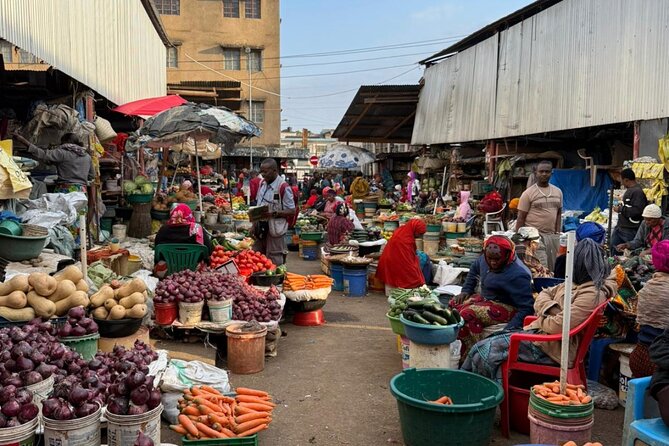
Arusha’s best food lesson may begin before you reach the kitchen. You start in the central food market, examining produce, meat, spices, and everyday ingredients with a guide who explains how local families use them. Then you help choose two dishes, buy what you need, and cook in Sanawari with a local chef.
I like the market-to-meal format and the chance to use ordinary public transport instead of staying inside a tourist bubble. I also like that the food you prepare becomes your lunch or dinner, with ingredients bought during the tour rather than arranged in advance.
The main consideration is the setting. This is not a polished cooking studio. Expect a low table, charcoal burners, a gas burner, tubs, and basic utensils, as well as a slower, more hands-on style of cooking. That is the point, but it may not suit anyone seeking a restaurant-style class.
Key points to know before booking
- The central food market comes first: Spend about 30 to 45 minutes seeing local produce, meat, and daily shopping in Arusha.
- You choose two dishes: The available choices are explained on the day, then you select the two foods for your lesson.
- Sanawari provides the cooking setting: The class takes place in a local kitchen, not a modern culinary school.
- Public transport is part of the experience: The trip from the market to Sanawari uses the sort of transport local people commonly take.
- Your cooked meal is included: Eat what you prepare for lunch or dinner, with takeaway food sometimes available.
- The $42 price covers useful basics: Pickup near central Arusha, transport, market guidance, ingredients, the lesson, and the meal are included.
From Arusha’s market to a local kitchen
This four-hour experience gives you a practical look at how food moves from market stall to family table. It is less about perfect knife work and more about seeing, buying, preparing, and eating food in the local way.
Your guide collects you from a hotel near Arusha city center. The exact guide can vary, but names associated with the experience include Israel, James, Jack, Lameck, Bariki, and Magret. You receive confirmation by WhatsApp or email after booking, which is useful for sorting out pickup details.
The day is built around two main stops. The market visit is listed at roughly 30 minutes, although some accounts describe closer to 45 minutes. The cooking lesson takes about 90 minutes. The remaining time allows for pickup, shopping, the ride to Sanawari, preparation, eating, and the return to your hotel.
That timing matters. You are not simply dropped into a kitchen for a quick demonstration. The market and transport are part of the lesson, showing how a dish begins before anyone lights a stove.
More Market Tour Cooking Classes in the world:
- Hanoi Cooking Class: Culture, Local Market & Meaning CSR Impact
★ 5.0 · 5,147 reviews - 5 Traditional Dishes Hanoi Cooking Class with Market Trip
★ 5.0 · 4,890 reviews - Cooking Class and Lunch at a Tuscan Farmhouse with Local Market Tour from Florence
★ 5.0 · 4,831 reviews
Seeing Arusha through its central food market
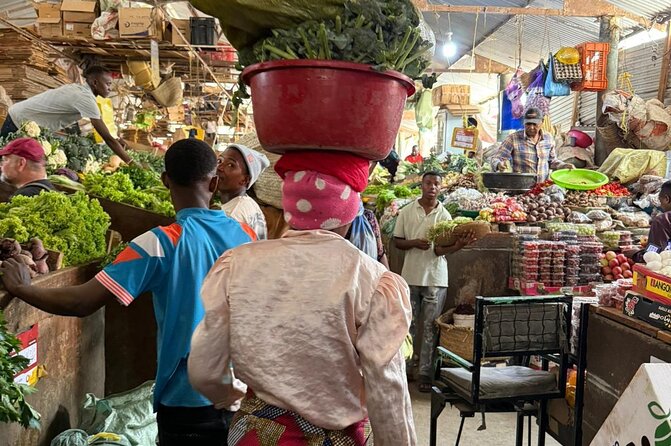
The central market is the most revealing part for anyone who wants to understand ordinary food shopping in Arusha. Your guide leads you through the market and points out local ingredients, explaining their traditional uses and how they fit into Tanzanian cooking.
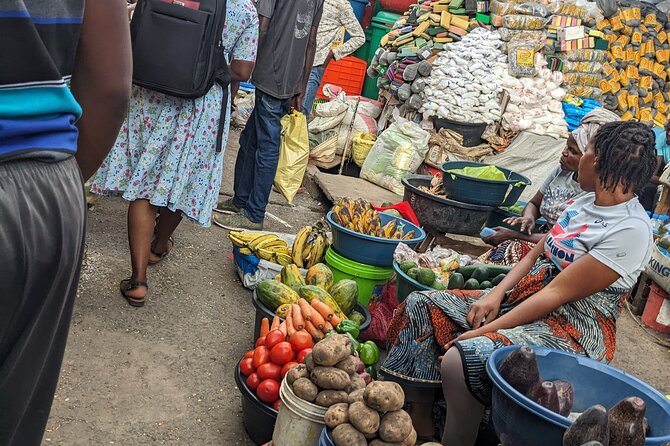
The produce is described as largely sourced from Tanzania, though some items come from outside the country. You may see fresh fruit, vegetables, meat, and other basic ingredients used in local homes. The value here is not a checklist of exotic foods. It is the chance to see how people shop for ingredients they will cook that same day.
A guide such as Israel or James can add context as you move through the market. The better part of the experience is the conversation: what an ingredient is called, how it is prepared, and which foods are common in the area. Market sellers are described as friendly, but you should still follow your guide’s lead on photographs and personal space.
The market visit is short, so do not expect a full food crawl or a long photography session. You are there to learn what goes into the cooking class. If you want more time to browse, arrive in Arusha with a separate market visit in mind.
Choosing two Tanzanian dishes
After the market walk, your guide explains the food choices available for that day. You select two dishes for the cooking lesson. The exact menu is not fixed in the information provided, so you should not book expecting one guaranteed recipe.
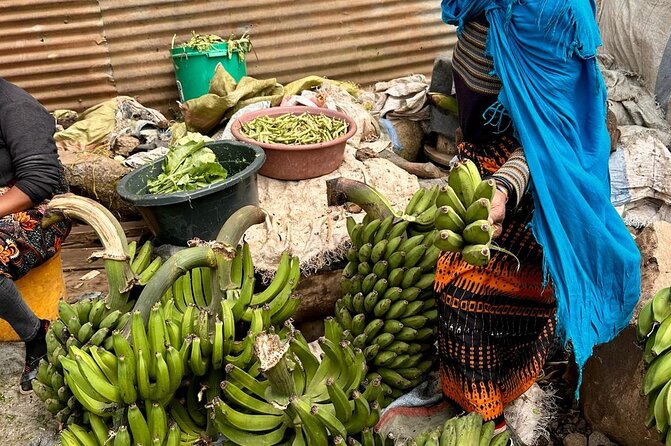
Ugali and ndizi are among the dishes specifically associated with the class. The final choices may vary according to the ingredients available and the plan for that particular session. This flexibility is useful because it connects the meal to what is fresh and available, but it also means you may not get to cook a particular dish you had hoped to learn.
The shopping is part of the activity. Ingredients are bought fresh from the market, and the cost is included. Spices from the market are not included, so budget a little extra if you want to buy some to take home.
I like this setup because you are not just handed a bowl of premeasured ingredients. You see the purchasing stage and gain a better sense of what a normal food budget and shopping trip might look like. For a first visit to Tanzania, that everyday detail can be more useful than a formal lecture on cuisine.
Riding from the market to Sanawari
The route from the central market to Sanawari uses normal public transport. This is not simply a transfer between tourist venues. You get a small look at how people move around Arusha, and the ride helps link the market to the neighborhood where the lesson takes place.
Sanawari is described as a short distance from the central market. The public transport portion may be basic and less predictable than a private vehicle, so keep your expectations practical. The transport is included as part of the local experience, but it is not designed for comfort or speed.
This portion will appeal to you if you like seeing how a city works at street level. If you prefer air-conditioned transfers and a tightly controlled schedule, it may feel less convenient. Pickup and drop-off are offered for hotels near the city center, and the experience is also near public transportation.
More Food and Drink Tours in the world:
- Small Group Cooking Class & Market Food Tour in Florence
★ 5.0 · 1,574 reviews - Paella Cooking Class, Wine Tasting & Central Market in Valencia
★ 5.0 · 1,150 reviews - Athens: Food Market Visit and Cooking Class with Wine
★ 4.9 · 1,087 reviews - Undiscovered Charleston: Half Day Food, Wine & History Tour with Cooking Class
★ 5.0 · 948 reviews
Cooking with charcoal, gas, and basic tools
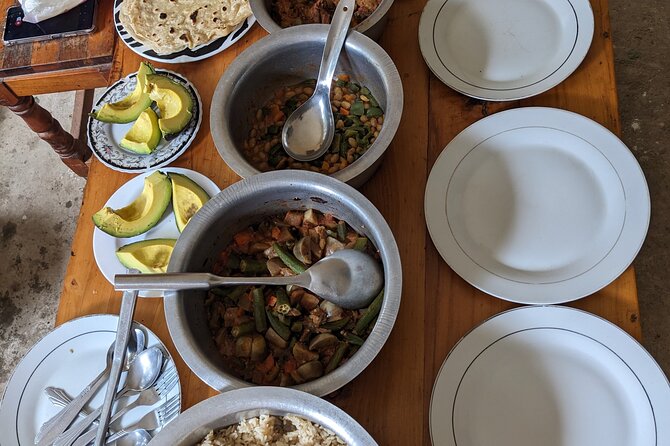
The class takes place in a local kitchen in Sanawari. The setting described by participants includes a low table, two charcoal burners, a gas burner, large tubs, and simple cooking tools. There may be no raised countertops, modern sink, or familiar kitchen layout.
That detail is worth taking seriously. You may sit or work lower to the ground than you are used to, and several people may share the available space. The kitchen is functional rather than decorative. It gives you a clearer sense of how food is prepared in a home setting, but it is not the easiest place for someone who needs a fully adapted cooking station.
The chef guides you through the selected dishes, and the lesson is intended to be interactive. You should expect to help with preparation and cooking rather than only watch from the side. The class is described as well organized and suitable for most people, but the simple setting means you should wear practical clothes and shoes.
The cooking stage lasts about an hour and a half. That is enough time to take part without turning the activity into an all-day project. You may not leave with restaurant-level technique, but you should understand the basic ingredients and steps behind the food you prepare.
Eating what you helped prepare
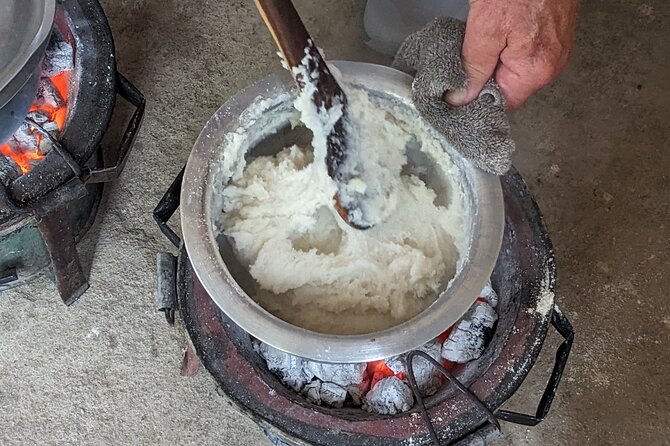
At the end, you eat the dishes you made. The meal is included for those taking part, and it can serve as lunch or dinner depending on the tour time. Some sessions may offer takeaway food as an option.
This is one of the strongest parts of the experience. The meal is not an unrelated restaurant stop added to the schedule. It is the result of the market visit, shopping, and cooking lesson. You see the ingredients, help prepare them, and then sit down to eat.
Drinks are not included. Water, soda, or beer can be bought along the way, so carry some cash or ask your guide about the best time to purchase a drink. The information does not promise a set beverage service, so do not assume that water will be supplied with the meal.
What the $42 price really covers
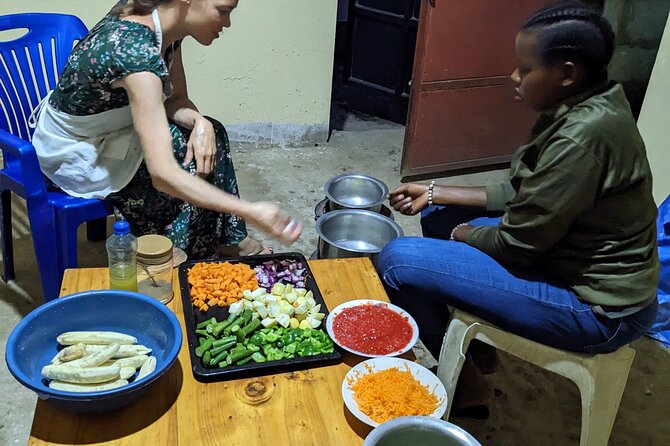
At $42 per person, the tour is priced as a compact cultural activity rather than just a cooking lesson. The fee includes hotel pickup and drop-off near central Arusha, the guided market visit, local transport connected with the tour, ingredient shopping, the cooking class, and the meal.
That is a fair package if you value the market and transport as much as the food. A standard cooking class might offer better equipment, but it would not necessarily show you where the ingredients come from or how local people shop for them.
The value is lower if you only want to learn recipes in a comfortable kitchen. In that case, part of your payment goes toward the market walk and the local transport experience, which you may not care about. You also pay extra for drinks, tips, and any spices you want to buy.
Tips are optional. If the guide and chef give you a good day, a tip is a reasonable way to show appreciation, but it is not required.
Who will enjoy this experience most
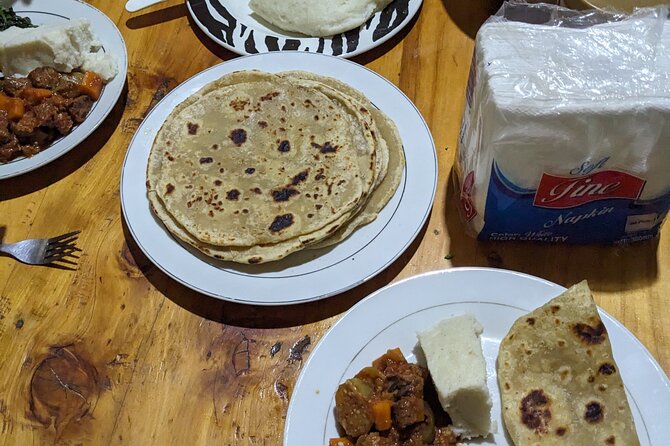
I would recommend this tour to you if you enjoy food as a way to understand daily life. It works especially well for first-time visitors to Arusha who want more than a restaurant meal and have about half a day free.
It also suits people who like participation. You choose ingredients, travel through the city, work in a simple kitchen, and eat the result. Guides such as Israel, James, Jack, Lameck, Bariki, and Magret have been associated with warm explanations and friendly instruction, though the person leading your tour can differ.
Families and mixed-age groups may find the format appealing because the activity changes from walking to shopping to transport to cooking. The information says most people can participate, but the low cooking setup and basic facilities may be awkward for anyone with mobility limitations.
You should think twice if you need a spotless modern kitchen, a fixed menu, a quiet private class, or a precise schedule. The experience is intentionally local, and local can mean simple, shared, and a little less predictable.
Timing, booking, and cancellation details
The full activity lasts about four hours. Pickup is offered from hotels near central Arusha, with return transportation at the end. The experience can be booked with a mobile ticket, and confirmation is sent by WhatsApp or email after booking.
It is often booked around 23 days in advance, so reserve ahead if your Arusha schedule is tight. The stated maximum is 200 participants, although the practical feel of the cooking portion may depend on how many people are assigned to one class.
Free cancellation is available if you cancel at least 24 hours before the local start time. Changes or cancellations inside that window are not refunded. The activity also requires good weather, so a weather cancellation should result in a different date or a full refund.
Final call: should you book it?
Book this experience if you want to see the food market, travel locally, cook with basic tools, and eat a meal tied to the work you did. At $42, it offers more than a recipe lesson because it connects food with shopping, transport, neighborhood life, and hospitality.
Skip it if your priority is polished equipment, a guaranteed menu, or a high-end culinary setting. The simple kitchen is not a minor footnote. It defines the experience.
For most people with a free half-day in Arusha, I would choose it as a practical introduction to Tanzanian food. Go with an open mind, bring money for drinks and optional spices, and expect the best moments to happen around the market and the cooking table rather than in a formal classroom.
FAQ
How long does the Arusha cooking class and market tour last?
The experience lasts about four hours in total, including pickup, the market visit, transport, cooking, eating, and return to your hotel.
Where does the tour begin?
Pickup is offered from hotels near Arusha city center. The first activity is a guided visit to Arusha’s central food market.
How long is the market visit?
The market portion is described as roughly 30 minutes, with some sessions lasting about 45 minutes.
Where does the cooking class take place?
The cooking lesson takes place in Sanawari, after the market visit and transport from the central market.
How do I get from the market to Sanawari?
The tour uses normal public transport for the journey from the central market to Sanawari.
How many dishes will I cook?
You choose two dishes from the local food options explained by the guide on the day.
Is the meal included?
Yes. The food you prepare is included and can be served as lunch or dinner. Takeaway food may also be available.
Are drinks included?
No. Water, soda, and beer are not included, but you can buy drinks along the way.
Are ingredients included in the price?
Yes. The cost of shopping for the cooking ingredients is included. Spices bought from the market are not included.
Can I cancel for a full refund?
Yes, if you cancel at least 24 hours before the experience start time. Cancellations or changes made less than 24 hours in advance are not refunded.
More Shopping Trips in the world
- Chiang Mai: Cooking Class, Market & Thai Herbs Garden Tour
★ 4.9 · 4,824 reviews - Chiang Mai: Authentic Cooking Class with Market & Farm Visit
★ 4.9 · 4,546 reviews - Barcelona: Paella Cooking Experience & Boqueria Market Tour
★ 4.8 · 3,661 reviews - Cooking Class Hoi An:Local Market, Basket Boat, Fishing & Cooking
★ 5.0 · 3,660 reviews
More Food Experiences in the world
- Vietnamese Food Cooking Class in Hanoi with Market Experience
★ 5.0 · 778 reviews - Milan: Italian Cooking Class with Food and Wine
★ 4.7 · 509 reviews - Mexican Cooking Class with Food Market Visit in Mexico City
★ 5.0 · 506 reviews - Florence: Cooking Class with Local Food Market Tour
★ 4.9 · 407 reviews
Just added around the world
- Cooking, Farming and Waterfall In Vietnam Countryside★ 3.0 · 6 reviews
- Busan Tailored Korean cooking class (Vegan OK)with market tour★ 5.0 · 66 reviews
- Korean cooking class in Haeundae, Busan★ 5.0 · 92 reviews
- Private Argentine Cooking Class and Tango Lesson in Buenos Aires★ 5.0 · 37 reviews
- Hungarian Home Cooking Class with Chef Marti★ 5.0 · 30 reviews
- Cooking Class with dinner/lunch in Ulcinj Montenegro★ 5.0 · 8 reviews
- BA: Empanadas and Alfajores Cooking Experience in Palermo★ 5.0 · 112 reviews
- Hungarian Cooking Class with Nelli – ONLINE over Zoom★ 5.0 · 16 reviews
Cooking Classes with a Market Tour, compared.
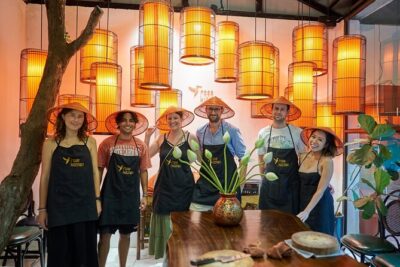
Hanoi Cooking Class: Culture, Local Market & Meaning CSR Impact
Read our review →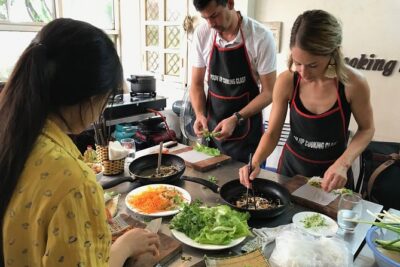
5 Traditional Dishes Hanoi Cooking Class with Market Trip
Read our review →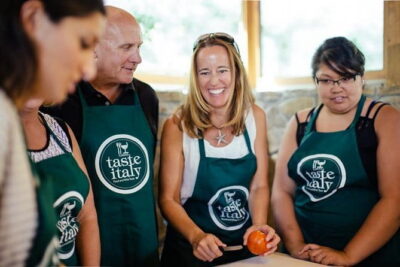
Cooking Class and Lunch at a Tuscan Farmhouse with Local Market Tour from Florence
Read our review →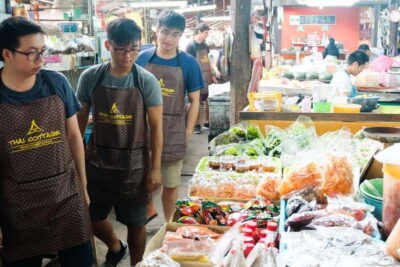
Chiang Mai: Cooking Class, Market & Thai Herbs Garden Tour
Read our review →
Chiang Mai: Authentic Cooking Class with Market & Farm Visit
Read our review →
Barcelona: Paella Cooking Experience & Boqueria Market Tour
Read our review →
Cooking Class Hoi An:Local Market, Basket Boat, Fishing & Cooking
Read our review →
Hoi An Cooking Class(Market,BasketBoat Crabfishing&Cooking Class)
Read our review →Browse the lists this tour appears in