
Review · SIEM REAP
Cambodian Cooking Class from Siem Reap
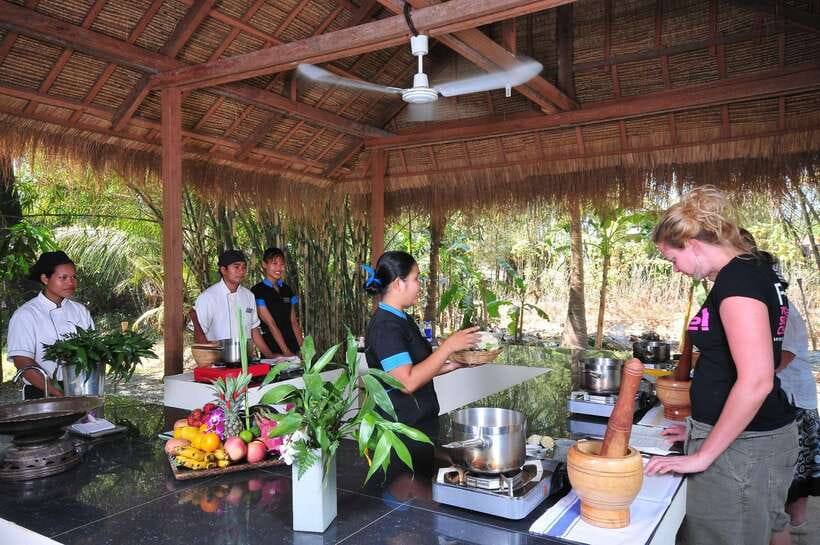
The best part of this Siem Reap cooking class is that it begins with where Khmer food comes from, not just a chopping board. You may visit a local market, smell the herbs, see unfamiliar produce, and visit a Cambodian family home before cooking beside a pond in the countryside. It feels far removed from the usual hotel kitchen lesson.
I like the small groups, capped at six, and the fact that every person gets a cooking station and cooks the meal from start to finish. I also like the patient teaching. Guides such as Sophia Lauren and chefs including Prey are praised for clear explanations, friendly help, and useful substitutions for ingredients you may not find at home.
The main drawback is the open-air setting. It is sheltered, but warm weather can make cooking uncomfortable, and the short village walk has little shade. Children must be over 12 unless you arrange a private family class.
Key points at a glance
- A real rural setting: Leave Siem Reap by tuk tuk and cook in a covered wooden pavilion beside a pond.
- Market or village insight: Learn about Khmer herbs, vegetables, spices, and daily food preparation.
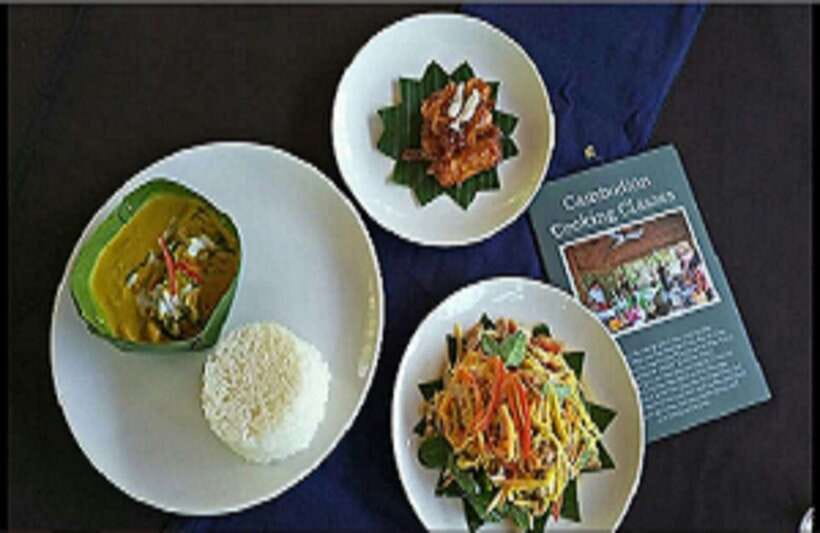
- Three-course cooking lesson: Menus include fish amok, mango salad, Cambodian curry, sugar-cane fish, and local desserts.
- Small class size: Groups are limited to six, so you get direct help at your own station.
- A meal you prepare yourself: Sit down after class and eat the dishes one by one with a beer, soft drink, or water.
- Useful for home cooks: You receive a recipe book, and the chefs explain ingredient alternatives.
Why this class feels more local than a hotel cooking lesson
A Cambodian cooking class can easily become a tidy demonstration aimed at tourists. This one makes a better effort to connect the food with ordinary life outside Siem Reap.
The short tuk tuk ride takes you away from the central streets and toward a rural village. The ride itself is part of the appeal. You see back roads and the quieter edge of the province before arriving at the cooking venue. It is not a long transfer, but it gives the half-day a clear change of pace.
The visit before cooking varies in detail. The planned experience includes a local family, its home kitchen, and a vegetable garden. Recent sessions have also included a stop at a local market, where the guide explains produce, leaves, herbs, spices, and snacks. This market visit is one of the strongest parts of the outing because it gives names and uses to ingredients you might otherwise pass in a restaurant.
The guide may point out the produce used in daily Khmer meals and explain how Cambodian households prepare food. You may also get to smell different leaves or taste local fruit and snacks. The experience is not built around grand sights. Its value comes from seeing familiar food in its everyday setting.
A short walk through the village follows or forms part of this introduction. Wear comfortable shoes and bring a hat. Cambodia gets hot, and the walk is more pleasant when you are not worrying about sun on your head or dusty paths under thin sandals.
More Hands-On Workshops in the world:
- Half-Day Thai Cooking Class at Organic Farm in Chiang Mai
★ 5.0 · 19,087 reviews - Florence: Pasta Cooking Class with Unlimited Wine
★ 4.9 · 10,285 reviews - 3 in 1 Cooking Class near Navona: Fettuccine, Ravioli & Tiramisu
★ 5.0 · 7,376 reviews
From family kitchen to open-air pavilion
The visit to a local home adds an important layer. You are not simply handed pre-measured ingredients in a tourist kitchen. You get a glimpse of how food preparation fits into a Cambodian household and how herbs and vegetables may be grown close to home.
Keep your expectations sensible. This is a brief cultural visit, not a full village study or a private home tour with a long discussion. Its purpose is to help you understand the ingredients and cooking habits that shape the class.
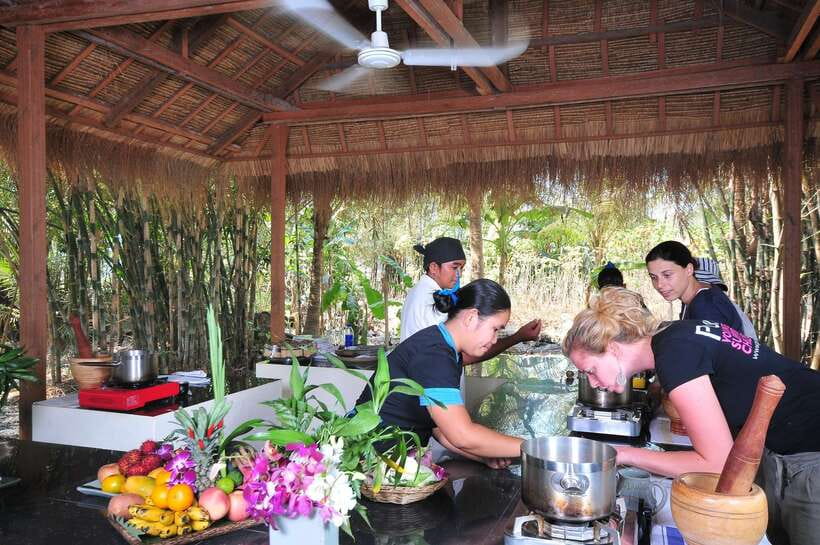
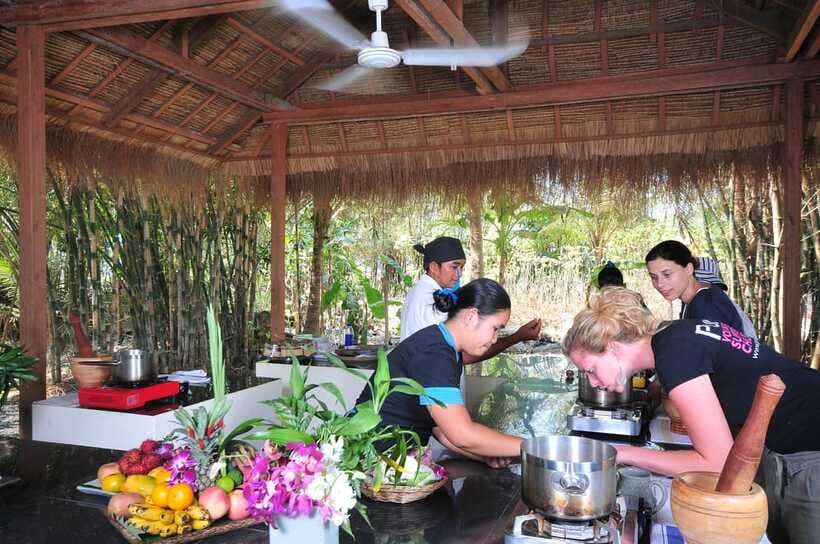
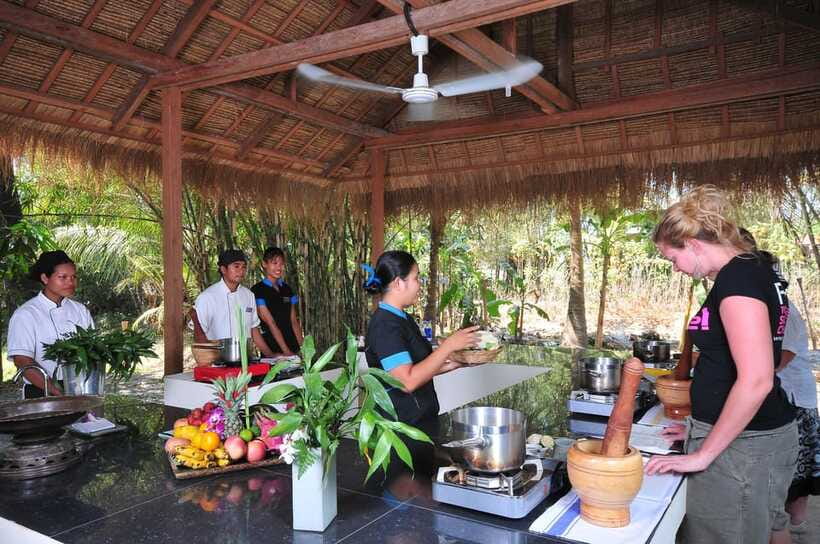
Afterward, you move to a covered pavilion or outdoor kitchen. The setting is a real strength. The pavilion sits by a pond, and some sessions have included views of turtles in the water. You cook in a peaceful garden setting rather than an enclosed room, with the countryside around you.
The open-air design also brings the main practical tradeoff. It can be hot, especially during warmer months. One useful tip is to choose light clothing, carry water, and expect some heat around the cooking stations. A drink is included, but you will be more comfortable if you arrive prepared.
What you actually cook during the 3.5-hour class
The morning menu centers on three dishes:
- Cambodian mango salad
- Fish amok
- Sticky rice balls with palm sugar and grated young coconut
The afternoon menu includes:
- Prahet chien, minced fish served on sugar cane
- Cambodian curry
- Nom tong noun, a Khmer-style brandy snap
Menus can make a cooking class sound more predictable than it is. Here, the appeal lies in the building blocks. You learn how herbs, spices, coconut, fish, curry paste, and fresh produce are combined rather than simply watching a chef prepare a finished plate.
Fish amok is the star dish for many people. It is a smooth Cambodian curry traditionally made with fish, though chicken or tofu can be used. It is often served in a young coconut, which gives the dish a distinctly Cambodian presentation. The class helps you understand why amok is different from the fiery curries associated with some neighboring cuisines.
Cambodian food uses plenty of fragrant spices, but it is generally milder than many Thai dishes. That makes this class a good choice if you like aromatic food but do not want a meal built around intense heat. Still, tell the guide about your preferred spice level and any dietary restrictions before cooking begins.
The mango salad offers a fresh contrast to amok. The sticky rice dessert brings palm sugar and young coconut into the meal, giving you a sweet finish made from ingredients common in the region.
The afternoon menu has a different balance. Prahet chien gives you a hands-on lesson with minced fish and sugar cane, while the Cambodian curry shows how layers of spice create flavor without relying on chili heat. Nom tong noun is a lightly sweet dessert and a good choice if you enjoy crisp pastry-style sweets.
Hands-on cooking with room to make mistakes
This is not a watch-and-copy demonstration. Each participant has an individual station and equipment, and the chef guides you through the preparation. You chop, mix, season, and cook your own dishes.
That arrangement matters. A large class can leave you standing at the back while the instructor works in front. With a maximum of six participants, you have a fair chance of receiving direct help. Solo bookings can sometimes become private or nearly private classes, depending on how many people are scheduled that day.
The teaching style is practical rather than formal. Guides and chefs explain the ingredients, show the method, and help when you lose track of a step. Sophia Lauren is frequently named as a friendly and attentive guide, while chefs such as Prey and Prayer are praised for patient instruction. The names vary in spelling, but the important point is that the staff play an active role throughout the class.
You also receive advice about replacing local ingredients. That is one of the most useful features if you want to cook Cambodian food after returning home. Exact herbs, leaves, or produce may be hard to find, so learning a workable substitute is more valuable than receiving a recipe that depends on a specialty ingredient you cannot buy.
The class suits beginners. You do not need previous cooking experience. The chef handles the instruction, and the recipes are designed so you can follow them at home. You should still expect to do real preparation rather than simply garnish a dish.
A few more cooking classes around the world worth a look
- Florence: Pasta & Tiramisu Cooking Class with Unlimited Wine
★ 4.9 · 6,708 reviews - Florence: Pasta Cooking Class with Unlimited Wine
★ 5.0 · 6,413 reviews - Hanoi Cooking Class: Culture, Local Market & Meaning CSR Impact
★ 5.0 · 5,147 reviews - 5 Traditional Dishes Hanoi Cooking Class with Market Trip
★ 5.0 · 4,890 reviews
Eating beside the pond
Once the cooking is finished, you move away from the stations and sit in the wooden pavilion. Your dishes are served one by one, giving you time to taste each course and compare the results.
This final meal is more than a reward. It lets you see how the separate ingredients work together and gives the chef a chance to answer last questions while the food is fresh. You can enjoy a complimentary beer, soft drink, or bottled water with lunch.
Portions appear generous. Some people have had enough food to take leftovers away, though containers should not be assumed unless the staff offer them. If you have a large appetite, the three-course meal should feel substantial.
The pond setting helps the meal feel calm and unhurried. It is a simple detail, but it changes the mood. After working over a stove and chopping board, sitting outside with your own food gives the class a satisfying finish.
The price and what you get for $32
At $32 per person, this is good value for a 3.5-hour activity. The price includes tuk tuk transport from your hotel to the class, the village or market visit, an English-speaking guide and chef, all cooking instruction, lunch, a drink, and a recipe book.
Compare that with paying separately for a restaurant meal, a tuk tuk ride, and a shorter cooking lesson. The value becomes clearer when you count the cultural visit and the small group size. You are paying for an activity that fills half a day, not just for the food on the plate.
The recipe book adds lasting value. It includes the recipes used in class and may include additional Cambodian dishes, so you are not limited to recreating only the menu you cooked.
The activity also supports a local social enterprise connected with training and work opportunities for Cambodian people. That does not turn the class into a charity visit, but it gives the experience a useful local purpose beyond sightseeing.
Personal purchases are not included. If you want to buy market snacks, produce, or other items, carry some spending money.
Morning or afternoon: which session suits you?
The morning class is the better pick if you want a fresh market start and a traditional Cambodian lunch. The mango salad, fish amok, and sticky rice dessert give you a clear introduction to sweet, fresh, savory, and fragrant flavors.
Choose the afternoon session if Cambodian curry appeals most to you or if you prefer a later start. Prahet chien and nom tong noun provide a different menu, with a stronger focus on curry, fish, and a sweet pastry-style dessert.
Check the available start time when booking because the duration is fixed at about three and a half hours, but the exact schedule can vary. If the market visit matters most to you, confirm what is planned for your chosen session.
Who should book this experience?
I would recommend it to first-time visitors who want a break from temple touring and a closer look at daily Cambodian life. It also works well for solo visitors, couples, and small groups who prefer conversation and direct instruction over a large demonstration.
Food lovers will get the most from it, but you do not need to be an experienced cook. The class is also suitable for people who want to learn how to make amok or curry at home.
Dietary needs can often be accommodated, but you should tell the operator in advance. A past session successfully handled dietary restrictions, and the kitchen can offer alternatives such as chicken or tofu for the amok-style dish, but do not leave important food requirements until the cooking starts.
Families should note the age rule. Children over 12 can join the regular class. Private family classes may be arranged for younger children, so contact the provider before booking if that is important.
Practical details before you go
Hotel pickup is provided by tuk tuk, and the return is to the centrally located Beyond office at the end of the tour. Confirm the final drop-off arrangement if you need to return to a hotel outside the central area.
Wear comfortable footwear for the village walk and clothing suitable for an outdoor kitchen. A hat is strongly recommended. The cooking area is covered, but it is not an air-conditioned room.
The group limit of six is a major advantage, especially if you want help with chopping, seasoning, or using unfamiliar ingredients. Free cancellation is available up to 24 hours before the activity, and you can reserve now and pay later.
The overall rating is 4.9 from 190 reviews, and the praise is consistent around the same points: the market or village visit, the peaceful pond setting, friendly instruction, fresh food, and the ability to recreate the recipes at home.
Should you book the Siem Reap Cambodian cooking class?
Book it if you want an active half-day that combines food, a rural setting, and a small amount of everyday cultural contact. The strongest reasons are the hands-on format, the small groups, the market and family-home context, and the chance to eat a meal you prepared yourself.
Skip it if you dislike heat, outdoor cooking, or short village walks. It is also not the best match if you want a formal chef school or advanced culinary training.
For most visitors, $32 is a fair price for the transport, instruction, meal, drink, and recipe book. Choose the morning menu for fish amok and mango salad, or the afternoon menu for Cambodian curry and nom tong noun. Either way, you leave with more than lunch. You gain a practical sense of how Cambodian food is grown, prepared, seasoned, and shared.
FAQ
How long does the Cambodian cooking class last?
The class lasts 3.5 hours, including transport-related arrangements, the village or market visit, cooking, and the meal.
How much does the experience cost?
The price is $32 per person.
Is hotel pickup included?
Yes. Tuk tuk pickup from your hotel to the cooking venue is included. At the end, the tuk tuk returns you to the centrally located Beyond office.
What food can I cook?
The morning menu includes Cambodian mango salad, fish amok, and sticky rice balls with palm sugar and grated young coconut. The afternoon menu includes prahet chien, Cambodian curry, and nom tong noun.
Is the cooking class suitable for beginners?
Yes. No special cooking skills are required, and the chef guides you through the preparation at your own cooking station.
How many people can join the class?
The regular tours are capped at a maximum of six participants.
Can children join the class?
Children over 12 can join the regular cooking class. Private family classes can be arranged on request.
Is a drink and recipe book included?
Yes. You receive a recipe book and one complimentary beer, soft drink, or bottled water. Lunch consists of the dishes you prepare.
Just added around the world
- Catania: Private Cooking Class at a Local’s Home★ 4.9 · 9 reviews
- Casablanca : Traditional Moroccan Cooking Class with Locals★ 5.0 · 22 reviews
- Catania: Cooking class set in a sea front historic villa★ 5.0 · 5 reviews
- Cape Town: Authentic African Cuisine Cooking Experience★ 4.9 · 31 reviews
- Cagliari Home Cooking Class: Pasta, Wine & Sardinian Flavors★ 4.9 · 61 reviews
- Cancún: Cooking Class and Optional Local Market Tour★ 4.5 · 127 reviews
- Cagliari: Pasta Cooking Class with 3-Course Dinner★ 5.0 · 96 reviews
- Cagliari: Sardinian Cooking Class with Meal and Drinks★ 5.0 · 56 reviews
Cooking Classes, compared.
Half-Day Thai Cooking Class at Organic Farm in Chiang Mai
Read our review →
Florence: Pasta Cooking Class with Unlimited Wine
Read our review →
3 in 1 Cooking Class near Navona: Fettuccine, Ravioli & Tiramisu
Read our review →
Hanoi Cooking Class: Culture, Local Market & Meaning CSR Impact
Read our review →
5 Traditional Dishes Hanoi Cooking Class with Market Trip
Read our review →
Cooking Class and Lunch at a Tuscan Farmhouse with Local Market Tour from Florence
Read our review →
Chiang Mai: Cooking Class, Market & Thai Herbs Garden Tour
Read our review →Browse the lists this tour appears in