
Review · MARRAKECH
Cooking class with Yassine & Mom
The best part of this Marrakech class is that it takes you beyond a restaurant table and into Yassine’s family home. You shop for ingredients, learn the cooking process from his mother and family, and sit down to eat what you made. It feels less like a staged demonstration and more like being welcomed into someone’s kitchen.
I like the small-group format, which gives you room to ask about spices, tagine cooking, argan oil, and Moroccan food customs. I also like the practical start at the market, where you see the vegetables and meat before they become dinner. The main consideration is the location: the class is outside the central square, so you should plan for a short taxi ride and confirm the exact meeting point before setting out.
Key points to know before booking
- Shop before you cook: Begin with a visit to a local market to choose the meat, vegetables, and other ingredients.
- Learn from Yassine and his mother: Yassine teaches in English and has more than 30 years of cooking experience in the family.
- Choose your main dish: Options include chicken, beef, or lamb tagine, royal chicken pastilla, and Tangia Marrakshia.
- Make more than tagine: The meal also includes three cooked vegetable salads, a starter, dessert, and Moroccan tea.
- Expect a family setting: The class takes place at home, with family members sometimes joining the cooking and meal.
- Good for varied diets: Vegetarian and vegan participants are welcome, and the menu can be adjusted for tastes, allergies, and dietary needs.
A family kitchen instead of a restaurant classroom
Marrakech has no shortage of cooking classes, but this one has a clear difference: the setting is a private family house rather than a polished culinary studio. Yassine, his mother, sister, and parents may all be part of the welcome, giving the afternoon a personal feel that a standard demonstration class cannot easily copy.
Yassine leads the class and speaks English well. He explains how to select produce, clean and prepare ingredients, recognize spices, and build Moroccan flavor step by step. His mother brings the family side of the cooking, while other relatives may help with preparation and conversation.
That arrangement is valuable if you want more than a recipe card. You can ask about everyday food, Moroccan hospitality, the use of preserved lemon, the difference between tagine and tangia, and the place of tea and sweets in a visit. The class also includes cultural conversation and some background about Morocco, though the main focus remains food.
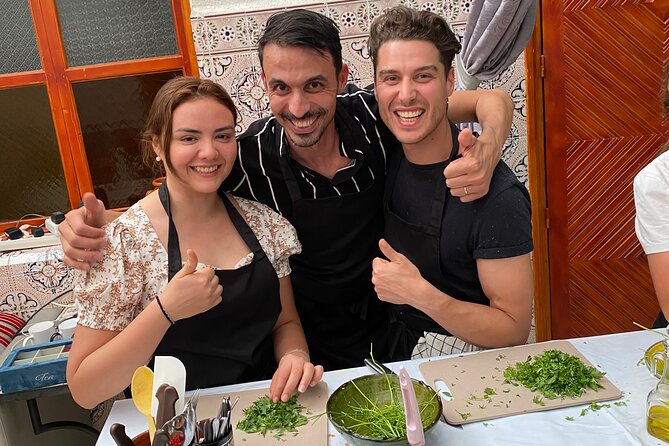
The atmosphere is relaxed rather than formal. You may be chopping, peeling, mixing, seasoning, or watching a dish cook while talking with the family. This is a good match for someone who wants hands-on participation and does not need a chef-school setting with strict timing.
More Hands-On Workshops in Marrakech:
- Marrakech: Moroccan Cooking Class with Pickup
★ 4.6 · 1,862 reviews - Marrakech: Traditional Moroccan Cooking Class & Market Visit
★ 4.8 · 1,861 reviews - Marrakesh: Moroccan Dishes Cooking Class with a Local Chef
★ 5.0 · 1,615 reviews
Finding the class and taking the short taxi ride
The meeting information needs a little attention. The stated activity address is Cooking Class with Yassine and Ayoub, 83 Lot Tasseltant, Marrakesh 40050. The instructions also say to meet next to Le Notre Patisserie before going to the market and home.
Because those details do not describe exactly the same point, I would confirm the meeting place with Yassine before leaving your hotel or riad. The class information says a taxi from the square to the house costs about €5. That is a small extra cost, but it matters when you are working out the real price of the afternoon.
Yassine has helped participants with taxi apps and directions, and the class is near public transportation. Still, Marrakech addresses can be confusing, especially when a meeting point, a family home, and a nearby market are described separately. Keep your phone available and allow enough time to find the starting point.
The class lasts about four hours and ends back at the meeting point. Depending on the start time, it can work as a long lunch or an afternoon and evening activity. Ask about the timing when you book so you know whether you will be eating before or after other plans.
The market visit gives the class a useful beginning
The cooking starts with shopping for the meal. Rather than arriving to find every ingredient already measured, you go to a local market and help choose what will be used. The market is available next door to the house, making this a practical part of the class rather than a separate sightseeing stop.
This is one of the most useful features for a first visit to Morocco. A recipe tells you to buy vegetables, meat, herbs, or spices, but a market visit helps you understand what those ingredients look like locally. Yassine can explain how to judge produce, what goes into the spice blend, and how Moroccan cooking uses simple ingredients with careful seasoning.
You also get a better sense of the relationship between shopping and cooking. Moroccan meals are often built around what is fresh and available, rather than around a complicated list of imported products. That makes the class easier to repeat at home.
Do not expect a full market tour of Marrakech. The purpose is to gather ingredients for the class. If you want a long souk walk, bargaining practice, or a broad food tour, you will need a separate activity.
Choosing between tagine, pastilla, and tangia
The main dish is selected from several Moroccan specialties. You may choose chicken tagine, beef tagine, lamb tagine, royal chicken pastilla, or Tangia Marrakshia. The available choice gives the class more flexibility than a fixed menu, especially for repeat visitors or people who already know which Moroccan dish they want to learn.
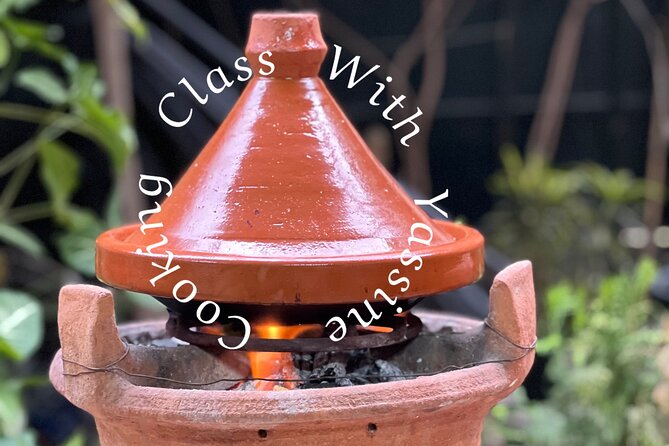
Tagine is the most familiar option for many people. The conical cooking vessel helps retain moisture, and the class shows you how ingredients are layered, seasoned, and cooked slowly. You learn not just what goes into the pot, but why the steps matter.
Beef or lamb can be paired with sweet elements such as dates, while chicken can be prepared in a style that uses Moroccan spices and other local flavors. The exact dish depends on the choice made at the beginning and the ingredients available.
Royal chicken pastilla offers a different lesson. It is a pastry-based dish with a more elaborate balance of savory and sweet flavors. Tangia Marrakshia is especially associated with Marrakech and gives you a chance to learn about a local specialty rather than only the tagines found on many restaurant menus.
The menu description also includes three cooked vegetable salads, a starter, and a Moroccan dessert. That makes this more than a single-dish lesson. You get to compare different preparation methods, textures, and seasonings during one meal.
A few more cooking classes around Marrakech worth a look
- Moroccan Cooking Class & Marrakech Market Visit with Chef Khmisa
★ 5.0 · 1,504 reviews - Half-Day Cooking Class with Local Chef Laila in Marrakech
★ 5.0 · 952 reviews - Marrakech: Moroccan Cooking Class with a Local Family
★ 4.9 · 668 reviews - Marrakech: Moroccan Cuisine Cooking Class in Local Home
★ 4.8 · 508 reviews
Hands-on work with spices and salads
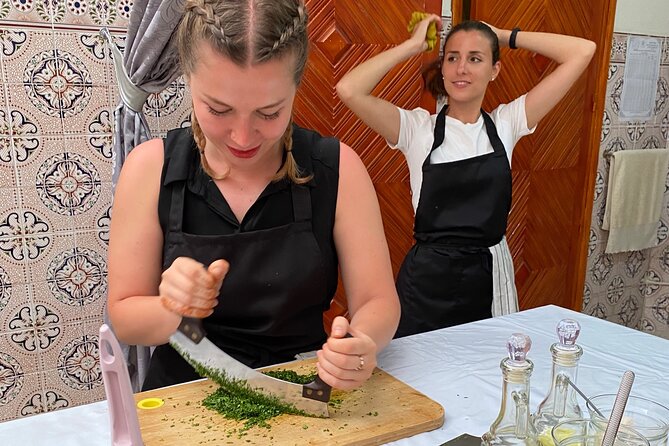
Yassine’s teaching style is practical. You are not simply watching him cook while he handles every knife and pan. Participants have been able to chop, peel, mix, and prepare ingredients themselves, including children with supervision and help.
One useful part of the lesson is making your own spice mixture. Moroccan food depends on balance, and the class helps you recognize individual spices rather than treating the seasoning as an unexplained powder. You can also ask about the quality of argan oil and how to use it in cooking.
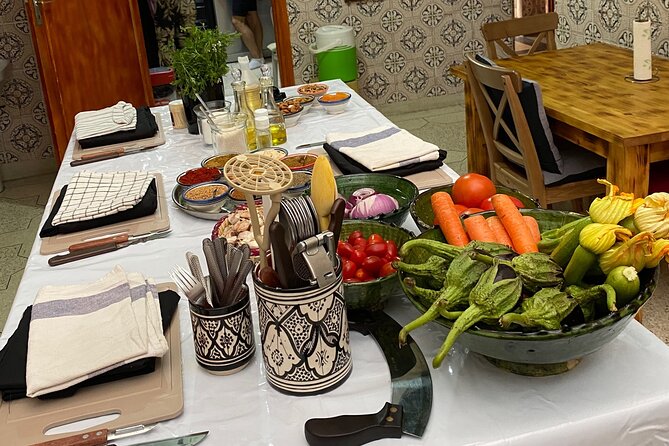
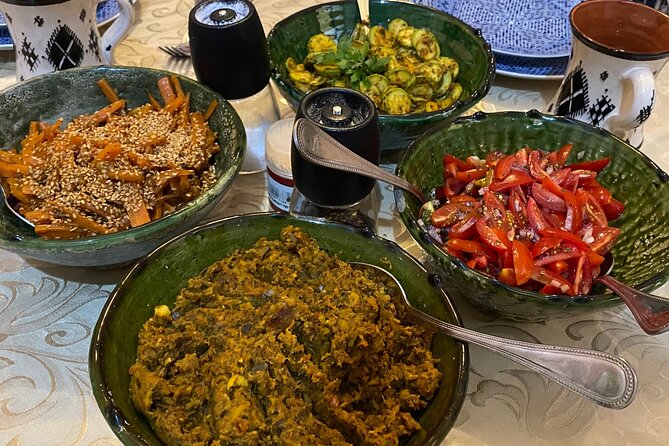
The three vegetable salads add variety. They show that Moroccan cooking is not only about a tagine simmering in the center of the table. Vegetables may be cooked and seasoned separately, giving each one a different taste and texture.
Yassine is described as patient and attentive to detail. That matters in a hands-on class because people arrive with different levels of kitchen confidence. If you are already comfortable cooking, you can ask more technical questions. If you are a beginner, the relaxed pace should make it easier to follow along.
People with allergies or dietary restrictions should explain them at the start. The menu can be discussed and adjusted, and vegetarian and vegan participants are welcome. Do not assume every option is automatically suitable, so make your needs clear before shopping begins.
Tea, sweets, and the meal at the end
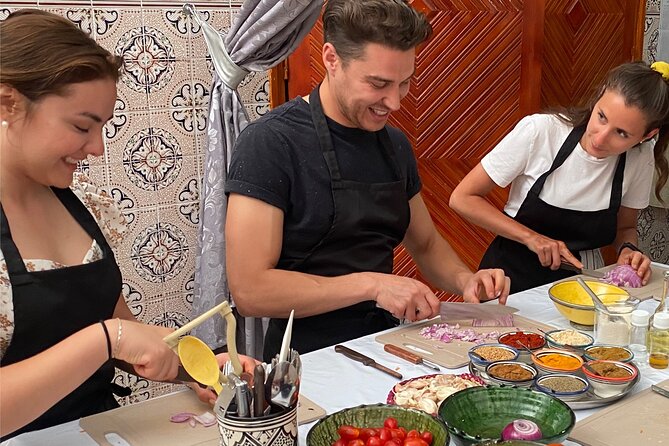
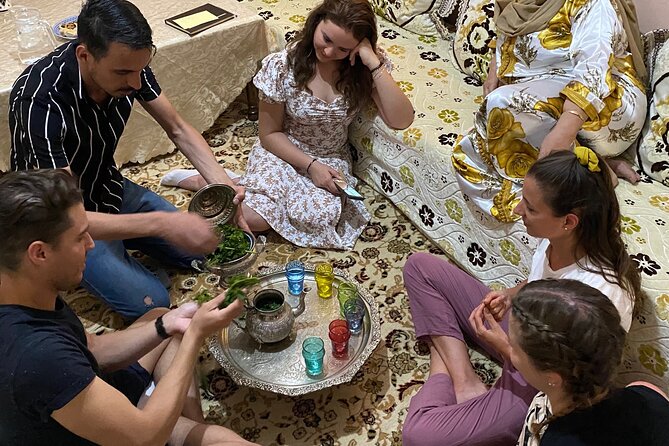
While the dishes cook, you share coffee or Moroccan tea with herbs of your choice and Moroccan sweets. This pause is part of the experience, not just dead time while the food is on the stove.
Mint tea carries social meaning in Morocco, and learning how it fits into a family visit adds context to the meal. The class also gives you a chance to talk with Yassine and his family about Moroccan life, food, and places to see in Marrakech.
At the end, you eat what you prepared. The meal may include the chosen main dish, three vegetable salads, a starter, and dessert. Some menus have included fruit salad, while the exact dessert can vary according to the class plan.
Eating together in the family home is the emotional center of the experience. You are not rushing through a restaurant meal after a demonstration. You have helped prepare the food, shared tea, and spent time with the people who taught you.
The setting may not offer the polished presentation of a restaurant. That is part of the tradeoff. You choose warmth, participation, and local contact over a formal culinary performance.
Group size, pace, and the value of the $40.71 price
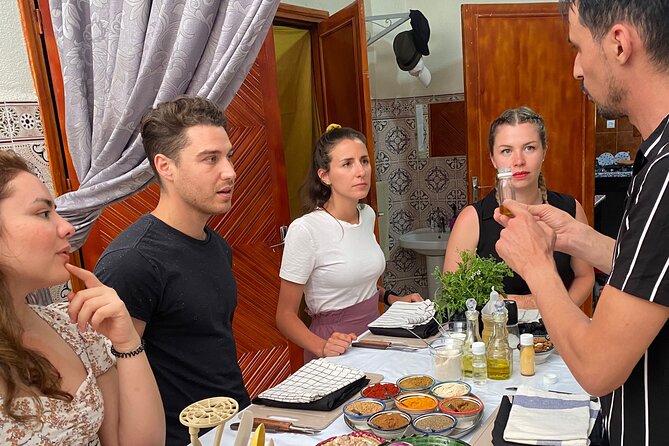
The maximum group size is 15, though some sessions are smaller. A group of that size can still feel personal if the cooking is divided among participants, but it is worth understanding that this is not guaranteed to be a private class.
The small-group setup helps keep the price at about $40.71 per person. For roughly four hours, that includes instruction, market shopping, ingredients, a full meal, tea, sweets, and a family-hosted setting. You should also allow for the taxi fare from the square, listed as about €5.
I consider that a fair price for visitors who want both dinner and a cultural activity. A restaurant meal alone may cost less, but it will not teach you how the food is made or introduce you to a local family. A private cooking lesson may offer more personal attention, but usually at a higher cost.
The value depends on your priorities. If you want a tightly organized culinary workshop with professional equipment and precise recipes, this may feel informal. If you want a generous, social afternoon with real participation, the price is easier to justify.
The experience is often booked about 10 days ahead, so reserve early if your Marrakech schedule is short. Confirmation is provided at booking. Free cancellation is available up to 24 hours before the start time, while cancellations or changes within 24 hours are not refunded.
Who will enjoy this class most
I would choose this experience if you want to learn a dish you can try again at home. It is also a good fit for couples, families, solo visitors who enjoy meeting people, and small groups of friends.
Families with children should find plenty of simple tasks, since a five-year-old participant was able to help with chopping, peeling, and mixing. Young children will still need close supervision, particularly around knives, hot food, and cooking surfaces.
The class also suits anyone curious about Moroccan life beyond the main tourist streets. You may meet several members of Yassine’s family, hear useful tips about Marrakech, and gain a better sense of how hospitality works around food.
Mobility needs should be discussed in advance. The family has made special arrangements for a participant using crutches and a wheelchair, but the available information does not give full accessibility details for the taxi, market, or house. Ask before booking so the arrangements are clear.
You may want to choose another activity if you dislike group meals, prefer exact dietary control, or want a highly formal cooking school. The family setting depends on conversation and shared participation. That is its strength, but it will not suit every style of holiday.
My practical verdict on cooking with Yassine and his mother
I would book this class if you want a meal you help create and a genuine chance to spend time with a Moroccan family. The market stop, flexible menu, hands-on work, tea, and shared dinner give the four hours a clear rhythm.
Before booking, confirm the meeting point, ask which main dishes are available on your date, and state any allergies or dietary needs. Bring a relaxed attitude, since the class is home-based and social rather than formal.
At $40.71, plus the taxi fare, it offers good value for a full afternoon of food and conversation. Choose it for personal contact, practical cooking skills, and the warm welcome from Yassine and his family. Skip it only if you want a private, highly polished culinary studio or a short demonstration with no group meal.
FAQ
How long does the cooking class last?
The class lasts approximately four hours and ends back at the meeting point.
Where does the activity begin?
The stated meeting point is Cooking Class with Yassine and Ayoub, 83 Lot Tasseltant, Marrakesh 40050, Morocco. The instructions also refer to meeting next to Le Notre Patisserie, so confirm the exact location with Yassine before you go.
Is transportation included?
Transportation is not listed as included. A taxi from the square to the family house costs about €5.
What dishes can I choose to cook?
The listed main-course choices are royal chicken pastilla, beef tagine, lamb tagine, chicken tagine, or Tangia Marrakshia.
Does the meal include anything besides the main dish?
Yes. The class includes a starter, three cooked vegetable salads, a Moroccan dessert, and Moroccan tea or coffee with Moroccan sweets while the food cooks.
Are vegetarian and vegan participants welcome?
Yes. Vegetarian and vegan participants are welcome, and the menu can be discussed to suit dietary needs.
How many people can join the class?
The activity has a maximum of 15 participants. It is described as a small-group experience, but the exact group size can vary.
Is the class suitable for children?
Yes. A five-year-old participant was able to take part in tasks such as chopping, peeling, and mixing. Children will need appropriate supervision during cooking.
Can I cancel for a full refund?
Yes, if you cancel at least 24 hours before the experience starts. Cancellations or changes made less than 24 hours before the start time are not refunded.
Just added around Marrakech
- Organic Moroccan Cooking Class At Secret Berber Garden CT★ 5.0 · 147 reviews
- Cooking Classes Farm to Table Marrakech★ 5.0 · 165 reviews
- Moroccan Cooking Class: Farm-to-Table Tagine★ 5.0 · 50 reviews
- Authentic Moroccan Cooking Class in a Farm in Marrakech★ 5.0 · 64 reviews
- Cooking Course with Lunch & Pool Access in Day Pass★ 5.0 · 32 reviews
- Marrakech: Traditional Moroccan Crepes & Bread Cooking Class★ 4.8 · 135 reviews
- Moroccan Cooking Class with Market Visit and Meal★ 5.0 · 196 reviews
- cooking class with chef FATIMA★ 5.0 · 226 reviews
Cooking Classes, compared.
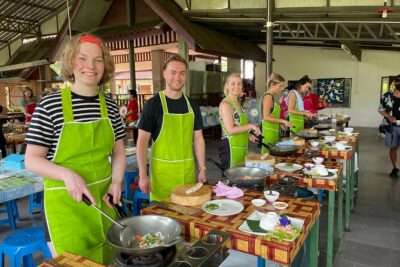
Half-Day Thai Cooking Class at Organic Farm in Chiang Mai
Read our review →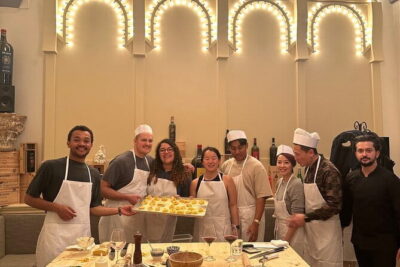
Florence: Pasta Cooking Class with Unlimited Wine
Read our review →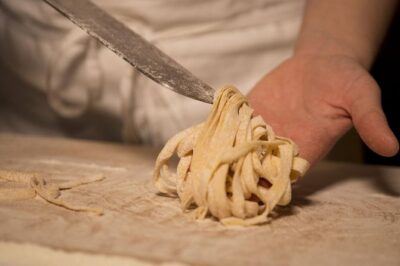
3 in 1 Cooking Class near Navona: Fettuccine, Ravioli & Tiramisu
Read our review →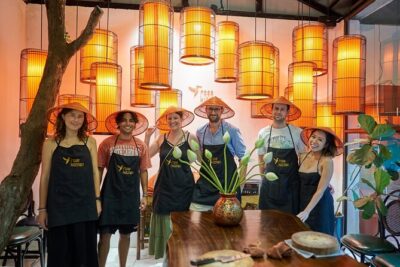
Hanoi Cooking Class: Culture, Local Market & Meaning CSR Impact
Read our review →
5 Traditional Dishes Hanoi Cooking Class with Market Trip
Read our review →
Cooking Class and Lunch at a Tuscan Farmhouse with Local Market Tour from Florence
Read our review →
Chiang Mai: Cooking Class, Market & Thai Herbs Garden Tour
Read our review →Browse the lists this tour appears in