
Review · KANDY
Cooking with Arun & Tamil Family
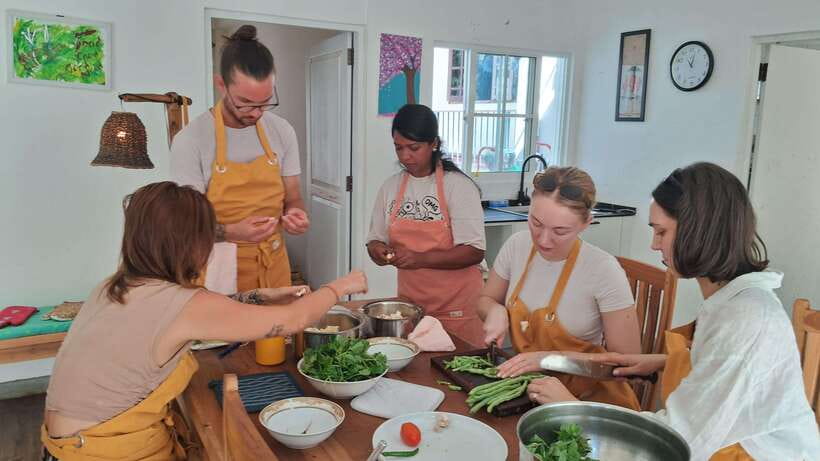
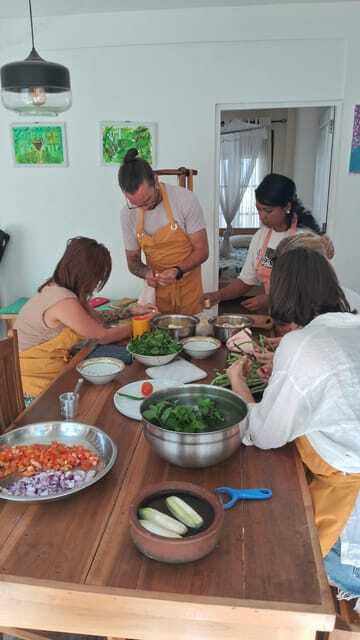
The best part of Cooking with Arun is the family setting. You are not simply watching a chef work. You are welcomed into a Tamil home kitchen, guided by Arun, his mother, and their assistant, then invited to eat what you helped prepare. The mood is friendly, hands-on, and relaxed.
I like the flexible menu, which can include spicy, mild, vegetarian, meat, or vegan dishes, and I like the personal touches: music, guitars, a ukulele, authentic sweets, and a recipe book to take home. The main consideration is that this is a small family cooking session, not a polished restaurant class, so you should expect a casual home atmosphere rather than a formal culinary school.
Key points
- Tamil family cooking: Learn Sri Lankan dishes from Arun, his mother, and their assistant in a home kitchen.
- Three hours of hands-on time: Cook, eat, enjoy afternoon tea, and spend time with the family.
- Menu suited to different diets: Ask for vegetarian, vegan, mild, spicy, meat-based, or allergy-aware options.
- Music and family atmosphere: Guitars and a ukulele add a playful touch while you cook.
- Recipes to use at home: A complimentary PDF recipe book helps you repeat the dishes after your trip.
- Small group value: With no more than 10 participants, you have a better chance to ask questions and receive help.
A Tamil kitchen rather than a staged cooking show
In Central Province, Arun opens his family kitchen to a small group for a three-hour Sri Lankan cooking experience. His mother brings the cooking expertise, while Arun helps create an easygoing setting for people with different levels of kitchen confidence.
That matters because Sri Lankan food can look more complicated than it is. Several dishes may be prepared at once, and the kitchen can fill with unfamiliar smells, spices, and sounds. Here, you get step-by-step guidance instead of being left to guess what happens next.
The session is designed for beginners as well as confident home cooks. You will not need to arrive with professional skills. The point is to take part, ask questions, and understand how the dishes come together.
The Tamil angle also gives this class a clear identity. Sri Lankan food is not one single style, and family cooking traditions vary by region, community, and household. Arun’s experience focuses on Tamil-style food, giving you a more personal look at the cuisine than a general cooking demonstration might offer.
A few more cooking classes around Sri Lanka worth a look
- Ella: Traditional Sri Lankan Cooking Class
★ 4.9 · 788 reviews - Organic cooking class sigiriya (kumara & family)
★ 5.0 · 650 reviews - Sri Lanka Cooking Class with Granny
★ 5.0 · 587 reviews
Meeting Arun, his mother, and Snowy
The welcome sets the tone. A drink is included at the start, and the family atmosphere begins before any chopping or cooking takes place. Arun’s mother is central to the experience, and the session also includes an assistant who helps with the class.
You may also meet Snowy, the family pet. Snowy is part of the kitchen scene and adds a bit of warmth and humor. If you like informal family experiences, this will probably feel more natural than a class held in a commercial studio.
The welcome is also useful for discussing food preferences. The menu can be adapted to suit vegetarian, vegan, meat-eating, mild, or spicy preferences. Food allergies and other dietary restrictions should be mentioned before you begin so the family has a chance to adjust the plan.
Do not expect a fixed, restaurant-style menu spelled out in advance here. The description allows for a range of Sri Lankan dishes, but it does not name a set list. If a particular ingredient or dish matters to you, ask about it before booking or at the start of the session.
Cooking several Sri Lankan dishes together
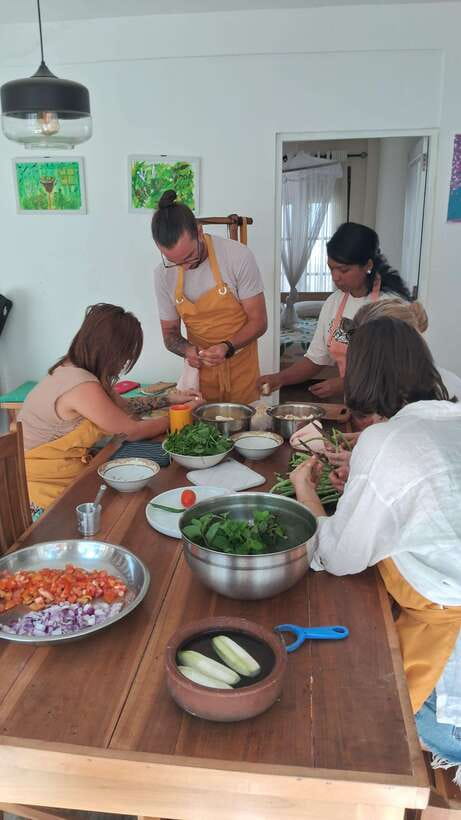
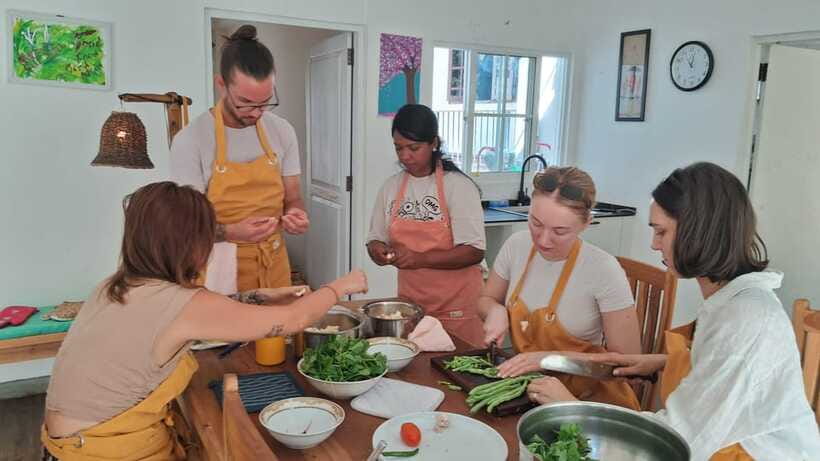
The main part of the experience is hands-on cooking. You will be guided through the preparation of the selected dishes, with the family explaining each stage in English.
Because the menu can be customized, the exact cooking sequence may vary. You might work with spicy curries, milder preparations, vegetarian dishes, vegan food, or meat-based recipes. That flexibility is useful for mixed groups, especially when one person wants heat and another prefers gentler flavors.
I like this format because it connects cooking choices with eating habits. You are not just copying a recipe without context. You can ask how to make a dish less spicy, how to adjust it for a different diet, or how to recreate it at home.
The class also gives you a chance to notice the difference between cooking for instruction and cooking for a family meal. There is no need to rush through a long restaurant service. The goal is to prepare food together and enjoy the process.
Still, you should keep your expectations sensible. The information does not promise a professional kitchen, chef uniforms, or advanced technical lessons. This is best for people who want cultural contact and good food, not for someone seeking a certificate or a highly structured cooking course.
Music, conversation, and a relaxed pace
Music is one of the more unusual features. You can play your own favorite tunes while cooking, and guitars and a ukulele are available. That turns the class into more than a sequence of instructions. It becomes a shared social activity, with food, conversation, and music in the same room.
You do not have to perform or play an instrument. The music is there as an option, not a requirement. If you would rather focus on the recipes, you can do that. If your group enjoys singing or strumming, the instruments provide another way to spend time together.
This informal approach suits couples, families, and small groups of friends. It also worked well for one family traveling with a two-year-old, since Arun, his mother, and the assistant were described as especially kind toward the child. That suggests a welcoming attitude toward young children, though the activity is still a cooking session and parents will need to supervise their own children.
The language of instruction is English. You should be comfortable following explanations in English, especially when learning several steps at once.
Same place, a different menu:
- Kandy Village Cooking Class
★ 5.0 · 536 reviews - Sea waves sri lankan cooking class
★ 5.0 · 467 reviews - Ella: Sri Lankan Cooking Class with Neranji at Homestay
★ 5.0 · 276 reviews - Cook with Wasantha
★ 5.0 · 248 reviews
Sitting down to eat what you made
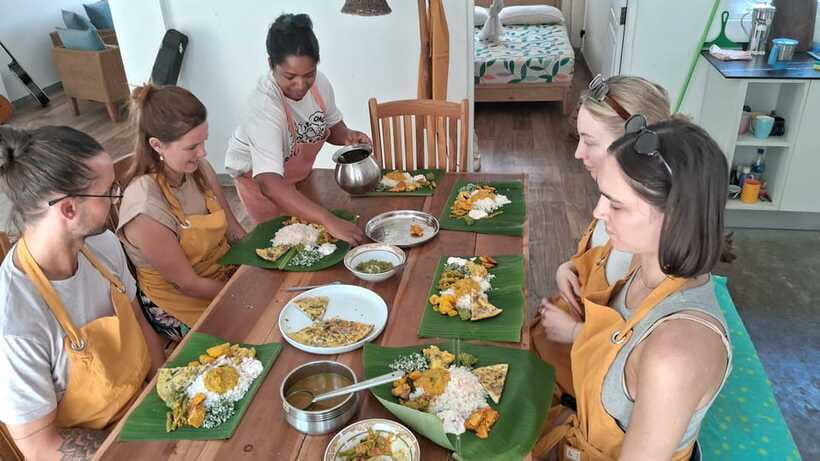
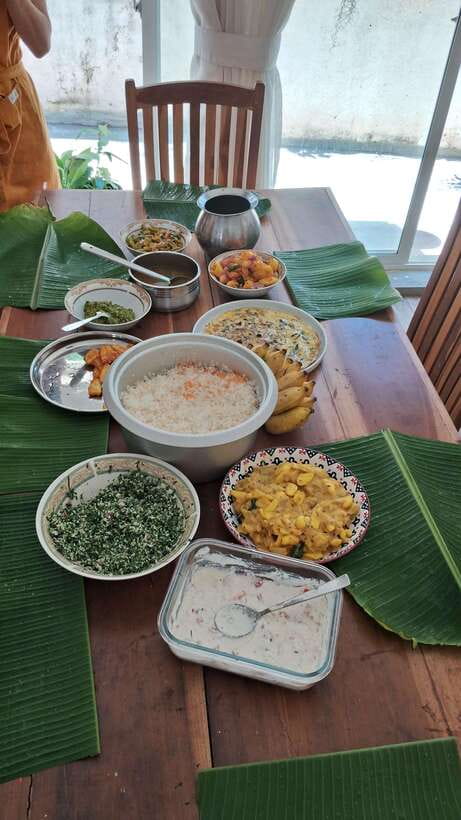
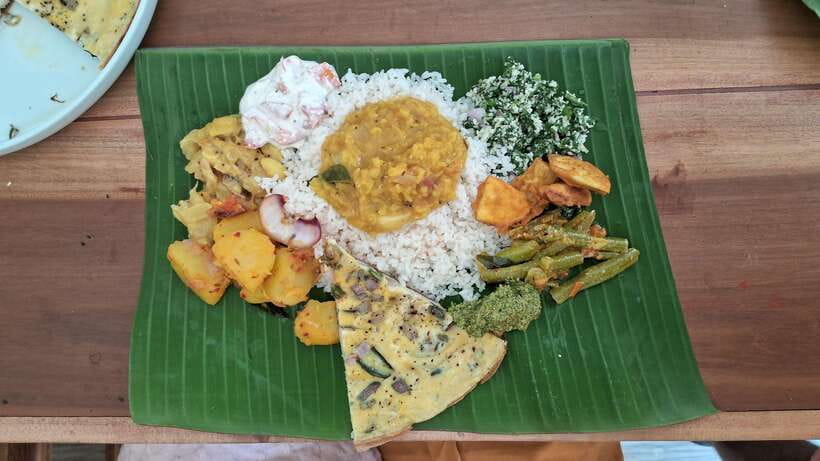
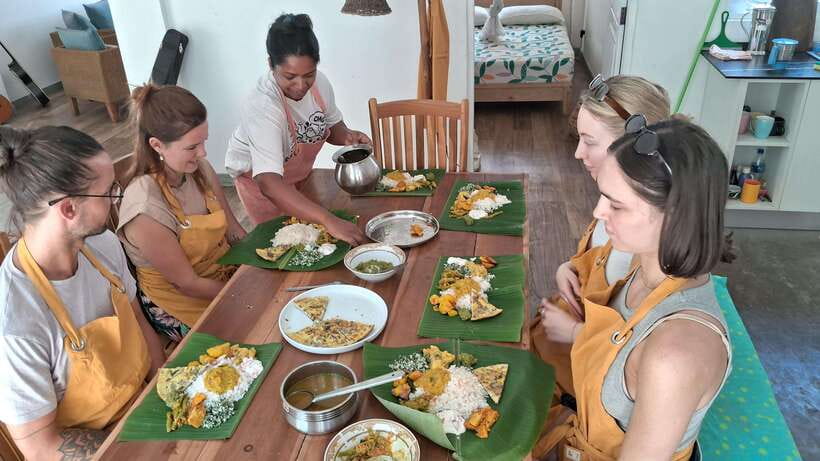
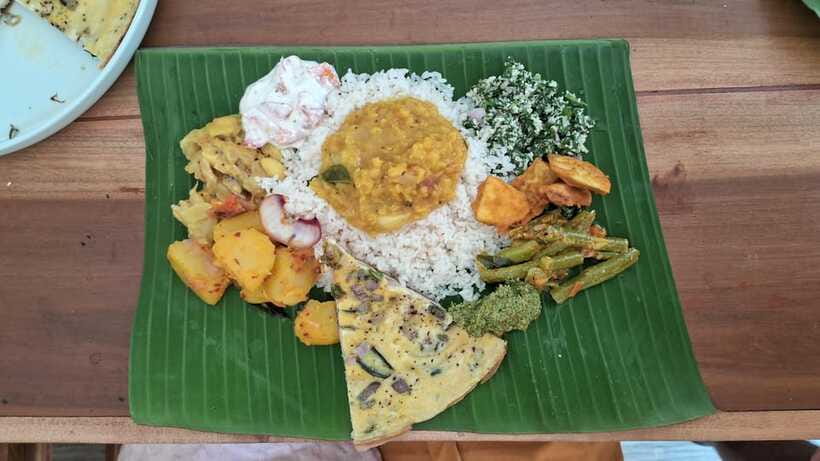
Once the cooking is finished, you sit down in the dining area and share the meal. This is an important part of the experience. Food tastes different when you have handled the ingredients, followed the process, and seen the family prepare it in their own space.
The meal is included, as is afternoon tea with authentic sweets. The sweets give the session a pleasant finish and add another taste beyond the main savory dishes.
You can eat at the family home, and if extra food has been prepared, you may be able to take some with you or donate it to disadvantaged people. That option gives the food a practical purpose beyond the class itself, though the amount available will depend on what has been cooked.
The dining portion is also where the family hospitality becomes most apparent. You are not simply served a plate and sent away. The format encourages everyone to sit together and enjoy the result of the work.
If you prefer a quiet meal, keep in mind that the atmosphere may remain social and conversational. This is a shared family experience, not a private restaurant table.
Taking the recipes home
The complimentary PDF recipe book is one of the most useful inclusions. Many cooking classes are enjoyable in the moment but hard to repeat because the recipe is forgotten by the time you return home. A digital book gives you a better chance of making the dishes again.
The value depends on how closely the recipes match what you cook, and the provided information does not specify the number of recipes or the file format beyond PDF. Still, it is a practical souvenir, especially if you want to introduce Sri Lankan flavors to friends or family after your trip.
I recommend taking notes during the session if you want to remember personal adjustments. A recipe can tell you what to add, but Arun’s family may also explain how to change the heat, texture, or seasoning to suit your taste. Those small details are often what make a home recipe useful.
The rooftop chill-out area
After the meal, you may use the rooftop chill-out area and take in the views. It offers a change of pace after cooking and dining, giving you somewhere to relax before leaving.
The information does not specify exactly what can be seen from the roof, so I would not book this class solely for a particular view. Think of the rooftop as an extra place to unwind rather than the main attraction.
Its presence does help the experience feel unhurried. You can finish your meal, talk with the family, and enjoy the setting instead of moving straight on to another scheduled stop.
Is $37 a fair price?
At $37 per person, this is not simply a meal. The price covers three hours, a welcome drink, instruction, dining, afternoon tea and sweets, and the PDF recipe book. You are also paying for a small-group setting with a maximum of 10 participants and direct time with Arun and his family.
That makes the price reasonable for someone who wants a personal food experience rather than a quick demonstration. The class combines several elements that would otherwise be separate: cultural exchange, cooking practice, a shared meal, and a take-home resource.
The value is strongest if you take part fully. If you only want to sit and watch, the price may feel less attractive. You get more from it when you ask questions, help prepare the food, taste the dishes, and use the family’s advice to understand the recipes.
There is also practical booking flexibility. You can reserve now and pay later, and cancellation is free up to 24 hours before the activity for a full refund. That is helpful if your Central Province plans are still shifting.
Who will enjoy this most?
I would recommend Cooking with Arun to you if you want food and culture in the same experience. It is particularly suited to:
- First-time visitors who want an easy introduction to Sri Lankan cooking
- Home cooks who like learning family recipes
- Couples and small groups who enjoy social activities
- Vegetarians and vegans who want menu flexibility
- Families looking for a welcoming activity with children
- Anyone who prefers personal contact over a formal cooking studio
It may be less suitable if you want a tightly timed professional course, a fixed menu listed in advance, or advanced chef training. The appeal is the family setting and the warmth of the occasion.
The maximum group size of 10 keeps the experience fairly intimate, though the exact feel will depend on how many people book on your date. A small group should make it easier to receive help and ask questions, while a full group may feel more social and lively.
Should you book Cooking with Arun?
Book it if you want to cook Tamil-style Sri Lankan food in a real family setting, then sit down and share the result. Arun, his mother, and their assistant create an experience built around kindness, humor, flexibility, and food rather than technical showmanship.
The strongest reasons to go are the adaptable menu, the personal guidance, the included sweets and recipe book, and the chance to spend time with a Tamil family. Music, Snowy, and the rooftop area add character without replacing the main purpose: cooking and eating together.
Skip it only if you prefer a formal chef-led class with a strict menu and polished restaurant setup. For everyone else, $37 buys a generous three hours of food, conversation, and practical recipes you can carry into the rest of your trip and back home.
FAQ
Where does Cooking with Arun take place?
The experience takes place in Sri Lanka’s Central Province, in Arun’s family kitchen.
How long does the cooking experience last?
The activity lasts three hours.
Who leads the cooking class?
Arun leads the experience with his mother and their assistant. Instruction is provided in English.
How many people can join the group?
The activity is limited to 10 participants.
Can the menu accommodate dietary preferences?
Yes. The menu can be adjusted for vegetarian, vegan, meat-based, mild, or spicy preferences. Food allergies and other dietary restrictions can also be discussed.
What is included in the price?
The $37 price includes a welcome drink, cooking lesson, dining, afternoon tea with authentic sweets, and a complimentary PDF recipe book. If extra food is prepared, you may also take it home or donate it to disadvantaged people.
Can I cancel or pay later?
You can reserve your place and pay later. Cancellation is free up to 24 hours in advance for a full refund.
Just added around Sri Lanka
- Udawalawe: Farm to Table Cooking & Authe: Village Experience★ 4.7 · 4 reviews
- Ella: Sri Lankan Authentic Cooking expirience★ 5.0 · 59 reviews
- Ella Cook With Sadamali★ 5.0 · 70 reviews
- Ella Sri Lanka : Mom’s Kitchen Cooking class★ 5.0 · 113 reviews
- Cooking Class: Sajee’s Place Cooking Class sigiriya★ 5.0 · 117 reviews
- Colombo: Local Market Tour & Cooking Demo with Lunch★ 4.6 · 3 reviews
- Authentic Sri Lankan Cooking Class in Kandy by Local Family★ 4.9 · 15 reviews
- Galle: Cooking Class at a Local Home and Market Tour★ 5.0 · 47 reviews
Cooking Classes, compared.
Half-Day Thai Cooking Class at Organic Farm in Chiang Mai
Read our review →
Florence: Pasta Cooking Class with Unlimited Wine
Read our review →
3 in 1 Cooking Class near Navona: Fettuccine, Ravioli & Tiramisu
Read our review →
Hanoi Cooking Class: Culture, Local Market & Meaning CSR Impact
Read our review →
5 Traditional Dishes Hanoi Cooking Class with Market Trip
Read our review →
Cooking Class and Lunch at a Tuscan Farmhouse with Local Market Tour from Florence
Read our review →
Chiang Mai: Cooking Class, Market & Thai Herbs Garden Tour
Read our review →Browse the lists this tour appears in