
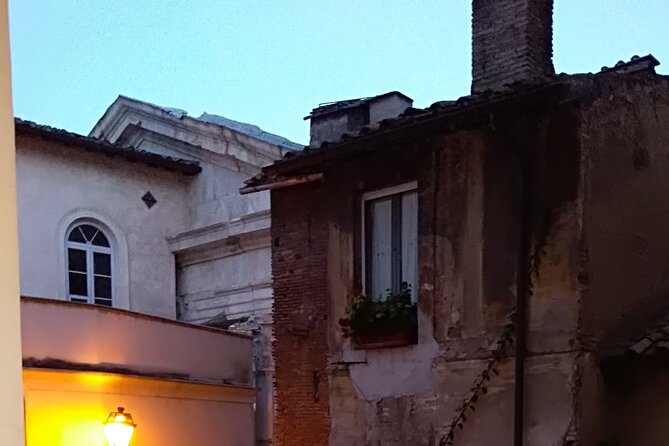
Review · ROME
Cooking Class with Lidia YoungGrandma in Jewish area
Rome has plenty of cooking classes, but this one takes you into Lidia’s private home, where the meal begins with bruschetta, olives, cheese, and Italian wine before you make fresh pasta. The small group, capped at six, gives the class a personal feel, and Lidia’s husband helps guide the cooking.
I like the family-style welcome and the focused Roman menu: carbonara, cacio e pepe, and tiramisù. I also like the setting near the Jewish area, where a cooking lesson can be paired with one of central Rome’s most atmospheric neighborhoods. The main consideration is the $118 price, which is fair for a three-hour private-group class, but high if you only want a quick pasta demonstration.
Key points
- A six-person maximum keeps the class personal and allows more hands-on help.
- Lidia and her husband host you at home, creating a relaxed family setting rather than a formal school kitchen.
- Two Roman pasta dishes are prepared: fettuccine carbonara and tagliolini cacio e pepe.
- The meal starts with wine and aperitivo, including tomato bruschetta, olives, and cheese.
- Tiramisù finishes the menu, giving you a full Roman meal from starter through dessert.
- English, French, Spanish, and German are spoken, and the activity returns to its meeting point.
A Roman cooking class with a family welcome
The best reason to choose this class is the human scale. Lidia YoungGrandma and her husband host you in a private home, not a large cooking studio filled with unrelated groups. That matters because pasta making works best when you can see what the instructor is doing, ask questions, and get help before a sticky dough becomes a small kitchen crisis.
The group is limited to six people. You may book it for your own group, since the activity is private and only your party participates. The information provided does not promise that every booking will include exactly six people, so expect a small, private format rather than a large class.
The tone is warm and informal. One detailed account describes being put at ease right away and welcomed into a peaceful home, with Lidia and her husband sharing both their cooking and their home. That is a useful clue for anyone choosing between a polished culinary studio and a more personal Roman encounter.
More Hands-On Workshops in Rome:
- 3 in 1 Cooking Class near Navona: Fettuccine, Ravioli & Tiramisu
★ 5.0 · 7,376 reviews - Rome: Pasta Making Class with Wine, Limoncello, and Dessert
★ 4.9 · 3,177 reviews - Rome Cooking Class: Make Pasta and 3 Spritz Cocktails
★ 5.0 · 2,937 reviews
Starting near Piazza Venezia and the Jewish area
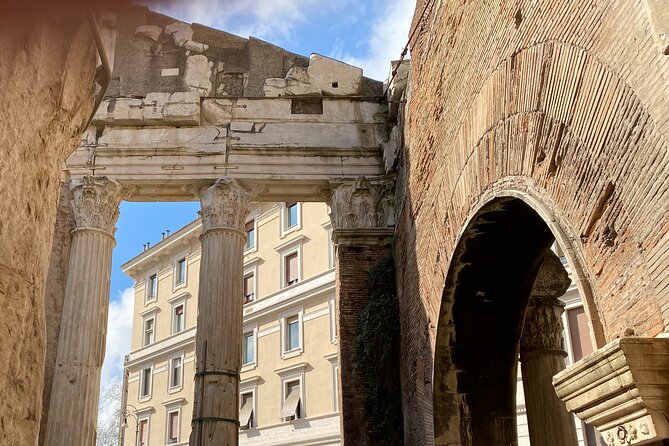
The meeting point is Torre Soricara, at Via del Portico d’Ottavia 25, in Rome’s Jewish area. The itinerary also identifies Piazza Venezia and the Ancient City, placing the class in the middle of central Rome rather than in a distant suburb.
That location makes the activity easy to pair with sightseeing. You can arrange your day around Piazza Venezia, the Ancient City, and the Jewish area, then finish back at the same meeting point. The experience itself lasts about three hours, so it takes a meaningful part of your day without consuming an entire morning or afternoon.
The area is especially useful for a food-focused outing because it gives the class a strong sense of place. You are not simply learning a generic Italian menu in an anonymous room. You are cooking Roman dishes close to the historic center, with the city’s streets and landmarks nearby.
Do pay attention to the exact meeting address. The supplied meeting point is specific, and the experience ends there as well. Since the activity is conducted at a private home, a little care with directions is sensible.
Aperitivo first: bruschetta, olives, cheese, and wine
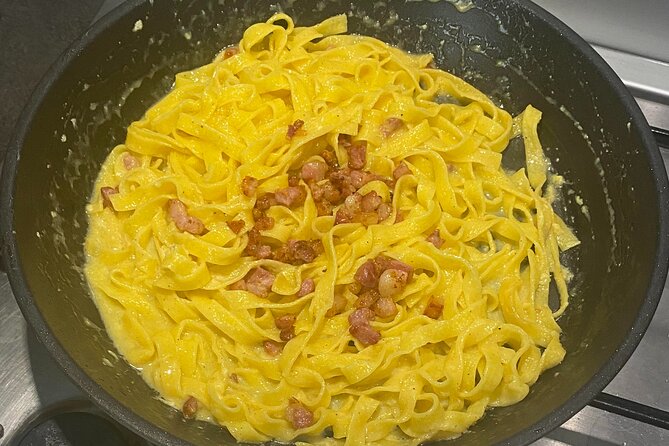
The class begins with a classic Roman aperitivo. You are served tomato bruschetta, olives, and cheese, along with Italian wine.
This opening is more than a snack. It gives you time to settle in before handling flour, eggs, and pasta dough. It also sets the pace for the meal. Italian cooking is often social, and sharing a small plate with wine helps turn the lesson into a meal with instruction rather than a rushed kitchen task.
I particularly like this part because it lets you sample familiar Roman flavors before learning how the main courses are made. The bruschetta is simple, but that is the point. Tomato, bread, olives, cheese, and wine rely on good ingredients and sensible preparation, not a long list of tricks.
The wine is part of the experience, so this class may be less suitable if you want a strictly alcohol-free cooking lesson. The information provided does not specify the amount served or whether a substitute is available.
Making fresh pasta by hand
The main lesson centers on fresh pasta dough. You will work through the basic process of making and shaping pasta, with the instructor guiding you step by step.
That hands-on element gives the class real value. A demonstration can show you what pasta looks like, but handling the dough teaches you more. You learn how it feels as it comes together, how thin it should become, and how the finished shapes differ.
The menu includes two homemade pastas. First is fettuccine carbonara. The sauce uses pork cheek, eggs, Pecorino Romano, and black pepper. Second is tagliolini with cacio and pepper, the dish commonly known as cacio e pepe.
The two dishes make a useful pair. Carbonara teaches you how eggs, cured pork, cheese, and pepper work together in a sauce. Cacio e pepe is more stripped down, with cheese and black pepper carrying the dish. Since both recipes use a short list of ingredients, you can better understand the balance of texture, heat, salt, and cheese.
The menu also makes this more than a general pasta class. You are learning dishes closely tied to Roman cooking. If your main aim is to take home techniques you can repeat, these recipes are practical choices because they do not depend on a long shopping list.
A few more cooking classes around Rome worth a look
- Rome: 3-in-1 Fettuccine, Ravioli, and Tiramisu Cooking Class
★ 4.9 · 2,704 reviews - Rome: Fettuccine Pasta Cooking Class in Rome’s City Center
★ 4.8 · 2,414 reviews - Fettuccine & Tiramisù: Cooking Class with Wine & Limoncello
★ 4.9 · 2,103 reviews - Pasta Cooking Class Near the Colosseum with 3 Spritz Cocktails
★ 5.0 · 1,686 reviews
Carbonara with pork cheek, egg, and Pecorino Romano
Carbonara is often served poorly outside Rome, so it is a smart choice for a local cooking lesson. Here, the listed ingredients are pork cheek, eggs, Pecorino Romano, and black pepper.
The class gives you a chance to see how the sauce becomes creamy without a separate cream-based sauce. The information does not spell out every cooking step, so you should not expect a detailed technical promise about temperatures or timing. You can expect guidance through the preparation and a finished plate made from the ingredients listed.
The use of pork cheek is worth noting. It gives the dish a more traditional Roman character than the bacon often used elsewhere. Pecorino Romano adds a sharp, salty flavor, while black pepper provides the bite that helps keep the dish from feeling heavy.
If you already know carbonara well, this part may feel familiar. Its value will come from seeing Lidia’s method and eating the result in the setting where Roman food is the focus.
Tagliolini cacio e pepe keeps the lesson focused
The second pasta is tagliolini with cheese and pepper. Cacio e pepe is one of Rome’s most direct dishes, and its short ingredient list leaves little room to hide mistakes.
That makes it a good teaching dish. You can pay attention to how pasta, Pecorino Romano, black pepper, and the cooking process create a sauce with body. The menu description calls it tagliolini cacio and pepper, so expect a thinner pasta shape than the fettuccine used for the carbonara.
Having two pastas also gives the meal a pleasant change of texture. Fettuccine is broad and substantial, while tagliolini is narrow and delicate. You are not simply repeating the same dough and sauce twice.
The drawback is that the class may feel pasta-heavy if you prefer a broad lesson in several kinds of Italian cooking. The menu is tightly focused on Roman pasta, with bruschetta and tiramisù providing the other courses.
Tiramisù closes the meal
Dessert is tiramisù, the familiar Italian combination of coffee-soaked layers and creamy mascarpone-style filling. The supplied menu identifies it as the famous Italian dessert but does not list the full recipe or ingredients.
That is still a useful finish. Making dessert gives the lesson a proper beginning, middle, and end. You start with a small aperitivo, prepare two pasta dishes, then finish with something sweet. You are not leaving after watching one sauce come together.
The class also gives you a chance to see how an Italian meal is structured. The cooking is not treated as a single technical exercise. It moves from a light starter to pasta, then dessert, with wine included at the beginning.
If tiramisù is your main reason for booking, keep your expectations measured. The supplied details give the dessert a place on the menu but do not promise a separate pastry lesson or a particular tiramisù variation.
Why the small group changes the experience
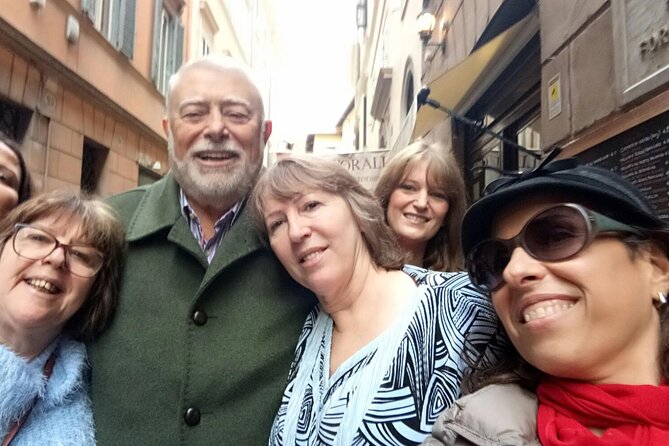
Six people is a useful ceiling for a cooking class. You are more likely to get a clear look at the work surface and receive direct help when rolling pasta or combining the ingredients.
The private format matters just as much. Only your group participates, so you do not have to adjust to a large mixed class. That suits couples, families, and small groups of friends who want time together while learning a meal.
The setting may also suit solo bookers who prefer a gentle introduction to cooking with other people, but the provided information does not say how solo reservations are arranged. The safe expectation is a private booking for your own party.
The personal tone is reinforced by Lidia’s husband, who helps with the instruction and welcome. One account describes both hosts guiding the cooking step by step and sharing their home. That suggests you should expect conversation and personal attention, not only a sequence of silent demonstrations.
Language support and practical comfort
The hosts speak English, French, Spanish, and German. That is helpful for a class where timing and texture matter. You need to understand when to stop mixing, how to shape pasta, and what is happening with the sauce.
The activity is near public transportation, making it practical to reach from central Rome. Service animals are allowed. Confirmation is provided at booking, and the ticket is mobile, so you do not need to print a voucher.
The activity returns to the meeting point at Via del Portico d’Ottavia 25. Since the duration is about three hours, leave enough time around it for getting there and for any sightseeing you plan before or after.
You can cancel for a full refund if you do so at least 24 hours before the start time. Changes or cancellations made less than 24 hours before the start are not accepted for a refund. The cut-off follows local Rome time, so check the timing carefully if you are booking from another country.
Is $118 a fair price?
At $118 per person, this is not a bargain cooking demonstration. It becomes more reasonable when you consider what is included: about three hours, a full meal, wine with the aperitivo, hands-on pasta work, dessert, and a private group capped at six.
The strongest value is personal attention. A larger class may cost less, but you would likely spend more time watching and less time handling the dough. Here, the small format and private-home setting are central to the price.
The value is weaker if you only want to eat carbonara or watch someone else cook. Rome has many inexpensive meals, and you can certainly find pasta for less than $118. This experience is priced as a cultural activity and a meal combined.
I would also look at how much you enjoy cooking. If rolling pasta and learning sauces sounds like part of your holiday, the price can make sense. If you would rather spend those three hours touring monuments, the class may not be the right use of your budget.
Who should book this Roman kitchen experience?
I would suggest it to anyone who wants a small, social activity with a clear Roman identity. It suits couples and families who enjoy food, small groups of friends, and people who would rather learn a dish than simply order it in a restaurant.
It is also a strong choice if you want a break from Rome’s major monuments without leaving the center. You remain near Piazza Venezia, the Ancient City, and the Jewish area, while spending time in a local home.
The class may be less suitable for people looking for a professional culinary certificate, a long technical course, or a menu with many different regions of Italy. It is a focused Roman meal, not a survey of Italian cuisine.
The food itself includes cheese, eggs, pork cheek, wine, and other standard ingredients. If you have dietary restrictions, the available information does not confirm substitutions, so ask before booking rather than assuming the menu can be changed.
Should you book it?
Book this class if you value personal contact, want to prepare fresh pasta, and like the idea of meeting Lidia and her husband in their home near Rome’s Jewish area. The six-person limit, step-by-step guidance, Roman recipes, and full meal give it more substance than a quick cooking demonstration.
Skip it if $118 feels too high for a three-hour activity, if you want a broad Italian menu, or if you do not enjoy hands-on kitchen work. For the right person, this is a warm and focused way to spend part of a Rome day, with carbonara, cacio e pepe, and tiramisù giving you a meal you will remember long after the last bite.
FAQ
Where does the cooking class meet?
It meets at Torre Soricara, Via del Portico d’Ottavia 25, 00186 Rome, in the Jewish area.
How long does the experience last?
The class lasts about three hours.
How many people can participate?
The experience is limited to six people and is private, meaning only your group participates.
What food is included?
The menu includes tomato bruschetta, olives, cheese, two homemade pastas, and tiramisù. The pastas are fettuccine carbonara and tagliolini cacio e pepe.
Is wine included?
Yes. Italian wine is served with the opening aperitivo.
What languages are spoken?
The hosts speak English, French, Spanish, and German.
Can I cancel for a refund?
Yes. You can cancel at least 24 hours before the local start time for a full refund. Cancellations or changes made less than 24 hours before the start are not accepted for a refund.
Just added around Rome
- Rome Trastevere: Tiramisù & Gelato Class with Savoiardo Baking★ 5.0 · 14 reviews
- Authentic Pasta and Tiramisù cooking class at spanish steps★ 4.5 · 14 reviews
- Rome: Pasta Cooking Class, Dinner & Wine in Authentic Restaurant★ 5.0 · 38 reviews
- Rome For Kids: Small Group Pizza Making Class★ 4.5 · 49 reviews
- Rome Cooking Class★ 5.0 · 4 reviews
- Rome: Private Cooking Class with Market Shopping Tour★ 5.0 · 3 reviews
- Devour Rome Wine & Pizza Making Class in Trastevere Neighborhood★ 5.0 · 75 reviews
- Pizza, Gelato & Suppli Cooking Class by Colosseum★ 5.0 · 79 reviews
Cooking Classes, compared.
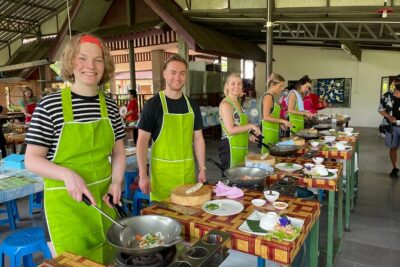
Half-Day Thai Cooking Class at Organic Farm in Chiang Mai
Read our review →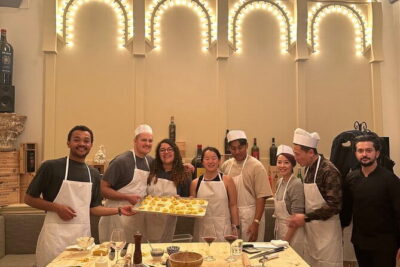
Florence: Pasta Cooking Class with Unlimited Wine
Read our review →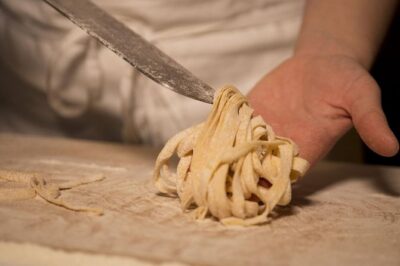
3 in 1 Cooking Class near Navona: Fettuccine, Ravioli & Tiramisu
Read our review →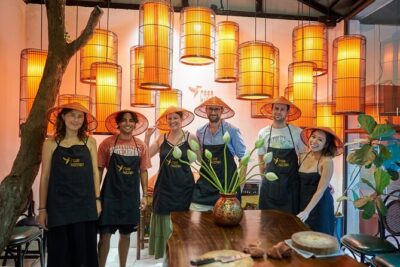
Hanoi Cooking Class: Culture, Local Market & Meaning CSR Impact
Read our review →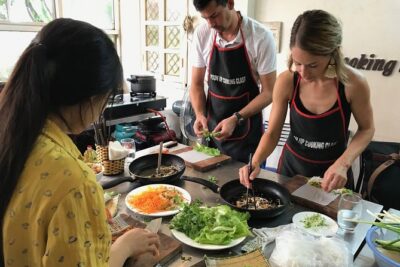
5 Traditional Dishes Hanoi Cooking Class with Market Trip
Read our review →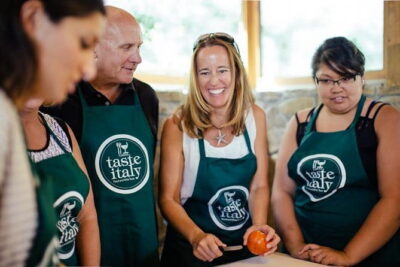
Cooking Class and Lunch at a Tuscan Farmhouse with Local Market Tour from Florence
Read our review →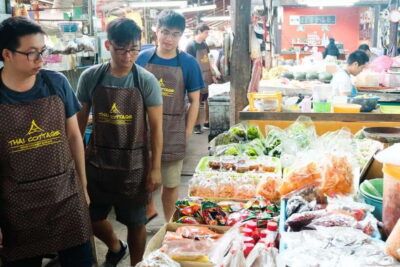
Chiang Mai: Cooking Class, Market & Thai Herbs Garden Tour
Read our review →Browse the lists this tour appears in