
Review · BALINESE & INDONESIAN
Bali: Private Balinese Cooking Class in a Family Home
The best part of this Bali cooking class is not simply the meal. You visit a local market, ride into a village, and cook inside a real Balinese family home, often with relatives nearby to explain daily customs. Guides such as Indah, Sana, Putu, and Nyoman have made the day feel personal and easy to follow.
I like the market visit, where you see the ingredients before they reach the cooking table, and the fact that you prepare five or six dishes yourself rather than watching a chef do all the work. The main drawback is distance: if you are staying in Seminyak, Nusa Dua, or another coastal area, the drive to the village can take two hours each way.
Key points to know before booking
- A real family-home setting: Cooking takes place in a traditional Balinese home rather than a polished city studio.
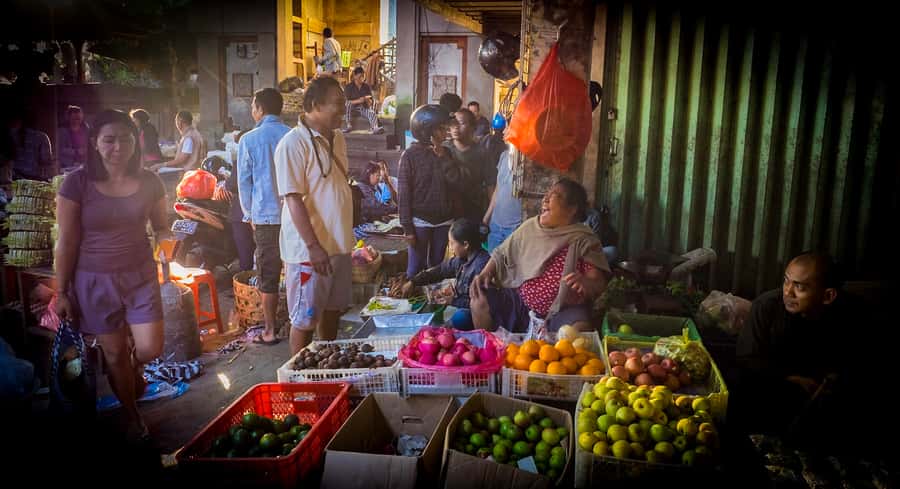
- Market shopping comes first: You select fresh ingredients and learn how local produce is used.
- Five or six dishes per class: Choose a standard non-vegetarian menu or a vegetarian menu before you arrive.
- Guides shape the day: Indah, Sana, Putu, Nyoman, and other English-speaking guides have been praised for explaining culture as well as food.
- Plan for a long transfer: The class lasts about four hours within a six-hour activity, but some pickups involve more than two hours on the road each way.
- Optional extras are available: Add coffee tasting, a jungle swing, traditional massage, photos, or a guide speaking another listed language.
Why this class feels different from a hotel cooking lesson
Many Bali cooking classes are held in dedicated kitchens built for tourists. This one takes you farther into village life, to a family home where the cooking area, people, and surroundings are part of the lesson.
That difference matters. You may see rice fields, cattle, chickens, or nearby homes, depending on the family hosting your class. One guide took visitors through the family property and rice field, while others added stops at a coffee plantation or local coffee tasting. These details make the day about more than recipes.
The setting is informal. You are welcomed with a drink, then introduced to the ingredients and menu. The family may join the cooking, serve the meal, or show you around. English ability can vary among family members, so your main guide is important. Past guides named Indah, Sana, Putu, Nyoman, and Sambe have been praised for explaining the food and Balinese customs in clear, friendly ways.
You should also enter with the right idea of comfort. This is a home kitchen, not a restaurant classroom. The facilities are described as fully equipped for the lesson, but the appeal is the ordinary family setting rather than a glossy cooking school.
More Balinese Cooking Classes in Indonesia:
- Ubud: Balinese Cooking Class at an Organic Farm
★ 5.0 · 1,786 reviews - Ubud Cooking Class Bali with Balinese Chef
★ 5.0 · 1,609 reviews - PRIVATE Authentic Balinese Cooking Class in Ubud at Putu’s Home
★ 5.0 · 644 reviews
The road to the village and local market
Hotel pickup and drop-off are included, which makes the day easier to arrange. The driver or guide collects you at your hotel and takes you toward the market and family home.
The route depends on where you stay. The cooking homes are generally east of Ubud or in the Bangli area, and the trip can be long from the beach districts. A pickup from Nusa Dua has taken more than two hours each way. For some people, the drive becomes an unexpected tour of Bali, with cultural explanations and stops along the way. For others, it is simply a lot of time in a car.
I would not book this class back-to-back with another fixed activity. Give the day room to run long, especially if traffic is heavy or you add a coffee stop, swing, or other extra.
The market visit is an excellent opening. You can look at fresh vegetables, herbs, spices, meat, fish, and other cooking ingredients before arriving at the house. The exact market can vary, and market access may change with the time of day or local rules. Still, this stop helps you understand the food in a way a prepared ingredient tray cannot.
Your guide can explain what the ingredients are and answer questions as you shop. One solo participant appreciated that her guide adjusted the market visit after part of it was closed for local celebrations. That kind of flexibility is useful, but you should not assume every optional stop or market stall will be available.
Inside the family home
At the house, expect a welcome drink before the cooking begins. The family then introduces the menu, ingredients, and basic methods.
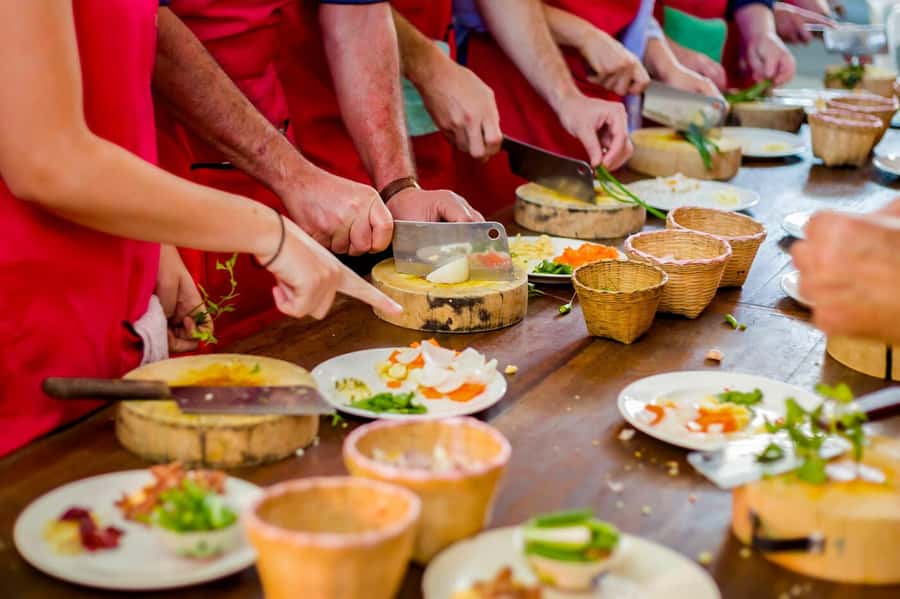
The lesson includes a demonstration followed by hands-on work. You will not simply sit at a counter and copy a recipe card. You help prepare the ingredients, season the dishes, and cook at the stoves with assistance from the chef or family members.
One useful lesson is the amount of chopping. Balinese cooking often depends on cutting ingredients very finely before they are cooked together. The method takes time, but it helps explain why the sauces and spice pastes have such strong flavor.
The class also includes two breaks. These are used to try fresh tropical fruit and Loloh Cem Cem, a homemade herbal drink known in Bali. The breaks give you a pause from the kitchen and add a small look at local drinks and produce.
Guiding styles will differ. Some families may let you do nearly every step, while others may take over parts of the cooking to keep the meal moving. One participant wanted more time doing the actual cooking, even though the overall day was enjoyable. If hands-on practice is your main goal, tell your guide early and ask to take the lead on several dishes.
What you cook on the standard menu
The non-vegetarian menu covers a wide range of Balinese flavors and cooking methods:
- Basic yellow sauce and peanut sauce with vegetables
- Sate Lilit Bawi, pork mixed and shaped around sticks before charcoal grilling
- Pepes Ikan, fish cooked in banana leaves with herbs and spices
- Chicken Kare, described here as Balinese fried chicken
- Lawar Bali, a mixture of vegetables, coconut, meat, herbs, and spices
- Mie Goreng, fried noodles
- Kolak Pisang, saba banana cooked in palm sugar gravy
That is a lot of food for one class. The menu moves from spice pastes and vegetables to grilled meat, banana-leaf cooking, noodles, and dessert. You get a useful sense of how Balinese meals combine several textures and preparations rather than relying on one main dish.
Sate Lilit is especially worth paying attention to. It is not simply meat threaded onto a skewer. The seasoned mixture is shaped around a stick and grilled, and the preparation technique is part of the fun. Pepes Ikan shows another familiar Indonesian method, wrapping food in banana leaves with aromatics before cooking.
Lawar brings together chopped vegetables, coconut, meat, and spices. If you have never tried it, this is one of the dishes that shows how many ingredients can work together in a single bowl.
Kolak Pisang finishes the meal with sweet banana and palm sugar. It is a simple dessert, but after several savory dishes, it makes a pleasant ending.
More Home Cooking Classes in Indonesia:
- Munduk Balinese Cooking Class lunch/Dinner at a Local Home
★ 5.0 · 26 reviews - packages cooking class and romantic dinner in a local home
★ 5.0 · 4 reviews - Khmer Cooking Class at a Local’s Home in Krong Siem Reap
★ 5.0 · 2,731 reviews - Local Home Korean Cooking Class & Market Adventure in Seoul
★ 5.0 · 1,024 reviews
What you cook on the vegetarian menu
The vegetarian menu is not a shortened version of the standard option. It has its own set of dishes:
- Basic yellow sauce and peanut sauce with vegetables
- Balinese vegetable soup, described as a Balinese green curry
- Pepes Tempeh, tempeh cooked in banana leaves with herbs and spices
- Tempeh Manis, stir-fried tempeh with sweet soy sauce
- Gado Gado, vegetable salad with peanut dressing
- Kolak Pisang
Tempeh appears in two different preparations, which lets you compare the ingredient cooked with herbs in banana leaves and stir-fried with sweet soy sauce. Gado Gado adds a fresh vegetable dish with a peanut dressing, while the green curry provides a warmer, soupy course.
Choose your menu before the class. Do not wait until you arrive, since the family needs time to prepare the correct ingredients. Also tell the team about allergies or dietary limits in advance. Peanuts, soy, animal products, and strong spices may appear in the food.
The activity is listed as unsuitable for people with food allergies, so you should not treat a casual note about restrictions as a guarantee of a safe meal. If cross-contact is a concern, this is probably not the right class.
Eating what you prepared
After the cooking, you move to the dining area and eat the food you made. The meal is served in a relaxed setting, often with the guide or family nearby.
This is where the class pays off. You can taste how the ingredients, chopping, spice balance, banana-leaf wrapping, and charcoal cooking worked together. Some participants found it to be the best meal of their Bali visit, while others appreciated taking home the remaining dishes.
The portions and leftovers can vary, but the activity specifically allows you to take the rest of your dishes home. Bring a practical attitude rather than expecting restaurant-style packaging. The point is to share a meal with the family and make use of what you cooked.
You may also receive a handwritten ingredient list or recipe notes. That is useful because Balinese cooking depends on technique as much as measurement. At home, you may need to adjust spice levels and search for substitutes, but the class gives you a starting point for recreating the dishes.
The cultural side of the day
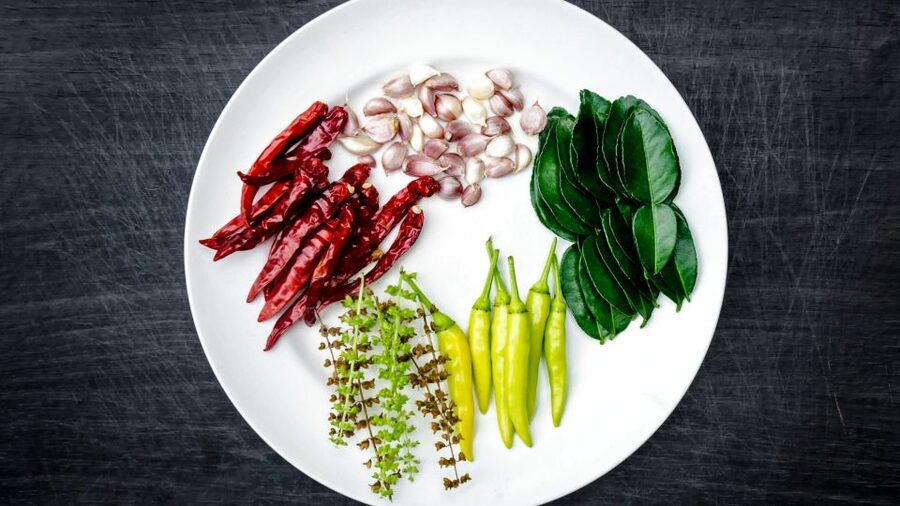
The food is only half the lesson. Your guide may explain Balinese traditions, village customs, Hindu practices, and differences among Indonesian Hindu groups. Guides such as Sana have been praised for discussing these subjects during the drive and at the family home.
The cultural details are strongest when they connect to something you can see. A family compound, rice field, animals, food preparation, and the way relatives share work all give context to the cooking.
This also explains why respectful behavior matters. You are entering a traditional family home, so follow the instructor’s guidance and respect local customs. Dress and conduct should be modest and polite, and alcohol and drugs are not allowed.
The class is private, which gives you more room to ask questions than a large group lesson. A solo participant found the private format comfortable, even though she was initially unsure about booking an activity alone. Couples, families with older children, and small groups can also benefit from the more personal pace.
Children under 10 are listed as unsuitable for this activity, and children who do attend must remain with an adult. The class includes knives, heat, and a long day, so it is best for older children who can follow instructions closely.
Optional add-ons and what they are worth
The add-ons can turn a cooking class into a fuller day, but they also make the schedule longer. Available choices can include:
- Luwak coffee tasting
- Jungle swing with coffee
- One-hour traditional massage
- Two-hour traditional massage
- A female guide
- German-speaking, Japanese-speaking, or Korean-speaking guide
- A Polaroid camera with 10 photographs
The coffee stop fits naturally with a village drive. Several itineraries included a coffee tasting, and some participants enjoyed the chance to try local coffee on the way to or from the cooking class.
The jungle swing is a separate type of activity, so add it only if you want a more touristic photo stop mixed into your food and culture day. It may appeal to families and couples, but it is not essential to the cooking lesson.
A traditional massage makes the day more relaxing, though the two-hour version could leave less time for a flexible return journey. If you select an add-on, check how it affects the schedule and total price.
The language choices may be useful if someone in your group is not comfortable learning through English. The base activity lists English instruction, while the other guide languages are optional and may only be offered with certain booking choices.
Is $52 good value?
At $52 per person, the price is reasonable if you value transport, a private class, a market visit, a full meal, and cultural contact in one day. Ingredients, apron, utensils, five or six dishes, and hotel pickup and drop-off are included.
The value depends heavily on your starting point. From a nearby area, the six-hour format can feel like a well-filled day. From Nusa Dua or another distant beach district, the long drive takes up a large part of the schedule, even if the road trip includes cultural commentary.
Compared with paying separately for a cooking class, a private car, market transport, and a meal, the package is attractive. The price becomes less compelling if you mainly want a short cooking lesson and do not care about village life.
The private format also helps justify the cost. You are not joining a crowded kitchen, and the itinerary can sometimes adapt to local conditions. Still, confirm the pickup area and estimated drive time before booking. That is the single most important practical question.
Who should book this Balinese cooking class?
I would recommend it to you if you want food connected to ordinary life. It suits people who enjoy asking questions, trying unfamiliar ingredients, and spending time with a family rather than rushing from one famous attraction to another.
It is also a strong choice for repeat visitors to Bali. Several people who had already visited Bali many times found the village setting and home meal different from the usual resort routine.
Solo visitors can book it, as the private arrangement gives you a guide and family interaction throughout the day. Couples and small groups will appreciate the relaxed setting and the chance to cook at their own pace.
You may want to skip it if you dislike long car rides, need wheelchair access, have serious food allergies, or want a polished professional kitchen. It is also not ideal if you want complete control over every cooking step. The family may prepare or finish some parts for you.
My verdict: book it for the setting, not just the recipes
I would book this tour if I wanted a personal look at Balinese food and village life. The strongest parts are the family home, market visit, private transport, warm guides, and the chance to eat what you prepared.
Before paying, ask where the class will be held and how long the drive should take from your hotel. Then choose the vegetarian or standard menu, disclose dietary concerns, and decide if the add-ons suit your day.
For a quick lesson near the beach, choose something closer. For a full cultural day with food at its center, this $52 private class offers a lot, especially when the guide takes the time to explain what you are seeing along the way.
FAQ
How long does the Bali cooking class last?
The activity lasts about six hours. The hands-on cooking portion is described as four hours, with time also used for hotel transfers, the market visit, breaks, and the meal.
Is hotel pickup and drop-off included?
Yes. Hotel pickup and drop-off are included in the activity.
Is the class private?
Yes. This is a private-group activity rather than a shared group class.
What language is used for instruction?
The standard instruction language is English. German-speaking, Japanese-speaking, Korean-speaking, and female-guide options may be available as paid add-ons for selected options.
Can I choose a vegetarian menu?
Yes. You must choose either the standard non-vegetarian menu or the vegetarian menu before the class.
How many dishes will I cook?
Each class includes five or six dishes. The exact menu depends on whether you choose the standard or vegetarian option.
Does the activity include a market visit?
Yes. You visit a local market before the cooking session and select ingredients. Market access can vary with the time of day and local regulations.
Can I take leftover food home?
Yes. You can take the remaining dishes home after you eat the meal you prepared.
Are coffee tasting and massage included?
They are not part of the basic activity. Luwak coffee tasting, a jungle swing with coffee, and one-hour or two-hour traditional massage are optional add-ons.
Is the class suitable for young children or wheelchair users?
The activity is listed as unsuitable for children under 10 and for wheelchair users. Children who attend must be accompanied by an adult throughout the activity.
More Hands-On Workshops in Indonesia
- From Ubud: Authentic Cooking Class in a Local Village
★ 4.9 · 1,325 reviews - Ubud: Cooking Class with Transfers and Optional Market Visit
★ 4.9 · 824 reviews - Ubud: Balinese Cooking Class and Market Tour
★ 4.8 · 531 reviews - Seminyak: Balinese Cooking Class & Market Tour
★ 4.9 · 458 reviews
Just added around Indonesia
- Spice Garden, Jamu & Cooking Class in Bali Village★ 5.0 · 5 reviews
- Pure Bali Village Experience, Cooking & Jamu Class+VIP Transfer★ 5.0 · 16 reviews
- The Authentic Balinese Cooking Experience★ 5.0 · 4 reviews
- Bali: Cooking Class with 5 Balinese Dishes★ 4.9 · 178 reviews
- Seminyak: Vegetarian Cooking Class★ 5.0 · 3 reviews
- Seminyak : cooking class traditional food bali★ 5.0 · 5 reviews
- Pure Bali Village Experience Cooking & Jamu Class, Transfer★ 4.8 · 5 reviews
- Quad ride, waterfalls & aunthentic cooking class in munduk★ 4.9 · 53 reviews
Balinese & Indonesian Cooking Classes, compared.
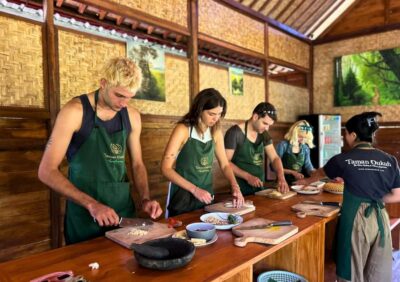
Ubud: Balinese Cooking Class at an Organic Farm
Read our review →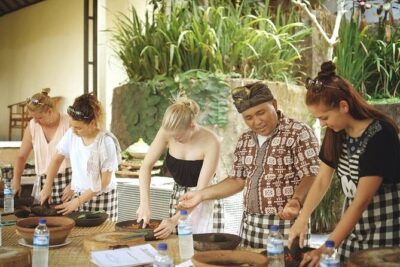
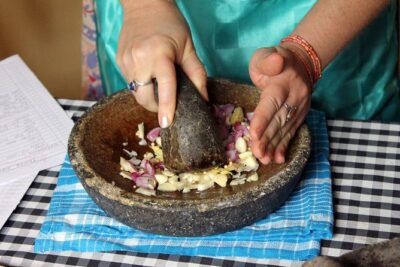
PRIVATE Authentic Balinese Cooking Class in Ubud at Putu’s Home
Read our review →
Balinese Ubud cooking school (9 Dish Cooking and Market Tour)
Read our review →
Learn to cook Indonesian food at Gili Cooking Classes Trawangan
Read our review →Browse the lists this tour appears in