
Review · SINGAPORE
Experience Singapore: Cultural Cooking Class
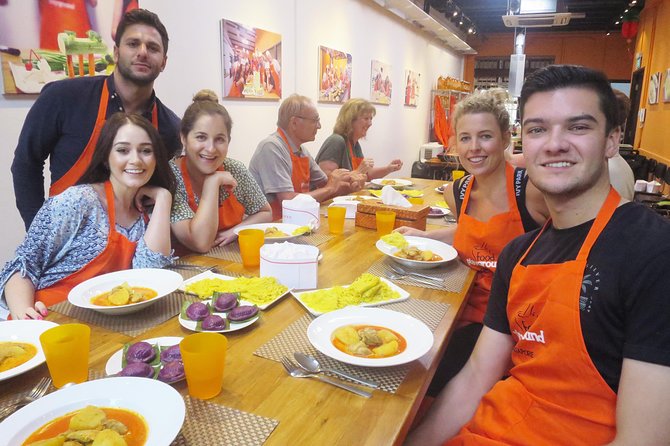
Singapore’s food culture makes the most sense when you get your hands dirty. At Food Playground, you’ll cook three local dishes, hear how Chinese, Malay, Indian, and British influences shaped Singapore’s kitchen, then sit down to eat what you made. Laksa, chicken satay, curry chicken, Hainanese chicken rice, and ondeh ondeh may appear, depending on the menu.
I like the small class size, capped at 12 and often much smaller, because instructors can guide you through the tricky bits. I also like the practical finish: you get lunch, recipes, and photos, so the experience does not end when you leave the kitchen.
The one thing to consider is the pace. Some instructors spend a long time explaining dishes or telling personal stories before the cooking begins. That can add context, but if you want nonstop hands-on work, the opening may feel slow.
Key details to know before you book
- Three dishes in about three hours: You cook a full set of Singapore-style food, then eat it for lunch.
- A heritage Chinatown setting: The class takes place upstairs in a historic shophouse at 24A Sago Street.
- Small groups help beginners: The class holds 2 to 12 people, with shared cooking stations and plenty of instructor guidance.
- Local food beyond the plate: You learn about ingredients, cooking methods, and the cultural roots of each dish.
- Useful take-home extras: Recipes and class photos are sent after the session.
- Easy to pair with Chinatown: The class ends where it starts, close to temples, food halls, and several MRT stations.
Cooking Singaporean food instead of only eating it
Singapore is one of the easiest places in Asia to eat well. You can grab noodles at a hawker center, order a polished tasting menu, or snack your way through Chinatown. Yet eating a dish tells you only part of its story.
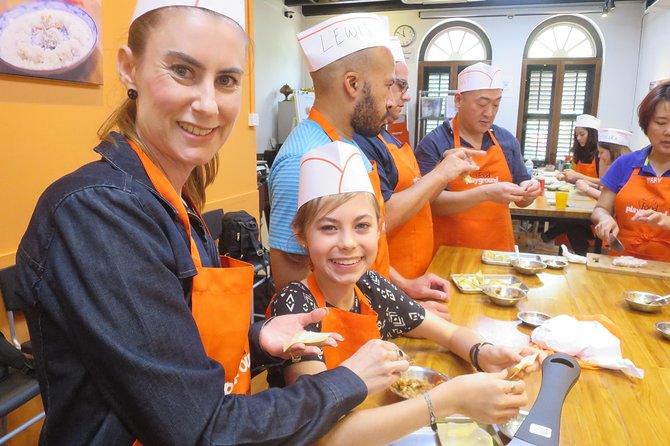
This class gives you the missing pieces. You learn how local flavors are built, how spice pastes come together, and why certain dishes belong to more than one cultural tradition. The lesson connects food with Singapore’s Chinese, Malay, Indian, and British influences without turning the morning into a formal lecture.
You do not need serious kitchen skills. The class welcomes beginners as well as experienced cooks, and the instructors break each recipe into manageable steps. You put on an apron, follow demonstrations, prepare ingredients, and cook with guidance from the teaching team.
The menu can change, so you should not book expecting one fixed set of dishes. Laksa, chicken satay, curry chicken, Hainanese chicken rice, and ondeh ondeh are among the foods associated with the class, but the exact selection and ingredients may vary.
That flexibility is sensible in a working cooking school. It also means you may want to ask about the current menu if one particular dish is your main reason for booking.
More Hands-On Workshops in the world:
- Half-Day Thai Cooking Class at Organic Farm in Chiang Mai
★ 5.0 · 19,087 reviews - Florence: Pasta Cooking Class with Unlimited Wine
★ 4.9 · 10,285 reviews - 3 in 1 Cooking Class near Navona: Fettuccine, Ravioli & Tiramisu
★ 5.0 · 7,376 reviews
Starting at Food Playground on Sago Street
The meeting point is Food Playground at 24A Sago Street, in the heart of Chinatown. The class begins at 9:30 am and finishes back at the same location after lunch.
The school occupies the second floor of an old shophouse. That setting gives the morning a useful sense of place. You are not cooking in a generic hotel room or a modern demonstration theater. You are in a historic part of Chinatown, surrounded by one of Singapore’s best food districts.
Several people who took the class found the location useful for the rest of the day. The nearby Pagoda Street area, temple, museum, rooftop garden, and food hall give you plenty to see after the cooking ends. You may be too full for another meal, but Chinatown remains an easy place for a post-class walk.
Arrive with enough time to find the address and settle in. Hotel pickup and drop-off are not included, so you make your own way to Sago Street. The activity ends at the meeting point, which makes onward planning simple.
A food quiz and a useful cultural introduction
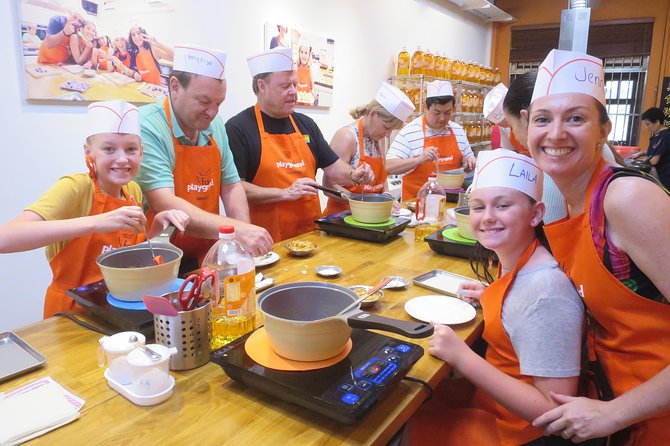
The class often begins with an entertaining food quiz and an introduction to Singapore’s culinary traditions. This opening helps you understand the dishes before you start chopping or stirring.
The cultural side is one of the strongest reasons to choose this experience. You learn not only what goes into a recipe, but also how dishes became local favorites and how food reflects the communities that shaped Singapore.
Some of the teaching can run longer than expected. A few participants felt that too much time was spent discussing foods not included on the day’s menu, while others appreciated the background and personal stories. Your experience will depend partly on the instructor leading your session.
Names mentioned by past participants include Monica, Sara, Nur, Mary, Ann, YY, Kiat, and Cindy. The teaching team changes, but the repeated pattern is clear: the instructors explain the food, demonstrate the techniques, and help at the cooking stations.
If you enjoy food stories, take notes or ask questions during this part. If you are mainly interested in cooking, be patient through the introduction. The hands-on work follows.
Three dishes, shared stations, and real participation
The lesson is hands-on, but it is not a private cooking station for every person. The class usually works in pairs or small groups around shared cooking areas. One participant who attended alone had an individual station, but the normal arrangement is two people per cooking station.
That format has pros and cons. You get to meet the other people in the group and can divide tasks, which makes the class social and relaxed. It also means you may not personally perform every single step of every recipe.
The instructors first demonstrate the recipe and techniques. You then prepare and cook the dishes with supervision. The recipes are designed to be approachable, and the teaching team helps you adjust as you go.
One especially useful detail is the preparation of curry paste from scratch. That sort of step gives you a better feel for local cooking than simply mixing a packet of prepared sauce into a pan. You learn how spices and seasonings create the base flavor, and you can later adapt the method at home.
The class covers three dishes, but the menu depends on the day. Laksa provides a lesson in noodles, broth, and fragrant seasoning. Chicken satay shows how a familiar street-food favorite is prepared. Hainanese chicken rice and curry chicken offer different paths into Singapore’s Chinese and South Asian food traditions. Ondeh ondeh adds a sweet finish when it appears.
You should expect demonstrations, group participation, and instructor help rather than three completely separate solo recipes. That is still enough practical work to leave you with a clear idea of how to repeat the dishes.
A few more cooking classes around the world worth a look
- Florence: Pasta & Tiramisu Cooking Class with Unlimited Wine
★ 4.9 · 6,708 reviews - Florence: Pasta Cooking Class with Unlimited Wine
★ 5.0 · 6,413 reviews - Hanoi Cooking Class: Culture, Local Market & Meaning CSR Impact
★ 5.0 · 5,147 reviews - 5 Traditional Dishes Hanoi Cooking Class with Market Trip
★ 5.0 · 4,890 reviews
The meal is part of the lesson
After the cooking, you sit down with the group and eat the food you prepared. Water, coffee, and tea are included, and the meal functions as the natural payoff for the morning’s work.
This shared lunch gives the class a friendly social side. You meet people from different places, compare results, and enjoy the food while the techniques are still fresh in your mind. Solo participants can fit in comfortably, and couples or families can work together.
The class has a minimum age of seven, making it suitable for families with children who enjoy cooking. Younger children may need extra help with kitchen tasks, but the format allows them to take part rather than simply watch.
The food is not presented as a restaurant tasting menu. You are eating a casual meal made during a group lesson. If you want a polished dining experience, book a restaurant. If you want to understand how the dish comes together and enjoy the result with new acquaintances, this format works better.
What you take home after the class
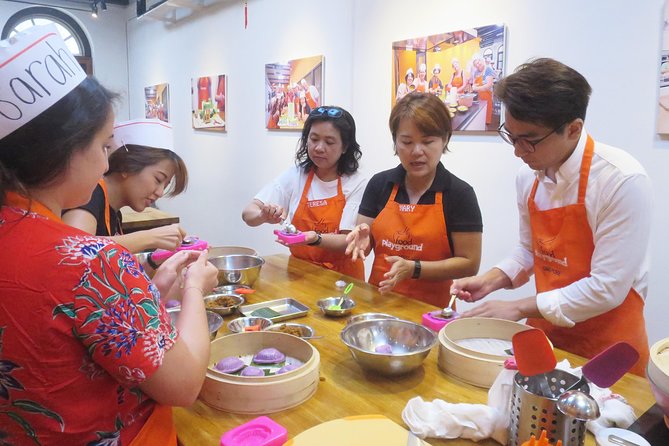
The most useful souvenir is not a trinket. It is the recipe collection and the confidence to try the food again.
Recipes are sent after the session, along with photographs taken during the class. The photos are a nice extra, particularly if you are traveling with family or marking a special occasion. You can also refer back to the written instructions instead of trying to remember every step from the morning.
The recipes may require ingredients that are easier to find in Singapore than at home. That is normal for a regional cooking class. Still, the instruction on spice pastes, preparation, and basic methods gives you a starting point for locating substitutes.
Ask questions while you have the instructors nearby. You can clarify how to handle an ingredient, how much preparation can be done ahead, or what part of the dish matters most for flavor. That practical conversation may be more useful than simply copying the recipe.
How the group size affects the experience
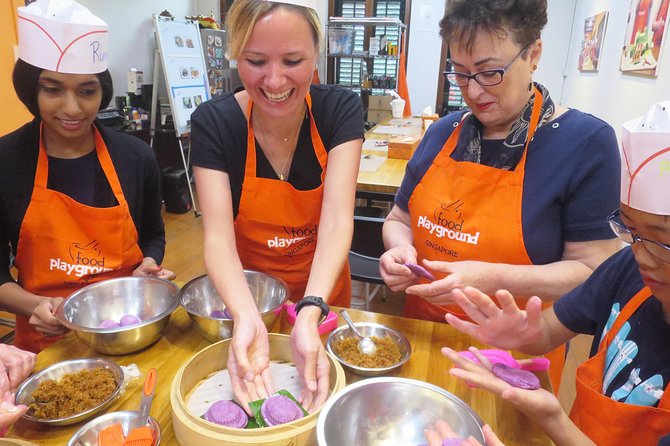
The official capacity is 12 people, with a minimum of two. A group of six gives you a particularly good balance: enough people for a social atmosphere, but not so many that you disappear at the back of the room.
A small group also matters for beginners. You can ask for help, receive corrections, and get guidance during the cooking instead of waiting through a long line. The instructors appear to take an active role at the stations rather than leaving you to follow a printed sheet.
The shared-station setup remains worth noting. If you are booking with a partner, you will likely prepare food together. If you are alone, you may work with another person or have your own station, depending on the group arrangement.
Families should consider the three-hour length. It is a substantial morning for a child, though the food quiz, demonstrations, and meal break add variety. The minimum age is seven, and specific dietary needs should be given when booking.
Is $96.97 a fair price?
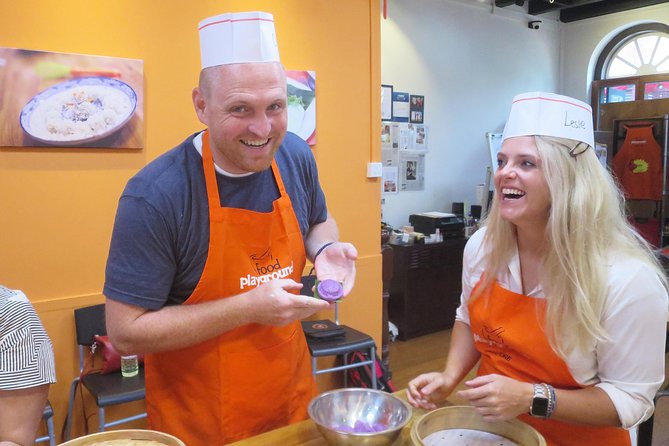
At $96.97 per person, this is not the cheapest way to eat in Singapore. You can find an excellent hawker meal for far less. The value comes from the teaching, ingredients, equipment, lunch, cultural context, and the chance to repeat the recipes later.
Three hours gives the price more weight than a short demonstration. You are not simply watching a chef prepare one dish and receiving a small sample. You cook three dishes, sit down for a meal, and receive recipes and photos afterward.
The value is strongest if you enjoy cooking or want a meaningful food activity rather than another restaurant meal. It is also a good choice for a family gift or a couple looking for something social and practical.
The value is weaker if you dislike group activities, already know Singaporean cooking well, or want total control over every dish. The shared stations and changing menu mean this is not a private chef lesson.
Group discounts may be available, which can help if you are booking for several people. The experience also includes a mobile ticket, making it easy to keep the booking on your phone.
Who should book this Chinatown cooking class?
I would recommend it most strongly to:
- First-time visitors who want context for Singapore’s food culture
- Couples looking for a shared activity beyond sightseeing
- Families with children aged seven or older
- Solo visitors who enjoy meeting people over a meal
- Home cooks who want local recipes and spice-paste techniques
- People who prefer active cultural experiences to passive demonstrations
You do not need to be a confident cook. In fact, beginners may get the most from the careful demonstrations and help at the stations.
I would think twice if your schedule is packed tightly. The class begins at 9:30 am, lasts about three hours, and the opening discussion may take longer than you expect. Do not plan a time-sensitive activity immediately afterward.
You should also provide any dietary requirements when booking. The menu, ingredients, and instructions can change, so the school needs to know about food restrictions in advance.
Practical planning for the morning
Wear something comfortable for a kitchen setting. The class provides equipment and ingredients, so you do not need to bring cooking tools. Water, coffee, and tea are included with lunch.
Plan your route to 24A Sago Street before the start time. Since there is no hotel pickup, you are responsible for getting there. The location is close to several MRT stations, and the Chinatown setting makes it easy to continue sightseeing afterward.
The activity is confirmed at booking. It operates with at least two people and no more than 12. If the minimum is not reached, the operator will offer another date or experience, or provide a full refund.
Free cancellation is available if you cancel at least 24 hours before the 9:30 am start time. Changes or cancellations made inside that window are not refunded, and cut-off times use Singapore local time.
Should you book it?
Book this class if you want Singaporean food to become more than something you order. The strongest parts are the small groups, the local teaching, the cultural explanation, the three-dish format, and the recipes you can use later.
The class is not perfect for someone seeking nonstop cooking or a private kitchen lesson. The introduction can run long, the menu changes, and shared stations mean you may not handle every task yourself.
For most food-focused visitors, I think the $96.97 price is fair because it buys an activity, a meal, practical instruction, and a better understanding of Singapore’s food traditions. If you have one spare morning in Chinatown and would rather make lunch than simply eat it, this is a smart booking.
FAQ
Where does the cooking class take place?
The class takes place at Food Playground, 24A Sago Street, Singapore 059020. It is on the second floor of a heritage shophouse in Chinatown.
What time does the class start?
The class starts at 9:30 am and lasts about three hours.
What dishes will I cook?
The menu can change, but dishes may include laksa, chicken satay, curry chicken, Hainanese chicken rice, and ondeh ondeh. You prepare three dishes during the class.
Are ingredients and cooking equipment included?
Yes. The experience includes all equipment and ingredients, plus lunch with water, coffee, and tea.
Is the class suitable for children?
The minimum age is seven. The class can suit families, though it lasts about three hours and children may need help with some kitchen tasks.
How many people can join the class?
The class requires at least two people and has a maximum of 12 participants. Cooking is generally done at shared stations, often with two people working together.
Is hotel transportation included?
No. Hotel pickup and drop-off are not included. The activity begins and ends at Food Playground on Sago Street.
Can I cancel for a refund?
Yes, if you cancel at least 24 hours before the experience starts. Cancellations or changes made less than 24 hours before the start time are not refunded.
Just added around the world
- Cooking, Farming and Waterfall In Vietnam Countryside★ 3.0 · 6 reviews
- Busan Tailored Korean cooking class (Vegan OK)with market tour★ 5.0 · 66 reviews
- Korean cooking class in Haeundae, Busan★ 5.0 · 92 reviews
- Private Argentine Cooking Class and Tango Lesson in Buenos Aires★ 5.0 · 37 reviews
- Hungarian Home Cooking Class with Chef Marti★ 5.0 · 30 reviews
- Cooking Class with dinner/lunch in Ulcinj Montenegro★ 5.0 · 8 reviews
- BA: Empanadas and Alfajores Cooking Experience in Palermo★ 5.0 · 112 reviews
- Budapest Market Tour & Home Cooking Class with local Chef & Guide★ 5.0 · 23 reviews
Cooking Classes, compared.
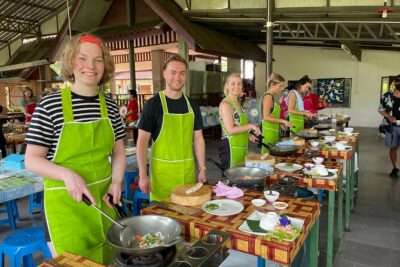
Half-Day Thai Cooking Class at Organic Farm in Chiang Mai
Read our review →
Florence: Pasta Cooking Class with Unlimited Wine
Read our review →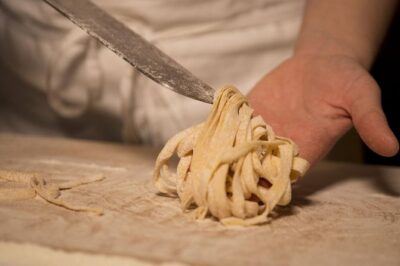
3 in 1 Cooking Class near Navona: Fettuccine, Ravioli & Tiramisu
Read our review →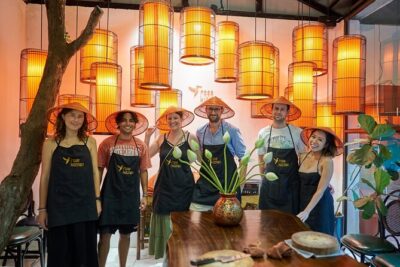
Hanoi Cooking Class: Culture, Local Market & Meaning CSR Impact
Read our review →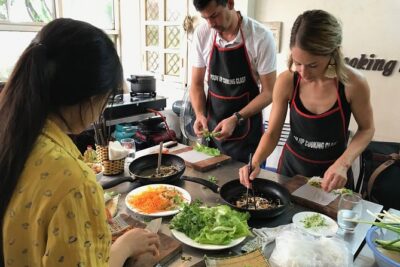
5 Traditional Dishes Hanoi Cooking Class with Market Trip
Read our review →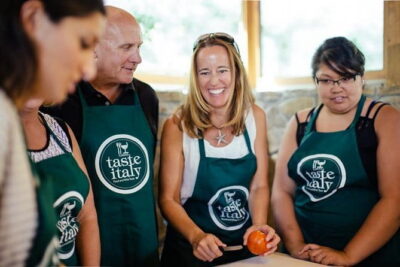
Cooking Class and Lunch at a Tuscan Farmhouse with Local Market Tour from Florence
Read our review →
Chiang Mai: Cooking Class, Market & Thai Herbs Garden Tour
Read our review →Browse the lists this tour appears in