
Review · TOKYO
Japanese Knife Skills & Tuna Don/Sushi Workshop in Tokyo
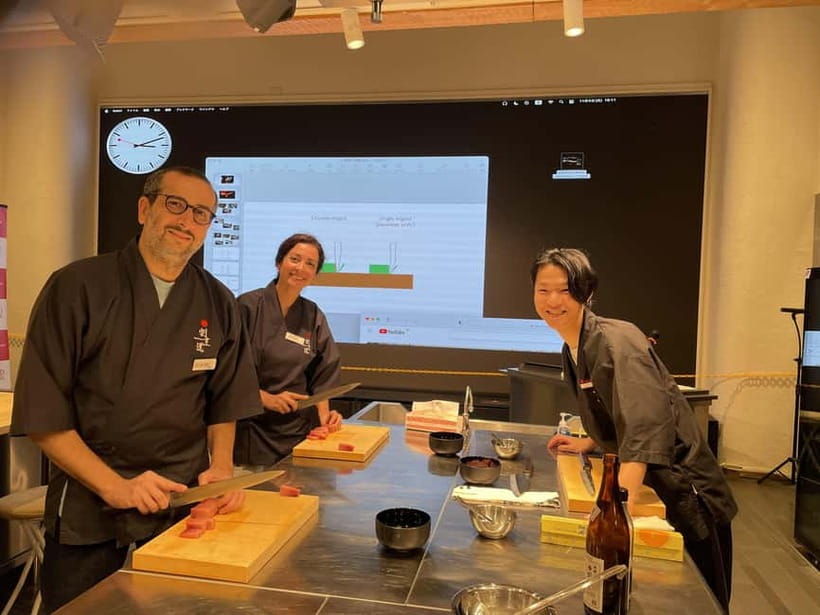
Japanese knives take center stage here. You watch an expert break down the craft behind these sharp, finely balanced blades, then practice sashimi cutting yourself. The hands-on tuna work is the most memorable part, turning a cooking lesson into a practical skill you can use at home.
I like the small group of eight and the generous meal, which includes fish, soup, and sake rather than a token taste. I also like that sharpening is included, since learning to care for a knife is more useful than simply admiring one. The main consideration is the fish: what you work with depends on availability, and the class is not suitable for children under 12 or people with food allergies.
Key points to know before booking
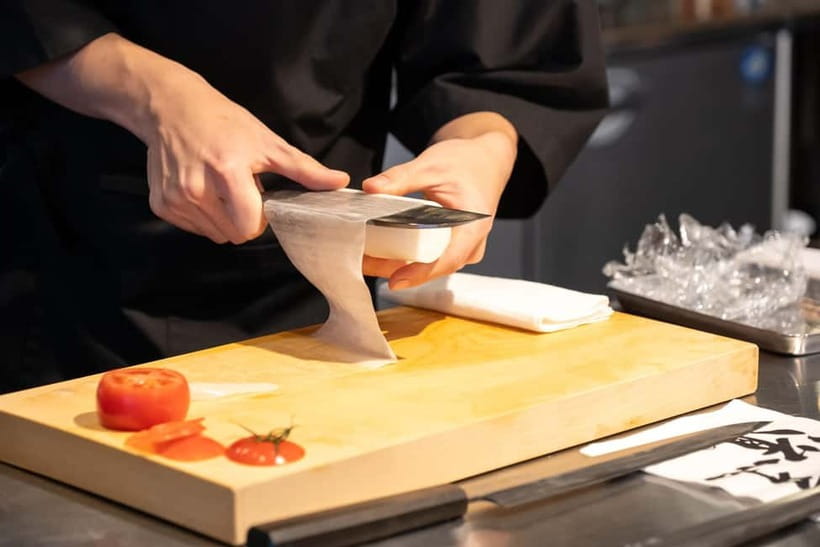
- Cut your own sashimi: After a knife-skills demonstration, you practice slicing fresh fish yourself.
- Choose your main dish: Prepare a tuna zuke-don rice bowl or a 10-piece sushi set, with the included meal listed as sashimi zuke don.
- Learn whetstone sharpening: The instructor guides you through a basic Japanese sharpening method.
- Eat a full lunch: Your dish comes with miso soup, sake, and green tea.
- Enjoy a compact class: The two-hour session is limited to eight participants and offered in English or Japanese.
- Take home useful extras: You receive a recipe, participation certificate, and 10 percent off purchases at the first-floor shop that day.
Why the knife lesson is the real star
Many cooking classes let you assemble a dish. This one begins with the tool itself. You learn why Japanese knives are prized for their sharpness and craftsmanship, and how different knives suit different kinds of food preparation.
That opening gives the rest of the class more meaning. When you handle the blade, you are not simply following instructions from a recipe card. You are learning how the edge, angle, and movement work together. The instructor also explains how Japanese knives are made, adding a useful craft lesson before the cooking starts.
I especially like the practical focus. Knife culture can sound lofty in a classroom, but here it quickly becomes something you can feel in your hand. A properly sharpened knife should cut cleanly rather than force you to saw through delicate fish. The difference becomes clear when you move from watching the demonstration to trying the technique yourself.
The session includes knife sharpening with a whetstone. That matters because even a fine knife becomes less useful if you do not know how to maintain it. You should not expect to leave as a professional sharpener after a short class, but you will gain a better sense of the process and the care Japanese cooking places on preparation.
More Sushi and Japanese Classes in Tokyo:
- Sushi Making Tokyo Roll and Authentic Japanese Sushi Class
★ 5.0 · 3,971 reviews - Tokyo: Roll and Authentic Sushi Making Class in Asakusa
★ 4.9 · 1,957 reviews - Tokyo: Sushi Making Class in a Happi Coat near a Famous Spot
★ 4.9 · 1,377 reviews
Watching sashimi become a precise skill
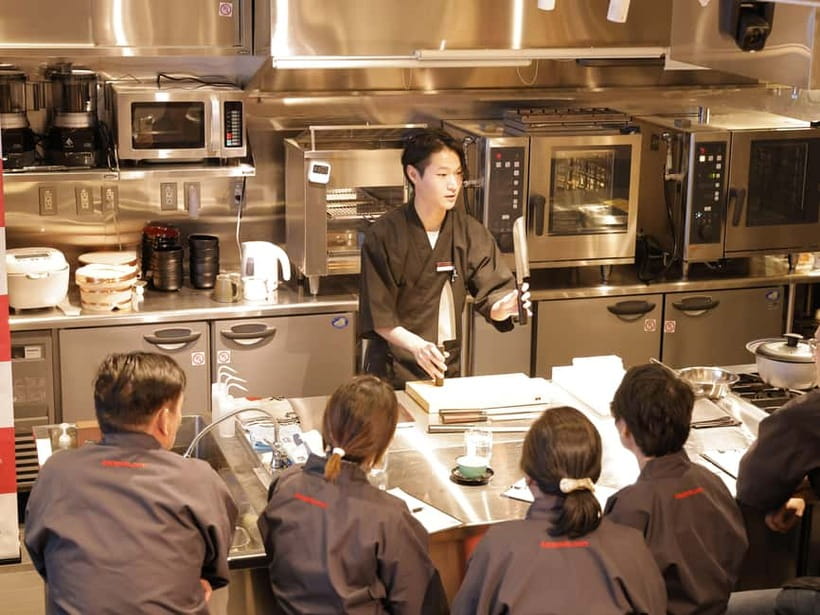
The knife-skills performance provides the class with its clearest visual moment. Your instructor demonstrates how to approach sashimi, then breaks the action into steps you can copy. This is not only about speed or showmanship. It is about making controlled cuts that preserve the fish’s texture and shape.
You then take your turn with the sashimi. That practical stage is where the lesson becomes useful. The first slice may feel more serious than expected, especially when you know the fish is destined for your lunch, but the small group keeps the setting focused and manageable.
The fish used in class can vary according to availability. That means you should not book this expecting one guaranteed species beyond the advertised tuna zuke-don option. The supplied details specifically highlight tuna, while also noting that the fish may change, so the exact sashimi selection can differ.
This is also the one area where your comfort level matters. If handling raw fish is not appealing, the class may not be the right choice. People with food allergies should not book, and the activity is not suitable for children under 12. For adults interested in sushi, sashimi, or Japanese kitchen tools, the cutting exercise is likely to be far more valuable than a standard demonstration where you only watch.
Making tuna zuke-don or a sushi set
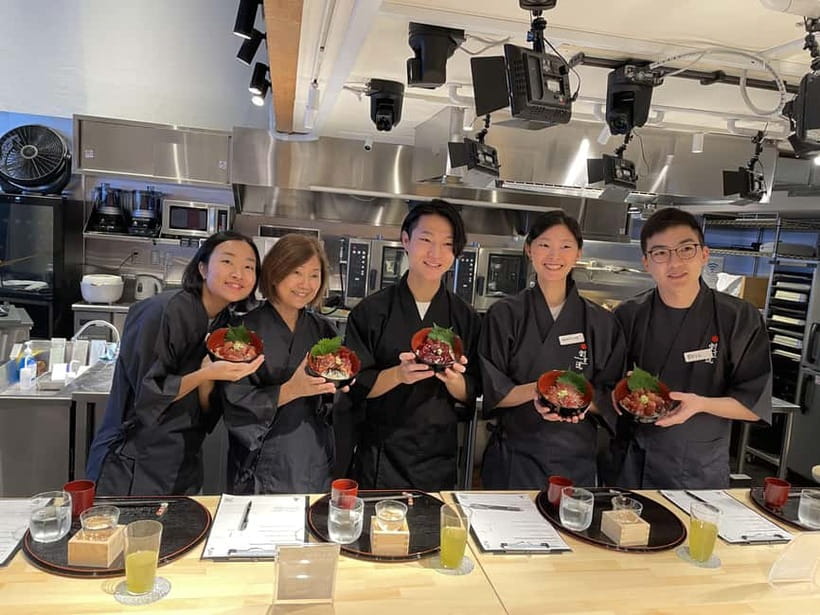
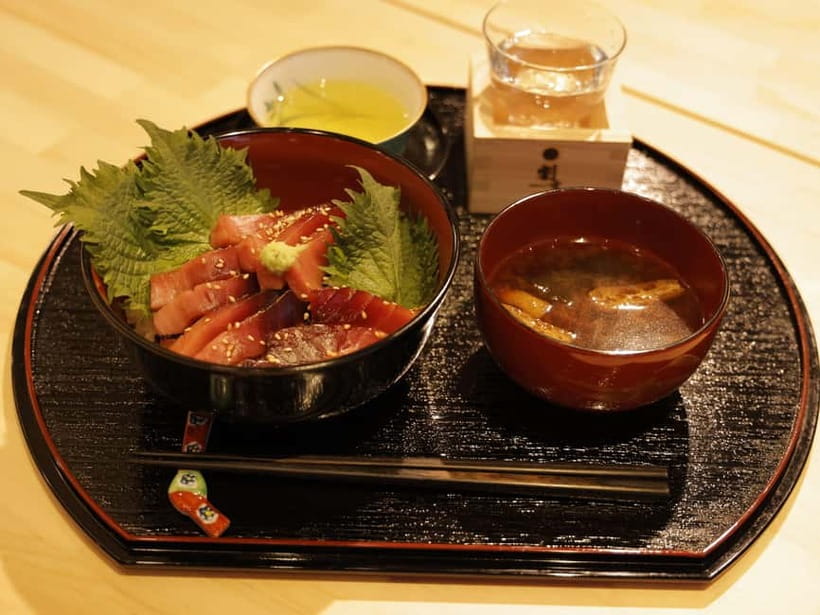
After the knife practice, you move into the cooking portion. You prepare either a tuna zuke-don rice bowl or a 10-piece sushi set. Zuke means marinated, so the rice bowl pairs seasoned sashimi with rice for a dish that is simple in appearance but depends on good ingredients and careful cutting.
The zuke-don option is appealing if you want a generous, straightforward meal. You can concentrate on the texture of the fish and the balance between rice and marinade without needing to shape individual sushi pieces. The sushi option suits you if forming a set of pieces is part of the appeal.
The supplied details clearly include sashimi zuke don as the lunch, while the class description also presents a 10-piece sushi set as an option. Ask at the start how the choice is handled on your date. That small check avoids confusion if the available format depends on the day or ingredients.
The value here is not just the food you eat. You also receive the recipe, so the lesson can continue after you leave Tokyo. The recipe gives you a practical way to repeat the dish at home, though the precise result will depend on the fish and ingredients available where you live.
A proper meal, not just a sample
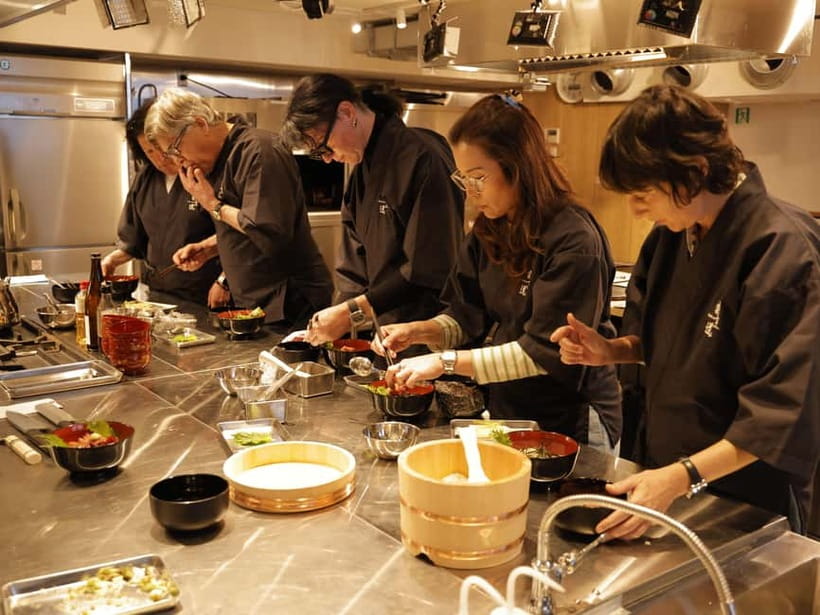
The class includes miso soup, sake, and green tea with the handmade dish. That makes the final sitting feel like lunch rather than a quick tasting between activities. One booking described the serving as generous, with plenty of fish, soup, and sake, which is useful context when judging the price.
The sake is an original tasting provided as part of the session. It gives you a chance to pair the finished dish with a Japanese drink without arranging a separate tasting later. If you do not drink alcohol, the included green tea gives you another beverage option, but the supplied information does not specify whether a nonalcoholic substitute is available for the sake.
The meal also creates a natural pause after the more technical work. You have spent the first part watching, cutting, and sharpening. Sitting down to eat what you prepared gives the two-hour class a satisfying finish.
Do not expect a long restaurant meal. This is still a compact workshop, and the meal is tied to the lesson. The point is to eat the dish while the techniques are fresh, not to spend an afternoon at the table.
More Hands-On Workshops in Tokyo:
- Tokyo Sushi Making Class in Tsukiji with Professional Chef
★ 5.0 · 1,177 reviews - Ramen & Gyoza Cooking Class in Tokyo with Local Supermarket Visit
★ 5.0 · 823 reviews - Tokyo: Tsukiji Fish Market Sushi Making Class with Pro Chef
★ 4.9 · 506 reviews - Tokyo: Sushi Making Class
★ 4.9 · 390 reviews
What the two-hour schedule means for you
Two hours is a good fit if your Tokyo plans are tight. You get a clear sequence: knife culture, demonstration, practice, cooking, meal, and the closing presentation. There is enough time to work with the tools and food, but not so much that the class takes over your day.
The schedule will feel active. You should arrive ready to listen, practice, and move through several stages rather than expecting a slow, open-ended cooking session. Comfortable clothing is important because this is hands-on food preparation, and you should wear something suitable for cooking.
The meeting point is identifiable by Samurai-style murals painted on the building. No transportation is included, so you need to arrange your own way to the venue and confirm the exact meeting details when booking. Since the location is given only as Honshu, check the booking information carefully for the precise Tokyo address and starting time.
The instructor speaks English and Japanese. That makes the class workable for English-speaking visitors, though the amount of conversation and explanation may vary depending on the group and instructor. The group limit of eight is a real advantage here. With knife work, a smaller class should give you a better chance to watch closely and receive help when your turn comes.
What you receive beyond lunch
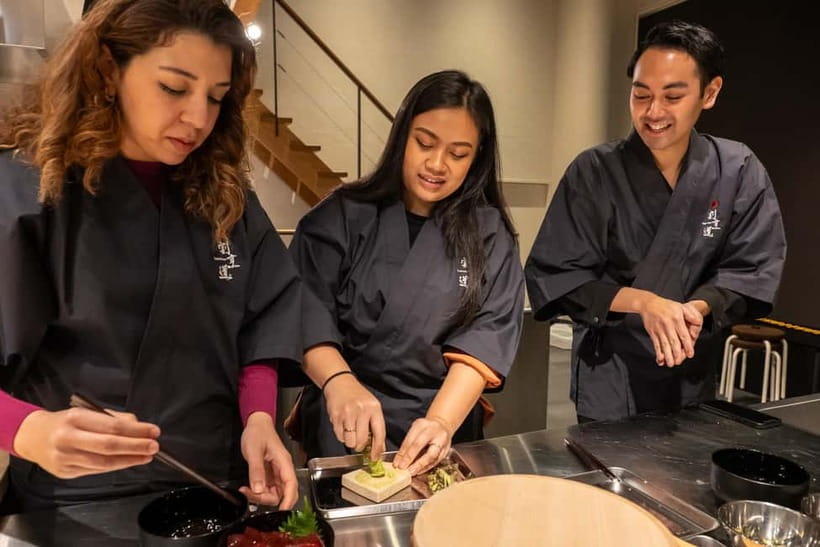
The package includes the ingredients and tools, so you do not need to bring kitchen equipment. A Kappodo costume rental is also included, adding a traditional visual touch to the session. It is a fun part of the setting, but the main value remains the instruction and hands-on practice.
At the end, you receive a participation certificate. It will not replace professional culinary training, but it gives the class a pleasant finish and a physical reminder of the activity.
You also receive 10 percent off items in the first-floor shop on the same day. This could be useful if the knife lesson persuades you to look at Japanese blades or related kitchen goods. Treat the discount as a bonus rather than a reason on its own to book. The class should make sense to you even if you leave without buying anything.
Is the $127 price fair?
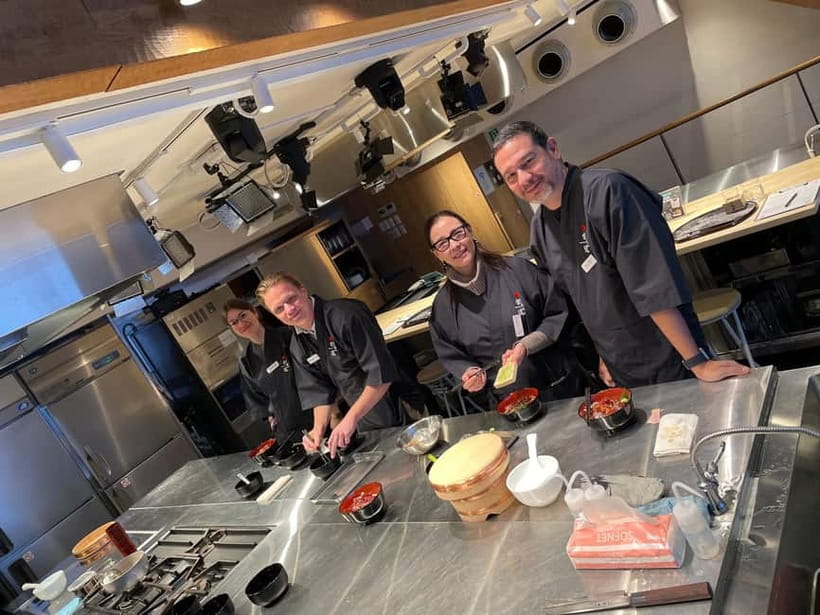
At $127 per person, this is more expensive than a basic group cooking class. The price makes more sense when you count what is included: two hours of instruction, knife-making background, sharpening practice, a live cutting demonstration, hands-on sashimi work, ingredients, tools, costume rental, a full meal, sake, green tea, a recipe, and a certificate.
The strongest value comes from the knife lesson. If you only want to eat sushi, a restaurant will give you that more cheaply and with less effort. If you want to understand how the fish is prepared and learn a skill you can repeat, the workshop offers more than a meal.
The included lunch also helps. A generous serving of fish, soup, and sake makes the cost easier to justify, especially in Tokyo where a polished food activity can quickly add up. Still, the class is best for people who care about technique. You are paying for instruction and participation, not just ingredients.
The 10 percent shop discount may improve the value if you planned to buy a knife or kitchen item anyway. Do not count on it as a major saving unless you already know what you want.
Who will enjoy this Tokyo workshop?
I would recommend this class to adults who enjoy Japanese food and want to understand the work behind it. It suits home cooks, sushi fans, people interested in Japanese tools, and visitors looking for a food activity with a cultural element.
It is also a good choice if you prefer doing something rather than watching a guide talk. You cut sashimi, handle the knife, practice sharpening, and prepare your own dish. That active format gives you a stronger memory of the meal.
The class may not suit you if you dislike raw fish, have food allergies, or want a relaxed meal with no instruction. It is also not designed for younger children, since participants must be at least 12. Anyone hoping for a guaranteed fish species should keep the availability note in mind.
The class has received a perfect rating from the three supplied bookings, with particular praise for the warm atmosphere, professional instruction, quality fish, and practical sashimi cutting. The useful takeaway is not simply that the session is pleasant. It is that the class succeeds where it matters most: the expert explanation leads to your own knife work, followed by a substantial meal.
Small details that can improve the visit
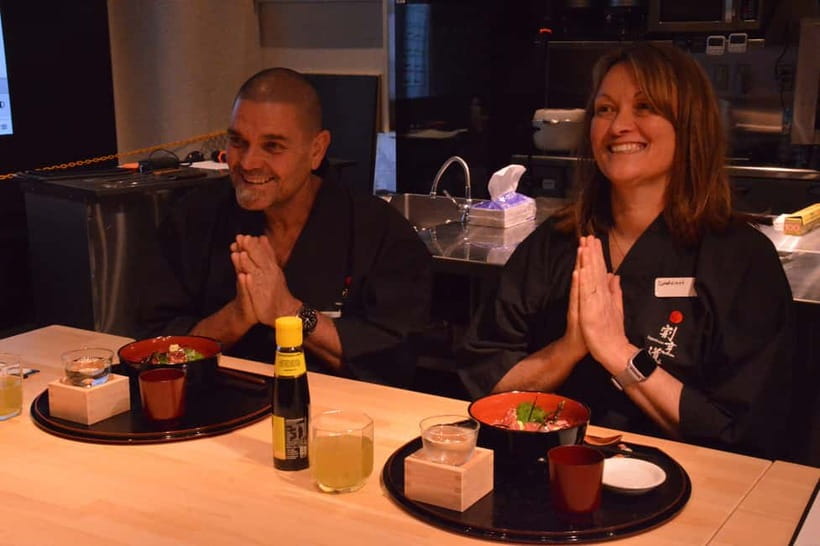
Wear clothes you can cook in. The costume rental is included, but comfortable clothing still matters underneath and around the practical work.
Arrive with room in your schedule for the full two hours. The session includes several parts, and rushing away before the meal would weaken the value of the booking.
If you want the sushi set rather than zuke-don, clarify the available choice when you arrive. The advertised formats include both, while the included lunch specifically names sashimi zuke don.
Keep your shop plans flexible. The first-floor discount is available on the same day, but personal purchases are not included in the activity price.
Cancellation is flexible if your plans change: you can cancel up to 24 hours in advance for a full refund. You can also reserve now and pay later, which helps if you are still arranging your Tokyo schedule.
Should you book it?
Book this workshop if you want a hands-on food lesson with a clear Japanese focus. The combination of knife history, sharpening, sashimi cutting, cooking, and a full lunch gives you more substance than a quick sushi-making activity.
Skip it if you only want a cheap meal, cannot eat raw fish, or prefer not to handle sharp knives. For everyone else, $127 is a reasonable price for a small-group session that leaves you with a recipe, a certificate, better knife awareness, and a meal you helped create.
FAQ
How long does the Japanese knife and sushi workshop last?
The workshop lasts two hours. The session includes knife instruction, sashimi practice, cooking, the meal, and the closing presentation.
What food will I prepare?
You can prepare a tuna zuke-don rice bowl or a 10-piece sushi set. The included lunch is listed as sashimi zuke don, and the fish used may vary depending on availability.
Is the meal included?
Yes. The activity includes the ingredients, your prepared dish, miso soup, sake, and green tea.
Is the class offered in English?
Yes. Instruction is available in English and Japanese.
How many people are in the group?
The workshop is limited to eight participants.
What should I bring and who cannot join?
Bring comfortable clothes suitable for cooking. The activity is not suitable for children under 12 or people with food allergies.
Just added around Tokyo
- Tokyo: Tsukiji Market Walking Tour & Sushi Cooking Class★ 4.6 · 122 reviews
- Tokyo: Sushi Cooking Class with Sake Tasting★ 4.8 · 55 reviews
- Sushi-Making Experience★ 4.7 · 4 reviews
- Tokyo: Tsukiji Market Guided Tour & Sushi-Making Experience★ 4.4 · 11 reviews
- Tokyo: Sushi and Ramen Cooking Class with Sake Pairing Set★ 5.0 · 81 reviews
- Tokyo: Kawaii Bento Cooking Class – Cute Character Lunchbox★ 4.9 · 55 reviews
- Tokyo: Learnt to cook Bento, Oyakodon and More!★ 5.0 · 5 reviews
- Tokyo: Real Ramen & Dumpling Cooking with Master Chef★ 5.0 · 10 reviews
Japanese & Sushi Cooking Classes, compared.
Sushi Making Tokyo Roll and Authentic Japanese Sushi Class
Read our review →
Tokyo: Roll and Authentic Sushi Making Class in Asakusa
Read our review →
Ramen Cooking Class at Ramen Factory in Kyoto
Read our review →
Tokyo: Sushi Making Class in a Happi Coat near a Famous Spot
Read our review →
Sushi Making Tokyo! Popular Maki Sushi & Japanese Sushi(+Recipe!)
Read our review →
Sushi Making Osaka Roll and Authentic Japanese Sushi Class
Read our review →
Tokyo Sushi Making Class in Tsukiji with Professional Chef
Read our review →
Ramen & Gyoza Cooking Class in Tokyo with Local Supermarket Visit
Read our review →Browse the lists this tour appears in