
Review · SINGAPORE
Singapore: Hands-on Cooking Class with Cultural Immersion
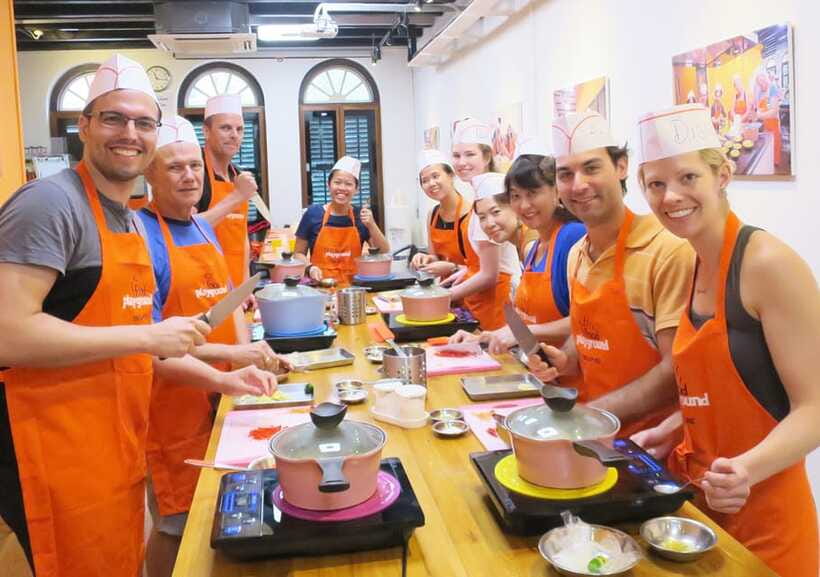
Singapore’s food story makes the best part of this class. You begin with coffee, tea, and nostalgic snacks, then learn how local dishes connect to family life before cooking three of them yourself. I especially like the daily changing menu and the chance to work with fresh ingredients at your own station. The instructors, including Sara, Annie, Helen, Nur, and Mrs Lee, are praised for patience and humor.
I also like that this is more than a recipe lesson. You hear personal stories about overcoming hard times and get useful tips on where to eat during the rest of your stay. The main drawback is practical: the studio sits on the second floor of a conservation shophouse with no lift, and the class is not suitable for people with limited mobility.
Key points to know before booking
- A different three-dish menu each day: Choose from nasi lemak on Monday, curry chicken on Tuesday, laksa on Wednesday, biryani on Thursday, char kway teow on Friday, and two repeating weekend menus.
- A full meal is included: You cook and eat a three-course Singaporean spread, so the class can also cover lunch.
- Family recipes and local context: The instructors explain where dishes came from, how ingredients are used, and how recipes passed through generations.
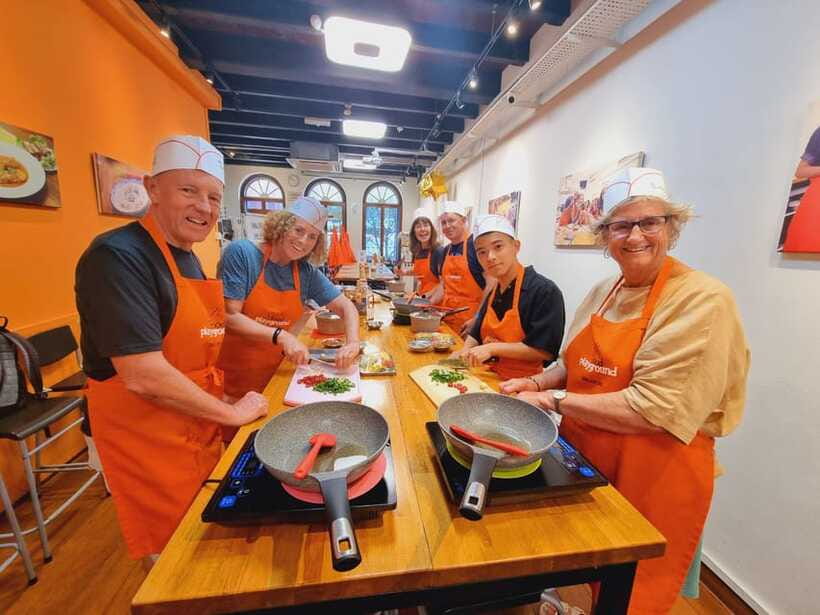
- Friendly, hands-on teaching: You receive a chef hat, apron, equipped workstation, ingredients, and close help through each stage.
- A social Chinatown setting: You share the finished meal with classmates and can ask the instructors for food and sightseeing advice.
- Important access note: The studio is on level two with no lift, and video recording is not allowed.
Why this Chinatown cooking class is worth your morning
Singapore is easy to eat in, but a cooking class gives you a better handle on what is in the bowl or on the plate. Instead of simply ordering laksa or nasi lemak, you learn the work behind those dishes and the role of spices, coconut, pandan, noodles, rice, and sauces in Singaporean home cooking.
This three-hour class takes place near the Buddha Tooth Relic Temple and Museum in Chinatown. That location is handy if you are already exploring the neighborhood, though hotel pickup and drop-off are not included. Look for the orange sign bearing the local partner’s name near the temple.
The setting is a cooking studio in a conservation shophouse. That gives the experience a more local feel than a hotel demonstration kitchen, but it also means stairs. The second-floor location has no lift, so I would not book this if you have a mobility impairment or find stairs difficult.
The class costs $94 per person. That is not a bargain meal, but you receive three hours of instruction, all ingredients, kitchen equipment, coffee, tea, water, Wi-Fi, and a substantial meal at the end. The value improves if you want both lunch and a cultural activity in one booking. It is also useful for anyone who plans to cook Singaporean food at home, since the class focuses on steps you can repeat rather than a one-off tasting.
More Hands-On Workshops in the world:
- Half-Day Thai Cooking Class at Organic Farm in Chiang Mai
★ 5.0 · 19,087 reviews - Florence: Pasta Cooking Class with Unlimited Wine
★ 4.9 · 10,285 reviews - 3 in 1 Cooking Class near Navona: Fettuccine, Ravioli & Tiramisu
★ 5.0 · 7,376 reviews
Starting with coffee, snacks, and Singapore stories
The class begins with a warm drink and nostalgic snacks or bites. This opening gives you time to settle in before the cooking starts, and it helps turn a roomful of strangers into a small group.
An ice-breaker game follows. It centers on Singapore’s heritage, food, and culture, so you get a quick introduction to the ideas behind the dishes. This part is not just filler. Singaporean food draws from several culinary traditions, and the class uses its menu to explain those connections in plain, practical terms.
You then hear about the dishes scheduled for that day. The instructors explain the origins of each recipe and point out local ingredients you may not recognize at first. This is a useful pause before the kitchen work begins, especially if you are new to Singaporean food.
The teaching style is friendly and relaxed. Sara, Annie, Helen, Nur, YY, and Mrs Lee are among the instructors named in the feedback, and the class format allows for different teaching personalities. Some students especially appreciated Annie’s humor, Sara’s patience, Helen’s attention to different skill levels, and Nur’s preparation and clear help.
One thing to keep in mind is the balance between talk and cooking. There is a fair amount of cultural background before you start handling ingredients. I like that approach, but if you want to cook from the first minute, you may find the introduction longer than expected.
Three dishes, one fixed daily menu
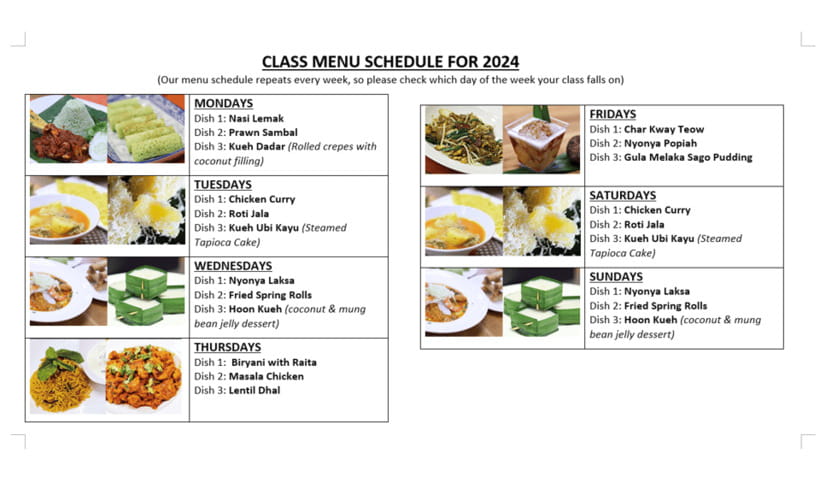
You do not choose individual dishes on the day. The studio runs on a fixed menu schedule, so check the day carefully before paying. This is the most important booking detail for food lovers.
Here is the weekly schedule:
- Monday: Nasi Lemak, Sambal Prawns, and Kueh Dadar
- Tuesday: Curry Chicken, Roti Jala, and Ondeh Ondeh
- Wednesday: Laksa, Fried Spring Rolls, and Hoon Kueh
- Thursday: Nasi Biryani, Masala Chicken, and Lentil Dhal
- Friday: Char Kway Teow, Nyonya Popiah, and Sago Gula Melaka
- Saturday: Curry Chicken, Roti Jala, and Ondeh Ondeh
- Sunday: Laksa, Fried Spring Rolls, and Hoon Kueh
The menus cover a good range of Singaporean cooking. Some days lean toward rice and curry, while others focus on noodles, wraps, or sweets. You might choose Monday for nasi lemak and sambal prawns, or Friday for the combination of char kway teow, Nyonya popiah, and sago gula Melaka.
The desserts are part of the appeal. Ondeh ondeh, kueh dadar, hoon kueh, and sago gula Melaka introduce you to coconut, pandan, palm sugar, and soft rice or flour-based textures. These are not side notes. They show how much of Singaporean cooking depends on fragrant leaves, coconut, and palm sugar.
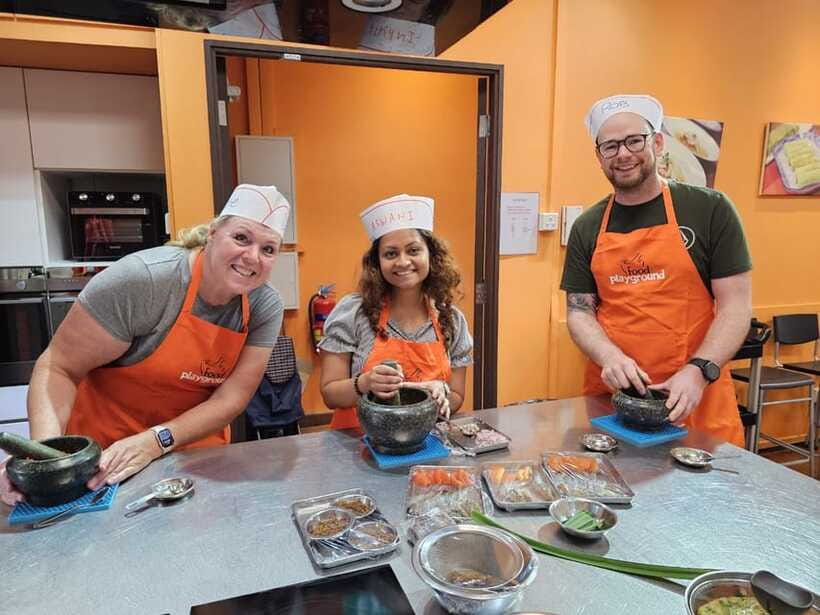
The savory menus give you more varied techniques. You may grind fresh spices for curry chicken, fold roti jala, stir noodles, shape spring rolls, or assemble popiah. The work is designed for ordinary home cooks, and the instructors break complex-looking dishes into manageable steps.
What happens at the cooking station
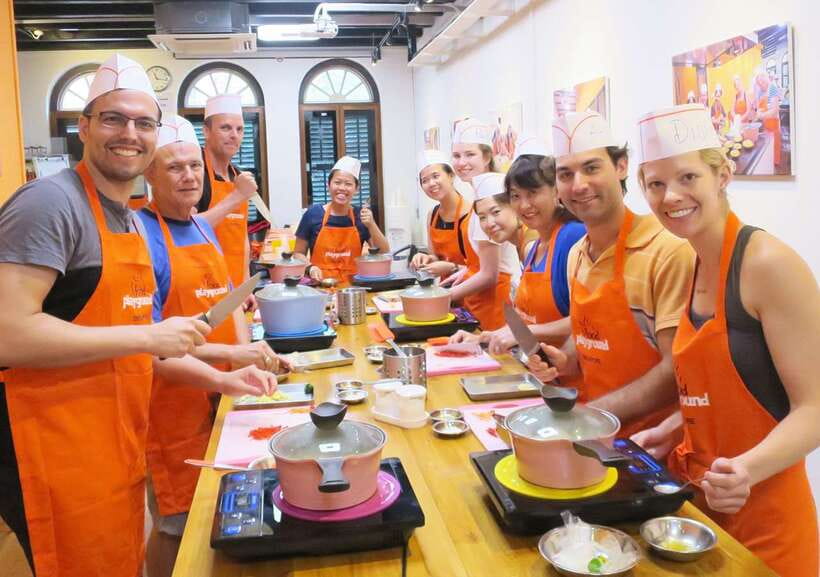
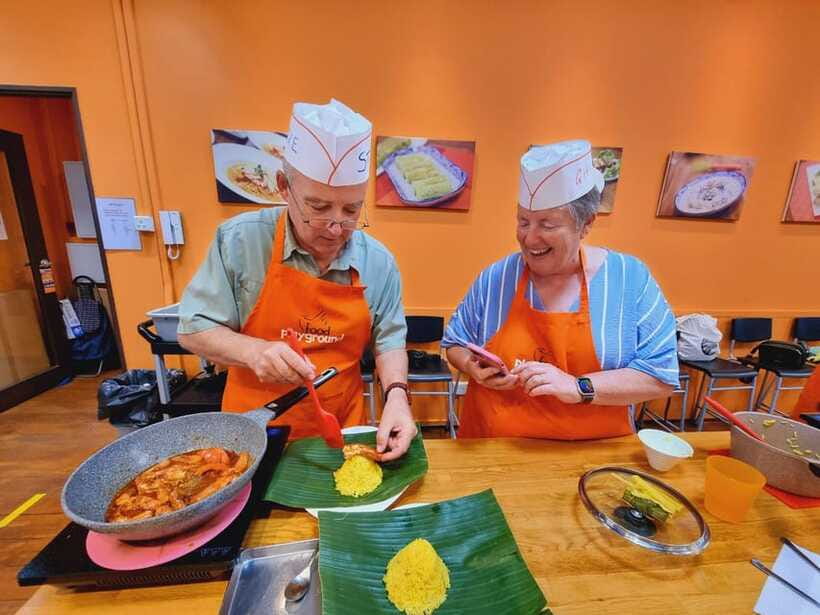
After the introduction, you put on an apron and chef hat and move into the kitchen. Each participant receives a fully equipped workstation and the ingredients needed for the menu.
The key benefit is that you do the work yourself. This is not a demonstration where you sit back while an instructor cooks. You receive guidance through the steps, with help available when a technique or ingredient is unfamiliar.
The instructors prepare the class so you can focus on cooking rather than shopping or measuring every item from scratch. That makes the three-hour schedule practical. It also lets the instructors spend time explaining why a step matters, rather than rushing to keep the class moving.
The class suits mixed skill levels. You do not need professional kitchen experience, and the teaching is aimed at helping you repeat the recipes at home. The instructors are described as patient with beginners and comfortable answering questions.
You should expect a social kitchen rather than a private lesson. You work alongside other participants, then share the meal afterward. That is a plus if you like meeting people during a trip. It may be less appealing if you want a quiet, one-to-one cooking session.
One detail worth noting: video recording is not allowed. You can still focus on the lesson instead of trying to film every movement, but you should plan to rely on the instruction and any written recipe material provided by the studio, if available. The supplied details confirm that the dishes are intended to be replicated at home, but do not promise a recipe booklet, so do not book on the assumption that printed recipes are included.
A few more cooking classes around the world worth a look
- Florence: Pasta & Tiramisu Cooking Class with Unlimited Wine
★ 4.9 · 6,708 reviews - Florence: Pasta Cooking Class with Unlimited Wine
★ 5.0 · 6,413 reviews - Hanoi Cooking Class: Culture, Local Market & Meaning CSR Impact
★ 5.0 · 5,147 reviews - 5 Traditional Dishes Hanoi Cooking Class with Market Trip
★ 5.0 · 4,890 reviews
The meal at the end is part of the lesson
Once the cooking is finished, you sit down with the group and eat the food you prepared. This is where the class pays off. You can taste the effect of the spice mixture, compare textures, and see how separate ingredients become a complete Singaporean meal.
The meal also gives you time to ask questions. The instructors can suggest places to eat or things to do during the rest of your stay. That local advice may be as useful as the recipes, particularly if this is your first visit to Singapore.
Past participants singled out the freshness of the ingredients and the flavor of the finished dishes. The food is not presented as a restaurant substitute. You made it yourself, with help, so the pleasure comes from understanding the process as well as eating the result.
The cleanup is handled by the team, according to the information provided. That is a small but real advantage. You can linger over the meal and conversation instead of spending the final part of the class scrubbing pans.
The personal side of the class
The cultural portion is not limited to food facts. You also hear personal stories about how the instructors overcame life challenges. Those stories give the class a human center and explain why the cooking studio matters beyond its menu.
The experience has a social purpose as well. One participant specifically valued the way the organization helps bring women who had been stay-at-home mothers back into the workforce. That gives your booking an added dimension, though the class remains focused on cooking rather than becoming a formal social enterprise presentation.
I would pay attention to the names of the instructors when you arrive, because their personalities shape the morning. Sara is described as attentive and good at explaining local food and nearby places. Annie is remembered for being funny, patient, and easy to work with. Helen is praised for explaining traditional cooking and adapting to different skill levels. Nur is noted for being ready and helpful from the moment participants arrived.
The instructors change, so you should not expect a particular person unless the booking specifically confirms one. The teaching language is English.
Who will get the most from this experience
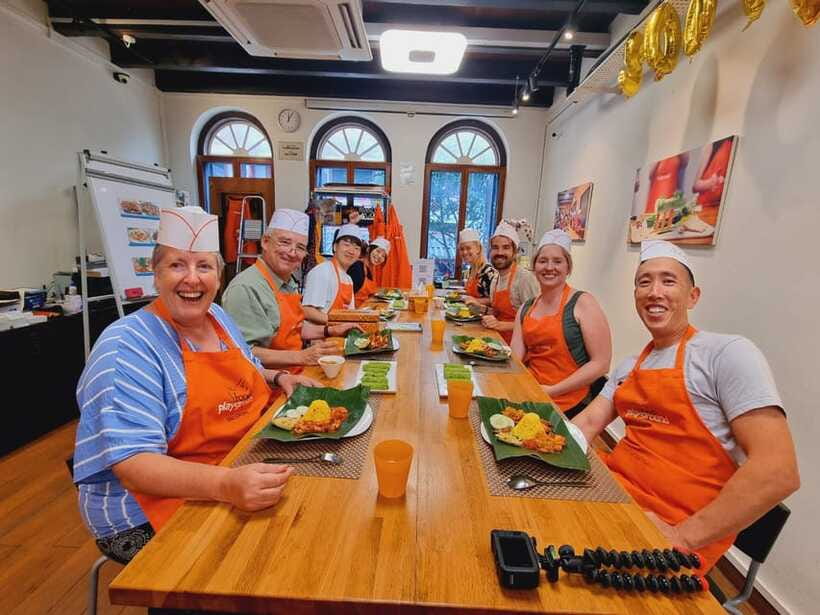
I recommend this class to first-time visitors who want a clear introduction to Singaporean food without spending a full day on a market tour. It is also a good fit for couples, solo visitors, families with older children, and friends who enjoy a shared activity.
You will get the most from it if you like active participation. The class involves cooking, asking questions, and eating with other people. If you prefer to watch a chef work or want a private kitchen lesson, this may not be your best choice.
It suits food-minded visitors who want to remember Singapore through techniques rather than photographs alone. A dish such as curry chicken or laksa can become a useful holiday memory when you know how its ingredients came together.
The class is less suitable for people with limited mobility because of the stairs. It is also not ideal if you have strict dietary needs that conflict with the fixed menu, since no accommodation is stated in the available information. Check the menu for your chosen day before booking.
Timing, meeting point, and booking value
The activity lasts three hours, with starting times shown according to availability. Plan to arrive at the cooking studio beside the Buddha Tooth Relic Temple and Museum in Chinatown, and look for the orange sign near the landmark.
There is no hotel transfer, so you arrange your own way to Chinatown. The central location makes it easy to pair the class with more sightseeing in the area, but the exact travel time from your hotel depends on where you are staying.
Coffee, tea, drinking water, and complimentary high-speed Wi-Fi are included. Chef hats and aprons are also supplied, as are the ingredients. You do not need to bring cooking equipment.
Cancellation is flexible up to 24 hours before the class for a full refund. You can also reserve now and pay later, which helps if you are still adjusting your Singapore plans.
Should you book this Singapore cooking class?
Book it if you want to cook a full Singaporean meal, hear the family stories behind the dishes, and spend a social morning in Chinatown. The daily menu is the deciding factor, so choose your date for the food you most want to learn.
At $94, the class is best value for someone who treats lunch, instruction, and cultural context as one experience. I would skip it if you only want a quick tasting, dislike group activities, need step-free access, or want to select your own recipes.
For most food-focused visitors, the strongest choice is a day with dishes you would actually try at home. Check the menu, confirm that stairs are manageable, and book with the expectation that you will cook, eat, listen, and leave with a better sense of how Singapore’s home-style food fits together.
FAQ
How long does the cooking class last?
The class lasts three hours.
Where does the cooking class meet?
The studio is beside the Buddha Tooth Relic Temple and Museum in Chinatown. Look for an orange sign with the local partner’s name near the temple.
Is hotel pickup and drop-off included?
No. You must arrange your own transportation to and from the cooking studio.
What dishes are prepared each day?
Monday features nasi lemak, sambal prawns, and kueh dadar. Tuesday and Saturday feature curry chicken, roti jala, and ondeh ondeh. Wednesday and Sunday feature laksa, fried spring rolls, and hoon kueh. Thursday features nasi biryani, masala chicken, and lentil dhal. Friday features char kway teow, Nyonya popiah, and sago gula Melaka.
Are ingredients included?
Yes. All ingredients required for the class are included.
Are chef hats and aprons provided?
Yes. The class provides chef hats and aprons, along with the cooking workstations.
What language is the class taught in?
The instructor teaches in English.
Is the studio accessible to people with limited mobility?
No. The studio is on level two of a conservation shophouse and does not have lift access. The class is not recommended for people with mobility impairments.
Can I cancel for a full refund?
Yes. You can cancel up to 24 hours in advance for a full refund. You can also reserve your place and pay later.
Just added around the world
- Korean cooking class in Haeundae, Busan★ 5.0 · 92 reviews
- Cooking, Farming and Waterfall In Vietnam Countryside★ 3.0 · 6 reviews
- Busan Tailored Korean cooking class (Vegan OK)with market tour★ 5.0 · 66 reviews
- Private Argentine Cooking Class and Tango Lesson in Buenos Aires★ 5.0 · 37 reviews
- Hungarian Home Cooking Class with Chef Marti★ 5.0 · 30 reviews
- Cooking Class with dinner/lunch in Ulcinj Montenegro★ 5.0 · 8 reviews
- BA: Empanadas and Alfajores Cooking Experience in Palermo★ 5.0 · 112 reviews
- Budapest Market Tour & Home Cooking Class with local Chef & Guide★ 5.0 · 23 reviews
Cooking Classes, compared.
Half-Day Thai Cooking Class at Organic Farm in Chiang Mai
Read our review →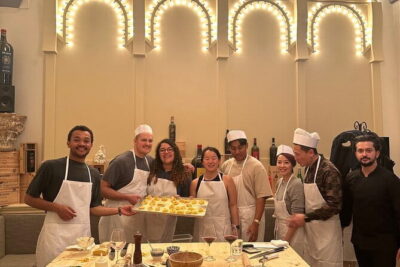
Florence: Pasta Cooking Class with Unlimited Wine
Read our review →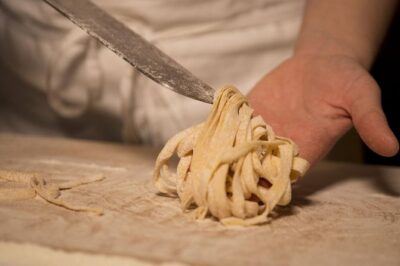
3 in 1 Cooking Class near Navona: Fettuccine, Ravioli & Tiramisu
Read our review →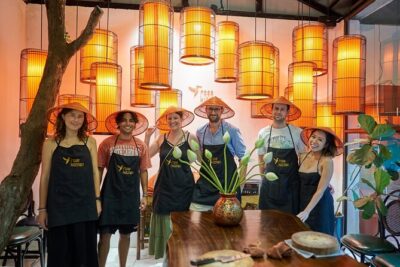
Hanoi Cooking Class: Culture, Local Market & Meaning CSR Impact
Read our review →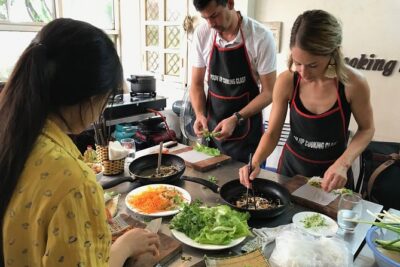
5 Traditional Dishes Hanoi Cooking Class with Market Trip
Read our review →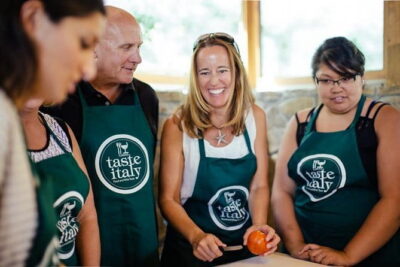
Cooking Class and Lunch at a Tuscan Farmhouse with Local Market Tour from Florence
Read our review →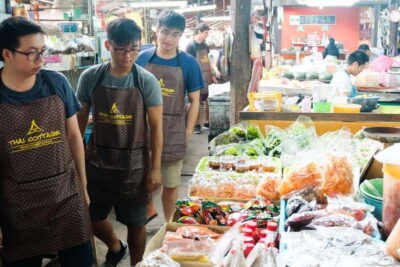
Chiang Mai: Cooking Class, Market & Thai Herbs Garden Tour
Read our review →Browse the lists this tour appears in