
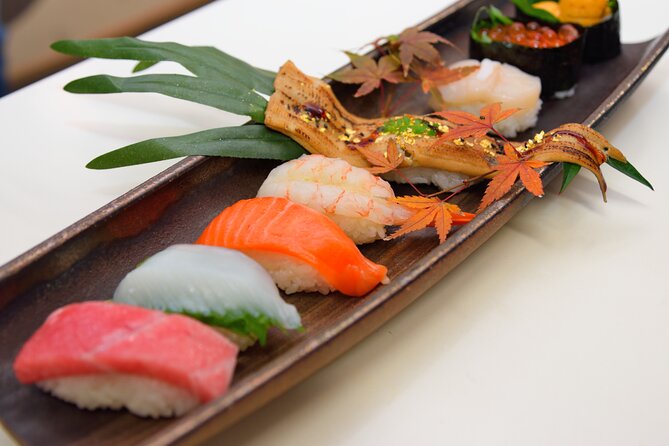
Review · JAPANESE & SUSHI
Sushi Making Experience Luxury Course in Nara
The most interesting part of this Nara class is that you do not just place toppings on prepared rice. You start with shari, properly seasoned sushi rice, then grate fresh wasabi, prepare sushi-grade fish, and shape the final pieces yourself. The class ends with a certificate, photos, and a small graduation celebration.
I like the cultural side, especially the choice of traditional Japanese clothing and the chance to learn the words and actions used during sushi-making. I also like the practical format: you make eight premium pieces, choose toppings such as green onion and ginger, and leave with skills you can use at home. The main consideration is price. At $115.96 per person, this is not a cheap meal, so it makes the most sense if you want instruction and cultural context, not just lunch.
Key points
- You make sushi from rice onward: The class covers shari, wasabi, fish preparation, and shaping.
- Fresh wasabi is part of the lesson: You grate it yourself and notice its aroma before tasting it.
- Traditional clothing adds a cultural touch: Rental clothing is included, with several styles available.
- English guidance is available: The instructors can answer questions and guide you through the work.
- Dietary needs can be discussed in advance: Vegetarian, vegan, Muslim, allergy, gluten-free, and non-raw options are available.
- You leave with more than a meal: The package includes eight premium sushi pieces, souvenir photos, and a completion certificate.
A 90-minute sushi lesson in central Nara
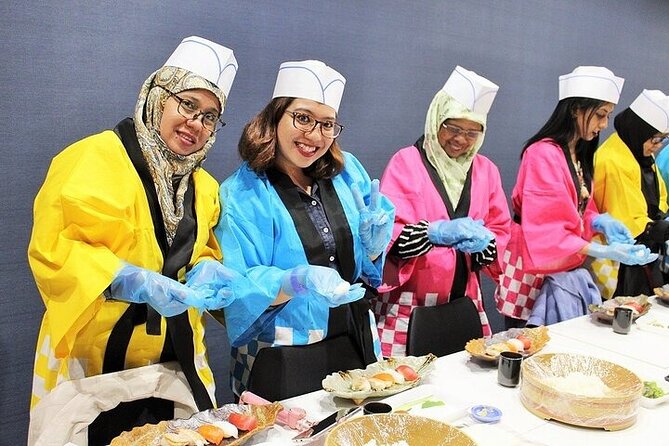
Umemori Sushi School is at 221 Hokkejichō, Nara, 630-8001, and the class begins and ends at that meeting point. The activity lasts about one hour and 30 minutes, which makes it easy to fit around a day of sightseeing in Nara.
This is a practical class rather than a long food tour. You stay in one place and work through the sushi process in a clear order. That matters because sushi can look simple from the outside. The finished piece may be only rice, fish, and a little wasabi, but the rice seasoning, knife work, temperature, and hand shape all affect the result.
The class is aimed at complete beginners as well as people who already enjoy sushi. You do not need advanced cooking skills. The instructions break the work into manageable steps, and the teaching team can guide you through the process.
One detail worth noting is the difference between the advertised small-group feel and the listed maximum of 200 participants. The class description promises personalized instruction, but the formal capacity is large. If a very intimate class is important to you, contact the school before booking and ask how many people will be in your specific session.
More Sushi and Japanese Classes in Japan:
- Sushi Making Tokyo Roll and Authentic Japanese Sushi Class
★ 5.0 · 3,971 reviews - Tokyo: Roll and Authentic Sushi Making Class in Asakusa
★ 4.9 · 1,957 reviews - Ramen Cooking Class at Ramen Factory in Kyoto
★ 5.0 · 1,937 reviews
Step 1: Preparing shari, the foundation of sushi
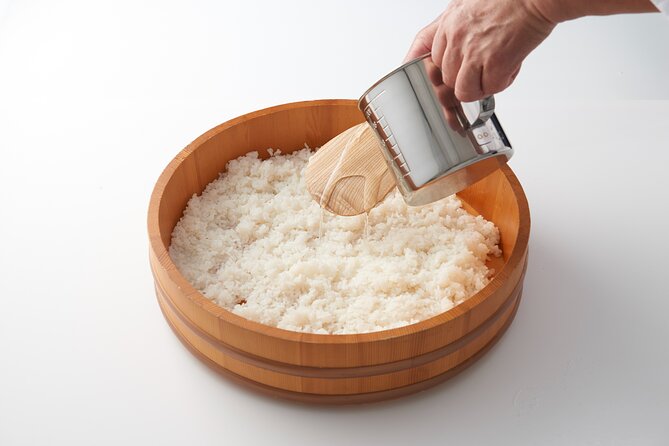
The class begins with sushi rice, called shari. This is more useful than it may sound. Many casual sushi lessons focus on the visual part, such as rolling or placing fish on top. Here, you learn that the rice carries much of the flavor and structure.
You are shown how to prepare and season the rice so it has the right balance for sushi. The seasoning is not simply a matter of adding vinegar at random. The rice must support the topping without overwhelming it, and it must hold together when shaped by hand.
This is one of the strongest reasons to choose this course over a quick demonstration. Once you understand the rice, you can repeat the basic method at home. The class gives you a starting point for making sushi for family or friends instead of leaving you with only a pleasant memory.
The lesson is also a quiet introduction to Japanese food culture. Sushi is often treated as a luxury food, but the class shows the care behind its preparation. You learn that technique and restraint matter as much as the ingredients.
Step 2: Grating fresh wasabi by hand
Next comes fresh wasabi. You grate it yourself, which gives the lesson a sensory moment that prepared packets cannot provide. Freshly grated wasabi has a noticeable aroma, and the process helps you understand why it tastes different from the common green paste served with inexpensive sushi.
The wasabi is not just there for decoration. It is part of the balance between rice and fish. You can choose how much to use when assembling your pieces, so this is also a chance to adjust the flavor to your own taste.
This step may be especially interesting if you already know Japanese food but have never handled fresh wasabi. It takes only a short time, yet it adds a clear sense of place and craft to the class.
Step 3: Preparing sushi-grade fish
The fish preparation section is where the class becomes more hands-on. You learn how to cut fresh sushi-grade seafood for use on top of the rice. The aim is not to turn you into a professional sushi chef in 90 minutes. Instead, you learn the basic movements and see how cutting affects the final piece.
The information provided does not promise a fixed list of fish, and the toppings may change with the season. That is normal for a food class built around fresh ingredients. If you have a favorite fish or a restriction, ask before the class rather than assuming it will be available.
For many people, this is the most valuable technical step. Fish can be cut too thick, too thin, or at the wrong angle, and each choice changes the bite. Guided practice gives you a better feel for the difference than watching a chef work from across a counter.
If raw seafood is not suitable for you, the school offers non-raw options. Vegetarian, vegan, Muslim, gluten-free, and allergy-friendly arrangements are also available, but you must inform the organizer before your class.
A few more cooking classes around Japan worth a look
- VIP Mekong Delta Adventure Cycling & Kayaking – Private Day Trip
★ 5.0 · 179 reviews - Cu Chi Tunnels Ben Duoc VIP Tour by Limousine with Lunch
★ 5.0 · 170 reviews - Pure Bali Village Experience, Cooking & Jamu Class+VIP Transfer
★ 5.0 · 16 reviews - VIP Cooking Class with Carbonara, Pesto Making, Lasagna & Cannoli
★ 5.0 · 10 reviews
Step 4: Shaping eight pieces of premium sushi
Once the rice, wasabi, and fish are ready, you assemble the sushi. The class focuses on forming nigiri, the hand-shaped style with a small mound of rice and a topping placed over it.
This is harder than it looks. Too much pressure makes the rice dense. Too little pressure leaves the piece loose. The goal is a neat shape that holds together while still feeling light when you eat it.
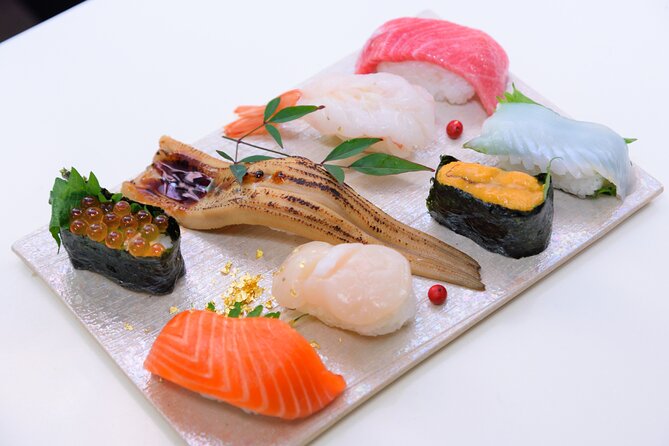
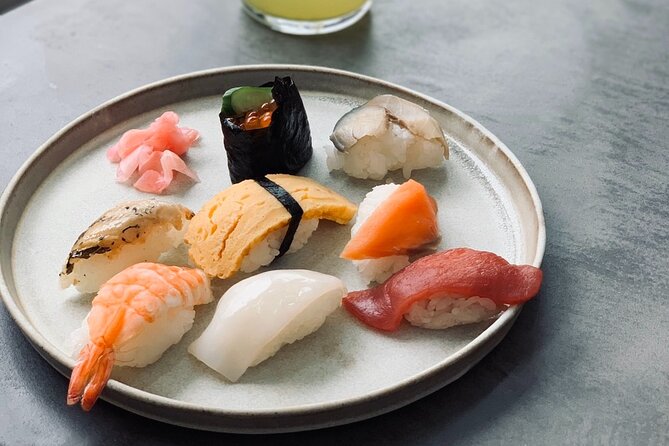
Your package includes eight premium sushi pieces. That is enough to practice the method and enjoy a proper tasting, though it is not meant to replace a full multi-course meal. The class does not include drinks, tempura, tofu, pork shabu-shabu, or other optional menu items.
Toppings such as green onion and ginger are available, and you can choose your favorites. Since ingredients change by season, the exact plate may not match promotional photographs. Treat that as part of the food experience rather than a problem, but contact the school if you need a specific ingredient.
Traditional clothing and the cultural side
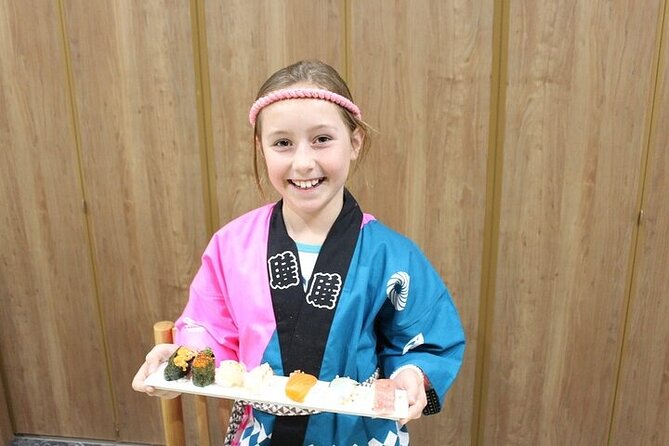
The included rental clothing gives this class a stronger cultural angle than a standard cooking lesson. You can choose from different clothing options, put on traditional Japanese attire, and take part in the activity in a setting designed around Japanese customs.
This is also where instructor Okashi adds personality. One class participant specifically enjoyed the clothing, the Japanese words, and the actions connected with making sushi. Okashi is noted for making the session fun, so families and first-time cooks may appreciate the lively approach.
The cultural material is not presented as a substitute for the cooking. It sits alongside the practical work. You learn how sushi is made, why the steps matter, and how the food fits into Japanese tradition. That balance gives the class more value than a simple recipe lesson.
The clothing may be less important to you if your main goal is serious knife training. It is also worth remembering that the focus is a short introduction, not a formal study of Japanese dress or etiquette. Think of it as an engaging extra that helps make the session memorable.
English instruction and the pace of the class
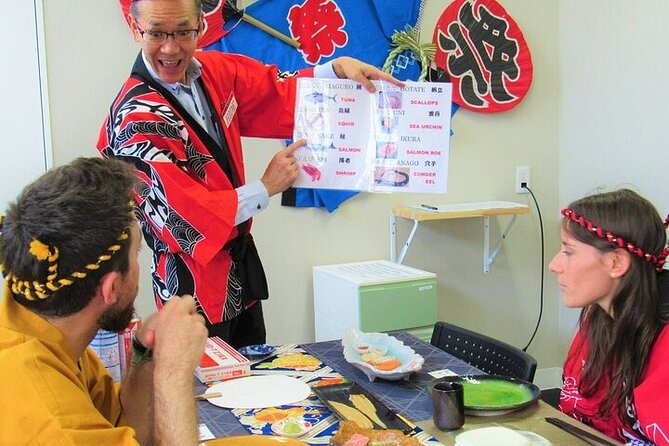
The instructors speak enough English to explain the process, answer questions, and guide you through the work. That is important in a class involving knives, raw ingredients, and hand technique.
The directions to the location are reported to be clear, and the meeting point is easy to find with the information provided. You should still allow time to reach Hokkejichō, since late arrival can affect the class.
If you are delayed by up to 15 minutes, contact the emergency number at +81-742-34-5789. The school cannot change the schedule for late arrivals because other people may be present. Arriving more than 30 minutes late is treated as a cancellation, with no refund, and even a shorter delay may mean missing some activities. This is a class where arriving early is sensible.
The building has no elevator, though staff can help you use the stairs. Service animals are allowed, and the meeting point is near public transportation.
What the $115.96 price really covers
At $115.96 per person, the cost is high for a 90-minute food activity. You are paying for more than eight pieces of sushi, however. The price includes the lecture, hands-on preparation, fresh wasabi work, fish practice, rental clothing, selected toppings, souvenir photography, and a certificate of completion.
The value depends on your aim. If you want the least expensive way to eat sushi in Nara, this is not the right choice. A restaurant meal will cost less and take less time.
If you want a guided activity that combines food, Japanese culture, and a skill you can repeat at home, the price is easier to justify. The certificate and photos also give the session a celebratory feel, which may matter for couples, families, or anyone marking a special trip.
I would think of the cost as a cooking lesson with a meal included, not a meal with a little entertainment added. That distinction helps set fair expectations.
Who will get the most from this class
This class suits you if you want to make something with your hands and prefer an activity that teaches a process. It works well for first-time cooks because the steps are ordered and the instructors provide guidance.
It is also a good fit for solo visitors, couples, and groups. A solo visitor gets a structured social activity without needing to organize a private class. Couples can treat it as a shared food experience. Families and friends may enjoy the clothing, photos, and graduation certificate as much as the sushi itself.
Experienced home cooks may find the class basic in places, but the rice preparation, fresh wasabi, and fish-cutting practice still provide useful detail. Professional sushi training is not what is being offered here.
You should think twice if you dislike raw seafood, have very limited time, or only want a large meal. Non-raw and other dietary options are available, but the session remains a sushi-making lesson rather than a broad Japanese cooking class.
Booking, timing, and dietary planning
The activity is booked an average of 40 days in advance, so it is wise to reserve early if your dates in Nara are fixed. Confirmation is provided at booking, and the ticket is mobile, which keeps the arrival process simple.
Tell the organizer about dietary needs before the class. Options are available for vegetarians, vegans, Muslims, people with allergies, gluten-free diets, and anyone who needs non-raw ingredients. Do not wait until you arrive, especially if your needs are strict.
The cancellation policy is straightforward: cancel at least 24 hours before the local start time for a full refund. Cancellations and changes made inside 24 hours are not refunded or accepted.
Should you book the Umemori Sushi School experience?
Book it if you want more than a sushi lunch. The strongest parts are the complete process, from shari to nigiri, the fresh wasabi, the chance to wear traditional clothing, and the practical guidance in English. Okashi’s friendly approach adds to the sense of fun.
Skip it if $115.96 feels too high for eight pieces of sushi, or if you want a long meal with several Japanese dishes. Also ask about the size of your specific class if close personal instruction matters to you, since the listed maximum is much larger than the small-group description.
For the right visitor, this is a memorable Nara activity with a useful souvenir: the ability to make better sushi at home.
FAQ
Where does the sushi-making class begin?
The class begins at Umemori Sushi School, 221 Hokkejichō, Nara, 630-8001, Japan.
How long does the activity last?
The class lasts approximately one hour and 30 minutes.
How many sushi pieces are included?
The package includes eight premium sushi pieces.
Is clothing included?
Yes. Rental clothing is included, and several styles are available for you to choose from.
Are drinks included?
No. Drinks are not included in the price.
Can I request vegetarian or vegan food?
Yes. Vegetarian and vegan options are available, along with Muslim, allergy, gluten-free, and non-raw options. You need to inform the organizer before the class.
Is English assistance available?
The instructors can provide English guidance, answer questions, and help you through the sushi-making steps.
What happens if I arrive late?
If you are delayed by up to 15 minutes, contact the organizer at +81-742-34-5789. Arrivals more than 30 minutes late are treated as cancellations, and refunds are not issued for late arrival.
Can I cancel for a full refund?
Yes. You can receive a full refund if you cancel at least 24 hours before the experience start time. Cancellations made less than 24 hours before the start are not refunded.
Just added around Japan
- [From Okayama] Okayama & Kurashiki Full Day Tour★ 5.0 · 15 reviews
- Cook Homestyle Ramen and Gyoza from scratch★ 5.0 · 4 reviews
- Udon and Tempura Cooking Class in Nara★ 5.0 · 3 reviews
- Sushi Making Experience Class in Naha Makishi Public Market★ 5.0 · 35 reviews
- Japanese Cooking Class at a Traditional House in Nagano★ 5.0 · 3 reviews
- Grandma’s Traditional Japanese Cooking Class in Nagoya★ 5.0 · 5 reviews
- Zen Style Voice Meditation and Cooking Workshop in Motobu Okinawa★ 5.0 · 9 reviews
- Miyazaki’s local cuisine experience Let’s make cold soup and chicken Nanban! Super Local Food Cooking!★ 5.0 · 11 reviews
Japanese & Sushi Cooking Classes, compared.
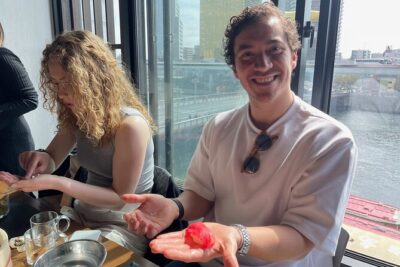
Sushi Making Tokyo Roll and Authentic Japanese Sushi Class
Read our review →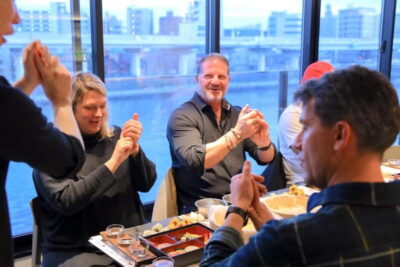
Tokyo: Roll and Authentic Sushi Making Class in Asakusa
Read our review →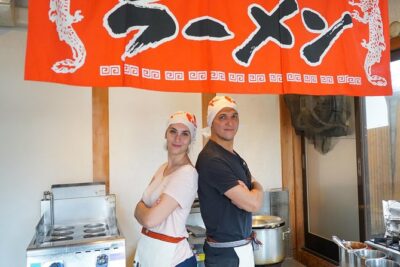
Ramen Cooking Class at Ramen Factory in Kyoto
Read our review →
Tokyo: Sushi Making Class in a Happi Coat near a Famous Spot
Read our review →
Sushi Making Tokyo! Popular Maki Sushi & Japanese Sushi(+Recipe!)
Read our review →
Sushi Making Osaka Roll and Authentic Japanese Sushi Class
Read our review →
Tokyo Sushi Making Class in Tsukiji with Professional Chef
Read our review →
Ramen & Gyoza Cooking Class in Tokyo with Local Supermarket Visit
Read our review →Browse the lists this tour appears in