
Review · JAPANESE & SUSHI
Cook Homestyle Ramen and Gyoza from scratch
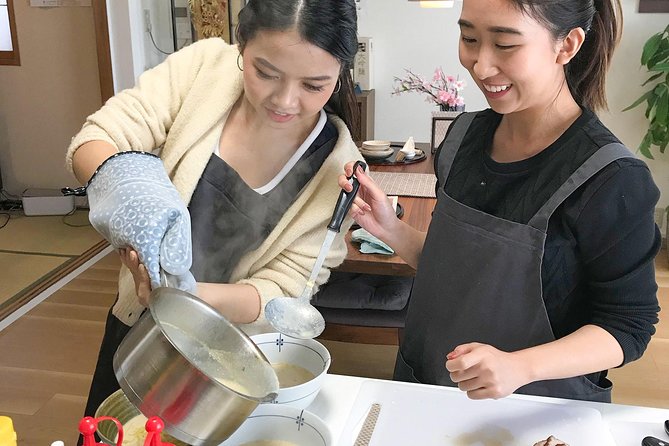
The best part of this Osaka cooking class is that you do not simply watch someone assemble a bowl of ramen. You make the chicken broth from scratch in about 30 minutes, prepare the toppings, mix the gyoza filling, roll the wrappers, and grill the dumplings. Seiki teaches in her home kitchen, where the small setting keeps the lesson personal and practical.
I like two things in particular: the recipes are built for home cooks outside Japan, and the class covers a full meal rather than one isolated dish. You also get useful guidance on replacing Japanese ingredients when your local market does not carry them. The main consideration is the fixed, non-refundable booking policy, so check your plans carefully before paying.
Key Points
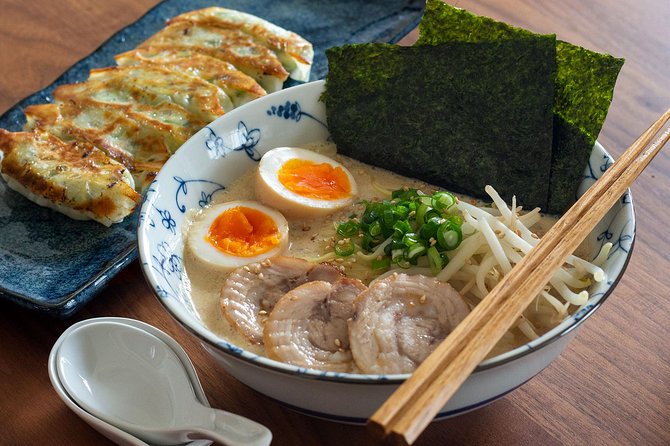
- A complete Japanese meal: Prepare creamy chicken ramen, grilled pork, seasoned egg, other ramen toppings, and gyoza.
- Real hands-on cooking: You make the ingredients and dishes instead of sitting through a demonstration.
- Small home-kitchen setting: The group is limited to five people, allowing room for questions and individual help.
- Useful overseas cooking advice: Seiki explains which local substitutes can replace harder-to-find Japanese ingredients.
- Family-friendly pace: Children aged 10 and 12 have stayed engaged through the full class.
- Convenient meeting point: Meet at Senri-Chuo Station at 10:00 am, then walk a few minutes to the kitchen.
Why This Ramen Class Feels Different
Many ramen lessons focus on assembling noodles, broth, and toppings that have already been prepared. This one takes you further back. You learn how the meal comes together, from basic Japanese ingredients to the final bowl and plate of gyoza.
The class lasts about three hours, which gives Seiki time to explain the ingredients before cooking begins. That matters because ramen can look simple on the table while hiding several separate jobs: broth, meat, egg, garnishes, noodles, and seasoning all need attention. Gyoza adds another set of skills, including making the dough, mixing the filling, folding the dumplings, and grilling them.
I like this format for anyone who wants a recipe they can repeat after returning home. The aim is not a restaurant-style performance with equipment you will never own. The recipes were created to be manageable in a regular home kitchen, and Seiki can suggest alternatives when Japanese products are difficult to find.
The group size is capped at five people. That is small enough to make questions easy and should give you more active time than a large demonstration class. It also suits families. Children aged 10 and 12 have remained involved for the whole lesson, which is a useful sign for parents considering this activity.
More Sushi and Japanese Classes in Japan:
- Sushi Making Tokyo Roll and Authentic Japanese Sushi Class
★ 5.0 · 3,971 reviews - Tokyo: Roll and Authentic Sushi Making Class in Asakusa
★ 4.9 · 1,957 reviews - Ramen Cooking Class at Ramen Factory in Kyoto
★ 5.0 · 1,937 reviews
Meeting Seiki at Senri-Chuo Station
Your morning begins at 10:00 am at Senri-Chuo Station in Toyonaka, Osaka Prefecture. The stated meeting address is Senri-Chuo 1 Chome-3 Shinsenri Higashimachi, and the home kitchen is only a few minutes on foot from the station.
This is not in the center of Osaka, so check your route before booking and allow enough time to reach Senri-Chuo. The station connection is a practical advantage once you are in the area, since you do not need to find a remote rural address or arrange a private taxi.
After you arrive, Seiki serves welcome tea and explains the ingredients used in the meal. This short introduction sets up the cooking well. You can see what each item is for before several bowls, tools, and ingredients appear on the counter.
The activity returns to the meeting point at the end. Since the class runs for about three hours, a 10:00 am start normally places the finish around early afternoon, though the exact end can depend on the pace of the group.
Building the Creamy Chicken Ramen Broth
The heart of the class is the chicken ramen broth. You learn to make it in roughly 30 minutes without instant soup stock, a useful skill for anyone who wants a more satisfying bowl without buying a prepared base.
Seiki first explains the basic Japanese ingredients, then demonstrates how the broth is prepared. You work through the method together rather than only taking notes. The class description calls the broth creamy, so expect a fuller style of ramen rather than a plain clear soup.
The short cooking time is important. Some ramen recipes involve long stock-making sessions that are hard to fit into ordinary home life. A broth method that can be made in about half an hour is more realistic for a weeknight meal, particularly if you are cooking for children or a small group.
You also learn how the broth connects with the rest of the bowl. Ramen is not just soup and noodles. The toppings affect texture, salt, color, and the sense of a finished dish. Seiki explains the ingredients before cooking, then shows how they are prepared and used.
Because the lesson takes place in a home kitchen, you should expect a practical cooking session rather than a polished restaurant demonstration. You may need to share counter space and work at the pace of the group. That is part of the trade-off for a small class where you get to take part in the preparation.
Preparing Grilled Pork, Seasoned Egg, and Ramen Toppings
The ramen includes grilled pork, a seasoned egg, and other garnishes. These parts give the class extra value. If you only learn a broth, you still need to figure out how to turn it into a complete bowl at home. Here, the toppings are part of the lesson.
The seasoned egg is a familiar ramen feature, but its success depends on preparation and seasoning. The class gives you a chance to see how it fits with the soup rather than treating it as a separate restaurant decoration.
The grilled pork adds another texture and a savory topping to the meal. You learn to prepare the ramen garnishes as part of the full cooking sequence, which helps you understand how the parts should come together at serving time.
Exact ingredient quantities and tools are not listed in the activity details, so you should not expect a printed inventory of every item before arrival. The useful promise is that the recipes were developed for repeat cooking at home, with advice about substitutions for Japanese ingredients.
That advice may be one of the most practical parts of the lesson. Japanese cooking products can be difficult to locate outside Japan, and a recipe is less useful if it depends on one special bottle or powder. Seiki has experience dealing with that problem and can explain which ingredients are better replaced with locally available options.
Same place, a different menu:
- Tokyo: Sushi Making Class in a Happi Coat near a Famous Spot
★ 4.9 · 1,377 reviews - Sushi Making Tokyo! Popular Maki Sushi & Japanese Sushi(+Recipe!)
★ 5.0 · 1,314 reviews - Sushi Making Osaka Roll and Authentic Japanese Sushi Class
★ 5.0 · 1,220 reviews - Tokyo Sushi Making Class in Tsukiji with Professional Chef
★ 5.0 · 1,177 reviews
Making Gyoza Skins and Filling by Hand
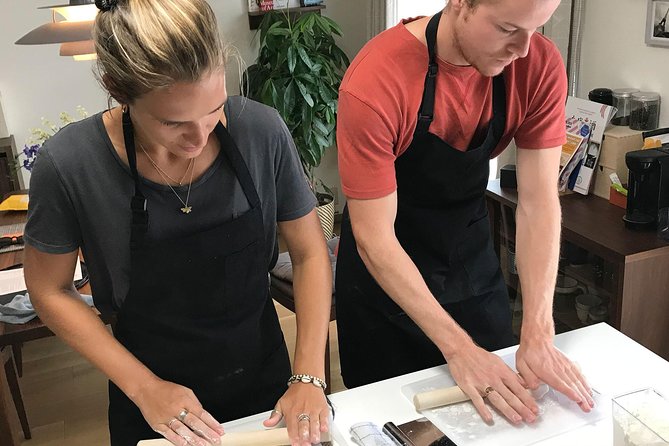
The gyoza section gives you a second project with a different rhythm. You learn to make the gyoza skin and filling from scratch, rather than buying ready-made wrappers and a prepared mixture.
Making the skin adds work, but it also makes the lesson more complete. You learn how the dough behaves and how the wrapper needs to hold the filling. For a first attempt, the folding stage can be the most enjoyable part, especially if you are cooking with children or friends.
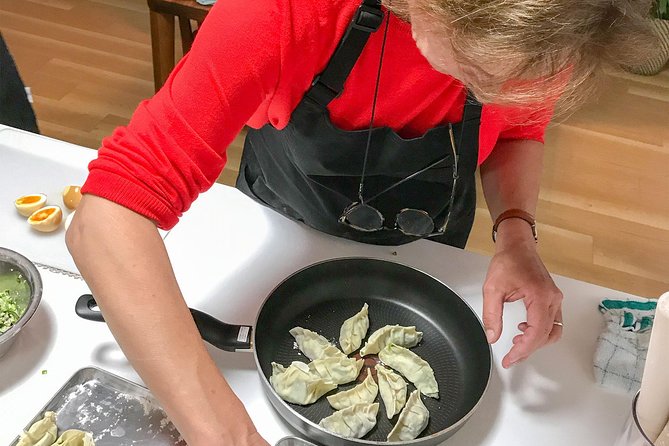
After the filling is prepared, Seiki demonstrates how to wrap the gyoza. You then practice the folds yourself before grilling them. The final cooking step is not just about heating the dumplings. It gives you the contrast of a browned base and tender upper wrapper, the texture that makes pan-grilled gyoza so appealing.
This is a good place to expect a little trial and error. Handmade dumplings rarely look identical, and the lesson is about learning a method you can repeat, not producing a row of perfect restaurant pieces. A small group helps here because Seiki can correct your technique as you work.
The class then brings the ramen and gyoza together for the meal. You can taste how the two dishes balance each other: a warm, creamy soup with toppings alongside crisp-bottomed dumplings. That makes the experience feel like a complete home lunch rather than a series of unrelated kitchen exercises.
Eating Together After the Cooking
Once the cooking is finished, you sit down to eat the food you prepared. Seiki also leaves time for conversation after the meal, giving the class a relaxed ending rather than sending you away the moment the last dumpling is grilled.
The host’s teaching style is described as enthusiastic and patient. That combination matters in a cooking class, since you may need instructions repeated while handling dough, filling, heat, and several ingredients at once. The setting also makes it easier to ask why a step is done, not just what to do next.
Families should pay attention to the age range that has worked well here. Children aged 10 and 12 have remained engaged throughout the class, which suggests the activity can hold younger cooks better than a long lecture or formal tasting. Still, the class involves several preparation stages, so a child who dislikes hands-on kitchen work may not enjoy every minute.
The meal is included as the natural result of the lesson. You are not paying only for a recipe demonstration. You are paying for instruction, ingredients, kitchen time, and the chance to eat a ramen and gyoza meal that you helped make.
Is $78 a Fair Price?
At $78 per person, this is not the cheapest way to eat ramen in Osaka. If your only goal is a bowl of noodles and a few dumplings, a restaurant will cost much less and require no work.
The value comes from the teaching and the range of dishes. In about three hours, you cover broth, toppings, pork, seasoned egg, gyoza dough, gyoza filling, folding, and grilling. You also receive practical advice for adapting the recipes outside Japan. That is a substantial amount of cooking for a small group of no more than five people.
I see the price as reasonable for someone who wants skills to take home, especially if you enjoy cooking or are planning Japanese meals after your trip. It is less attractive for someone who wants a quick food experience with little participation.
The class also suits families or small private groups that value direct help. A group of five or fewer means the fee buys more personal attention than a large workshop. Since confirmation is subject to availability and can arrive within 48 hours of booking, do not leave this to the last minute if the class is central to your plans.
The non-refundable policy deserves clear attention. You cannot receive a refund or change the booking for any reason, so book only after checking your schedule and route to Senri-Chuo.
Who Should Book This Osaka Cooking Experience?
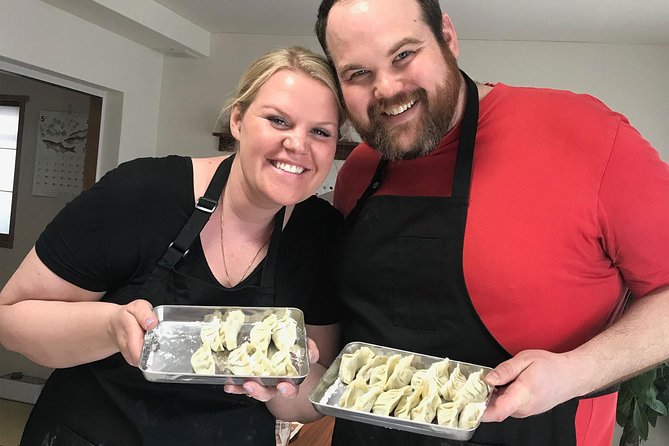
I would choose this class if you want to understand how a Japanese home meal is built, not simply sample one. It is especially well suited to:
- Home cooks who want ramen and gyoza recipes they can repeat abroad
- Families with children who enjoy mixing, shaping, folding, and grilling
- Visitors who prefer a small class over a large cooking school
- Anyone curious about Japanese ingredients and practical substitutions
- Diners who want both ramen and gyoza in one session
You may want to skip it if you are looking for a central Osaka activity, a short tasting, or a class with a flexible cancellation policy. The location requires a trip to Senri-Chuo, and the non-refundable terms make careful planning essential.
The activity is near public transportation, but the supplied details do not specify accessibility features inside the home kitchen. If you need particular access arrangements, ask before booking rather than assuming a private home setting will meet your needs.
Final Verdict: A Useful Class for Serious Home Cooks
I recommend this experience for cooks who want more than a souvenir photograph and a restaurant meal. The strongest feature is the hands-on range: you make a fast chicken broth, prepare ramen toppings, form gyoza skins, mix the filling, wrap the dumplings, and grill them.
The small group, patient teaching style, and advice on non-Japanese ingredient substitutes make the class useful long after your Osaka visit. Families have a good reason to consider it too, since children aged 10 and 12 have stayed engaged through the full session.
Book it if you are happy to spend three hours cooking and can commit to the date. Pass if you want a casual tasting or need the option to cancel. For a visitor who wants to recreate a Japanese meal at home, the $78 price buys instruction you can use again, which is the real payoff.
FAQ
Where does the cooking class meet?
The class meets at Senri-Chuo Station in Toyonaka, Osaka Prefecture. The stated meeting address is Senri-Chuo 1 Chome-3 Shinsenri Higashimachi, and you walk a few minutes from the station to the home kitchen.
What time does the activity start?
The cooking class starts at 10:00 am.
How long does the class last?
The activity lasts approximately three hours.
What dishes will I cook?
You will cook creamy chicken ramen and gyoza from scratch. The ramen includes broth, grilled pork, a seasoned egg, and other toppings. You will also make gyoza skins and filling, wrap the dumplings, and grill them.
Will I make the ramen broth without instant stock?
Yes. The class teaches you how to prepare a chicken-based ramen broth in about 30 minutes without instant soup stock.
How many people can join the class?
The activity has a maximum of five participants.
Can I cancel or change my booking?
No. The experience is non-refundable and cannot be changed for any reason. Any cancellation or amendment request does not result in a refund.
Just added around Japan
- [From Okayama] Okayama & Kurashiki Full Day Tour★ 5.0 · 15 reviews
- Sushi Making Experience Luxury Course in Nara★ 5.0 · 36 reviews
- Udon and Tempura Cooking Class in Nara★ 5.0 · 3 reviews
- Sushi Making Experience Class in Naha Makishi Public Market★ 5.0 · 35 reviews
- Japanese Cooking Class at a Traditional House in Nagano★ 5.0 · 3 reviews
- Grandma’s Traditional Japanese Cooking Class in Nagoya★ 5.0 · 5 reviews
- Zen Style Voice Meditation and Cooking Workshop in Motobu Okinawa★ 5.0 · 9 reviews
- Japanese food Cooking at Home★ 5.0 · 12 reviews
Japanese & Sushi Cooking Classes, compared.
Sushi Making Tokyo Roll and Authentic Japanese Sushi Class
Read our review →
Tokyo: Roll and Authentic Sushi Making Class in Asakusa
Read our review →
Ramen Cooking Class at Ramen Factory in Kyoto
Read our review →
Tokyo: Sushi Making Class in a Happi Coat near a Famous Spot
Read our review →
Sushi Making Tokyo! Popular Maki Sushi & Japanese Sushi(+Recipe!)
Read our review →
Sushi Making Osaka Roll and Authentic Japanese Sushi Class
Read our review →
Tokyo Sushi Making Class in Tsukiji with Professional Chef
Read our review →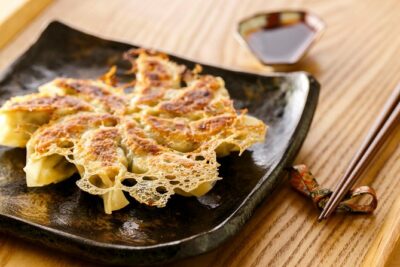
Ramen & Gyoza Cooking Class in Tokyo with Local Supermarket Visit
Read our review →Browse the lists this tour appears in