
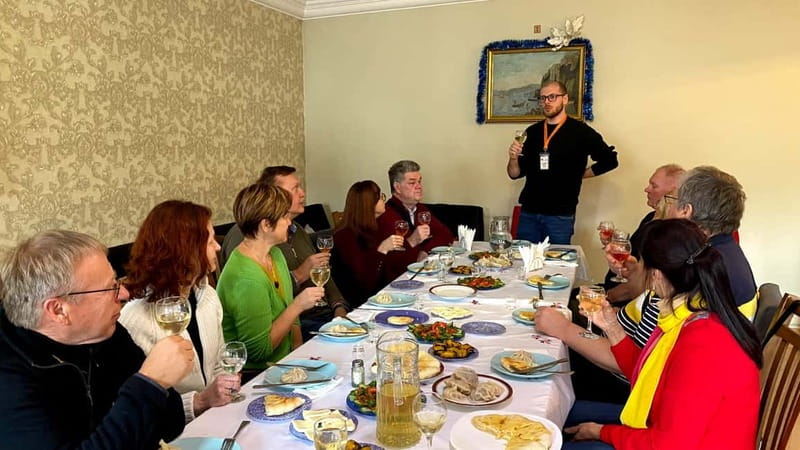
Review · TBILISI
Tbilisi: Cooking Class with a Local Family
Georgian food is made for sharing, and this three-hour class takes that idea straight into a local home. You meet at Avlabari Metro Station, then head to Shorena’s family kitchen to shape dumplings, prepare cheese bread, and sit down to a generous homemade feast.
I especially like the hands-on cooking, since you do more than watch a chef work. I also like the easy cultural exchange: guides such as Maria, Ana, Nicolas, Salome, and Beka have explained food, family customs, music, and daily life while translating for a host who speaks mostly Georgian. The main consideration is that the cooking is partly prepared in advance, and return transport is not included.
Key points at a glance
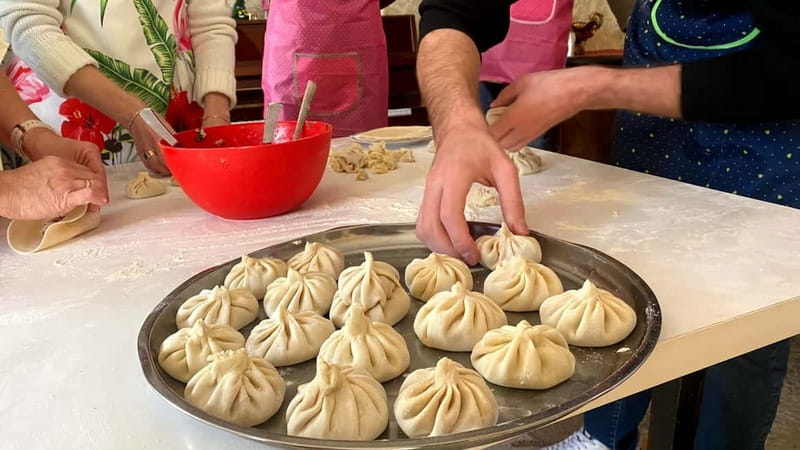
- Shape your own khinkali: Learn the folds of Georgia’s famous soup dumplings and eat them fresh.
- Cook in a family home: This is a home meal and cultural visit, not a restaurant demonstration.
- Try a full Georgian spread: Expect khachapuri, mchadi, eggplant with walnuts, salad, cheese, and other local dishes.
- Guides bridge the language gap: English-speaking guides translate the host’s instructions and add context about Georgia.
- Wine and chacha are included: You can taste homemade dry white wine, Sulguni cheese, and Georgian grape vodka.
- Good for solo visitors: You join a small social group, and the cooking gives everyone an easy way to talk.
Arriving at Avlabari for a 5:30 p.m. start
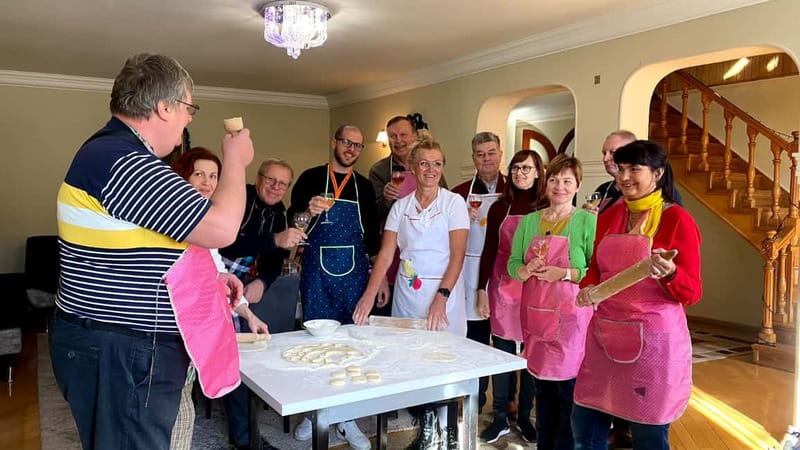
The meeting point is simple: Avlabari Metro Station at 17:30. Look for a local partner’s representative holding a branded orange flag. This matters in Tbilisi, where a clear meeting point saves time and prevents a pleasant evening from starting with a frantic search.
From there, transportation takes you to the local family’s home. The exact travel time and home location can vary, so keep the evening flexible. Transportation from the meeting point is included, but transportation back is not listed as included. Ask your guide about the return plan before the meal is over.
The class lasts three hours. That gives you enough time to cook several dishes, ask questions, eat at a relaxed pace, and enjoy the wine and conversation without turning the evening into a rushed kitchen lesson.
More Home Cooking Classes in the world:
- Khmer Cooking Class at a Local’s Home in Krong Siem Reap
★ 5.0 · 2,731 reviews - Local Home Korean Cooking Class & Market Adventure in Seoul
★ 5.0 · 1,024 reviews - Marrakech: Moroccan Cooking Class with a Local Family
★ 4.9 · 668 reviews
A Georgian welcome before the cooking begins
The setting is part of the appeal. You are not simply seated at a cooking school with polished workstations and a fixed script. You visit a local family, with Shorena as the main host, and get a look at how food and hospitality work inside a Georgian home.
Several sessions have included time in a garden, with grapevines, fruit trees, wine, and a relaxed welcome before the cooking starts. Those details are not guaranteed at every departure, but they show the kind of setting you might find. The focus is personal and informal rather than staged.
Shorena comes from western Georgia and has more than 30 years of cooking experience. That regional connection matters because Georgian food changes from one part of the country to another. Your guide can explain those differences as you work, including variations in ingredients, preparation, and the way dishes are served.
The host may speak Georgian and only some English. That is not a serious problem, since the English-speaking guide translates the instructions. Guides have included Maria, Ana, Oki, Nicolas, Nini, Salome, Beka, and others, so the person leading your class can vary. The guide’s role is important: you are getting a translator, food interpreter, and cultural companion in one.
Making khinkali from the kitchen table
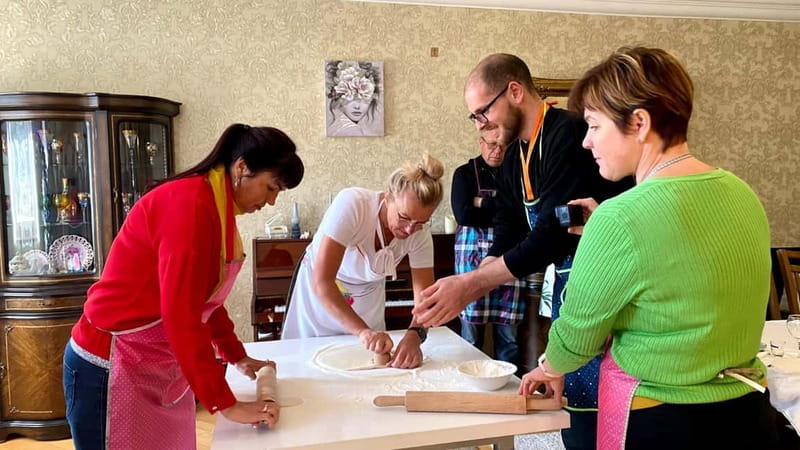
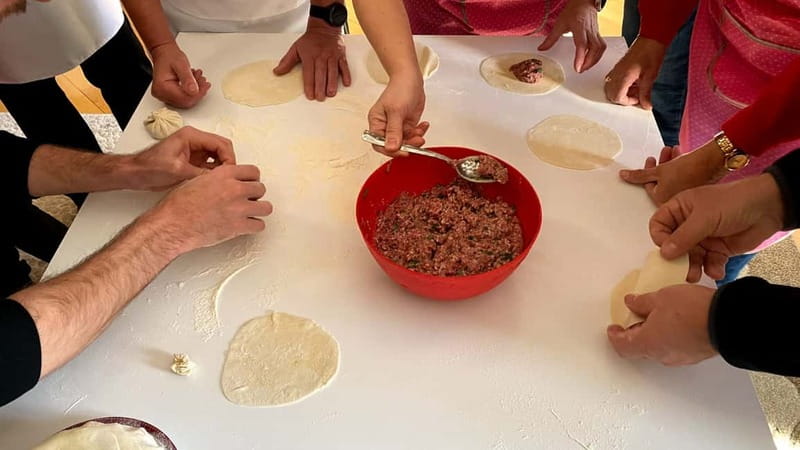
Khinkali is likely to be the most entertaining part of the class. These Georgian dumplings are filled, pleated, boiled, and eaten by hand. The folds take a little practice, but the group format makes the process lighthearted rather than fussy.
You learn how to handle the filling and shape the dumplings. The amount of work you do can vary by session. In some classes, the dough has already been prepared, so you concentrate on forming and filling the khinkali rather than making every stage from scratch.
That is both a benefit and a limitation. If you want a professional pastry lesson from flour to finished dumpling, this may feel abbreviated. If you want a successful first attempt and enough time to prepare several other dishes, the advance preparation keeps the class moving.
The result is especially satisfying because you eat what you made. Khinkali is not just another item on a tasting menu here. You see the process, handle the dough, and then learn how to enjoy the finished dumpling as part of the larger meal.
Khachapuri, Georgia’s great cheese bread
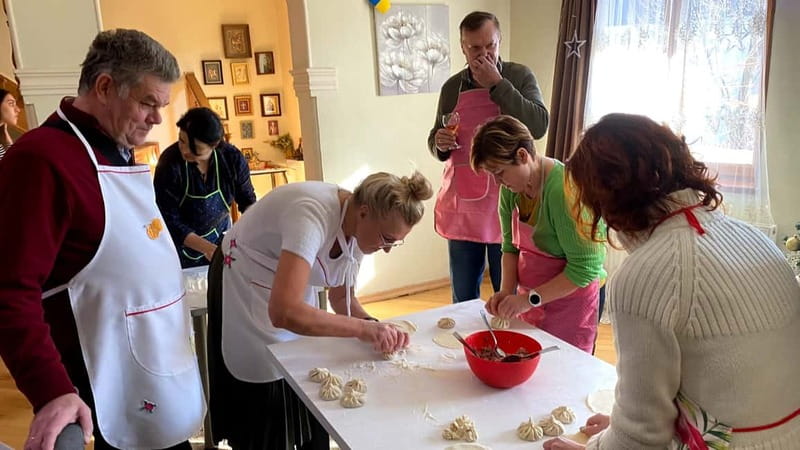
Khachapuri is the other major project. This broad family of Georgian cheese breads comes in different regional forms, and the class may include more than one style. The exact shape and method can vary, but the central idea is simple: dough, Georgian cheese, and a hot, filling result.
Sulguni, a well-known Georgian cheese, is included for tasting and may also feature in the cooking. Expect a salty, pleasantly elastic cheese that gives khachapuri its character. You do not need advanced kitchen skills to take part. The preparation is guided step by step, and the cooking is designed so that beginners can join in.
The cheese bread is also a useful introduction to Georgian eating habits. It is filling, shared at the table, and often combined with other dishes rather than served as a separate course. If you are planning to eat your way around Tbilisi, learning how khachapuri is prepared gives you a better sense of what you are ordering later.
More Hands-On Workshops in the world:
- Half-Day Thai Cooking Class at Organic Farm in Chiang Mai
★ 5.0 · 19,087 reviews - Florence: Pasta Cooking Class with Unlimited Wine
★ 4.9 · 10,285 reviews - 3 in 1 Cooking Class near Navona: Fettuccine, Ravioli & Tiramisu
★ 5.0 · 7,376 reviews - Florence: Pasta & Tiramisu Cooking Class with Unlimited Wine
★ 4.9 · 6,708 reviews
Mchadi, eggplant, salad, and the rest of the table
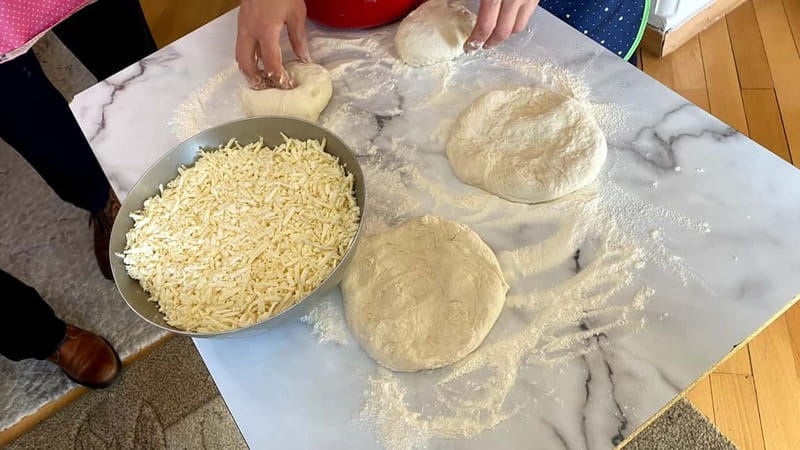
The class is not only about the two famous dishes. You also prepare mchadi, a Georgian cornbread, along with eggplant with walnuts and a Georgian salad. The eggplant dish, often prepared as rolled pieces with a walnut filling, shows off Georgia’s fondness for walnuts, herbs, and strong but balanced flavors.
Mchadi is simpler and rustic. It gives you a taste of corn-based cooking and adds a firm, savory side to the meal. The salad brings fresh vegetables to a table that can otherwise become wonderfully heavy with dough, cheese, and dumplings.
The advertised menu refers to six foods, while the named dishes can vary in the way they are counted. Past meals have also included ajapsandali, a vegetable stew, two styles of khachapuri, and other home-prepared items. Think of the menu as a generous Georgian spread built around the core dishes rather than a rigid restaurant menu.
This is one of the reasons I would arrive hungry. The meal is not a few samples placed on small plates. Hosts have prepared enough food for a large group, and the meal can feel like a family feast. If you eat lightly or have dietary limits, tell the operator about a vegetarian option when booking. A vegetarian version is available on request, but other dietary needs are not specified.
The meal is the payoff
Once the cooking is finished, you sit down and eat together. This change from kitchen work to shared table is what gives the class its warmth. You are no longer just following instructions. You are tasting the finished dishes, comparing results, and talking with the host, guide, and other people in the group.
The meal can include Georgian cheese, homemade dry white wine, water, and chacha, the country’s well-known grape spirit. The wine and chacha are part of the cultural lesson, but they also deserve a practical note: homemade drinks can vary in style and quality. Most of the feedback has been strongly positive about the food and hospitality, while one assessment found the wine and chacha less impressive than expected.
Beka, who has acted as a guide and host on some occasions, is known for leading Georgian toasts. Toasting is not just a way to raise a glass in Georgia. It can be a long-form expression of friendship, family, peace, gratitude, and good fortune. If Beka leads your meal, expect stories and several toasts, often with traditional Georgian music in the background.
You do not have to drink alcohol to enjoy the meal. Water is included, and you can focus on the cooking and food if wine or chacha is not for you. Still, if you are comfortable drinking, the wine and toast customs add an important part of the evening.
What the guide adds to the home visit
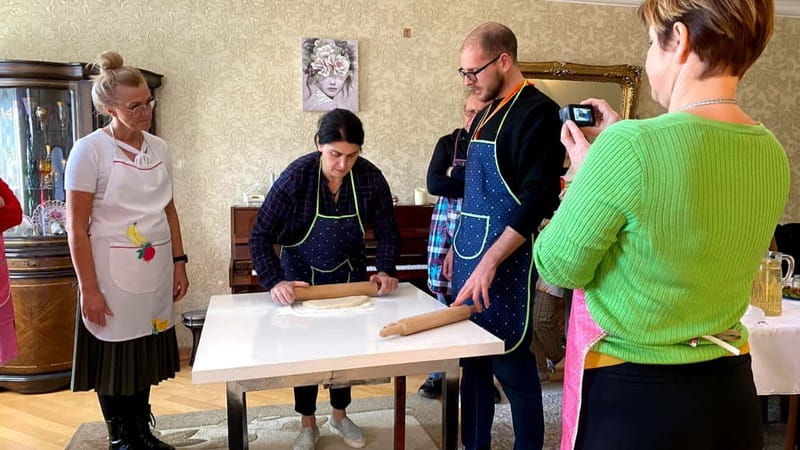
The host teaches the cooking, but the guide shapes the wider experience. English-speaking guides have explained the origins of dishes, regional variations, Georgian traditions, music, dance, current events, and everyday life.
Nicolas, for example, has been praised for translating the cooking instructions while also discussing Georgian culture and history. Maria, Ana, Oki, Nini, Salome, and Beka have also led sessions, each bringing a different style. Some are especially chatty; others focus more closely on the cooking. Since the guide changes, do not book on the assumption that you will have one particular person unless the operator confirms it.
This translation role is more important than it might first appear. A host who speaks mostly Georgian can show you authentic methods and family habits, but without an interpreter you could miss the explanations. The guide lets you ask questions and understand not just what to do, but why a dish is prepared in that way.
The atmosphere also suits solo visitors. One person who joined alone found it easy to become part of the group, since cooking gives everyone an immediate shared task. Couples, families, and children can take part too, provided they are comfortable with a three-hour food-focused evening.
How authentic is the cooking?
The class offers a real family setting, but it is still an organized activity. Ingredients and some preparation may be ready before you arrive, and the host keeps the process manageable for a group. That means you are not seeing every hidden step of a Georgian household meal.
I see this as a fair trade. You get to work with the food, ask questions, and eat several finished dishes in a limited time. A fully from-scratch class would require more hours, more waiting, and perhaps fewer dishes.
The strongest part is the combination of food and conversation. You can ask about family life, Georgian customs, local drinks, and regional cooking while standing in the kitchen. That is more revealing than a standard restaurant meal, even if it does not show every part of the host’s daily routine.
The $55 question
At $55 per person, the class is not the cheapest meal in Tbilisi. You could eat khinkali and khachapuri for less at a casual restaurant. The value comes from what is added around the food: transportation from the meeting point, an English-speaking guide, a cooking lesson, a family home, several dishes, wine, chacha, and the meal itself.
You are also paying for access to instruction and conversation that you would not get by ordering from a menu. If your main goal is simply to eat Georgian food, choose a restaurant. If you want to learn how to make it and understand the customs around the table, the price is reasonable for a three-hour evening.
The generous portions improve the value. This is a full dinner, not a snack before dinner. Some groups have been small enough to feel almost private, while other sessions bring together a social mix of people. Group size can affect how much direct attention you receive, but the cooking tasks naturally keep people involved.
Practical details before you book
Bring your passport or ID card. The tour operates in rain or sunshine, so dress for the weather, especially if your welcome includes time outdoors.
The meeting time is 17:30, and the activity runs for about three hours. That makes it a good evening plan after sightseeing, but it may be too late if you have an early dinner reservation elsewhere. Leave room afterward, since Georgian meals and toasts are not built for rushing.
Vegetarian food is available on request. Ask about it in advance rather than waiting until you arrive. The standard menu includes meat-based khinkali in many versions, although the exact preparation can vary.
Free cancellation is available up to 24 hours before the activity for a full refund, and you can reserve without paying immediately. Those terms are useful if your Tbilisi plans are still shifting.
Should you book Shorena’s Magic Kitchen?
Book this class if you want active participation, a generous meal, and a close look at Georgian hospitality. It is especially suitable for solo visitors, couples, families, and anyone who wants to learn dishes they can try at home.
You should think twice if you want every recipe made entirely from scratch, a polished professional kitchen, or a tightly timed itinerary. The class is informal, translation depends on the guide, and the return transportation arrangement needs checking.
For most people, the combination is the point: shape khinkali, fill khachapuri, taste homemade wine, listen to Georgian toasts, and share food in a family home. I would book it early in a Tbilisi stay, then use what you learn to order with more confidence at the city’s restaurants and markets.
FAQ
Where does the cooking class meet?
Meet at Avlabari Metro Station at 17:30. A local partner’s representative will wait in front of the station with a branded orange flag.
How long does the activity last?
The cooking class and meal last about three hours. Starting times can vary, so check availability when booking.
What dishes will I learn to prepare?
The core dishes are khinkali dumplings, khachapuri, eggplant with walnuts, Georgian salad, and mchadi cornbread. The menu can also include dishes such as ajapsandali, and the exact spread may vary.
Is the class taught in English?
The guide speaks English and translates the host’s cooking instructions. The host may speak Georgian and only some English.
Are drinks included?
Yes. The activity includes homemade dry white wine, Georgian chacha, water, and Sulguni cheese. You do not need to drink alcohol to take part.
Is transportation included?
Transportation from Avlabari Metro Station to the local family’s home is included. Transportation from the home back to the meeting point is not included, so ask your guide about the return plan.
Just added around the world
- Cooking Class and Wine Pairing in Capri★ 5.0 · 57 reviews
- Private Cape Malay Cooking Class in Cape Town with a Local Family★ 5.0 · 24 reviews
- Private Moroccan Cooking Class in Casablanca with a Local Expert★ 5.0 · 12 reviews
- South African Cooking in Cape Town with Local Chef Richard★ 4.5 · 10 reviews
- Langa Township and Bokaap Cooking Class Half Day Tour★ 5.0 · 4 reviews
- Private Authentic Mexican Cooking Class in Cancun with Alberto★ 5.0 · 3 reviews
- Private Authentic Cape Malay Cooking Class in Manenberg with Locals★ 5.0 · 5 reviews
- Cape Town Shore Excursion| South African Cooking & Port Transfers★ 5.0 · 3 reviews
Home Cooking Classes, compared.
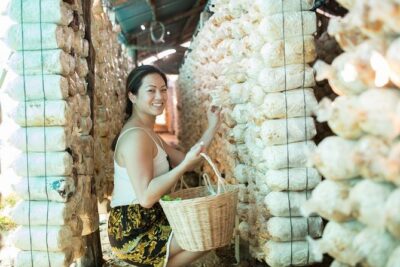
Khmer Cooking Class at a Local’s Home in Krong Siem Reap
Read our review →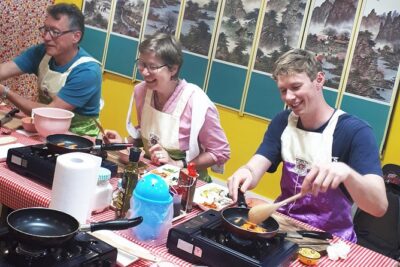
Local Home Korean Cooking Class & Market Adventure in Seoul
Read our review →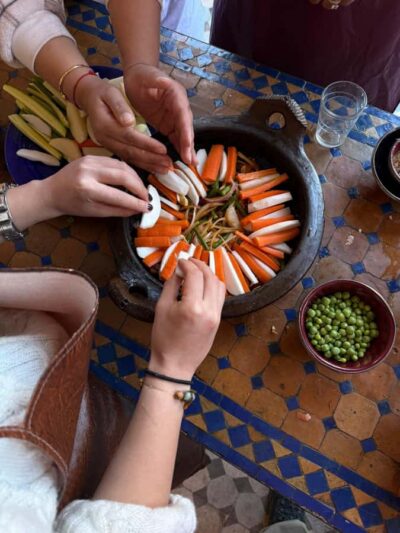
Marrakech: Moroccan Cooking Class with a Local Family
Read our review →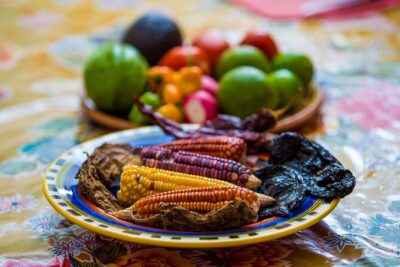
Mexican Cooking from Scratch in a Local Home in Tulum
Read our review →
Pastamama, Home Cooking Classes at Grace’s Home
Read our review →
Marrakech: Moroccan Cuisine Cooking Class in Local Home
Read our review →
Hoi An: Traditional Cooking Class & meal with Local Family
Read our review →
Browse the lists this tour appears in