
Review · USA
Thai Cooking Class in Fullerton, California
The best part of this Fullerton experience is that you learn Thai cooking in a local home, not in a staged restaurant kitchen. Young teaches you to make three dishes from scratch, then sits down with you to share the meal and explain the customs behind it.
I like the private setting, which keeps the pace personal and gives you room to ask questions. I also like the focus on flavor balance and regional food, from Central Thai and Royal Thai cooking to Northeastern Isaan dishes.
The main consideration is time: the cooking takes about two hours, followed by the meal, so plan on roughly three hours from start to finish. You also need to share dietary restrictions ahead of time so Young can prepare suitable ingredients.
Key points to know before booking
- Cook three dishes from scratch: Prepare pineapple curry, wing bean salad, and galangal soup during the hands-on class.
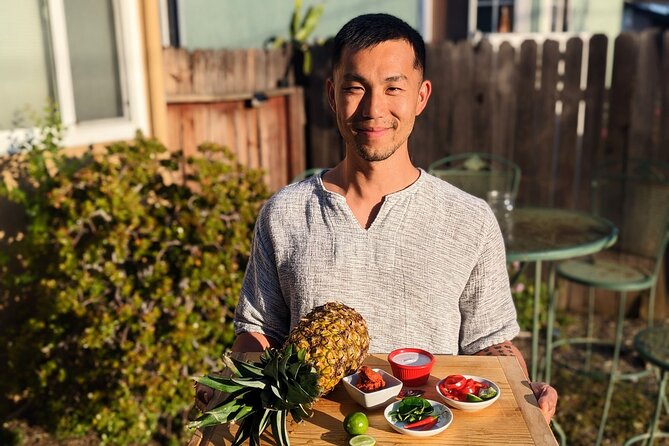
- Learn from Young at his home: The class takes place with Young, his wife, and his father in a residential area near California State University.
- Explore several Thai food traditions: The lesson covers Central Thai, Royal Thai, and Northeastern Isaan cooking.
- Share the food you prepare: After cooking, sit at the table for a homemade meal with your host.
- Private and flexible for diets: Only your group takes part, with vegetarian, vegan, and pescatarian choices available by advance request.
- Allow about three hours: The cooking portion lasts two hours, followed by time to eat and talk.
Cooking Thai food in a Fullerton home
This is a small, personal experience built around food and conversation. You meet Young at 819 N Acacia Ave in Fullerton, in a residential area near California State University. The activity begins and ends at the same location, and public transportation is nearby.
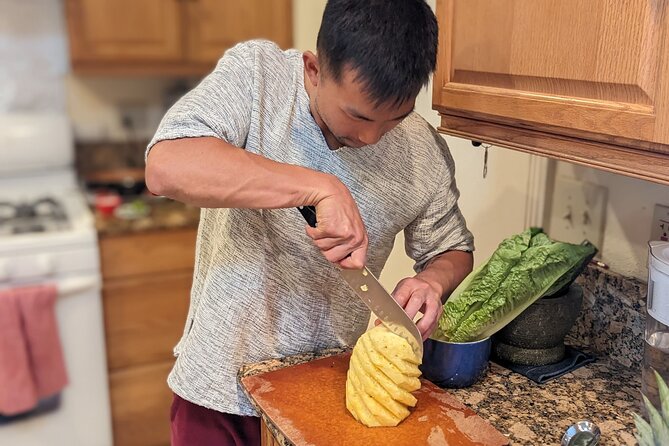
The setting matters. You are not simply watching a chef prepare a fixed menu while standing behind a counter. You join Young in his kitchen and work through the dishes yourself. That makes the class useful for anyone who wants to remember the techniques after returning home.
Young lives with his wife and father, and the class introduces you to Thai hospitality as part of the meal. The family setting may appeal to you if you prefer local contact over a formal cooking school. It also means the atmosphere is likely more intimate and home-based than polished or theatrical.
The class is private, so only your group participates. That is a practical advantage for couples, families, or friends with different cooking speeds. You can ask questions without waiting for a large class to catch up, and Young can adjust his explanations to your level.
More Thai Cooking Classes in the USA:
- Half-Day Thai Cooking Class at Organic Farm in Chiang Mai
★ 5.0 · 19,087 reviews - Chiang Mai: Cooking Class, Market & Thai Herbs Garden Tour
★ 4.9 · 4,824 reviews - Thai and Akha Cooking Class in Chiang Mai
★ 5.0 · 4,358 reviews
The two-hour hands-on lesson
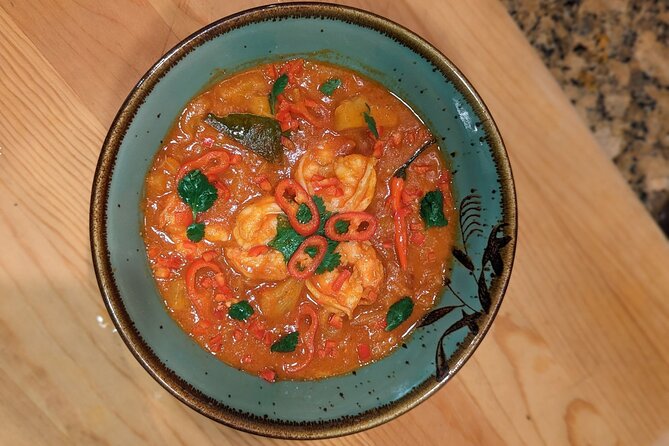
The cooking portion lasts about two hours. You will prepare three dishes from scratch: pineapple curry, wing bean salad, and galangal soup.
That menu gives you a useful spread of Thai cooking styles. The pineapple curry brings together sweet, savory, and spicy notes. The wing bean salad adds a fresh, crisp element. Galangal soup introduces the fragrant, earthy quality associated with this distinctive Thai root.
The point is not just to follow a recipe line by line. Young explains how to balance flavors so the finished meal tastes complete rather than simply hot. That lesson is especially useful because Thai food often depends on the relationship between sweet, sour, salty, spicy, and aromatic elements.
You should expect to take part in the preparation rather than sit back and observe. The class is designed around learning by doing, which gives you a better sense of how ingredients change as you work with them. If you enjoy cooking, the two-hour format gives enough time to slow down and ask about the food instead of rushing through a demonstration.
One particularly helpful feature is the chance to discuss regional differences while you cook. Young presents Central Thai food, traditional Royal Thai cuisine, and Isaan food from northeastern Thailand. These are not treated as one single Thai style. You get a broader picture of how recipes and flavor preferences vary across the country.
Pineapple curry, wing bean salad, and galangal soup
The three dishes create a balanced meal, and each one serves a different purpose in the lesson.
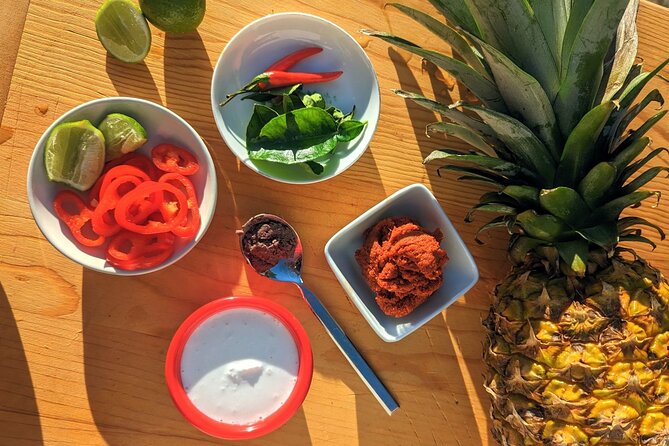
Pineapple curry gives you a look at the sweet and savory side of Thai food. Pineapple adds fruitiness to the curry, while the spices and other ingredients keep the dish from becoming dessert-like. This is the kind of recipe where flavor balance matters more than simply adding heat.
Wing bean salad brings a lighter texture to the table. Wing beans are less familiar to many people than green beans, so this part of the class can introduce you to an ingredient you may not often use at home. A salad also gives you a chance to see how Thai seasoning can make fresh vegetables the center of a dish.
Galangal soup offers a lesson in aroma. Galangal is related to ginger but has its own flavor, and it plays an important role in many Thai dishes. Making the soup from scratch helps you understand how fragrant ingredients shape a broth before you sit down to eat it.
Together, the recipes avoid making the experience all about curry. You get one substantial main dish, one fresh salad, and one soup. That variety makes the final meal feel like a proper Thai spread rather than three versions of the same preparation.
Learning the balance behind Thai flavor
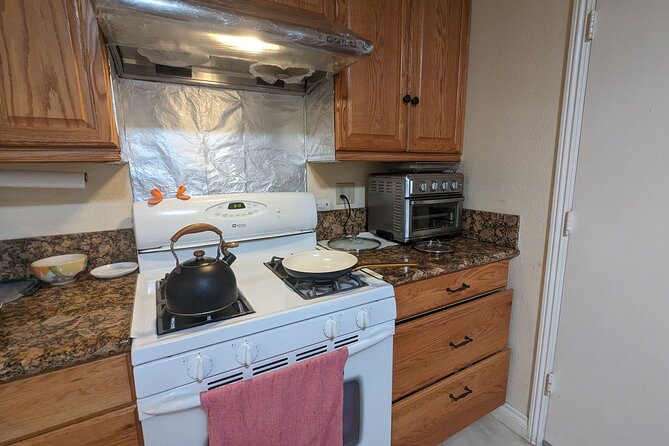
For me, the strongest teaching point here is flavor balance. Young focuses on how to create a flavorful Thai meal, not merely how to copy a list of ingredients.
That distinction is useful. A recipe can tell you what to add, but it may not explain how the finished dish should taste. Young’s guidance helps you understand the role of each element and how the parts work together.
The class also offers context about Thai customs and food traditions. You learn about Central Thai cooking, Royal Thai cuisine, and Isaan food while preparing the dishes. This gives the meal a cultural frame, so you are not treating the recipes as isolated kitchen projects.
The private format should help if you are new to Thai cooking. You can ask about ingredients, methods, and regional food without worrying about holding up a large group. One detailed account of the experience specifically praised Young’s patience, preparation, and clear discussion of different Thai regions. That is exactly the kind of teaching style that helps when unfamiliar ingredients enter the kitchen.
More Hands-On Workshops in the USA:
- New Orleans Demonstration Cooking Class with Meal
★ 5.0 · 3,000 reviews - New Orleans Hands-On Cooking Class with Meal
★ 5.0 · 1,183 reviews - Undiscovered Charleston: Half Day Food, Wine & History Tour with Cooking Class
★ 5.0 · 948 reviews - New Orleans: Cajun and Creole Cooking Class
★ 4.9 · 730 reviews
Sitting down for the meal
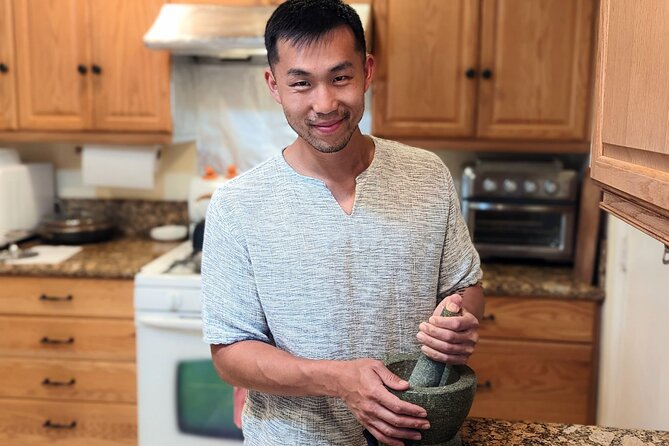
After approximately two hours of cooking, you sit down with Young to eat the food you helped prepare. This final part is more than a reward for finishing the recipes.
Sharing the meal gives you time to talk about the dishes and the customs connected with Thai food. It also lets you taste the results in the order and combination intended for the meal, rather than sampling each item separately while standing in the kitchen.
Because the class takes place in a family home, the meal has a personal quality. Young’s wife and father are part of the household, and the experience introduces you to Thai hospitality in California. If you value conversation as much as instruction, this is an important part of the three-hour schedule.
The meal may also help you judge what you learned. You can taste how the curry, salad, and soup work together and think about which techniques you want to try at home. The cooking lesson teaches the method, but eating the finished dishes shows you the target.
Regional Thai food in one class
Thai cuisine is often reduced to a short list of familiar restaurant dishes. This class offers a wider view.
Central Thai cooking and Royal Thai food are included in the discussion. Royal Thai cuisine is associated with refined preparation and presentation, while Central Thai food covers a broad range of dishes from the country’s central region. You also learn about Isaan cuisine, the food tradition of northeastern Thailand.
The experience does not turn into a long academic lecture. The regional discussion is tied to the food you are making, which keeps the information practical. You can connect a flavor or ingredient to a wider food tradition while working in the kitchen.
That makes this class a good choice if you have already eaten Thai food but want to understand it better. It is also suitable if you are new to the cuisine and would rather learn through a meal than through a formal cultural presentation.
Price, timing, and overall value
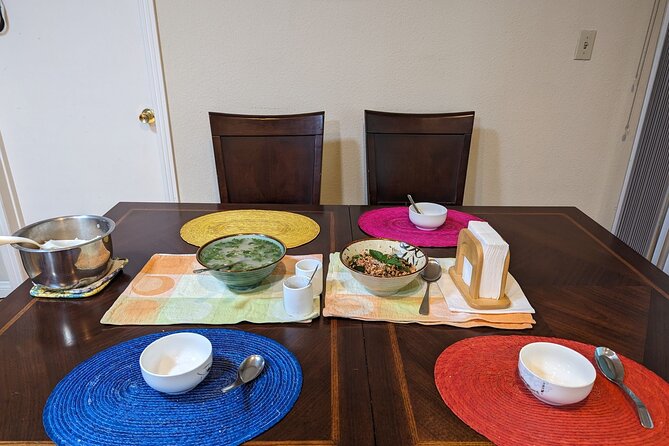
The price is $66 per person for about three hours, including the cooking class and the meal you prepare. I consider that fair value for a private experience with direct instruction and food included.
You are paying for more than a meal. The price covers the chance to work in a home kitchen, prepare three dishes, receive personal guidance, discuss Thai food traditions, and then eat the results. A standard restaurant meal may cost less, but it will not teach you how to make the food or give you the same family setting.
The value depends on what you want from the outing. If your goal is simply to eat Thai food quickly, a restaurant is easier and probably cheaper. If you want a hands-on activity with a local host, the price is more reasonable.
The schedule also deserves attention. The cooking section lasts two hours, and the full activity runs about three hours. That makes it a substantial part of your day, not a quick stop between other attractions. Since the meeting point is in Fullerton near California State University, check your plans around Anaheim and Buena Park before booking.
The activity accepts mobile tickets, and confirmation is sent within 48 hours of booking, subject to availability. Cancellation is allowed for a full refund if you cancel at least two full days before the local start time.
Dietary choices and group fit
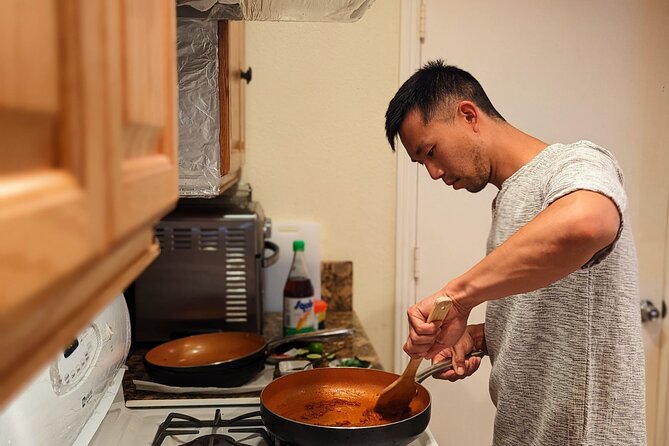
Young can accommodate vegetarian, vegan, and pescatarian diets. You need to mention your dietary needs in advance so the meal and ingredients can be planned properly.
This is a strong option for a small private group with mixed preferences. One person may want a vegan meal, while another prefers seafood or a standard menu. The available choices give you room to plan, but you should not wait until arrival to mention restrictions.
The class is also a good match for people who enjoy active experiences. You will be cooking for much of the first two hours, so it suits you if you want to work with ingredients and ask questions. It may be less suitable if you prefer a passive food tour or a simple tasting session.
Families and couples may appreciate the private format. Friends who cook together can split tasks and compare results. Solo visitors can also benefit from the personal instruction, though the supplied details do not state how solo bookings are arranged, so confirm availability before making plans.
What makes Young’s hosting important
The strongest praise centers on Young’s approach. He is described as patient, thorough, well prepared, and clear when discussing Thai regional cuisines. Those qualities matter in a cooking class because timing and explanation can make the difference between feeling lost and feeling capable.
A second strong point is his hospitality. He welcomes you into his home, shares customs connected with Thai food, and eats the meal with you afterward. This makes the experience feel like a personal introduction rather than a simple recipe lesson.
The tone also seems relaxed and conversational. You have time to talk while cooking, and the meal provides a natural chance to continue the discussion. If you want a class where the host is present throughout, rather than disappearing once the demonstration ends, this format should suit you.
Of course, a home-based class is not for everyone. You may prefer a professional school with commercial equipment, a larger menu, or a more formal structure. The appeal here is the home setting and personal contact, so book it for those reasons.
Who should book this Fullerton class?
I would recommend it to you if you enjoy food, local contact, and practical lessons. It works especially well for:
- People who want to cook Thai food rather than only eat it
- Couples and small groups seeking a private activity
- Anyone curious about Central Thai and Isaan cuisine
- Vegetarians, vegans, and pescatarians who give advance notice
- Visitors staying around Anaheim or Buena Park who can spare about three hours
- Cooks who want to understand Thai flavor balance
You may want to skip it if your schedule is tight, if you dislike cooking, or if you want a restaurant-style meal without hands-on work. The class takes time, and its value comes from participation.
Should you book it?
Book this class if you want a personal introduction to Thai food in a real home setting. The combination of three dishes, regional context, private instruction, and a shared meal gives you something a restaurant cannot.
The best reason to choose it is the chance to learn from Young’s patient, well-prepared teaching while eating the food you helped make. Just allow the full three hours, provide dietary details in advance, and make sure the Fullerton meeting point fits your day. If those conditions work, this is a practical and warmly hosted way to experience Thai cooking in Southern California.
FAQ
Where does the Thai cooking class take place?
The class takes place at 819 N Acacia Ave, Fullerton, California 92831, in a residential area near California State University.
How long does the experience last?
The activity lasts approximately three hours. The hands-on cooking class takes about two hours, followed by a shared meal.
What dishes will I learn to make?
You will learn to make dishes such as pineapple curry, wing bean salad, and galangal soup from scratch.
Is the class private?
Yes. Only your group participates in the activity.
Who leads the cooking class?
Young hosts the class and shares his cooking knowledge, Thai customs, and information about Central Thai, Royal Thai, and Isaan food.
Are vegetarian, vegan, and pescatarian meals available?
Yes. Young can accommodate vegetarian, vegan, and pescatarian diets if you provide the information in advance.
Does the activity begin and end at the same place?
Yes. The meeting point is 819 N Acacia Ave, and the activity ends back at that location.
Can I cancel for a full refund?
Yes. You can receive a full refund if you cancel at least two full days before the experience start time. Cutoff times use the local time of the activity.
Just added around the USA
- San Francisco: Dumpling Cooking Class & 3-Course Dinner★ 5.0 · 10 reviews
- New Orleans: Cooking Class & Cocktail Walking Tour★ 4.7 · 16 reviews
- New Orleans: Food Walking Tour & Cooking Class Experience★ 5.0 · 8 reviews
- New Orleans: Hands-on Cajun Roux Cooking Class★ 4.9 · 7 reviews
- New Orleans: Traditions Cooking Class★ 5.0 · 9 reviews
- Atlanta: Historic Market Food Tour and Biscuit Cooking Class★ 4.9 · 25 reviews
- Chinese Dumplings Cooking Class in NYC – Fun & Delicious!★ 5.0 · 4 reviews
- Hands-on Cajun Roux Cooking Class in New Orleans★ 5.0 · 356 reviews
Thai Cooking Classes, compared.
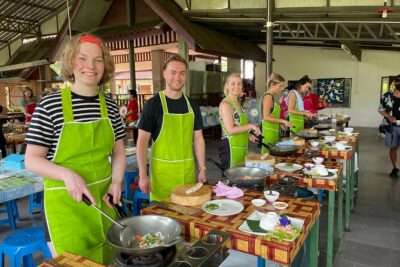
Half-Day Thai Cooking Class at Organic Farm in Chiang Mai
Read our review →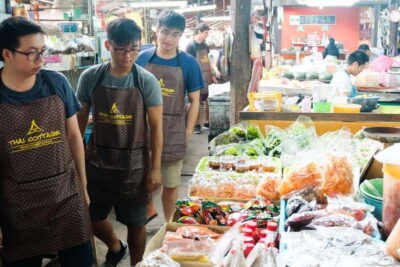
Chiang Mai: Cooking Class, Market & Thai Herbs Garden Tour
Read our review →
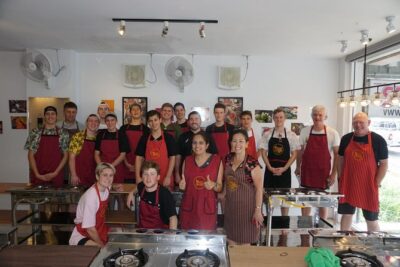
Phuket Thai Cooking Class with Market Tour Option
Read our review →
Bangkok: Hands-on Thai Cooking Class and Market Tour
Read our review →
Bangkok: Tingly Thai Cooking School Half-Day Cooking Class
Read our review →
Bangkok: Maliwan Thai Cooking Class with Market Tour
Read our review →
Browse the lists this tour appears in