
Review · TOKYO
Tokyo: Wagyu and 7 Japanese Dishes Cooking Class
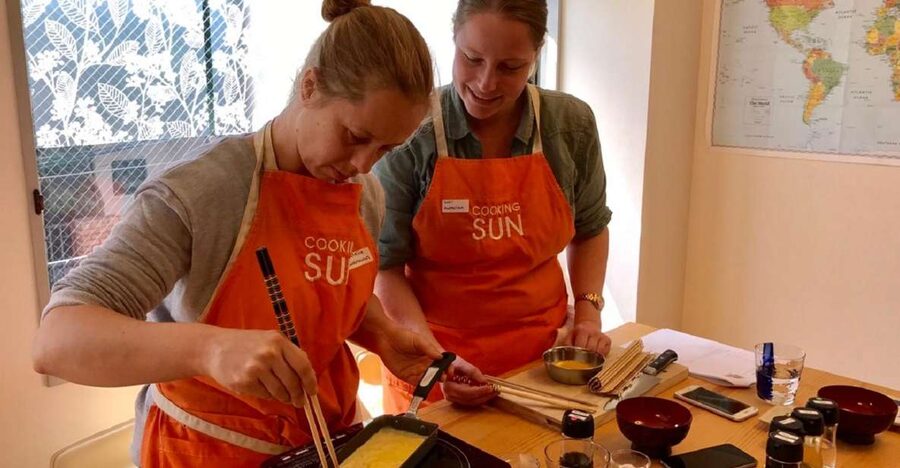
The best part of this Tokyo cooking class is that Wagyu is only one piece of a full Japanese meal. You work through eight dishes, from dashi-based soup and small appetizers to Wagyu sukiyaki and dorayaki pancakes, then sit down to eat what you made.
I like the small group of up to eight, which gives you room to ask questions, and I like the practical focus. You learn simple methods you can repeat at home, such as making dashi, preparing miso soup, folding omelets, and finding ingredient substitutes abroad. The friendly English-speaking instructors, including Yuki, Yuko, and Kaori, add useful food history without turning the class into a lecture.
The one caution is the pace. Three hours is enough time for a varied meal, but not for advanced knife training or a slow, chef-school lesson. You will handle plenty of food, but some preparation is done ahead of time so the group can finish all seven main dishes and dessert.
Key points at a glance
- Eight dishes in about three hours: You prepare a full Japanese meal rather than focusing only on sushi or one famous dish.
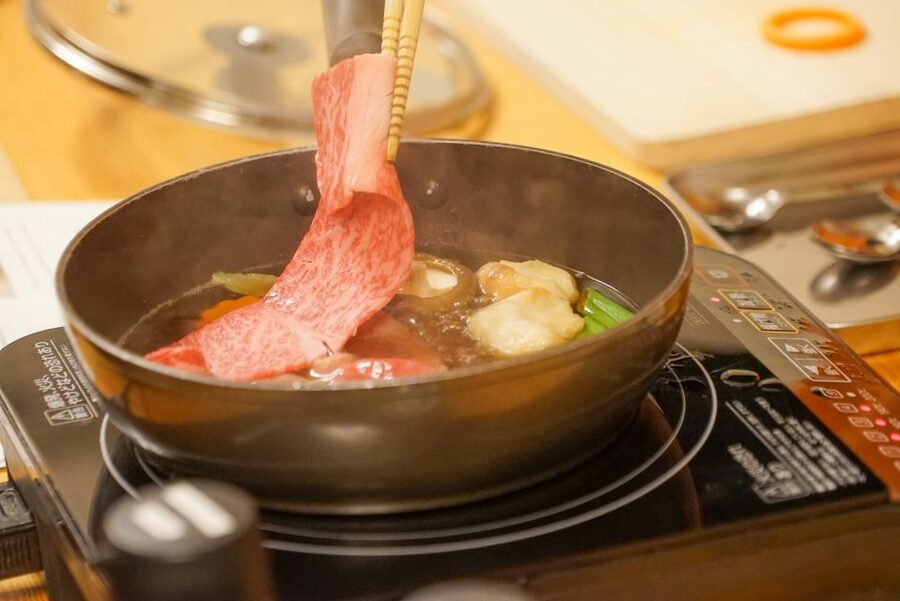
- Wagyu sukiyaki is the main event: The tender beef is cooked in a Japanese hot pot style with a savory sauce.
- Real cooking basics: You make dashi from scratch, work with miso, prepare tofu, and practice Japanese cutting and shaping techniques.
- Small, friendly English-speaking class: The group is limited to eight people, with instructors guiding each step.
- Recipes you can use later: The methods are simple enough for home kitchens, and the instructors offer substitution ideas.
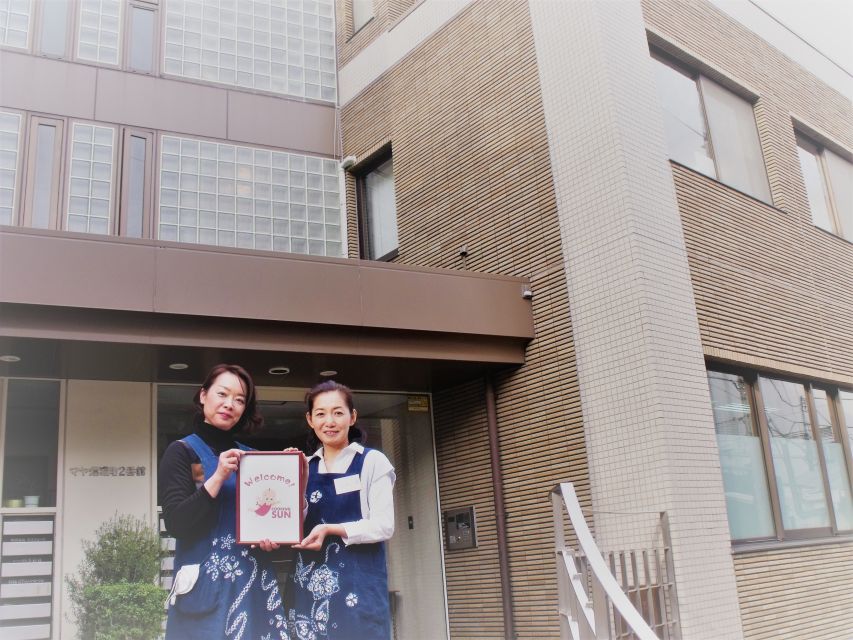
- A residential Tokyo setting: The studio is on the second floor of a beige building in Shinjuku-ku, not in a tourist district.
A full Japanese meal, not just a Wagyu tasting
Many Japanese cooking classes build the whole experience around sushi, ramen, or a single specialty. This class takes a broader route. Wagyu gets the most attention, but the meal also shows you how several everyday Japanese dishes fit together.
The menu changes with ingredients and class arrangements, but the dishes described for this experience include appetizers, dashi-based soup, salads, tofu stuffed with ground chicken, a Japanese omelet, Wagyu sukiyaki, sesame potato salad, and dorayaki made with rice flour. That is a lot to cover in one sitting.
I like this approach because it gives you a better feel for Japanese home cooking. You are not only learning how to prepare an expensive cut of beef. You are also seeing how small portions, soup, vegetables, tofu, and sweets create a balanced meal.
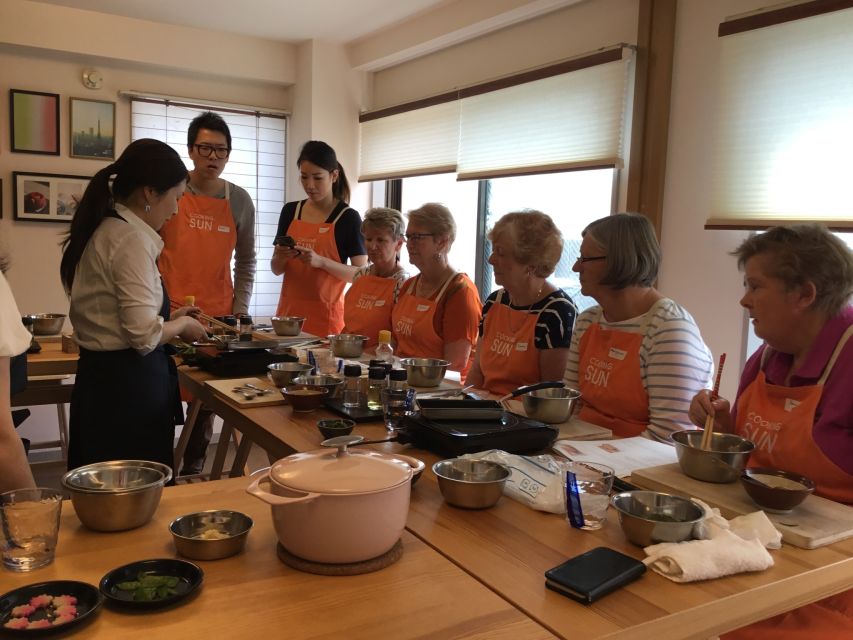
The class is hands-on, but it is designed for beginners. You follow demonstrations, work with prepared ingredients, and receive step-by-step help. The setup keeps the session moving and makes it possible to cook several dishes without turning the afternoon into a marathon.
More Sushi and Japanese Classes in Tokyo:
- Sushi Making Tokyo Roll and Authentic Japanese Sushi Class
★ 5.0 · 3,971 reviews - Tokyo: Roll and Authentic Sushi Making Class in Asakusa
★ 4.9 · 1,957 reviews - Tokyo: Sushi Making Class in a Happi Coat near a Famous Spot
★ 4.9 · 1,377 reviews
Starting with dashi, miso, and Japanese flavor
A useful feature of the class is its attention to basic flavors. Dashi, the Japanese soup stock, appears early in the meal and helps explain why Japanese cooking can taste light but still full of depth.
You may make dashi from scratch for miso soup, then learn how different types of miso affect the final taste. One useful point covered in the class is the difference between red miso and white miso. That kind of comparison matters when you shop for ingredients later, especially since recipes often use the word miso as if all miso tastes the same.
The instructors also explain why particular ingredients are used and how they fit into Japanese cooking. This makes the class more useful than a simple recipe demonstration. You begin to understand the role of stock, seasoning, texture, and presentation.
The soup course is not flashy, but it may be one of the most valuable parts for cooking at home. Once you know how to make a basic dashi and adjust miso, you have a foundation for several Japanese meals.
Small dishes with useful kitchen techniques
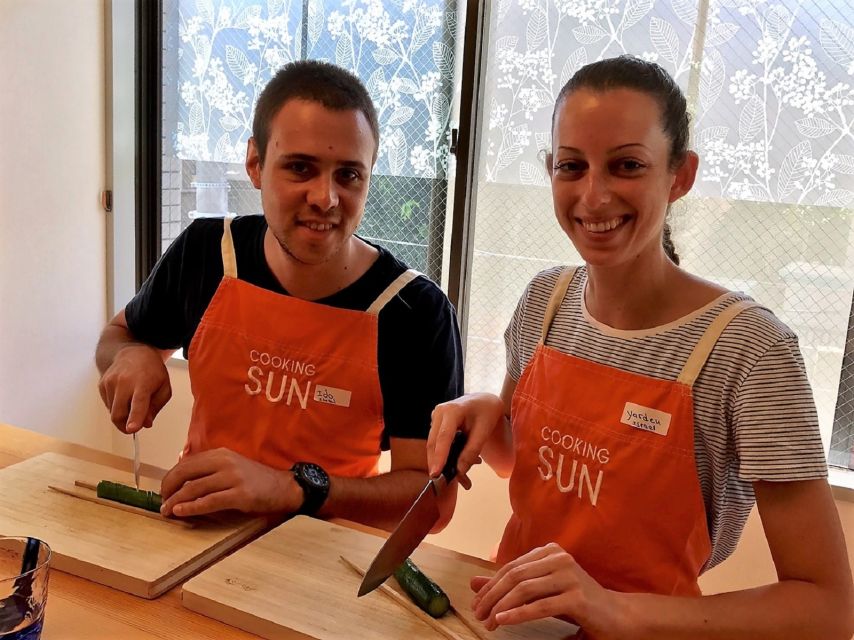
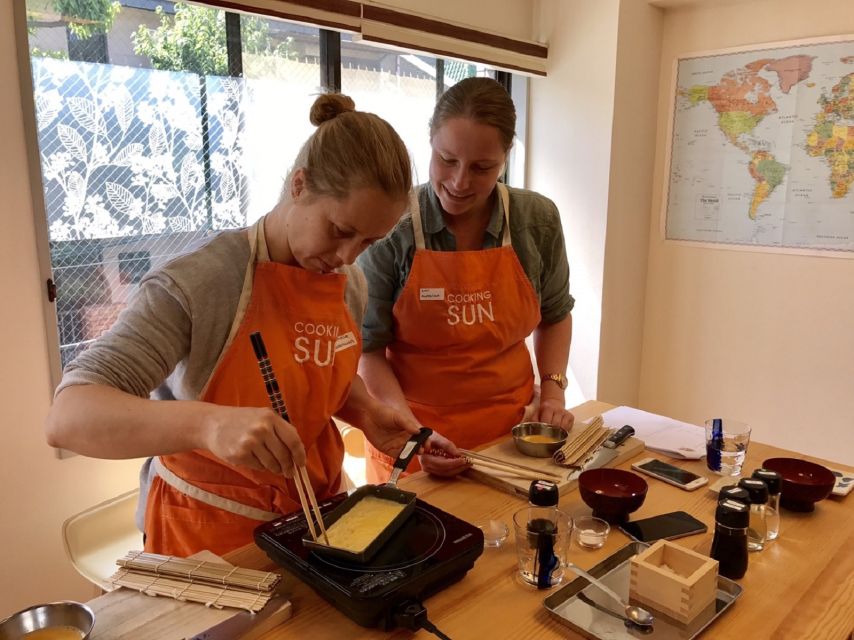
The class includes several smaller preparations that teach skills rather than simply filling time. You might roll your own Japanese omelet, accordion-cut cucumbers for a salad, and prepare a sesame potato salad.
The cucumber technique is a good example of the class’s practical style. It adds texture and helps a simple salad look more carefully prepared. The omelet gives you a chance to work with a familiar ingredient in a distinctly Japanese way.
Another dish described in the class is tofu stuffed with ground chicken, ginger, and edamame. This brings together soft tofu, savory filling, and fresh green vegetables. It also shows how Japanese food often uses modest ingredients in careful combinations rather than relying on heavy sauces.
The recipes are not presented as difficult restaurant challenges. That is good news if you want skills you can repeat at home. It is less suitable if your main goal is advanced knife work, professional plating, or complex restaurant technique.
One past participant made the useful distinction that the class teaches Japanese style and flavor more than serious cutting instruction. I would keep that in mind when booking. You will gain confidence with everyday dishes, but this is not a specialist culinary course.
Wagyu sukiyaki and the meal you prepare
The Wagyu portion is the headline attraction, and it gives the class a special treat without making the whole experience about luxury beef. You prepare the beef in sukiyaki style, a Japanese hot pot dish known for its sweet-savory sauce and tender slices of meat.
The cooking method is approachable. You do not need advanced skill to produce a good result, and the instructors guide you through the process. The pleasure comes from the contrast between the richly flavored beef and the lighter supporting dishes you prepared earlier.
Several people who took the class found the Wagyu especially tender and satisfying. One useful comparison came from a couple who had already eaten Wagyu at a Tokyo restaurant and still found the class’s beef notably tender. That is not a promise that every serving will match your favorite restaurant, but it does suggest the beef is not treated as a token ingredient.
The format also lets you eat the food while it is fresh. After the cooking, you sit down to enjoy the full meal, including the Wagyu main dish. I consider this better value than a class where you prepare food but leave before the meal is properly served.
More Hands-On Workshops in Tokyo:
- Tokyo Sushi Making Class in Tsukiji with Professional Chef
★ 5.0 · 1,177 reviews - Ramen & Gyoza Cooking Class in Tokyo with Local Supermarket Visit
★ 5.0 · 823 reviews - Tokyo: Tsukiji Fish Market Sushi Making Class with Pro Chef
★ 4.9 · 506 reviews - Tokyo Tsukiji Fish Market Tour and Sushi Making Lesson
★ 5.0 · 390 reviews
Dorayaki dessert and the final table
Dessert is not forgotten. You may make dorayaki, a Japanese sweet made with pancakes and filling. The version described here uses rice flour, adding another small lesson in Japanese ingredients and texture.
Making dessert after the savory courses gives the class a clear beginning, middle, and end. You start with basic stock and side dishes, move into the main course, and finish with something sweet. That structure helps the meal feel like a complete introduction rather than a collection of unrelated recipes.
The final meal is also a chance to compare results with the other people in the room. Since the group is small, the atmosphere is social without being a large demonstration. Solo participants can join in easily, and families or couples can work together while still meeting other cooks.
The class has also worked well for families with older children. An 11-year-old participant enjoyed making the dishes and declared the Wagyu the best beef in the world. That is not a technical assessment, of course, but it says something about the broad appeal of cooking and eating the finished meal.
Friendly instruction in clear English
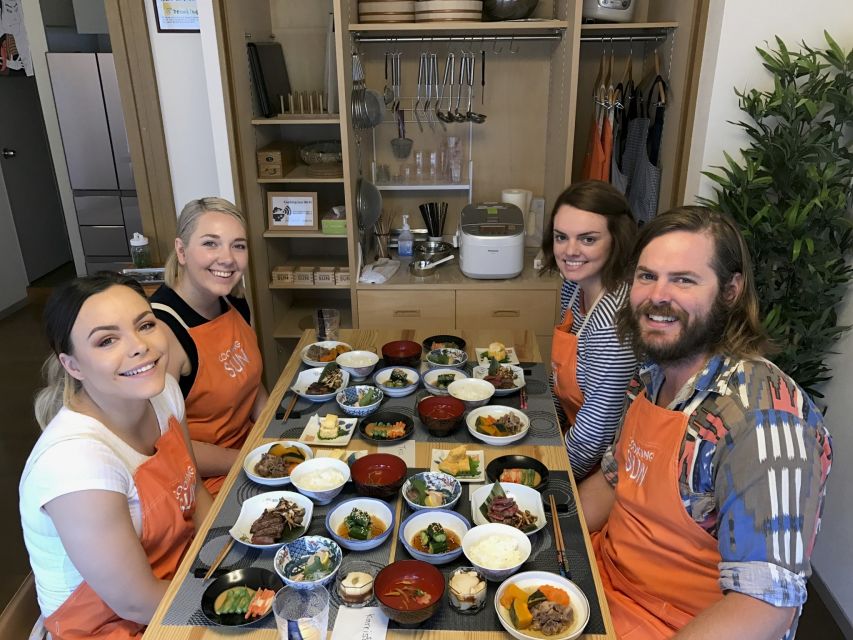
The instructors are a major part of the experience. They demonstrate each stage, explain ingredients, and give background on Japanese food and customs. The English is described as clear, and the teaching style is patient and organized.
Different instructors may lead the session, but names associated with the class include Yuki, Yuko, Kaori, and Bifuka. You may have more than one instructor working with the group, which helps when several dishes are underway at once.
The best teaching detail is the link between food and daily life. You learn not only what to do, but why the ingredient is used and how the dish fits Japanese eating habits. You may also pick up small cultural points, such as what to say before and after a meal.
The staff also explain where to find ingredients and how to make substitutions outside Japan. That is especially useful for people who want to recreate the food at home but cannot buy the exact Japanese product named in the recipe.
The studio in a quiet Shinjuku neighborhood
The studio is in Shinanomachi, in Shinjuku-ku, inside a residential area. This gives you a look at a quieter side of Tokyo, away from the giant signs and packed shopping streets.
It can be hard to find on your first attempt. The studio is on the second floor of a beige residential building. At the entrance, you will see two doors, and you need to use the door on the right. Press 314 on the intercom to call the studio.
If you have internet access, search Google Maps for Cooking Sun Tokyo at Shinanomachi 18-39, Shinjuku-ku, Tokyo. If you do not have Wi-Fi, prepare the directions before leaving your hotel and check the detailed directions supplied by the cooking school.
This is a small but important planning point. Do not assume the studio will be obvious from the street. Give yourself extra time, especially if you are cooking on your first morning in Tokyo.
If you arrive by private vehicle, do not stop or wait in front of the building. The area is residential, so a driver who needs to wait should use a nearby coin-operated parking lot.
Is $67 good value for three hours?
At $67 per person, this class offers solid value if you want both instruction and a meal. Your fee covers the recipes, ingredients, utensils, apron and towel rental, welcome tea, instruction, and the food you prepare.
The value comes from the range of dishes. A Wagyu tasting alone might be shorter and more limited. Here, you also learn dashi, miso soup, omelet preparation, tofu, salad techniques, sukiyaki, and dessert.
The small group matters too. With no more than eight participants, you are not simply watching a chef from the back of a crowded room. You have a reasonable chance to ask about ingredients, cooking times, and substitutions.
There are limits. Hotel pickup and transportation are not included, and the residential studio requires careful navigation. The class also does not promise advanced cutting instruction. If you want a highly technical cooking lesson, you may prefer a more specialized course.
For most people who want a useful introduction to Japanese home cooking, the price is fair. You leave with a meal, recipes, and techniques you can try again. That is a better deal than an activity built only around taking photographs or sampling one expensive ingredient.
Who should book this cooking class?
I would recommend it to first-time visitors who want food knowledge they can use during the rest of a Japan trip. Learning about dashi, miso, tofu, and everyday meal structure can change how you read a Japanese menu afterward.
It also suits couples, solo participants, families with older children, and people who do not eat fish. The menu includes several meat, vegetable, tofu, soup, and dessert elements, and the class can adjust ingredients for allergies, gluten-free diets, vegetarian preferences, religious restrictions, and other dietary needs if you report them when booking.
You do not need to be a confident cook. The recipes are intended to be manageable, and the instructors demonstrate each stage. You should still be comfortable standing, preparing food, and keeping up with several dishes in one session.
Book it early in your trip if possible. The class gives you useful context for dishes you may encounter elsewhere in Japan, and the recipes can help you recognize familiar ingredients and flavors.
The main reason to skip it is if you want a narrow, advanced lesson. This class gives you breadth, practical methods, and a social meal. It does not focus on expert knife skills or one difficult signature dish.
Practical details before you reserve
The experience lasts about three hours, with roughly two and a half hours devoted to preparing the meal before you sit down to eat. Starting times vary, so check availability for the date you want.
The class is conducted in English, and participation is limited to eight people. Ingredients, utensils, apron rental, towel rental, welcome tea, and recipes are included. Transportation and hotel pickup are not.
You can cancel up to 24 hours in advance for a full refund, and a reserve-now, pay-later option is available. Dietary needs should be stated at booking so substitutions can be arranged.
Should you book it?
Book this class if you want a friendly, practical introduction to Japanese food with a proper meal at the end. The strongest reasons are the variety of dishes, the useful dashi and miso lessons, the small English-speaking group, and the chance to cook Wagyu sukiyaki rather than simply eat a sample.
I would especially choose it early in a Tokyo visit, when the food background will help you make sense of later meals. Just allow time to find the residential studio, and do not expect a high-level knife course. For $67, it is a sensible pick for cooks of nearly any skill level who want recipes, context, and a satisfying lunch in one compact session.
FAQ
How long does the Wagyu and Japanese dishes cooking class last?
The experience lasts three hours. About two and a half hours are spent preparing the meal, followed by time to sit down and eat what you made.
How many dishes will I prepare?
The class includes eight dishes in total, described as seven Japanese dishes plus dessert. The menu can include appetizers, dashi soup, salads, tofu, a Japanese omelet, Wagyu sukiyaki, and dorayaki.
Is the class taught in English?
Yes. The instructors speak English and guide you through the cooking steps, ingredients, and background of the dishes.
How large is the cooking group?
The class is limited to eight participants, making it a small-group experience.
Is Wagyu included in the meal?
Yes. Wagyu beef is the main highlight, prepared in sukiyaki hot pot style and eaten as part of the meal you cook.
Can dietary requirements be accommodated?
Yes. Ingredient substitutions can be arranged for food allergies, gluten-free diets, religious dietary restrictions, vegetarian preferences, and other requirements. You should provide this information when booking.
Where is the studio located?
The studio is at Shinanomachi 18-39 in Shinjuku-ku, Tokyo, inside a beige residential building. It is on the second floor, and you should use the right-side entrance door and press 314 on the intercom.
Just added around Tokyo
- Tokyo: Tsukiji Market Walking Tour & Sushi Cooking Class★ 4.6 · 122 reviews
- Tokyo: Sushi Cooking Class with Sake Tasting★ 4.8 · 55 reviews
- Sushi-Making Experience★ 4.7 · 4 reviews
- Tokyo: Tsukiji Market Guided Tour & Sushi-Making Experience★ 4.4 · 11 reviews
- Tokyo: Sushi and Ramen Cooking Class with Sake Pairing Set★ 5.0 · 81 reviews
- Tokyo: Kawaii Bento Cooking Class – Cute Character Lunchbox★ 4.9 · 55 reviews
- Tokyo: Learnt to cook Bento, Oyakodon and More!★ 5.0 · 5 reviews
- Tokyo: Real Ramen & Dumpling Cooking with Master Chef★ 5.0 · 10 reviews
Japanese & Sushi Cooking Classes, compared.
Sushi Making Tokyo Roll and Authentic Japanese Sushi Class
Read our review →
Tokyo: Roll and Authentic Sushi Making Class in Asakusa
Read our review →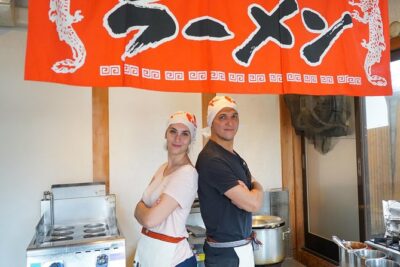
Ramen Cooking Class at Ramen Factory in Kyoto
Read our review →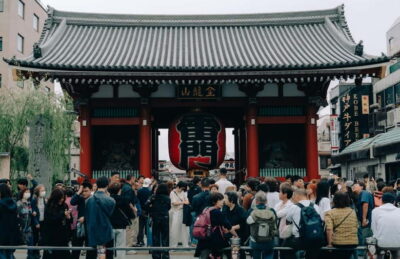
Tokyo: Sushi Making Class in a Happi Coat near a Famous Spot
Read our review →
Sushi Making Tokyo! Popular Maki Sushi & Japanese Sushi(+Recipe!)
Read our review →
Sushi Making Osaka Roll and Authentic Japanese Sushi Class
Read our review →
Tokyo Sushi Making Class in Tsukiji with Professional Chef
Read our review →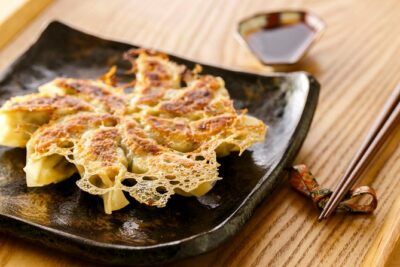
Ramen & Gyoza Cooking Class in Tokyo with Local Supermarket Visit
Read our review →Browse the lists this tour appears in