
Review · COOKING CLASSES
Unique Ethiopian Cooking Class and Coffee Ceremony with a Local in Addis Ababa
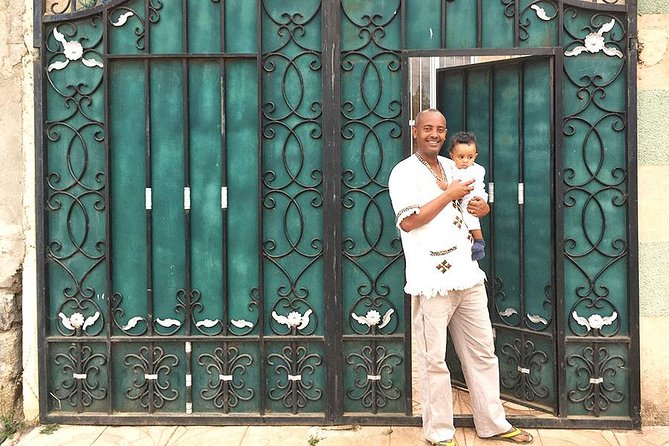
The best part of this Addis Ababa experience is that you enter a real family home, not a polished cooking studio. Daniel and Tigist welcome you into their kitchen, where you learn to make injera, cook a traditional dish, and roast coffee from raw beans. The setting is calm, homey, and well away from the usual sightseeing circuit.
I like the hands-on focus, especially the chance to practice pouring and cooking injera rather than simply watching. I also like the coffee ceremony, which turns a simple cup of coffee into a careful social ritual. The main drawback is the price, $116 per person, and the fact that meeting-point and pickup details need close attention.
Key points to know before booking
- A real Addis Ababa home: Daniel and Tigist host you in their own kitchen, with family life nearby.
- Injera is the main lesson: You learn how to mix, pour, and cook Ethiopia’s famous fermented flatbread.
- Coffee starts with raw beans: The ceremony includes hand-roasting the beans before drinking the coffee.
- The menu can change: You might prepare shiro, tibs, or another seasonal dish, with vegetarian food available by request.
- Lunch or dinner is possible: Evening and weekend visits may include time with Daniel and Tigist’s three sons.
- Private but not fully escorted: Your group takes part alone, but hotel pickup and drop-off are not included.
A home kitchen instead of a cooking school
This experience works because it feels personal from the moment you arrive. Daniel and Tigist do not run a commercial cooking studio with rows of workstations and printed recipes. You visit their home on the outskirts of Addis Ababa, in a neighborhood described as calmer and greener than the city center.
That location matters. You see a quieter side of Addis, one that is easy to miss if your time is limited to museums, churches, markets, and major roads. The home is clean and comfortable, with photographs of the couple’s three boys. If you book for an evening or weekend, the children may be around, adding the ordinary family rhythm that makes the visit feel less staged.
I like this format for anyone who wants cultural contact without a formal lecture. You sit in a kitchen, talk with a local family, and learn through food. The experience is as much about conversation and daily life as it is about cooking.
It is also worth setting expectations. This is not the best choice if you want a professional chef, a printed recipe booklet, or a tightly timed restaurant-style class. The appeal is the home setting, and that means the pace may feel more relaxed and informal.
More Coffee Experiences in the world:
- Da Nang Cooking Class with Coffee Tasting and Market Visit
★ 5.0 · 310 reviews - Hanoi Cooking Class: Pho/Bun Cha/Banh Xeo…+Free Egg/Salt Coffee
★ 5.0 · 267 reviews - Market Tour and Cooking Class with a Coffee Ceremony at a Home in Addis Ababa
★ 5.0 · 32 reviews
Starting with injera, Ethiopia’s essential bread
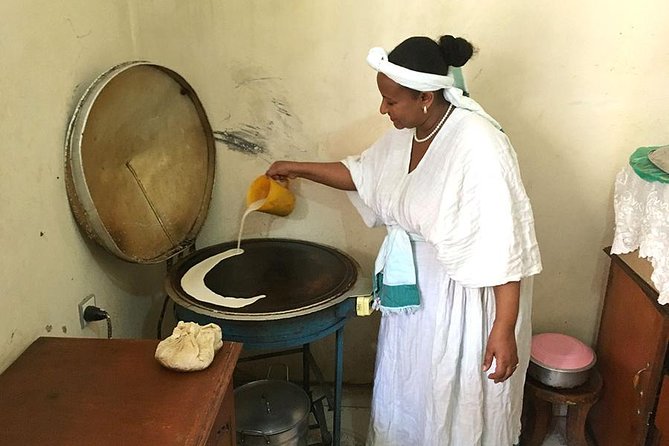
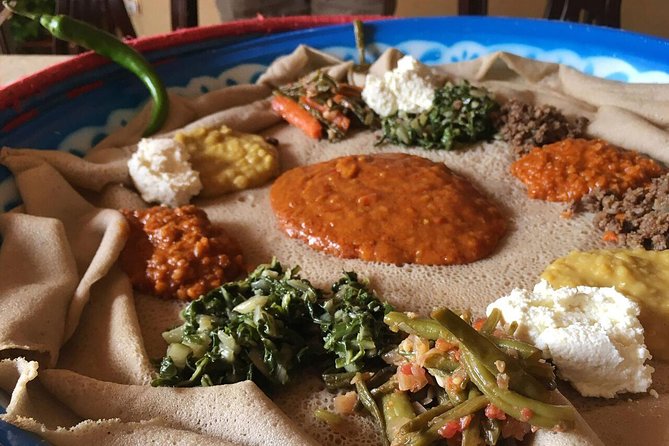
The cooking class lasts about two hours, with Tigist leading the practical work. The central lesson is injera, the soft, fermented flatbread used across Ethiopia to scoop up food. It is not simply a side dish. Injera acts as plate, utensil, and part of nearly every shared meal.
You learn how to pour the batter and cook the flatbread properly. That sounds simple until you consider the texture and timing involved. A good injera needs to cook through while keeping its distinctive softness and spongy surface. The class gives you a chance to see the process up close and try it yourself.
I especially like this part because injera is one of the foods you will encounter repeatedly in Ethiopia. Learning how it is made changes the way you understand the meal later. Instead of treating it as an unfamiliar bread, you recognize the skill behind each piece.
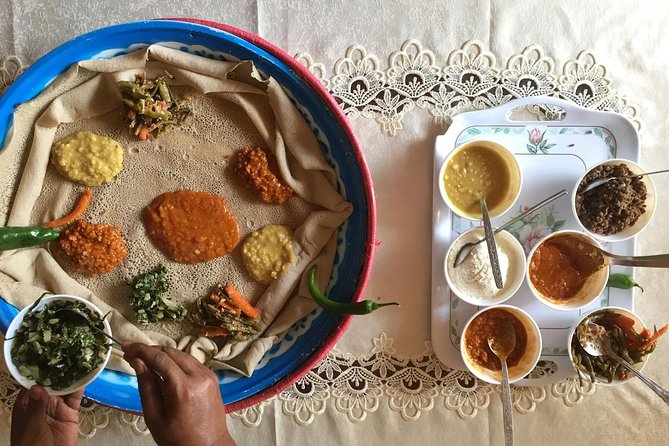
The menu varies with the season and the host’s plan. Shiro, a stew made from chickpea or broad bean flour, is one possible dish. Tibs, made with stir-fried meat, vegetables, and spices, is another. If you want to learn an additional dish, you can add that request in your booking notes, but expect the cooking time to become longer than the usual three-hour visit.
That flexibility is useful, particularly for people with a strong interest in Ethiopian food. I would make your preferences clear in advance rather than assume a certain dish will be served. Vegetarian food is available, but you need to request it when booking. Allergies, dietary restrictions, and other cooking preferences should also be shared ahead of time.
Shiro, tibs, and the value of learning by doing
The possible dishes give the class a good range. Shiro introduces you to a comforting, everyday stew with a smooth texture and earthy flavor. Tibs offers a different experience, with meat, vegetables, and spices cooked together in a more direct, lively style.
The important point is that the menu is not fixed. You are not buying a guaranteed shiro class or a guaranteed tibs class unless the host confirms it. That may disappoint someone planning an entire food-focused itinerary around one particular recipe, but it also keeps the meal connected to the season and the household.
You should expect to work alongside Tigist rather than simply watch her cook. The information provided describes this as a private class and meal, which means your group has the host’s attention instead of sharing a large public session. For a small group, that can make it easier to ask questions and get help with injera.
The private format also makes the $116 price easier to judge. It is not a cheap meal, and solo visitors may find the cost high compared with eating at an Addis Ababa restaurant. But the fee covers a three-hour private visit, instruction, food, beverages, taxes, handling charges, and gratuities. For a couple or family that values personal contact, the price buys more than dinner.
Group discounts are available, so check the final cost if several people are booking together. A larger group may also make the per-person price more comfortable, though the experience is likely most enjoyable when everyone can take part in the kitchen.
Coffee roasted by hand, then served with care
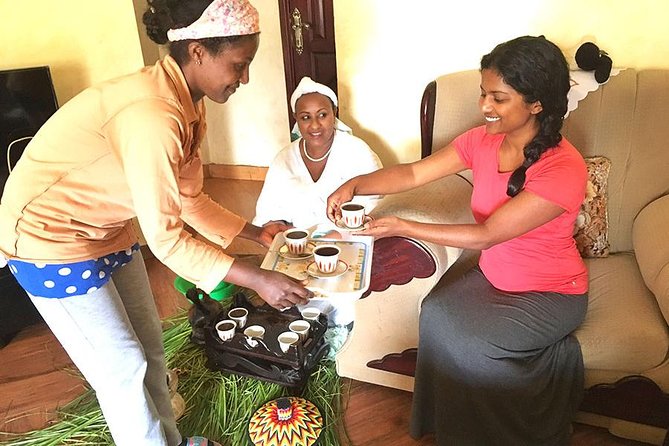
The coffee ceremony gives the afternoon or evening its most memorable finish. You learn to roast coffee beans by hand, starting with the raw beans rather than jumping straight to a brewed cup. That small detail makes the process easy to understand: roasting is part of the ceremony, not an invisible step completed somewhere else.
The ceremony also adds a social side to the meal. Ethiopian coffee is tied to hospitality and time spent together, so the coffee is not rushed between cooking tasks. You get a chance to sit, talk, and absorb the household setting after the kitchen work is done.
I like the contrast between the two parts of the experience. Cooking asks you to pay attention to technique, heat, texture, and timing. Coffee slows things down. It gives you room to speak with Daniel and Tigist about their lives and family, rather than focusing only on food.
The coffee component is especially helpful for anyone who already knows Ethiopian coffee as a product but has never seen the preparation. You leave with a better sense of the work behind the cup and the role coffee can play in a home gathering.
More Hands-On Workshops in the world:
- Half-Day Thai Cooking Class at Organic Farm in Chiang Mai
★ 5.0 · 19,087 reviews - Florence: Pasta Cooking Class with Unlimited Wine
★ 4.9 · 10,285 reviews - 3 in 1 Cooking Class near Navona: Fettuccine, Ravioli & Tiramisu
★ 5.0 · 7,376 reviews - Florence: Pasta & Tiramisu Cooking Class with Unlimited Wine
★ 4.9 · 6,708 reviews
What the neighborhood adds to the visit
The home is on the outskirts of Addis Ababa, outside the areas most visitors see. The neighborhood is described as calmer and greener than central Addis, which changes the mood before you even begin cooking.
The meeting point is given as an unnamed road in Addis Ababa, and hotel pickup and drop-off are not included. You will need to plan how you reach the starting point and how you return afterward. Public transportation is nearby, but the exact point should be confirmed carefully before the day of the experience.
This is more than a minor practical note. Addis Ababa is spread out, and traffic can make a cross-city journey take much longer than the map suggests. One booking arrangement caused confusion over the pickup location, with the planned point changing from Japan Market to Asko Bus Station. I would confirm the exact meeting point, pickup plan, and contact details before setting out.
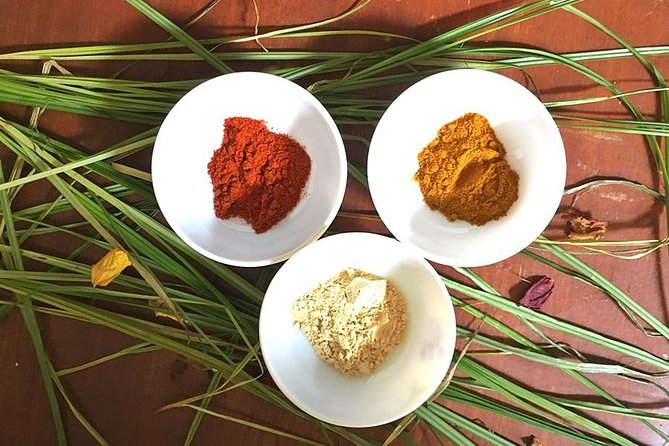
Some visits have included a stop at a local market with Daniel to discuss herbs, spices, and the ingredients being purchased. That sounds like a fine addition, but it should not be treated as a guaranteed part of every booking unless the host confirms it. Ask about it when arranging your time.
Choosing lunch, dinner, weekday, or weekend
You can choose a lunch or dinner departure, so the class can fit into different Addis Ababa schedules. A daytime visit may work well if you want to continue sightseeing afterward. An evening visit can feel more like a family meal, especially if Daniel and Tigist’s children are home.
The three-hour duration is long enough for cooking, eating, coffee, and conversation without taking your entire day. If you add another dish, the class will run longer, so avoid scheduling a tight connection or a fixed evening plan immediately afterward.
I would choose the time based on the kind of contact you want. Lunch may feel more focused on cooking and food. Dinner or a weekend visit may offer more family interaction, though the children’s presence is not guaranteed.
The experience ends back at the meeting point. Since transport is not included, allow extra time for your return trip. You should also avoid assuming that the starting point is in central Addis Ababa simply because the activity is marketed for the city.
How this compares with eating at a restaurant
A restaurant is cheaper and easier. You can order injera, shiro, tibs, and coffee without spending three hours learning how they come together. If your priority is simply tasting Ethiopian food, this class is not the most economical route.
The value here is the access to a household and the chance to take part. You learn from Tigist in her own kitchen, speak with Daniel, and share a meal in the place where family life happens. That kind of contact is difficult to reproduce at a restaurant.
I would recommend it most to people who enjoy food as a way to understand daily life. It suits couples, families, small groups, and solo visitors who are comfortable entering a local home. It is also a strong option for anyone who has already seen Addis Ababa’s main sights and wants a slower, more personal activity.
It may suit less well if you dislike flexible schedules, have strict expectations about the menu, or want a polished cooking lesson with professional equipment. The experience depends on conversation and participation, not on a showy presentation.
Price, private access, and what you receive
At $116 per person, this is a premium food activity for Addis Ababa. I would not book it solely because you want the cheapest possible meal. You can eat well for less elsewhere.
The fee includes the private cooking class, the meal with Daniel and his family, beverages, taxes, handling charges, and gratuities. Group discounts may improve the value, especially when several people share the private setting.
The strongest case for the price is the combination of instruction and home access. You are not paying for a standard cooking course repeated for large groups. You are paying for time with local hosts, practical food preparation, coffee roasting, and a shared meal.
The weakest case is the uncertain transport arrangement. Since pickup and drop-off are excluded, you carry the work and cost of reaching the home. Clear communication before booking is essential, particularly if you are staying far from the outskirts.
A few practical points before you commit
Confirmation is sent within 48 hours, subject to availability. I would avoid booking this at the last possible moment if your schedule is fixed.
Service animals are allowed, and the location is near public transportation. If you have allergies, dietary restrictions, or cooking preferences, include them when booking. The vegetarian option is available by request, not something to assume automatically.
The menu can change by season. I see that as a benefit if you enjoy local cooking, but you should ask ahead if a particular dish is important to you.
Cancellation is flexible until two full days before the start time. Cancel at least two days in advance for a full refund. Changes or cancellations made later are not accepted for a refund, and the cutoff follows Addis Ababa local time.
Should you book this Addis Ababa cooking class?
I would book this if you want a personal introduction to Ethiopian food and family life, and if you are willing to pay more for a private home visit. The injera lesson, hand-roasted coffee, and chance to meet Daniel and Tigist make this far more personal than a standard meal.
I would skip it if your budget is tight, your schedule cannot handle an uncertain journey across Addis Ababa, or you want a fixed menu and formal instruction. Before paying, confirm the meeting point, transport plan, meal choice, and any market visit.
For the right audience, this is a thoughtful three-hour encounter built around food, conversation, and hospitality. It gives you something a restaurant cannot: a look at how Ethiopian cooking fits into an actual home.
FAQ
How long does the cooking class and coffee ceremony last?
The experience lasts approximately three hours. The cooking portion takes about two hours, followed by the meal and coffee ceremony.
Where does the experience take place?
It takes place in Daniel and Tigist’s home on the outskirts of Addis Ababa. The activity starts and ends at the listed meeting point.
Is hotel pickup and drop-off included?
No. Hotel pickup and drop-off are not included. Public transportation is available near the meeting point.
What dishes might I learn to cook?
The menu may include injera and a dish such as shiro or tibs. The menu can change with the season.
Can I request vegetarian food or report an allergy?
Yes. Vegetarian food is available, and you should provide details about allergies, dietary restrictions, or cooking preferences when booking.
Can I choose lunch or dinner?
Yes. The experience offers a choice of lunch or dinner to fit your schedule.
How far in advance can I cancel for a full refund?
You must cancel at least two full days before the experience start time for a full refund. Cancellations or changes made less than two full days in advance are not accepted for a refund.
Just added around the world
- Cooking, Farming and Waterfall In Vietnam Countryside★ 3.0 · 6 reviews
- Busan Tailored Korean cooking class (Vegan OK)with market tour★ 5.0 · 66 reviews
- Korean cooking class in Haeundae, Busan★ 5.0 · 92 reviews
- Private Argentine Cooking Class and Tango Lesson in Buenos Aires★ 5.0 · 37 reviews
- Hungarian Home Cooking Class with Chef Marti★ 5.0 · 30 reviews
- Cooking Class with dinner/lunch in Ulcinj Montenegro★ 5.0 · 8 reviews
- BA: Empanadas and Alfajores Cooking Experience in Palermo★ 5.0 · 112 reviews
- Budapest Market Tour & Home Cooking Class with local Chef & Guide★ 5.0 · 23 reviews
Cooking Classes, compared.
Half-Day Thai Cooking Class at Organic Farm in Chiang Mai
Read our review →
Florence: Pasta Cooking Class with Unlimited Wine
Read our review →
3 in 1 Cooking Class near Navona: Fettuccine, Ravioli & Tiramisu
Read our review →
Hanoi Cooking Class: Culture, Local Market & Meaning CSR Impact
Read our review →
5 Traditional Dishes Hanoi Cooking Class with Market Trip
Read our review →
Cooking Class and Lunch at a Tuscan Farmhouse with Local Market Tour from Florence
Read our review →
Chiang Mai: Cooking Class, Market & Thai Herbs Garden Tour
Read our review →Browse the lists this tour appears in