
Review · MOROCCAN
Marrakech: Moroccan Cuisine Cooking Class in Local Home
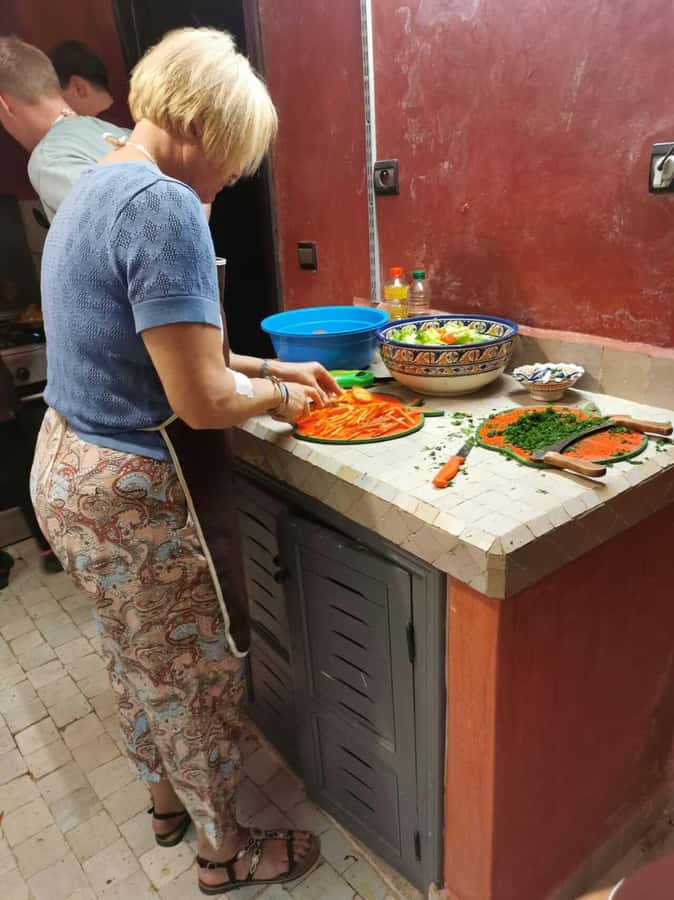
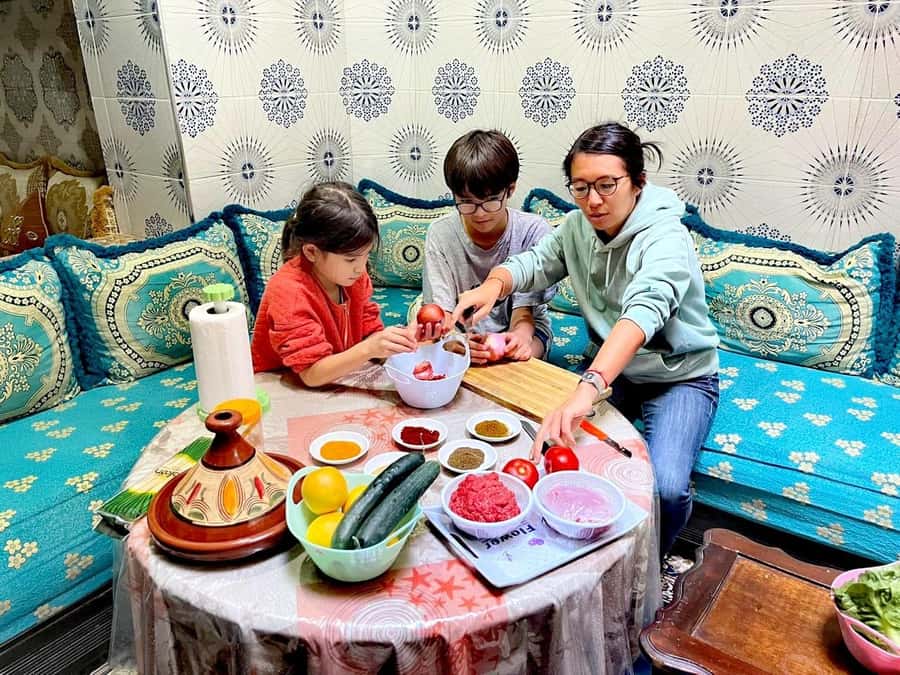
The best part of this Marrakech cooking class is that you do not simply watch a chef perform. You chop, season, stir, shape bread, and cook a Moroccan meal inside a local home near the medina. The food is only half the point. The other half is hearing Abdo, Abdul, or another bilingual host explain Moroccan family life, tea customs, spices, and everyday traditions.
I like the hands-on format, which works for complete beginners but still gives experienced cooks useful ideas to take home. I also like the shared meal at the end, when the cooking becomes a social evening with people from several countries. At $24 per person, three hours of food, instruction, recipes, and cultural conversation is strong value.
The main consideration is finding the meeting point. You meet outside Riad Les Etoiles Berberes, not inside, and some people have found the route confusing. Use Google Maps rather than Apple Maps, arrive early, and wait outside for the guide in a green hat.
Key points at a glance
- Cook in a local home: The setting feels more personal than a standard cooking school.
- Prepare a full Moroccan meal: Expect bread, tagines, salads, zaalouk, and fruit dessert, with the exact menu open to change.
- Learn by doing: You take part in chopping, peeling, seasoning, cooking, plating, and tea preparation.
- Hear local stories: The guide explains Moroccan food, hospitality, family customs, and tea traditions while you work.
- Eat what you make: The class ends with a shared lunch or dinner, not a quick taste at the counter.
- Good for mixed groups: Beginners, families, vegetarians, and larger groups can be accommodated with advance notice.
A Marrakech cooking class built around the home kitchen
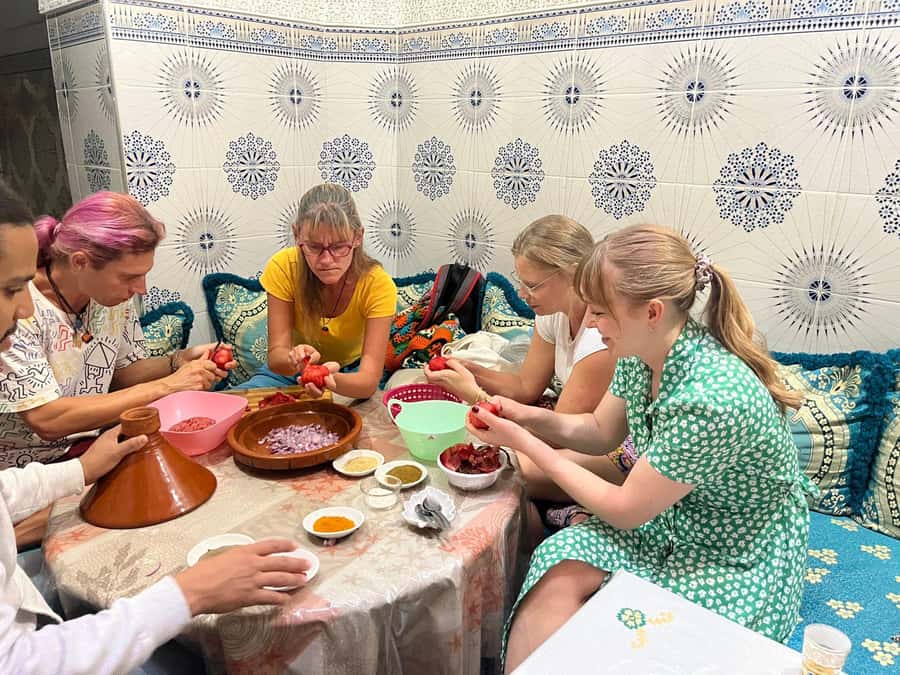
Many cooking classes put you behind a workbench in a polished school kitchen. This one takes you into a traditional house near the Marrakech medina. That small change matters. You see the rooms, tools, and rhythm of a Moroccan home, then sit down to eat in the same place where you cooked.
The experience lasts about three hours. It is offered as a lunch or dinner activity, depending on the starting time you choose. You meet the guide outside Riad Les Etoiles Berberes, then continue to the nearby house. The home is close to the meeting point, but the directions can still be tricky in the medina.
Look for the guide wearing a green hat. The guide checks your names before bringing the group inside. I would not wait inside the riad, since the instructions specifically ask you to stay in front of it. Build in a little extra time, especially if you are coming from a different part of the old city.
The guides are bilingual or multilingual, with English, Dutch, French, and Arabic available. Abdo, also called Abdul or Abdoo by some participants, is the main name associated with the class, though the exact guide can vary. The teaching style is friendly and informal, with plenty of room for questions.
More Home Cooking Classes in Morocco
- Marrakech: Moroccan Cooking Class with a Local Family
★ 4.9 · 668 reviews - Fez: Souk Tour and Traditional Home Cooking Class
★ 4.9 · 186 reviews - Old local Market visit+Moroccan cooking class with a local family
★ 5.0 · 84 reviews
What you actually cook during the three hours
The menu is generous for a three-hour class. You may prepare Moroccan bread, chicken tagine with olives and golden fries, a meatball tagine finished with melted cheese, tomato and green pepper salad, zaalouk, and fruit salad. The exact dishes can change, especially when dietary needs are discussed ahead of time.
The cooking begins with preparation rather than a long talk. You work through the ingredients step by step, learning how vegetables are peeled, cut, seasoned, and arranged in the Moroccan style. That practical approach helps you understand why Moroccan dishes taste layered even when the method is simple.
Moroccan bread
Bread is an important part of Moroccan meals, so learning to make it gives the class a useful starting point. You get involved rather than simply receiving a piece from the kitchen. Bring a hair tie if you have long hair, and wear comfortable clothes that you do not mind cooking in.
Tagines
The tagine is the main event. You learn how the ingredients are prepared and how the cooking vessel is used to build a slow, fragrant dish. The class may include chicken with olives and fries, or meatballs with melted cheese. You do not need advanced knife skills or previous Moroccan cooking experience.
The recipes are simple enough for beginners, but the instruction helps you understand the small details that make the food work. You learn about seasoning, ingredient order, and presentation rather than just following a list of steps.
More Moroccan Cooking Classes in Marrakech:
- Marrakech: Moroccan Cooking Class with Pickup
★ 4.6 · 1,862 reviews - Marrakech: Traditional Moroccan Cooking Class & Market Visit
★ 4.8 · 1,861 reviews - Marrakesh: Moroccan Dishes Cooking Class with a Local Chef
★ 5.0 · 1,615 reviews - Moroccan Cooking Class & Marrakech Market Visit with Chef Khmisa
★ 5.0 · 1,504 reviews
Salads and zaalouk
The salads bring freshness to the meal. Tomato and green pepper salad is one of the dishes included, while zaalouk introduces you to a traditional Moroccan eggplant preparation. These are useful dishes to learn because they are practical at home and do not require special equipment.
You may also prepare skewers, chicken, or other dishes depending on the group and dietary needs. The menu is not fixed in every detail, so if you have a strong preference, ask before booking or contact the provider as soon as possible.
Dessert and tea
The meal finishes with a special fruit salad. Some sessions also include Moroccan tea, and the guide explains the tea tradition and the customary way of pouring it. This is a small but memorable part of the class, since tea is tied to welcome, conversation, and hospitality.
The dessert is not treated as an afterthought. It gives the group time to slow down, talk, and enjoy the meal after the cooking is finished.
The cultural side is as useful as the recipes
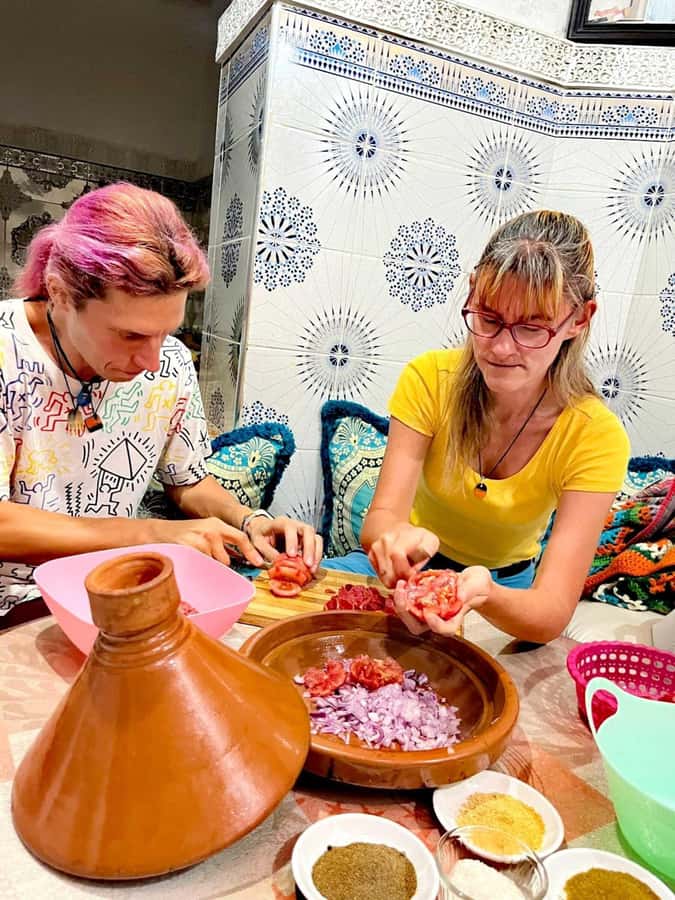
This is not a silent kitchen lesson. The guide talks while you work, explaining Moroccan food, social customs, family traditions, tea, spices, and daily life. That conversation gives the dishes a setting. You learn not only what goes into a tagine, but also why meals are made and shared in particular ways.
Abdo is described as funny, patient, and good at bringing mixed groups together. That matters when the class includes families, couples, solo participants, and people from different countries. The group may be small, around five or six people, but larger groups of nine, eleven, or twelve have also been accommodated.
A small group gives you more time with the ingredients and the guide. A larger group can feel more social, but you may have to share tasks. The activity is designed so everyone takes part, and the teaching is basic enough for people who rarely cook.
I particularly like that the cultural talk continues during the meal. You can ask about Marrakech, local lifestyles, shopping for spices, cooking tools, and ways to experience the city. Several people also used the class to ask for practical city advice, which makes the dinner more useful than a stand-alone recipe lesson.
Eating together makes the class work
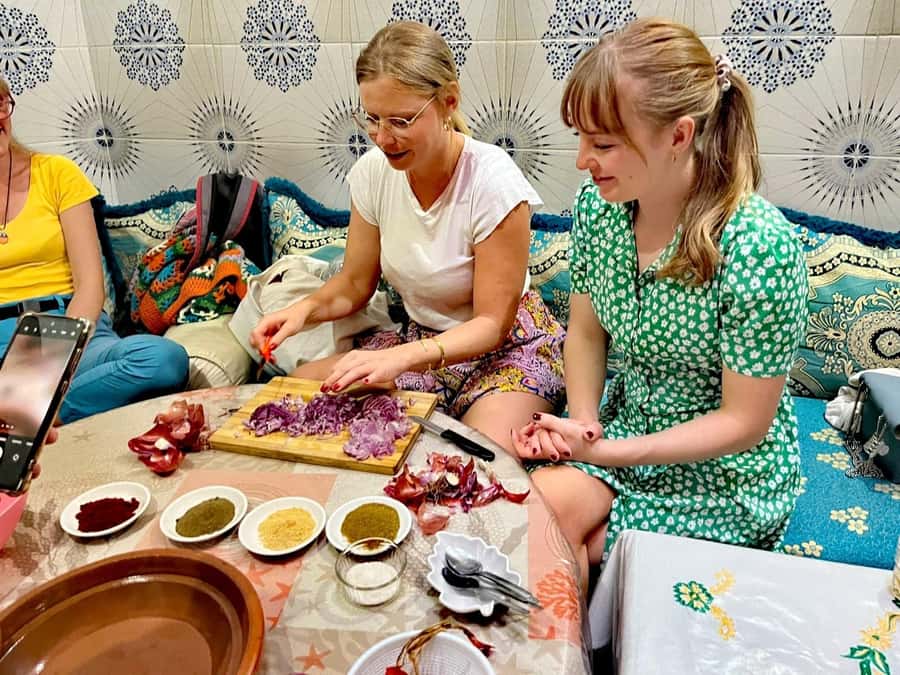
After the cooking, everyone sits down to eat the food prepared during the session. This is not a cooking demonstration followed by a small sample. You share a proper meal, including the dishes prepared by the group and the fruit dessert.
The final meal is where the class feels most relaxed. The work is finished, the tagines are ready, and the conversation moves easily between food, Morocco, and the other people at the table. If you are traveling alone, this provides an easy social setting without requiring you to join a formal group tour for the rest of your trip.
The meal also gives you a fair test of the recipes. You can see how the flavors came together and ask what you would change when cooking at home. Plating tips are included, so you leave with more than a list of ingredients.
Recipes are provided to take home. That is a real benefit at this price. You can recreate the tagines, salads, bread, or other dishes instead of letting the experience disappear as soon as you leave Marrakech.
Who will get the most from this experience
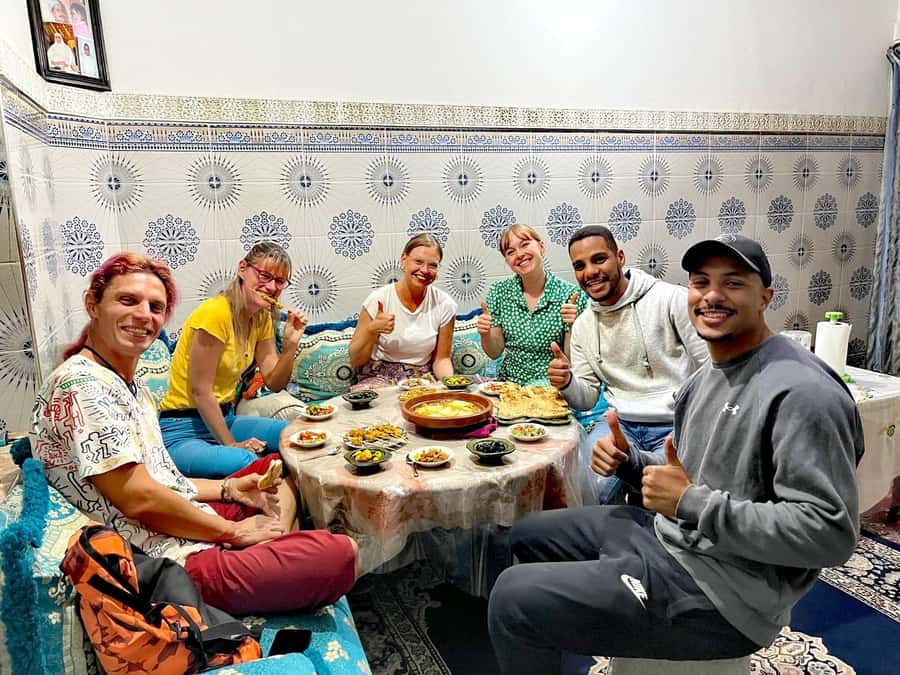
This class is a good match for first-time cooks. The instructions are step by step, and you do not need special skills. If you already cook, you will still find useful ideas in the Moroccan approach to seasoning, bread, vegetables, and tagines.
Families should also consider it. The activity is suitable for different ages, and the guide makes an effort to include everyone. Cooking together gives children and teenagers something active to do, rather than asking them to sit through a long cultural talk.
It works well for vegetarians too, but you need to give notice. The menu can be changed for dietary restrictions, and vegetarian participants have been accommodated. Do not assume the standard menu will automatically suit you. Send the details early so the kitchen can plan properly.
This is also a smart rainy-day plan. The class takes place indoors, lasts three hours, and gives you a full activity without depending on good weather. It can also be a strong final-day experience, since you leave with recipes and a shared memory rather than another souvenir.
You may prefer a formal culinary school if you want precise professional instruction, a fixed menu, or a highly polished kitchen. This class is better suited to people who want food, conversation, and a look at local home life.
Price, timing, and practical value
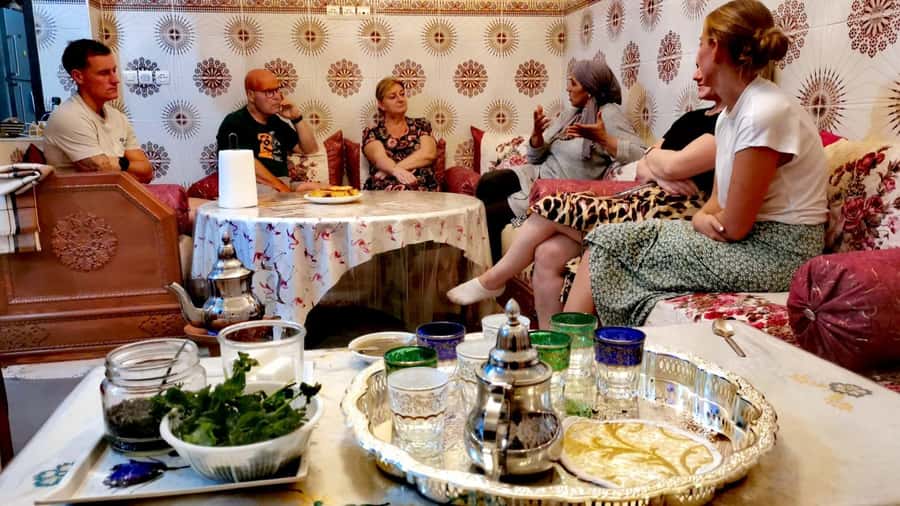
At $24 per person, the value is easy to see. You receive a three-hour class, fresh ingredients, a bilingual guide, the meal, dessert, cultural storytelling, plating advice, and recipes to take home. Transportation is not included, but the meeting point is in or near the medina and the house is nearby.
The low price does not mean the class is rushed. Three hours gives enough time to prepare several dishes, wait for the tagines to cook, make tea, and eat together. The pace can vary with group size and menu, but the activity is intended to last the full scheduled period.
You should wear comfortable shoes and clothes. The class involves standing, preparing food, and moving around the kitchen. Bring cash if you want it available for personal needs, and tie back long hair.
Smoking, alcohol, drugs, and excessive noise are not allowed. That is worth knowing because the setting is a private home rather than a large commercial venue.
Wheelchair access is listed as available. If you need specific arrangements, confirm them when booking, since a traditional home and medina route may involve details that are not explained in the general description.
Free cancellation is available up to 24 hours before the activity for a full refund. You can also reserve now and pay later, which helps if your Marrakech schedule is still shifting.
Finding Riad Les Etoiles Berberes without stress
The meeting instructions are simple, but medina navigation can make simple directions feel less simple. Go to the front of Riad Les Etoiles Berberes and wait there. Do not enter the riad or continue searching inside.
The guide waits about ten minutes before the starting time and wears a green hat. That is the easiest way to identify the right person. Have your booking names ready so the guide can check that you are with the correct group.
Use Google Maps if possible. One person specifically found Apple Maps less helpful, and another had difficulty finding the riad. I would also avoid arriving at the last minute. Give yourself time to walk through the medina, especially if you are leaving from a hotel or another riad.
Transportation is not included. You make your own way to the meeting point, so this activity is easiest if you are already staying in or near the old city. If you are far away, allow for the cost and time of reaching the medina.
The few drawbacks to keep in mind
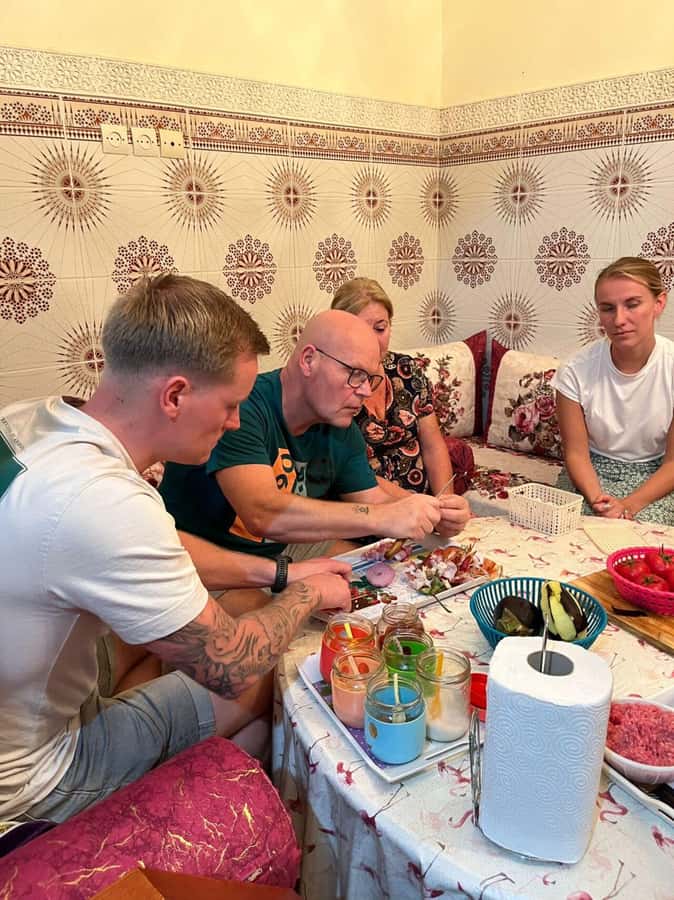
The class does not promise a fixed menu every time. That is useful for dietary changes, but it means you should not book expecting one exact set of dishes. Chicken, meatball tagine, skewers, salads, bread, and fruit are all possible parts of the meal, but the final menu can vary.
The meeting point is another weak spot. The house is described as being near the riad, yet the medina can be confusing, and you may need to walk fifteen to twenty-five minutes from the place you first expect to meet. Follow the instructions carefully and contact the provider promptly if you are lost.
Group size also affects the feel of the class. A group of five or six allows more personal attention. Groups of nine to twelve can still be accommodated, but individual kitchen time may be shared more widely. If you want the most personal session, ask about the expected group size.
Finally, this is a social cooking class, not private instruction by default. You should be comfortable cooking alongside people you do not know and sharing the finished meal with them.
Should you book this Marrakech cooking class?
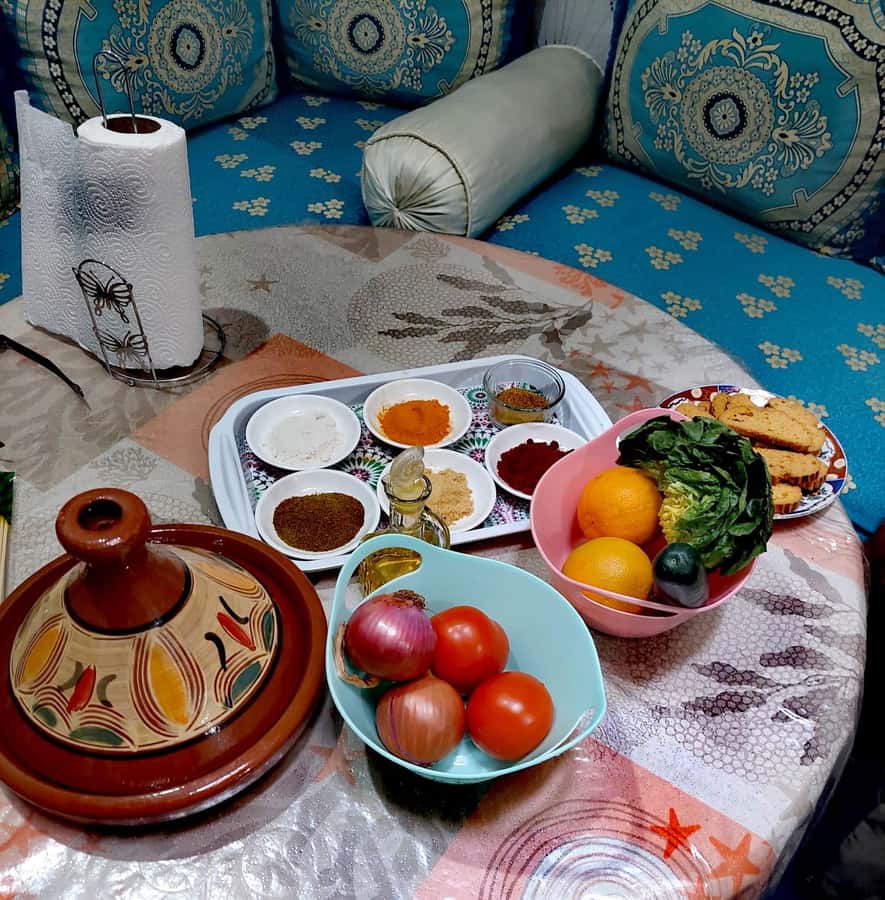
I would book it if you want an affordable, friendly way to connect Moroccan food with everyday culture. The strongest reasons are the local-home setting, the amount of food you prepare, the shared meal, and the recipes you can use later.
Book early in your Marrakech stay if possible. The guide can offer useful ideas about spices, tools, food, and city customs, and you will have time to use that advice. Tell the provider about vegetarian needs or other restrictions before the class.
Skip it if you want a polished cooking studio, private transport, or a strictly fixed menu. For everyone else, especially families, first-time cooks, solo visitors, and anyone needing a rainy-day plan, this is a practical $24 experience with plenty of food and genuine contact with local life.
FAQ
How long does the Moroccan cooking class last?
The class lasts three hours and may be scheduled for lunch or dinner.
How much does the experience cost?
The listed price is $24 per person.
Where do I meet the guide?
Meet the guide outside Riad Les Etoiles Berberes. Wait in front of the riad rather than going inside.
How will I recognize the guide?
The guide wears a green hat and checks your names before taking you to the nearby home.
What languages are available?
The live guide may speak English, Dutch, French, or Arabic.
Is the class suitable for beginners?
Yes. The instruction is designed for beginners, while people with previous cooking experience can also take part.
What food might I prepare?
The menu may include Moroccan bread, chicken tagine with olives and fries, meatball tagine with melted cheese, tomato and green pepper salad, zaalouk, fruit salad, skewers, and Moroccan tea. The menu can change.
Can dietary restrictions be accommodated?
The menu can be modified for dietary restrictions. Tell the provider as soon as possible so the meal can be planned.
Is transportation included?
No. You are responsible for reaching the meeting point.
What should I bring?
Wear comfortable clothes and shoes, bring cash, and bring a hair tie if you have long hair. Smoking, alcohol, drugs, and excessive noise are not allowed.
More Hands-On Workshops in Marrakech
- Half-Day Cooking Class with Local Chef Laila in Marrakech
★ 5.0 · 952 reviews - Marrakech: Moroccan Cooking Workshop at La Maison Arabe
★ 5.0 · 446 reviews - Marrakesh cooking class with chef Hassan – Local dishes
★ 5.0 · 425 reviews - Marrakech: Tajine Cooking Class in a Traditional Riad
★ 4.8 · 424 reviews
More Home Cooking Classes in Marrakech
- Khmer Cooking Class at a Local’s Home in Krong Siem Reap
★ 5.0 · 2,731 reviews - Local Home Korean Cooking Class & Market Adventure in Seoul
★ 5.0 · 1,024 reviews - Mexican Cooking from Scratch in a Local Home in Tulum
★ 5.0 · 585 reviews - Pastamama, Home Cooking Classes at Grace’s Home
★ 5.0 · 521 reviews
Just added around Marrakech
- Cooking Classes Farm to Table Marrakech★ 5.0 · 165 reviews
- Moroccan Cooking Class: Farm-to-Table Tagine★ 5.0 · 50 reviews
- Authentic Moroccan Cooking Class in a Farm in Marrakech★ 5.0 · 64 reviews
- Organic Moroccan Cooking Class At Secret Berber Garden CT★ 5.0 · 147 reviews
- Cooking Course with Lunch & Pool Access in Day Pass★ 5.0 · 32 reviews
- Marrakech: Traditional Moroccan Crepes & Bread Cooking Class★ 4.8 · 135 reviews
- Moroccan Cooking Class with Market Visit and Meal★ 5.0 · 196 reviews
- Cooking class with Yassine & Mom★ 5.0 · 204 reviews
Moroccan Cooking Classes, compared.
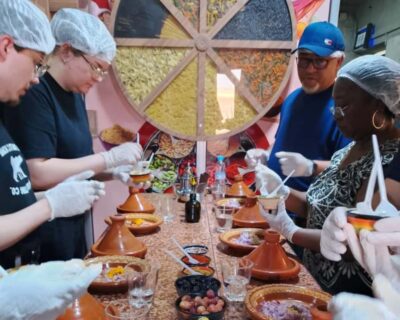
Marrakech: Moroccan Cooking Class with Pickup
Read our review →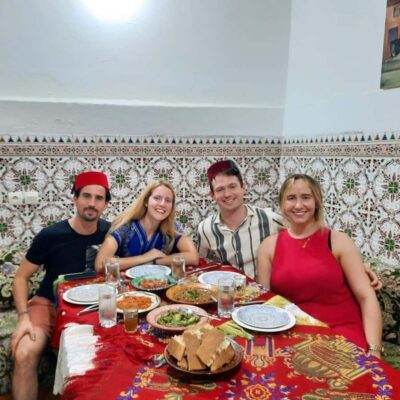
Marrakech: Traditional Moroccan Cooking Class & Market Visit
Read our review →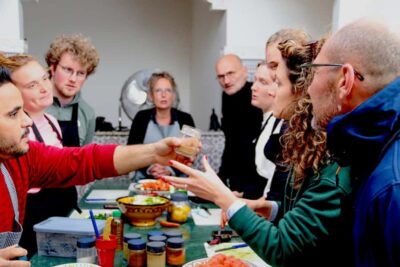
Marrakesh: Moroccan Dishes Cooking Class with a Local Chef
Read our review →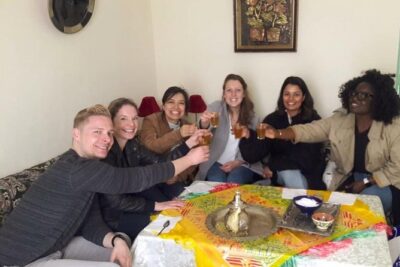
Moroccan Cooking Class & Marrakech Market Visit with Chef Khmisa
Read our review →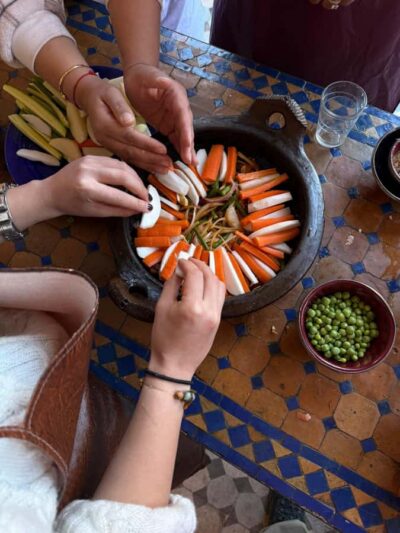
Marrakech: Moroccan Cooking Class with a Local Family
Read our review →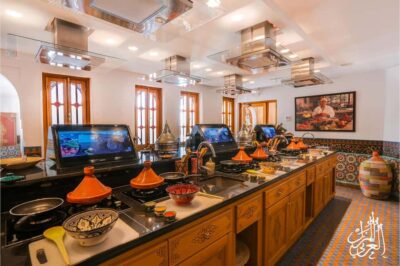
Marrakech: Moroccan Cooking Workshop at La Maison Arabe
Read our review →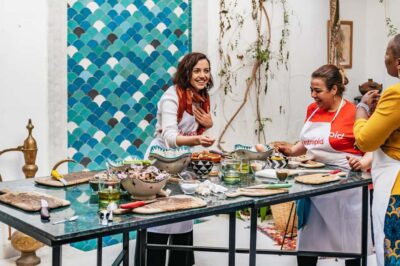
Marrakech: Tajine Cooking Class in a Traditional Riad
Read our review →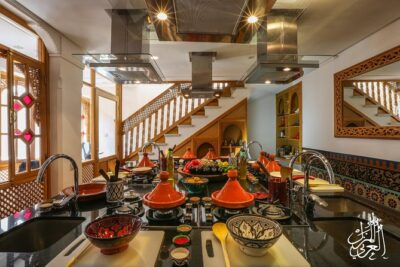
Browse the lists this tour appears in