Review · MOROCCAN
Marrakech: Traditional Moroccan Cooking Class & Market Visit
The best part of this Marrakech cooking class begins before you reach the kitchen. You walk through a local souk with your hosts, choose fresh ingredients, then carry them back to an intimate riad in the Medina. It turns a standard cooking lesson into a look at how Moroccan food starts.
I like the market shopping and the way everyone takes part, from washing and chopping to adding spices and shaping the meal. I also like that the recipes are practical enough to try at home, especially the chicken tagine, vegetable tagine, Moroccan salads, and milk pastilla.
The main thing to consider is the setting. You’ll walk through the Medina and work in a shared group, usually around 12 people, though some sessions are much smaller. The meeting point can be hard to pinpoint near the mosque, and the class is not suitable for wheelchair users.
Key points before you book
- Shop for the ingredients first: You visit a local food market with the hosts and choose fresh produce for the meal.
- Learn the full Moroccan tea ritual: This is more than steeping mint in hot water. The ceremony has its own steps and presentation.
- Cook 3 to 6 dishes: Menus can include starters, Moroccan salads, chicken and vegetable tagines, and milk pastilla for dessert.
- Work with local Moroccan women: Kawtar, Khmisa, and other cooks lead the class, with English, French, and Arabic available.
- Eat what you prepare: Lunch or dinner is included, and the shared meal is a large part of the experience.
- Take the class home: Electronic recipes are sent afterward, and homemade spices may be available to buy.
Why the market visit matters in Marrakech
Many cooking classes begin with bowls of pre-measured ingredients. This one starts in the souk, which gives you a better sense of Moroccan cooking before the first onion is chopped.
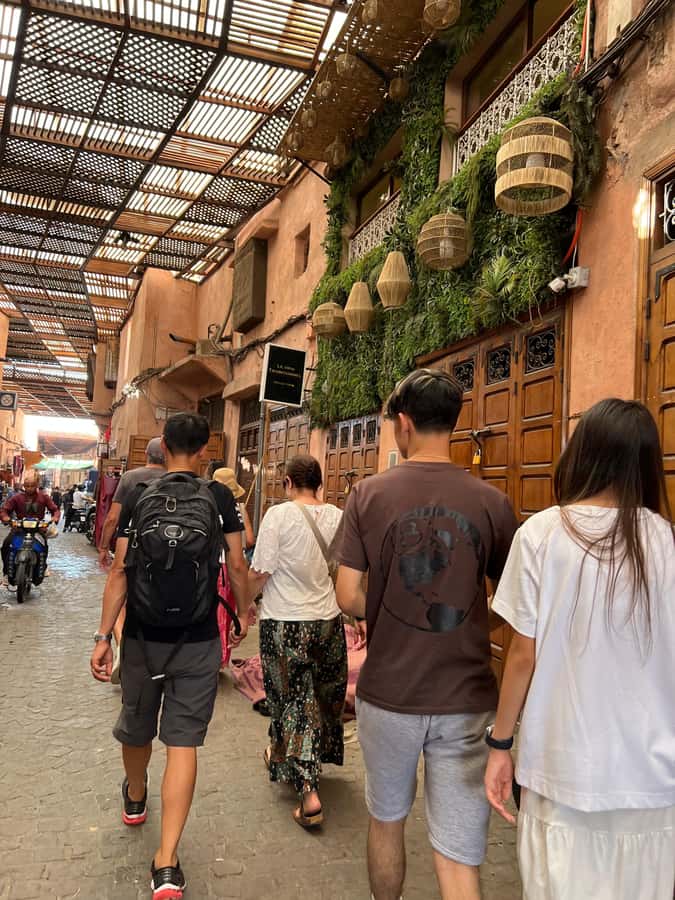
After discussing allergies and food restrictions, you walk with the hosts through a local market away from the most tourist-focused parts of Marrakech. The walk is short, but it gives you a useful lesson in the ingredients behind Moroccan food: fresh vegetables, herbs, spices, tea, chicken, and other items needed for the day’s menu.
I like this part because you see the food in its everyday setting. You are not simply told that Moroccan cooking depends on fresh produce and spice blends. You help select the ingredients yourself. That small task makes the final meal feel earned.
The market stop is also a good fit if you are curious about food but do not want a formal food tour. You are not spending hours moving between stalls. Instead, the market visit has a clear purpose: buy what the group will cook.
Expect a Medina walk, uneven surfaces, and the usual need to stay close to your group. Comfortable shoes are a must. If you have serious food allergies or dietary restrictions, raise them before the market visit so the hosts can plan the menu.
More Market Tour Cooking Classes in Marrakech
- Moroccan Cooking Class & Marrakech Market Visit with Chef Khmisa
★ 5.0 · 1,504 reviews - Marrakech: Moroccan Cooking Class with Market Visit and Meal
★ 4.9 · 347 reviews - Moroccan Cooking Class with Market Visit and Meal
★ 5.0 · 196 reviews
Inside Khmisa’s traditional Medina riad
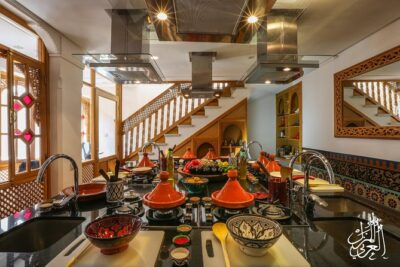
The cooking takes place at Khmisa Workshops, an intimate riad in the heart of the Medina. The setting is part of the appeal. You are welcomed into a family-style space rather than a large commercial kitchen.
The hosts describe the workshop as a place for local women and experienced Moroccan cooks to share their food culture. Kawtar and Khmisa are named among the regular hosts, and some sessions include other cooks such as Leila or Mama Marrakech. Ilham has also helped translate for the chef in at least one session.
That variety means the exact person leading your class can differ. What remains consistent is the format: local cooks guide the preparation, explain the food, and involve the group. English, French, and Arabic are offered.
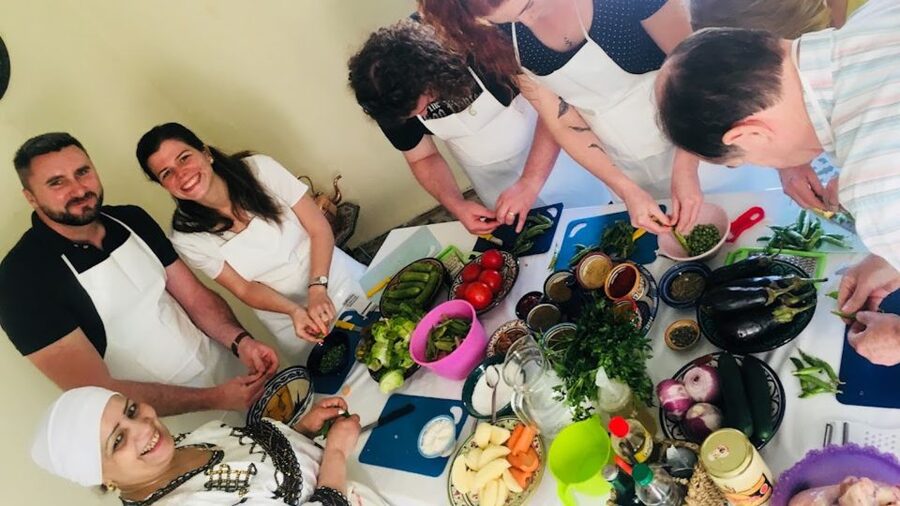
Some sessions have six people, while the advertised group can reach about 12. A smaller group gives you more time with the cooks and makes it easier to handle every step yourself. A larger group can feel more social, but you may share tasks more often.
The riad has air conditioning, which is a useful detail during Marrakech’s warmer months. You should still wear clothes and shoes that are comfortable for standing, chopping, and moving around a working kitchen. Tie back long hair.
The Moroccan mint tea ritual comes first
Once you arrive, the hosts serve Moroccan mint tea and explain how it is made. This is not treated as a quick drink before the real activity begins. The tea ritual is one of the class’s cultural lessons.
The process includes more than adding mint to boiling water and stirring in sugar. You learn the order of preparation and the role the tea plays in Moroccan hospitality. The hosts also show you how it is traditionally served.
I consider this one of the most useful parts for first-time visitors. Moroccan tea appears everywhere during a trip, but understanding the ritual helps you notice what is happening when you are welcomed into a home, riad, shop, or restaurant.
It also sets the tone for the class. You sit together, meet the other people in your group, and move into the cooking session without a rushed start.
Cooking together, from salads to tagines
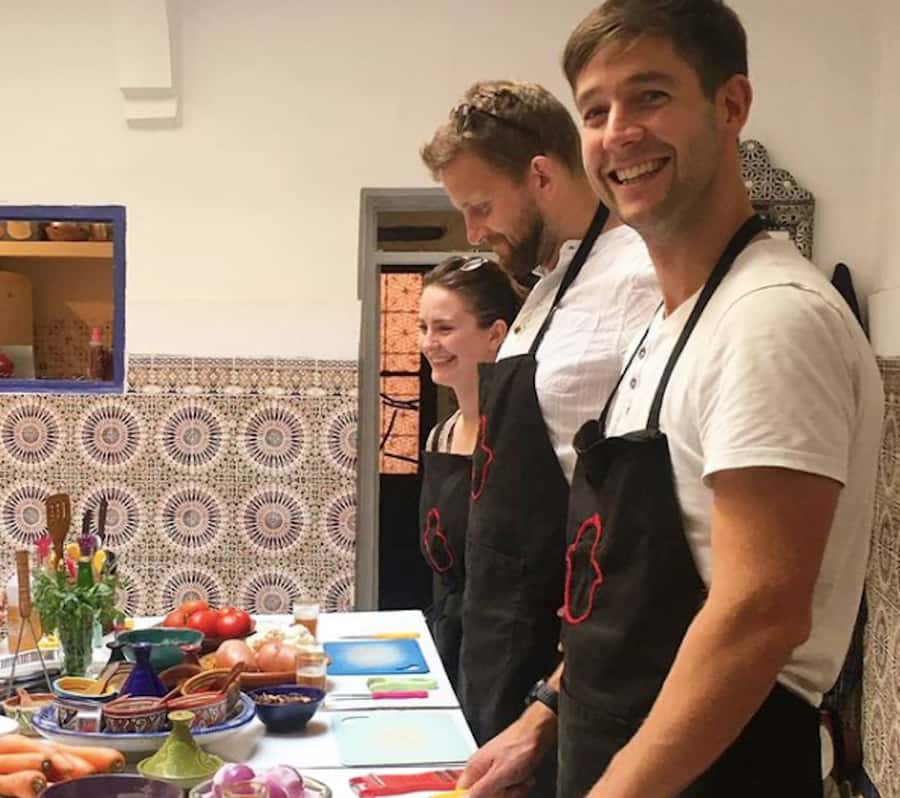
The menu is not fixed to one narrow recipe. You can expect between three and six dishes, with starters, a main course, and dessert. The exact selection varies, but the sessions described include several Moroccan salads, a chicken tagine, a vegetable tagine, and milk pastilla.
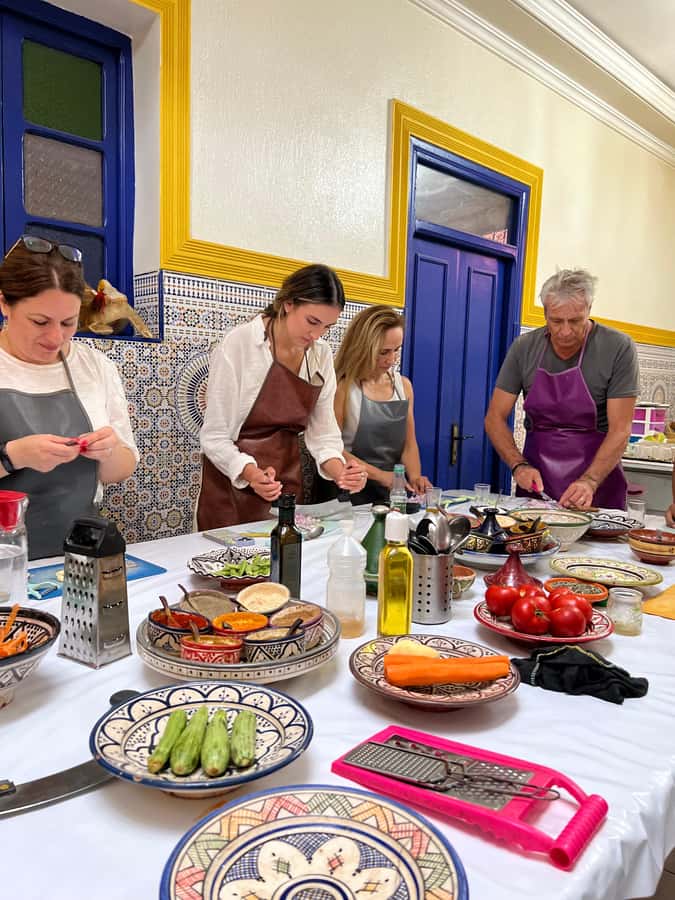
The group prepares the food as a team. You might chop vegetables, add spices, prepare salads, or help build a tagine. The cooks keep assigning tasks, so you are not left watching from the side while one person does all the work.
That hands-on format is important. Moroccan food can look simple on the plate, but its flavor depends on timing, spice balance, slow cooking, and the order in which ingredients are added. The chef may tell you what to put in, then adjust the amount with the confidence of someone who has cooked the dish for years.
Chicken tagine is a popular focus because it is both traditional and realistic to make at home. Lemon chicken tagine is specifically mentioned as a dish that can give you more confidence to recreate Moroccan food in your own kitchen.
Vegetarians are also well served by this class. Vegetarian starters and a vegetable tagine have been included in sessions, and one family with a vegetarian member was pleased with the range of choices. Still, ask about the menu in advance if you need a strictly vegetarian, vegan, or allergy-safe meal, since the menu can change.
The class can feel busy when several dishes are in progress, but that is part of the fun. You are learning how a Moroccan meal comes together as a group, not completing a quiet, individual recipe worksheet.
More Market Tour Cooking Classes in Morocco
- Fez: Souk Tour and Traditional Home Cooking Class
★ 4.9 · 186 reviews - Old local Market visit+Moroccan cooking class with a local family
★ 5.0 · 84 reviews - Moroccan Cooking Class and Fez Market Visit and Meal
★ 5.0 · 40 reviews - Private Casablanca Market Tour and Cooking Class with Chamsi
★ 5.0 · 33 reviews
Eating the meal you prepared
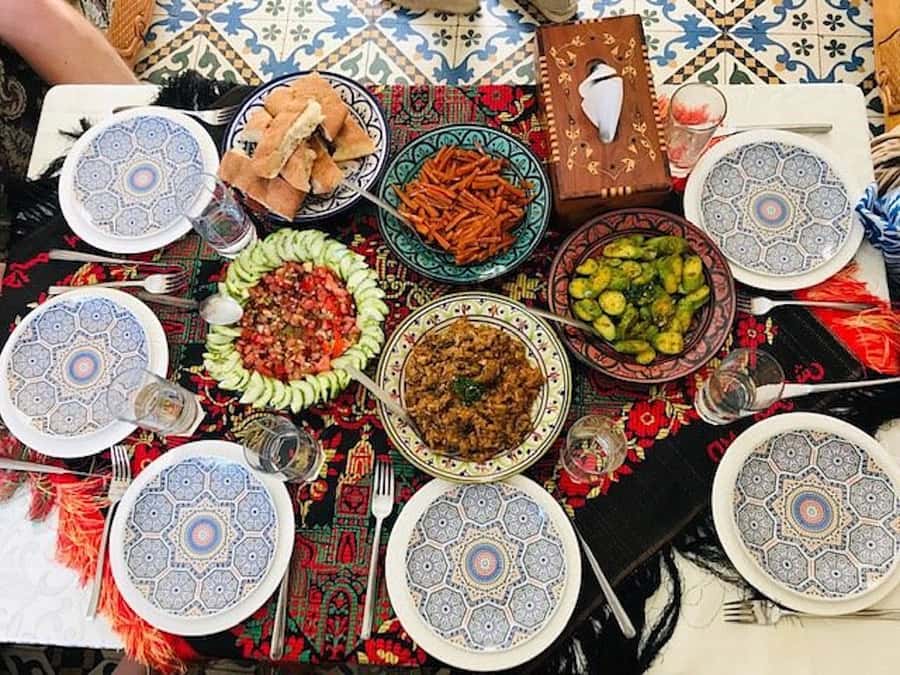
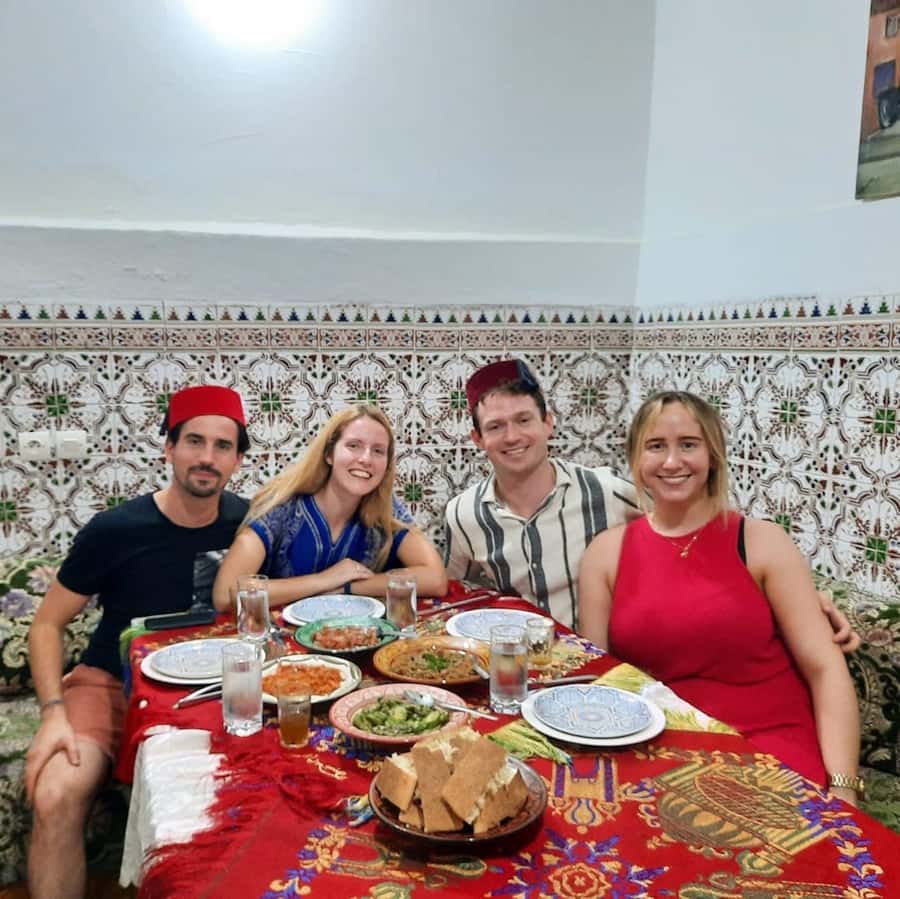
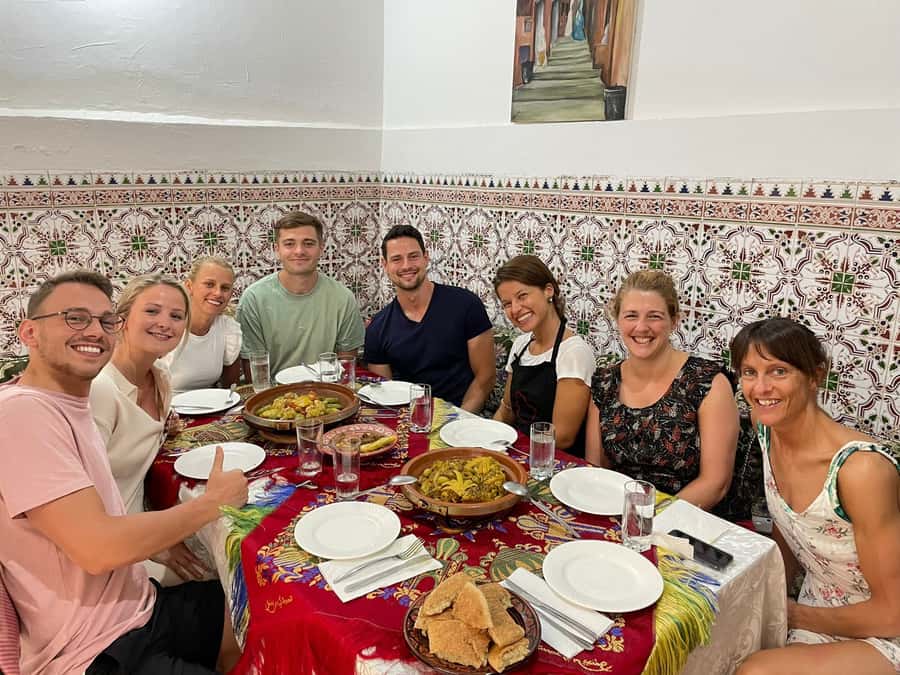
After the cooking, you sit down to eat the food with the group. Lunch or dinner is included, and the meal is usually generous. Several sessions included enough food to feel very filling, with multiple starters, two tagines, dessert, and tea.
This shared table is where the activity shifts from lesson to social evening. You meet people from different places, compare notes, and taste the results while the techniques are still fresh in your mind.
The meal also gives you a useful way to judge the recipes. You can taste the difference between the vegetable dishes and tagines, see how the spices work together, and ask questions while the cooks are nearby.
The food has received the strongest praise in the available feedback, especially the chicken tagine and potatoes. That does not mean every dish will suit every palate, but the class gives you a chance to taste a wide range of Moroccan cooking rather than ordering one plate from a restaurant menu.
For families, this can be an easy activity to share. An eight-year-old took part successfully, and a family with teenagers found that everyone had something to do. Children still need supervision around knives, hot pans, and the busy Medina walk.
Recipes, spices, and what you can repeat at home
A cooking class is better value when the lesson survives the holiday. Here, the recipes are sent electronically afterward, by email or another agreed message service.
The home-cooking test is a strong point. The dishes use recognizable ingredients and methods that can be adapted outside Morocco. Chicken tagine, vegetable tagine, Moroccan salads, mint tea, and milk pastilla are not presented only as demonstrations. You take away instructions for making them again.
You can also buy homemade spices before leaving. This is useful if you want the flavor of the class at home, though you should confirm availability and price with the hosts. The spices used during the lesson are explained as part of the cooking process, so you leave with more than a vague idea that Moroccan food uses a lot of seasoning.
Do not expect a professional certificate or a long technical course. This is a warm, practical introduction to Moroccan home cooking. You will learn by doing, asking, tasting, and watching the cooks correct small details as they go.
The $40 price and the overall value
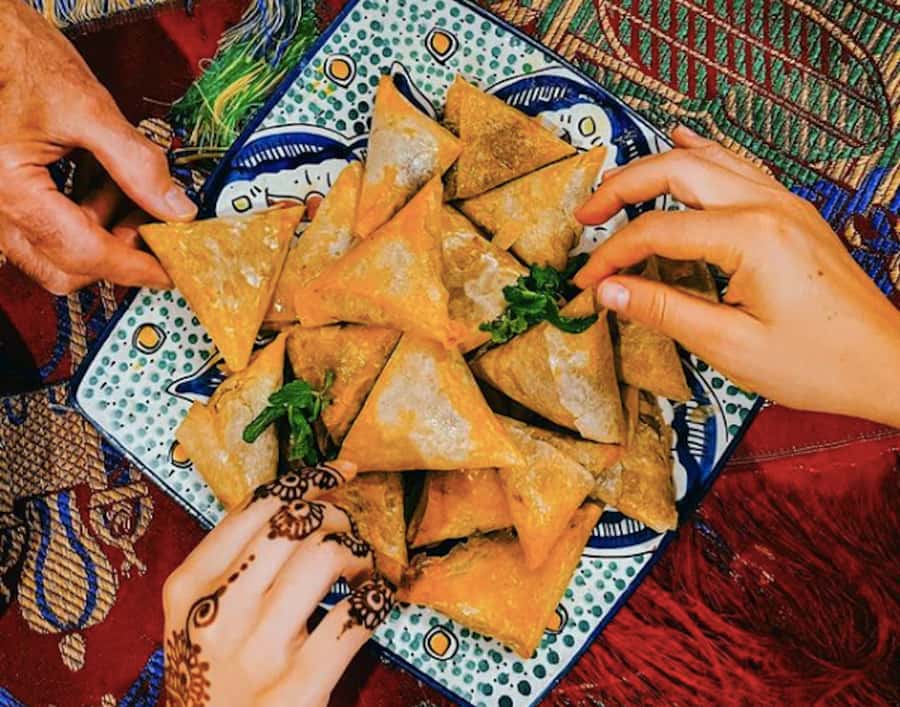
At $40 per person, the class includes the market walk, all ingredients, the guide, a local chef, mint tea, and a full lunch or dinner. That is good value if you want both a cultural activity and a meal.
You are also paying for the market shopping, the riad setting, the instruction, and the recipes. A restaurant meal alone would give you the finished food but not the chance to understand how it was selected or prepared.
The value is strongest for people who enjoy participation. If you only want to eat Moroccan food, a restaurant is simpler and probably faster. If you want a relaxed activity that fills part of your day or evening and leaves you with usable recipes, the class makes more sense.
Hotel pickup and drop-off are not included. You need to reach the meeting point yourself, and one practical issue deserves attention: the mosque meeting point may be obvious in theory but too large to identify a precise entrance. Check the instructions carefully and ask for the front entrance if needed.
The class can be booked with reserve and pay later terms, and cancellation is allowed up to 24 hours before the activity for a full refund. Those policies help if your Marrakech plans are still shifting.
Who will enjoy this cooking class most
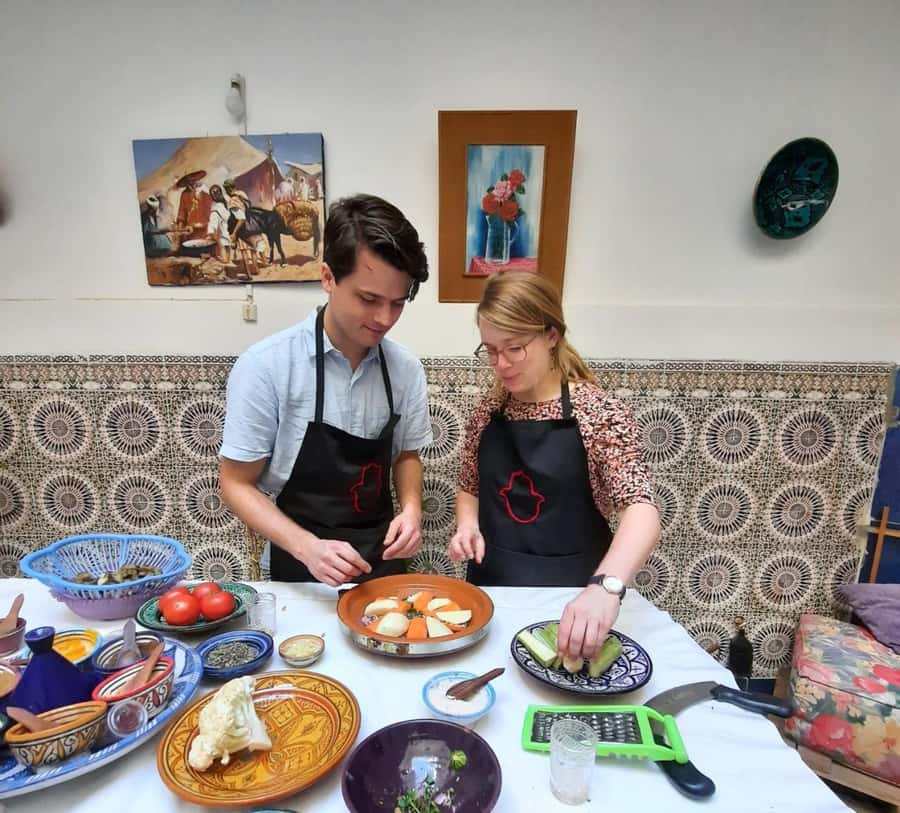
I would choose this for food lovers, first-time visitors to Marrakech, families, couples, solo visitors, and anyone who prefers a cultural activity with a clear purpose. You do not need advanced cooking skills. The cooks guide each stage and make sure the group shares the work.
It is especially useful early in a Marrakech visit. You learn about spices, markets, tea, and familiar dishes before seeing them repeatedly during the rest of your stay.
The class also suits vegetarians better than many Moroccan food activities, since several sessions included vegetarian starters and a vegetable tagine. Still, confirm your needs before booking.
You may want to skip it if you dislike group activities, cannot stand for a cooking session, or want a tightly timed professional lesson. The experience is shared, social, and shaped by the cooks and the people in the room. It is not a private class unless you request a private session in advance.
Smoking, alcohol, drugs, and pets are not allowed. The activity is not suitable for wheelchair users, and the Medina walk may be difficult for anyone who has trouble with uneven streets.
Should you book the Khmisa cooking class?
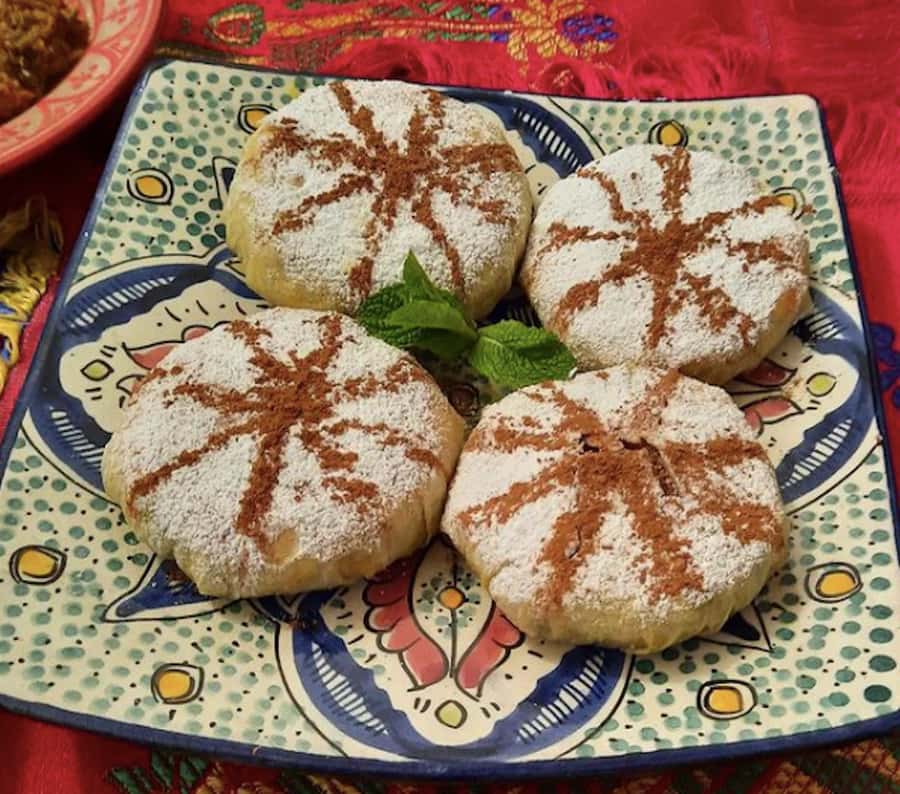
Yes, if you want to understand Moroccan food through the people, markets, and methods behind it. The strongest reasons to book are the ingredient shopping, the proper tea ritual, the hands-on cooking, and the recipes you can use after returning home.
Book with realistic expectations. The group size can vary, the meeting point needs careful checking, and the menu is not identical every time. But for $40, you receive a market visit, instruction from local Moroccan cooks, a substantial meal, and a personal introduction to dishes such as tagine, salads, and milk pastilla.
If your idea of a good Marrakech activity is sitting around a table, learning by doing, and eating together afterward, this is a smart choice.
FAQ
How much does the Marrakech cooking class cost?
The experience costs $40 per person.
What is included in the price?
The price includes lunch or dinner, a local guide, a Moroccan chef, all ingredients, the short market walk, Moroccan tea, and electronic recipes.
How many dishes will I cook?
The menu includes between three and six traditional Moroccan dishes. Sessions can include starters, main courses such as chicken or vegetable tagine, and milk pastilla for dessert.
Is the market visit included?
Yes. You take a short walk through a local market with the hosts and shop for the fresh ingredients used in the class.
Which languages are available?
The experience is offered in English, French, and Arabic.
Are vegetarian options available?
Vegetarian starters and vegetable tagine have been included in the menu. If you have specific dietary restrictions or allergies, discuss them before the market visit.
Is hotel pickup included?
No. Hotel pickup and drop-off are not included.
Is the activity suitable for wheelchair users?
No. The activity is listed as not suitable for wheelchair users.
What should I bring?
Wear comfortable shoes and bring a hair tie if you have long hair. Smoking, alcohol, drugs, and pets are not allowed.
More Shopping Trips in Marrakech
- Hanoi Cooking Class: Culture, Local Market & Meaning CSR Impact
★ 5.0 · 5,147 reviews - 5 Traditional Dishes Hanoi Cooking Class with Market Trip
★ 5.0 · 4,890 reviews - Cooking Class and Lunch at a Tuscan Farmhouse with Local Market Tour from Florence
★ 5.0 · 4,831 reviews - Chiang Mai: Cooking Class, Market & Thai Herbs Garden Tour
★ 4.9 · 4,824 reviews
More Moroccan Cooking Classes in Marrakech
- Marrakech: Moroccan Cooking Class with Pickup
★ 4.6 · 1,862 reviews - Marrakesh: Moroccan Dishes Cooking Class with a Local Chef
★ 5.0 · 1,615 reviews - Marrakech: Moroccan Cooking Class with a Local Family
★ 4.9 · 668 reviews - Marrakech: Moroccan Cuisine Cooking Class in Local Home
★ 4.8 · 508 reviews
Just added around Marrakech
- Cooking Classes Farm to Table Marrakech★ 5.0 · 165 reviews
- Moroccan Cooking Class: Farm-to-Table Tagine★ 5.0 · 50 reviews
- Authentic Moroccan Cooking Class in a Farm in Marrakech★ 5.0 · 64 reviews
- Organic Moroccan Cooking Class At Secret Berber Garden CT★ 5.0 · 147 reviews
- Cooking Course with Lunch & Pool Access in Day Pass★ 5.0 · 32 reviews
- Marrakech: Traditional Moroccan Crepes & Bread Cooking Class★ 4.8 · 135 reviews
- Moroccan Cooking Class with Market Visit and Meal★ 5.0 · 196 reviews
- Cooking class with Yassine & Mom★ 5.0 · 204 reviews
Moroccan Cooking Classes, compared.
Marrakech: Moroccan Cooking Class with Pickup
Read our review →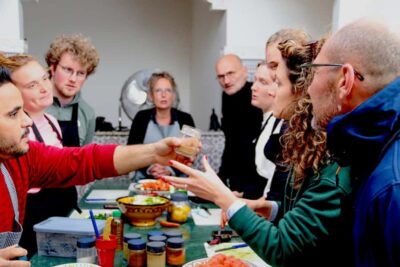
Marrakesh: Moroccan Dishes Cooking Class with a Local Chef
Read our review →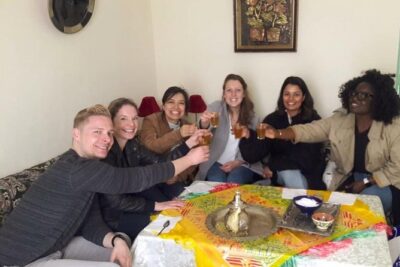
Moroccan Cooking Class & Marrakech Market Visit with Chef Khmisa
Read our review →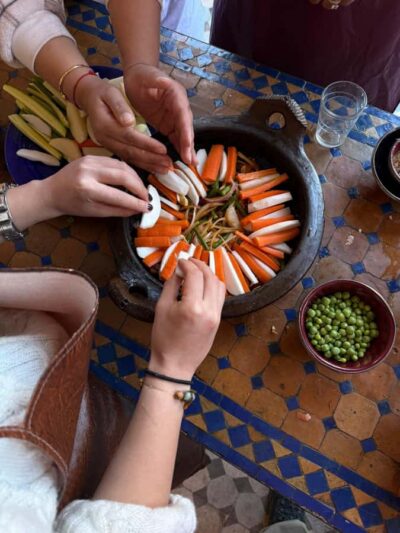
Marrakech: Moroccan Cooking Class with a Local Family
Read our review →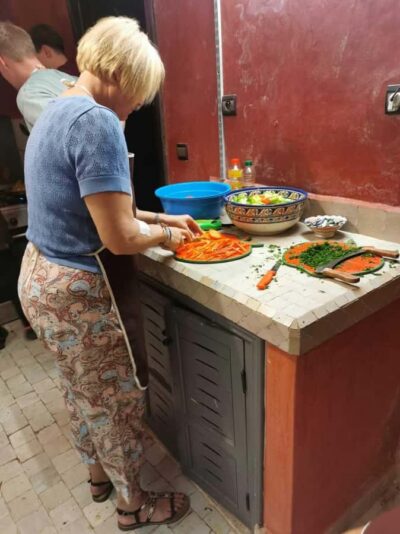
Marrakech: Moroccan Cuisine Cooking Class in Local Home
Read our review →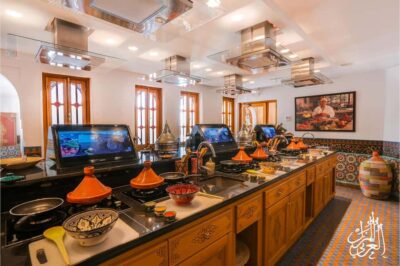
Marrakech: Moroccan Cooking Workshop at La Maison Arabe
Read our review →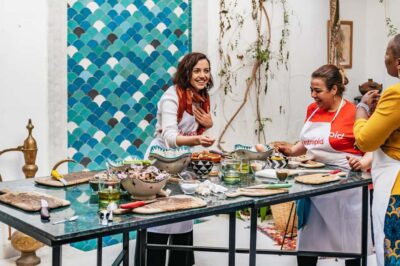
Marrakech: Tajine Cooking Class in a Traditional Riad
Read our review →