
Review · TOKYO
Tokyo: Night Cooking Class: 5 Home-Cooked Japanese Dishes
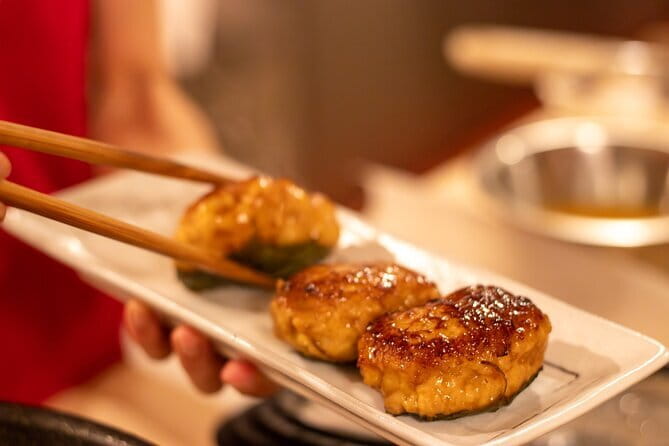
Tokyo’s best cooking classes do more than teach recipes. This evening class gives you a seat at the Japanese home-drinking table, where small plates arrive one after another and food is chosen to match the drink. You’ll prepare dishes such as wagyu steak, rolled omelette, and miso eggplant, then sit down to enjoy them with sake, beer, or soft drinks.
I like two things here. First, the recipes use ingredients you can usually find outside Japan, so the class has value after your holiday ends. Second, the six-person limit leaves room for real instruction. Guides including Alice, Masae, and Fuji have helped make the evening warm, social, and useful. The main drawback is the dietary limit: vegetarians can be accommodated, but vegan and gluten-free diners should not book.
Key points
- Japanese home-drinking culture: Learn how small dishes work with sake, beer, and other drinks.
- Four core hands-on dishes: Prepare sushi hand rolls, wagyu or tofu steak, Japanese rolled egg, and eggplant with miso sauce.
- A compact six-person group: The small format gives you more time with the English-speaking guide.
- Recipes you can repeat at home: Ingredients are chosen with home cooking abroad in mind.
- Family details matter: Children from age six can attend, but knife and heat work is limited to those 12 and older.
- Three included drinks: Choose alcoholic or soft drinks, with alcohol available only to people aged 20 and over.
A Tokyo Evening Built Around Small Plates
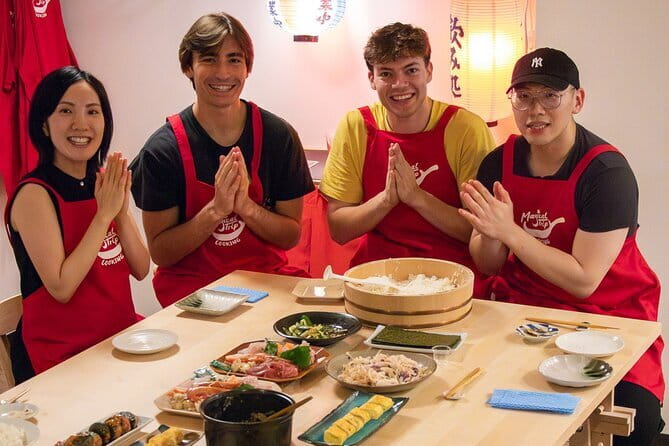
This is not a formal restaurant lesson where you watch a chef work from a distance. It is an active, social class based on the Japanese izakaya style, a way of eating that favors several modest dishes rather than one large main course.
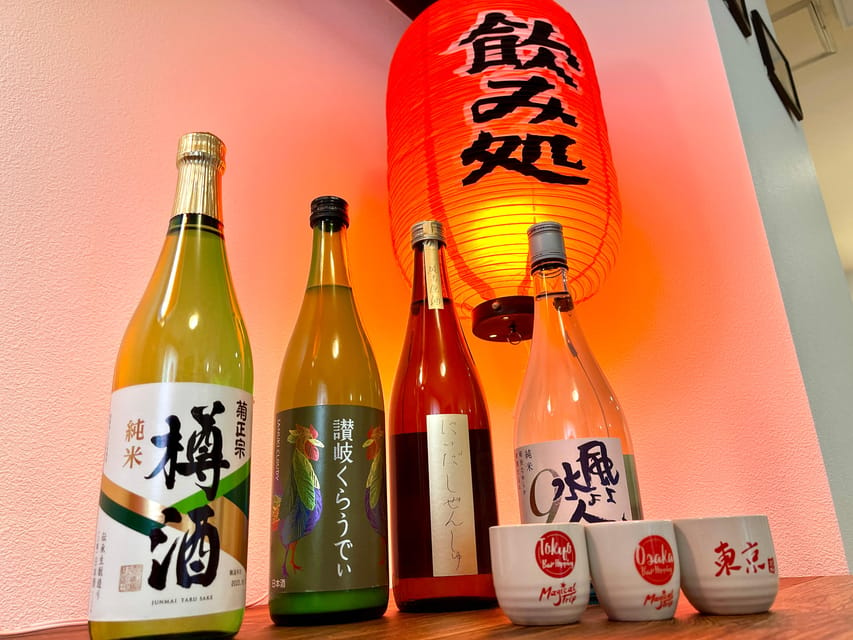
The evening also introduces nomikai, the Japanese custom of gathering over drinks and food. That cultural setting helps explain why the menu is varied. A salty bite, a warm egg dish, a grilled vegetable, and a piece of steak each give you a different partner for beer or sake.
You’ll spend about three hours cooking, tasting, talking, and learning. The pace should suit people who want more than a quick demonstration, but it is still manageable for a first cooking class. You do not need advanced kitchen skills.
The class is offered in English, and the group is limited to six people. That number matters. You can ask questions without trying to catch a guide’s attention across a crowded room, and a solo visitor has a fair chance to meet everyone at the table.
More Sushi and Japanese Classes in Tokyo:
- Sushi Making Tokyo Roll and Authentic Japanese Sushi Class
★ 5.0 · 3,971 reviews - Tokyo: Roll and Authentic Sushi Making Class in Asakusa
★ 4.9 · 1,957 reviews - Tokyo: Sushi Making Class in a Happi Coat near a Famous Spot
★ 4.9 · 1,377 reviews
Finding the Class Near Iriya Station
The meeting point is in front of the FamilyMart beside Gindako takoyaki shop and Doutor Coffee near Iriya Station Exit 2. Iriya Station has two FamilyMart stores, so use the Gindako and Doutor landmarks rather than simply searching for FamilyMart.
This is one of those small Tokyo meeting-point details worth taking seriously. Arrive with enough time to check the shop signs before the start. The guide will meet you there and lead the group onward.
The class does not include hotel pickup or drop-off. You are responsible for reaching Iriya Station and returning to your accommodation afterward. That is not a major problem for an independent Tokyo visitor, but it does mean you should allow time to get your bearings before the class begins.
Some parts of the activity are not accessible to wheelchairs or strollers. If mobility access is important to you, ask before booking rather than assuming a small cooking studio will have step-free access.
What You’ll Cook During the Three Hours
The hands-on menu centers on Japanese dishes that work well in a home party. The included cooking activities are sushi hand rolls, wagyu or tofu steak, Japanese-style rolled egg, and grilled eggplant with miso sauce. The experience is presented as a five-dish class, so the evening may divide some preparations into separate components.
Sushi hand rolls
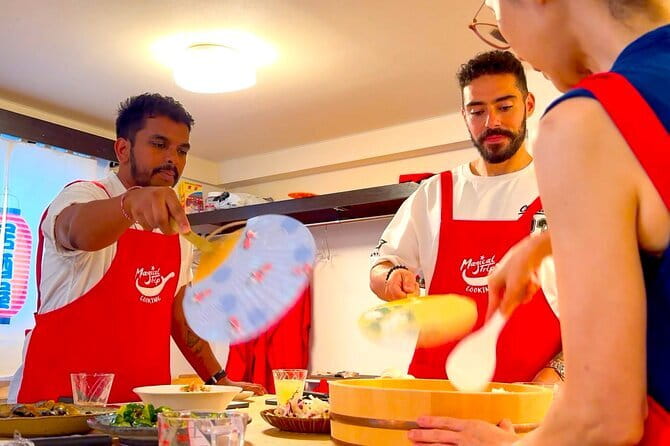
Hand-rolled sushi is a friendly starting point because it is practical and flexible. You get to work with the components yourself rather than receiving a finished plate. The point is not only the rolling technique, but also how a simple dish can be arranged for sharing.
This is useful for home cooks because hand rolls are easier to reproduce than elaborate restaurant sushi. You can prepare them for a casual meal and adjust the filling to suit what you can buy at home.
More Hands-On Workshops in Tokyo:
- Tokyo Sushi Making Class in Tsukiji with Professional Chef
★ 5.0 · 1,177 reviews - Ramen & Gyoza Cooking Class in Tokyo with Local Supermarket Visit
★ 5.0 · 823 reviews - Tokyo: Tsukiji Fish Market Sushi Making Class with Pro Chef
★ 4.9 · 506 reviews - Tokyo: Sushi Making Class
★ 4.9 · 390 reviews
Wagyu or tofu steak
The choice between wagyu and tofu makes this part more flexible for vegetarians. Wagyu gives you a distinctly Japanese luxury ingredient, while tofu offers a substantial alternative without pretending to copy meat.
The class focuses on food that pairs with drinks, so the steak portion is part of a wider meal rather than an isolated cooking exercise. You learn how a richer bite can fit into a table of smaller servings.
Vegetarians are welcome, and the cooking process and ingredients can be arranged for them. This does not extend to vegan diners, since the overall menu and preparation cannot reliably meet a vegan diet.
Japanese rolled egg
Japanese rolled omelette, often called tamagoyaki, is simple in its ingredient list but takes practice to shape well. It is a useful lesson because it shows how an ordinary egg can become a neat, layered dish for a bento, breakfast, or drinking table.
You may find this is one of the more skill-based parts of the class. The lesson is not just about mixing egg. It is about controlling the cooking process and rolling the egg into its familiar form.
Grilled eggplant with miso sauce
Eggplant with miso brings a soft texture and savory sweetness to the menu. It also shows how Japanese home food can make a vegetable the center of a small plate rather than an afterthought.
This dish has practical value for cooks outside Japan. Eggplant is widely available, and miso is now easy to find in many supermarkets. It is the sort of recipe you can make for friends without needing specialist equipment.
Other izakaya ideas
The wider lesson includes the kind of food associated with an izakaya evening, such as savory skewers, crispy tempura, and tangy pickles. The exact core dishes are the ones listed above, so you should not book this expecting a full restaurant menu or every possible izakaya favorite.
That is a fair trade. Four or five well-explained dishes are more useful than a rushed tour through a dozen recipes. You leave with a set of techniques you can repeat, not just a long list of names.
Matching Food With Sake, Beer, or Soft Drinks
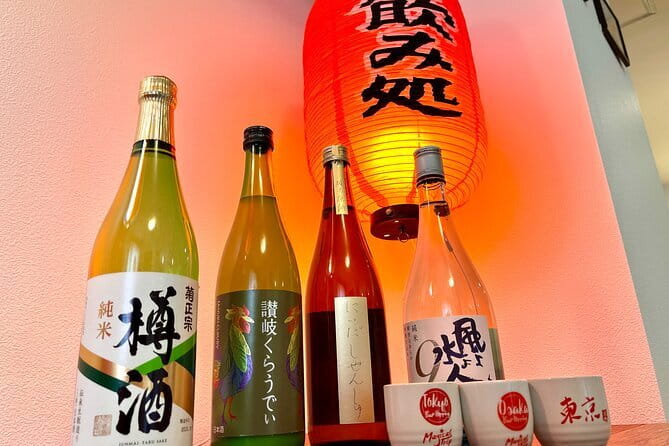
Three cans of alcoholic or soft drinks are included. Adults aged 20 and over can choose alcoholic options, while younger participants receive soft drinks. Japanese law does not allow alcohol service to anyone under 20.
The drink element is more than a perk. It gives the cooking a clear purpose. Japanese home drinking is built around having several tastes on the table, and the class shows how food and drink can be considered together.
You can expect guidance on which beverages pair best with different dishes. This will appeal most to people who enjoy sake or Japanese beer and want to understand the food beyond the familiar restaurant order.
Keep your expectations sensible. This is a cooking class with a drink pairing element, not a dedicated sake tasting. The included allowance is three cans, and the emphasis stays on preparing and eating the food.
If you do not drink alcohol, the class still works. Soft drinks are included, and the food preparation remains the main event. Pregnant participants are not considered suitable for this activity, so choose a different culinary experience if that applies to you.
The Value of a $103 Evening
At $103 per person, this is not Tokyo’s cheapest meal. You are paying for three hours of instruction, all ingredients and equipment, an English-speaking local guide, three drinks, recipes to take home, and tour photos.
The strongest value comes from the hands-on format. A meal at an izakaya would cost less, but it would not teach you how to prepare the dishes or explain the connection between food and drinking culture. A cheaper demonstration class might also give you fewer chances to cook.
The small group improves the calculation. With no more than six participants, the price covers a more personal lesson than a large workshop. Solo visitors may also find the format useful because it gives the evening a natural social structure.
I would book this for someone who wants a cultural activity with dinner built in. I would not book it purely for a cheap meal, nor for a serious professional cooking course. The recipes are practical and approachable, but the class is designed for home cooks and curious beginners.
The included recipes add value after you return home. You can make the dishes for a casual gathering and recreate some of the evening’s atmosphere without needing a Japanese kitchen or restaurant setup.
What the Guides Add to the Evening
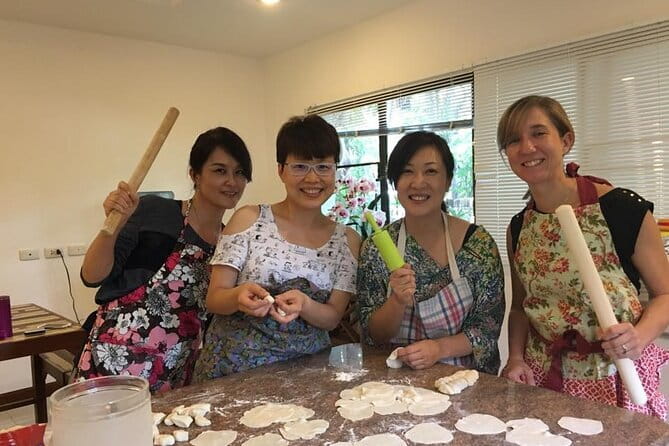
The guide can make or break a small cooking class. Alice has been singled out for making the evening fun while explaining the food clearly. Masae has led a warm, educational session that included a stop at a local supermarket before cooking, giving the class extra context about Japanese ingredients and shopping.
Fuji has also taught the class as both guide and instructor. These names matter because the experience is personal and guide-led, not an audio tour with a fixed script.
The guide’s job is to explain techniques, help with the food, discuss Japanese cooking customs, and connect the dishes to home drinking. You should also expect a social evening with other participants, though the group may occasionally be as small as three people.
A private-feeling session is possible when bookings are light, but it is not guaranteed. The normal group limit is six, and other participants may join you.
Who Should Book, and Who Should Think Twice
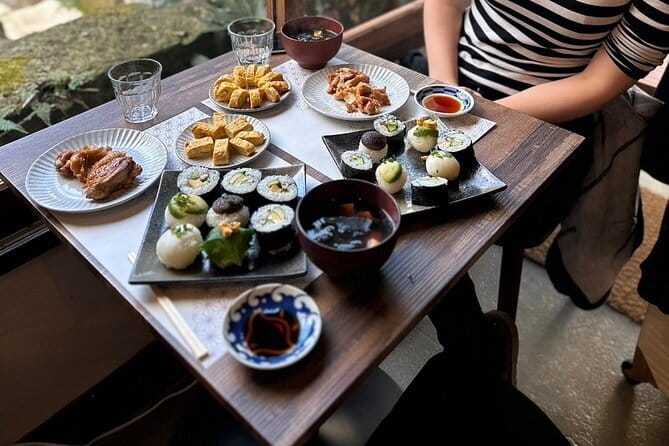
This class suits:
- Couples looking for a relaxed evening activity
- Solo visitors who want to meet people through food
- Friends who enjoy cooking and Japanese drinks
- Beginners who prefer direct help at the counter
- Experienced home cooks seeking repeatable Japanese recipes
- Families with older children who can follow the safety rules
Children from age six can attend, but the activity is marked as unsuitable for children under 12. The practical distinction is important: knife and heat work is reserved for participants aged 12 and over, under parent or guardian supervision. Younger children may be present, and a kids’ playroom is available, but they will not take part in every cooking step.
The class is not suitable for vegans or people who need gluten-free food. Allergy-free preparation cannot be guaranteed, and substitutions may not always be possible because the food is made in kitchens not belonging to the activity provider.
That warning should guide your booking decision. If you have a serious allergy or strict medical diet, the safest choice is to skip this class rather than hope an adjustment can be made on the night.
Practical Details Before You Go
Wear clothes you can cook in and arrive ready for an active evening. Smoking is not allowed.
The booking terms are fairly flexible: you can cancel up to 24 hours before the activity for a full refund, and you can reserve now while paying later. Starting times vary, so check the available departure time when you choose your date.
The class does not include transportation. Use Iriya Station Exit 2, then locate the FamilyMart next to Gindako and Doutor Coffee. There are two FamilyMart stores at the station, so this landmark combination is essential.
The activity runs in the evening, which makes it a good fit after sightseeing. Still, do not plan a tightly timed show or distant reservation afterward. Cooking, eating, questions, and group conversation can fill the full three hours.
Should You Book This Cooking Class?
Book it if you want to understand Japanese food as part of everyday social life, not just as a restaurant meal. The small group, hands-on menu, drink pairings, and take-home recipes make the $103 cost reasonable for a full evening.
I especially recommend it to couples, solo visitors, and home cooks who want recipes they can repeat abroad. Alice, Masae, and Fuji have each brought a personal teaching style to the class, and the format leaves room for conversation.
Skip it if you need vegan, gluten-free, or guaranteed allergy-safe food, or if you want a polished chef-led lesson focused on advanced technique. For everyone else, this is a friendly way to cook, eat, and learn how Japanese home drinking brings people together.
FAQ
How long does the Tokyo cooking class last?
The class lasts three hours.
Where do I meet the guide?
Meet in front of the FamilyMart next to Gindako takoyaki shop and Doutor Coffee near Iriya Station Exit 2. There are two FamilyMart stores at Iriya Station, so choose the one beside those two landmarks.
What dishes will I prepare?
The hands-on menu includes sushi hand rolls, wagyu or tofu steak, Japanese-style rolled egg, and grilled eggplant with miso sauce. The experience is presented as a five-dish class.
Are drinks included?
Yes. Three cans of alcoholic or soft drinks are included. Alcohol is available only to participants aged 20 and over.
Can vegetarians join the class?
Yes. Vegetarian participants are welcome, and the ingredients and cooking process can be arranged for them. The class is not available for vegan or gluten-free participants.
Can children take part?
Participants must be at least six years old, but knife and heat work is limited to those aged 12 and over under parent or guardian supervision. The activity is marked as unsuitable for children under 12, and a kids’ playroom is available.
More Evening Classes in Tokyo
- Chiang Mai: Evening Cooking Class and Local Market Visit
★ 4.9 · 648 reviews - Paris Evening Cooking Class French Dinner and Market Visit Option
★ 5.0 · 430 reviews - Evening Cooking Class in Organic Farm with Local Market Tour
★ 5.0 · 394 reviews - Tingly Thai Cooking School Evening Class
★ 5.0 · 335 reviews
Just added around Tokyo
- Tokyo: Tsukiji Market Walking Tour & Sushi Cooking Class★ 4.6 · 122 reviews
- Tokyo: Sushi Cooking Class with Sake Tasting★ 4.8 · 55 reviews
- Sushi-Making Experience★ 4.7 · 4 reviews
- Tokyo: Tsukiji Market Guided Tour & Sushi-Making Experience★ 4.4 · 11 reviews
- Tokyo: Sushi and Ramen Cooking Class with Sake Pairing Set★ 5.0 · 81 reviews
- Tokyo: Learnt to cook Bento, Oyakodon and More!★ 5.0 · 5 reviews
- Tokyo: Real Ramen & Dumpling Cooking with Master Chef★ 5.0 · 10 reviews
- Tokyo: Kawaii Bento Cooking Class – Cute Character Lunchbox★ 4.9 · 55 reviews
Japanese & Sushi Cooking Classes, compared.
Sushi Making Tokyo Roll and Authentic Japanese Sushi Class
Read our review →
Tokyo: Roll and Authentic Sushi Making Class in Asakusa
Read our review →
Ramen Cooking Class at Ramen Factory in Kyoto
Read our review →
Tokyo: Sushi Making Class in a Happi Coat near a Famous Spot
Read our review →
Sushi Making Tokyo! Popular Maki Sushi & Japanese Sushi(+Recipe!)
Read our review →
Sushi Making Osaka Roll and Authentic Japanese Sushi Class
Read our review →
Tokyo Sushi Making Class in Tsukiji with Professional Chef
Read our review →
Ramen & Gyoza Cooking Class in Tokyo with Local Supermarket Visit
Read our review →Browse the lists this tour appears in