
Review · ATHENS
Athens: Traditional Vegan Cooking Class incl. Drinks
Greek food is often built around vegetables, beans, olive oil, herbs, and grains, so this class shows you how little you need to lose when meat and dairy leave the table. At SOYBIRD in Koukaki, you’ll prepare vegan moussaka, spanakopita, fava, and almond feta, then sit down to eat the whole spread.
I like the small-group format, which gives you a real task instead of leaving you to watch from the edge. I also like the shared meal, with water, white wine, and beer included. The main caution is that the class can feel crowded and hurried, especially when several dishes are moving at once and there is only one instructor.
Key points at a glance
- Seven Greek dishes in one sitting: Make moussaka, fava, dakos, spanakopita, koulouri, tzatziki, and ekmek.
- A genuinely hands-on class: You cook in two teams rather than simply watching a demonstration.
- Near the Acropolis: SOYBIRD is on Veikou Street in Koukaki, with public transportation nearby.
- Drinks are part of the meal: Water, white wine, and beer are included.
- Recipes go home with you: A digital recipe book lets you repeat the dishes after Athens.
- Allow for an informal kitchen: Labels, utensils, and instructions may not always be obvious.
Cooking Greek Classics Without Meat or Dairy
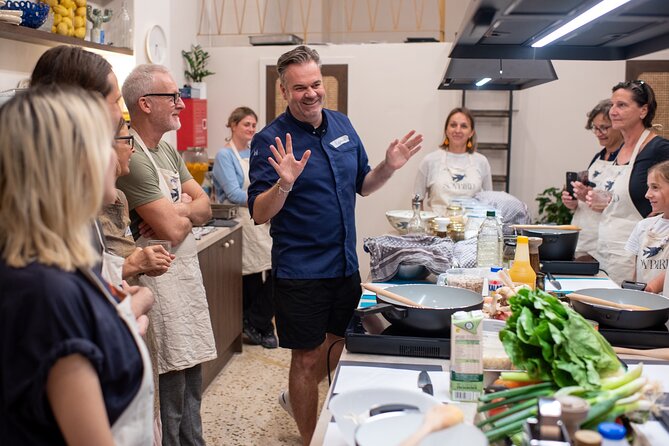
The appeal here is not just the vegan label. It is the chance to see how familiar Greek dishes work when their usual animal products are replaced with plant-based ingredients.
Moussaka arrives with cashew béchamel instead of the classic dairy sauce. Dakos, the Cretan-style rusk dish, is topped with homemade almond feta. Tzatziki uses a plant-based yogurt and cucumber base, while spanakopita keeps its spinach and pastry character without relying on butter or cheese.
That makes the class useful for two kinds of cooks. If you already eat vegan food, you get practical ideas for handling Greek flavors at home. If you do not, you get a clear lesson in how beans, nuts, vegetables, herbs, and olive oil can carry a meal without leaving it thin or austere.
You should not expect a formal lesson in Greek culinary history. The focus is on making food, working with other people, and eating what you produce. That is a good fit if you want a social evening with useful recipes rather than a lecture.
More Vegan Cooking Classes in Athens:
- Oaxacan Vegetarian Cooking Class
★ 5.0 · 235 reviews - Marrakech: Moroccan Cooking Class for vegetarians and vegan
★ 4.9 · 156 reviews - Hoi An: Vegetarian Cooking Class w Local Family and transfer
★ 4.9 · 145 reviews
What Happens During the Three-and-a-Half Hours
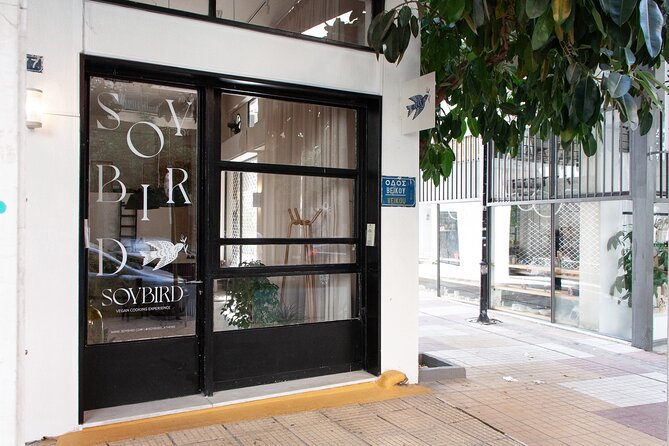
The class begins at SOYBIRD, at Veikou 75 to 77 in Koukaki. The location is near the Acropolis and public transportation, but you should still allow time to find the exact entrance and arrive ready to start. The activity ends at the same place, so there is no second location to navigate after dinner.
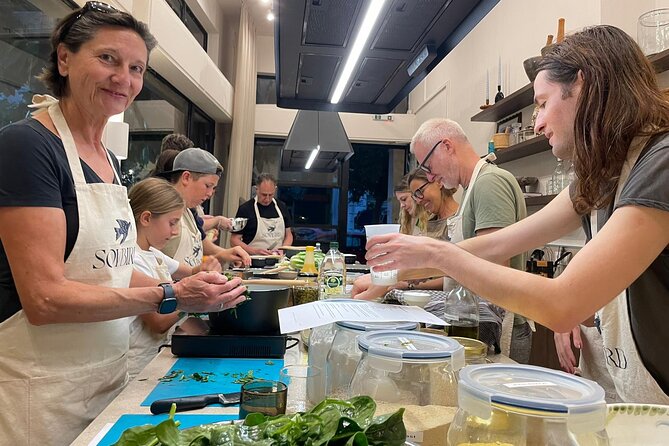
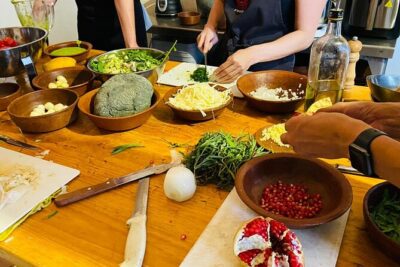
After a short introduction, the group divides into two teams. You work through the dishes step by step, with the class arranged around several recipes rather than one single finished plate. This keeps the evening varied, but it also means you may not personally handle every part of every dish.
The menu is generous:
- Moussaka with cashew béchamel
- Fava with caramelized onions
- Dakos with homemade almond feta
- Spanakopita, described as a spinach cake
- Koulouri, or sesame rings
- Tzatziki, a cucumber and yogurt dip
- Ekmek, a Greek dessert specialty
That is a lot of food for a three-and-a-half-hour class. I would think of it as a group cooking project, not a private lesson in which you master seven complete recipes from start to finish. You will take part, but the division of labor matters.
Once the cooking is done, everyone sits down to eat together. Water, white wine, and beer are included, which helps turn the class into an evening meal rather than a quick tasting. The shared table is also where the social side becomes most useful. You can talk with people you have just cooked beside, compare results, and enjoy the food without rushing off to find a restaurant.
Moussaka, Fava, and the Main Work
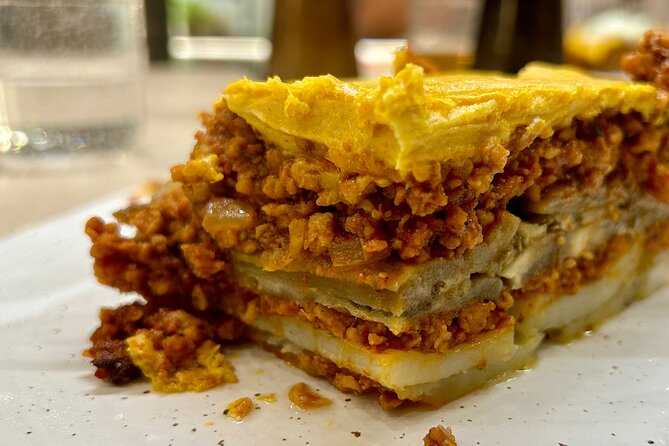
Moussaka is likely to be the most familiar dish on the menu, and the cashew béchamel is the main point of difference. You get the layered, comforting character associated with Greek moussaka, while learning how a nut-based sauce can replace the usual dairy topping.
The fava offers a simpler lesson. Paired with caramelized onions, it shows how a basic legume dish gains depth from slow-cooked sweetness and seasoning. If you want one recipe that could become a regular part of your home cooking, this may be the practical winner. It is less fussy than pastry and easier to adapt to an ordinary weeknight.
Dakos gives you another useful technique. The dish combines a crisp rusk base with fresh toppings and homemade almond feta. It demonstrates how texture matters in plant-based cooking. You are not simply replacing cheese with a substitute. You are building contrast between crunch, creaminess, and fresh ingredients.
The class has produced especially strong results for cooks who want recipes they can actually repeat. One useful detail is that the recipes are supplied digitally after the session. That matters because seven dishes, several substitutions, and a busy kitchen are a lot to remember from memory.
Spanakopita, Koulouri, and the Pastry Work
Spanakopita brings the most hands-on pastry element to the table. Spinach, herbs, and pastry are familiar Greek partners, but removing dairy changes how you think about moisture and filling. You will need to pay attention to the texture of the mixture so the pastry does not become heavy or soggy.
Koulouri, the sesame ring, is a smaller item but a nice change of pace. It gives you something breadlike and snackable alongside the more substantial dishes. The sesame topping also adds a useful bit of texture and flavor without needing a complicated sauce.
Tzatziki is the quick, cooling dish in the group. It is simple enough to make without much cooking experience, but it helps balance the richer moussaka and pastry. The cucumber dip also shows how Greek food depends on freshness and acidity, not just long cooking.
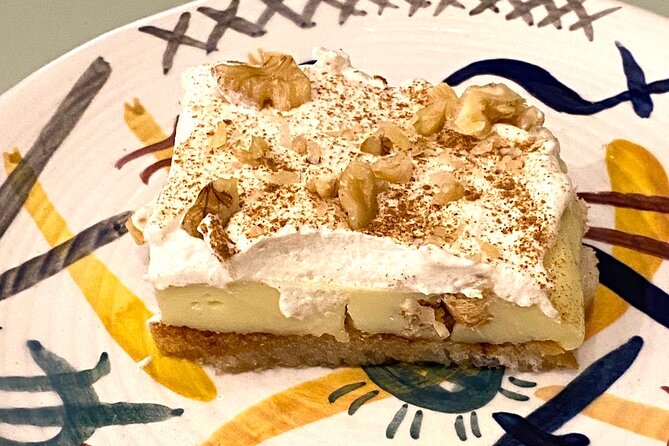
The dessert is ekmek, a Greek specialty. The provided menu does not spell out its exact preparation, so you should not expect a detailed pastry-school lesson from the description alone. You can expect a final sweet course made as part of the shared meal.
More Food Experiences in Athens:
- Athens: Food Market Visit and Cooking Class with Wine
★ 4.9 · 1,087 reviews - Small Group Cooking Class & Market Food Tour in Florence
★ 5.0 · 1,574 reviews - Undiscovered Charleston: Half Day Food, Wine & History Tour with Cooking Class
★ 5.0 · 948 reviews - Vietnamese Food Cooking Class in Hanoi with Market Experience
★ 5.0 · 778 reviews
A Social Kitchen, Not a Silent Demonstration
The best part of the format is that you are expected to do things. You measure, mix, shape, season, and help bring the meal together. That is more memorable than standing behind a counter while someone else handles the knife and stove.
The class has also been led by cooks named Alexandra and Mirka, both praised for keeping groups moving and helping less experienced cooks. Mirka has been noted for adapting traditional Greek dishes to vegan cooking in a warm, friendly way. Alexandra has been described as managing several recipes and different skill levels with patience.
The style is informal. There is not always a full demonstration before each task. Instead, instructions may come through recipe cards and direct guidance as you work. That can feel relaxed and homey, but it can also produce confusion when several people need help at once.
I would choose this class if you enjoy talking while you cook and do not mind a little kitchen disorder. I would choose a more structured cooking school if you want every technique demonstrated slowly, each ingredient clearly labeled, and a quiet workstation for yourself.
Group Size and Kitchen Comfort
The advertised working group is small, generally five to ten people, which is a good size for shared cooking. The additional information allows up to 14 participants, so I would confirm the expected headcount if space is important to you. The course needs at least five people to run, and you are told 24 hours ahead if the appointment does not go ahead.
A small group can give you more contact with the instructor, but it does not mean this is a private lesson. You will be assigned to one of two teams, and some jobs may be shared or divided among several people.
The kitchen itself is compact. That helps create the feeling of cooking in someone’s home, but it can become tight with eight people plus an instructor. You might need to wait for counter space, share tools, or help wash and dry dishes as the meal takes shape.
A few practical points deserve attention. Ingredients and utensils may not always be labeled as clearly as you would like. Measuring jugs and other tools may not be immediately obvious, and seasonings such as pepper and volcanic salt can be easy to confuse if you are moving quickly.
Good kitchen habits also matter. If you have long hair, tie it back before you arrive. The induction cooker means the activity is not suitable for people with pacemakers.
Is $94.66 a Fair Price?
At $94.66 per person, this is not a budget meal. It becomes better value when you count what is included: about three and a half hours of instruction and cooking, seven menu items, a full shared meal, water, white wine, beer, and a digital recipe book.
You are also paying for the setting and the chance to meet people while doing something useful. A restaurant meal near the Acropolis could cost a fair amount without teaching you how the food is made. This class gives you dinner plus recipes and cooking practice.
The value is weaker if you want a polished professional demonstration with personal bench space. You may spend part of the session waiting, sharing jobs, or helping with cleanup. In that case, you are paying for a social cooking evening, not a private chef lesson.
For a couple, it offers an easy date-night activity. For a solo visitor, it provides a natural way to meet people without the awkwardness of sitting alone at a bar. It also works for mixed groups in which one person is vegan and another is not. The recipes are designed to be satisfying beyond the plant-based audience.
Who Will Enjoy This Athens Cooking Class?
I would recommend it most strongly to you if you meet one or more of these descriptions:
- You want to eat Greek food but avoid meat and dairy.
- You enjoy hands-on activities more than passive sightseeing.
- You are happy to share work and conversation with a small group.
- You want recipes you can recreate after returning home.
- You are looking for an evening activity near the Acropolis.
- You are a beginner who appreciates friendly help rather than formal culinary training.
It is also a good choice for a vegetarian or omnivore who wants to understand vegan Greek cooking without committing to a fully vegan holiday. The food is the focus, not a lecture about dietary choices.
I would hesitate if you dislike communal cooking, need a very orderly workspace, or want to prepare every recipe yourself. You should also be comfortable with a class that may become hectic when multiple dishes are underway.
Booking Details That Matter
The experience is offered in English and uses a mobile ticket. Free cancellation is available up to 24 hours before the local start time. Cancellations or changes inside that window are not refunded or accepted.
Private lessons can be arranged on request, but the total cost depends on the size of your group. Since the standard course needs a minimum of five people, check the status of your date if you are booking far ahead or traveling alone.
The class is booked, on average, about 29 days in advance. That is a useful warning for peak periods in Athens. If this is important to your plans, reserve before your sightseeing schedule fills up.
Should You Book It?
Book this SOYBIRD class if you want an active, social meal and the idea of vegan moussaka, almond feta, spanakopita, and fava sounds better than another restaurant dinner. The strongest points are the broad menu, the included drinks, the recipe book, and the chance to cook with instructors such as Alexandra or Mirka.
Skip it if you expect a quiet, polished demonstration with every utensil in its place. The informal format can be part of the charm, but the small kitchen, uneven labeling, and limited one-on-one attention may test your patience.
For most people who enjoy food and conversation, the class offers a useful evening near the Acropolis. You leave with dinner already eaten, recipes in hand, and a clearer sense of how Greek cooking can work without meat or dairy.
FAQ
Where does the cooking class take place?
The class starts and ends at SOYBIRD, Cooking Classes Athens, at Veikou 75 to 77, Athina 117 41, Greece. It is in Koukaki, near the Acropolis.
How long does the experience last?
The cooking class lasts approximately three hours and 30 minutes.
What language is the class offered in?
The class is offered in English.
What dishes will I prepare?
The sample menu includes moussaka with cashew béchamel, fava with caramelized onions, dakos with homemade almond feta, spanakopita, koulouri sesame rings, tzatziki, and ekmek dessert.
Are drinks included?
Yes. Water, white wine, and beer are included with the shared meal.
How many people take part?
The class is designed for small groups of about five to ten people. The additional activity information lists a maximum of 14 participants.
Is the class suitable for someone who is not vegan?
Yes. The dishes are vegan, but the activity is open to people who are vegan, vegetarian, or neither.
Can I cancel for a full refund?
Yes, if you cancel at least 24 hours before the local start time. Cancellations made less than 24 hours in advance are not refunded.
More Hands-On Workshops in Athens
- Athens: Classic Cooking Class with Market Visit and Wine
★ 5.0 · 1,101 reviews - Greek Cooking Class in Athens Including Rooftop Dinner with Acropolis View
★ 5.0 · 826 reviews - Greek Small-Group Athens Cooking Class & Dinner
★ 5.0 · 574 reviews - Athens: Greek Cooking Class & Dinner on a Rooftop
★ 5.0 · 383 reviews
Just added around Athens
- Hands On Greek Cooking Classes in Athens★ 5.0 · 7 reviews
- Greek Meze Cooking class and dinner with an Acropolis view★ 5.0 · 41 reviews
- Pick Your Plates, Cook & Savor- Greek Cooking Class in Athens★ 5.0 · 8 reviews
- Local Home Cooking – A Taste of the Greek Islands in Athens★ 5.0 · 9 reviews
- Athens Greek Cooking Class Pita Gyros from Scratch with a Local★ 5.0 · 175 reviews
- Cooking Class at Diamond Roof Garden★ 5.0 · 14 reviews
- Athens Central Market Tour and Greek Cooking Class with Penelope★ 5.0 · 4 reviews
- Cook a Greek Feast Steps From the Acropolis (8-Course Meal)★ 5.0 · 5 reviews
Vegan & Vegetarian Cooking Classes, compared.
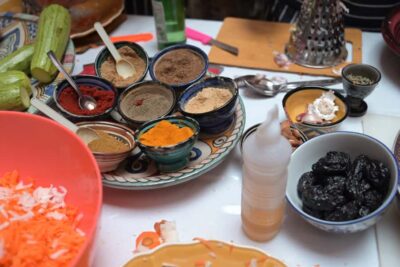
Marrakech: Moroccan Cooking Class for vegetarians and vegan
Read our review →
Hoi An: Vegetarian Cooking Class w Local Family and transfer
Read our review →
Jaipur Market Tour & Vegetarian Rajasthani Home Cooking Class
Read our review →
Ramen & Dumpling Cooking in Tokyo with Chef/Vegan possible
Read our review →
Hoi An/Da Nang: Vegetarian Cooking Class & Basket Boat Ride
Read our review →
Vegan/Vegetarian Ramen and Gyoza by Bentoya cooking
Read our review →Browse the lists this tour appears in