
Review · TOKYO
Sushi Making Tokyo! Popular Maki Sushi & Japanese Sushi(+Recipe!)
Making sushi looks simple until you try shaping a neat nigiri piece. This Asakusa cooking class gives you a practical introduction to both nigiri and maki sushi, with ingredients prepared for you and an English-speaking instructor guiding each step. You make the food, then sit down to eat it.
I like the mix of sushi styles, since maki is approachable while nigiri shows you the more technical side of the craft. I also like the friendly, hands-on teaching, with instructors including Ken, Sato, Momo, Yuto, Kento, and Matti praised for their humor and clear demonstrations.
The main consideration is pace. One participant found that the spoken English could be a little fast, so do not hesitate to ask the instructor to repeat or slow down. The class lasts only about 1 hour 50 minutes, which keeps it easy to fit into a Tokyo day but leaves little room for a slow, leisurely lesson.
Key points at a glance
- Two classic sushi styles: Learn both hand-shaped nigiri and rolled maki sushi.
- A meal you make yourself: The ingredients and finished food are included, so this is both a lesson and lunch.
- A convenient Asakusa setting: The meeting point is at 2-chōme-1-13 Kaminarimon, near public transportation and Tokyo sights.
- Suitable for families: A ten-year-old enjoyed making sushi, and non-raw-fish choices are available.
- Useful for special diets: Gluten-free accommodations can be made, including for a gluten-free child.
- Good short activity: The class takes about 1 hour 50 minutes and costs $63.28 per person.
Why this short Asakusa class works well
Sushi is one of those foods that can seem easy from the dining table. There is rice, fish, seaweed, and perhaps a little soy sauce. The trouble begins when you try to make rice hold its shape, place ingredients evenly, roll without squeezing too hard, or form nigiri that looks like something more than a lump of rice with fish on top.
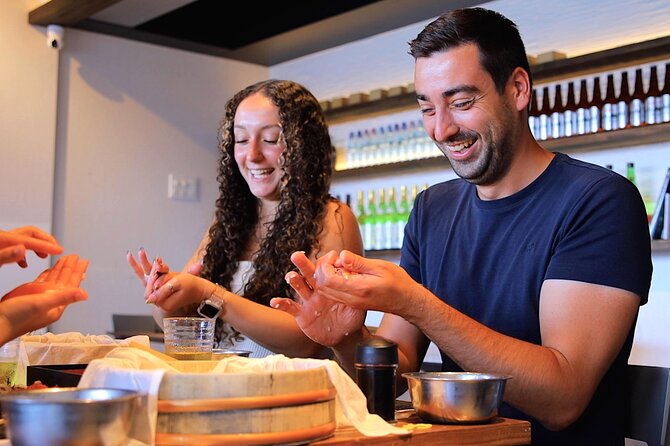
That is the useful part of this class. You are not only watching a chef work. You are given the chance to practice the basic movements yourself, with the instructor breaking the process into manageable steps. The class covers maki sushi, or roll sushi, and nigiri sushi, the hand-shaped style that is especially familiar in Japan.
Maki is likely to feel more forgiving at first. Ingredients are placed on rice and rolled in seaweed, giving you a clear structure to work with. Nigiri is more exact. The rice must be portioned and shaped, then paired with the topping in a way that keeps the piece together without crushing it.
That contrast gives the lesson a good rhythm. You can begin with a style that feels playful and familiar, then try the technique that requires more control. If your first nigiri looks a little uneven, that is part of the point. Sushi making rewards practice, and this class lets you make mistakes before you attempt it at home.
More Sushi and Japanese Classes in Tokyo:
- Sushi Making Tokyo Roll and Authentic Japanese Sushi Class
★ 5.0 · 3,971 reviews - Tokyo: Roll and Authentic Sushi Making Class in Asakusa
★ 4.9 · 1,957 reviews - Tokyo: Sushi Making Class in a Happi Coat near a Famous Spot
★ 4.9 · 1,377 reviews
From Japanese food culture to your first roll
The class was opened in 2023 with a focus on Japanese food and hands-on experience. Its purpose is straightforward: help people from around the world understand more about Japanese food culture by making sushi rather than simply ordering it.
You can expect an introduction to sushi and some background about the two styles you will prepare. Nigiri is presented as the original and standard sushi style in Japan, while maki has become popular around the world. That distinction gives the lesson a bit of context without turning a short cooking session into a lecture.
The English-speaking staff keeps the class accessible to international visitors. Names connected with the teaching team include Ken, Sato, Momo, Yuto, Kento, and Matti. The teaching style appears warm and energetic, with a balance of explanation, demonstration, and time at your own station.
I would pay close attention during the demonstrations. Sushi technique depends on small details, such as how firmly you press the rice and how you position ingredients before rolling. One participant specifically found nigiri harder than expected, which is useful to know before you arrive. The class is meant to teach you, not make you look like a professional sushi chef on the first try.
If an instructor speaks faster than you can follow, ask for a slower explanation. That is especially important if you are learning through English. The class is designed for international visitors, but speaking styles can vary, and a short request for repetition may save you from guessing at an important step.
Maki sushi: the friendly place to begin
Maki sushi is the more familiar entry point for many people. Rice and fillings are rolled in seaweed, producing a cylindrical piece that is later cut into portions. The structure gives you something to work toward, and the finished roll is satisfying even when it is not perfectly tight.
You will work with the ingredients supplied for the class rather than shopping or preparing a full kitchen setup yourself. That keeps the focus on technique. It also makes the activity efficient, since the total session is under two hours.
The best part of making maki is seeing how a few simple movements affect the result. Place too much filling in the center and the roll becomes hard to close. Press too firmly and the rice can be squeezed out. Roll too loosely and the pieces may fall apart when cut.
Those small lessons are useful after you leave Tokyo. The class includes a recipe, giving you a reference for trying the process again at home. You will not leave as a sushi master after one session, but you should have more confidence about where to start, especially if you already own a sushi-making kit.
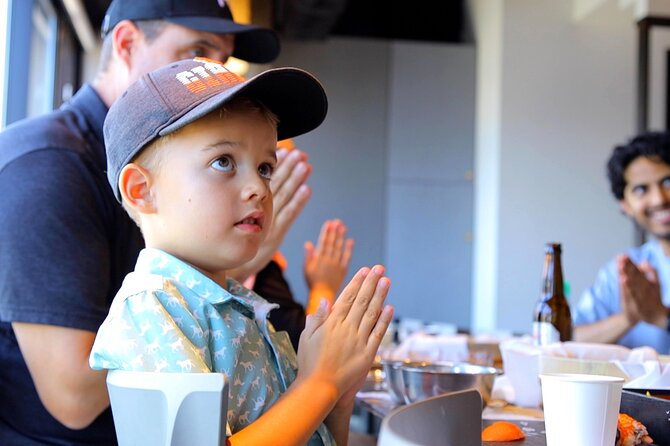
Maki is also a good choice for families. It feels like a craft project with an edible finish, and the hands-on nature gives children a clear job to do. A ten-year-old enjoyed the class, and the prepared format means you are not asking a child to wait through a long demonstration.
Nigiri sushi shows the real challenge
Nigiri is the more demanding half of the class. It looks minimal, but that simplicity leaves nowhere to hide. The rice should be shaped carefully, and the topping needs to sit neatly without making the piece too heavy or unstable.
This is where the class has the most educational value. You learn why sushi chefs use controlled movements rather than simply pressing ingredients together. Even if you never repeat the technique at home, you will understand why a well-made piece of nigiri requires skill.
The teaching team breaks the steps down rather than assuming you already know what to do. You receive guidance as you work, which matters because the right pressure is difficult to judge from a demonstration alone. You may need to make a few attempts before the rice feels right in your hands.
The class also helps you see sushi as more than a restaurant product. You learn that the balance of rice, topping, shape, and handling all affect the final bite. That knowledge can change how you look at sushi during the rest of your time in Japan.
Raw fish is not the only concern for every member of a group. The class offers options without raw fish, so people with different comfort levels can take part together. That makes the experience easier to recommend to families and mixed groups, though you should explain dietary needs when booking or at the start of the class.
Same place, a different menu:
- Tokyo Sushi Making Class in Tsukiji with Professional Chef
★ 5.0 · 1,177 reviews - Ramen & Gyoza Cooking Class in Tokyo with Local Supermarket Visit
★ 5.0 · 823 reviews - Tsukiji Fish Market Guided Tour and Sushi Making with Pro Chef
★ 5.0 · 775 reviews - Tokyo: Tsukiji Fish Market Sushi Making Class with Pro Chef
★ 4.9 · 506 reviews
A filling lunch, not just a demonstration
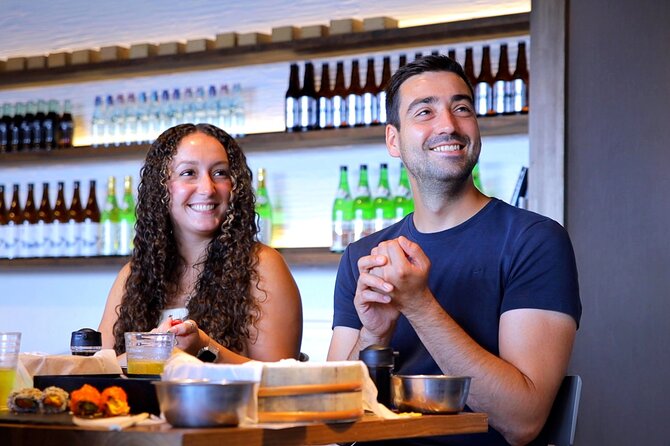
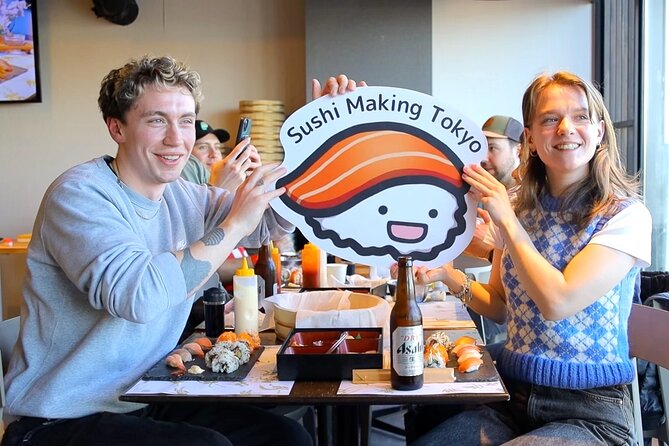
The ingredients and meal are included in the price. You eat the sushi you make, which turns the class into a practical lunch or early meal rather than an activity followed by another restaurant bill.
That matters in Tokyo, where food costs can vary widely. At $63.28 per person, this is not the cheapest way to eat sushi. You are paying for instruction, ingredients, a central setting, and the chance to prepare the food yourself. If you only want a quick plate of sushi, a restaurant will cost less and take less time.
The value improves if you want an activity as well as food. You receive nearly two hours of guided instruction, a meal, and a recipe you can use later. For a couple, family, or small group, that shared experience may be worth more than a standard lunch.
Portions are described as filling, which is helpful when planning the rest of your day. You should not need to treat this as a tiny tasting session. The exact selection of ingredients is not specified, so do not book expecting a particular fish or a fixed menu.
The fresh ingredients are an important part of the experience. Since you prepare the food yourself, freshness is more noticeable than it would be during a quick restaurant meal. You can see the components before assembling them and then eat the result soon after making it.
Why Asakusa is a smart location
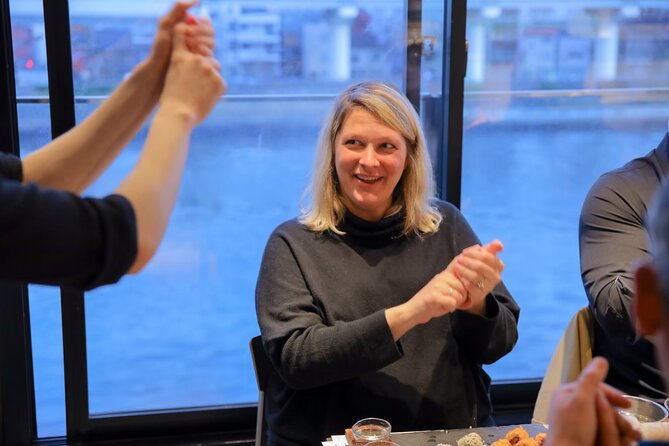
The class meets at 2-chōme-1-13 Kaminarimon, Taito City, Tokyo 111-0034, Japan. It is in Asakusa, a district known for its traditional atmosphere, historic sights, and strong connection to Tokyo’s older tourist routes.
That location makes the class easy to pair with sightseeing. You can plan it around time in Asakusa rather than crossing the city for a one-off lesson. The meeting point is near public transportation, another practical benefit when you are working around Tokyo’s large rail and subway network.
Because hotel pickup and drop-off are not included, you need to reach the meeting point yourself. Build in time to find the exact address, especially if you are unfamiliar with Asakusa. Arriving late can be stressful during a timed cooking class, and one group arrived a few minutes late and felt uncomfortable about it.
I would place the class either before or after other Asakusa plans. The 1 hour 50 minute duration is short enough to fit into a half-day schedule, but you should allow extra time for getting there, checking in, and moving on afterward.
Family needs, gluten-free requests, and group size
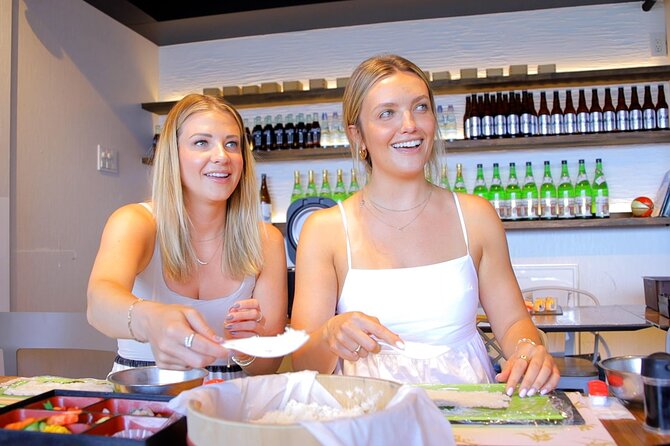
The class can accommodate up to 40 people. That is a fairly large maximum, so the experience may not always feel like a private lesson. At the same time, direct accounts describe groups as small enough for participants to receive help when needed. The actual feel may depend on the date and attendance.
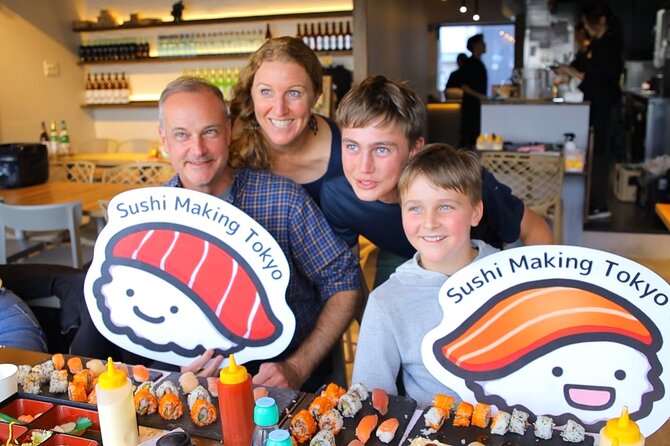
Families have several reasons to consider it. Children can take part in the main task, the lesson is short, and non-raw-fish options allow everyone to eat something they are comfortable with. It also gives children a structured way to learn about Japanese food rather than simply watching adults order it.
Gluten-free needs can be accommodated, including for a gluten-free child. You should still raise the issue clearly before the class begins. The information provided confirms that accommodation is possible, but it does not list every ingredient, substitution, or cross-contact procedure.
Service animals are allowed, and the location is near public transportation. No full accessibility details are provided, so if you have mobility or other access needs, contact the provider before booking rather than relying on assumptions.
The price, timing, and cancellation rules
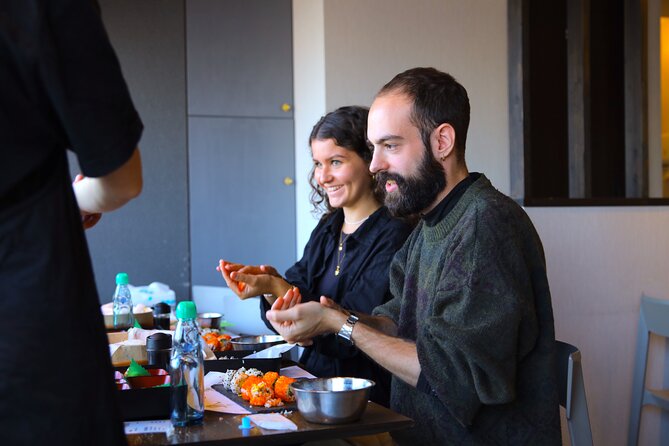
The listed price is $63.28 per person. Since it includes an English-speaking instructor, cooking ingredients, and the meal you prepare, it is a reasonable price for a structured food activity in central Tokyo. The value is strongest for people who want a skill and a shared memory, not just a meal.
The average booking lead time is 36 days. That suggests you should not leave this until the final day of a busy Tokyo trip, particularly if you need a certain date or want to attend with several people.
A mobile ticket makes the booking simple to carry on your phone. The class offers free cancellation up to 24 hours before the start time for a full refund. Cancellations or changes made less than 24 hours ahead are not accepted for a refund, and the cut-off uses local Tokyo time.
The experience requires a minimum number of participants. If that minimum is not met and the class is canceled, you are offered another date or experience, or a full refund.
Who will get the most from this sushi lesson
I would recommend this class to first-time sushi makers, families, couples, and friends who want a food activity with a clear beginning and end. It also suits people who have a sushi kit at home but lack the confidence to use it.
It is a good choice if you want to understand the difference between rolled and hand-shaped sushi. It is also useful for anyone who wants a meal that feels more personal than sitting at a restaurant counter.
You may want something else if you already make sushi regularly, need a long technical workshop, or want a highly specialized lesson focused on knife work, rice seasoning, or advanced fish preparation. Those subjects are not promised here.
The class is also not ideal for a traveler who dislikes structured group activities. You are following an instructor, working within a fixed time, and sharing the setting with other participants. For most people, that structure is a help. For others, it may feel less relaxed than making food privately with a chef.
Should you book Sushi Making Tokyo?
Yes, if you want a friendly, practical introduction to sushi in a convenient Asakusa location. The strongest reasons are the combination of maki and nigiri instruction, the included meal, family-friendly options, and staff who make an effort to keep the class lively and approachable.
At $63.28, you are paying for more than lunch. You are paying for instruction, a recipe, fresh ingredients, and the chance to understand why nigiri takes more skill than it appears to. Book ahead if your schedule is tight, mention gluten-free or non-raw-fish needs early, and ask the instructor to slow down if the English moves too quickly.
FAQ
Where does the sushi-making class meet?
The meeting point is Sushi Making Tokyo, 2-chōme-1-13 Kaminarimon, Taito City, Tokyo 111-0034, Japan.
How long does the experience last?
The class lasts approximately 1 hour and 50 minutes.
What types of sushi will I learn to make?
You will learn to make maki sushi, also called roll sushi, and nigiri sushi, the hand-shaped style.
Is an English-speaking instructor included?
Yes. An English-speaking instructor is included.
Are the ingredients and meal included?
Yes. The cooking-class ingredients and the meal are included in the price.
Can children take part?
Yes. The class is suitable for families, and a ten-year-old was able to enjoy making sushi. Non-raw-fish options are available.
Can the class accommodate gluten-free participants?
Yes. Gluten-free accommodations can be made, including for a gluten-free child. Raise the request clearly with the provider.
What is the cancellation policy?
You can cancel up to 24 hours before the experience start time for a full refund. Cancellations or changes made less than 24 hours before the start time are not accepted for a refund.
Just added around Tokyo
- Ramen Making from Scratch with Tokyo Mom(Vegan Option Available)★ 5.0 · 39 reviews
- Shibuya Tokyo: Sushi Making Class (Vegan/Vegetarian/Halal)★ 4.7 · 29 reviews
- Ramen & Dumpling Cooking in Tokyo with Chef/Vegan possible★ 5.0 · 107 reviews
- Tokyo Haneda: Bento & Ramen Gyoza Cooking Class in a Local home★ 5.0 · 9 reviews
- Hands-on Japanese Cooking in a Shinjuku Home Kitchen with Satoru★ 5.0 · 19 reviews
- Japanese Home Cooking Class & Walk in Todoroki Temple Tokyo★ 5.0 · 88 reviews
- Private Home Cooking in Yanaka – Local Flavors in a Warm Setting★ 5.0 · 173 reviews
- Sushi-Making Experience at ’Activity Maison Kissako’★ 5.0 · 197 reviews
Japanese & Sushi Cooking Classes, compared.
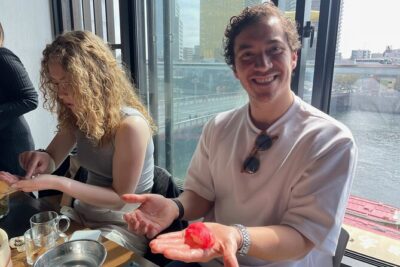
Sushi Making Tokyo Roll and Authentic Japanese Sushi Class
Read our review →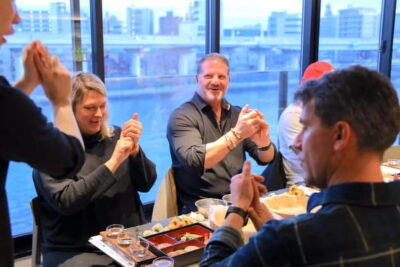
Tokyo: Roll and Authentic Sushi Making Class in Asakusa
Read our review →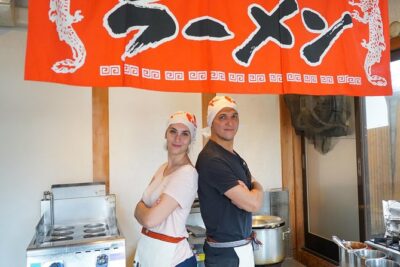
Ramen Cooking Class at Ramen Factory in Kyoto
Read our review →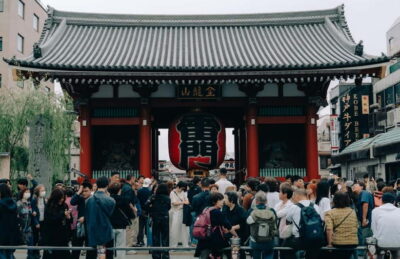
Tokyo: Sushi Making Class in a Happi Coat near a Famous Spot
Read our review →
Sushi Making Osaka Roll and Authentic Japanese Sushi Class
Read our review →
Tokyo Sushi Making Class in Tsukiji with Professional Chef
Read our review →
Ramen & Gyoza Cooking Class in Tokyo with Local Supermarket Visit
Read our review →
Tsukiji Fish Market Guided Tour and Sushi Making with Pro Chef
Read our review →Browse the lists this tour appears in