
Review · MOROCCO
Berber Cooking Class at a Farm in the Countryside & shopping at a rural Souk.
The best part of this seven-hour outing is that the meal begins long before you sit down. You visit a rural souk to see and buy the fruit, vegetables, meat, eggs, and honey used in the cooking class, then head to an ecological farm in the Haha region, Berber country south of Essaouira.
I like the honest, hands-on food preparation, especially roasting barley over a fire, grinding it in a stone mill, and baking bread in a clay oven. I also like the setting: lunch may be served outdoors beside the farm’s olive trees, followed by fresh-herb tea. The main consideration is the pace. This is a full seven-hour day, and the rural kitchen is traditional rather than polished, so you should be comfortable with heat, smoke, basic equipment, and a flexible schedule.
Key points
- Rural souk first: Shop for the ingredients used later in the Berber meal, including produce, meat, eggs, and honey.
- Traditional kitchen work: Roast barley, grind it by hand, bake flatbread in a clay oven, and steam couscous in a clay pot.
- Farm-made lunch: Prepare vegetable and goat-meat tagine with Moroccan spices, olive oil, and ingredients from the farm.
- Two local teachers: Khadija and Khadija demonstrate the cooking methods and food preparation.
- Optional argan stop: Learn how argan oil is produced and taste products made with it.
- Small group size: The outing is limited to eight participants, which suits a practical cooking lesson.
From Essaouira to the Haha region
You meet at 9:00 am at Labo Abdelkrim Khatabi d’Analyses Médicales, 287 Rue Oued El Makhazine, in Essaouira. The activity ends back at the same meeting point, making the day fairly easy to fit into an Essaouira stay.
The farm lies about 35 kilometers south of town in the Haha region. This is an important detail, not just a mileage note. Essaouira’s old town and sea air give you one view of Morocco, while the Haha hills show you a rural Berber community shaped by farming, herding, and local food production.
The Berbers, also called Amazigh, are Morocco’s indigenous people. In this part of the country, families cultivate crops and keep goats and sheep. The class gives you a direct look at how local ingredients move from market stall to kitchen to table.
The group limit of eight is useful here. A cooking class built around a fire, stone mill, clay oven, and shared work area can become awkward with a large crowd. A small group gives you a better chance to watch the demonstrations and take part without standing at the back.
More Farm Cooking Classes in Morocco
- Cooking Classes Farm to Table Marrakech
★ 5.0 · 165 reviews - Organic Moroccan Cooking Class At Secret Berber Garden CT
★ 5.0 · 147 reviews - Authentic Moroccan Cooking Class in a Farm in Marrakech
★ 5.0 · 64 reviews
Shopping for lunch at a rural souk
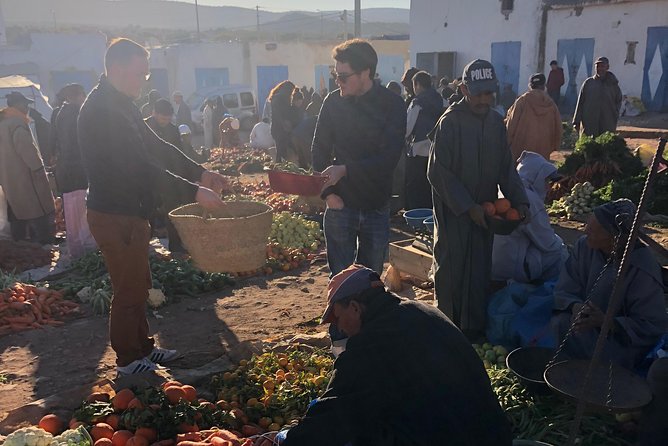
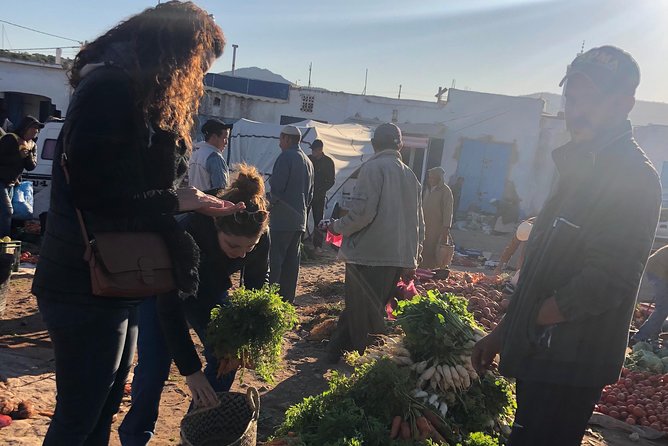
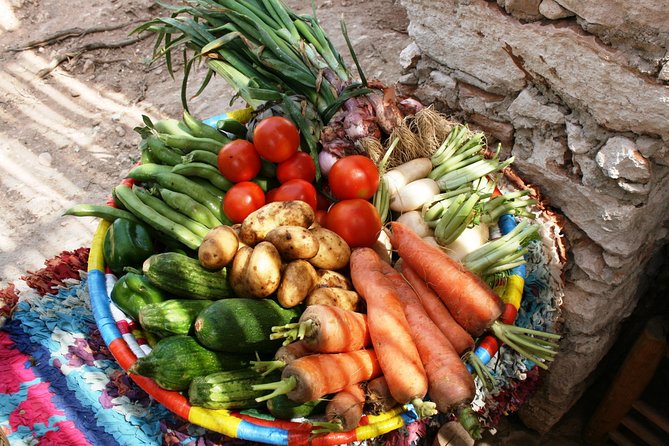
The first major stop is a local souk. This is not simply a quick market photo stop. You look for the basic foods needed for the day’s meal: freshly harvested fruit and vegetables, meat, eggs, honey, and other household staples.
I like this order of events. When a cooking class hands you a prepared basket of ingredients, you learn recipes but not much about how food is bought. Here, the market gives the meal a beginning. You see what is available locally and understand that Moroccan cooking depends on fresh produce, spices, oil, grains, and careful use of what a household can obtain.
The souk may feel more practical than theatrical. It serves local daily needs, and that is its value. You should expect a working market rather than a tidy food hall designed for sightseeing. Keep an open mind, pay attention to the ingredients, and let the guide explain what will be used later.
The market can also add time and sensory variety to the morning. You may see fruit and vegetables beside meat, eggs, and honey, then carry the day’s purchases toward the farm kitchen. That connection makes the later meal feel earned.
Roasting barley over the fire
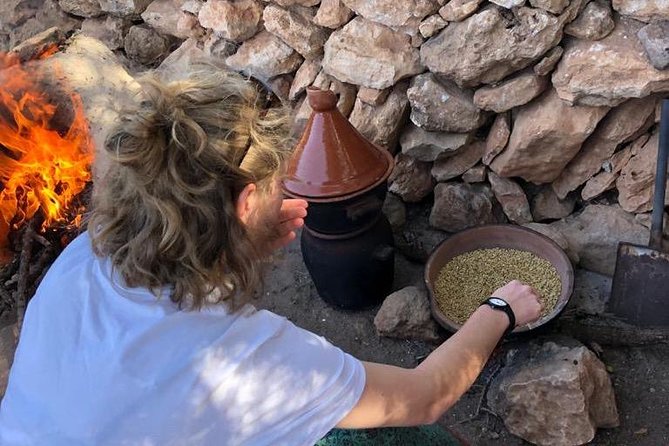
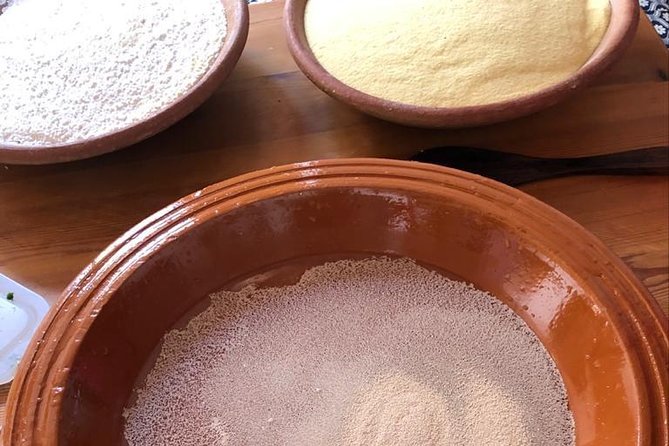
At the farm, the cooking begins with barley. Khadija and Khadija show you how barley grains are roasted over a fire, then ground in a stone mill.
This is one of the most worthwhile parts of the class because it reveals the work behind familiar foods. The roasted grain becomes flour and semolina, which form the base for traditional flatbread and couscous. You are not simply stirring a sauce or decorating a finished dish. You see a grain change through heat and grinding before it reaches the table.
The stone mill is also a reminder that traditional cooking takes time and muscle. It is slower than using a modern electric grinder, but the process helps explain the texture and role of the grain. If you enjoy food classes that show technique rather than just recipes, this is a strong feature.
The fire adds a practical note. Smoke, heat, and uneven temperatures are part of the setting. You should wear clothes that are comfortable around cooking and accept that the experience will not resemble a modern demonstration kitchen. The rustic tools are the point, but they also mean less control and less comfort.
Flatbread from a clay oven
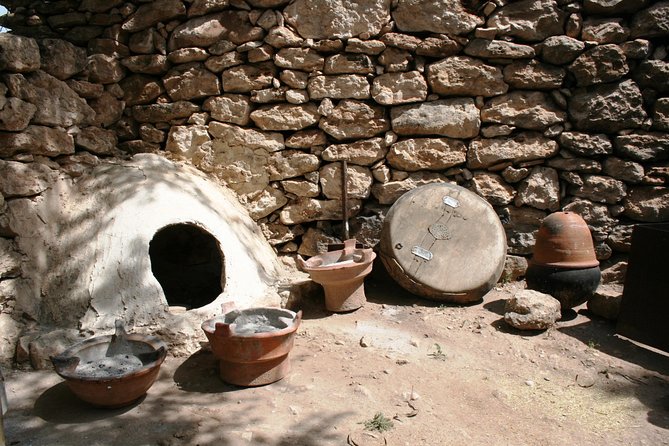
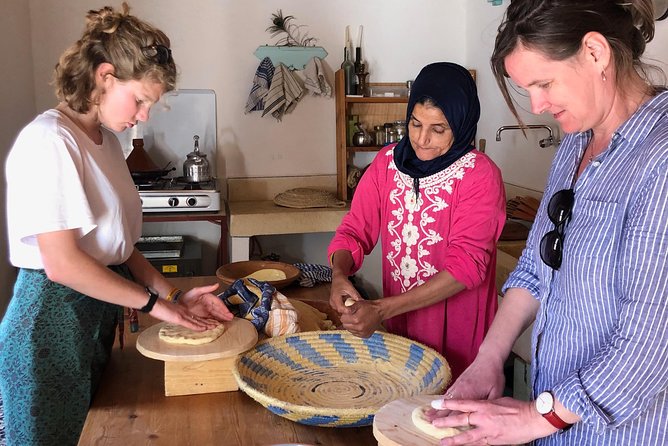
After the barley work, you make flatbread and bake it in a clay oven. The oven gives the lesson a clear sense of place. You are using the sort of equipment associated with a traditional Berber kitchen, not a standard home oven.
Bread is a good class subject because it requires several stages and produces something you can eat immediately. You handle the dough, see how it cooks, and understand why bread remains central to a Moroccan meal. The process also gives you a useful comparison with the couscous and tagine that follow.
Expect instruction rather than a formal culinary-school lesson. The supplied information does not specify how much individual cooking time each person receives, so your exact role may depend on the group size and the day’s pace. With a maximum of eight participants, the setup should be more manageable than a large class, but you should still be ready to share tasks.
More Market Tour Cooking Classes in Morocco
- Marrakech: Traditional Moroccan Cooking Class & Market Visit
★ 4.8 · 1,861 reviews - Moroccan Cooking Class & Marrakech Market Visit with Chef Khmisa
★ 5.0 · 1,504 reviews - Marrakech: Moroccan Cooking Class with Market Visit and Meal
★ 4.9 · 347 reviews - Moroccan Cooking Class with Market Visit and Meal
★ 5.0 · 196 reviews
Steaming couscous the traditional way
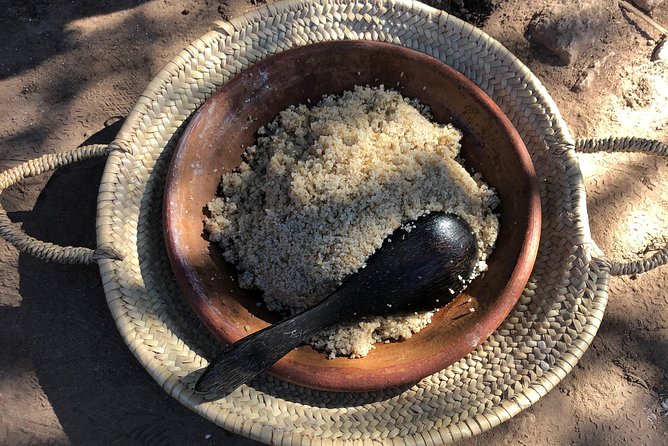
Couscous is steamed in a traditional clay pot. This matters because couscous is often treated as a quick side dish outside Morocco, while traditional preparation takes more care.
Here, you learn that the grain is part of a longer process that begins with barley being ground into semolina. The clay pot gives the class another chance to show how local materials and cooking methods work together.
The lesson is especially useful if you want to understand the texture of Moroccan couscous rather than simply eat it. You can watch the steam do the work and see how the grain fits into the larger meal. The class does not promise a full recipe booklet or formal instruction in every possible Moroccan dish, so think of it as a practical introduction to one Berber cooking tradition.
Preparing goat tagine at the farm
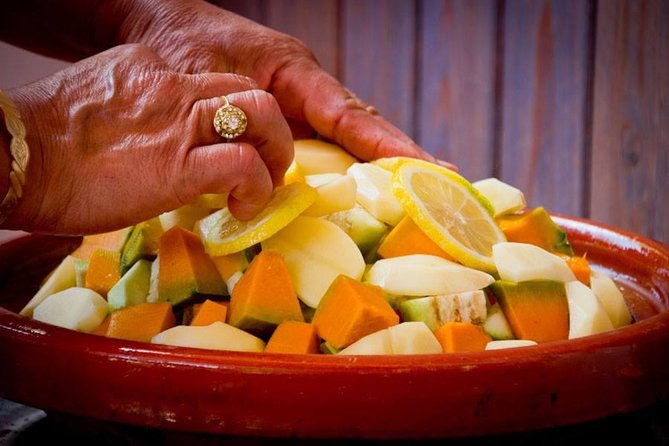
The main savory dish is a tagine of vegetables and goat meat. It is seasoned with Moroccan spices and olive oil, including oil made from olive trees growing on the farm.
The goat meat is an important regional detail. Goats and sheep are common livestock in the Haha hills, so the dish reflects the foodways of the area rather than offering a generic version of Moroccan cooking. The vegetables and spices balance the meat, while the tagine method allows the ingredients to cook together in a covered vessel.
If you do not eat goat, this is the point to ask about alternatives before booking or as soon as the day begins. The supplied details identify goat meat as part of the dish and do not promise a substitute. The same applies to dietary restrictions generally. Most participants can take part, but the class is built around a particular traditional meal.
Olive oil from the farm adds another useful link between place and plate. You taste an ingredient connected to the surrounding olive trees, rather than treating oil as an anonymous pantry item. That connection is easy to miss on a restaurant meal, but a farm class makes it visible.
Lunch under the open sky
Depending on the weather, lunch is served outside. That flexibility is a plus, but it also means you should not count on an outdoor meal in all conditions.
The farm setting gives lunch a quiet, rural character. After the work of shopping, grinding, baking, steaming, and cooking, the meal becomes a chance to slow down. You eat food prepared through the day while surrounded by the countryside rather than returning immediately to Essaouira.
Fresh-herb tea follows lunch. The herbs come from the garden, adding a simple final course that fits the setting. I like this ending because it avoids rushing from the last cooking task straight into transport. Tea gives the meal a proper close.
Still, the outdoor setting is weather dependent. If you strongly prefer a controlled indoor dining room, this outing may feel too informal. If you value a meal in a calm agricultural setting, the possibility of eating outside is one of the day’s best features.
The optional argan oil cooperative
The route passes through Morocco’s argan-growing zone, and you may have the option to visit an argan oil cooperative. At the cooperative, you learn how the oil is produced and taste products made with it.
Argan oil is closely tied to this part of Morocco. A cooperative visit gives you a chance to connect a familiar product with the work behind it. The stop is optional, so it should be treated as an extra rather than the main reason to book the day.
The tasting is also useful. You do not only hear about the oil’s production. You get to sample products made with it. The information provided does not specify the length of the visit or the products offered, so expect a short educational stop rather than a full workshop.
If you are interested in local food products, cosmetics, or the farming economy of the region, this is a sensible addition. If your priority is time at the farm kitchen, ask how the stop fits into the day’s schedule.
Watching for goats in the trees
The drive south of Essaouira passes through argan country, where you are very likely to see goats in the trees. This is one of the region’s best-known sights, and it can seem almost comic at first glance.
The goats climb into argan trees to eat the leaves and fruit. The sight is seasonal and natural, not a guaranteed staged stop, so keep your eyes open during the drive. Do not build the entire day around it, but consider it a welcome bonus that fits the area’s farming life.
It also gives the route a bit of character between the market and the farm. You are not being moved through empty miles simply to reach a class. The drive passes through a working rural zone with goats, olive trees, and argan trees.
What the $98.76 price means
At $98.76 per person, this is not a bargain-priced market visit or a short cooking demonstration. You are paying for about seven hours of activity, a small group capped at eight, the souk visit, the farm-based lesson, the meal preparation, and the chance to add the argan cooperative.
The value depends on how you like to spend a day. If you want a quick recipe class close to the old town, the price may feel high. If you want a full countryside outing that combines food, farming, a market, and cultural context, the day offers more than a meal alone.
The price also reflects the unusual setting. Traditional cooking equipment, local instructors, a working farm, and a small group create a more specific experience than a generic kitchen class. I would choose it for the connection between market and meal, not just for the final tagine.
The experience is booked an average of 55 days ahead, so planning early makes sense if your Essaouira dates are fixed. Confirmation arrives within 48 hours of booking, subject to availability. The mobile ticket is convenient, and free cancellation is available until 24 hours before the 9:00 am start. Cancellations or changes inside that window are not accepted for a refund.
Who will enjoy this day most
I would recommend this outing to you if you enjoy food with a clear sense of place. It suits people who want to see ingredients being bought, prepared, cooked, and eaten in one rural setting.
It is also a good match for curious families and small groups, provided everyone is comfortable with a seven-hour schedule and traditional cooking conditions. Most participants can take part, and service animals are allowed.
You may want to choose another activity if you need guaranteed indoor dining, a short schedule, a highly polished cooking studio, or a confirmed alternative to goat meat. The weather requirement is another factor. If poor weather cancels the day, you are offered another date or a full refund.
For German-speaking visitors, the guide Nicole has led a German-language outing. Ask whether she is assigned to your departure if language support matters to you. At the farm, the cooking demonstrations are led by Khadija and Khadija.
Should you book the Berber farm cooking class?
Book it if you want a full day built around real food production rather than a quick tourist meal. The rural souk, barley grinding, clay-oven bread, steamed couscous, goat tagine, garden tea, and possible argan stop form a strong chain from local market to shared table.
Skip it if you dislike rustic kitchens, cannot eat the stated menu, or want a tightly timed indoor activity. At $98.76, the class earns its price through its length, small group size, countryside setting, and hands-on approach. For an authentic food-focused day south of Essaouira, it is a well-rounded choice.
FAQ
Where does the cooking class take place?
The class takes place at an ecological farm in the Haha region, about 35 kilometers south of Essaouira.
What time does the experience start?
The experience starts at 9:00 am.
Where is the meeting point?
You meet at Labo Abdelkrim Khatabi d’Analyses Médicales, 287 Rue Oued El Makhazine, Essaouira 44000, Morocco.
Where does the activity end?
The activity ends back at the meeting point in Essaouira.
How long does the experience last?
The experience lasts approximately seven hours.
How many people can join the activity?
The maximum group size is eight participants.
What food will I prepare?
You prepare traditional flatbread, couscous, and a tagine made with vegetables and goat meat, Moroccan spices, and olive oil.
Is the argan oil cooperative visit included?
The argan oil cooperative visit is described as an optional stop. You can learn how argan oil is produced and taste products made with it.
Can I cancel for a full refund?
Yes. You can cancel at least 24 hours before the local start time for a full refund. If poor weather or an insufficient number of participants causes the activity to be canceled, you are offered another date or a full refund.
More Hands-On Workshops in Morocco
- Marrakech: Moroccan Cooking Class with Pickup
★ 4.6 · 1,862 reviews - Marrakesh: Moroccan Dishes Cooking Class with a Local Chef
★ 5.0 · 1,615 reviews - Half-Day Cooking Class with Local Chef Laila in Marrakech
★ 5.0 · 952 reviews - Marrakech: Moroccan Cooking Class with a Local Family
★ 4.9 · 668 reviews
More Shopping Trips in Morocco
- Flavors of Fez: Market visit, and a hands-on cooking class.
★ 4.6 · 112 reviews - Old local Market visit+Moroccan cooking class with a local family
★ 5.0 · 84 reviews - Moroccan Cooking Class and Fez Market Visit and Meal
★ 5.0 · 40 reviews - Private Casablanca Market Tour and Cooking Class with Chamsi
★ 5.0 · 33 reviews
Just added around Morocco
- Pastries / Baking class★ 5.0 · 3 reviews
- Moroccan Cuisine Fez Cooking Class★ 5.0 · 87 reviews
- Moroccan Cooking Class at a Riad in Fez★ 5.0 · 4 reviews
- Moroccan Cooking Workshop in Fez★ 5.0 · 3 reviews
- Full Day Fes Cooking Class Experience★ 3.5 · 3 reviews
- 2 Hours Cooking Experience in Fez★ 5.0 · 3 reviews
- Unforgettable Cooking Class in Fez★ 5.0 · 89 reviews
- Fez Souk 4-Hour Traditional Home Cooking★ 5.0 · 3 reviews
Cooking Classes with a Market Tour, compared.
Hanoi Cooking Class: Culture, Local Market & Meaning CSR Impact
Read our review →
5 Traditional Dishes Hanoi Cooking Class with Market Trip
Read our review →
Cooking Class and Lunch at a Tuscan Farmhouse with Local Market Tour from Florence
Read our review →
Chiang Mai: Cooking Class, Market & Thai Herbs Garden Tour
Read our review →
Chiang Mai: Authentic Cooking Class with Market & Farm Visit
Read our review →
Barcelona: Paella Cooking Experience & Boqueria Market Tour
Read our review →
Cooking Class Hoi An:Local Market, Basket Boat, Fishing & Cooking
Read our review →
Hoi An Cooking Class(Market,BasketBoat Crabfishing&Cooking Class)
Read our review →Browse the lists this tour appears in