
Review · USA
Hands-On Hawaiian Imu Cooking and Cultural Dining Experience
An underground oven is the star here. You help build an imu, then watch the earth give back a slow-cooked Hawaiian feast. The Men of Paʻa guide the work and explain why food, family, land, and gathering belong together.
I like the hands-on work and the chance to learn directly from Hawaiian hosts whose families have kept this cooking tradition alive. I also like that the meal is part of the lesson, not a separate restaurant stop. The main consideration is time: this is a four-hour cultural activity, not a quick lunch, and the group can reach 50 people.
- Build the imu from scratch: You take part in preparing the underground oven rather than simply watching a cooking demonstration.
- Learn the meaning behind the meal: The hosts connect imu cooking with family, land, gathering, and the Hawaiian idea of ohana.
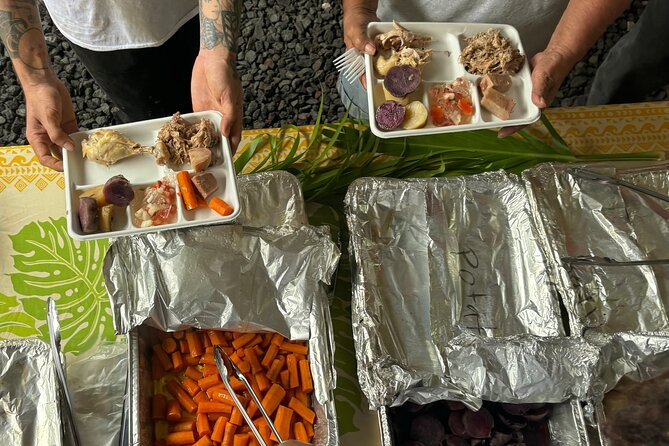
- Eat food cooked in the earth: The meal includes kalua pork, kalua chicken, local vegetables, and kulolo made with kalo, coconut milk, and honey.
- Meet at 10:00 am in Pāhoa: The experience begins and ends at 15-1380 Auina St, Pāhoa.
- Plan around the weather: Poor weather can lead to a new date or a full refund.
- Book ahead: This experience is commonly reserved about 25 days before the activity date.
Why the Imu Makes This More Than Lunch
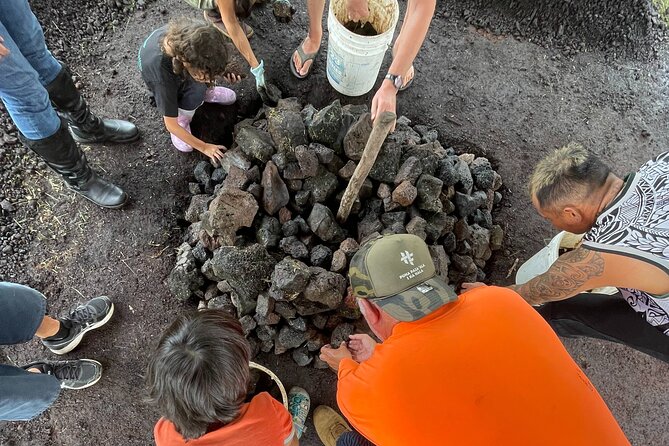
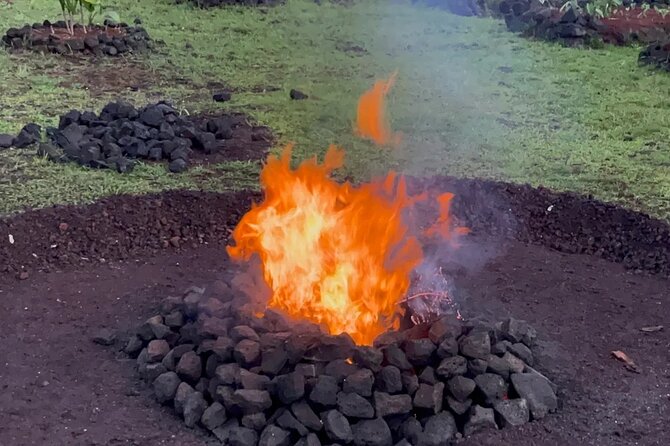
An imu is an underground oven. Food is cooked slowly using heat from the earth and prepared materials, producing the tender, smoky style associated with kalua cooking.
The appeal is not only the flavor. You get to see how the cooking method works and take part in the physical preparation. That matters because the meal does not appear by magic in a serving tray. You help create the process that makes it possible.
The experience is led by the Men of Paʻa, including Iopa Maunakea of Imu Mea ‘Ai Food Tour Hawaii. The emphasis is on participation and conversation. You are not placed in front of a staged performance and asked to clap at set moments. Instead, you are invited to work, listen, ask questions, and share the finished meal.
That format gives the morning a more personal feel. It also means the quality of your visit depends partly on your willingness to join in. If you prefer a polished show with a fixed script, this may feel less predictable. If you want a direct cultural experience, the open format is a major advantage.
Starting at 10:00 am in Pāhoa
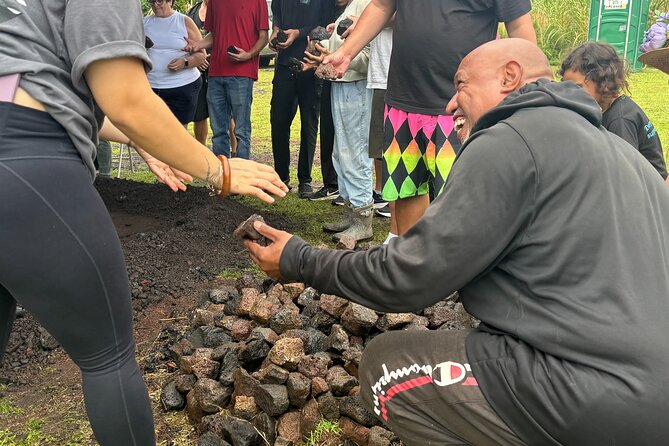
The meeting point is 15-1380 Auina St in Pāhoa, on the Big Island. You need to arrange your own way to the starting point because transportation from hotels is not listed as part of the experience.
The activity begins at 10:00 am and lasts about four hours. That puts the shared meal around the middle or latter part of your morning and early afternoon, so avoid scheduling another tight activity immediately afterward.
The experience ends back at the same meeting point. This simple arrangement is useful if you are exploring the Pāhoa area by car and want to continue your day from there. It is less convenient if your Big Island plans are based far away and you have not allowed time for the drive.
The tour is offered in English, and an activity guide is included. The host group has also made room for language help in the past, including time for a visitor to translate between English and Chinese for family members. That does not promise translation on every date, but it shows the welcoming spirit of the format.
More Dinner Experiences in the USA:
- San Francisco: Dumpling Cooking Class & 3-Course Dinner
★ 5.0 · 10 reviews - Pasta Making & Wine Tasting with Dinner in Frascati from Rome
★ 5.0 · 1,326 reviews - Rome: Pasta Making with Wine Tasting and Dinner in Frascati
★ 4.9 · 979 reviews
Building an Underground Oven by Hand
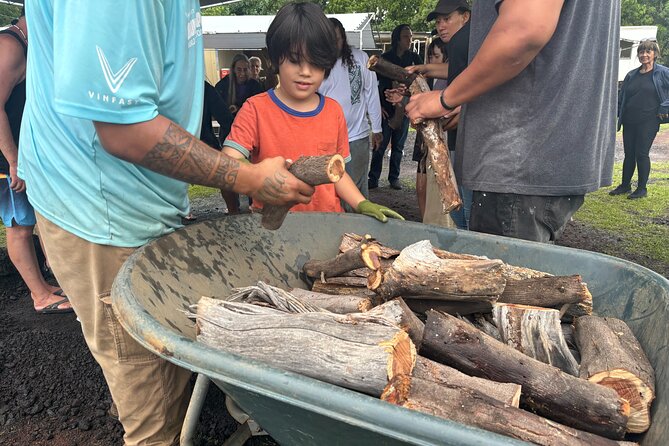
The first major part of the experience is helping construct the imu. You learn the basic idea of an oven built below ground, using heat from the earth to cook food slowly.
The work gives you a practical way to understand Hawaiian food preparation. Rather than hearing a short explanation and moving straight to lunch, you see how cooking can be tied to place and natural materials. The earth is not just the setting. It is part of the cooking method.
The hands-on element is especially useful for families. Children and adults can take part in a shared task, then eat food that came from the work they helped prepare. The activity also suits anyone who enjoys learning by doing rather than sitting through a lecture.
You should keep your expectations sensible. This is a cultural food experience, not a full agricultural workshop or a technical cooking class with a written recipe packet. The supplied details do not promise that you will master every step of imu construction. The value is in taking part, seeing the method, and hearing the meaning explained by the hosts.
The group size may be as large as 50 people. On a quieter date, the conversation may feel more personal. With a full group, you may need to stay close and listen carefully during explanations. That range is worth considering if personal attention is a top priority.
Understanding Food, Family, and Ohana
The hosts place food within a larger Hawaiian cultural setting. The central ideas include family, community, the land, and the act of gathering around a shared meal.
One word that comes up is ohana, meaning family. Here, that idea extends beyond a private household. The experience presents food as something that brings people together and strengthens ties within a community.
This context is one of the strongest reasons to book. You are not just learning that kalua pork is cooked underground. You are hearing why a traditional method remains meaningful and how a meal can carry family knowledge from one generation to the next.
The presentation also includes Hawaiian words, history, and explanations of family and gathering. Chanting and spoken words may be part of the cultural sharing. These details help give the activity a sense of ceremony without turning it into a formal stage production.
The tone appears warm and inclusive. The Men of Paʻa invite participation during the process, and the welcome continues through the meal. You should approach it with respect, listen when cultural explanations are being given, and understand that the people leading the activity are sharing something connected to their families and community.
What Comes Out of the Imu
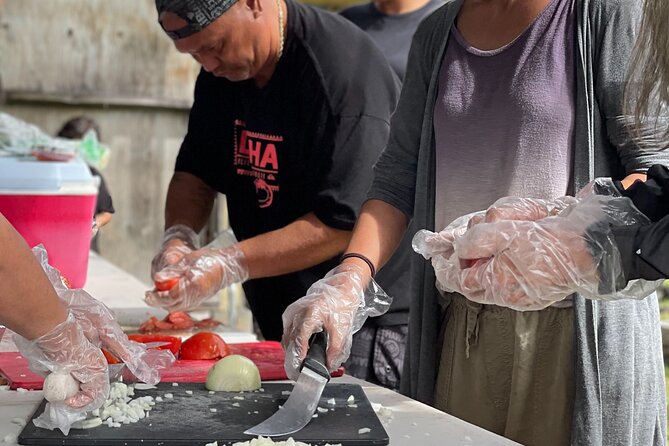
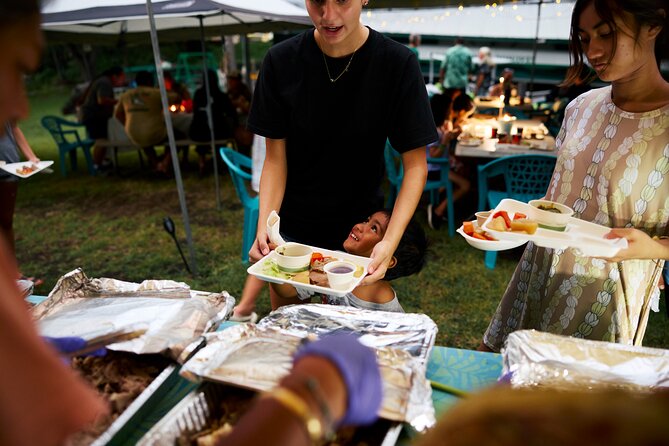
After the imu is uncovered, the food is gathered for a backyard-style lunch. The meal is included in the $150 price, along with bottled water and the activity guide.
The main dish is kalua pork, steamed in the underground oven. This is the food most closely tied to the imu, and eating it after seeing the cooking method gives you a better sense of how the process affects the final result.
Kalua chicken is also served. Having a second meat option gives the meal more variety and may suit you if pork is not your first choice.
The vegetable selection includes local sweet potato, kalo, carrots, celery, and more. Kalo, also called taro, is particularly important in Hawaiian food traditions. Its presence makes the vegetable dish more than a basic side plate.
Dessert is kulolo, made with kalo, coconut milk, and honey. It is a distinctly Hawaiian finish and gives you another chance to taste kalo in a different form.
The menu is filling and focused, not an elaborate tasting menu. You should not book this expecting a long list of restaurant courses or a wide choice of substitutions. The strength is the connection between the cooking method and the food on your plate.
Dietary details are not provided, so ask the operator before booking if you have allergies or strict dietary needs. The listed menu includes pork, chicken, taro, vegetables, coconut milk, and honey, but the information does not confirm special meal options.
More Dining Experiences in the USA:
- Palermo: Pizza and Gelato Cooking Class with Dinner and Wine
★ 4.9 · 951 reviews - Seville: Spanish Cooking Class with Dinner
★ 4.9 · 900 reviews - Greek Cooking Class in Athens Including Rooftop Dinner with Acropolis View
★ 5.0 · 826 reviews - Tuscan Cooking Class and Dinner in Florence
★ 4.5 · 732 reviews
Why the $150 Price Can Make Sense
At $150 per person, this is more expensive than an ordinary Big Island lunch. You are paying for a four-hour activity, not simply for a plate of kalua pork.
The price includes instruction, cultural context, hands-on imu construction, lunch, bottled water, and the guide. You also receive direct time with the Men of Paʻa and a chance to take part in a traditional preparation method.
I see the best value for people who want an experience they can remember and discuss afterward. The price is harder to justify if your main goal is simply to eat Hawaiian food. You can find meals for less, but they will not normally include building an underground oven or learning the cultural meaning connected to it.
The cultural setting also matters. The meal is shared in a backyard-style format rather than served as an isolated restaurant course. That can make the afternoon feel more social and personal, though it may be less suitable if you want quiet, private dining.
A group of up to 50 people also affects the value. The maximum is not especially intimate, so you should not assume this will feel like a private family visit. The experience is still built around participation, but the amount of individual attention can vary.
Who Will Get the Most From This Experience
I would recommend the imu experience to families, curious eaters, and people who want a cultural activity with a real task at its center. It also fits visitors who have already seen beaches and scenic drives and want to spend part of the Big Island learning from local hosts.
It is a particularly good choice if you enjoy:
- Hands-on activities rather than demonstrations only
- Traditional food preparation
- Shared meals and conversation
- Learning the meaning behind Hawaiian words and customs
- Experiences connected to family and community
- A slower half-day schedule
The activity may be less suitable if you want a quick stop, a luxury dining setting, or a tour built around sightseeing. There is no listed transportation, and the experience remains at the Pāhoa meeting point rather than taking you through several Big Island attractions.
It may also be a poor fit for someone who does not enjoy group activities. With a maximum of 50 people, you may be part of a fairly large gathering. The cultural material is central, so a visitor seeking only entertainment may not appreciate the pace or purpose.
Practical Booking Advice for Pāhoa
This experience is often booked about 25 days in advance. I would not leave it until the last minute if the date matters to you, especially since the activity is offered on a limited schedule and may require a minimum number of participants.
You receive confirmation when you book, and the ticket is mobile. Bring the booking information on your phone and arrive at the stated meeting point in time for the 10:00 am start.
The activity requires good weather. If weather causes a cancellation, you are offered another date or a full refund. The same applies if the minimum number of participants is not met.
The standard cancellation policy allows a full refund when you cancel at least 24 hours before the start time. Cancellations or changes made less than 24 hours before the activity are not accepted for a refund, and the cut-off uses local Hawaiian time.
Because this is an outdoor cooking activity, check the forecast before the final day of your cancellation window. That gives you time to make a change if your plans are no longer workable.
The Experience’s Strongest Point
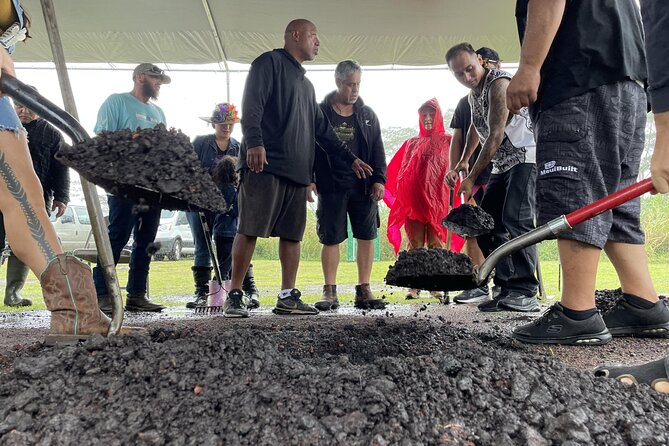
The best part is the link between work, story, and food. You do not simply hear about Hawaiian cooking and then eat a prepared meal. You help with the imu, learn why it matters, and then taste the result.
The welcome also appears to be a major strength. The hosts make an effort to create a sense of inclusion, and the cultural sharing extends beyond cooking instructions. Chanting, family stories, explanations of ohana, and exchanges between hosts and visitors can give the day emotional weight.
That does not mean every moment will be dramatic. Some of the time is practical and slow. You may wait while food cooks or listen while someone explains a word or tradition. That pace is part of the point, but it requires patience.
I also like that the meal includes more than pork. Kalua chicken, kalo, sweet potato, other vegetables, and kulolo give you a fuller taste of island food. The menu remains simple, but it supports the cultural lesson instead of distracting from it.
Should You Book the Imu Cooking Experience?
Book it if you want a genuine, participatory Hawaiian food experience and you are happy to give it four hours. The combination of building an imu, learning from the Men of Paʻa, and sharing a meal makes this a strong choice for families and culturally curious visitors.
Skip it if you only want lunch, need hotel transportation, or prefer a tightly scheduled sightseeing tour. At $150, the value depends on your interest in the teaching and participation, not just the food.
For the right visitor, this is one of the more meaningful ways to spend a morning near Pāhoa. You leave with more than a meal. You gain a clearer idea of how food can carry family knowledge, connect people to the earth, and bring a group together.
FAQ
Where does the imu cooking experience begin?
It begins at 15-1380 Auina St, Pāhoa, Hawaii 96778.
What time does the activity start?
The scheduled start time is 10:00 am.
How long does the experience last?
The activity lasts approximately four hours.
Where does the experience end?
It ends back at the meeting point in Pāhoa.
What food is included?
Lunch includes kalua pork, kalua chicken, kalua vegetables with ingredients such as sweet potato and kalo, and kulolo made with kalo, coconut milk, and honey.
Is bottled water included?
Yes. Bottled water and an activity guide are included.
How many people can join the activity?
The maximum group size is 50 people.
What happens if I need to cancel?
You can receive a full refund if you cancel at least 24 hours before the start time. Cancellations or changes made less than 24 hours before the activity are not accepted.
More Hands-On Workshops in the USA
- New Orleans Demonstration Cooking Class with Meal
★ 5.0 · 3,000 reviews - New Orleans Hands-On Cooking Class with Meal
★ 5.0 · 1,183 reviews - Undiscovered Charleston: Half Day Food, Wine & History Tour with Cooking Class
★ 5.0 · 948 reviews - New Orleans: Cajun and Creole Cooking Class
★ 4.9 · 730 reviews
Just added around the USA
- Authentic Asian Cooking Class in NYC (Includes 4-Course Meal)★ 5.0 · 8 reviews
- Sushi Making Class at a Local Distillery in Boston★ 5.0 · 22 reviews
- Sushi Making Class at a Local Brewery in Boston★ 4.5 · 3 reviews
- Baumkuchen Campfire Baking Class★ 5.0 · 3 reviews
- Farm to Table Cooking Class at Kulaniapia Falls★ 4.5 · 36 reviews
- Thai Cooking Class in Fullerton, California★ 5.0 · 3 reviews
- San Francisco: Dumpling Cooking Class & 3-Course Dinner★ 5.0 · 10 reviews
- New Orleans: Cooking Class & Cocktail Walking Tour★ 4.7 · 16 reviews
Cooking Classes, compared.
Half-Day Thai Cooking Class at Organic Farm in Chiang Mai
Read our review →
Florence: Pasta Cooking Class with Unlimited Wine
Read our review →
3 in 1 Cooking Class near Navona: Fettuccine, Ravioli & Tiramisu
Read our review →
Hanoi Cooking Class: Culture, Local Market & Meaning CSR Impact
Read our review →
5 Traditional Dishes Hanoi Cooking Class with Market Trip
Read our review →
Cooking Class and Lunch at a Tuscan Farmhouse with Local Market Tour from Florence
Read our review →
Chiang Mai: Cooking Class, Market & Thai Herbs Garden Tour
Read our review →Browse the lists this tour appears in