
Review · SPAIN
Mojo Workshop Cooking Class in Ancient Canarian Village
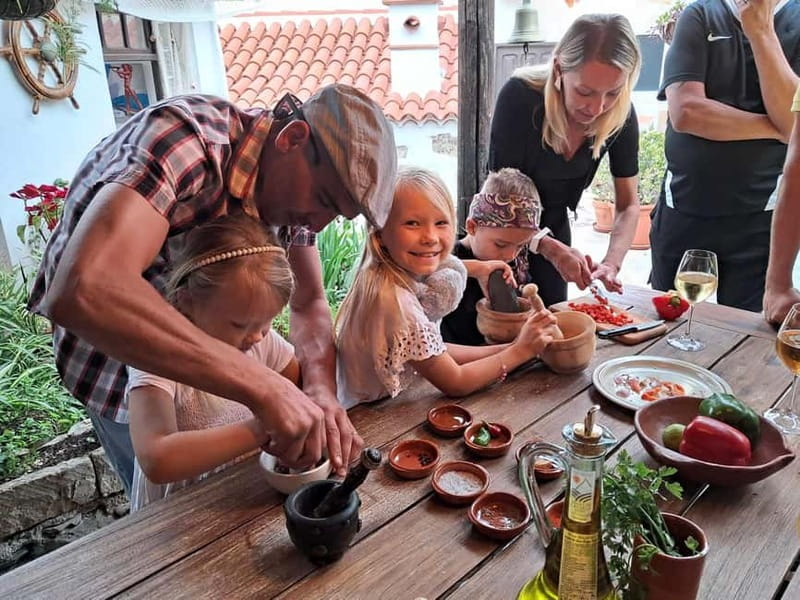
The best part of this experience is that the food lesson happens in Chirche, a mountain village where old terrace fields and threshing grounds still shape the view. You make traditional Canarian mojos by hand, then sit down with local food and drink while Chef Ave and Erik explain what is on the table. I like the hands-on use of a mortar and pestle, and I like that the history comes through stories rather than a formal lecture.
At $34 per person, this is a good-value way to spend two hours, especially if you want more than a hotel-zone activity. The main drawback is practical: Chirche is a small mountain village, and the approach can be awkward by car. People with mobility impairments and wheelchair users may also find the setting unsuitable.
Key points to know before booking
- Make red and green mojos by hand: You work with fresh local ingredients and a traditional mortar and pestle rather than simply watching a demonstration.
- Meet Chef Ave and Erik: Ave leads the cooking, while Erik adds stories about Tenerife, food, customs, and rural life.
- Taste more than sauce: The session can include Canarian potatoes, tapas, local drinks, wine, beer, lemonade, and other refreshments alongside the mojos.
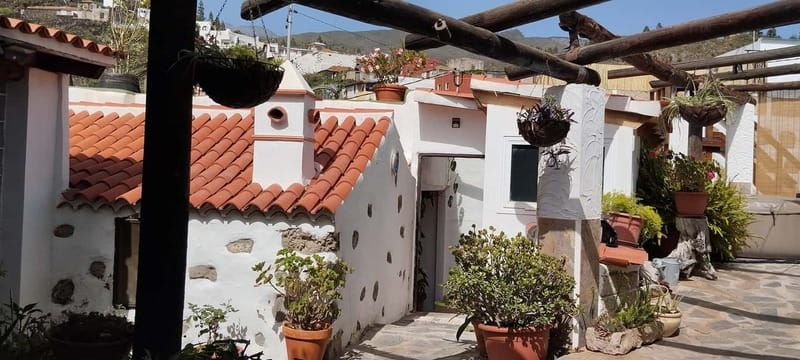
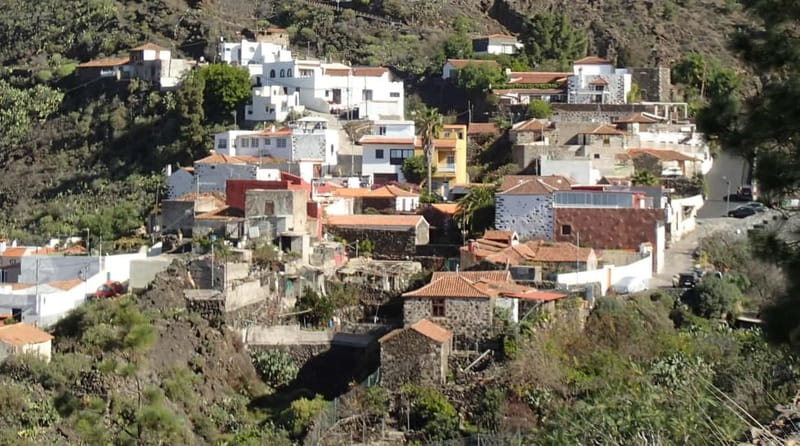
- See a quieter side of Tenerife: Chirche offers old terrace fields, threshing grounds, mountain views, and traditional village character.
- Keep the group small: The activity is limited to eight people and runs in English for about two hours.
- Plan your route carefully: Transport is not included, but optional pickup is available from the South Tenerife area.
Why Chirche gives this cooking class its character
Many Tenerife food activities could happen in any modern kitchen. This one depends heavily on its setting. Casa Carmen is at C/ San Felipe, Nº 18, in Chirche, a historic village in South Tenerife. The surrounding old fields and threshing grounds give you a useful link between the ingredients on the table and the way island families once lived and worked.
I like this setting because it slows the experience down. You are not rushing between attractions or trying to fit a cooking lesson into a crowded restaurant. You arrive in a rural community, enter a Spanish home with traditional character, and spend time with hosts who clearly enjoy explaining their food and customs.
Chirche is also a good choice if you want to get away from the busiest resort areas. The village is described as quaint and beautiful, with mountain scenery and old agricultural features. It is not a polished showpiece built for sightseeing, and that is part of the appeal. You get a more everyday sense of Tenerife, though the narrow village approach requires care.
The setting does create a limitation. One participant specifically found Chirche difficult to drive through, so I would not leave route planning until the last minute. The provider sends driving instructions by email, and you can ask about optional pickup from the South Tenerife area.
More Farm Cooking Classes in Spain:
- Half-Day Thai Cooking Class at Organic Farm in Chiang Mai
★ 5.0 · 19,087 reviews - Cooking Class and Lunch at a Tuscan Farmhouse with Local Market Tour from Florence
★ 5.0 · 4,831 reviews - Chiang Mai: Authentic Cooking Class with Market & Farm Visit
★ 4.9 · 4,546 reviews
What happens during the two-hour workshop
The event combines cooking, tasting, storytelling, and refreshments rather than treating them as separate parts. You can expect the session to move between preparing the sauces, hearing about their background, tasting food, and sharing time with the hosts.
Chef Ave leads the practical side. Her background includes long experience as a chef de cuisine on cruise lines, and the class is designed to be accessible even if you have never taken a cooking lesson. One first-time participant described the preparation as easy to follow, while another attended with a partner and found the class relaxed and enjoyable.
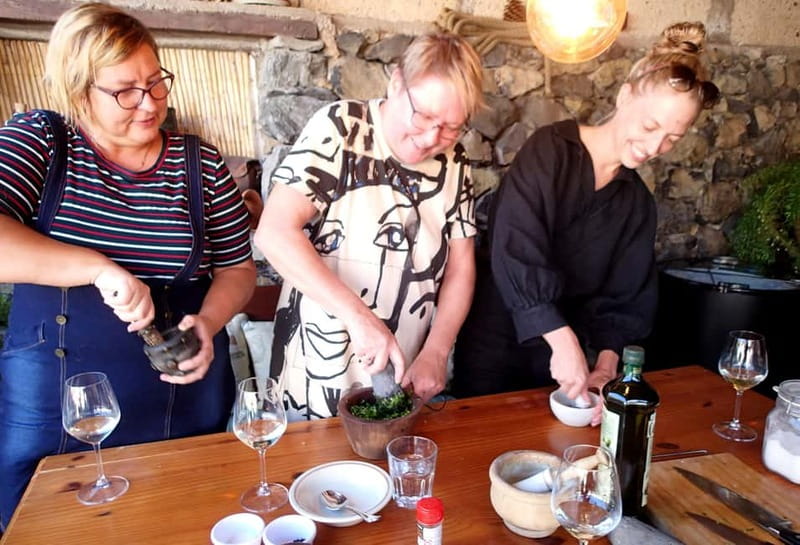
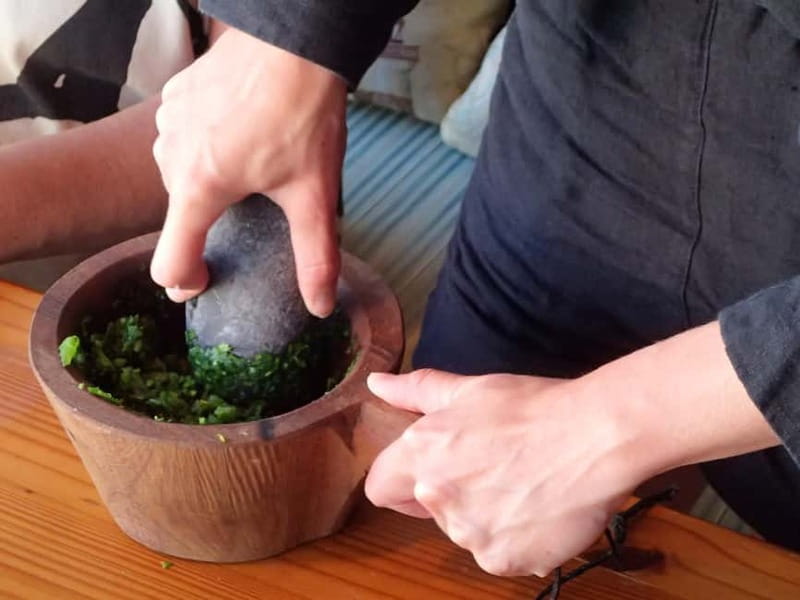
You will work with fresh local ingredients and use a mortar and pestle to make traditional mojos. The physical method matters. Crushing and blending the ingredients yourself gives you a feel for the texture and strength of the sauce, and it makes the lesson more useful when you try to recreate it at home.
The focus is not simply on copying a recipe. You also learn about taste pairing, including how the sauces work with other Canarian foods. That makes the class more useful than a quick demonstration followed by a single spoonful of tasting.
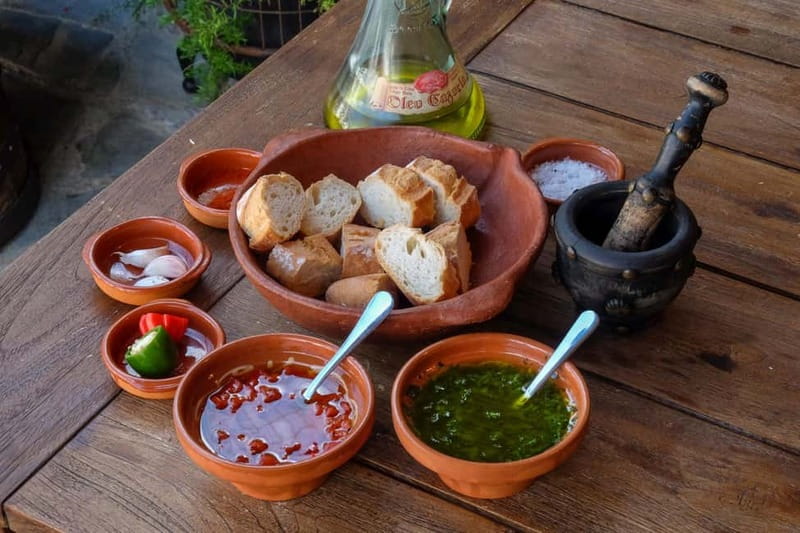
The exact balance of cooking and food served may vary with the session, but the experience includes a tasting and refreshments. Descriptions of the meal include Canarian potatoes, tapas, bread, traditional snacks, wine, beer, and lemongrass lemonade. One person was surprised by receiving what felt like a full lunch, so you should arrive ready for more than a tiny sample of sauce.
The mojos: a useful introduction to Canarian food
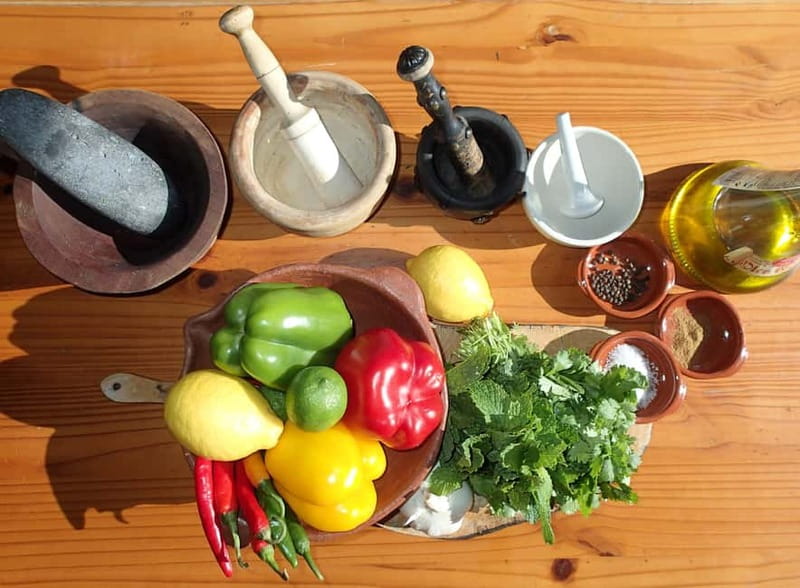
Mojo is one of the most familiar flavors of the Canary Islands, but the word covers more than one sauce. The workshop focuses on both red and green versions, allowing you to compare their color, taste, ingredients, and uses.
The value here is not only learning a recipe. You get context for a sauce that appears across Canarian cooking, then taste it with local food. Canarian potatoes are especially important to the experience. Several people singled them out as a favorite part of the meal, and they provide a natural way to understand why mojo is such a central pairing.
The mortar and pestle also help make the class feel connected to older kitchen methods. You are not simply pressing a button on a blender and moving on. The process is slower and more tactile, which gives the workshop a traditional feel without making it difficult for a beginner.
I would not book this expecting advanced culinary training. The class is aimed at learning, tasting, and enjoying the culture around the food. If you are a serious cook, you may want more technical detail than two hours allows. If you want a recipe you can understand and use at home, the format should suit you well.
Stories about Tenerife, not just recipes
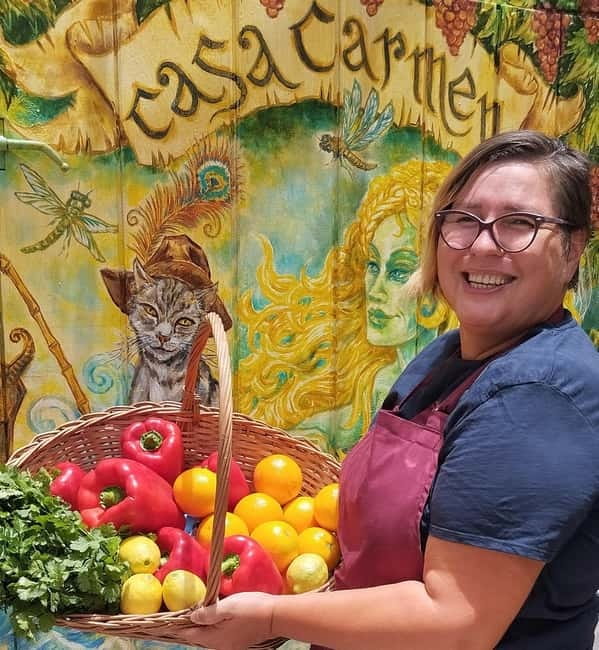
Erik adds the storytelling side of the experience. His role is not limited to explaining what you are cooking. He talks about the village, Tenerife’s past, local products, traditions, and the meaning behind the food being served.
This is one of the strongest reasons to choose the workshop. Food becomes easier to remember when it is connected to a place and a way of life. As you taste the ingredients, you hear about the island and its rural customs, including details that are not always found in standard guidebooks.
The hosts also keep the tone informal. The comments from the sessions describe Ave and Erik as warm, welcoming, patient, and entertaining. That matters in a small group, where a stiff or overly formal presentation would quickly become uncomfortable.
The workshop is conducted in English. The group limit of eight people gives you a better chance to ask questions and take part in the preparation. If you prefer a large food tour with many stations and a fast schedule, this will feel different. It is closer to a shared kitchen visit with local storytelling.
More Hands-On Workshops in Spain:
- Barcelona Paella Cooking Class with Market Visit, Tapas & Sangria
★ 5.0 · 2,531 reviews - Spanish Cooking Class Paella Tapas and Sangria in Madrid
★ 5.0 · 1,340 reviews - Paella Cooking Class, Wine Tasting & Central Market in Valencia
★ 5.0 · 1,150 reviews - Paella Cooking Class in Madrid with Bottomless Wine Pairing
★ 5.0 · 985 reviews
The tasting table is part of the value
The $34 price looks modest for a two-hour activity, and the tasting makes the value clearer. You are not paying only for an instruction session. The cost includes the cooking class, instructor, tasting, storytelling, and refreshments.
The food served alongside the mojos can make the experience feel like a small meal. Canarian potatoes and tapas are frequently part of the table, with drinks such as wine, beer, and lemonade also described. These extras help you understand how the sauce is used instead of tasting it in isolation.
There is also value in the setting. A standard restaurant meal gives you food, but not necessarily the chance to prepare a local recipe, ask questions about island traditions, and see a historic village at the same time. A cooking lesson in a resort kitchen might offer more polished equipment, but it would lose some of the sense of place found here.
The price does not include transport. That is the main cost to consider beyond the booking fee, especially if you are staying outside South Tenerife or prefer not to drive. Optional pickup may be available from the South Tenerife area, so ask for arrangements when you receive the follow-up email.
Who will enjoy this most
I would recommend this for couples, families with older children, and anyone who likes food with a story attached. The activity has worked well for families with children aged six and eight, as well as teenagers aged thirteen. The hands-on work gives younger participants something active to do, while the stories add interest for adults.
It is also a strong choice for first-time cooking-class participants. You do not need to arrive with special skills. The process is guided, and the emphasis is on making tasty sauces and sharing a meal rather than producing restaurant-level dishes.
The workshop suits repeat visitors to Tenerife, too. If you have already seen the major resort areas, this gives you a reason to visit a traditional village and learn about another part of island life. It can also appeal to people who want a quieter cultural activity instead of a crowded attraction.
I would be more cautious if you have limited mobility. The activity is not suitable for people with mobility impairments or wheelchair users, and the village setting may involve surfaces or access that are not easy for everyone. Babies under one year are also not suitable for this activity.
Getting to Casa Carmen in Chirche
The meeting point is Casa Carmen, C/ San Felipe, Nº 18, 38688 Chirche, South Tenerife. You receive detailed driving instructions by email, and optional pickup can be arranged from the South Tenerife area.
Give yourself time for the drive. Chirche is a historic mountain village, and the streets can be tight and less straightforward than the roads around the main resorts. A navigation app may get you close, but the written directions from the provider are worth reading before you set out.
If you are driving, I would avoid planning another tightly timed activity immediately afterward. The workshop itself lasts two hours, but finding the village and parking can add time. The slow pace is part of the charm, so it is better enjoyed without watching the clock.
If you do not have a car, ask about pickup before booking rather than assuming it is included. Transport is not part of the $34 price, and arrangements depend on the South Tenerife area.
Small details that improve the experience
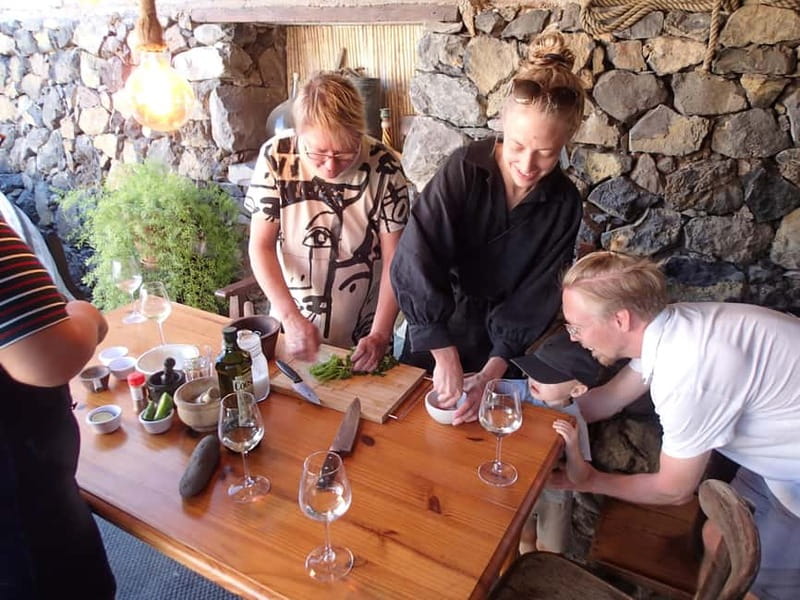
Wear clothing you are comfortable cooking in. The class includes hands-on preparation, and you will be working with ingredients rather than sitting through a talk.
Arrive hungry enough to enjoy the tasting, but do not assume a fixed multi-course meal. The food offering can be generous, with potatoes, tapas, snacks, and drinks included in the experience, but the official description promises tasting and refreshments rather than a guaranteed full lunch.
Bring questions. The best part of the session is the exchange with Ave and Erik, and the small group makes it easier to ask about ingredients, village life, Tenerife’s food customs, and the recipes themselves.
If you enjoy the workshop, the hosts also offer other master classes, including a paella lesson. That makes this a useful first visit for anyone planning to return to Tenerife and try another local cooking session.
Booking flexibility and practical limits
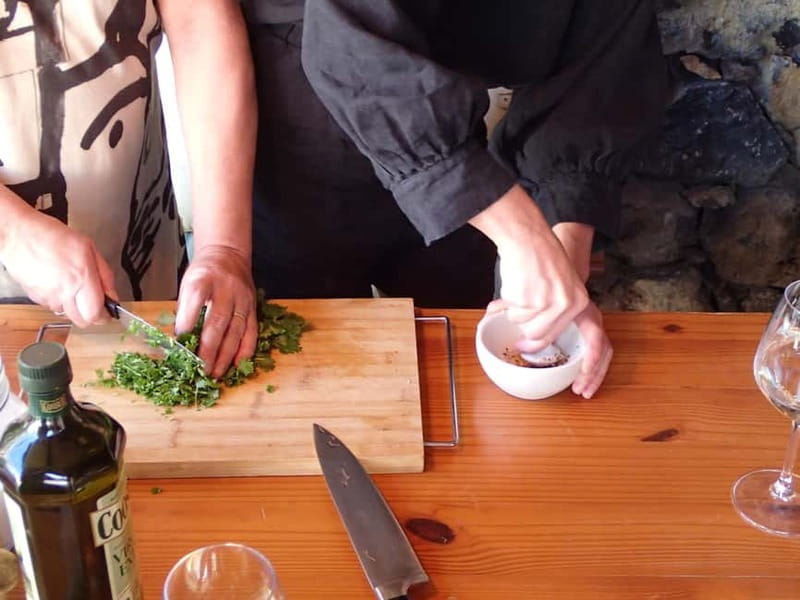
The activity costs $34 per person and lasts two hours. It is limited to eight participants, which keeps the class personal, but it also means popular dates may fill sooner than a large group tour.
You can reserve now and pay later, which helps if your Tenerife schedule is still changing. Free cancellation is available up to 24 hours in advance for a full refund.
The language is English. The instructor is listed as English-speaking, and the storytelling and cooking guidance are both built around that language. If you need another language, this is not the right choice based on the available information.
Should you book the Mojo Workshop in Chirche?
Book it if you want a friendly, hands-on introduction to Canarian food and are willing to make the trip to a rural village. The strongest combination is the mortar-and-pestle cooking, the red and green mojos, the tasting table, and the local stories from Ave and Erik.
At $34, the experience offers more than a recipe demonstration. You get a meal-like tasting, refreshments, a small group, and a look at a part of Tenerife that many beach-focused itineraries miss. The main question is not the price. It is whether you are comfortable with the drive to Chirche and the access limits of an old village setting.
For food lovers, families, and visitors who want a personal cultural experience, I would put this high on the South Tenerife list. If you need wheelchair access, included transport, or a polished urban kitchen, choose something else.
FAQ
Where does the Mojo Workshop take place?
The workshop takes place at Casa Carmen, C/ San Felipe, Nº 18, 38688 Chirche, in South Tenerife.
How long does the cooking class last?
The activity lasts two hours. Starting times depend on availability when you book.
What will I prepare?
You will prepare traditional Canarian mojos using fresh local ingredients and a mortar and pestle. The workshop includes red and green mojo preparation.
Is food and drink included?
Yes. The experience includes tasting and refreshments. The food served can include Canarian potatoes, tapas, traditional snacks, wine, beer, and lemonade.
Is transport included?
No. Transport is not included, but optional pickup may be available from the South Tenerife area. Driving instructions and transport details are sent by email.
Is the activity suitable for wheelchair users?
No. The activity is not suitable for wheelchair users or people with mobility impairments. Babies under one year are also not suitable for the activity.
Just added around Spain
- Valencia: Traditional Paella Cooking Class and Dinner★ 4.8 · 53 reviews
- Málaga: Paella and Sangria Cooking Class with Market Visit★ 4.9 · 26 reviews
- Malaga: Authentic Paella Cooking Class with Sangría★ 5.0 · 103 reviews
- Madrid: Tapas & Paella Cooking Class with Expert Chef★ 4.9 · 61 reviews
- Madrid: Paella & Tapas Cooking Class and Market Visit★ 5.0 · 50 reviews
- Local cooking class in Cordoba. Hands on: Salmorejo★ 4.6 · 25 reviews
- Mallorca: Market Visit and Traditional Cooking Workshop★ 4.9 · 29 reviews
- Bilbao: Immersive Basque Cooking Class★ 4.9 · 12 reviews
Farm & Countryside Cooking Classes, compared.
Half-Day Thai Cooking Class at Organic Farm in Chiang Mai
Read our review →
Cooking Class and Lunch at a Tuscan Farmhouse with Local Market Tour from Florence
Read our review →
Chiang Mai: Authentic Cooking Class with Market & Farm Visit
Read our review →
Ubud: Balinese Cooking Class at an Organic Farm
Read our review →
Ubud: Authentic Cooking Class in a Local Village
Read our review →
Chiang Mai: Cooking Class with Organic Farm at Mama Noi
Read our review →
Hands-On Cooking Class & Farmhouse Tour on the Amalfi Coast
Read our review →Browse the lists this tour appears in