
Review · UBUD
The Authentic Balinese Cooking Experience
The best part of this four-hour experience is that cooking comes after a look at Balinese home life, not before it. You visit a traditional house, see its layout and customs, walk through a farm, taste local fruit, and then cook in a rice-field setting. I like the route because it gives your meal a clear sense of place.
I especially like the small group of eight and the chance to cook your own food rather than watch a demonstration. The welcome young coconut, family home, garden, and rice-field meal add real local color. The main limitation is practical: each cooking station is shared by two people, and the walking route and setting are not suitable for wheelchair users.
Key Points
- A four-hour food and culture visit: The cooking class is only one part of the experience, with a traditional house, farm stop, fruit tasting, and village walk included.
- Five main dishes and one dessert: You prepare a full meal and eat the food you make at the end.
- Small group size: Up to eight people attend, with two people sharing each cooking station.
- A traditional Balinese house: You learn about the home layout and local customs before cooking begins.
- Rice-field dining: Your finished meal comes with views of green rice fields and, for afternoon sessions, a possible sunset.
- Useful Ubud logistics: Hotel pickup and drop-off are included within the Ubud area, along with equipment, recipes, water, and the meal.
A Cooking Class That Starts at Home
Many food classes begin at a kitchen counter. This one begins with a visit to a traditional Balinese house. That choice matters because food in Bali is closely tied to family life, daily routines, and religious customs.
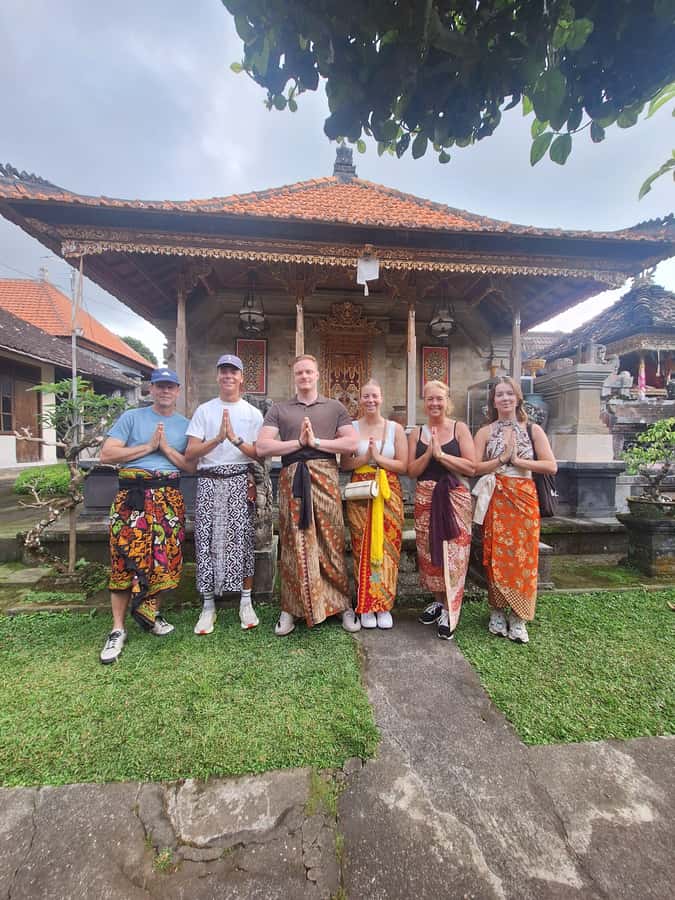
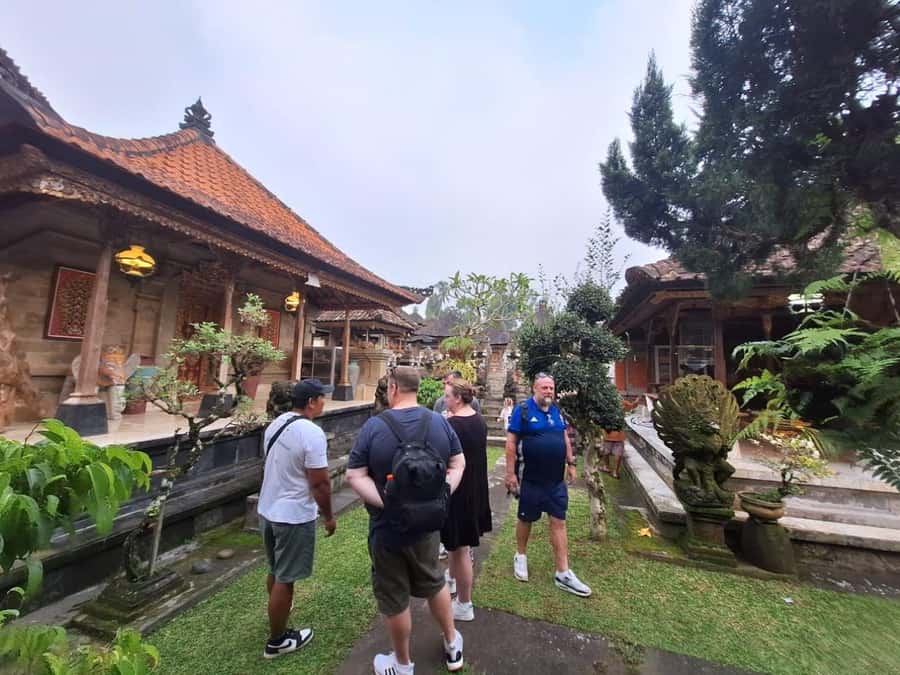
You will learn about the layout of the house and the customs connected with it. The visit can include a look at the family temple area, giving you a glimpse into how a private home functions beyond its rooms and cooking space. This is not a museum stop. It is a chance to see a lived-in setting and understand some of the cultural details behind the meal you are about to prepare.
I like this opening because it prevents the cooking class from feeling detached from Bali. You are not simply learning how to combine ingredients. You are first seeing the type of home and community where these food traditions belong.
The house visit also gives the experience a more personal tone. The setting is part of the host family’s daily world, so you should approach it with the same care you would use when visiting any private home. Follow instructions about where to walk and what you may photograph.
More Balinese Cooking Classes in Ubud:
- Ubud Cooking Class Bali with Balinese Chef
★ 5.0 · 1,609 reviews - PRIVATE Authentic Balinese Cooking Class in Ubud at Putu’s Home
★ 5.0 · 644 reviews - Balinese Ubud cooking school (9 Dish Cooking and Market Tour)
★ 5.0 · 540 reviews
Walking Through the Farm and Rice Fields
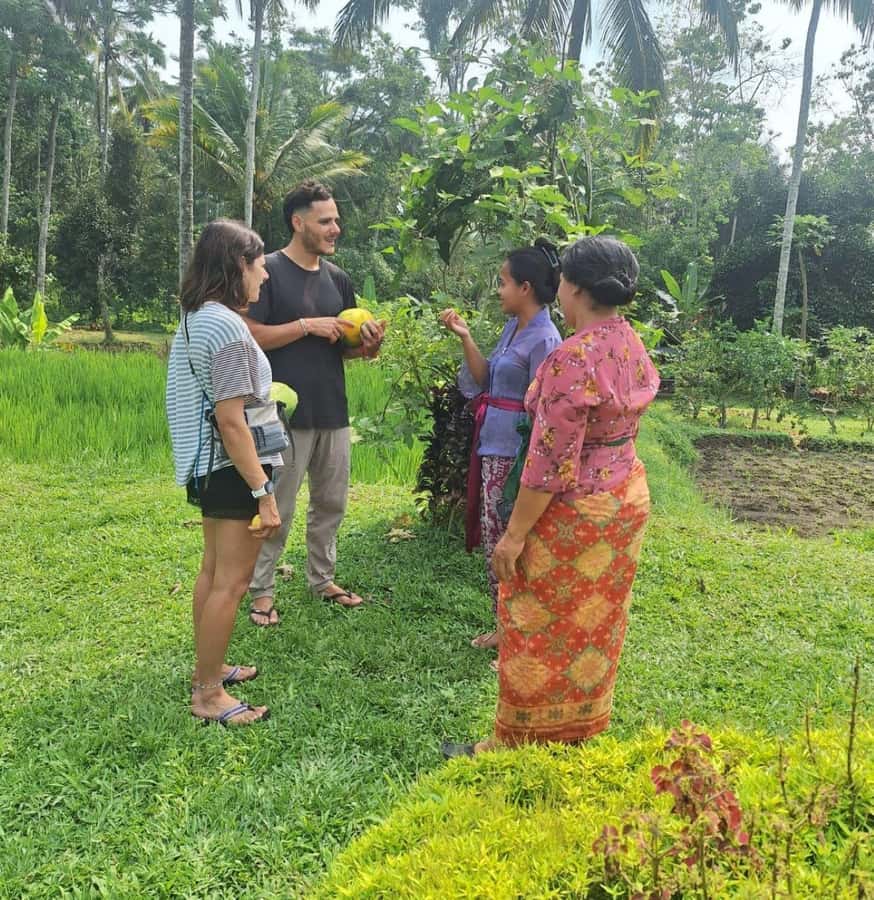
After the house visit, you walk toward the cooking area through the rice fields. Along the way, you may see local people carrying out ordinary daily activities. This short walk is one of the most useful parts of the experience because it slows the pace and connects the different stops.
You also stop at a farm to learn about local plants. This helps explain where some of the flavors in Balinese food begin. You will have a chance to taste local fruit and take part in harvesting it, adding a hands-on element before the class starts.
The farm visit is not presented as a large agricultural attraction. Its value is in seeing plants in their growing environment and learning how local ingredients fit into everyday cooking. If you enjoy food markets and gardens, you will likely appreciate this stop more than someone who wants a class with no time spent away from the stove.
Wear shoes that are comfortable for walking. The activity information does not give a specific distance or trail surface, but the route includes a walk between the house, farm, and cooking location. The experience is not suitable for wheelchair users.
Young Coconut Before the First Chop
Before cooking begins, you receive a young coconut as a welcome drink. It is a simple touch, but a useful one after the walk. Mineral water is also provided throughout the experience.
Then the instructor introduces the menu and the basic method for preparing it. The class includes five types of main dishes and one dessert. Exact dish names are not provided, so you should not book this expecting a particular recipe. The strength is the range: you prepare several parts of a Balinese meal rather than one single dish.
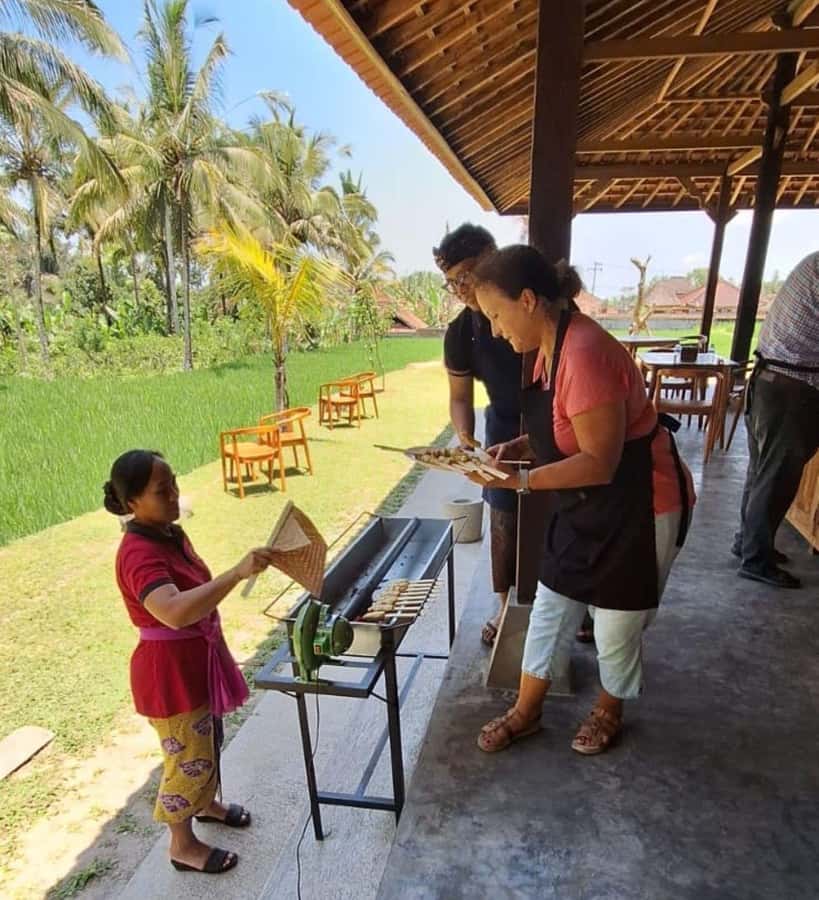
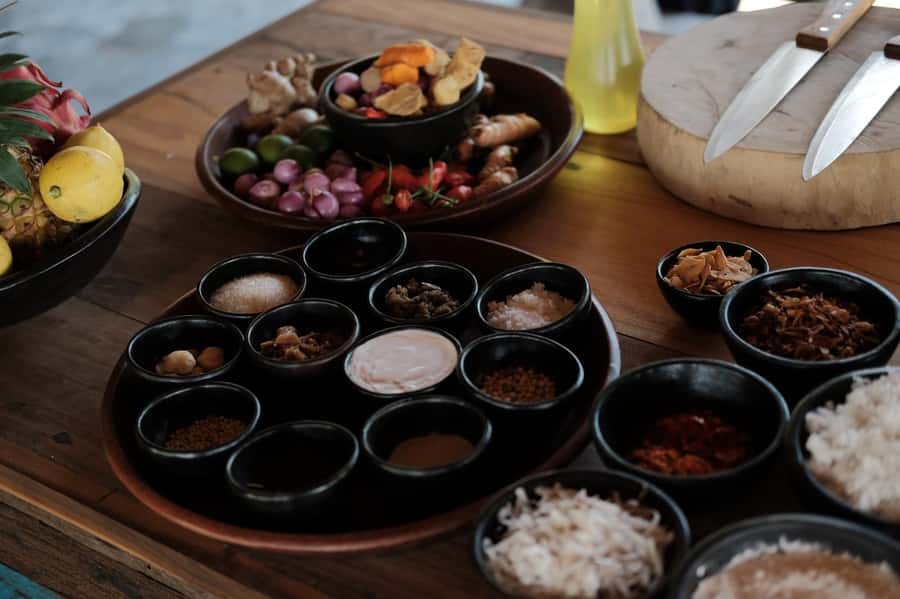
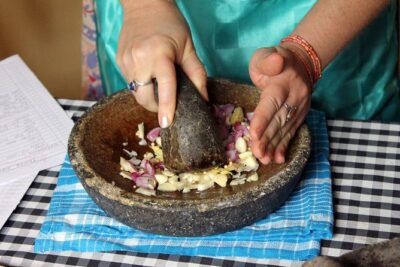
You will chop, grind, and simmer ingredients, learning how spices work together and how the balance of flavors is built. The class is designed to let you cook according to your taste and serve the food according to your own creation.
That flexibility is helpful for anyone who likes to adjust seasoning. It also means the final meal reflects your choices, rather than being a plate prepared entirely by someone else. At the same time, people who prefer a tightly controlled professional cooking lesson may find the shared, informal approach less structured.
What Two People Share at the Cooking Station
The maximum group size is eight people, which keeps the class fairly small. However, each cooking station is shared by two people. That detail is worth considering before you book.
Sharing can make the class more social and gives you someone to divide tasks with. It may work especially well for couples, friends, or family members who are happy to cook together. If you want to control every step yourself, you should be ready to coordinate with your partner.
The English and Indonesian-speaking instructor guides the class through each stage. No instructor names are provided, so you should not expect a specific named chef. What you can expect is hands-on guidance, equipment, a recipe book, and help as you prepare the dishes.
The recipe book adds value beyond the afternoon itself. You can use it to recreate the meal at home, though the final result may depend on finding similar local ingredients and getting the spice balance right.
A few more cooking classes around Ubud worth a look
- Ubud: Cooking Class with Transfers and Optional Market Visit
★ 4.9 · 824 reviews - Ubud: Balinese Cooking Class and Market Tour
★ 4.8 · 531 reviews - Balinese Farm Cooking Class by Pemulan Bali
★ 5.0 · 410 reviews - Balinese Authentic Cooking Class in Ubud
★ 5.0 · 239 reviews
Eating Your Own Food Beside the Rice Fields
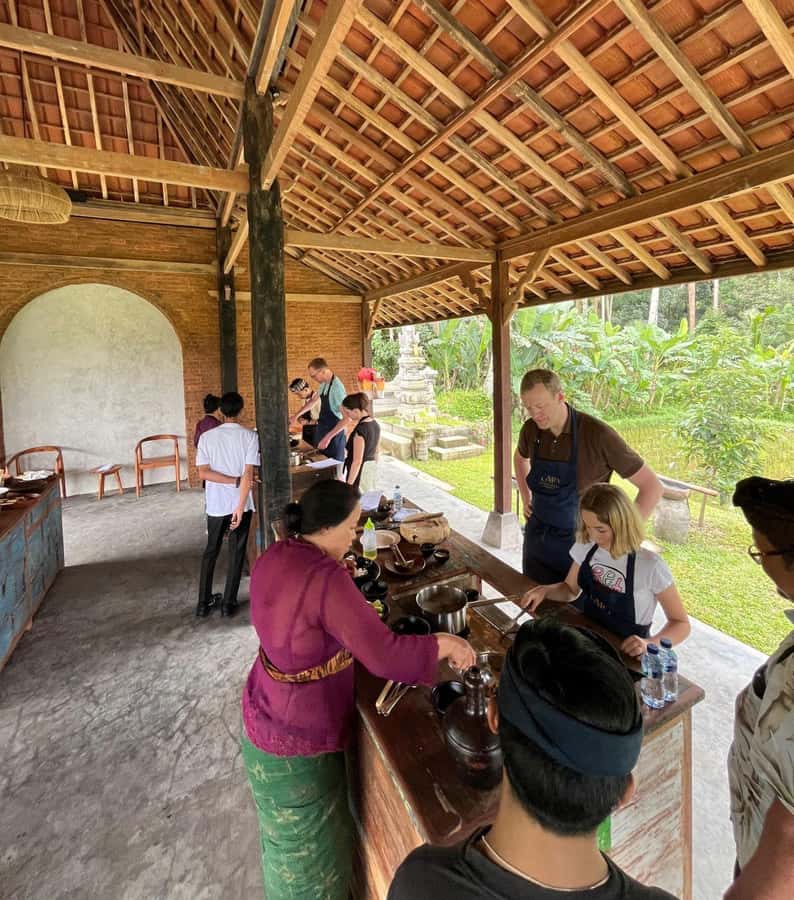
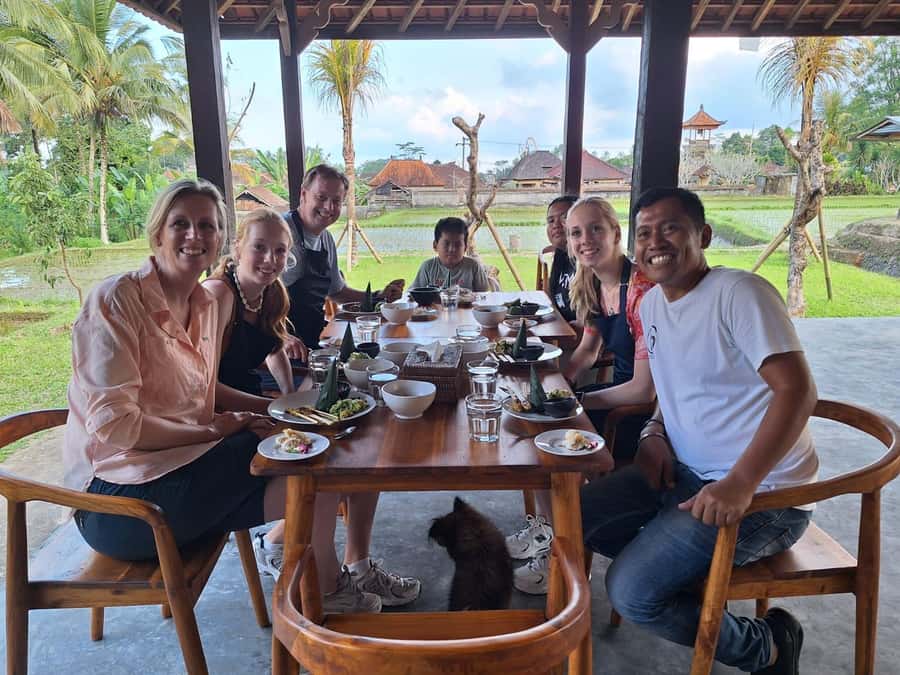
After roughly two hours of cooking, you sit down to eat the meal you prepared. The dining setting is beside green rice fields, and afternoon sessions may include a sunset view.
This is where the experience earns its price. You are not paying only for a cooking lesson. You are also getting transport within Ubud, a house visit, a farm stop, a fruit tasting, a welcome drink, cooking equipment, recipes, water, and a complete meal in a scenic setting.
The food will probably taste better because you made it yourself, but the setting also changes the mood. A meal beside rice fields gives the class a calm finish and makes the experience feel connected to the area rather than contained inside a classroom.
Soft drinks and beer are not included, although they are available for purchase. If you want something beyond coconut and water, bring money for those extras.
Is $33 a Good Value?
At $33 per person, this is a strong value if you want more than a standard cooking class. The price includes hotel pickup and drop-off in the Ubud area, a cultural visit, a farm stop, ingredients and equipment, a recipe book, drinks, and the meal you prepare.
A comparable class with only cooking time might be cheaper, but it would not include the house visit and farm walk. Here, the added cost pays for a four-hour cultural activity rather than just kitchen instruction.
The value is strongest for first-time visitors to Bali, couples, families, and anyone who wants a gentle introduction to Balinese food. It is also a good choice if you enjoy meeting local people and seeing ordinary settings.
The value is less clear if you already have a packed schedule of food tours, farm visits, and cultural activities. The route is intentionally broad, so it gives you a taste of several aspects of local life rather than a highly specialized lesson in one cooking technique.
Timing, Transport, and Group Size
The total duration is four hours. Starting times vary, so you need to check availability when booking. Afternoon departures may suit you if you want the possibility of sunset during the final meal.
Hotel pickup and drop-off are included within the Ubud area. That removes the need to arrange transport to a rural cooking location, but the stated pickup service does not cover every part of Bali. If you are staying outside Ubud, confirm your transport plan before booking.
The small group limit of eight is a real advantage. You should receive more direct help than in a large class, and the group can move through the house, farm, and kitchen without becoming unwieldy. The shared stations are the main tradeoff.
Free cancellation is available up to 24 hours in advance for a full refund, and you can reserve now and pay later. Those terms help if your Bali schedule is still shifting.
Who Will Enjoy This Experience Most?
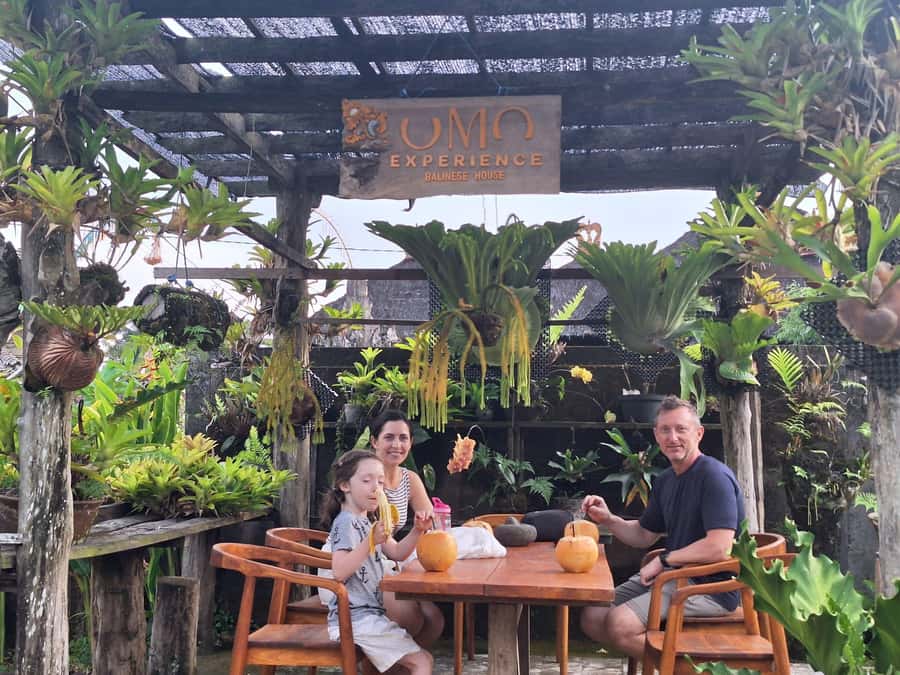
I would choose this experience if you want a relaxed introduction to Bali that combines food, family life, plants, and scenery. It suits you especially well if you like practical activities and prefer making your own lunch or dinner to sitting through a long cultural talk.
It is also a good option for someone who says they do not enjoy cooking. The class is social and guided, and you are not expected to arrive with advanced skills. One particularly useful sign is that even a person who disliked cooking enjoyed the activity, according to the information provided about the experience.
Families may enjoy the fruit harvesting and hands-on work, though the data does not specify a minimum age. Ask before booking if you are traveling with young children. The house visit also calls for respectful behavior and close attention to the instructor.
You should reconsider it if you need wheelchair access, dislike walking, or want complete control of an individual cooking station. You should also avoid booking if your main goal is a particular named dish, since the menu is described by number and type rather than by recipe.
Practical Tips Before You Go
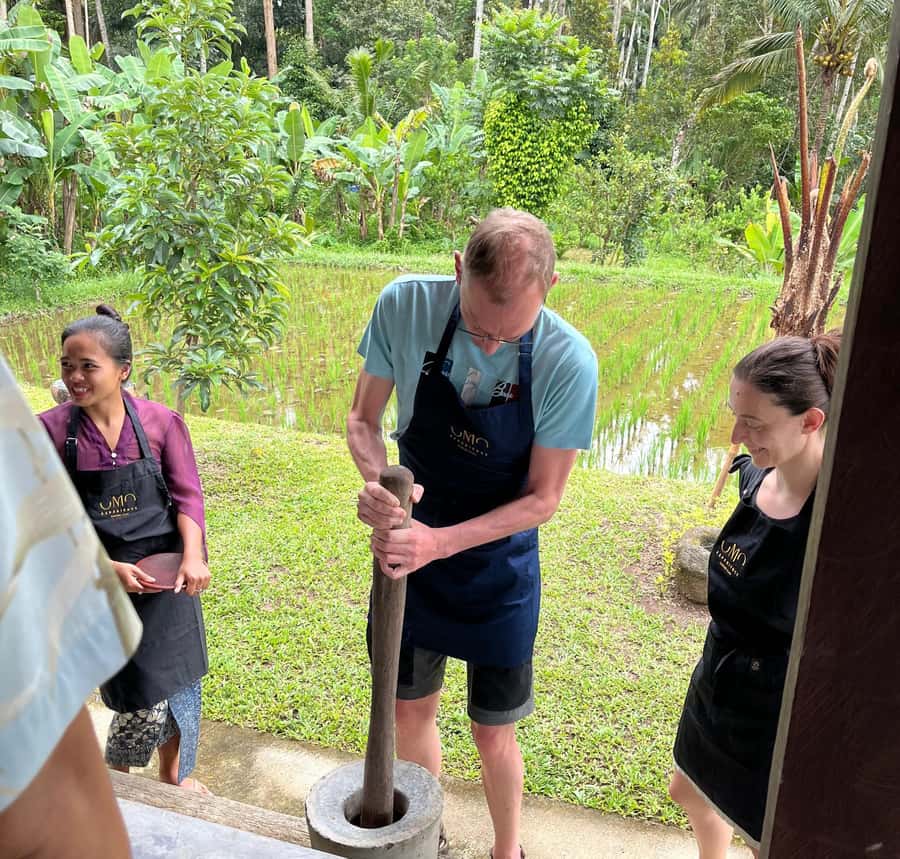
Bring a camera, especially if you enjoy recording details of gardens, house layouts, food preparation, and rice-field views. Ask before photographing people or private areas.
Plan to wear comfortable clothing and shoes suitable for walking. This is practical advice based on the route through the house, farm, and rice fields, not a stated dress requirement.
Remember that each cooking station is shared by two people. If you are booking with a partner, decide in advance whether you want to divide tasks or work side by side on every step.
The class is offered in English and Indonesian. If you need another language, this experience may not be the right fit.
Should You Book It?
Book it if you want a small-group cultural activity that happens to include a cooking class, rather than a cooking class with a little culture added on. The traditional house, farm walk, local fruit, and rice-field meal give the four hours a satisfying shape.
At $33, the combination of transport, instruction, food, recipes, and local visits is hard to fault. Just keep the shared cooking station, walking route, Ubud-only pickup, and lack of wheelchair access in mind.
If you are staying in Ubud and want a personal, food-focused look at everyday Bali, I would book this one. If you need a fully accessible tour or a private chef-led lesson with a fixed menu, choose something more specialized.
FAQ
How long does the Balinese cooking experience last?
The experience lasts four hours.
How much does the experience cost?
The price is $33 per person.
Is hotel pickup included?
Yes. Hotel pickup and drop-off are included for locations in the Ubud area.
How many people can join the class?
The group is limited to eight participants.
Will I have my own cooking station?
No. Each cooking station is shared by two people.
What food will I prepare?
You will prepare five types of main dishes and one dessert, then eat the meal you make. Specific dish names are not provided.
Is the experience available in English?
Yes. The instructor speaks English and Indonesian.
Is the activity suitable for wheelchair users?
No. The activity is not suitable for wheelchair users.
Just added around Ubud
- Ubud: Organic Farm Harvest, Bali Cooking Class by Pemulan★ 4.8 · 12 reviews
- packages cooking class and romantic dinner in a local home★ 5.0 · 4 reviews
- Jambangan bali cooking class with morning market tour★ 5.0 · 35 reviews
- Balinese cooking class/Go shopping at the market, cook, eat★ 5.0 · 12 reviews
- Ubud: Balinese Cooking Class with Hotel Transfers★ 4.8 · 17 reviews
- Balinese Cooking class with traditional morning market visit★ 5.0 · 161 reviews
- Small-Group Farm Tour & Balinese Cooking Class in Ubud with Kadek★ 5.0 · 16 reviews
- Balinese Cooking Class at Organic Farm★ 5.0 · 51 reviews
Balinese & Indonesian Cooking Classes, compared.
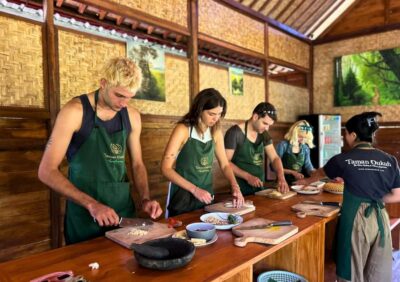
Ubud: Balinese Cooking Class at an Organic Farm
Read our review →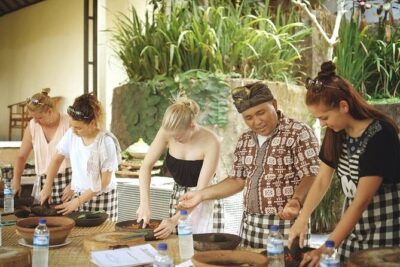
PRIVATE Authentic Balinese Cooking Class in Ubud at Putu’s Home
Read our review →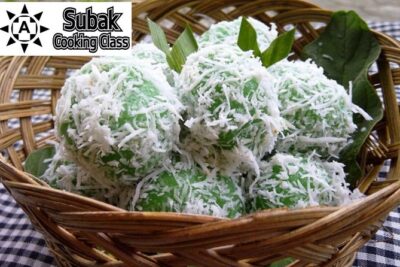
Balinese Ubud cooking school (9 Dish Cooking and Market Tour)
Read our review →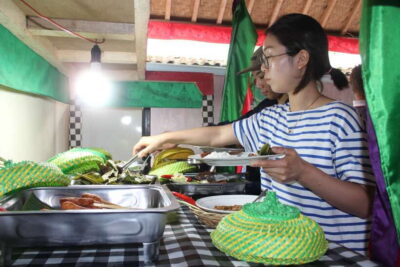
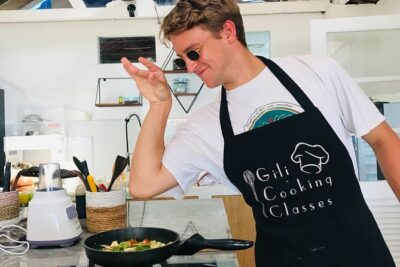
Learn to cook Indonesian food at Gili Cooking Classes Trawangan
Read our review →Browse the lists this tour appears in