
Review · CAPE TOWN
Private Authentic Cape Malay Cooking Class in Manenberg with Locals
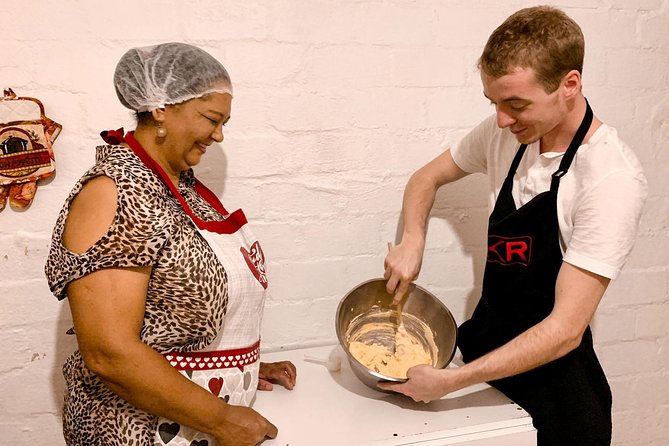
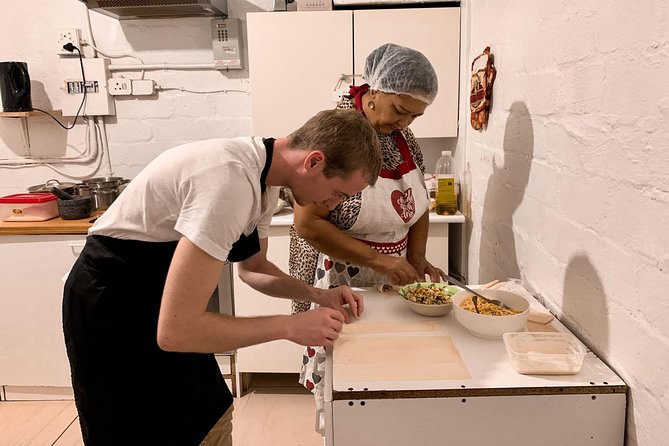
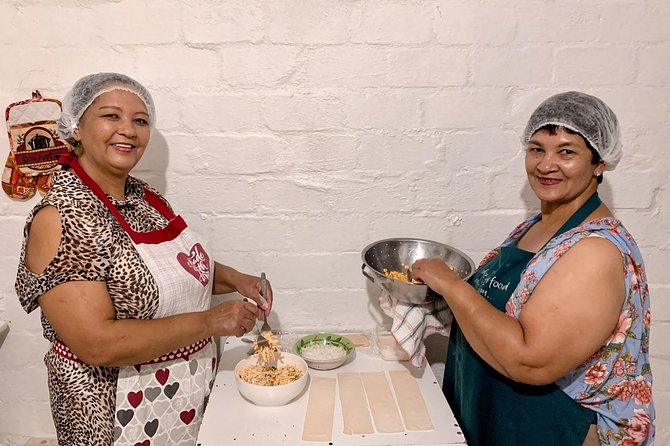
Cape Malay cooking is the heart of this experience. You spend time in Ruth’s home in Manenberg with sisters Colleen and Ruth, making a full meal from family recipes rather than watching a restaurant demonstration from the sidelines. The food moves from crisp samosas and half-moons to slow-cooked tomato bredie, yellow rice, and dessert.
I like the private format, which gives your group direct attention during the roughly two-hour cooking lesson. I also like the chance to share the finished meal with the hosts, with alcoholic drinks included. The main consideration is getting to Manenberg on your own, since hotel pickup and drop-off are not included.
Key points to know
- Family recipes in a local home: Learn Cape Malay dishes from recipes passed through Colleen and Ruth’s family.
- A complete three-course meal: Prepare samosas, tomato bredie, yellow rice, and dessert.
- Private instruction: Only your group takes part, so you can ask questions and work at your own pace.
- A generous food spread: The starter platter includes samosas, half-moons, and fried spring rolls with dhanya dipping sauce.
- About four and a half hours total: The cooking lesson lasts around two hours, followed by time to eat and talk.
- Plan your own transport: Meet at 10:00 a.m. in Manenberg, and return to that same meeting point when the activity ends.
Cape Malay cooking begins at Ruth’s home
At 10:00 a.m., you meet Colleen and Ruth at Ruth’s home in Manenberg, Cape Town. This is not a class in a polished cooking studio. The setting is a local home kitchen, which gives the experience a personal, everyday feel.
That setting matters. Food makes more sense when you see it prepared in the kind of place where family recipes are actually used. You are not only learning what goes into a dish. You are also seeing how the hosts organize a meal, explain familiar techniques, and pass on recipes that have moved through generations of their family.
The class is private, so only your group participates. That is a useful advantage if you have questions, cook at different speeds, or want more help with a particular step. A larger public class can be social, but it can also mean waiting for a turn. Here, Colleen can focus on your group during the hands-on portion.
You should allow about four and a half hours for the whole activity. The cooking itself lasts around two hours, with the remaining time used for eating and sharing the meal with your hosts. This is best treated as a relaxed half-day plan, not a quick lesson squeezed between major Cape Town sights.
More Hands-On Workshops in South Africa:
- Cape Town: Malay Cooking Class and Lunch in Bo-Kaap
★ 4.8 · 515 reviews - Cape Town: Cape Malay Cooking Class in Bo-Kaap
★ 4.8 · 120 reviews - Cape Town: Bo-Kapp Walking Tour and Malay Cooking Class
★ 4.7 · 105 reviews
Making the starter platter by hand
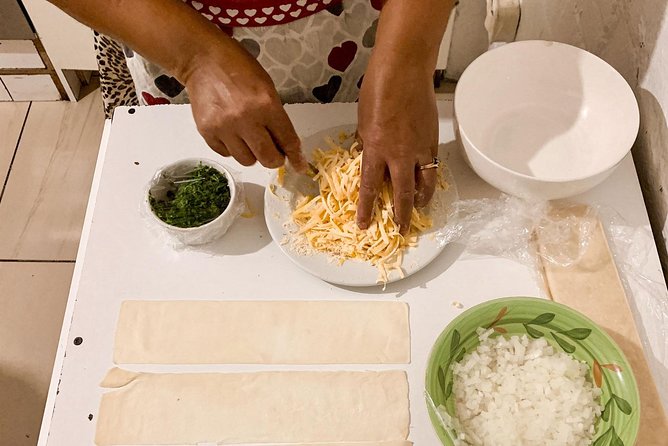
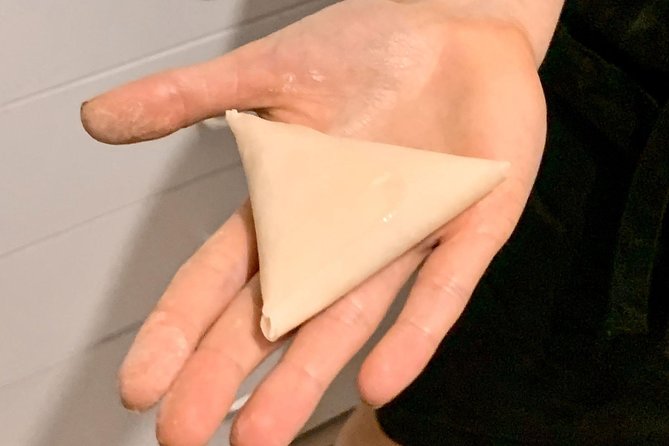
The first part of the meal includes a platter of Cape Malay pastries. You prepare samosas, half-moons, and fried spring rolls, then serve them with a traditional dhanya dipping sauce made with coriander.
This is a good introduction to the cooking style because the starter course brings together texture, spice, and technique. The pastries need careful handling, and the lesson gives you a chance to follow demonstrations before sitting down to eat what you made. The coriander dipping sauce adds a fresh counterpoint to the fried pastries.
Samosas are familiar to many people, but learning them in a family kitchen gives the dish more context. You can ask about the methods used in the family recipe and see how the filling, folding, and cooking come together. The half-moons and spring rolls give the platter more variety, so this is not simply a lesson focused on one fried snack.
The food is described as bold and warming, with sweet, sour, and savory combinations. If you usually associate Cape Malay food only with heat, this class can help broaden that picture. Spice is part of the flavor, but the meal also depends on balance and the way different tastes work together.
Tomato bredie and yellow rice for the main course
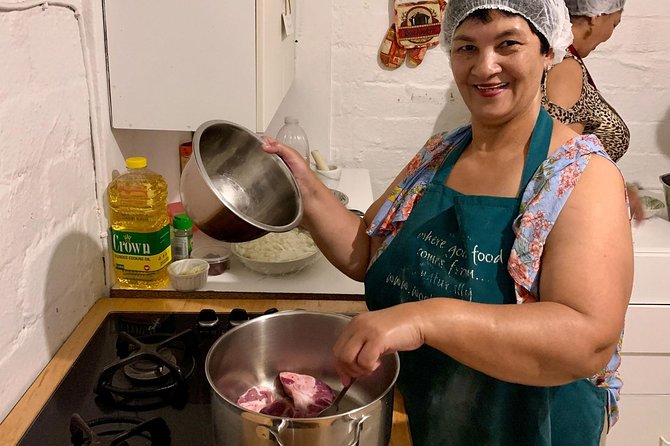
After the pastries, you prepare Cape Malay tomato bredie. This is a South African stew made with slow-cooked meat and vegetables, served with yellow rice. The recipe comes from a family formula described as secret, so you will learn the cooking process without necessarily leaving with every exact measurement.
Tomato bredie is a useful main course for a lesson because the flavor develops over time. The slow-cooked meat and vegetables need patience, and the tomato base brings a sweet and savory quality to the dish. You get to see how the separate ingredients become a complete stew rather than simply assembling a finished plate.
The yellow rice provides a gentle partner for the bredie. Rice may seem simple, but it helps carry the sauce and rounds out the meal. Together, the stew and rice show how a Cape Malay table can balance strong seasoning with a filling, comforting main course.
I would pay close attention during this section and ask questions as you go. The private format means you can request clarification about timing, texture, and preparation without worrying about holding up a larger group. If you enjoy cooking at home, the techniques may be as useful as the recipes themselves.
Dessert and the pleasure of eating what you made
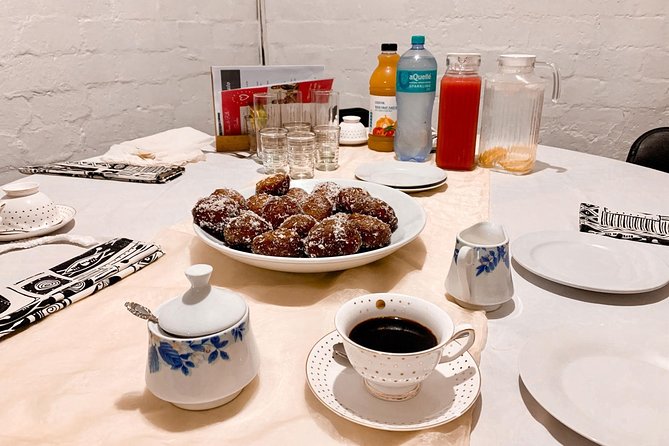
Dessert completes the three-course meal. The exact dessert is not specified in the available details, so you should expect a sweet finish without booking on the assumption of one particular dish.
The shared meal is an important part of the experience. Once the cooking is done, you sit at the table with Colleen and Ruth and eat the food prepared during the class. This turns the lesson into a social visit, not just a set of instructions followed in a kitchen.
Alcoholic beverages are included. That adds to the relaxed meal, though you should keep the full timing in mind if you have plans later in the day. Gratuities are also included in the price, which makes the final cost easier to judge.
The strongest appeal here is the sense of welcome created by the hosts. One solo participant described arriving by Uber and feeling at home with Colleen and Ruth throughout the day. That detail is useful if you are traveling alone and wondering if a private home visit will feel awkward. The format is designed around conversation, instruction, and a shared meal, rather than leaving you to cook in silence.
A few more cooking classes around South Africa worth a look
- Private Cape Malay Cooking Class in Cape Town with a Local Family
★ 5.0 · 24 reviews - PRIVATE Authentic Balinese Cooking Class in Ubud at Putu’s Home
★ 5.0 · 644 reviews - Rome: Pasta Making Class with Tiramisu & Wine PRIVATE OPTION
★ 4.8 · 404 reviews - Semi-Private Pizza Making Experience in Naples with Drink
★ 5.0 · 324 reviews
What the private format is worth at $92
The price is $92 per person. That is not the cheapest way to eat in Cape Town, but it covers more than lunch. You are paying for a private cooking lesson, direct instruction, a three-course meal, alcoholic beverages, and gratuities.
The value depends on what you want from a food experience. If your main goal is simply to taste Cape Malay food, you may find a restaurant meal less expensive and easier to fit into your day. If you want to learn how the food is made and spend several hours with local hosts, the price is more reasonable.
The private setup is especially important when comparing costs. A shared lesson may cost less, but you could have less time with the instructor and fewer chances to ask questions. Here, the group receives the teacher’s attention, and the hands-on work is central to the experience.
Group discounts are available, so the per-person cost may make better sense for a small group. The exact discount is not provided, so check the price for your party before booking. Since the food, drinks, and gratuities are included, you have fewer add-on costs once the class begins.
Reaching Manenberg without hotel pickup
You meet at Manenberg, Cape Town, 7767, South Africa, at 10:00 a.m. The experience ends back at the meeting point. Hotel pickup and drop-off are not included, so transportation is your responsibility.
The most useful practical tip from the available information is that an Uber worked well for one solo participant getting there and back. You should still allow enough time for the journey and confirm the exact meeting details after booking. Manenberg is not a pickup point at a central hotel or major sightseeing stop, so this needs a little planning.
Because the activity begins at a private home, arrive at the stated meeting point rather than expecting a guide to collect you elsewhere. A mobile ticket is provided, and confirmation is sent within 48 hours of booking, subject to availability.
The location is part of the appeal, but it is also the main logistical tradeoff. You leave the usual sightseeing circuit and go to a neighborhood home for the class. That makes the experience feel more personal, but it means you should not book it back-to-back with an attraction on the far side of Cape Town.
Who will enjoy this cooking class most
I would recommend this experience to anyone who places food, conversation, and local connection high on a Cape Town itinerary. It suits solo visitors particularly well because the private format gives you a clear reason to spend time with the hosts rather than trying to join an established group.
It also works for couples, families, and small groups who want to cook together. The private setting lets everyone take part, and group discounts may help with the overall cost. If one person in your group is a confident cook and another is a beginner, the one-to-one instruction should make the lesson easier to manage.
Food lovers will appreciate the full menu. You are not making one sample dish and then watching someone else finish dinner. You prepare starters, a main course, and dessert, then eat the results.
This may be less suitable if you want a short activity, dislike fried food, or prefer a formal commercial cooking school. The total experience lasts about four and a half hours, and several dishes involve hands-on preparation. The home setting is central to the experience, so book it because you want that personal atmosphere, not because you expect a restaurant-style venue.
The class is also not the right choice if you need included transportation. You must arrange your own way to Manenberg and back. Service animals are allowed, but no further accessibility details are provided, so ask before booking if you have specific needs.
How to make the most of your morning
Keep your schedule open around the class. The cooking lesson is about two hours, but the full activity lasts about four and a half hours. Give yourself enough time to travel to Manenberg in the morning and enough flexibility afterward for the shared meal.
Come ready to participate. The best part of a private lesson is the chance to handle the food yourself, so pay attention to the demonstrations and ask questions as soon as something is unclear. You will get more from the experience if you treat it as a cooking lesson rather than a meal with a short demonstration attached.
If you are booking for a group, compare the total cost with the available group discount. Since drinks and gratuities are already included, the main extra expense to plan for is transportation.
The booking has free cancellation up to 24 hours before the start time. Cancel at least 24 hours before 10:00 a.m. on the day of the activity if you need a full refund. Changes or cancellations made later are not accepted for a refund under the stated policy.
Should you book this Manenberg food experience?
Book it if you want Cape Town food with a human connection. Colleen and Ruth offer more than a recipe lesson: you visit Ruth’s home, cook family dishes, and share the meal around the table. The private setting, full menu, included drinks, and warm welcome make the $92 price easier to justify for someone who values time and personal attention.
Think twice if you only want a quick taste, need hotel transport, or prefer a professional kitchen built for demonstrations. The location takes planning, and the class occupies much of the day.
For a solo visitor, a couple, or a small group looking for Cape Malay food beyond a restaurant menu, this is a strong choice. Arrange your ride in advance, keep your afternoon flexible, and arrive ready to fold samosas, stir a slow-cooked stew, and eat the meal you helped create.
FAQ
Where does the Cape Malay cooking class take place?
The class takes place at Ruth’s home in Manenberg, Cape Town, South Africa.
What time does the activity start?
The activity starts at 10:00 a.m.
How long does the full experience last?
The full experience lasts approximately four hours and 30 minutes. The hands-on cooking class itself lasts about two hours.
What dishes will I learn to prepare?
You will learn to prepare samosas, tomato bredie, yellow rice, and dessert as part of a three-course Cape Malay meal.
What is included in the starter platter?
The starter platter includes samosas, half-moons, and fried spring rolls served with a traditional dhanya, or coriander, dipping sauce.
Are drinks included?
Yes. Alcoholic beverages are included.
Is transportation from my hotel included?
No. Hotel pickup and drop-off are not included. You meet in Manenberg and return to the meeting point at the end.
Is this a private activity?
Yes. Only your group participates in the cooking class.
Can I cancel for a full refund?
Yes, if you cancel at least 24 hours before the experience start time. Cancellations made less than 24 hours in advance are not refunded.
Just added around South Africa
- Private Cape Malay Cooking Class in Cape Town with a Local Family★ 5.0 · 24 reviews
- South African Cooking in Cape Town with Local Chef Richard★ 4.5 · 10 reviews
- Langa Township and Bokaap Cooking Class Half Day Tour★ 5.0 · 4 reviews
- Cape Town Shore Excursion| South African Cooking & Port Transfers★ 5.0 · 3 reviews
- Koeksister and Samoosa Class by the Malay Cook Up★ 4.8 · 9 reviews
- Johannesburg: Pan-African Cooking & Dinning Experience★ 4.5 · 6 reviews
- GQ: City Walking Tour & African Cuisine Cooking Class★ 4.6 · 11 reviews
- Cape Town: Authentic African Cuisine Cooking Experience★ 4.9 · 31 reviews
Cooking Classes, compared.
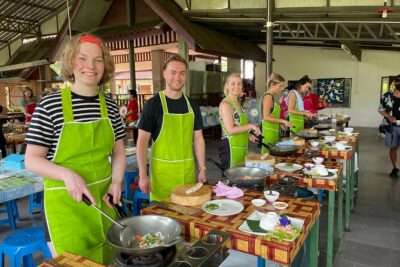
Half-Day Thai Cooking Class at Organic Farm in Chiang Mai
Read our review →
Florence: Pasta Cooking Class with Unlimited Wine
Read our review →
3 in 1 Cooking Class near Navona: Fettuccine, Ravioli & Tiramisu
Read our review →
Hanoi Cooking Class: Culture, Local Market & Meaning CSR Impact
Read our review →
5 Traditional Dishes Hanoi Cooking Class with Market Trip
Read our review →
Cooking Class and Lunch at a Tuscan Farmhouse with Local Market Tour from Florence
Read our review →
Chiang Mai: Cooking Class, Market & Thai Herbs Garden Tour
Read our review →Browse the lists this tour appears in