
Review · JAPANESE & SUSHI
Ramen Cooking Class at Ramen Factory in Mt.Fuji
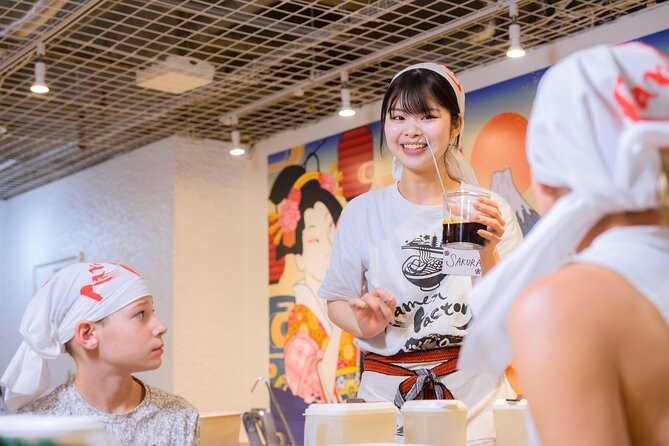
The best part of this Mt. Fuji-area activity is that you do not just eat ramen, you build the whole bowl yourself. You knead flour, roll and cut the dough, boil and drain the noodles, blend the soup, and prepare the chicken garnish. The process is the meal.
I like the clear, friendly instruction from guides such as Jojo and Eri, and I like that the class works for more than one kind of diet. The choice of a T-shirt, ramen bowl, or Japanese apron gives you something useful to take home. The main drawback is practical: transport is not included, and the class is at the Mt. Fuji store, not the Kyoto location.
Key points to know before booking
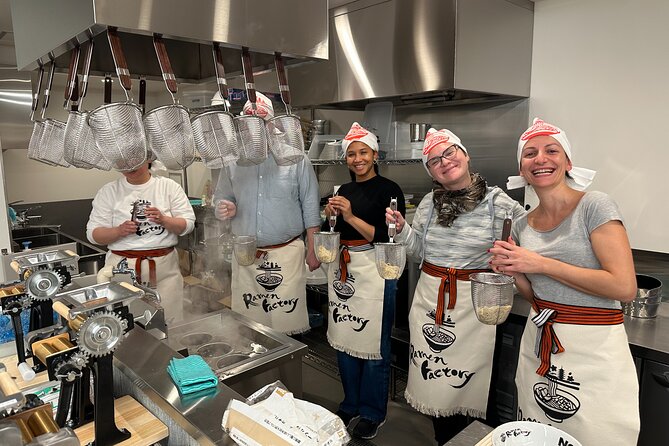
- You make every major part of the bowl: Dough, noodles, soup, chicken, and toppings are all part of the class.
- The class lasts about 90 minutes: It is short enough to fit into a day around Fujikawaguchiko.
- Jojo and Eri lead the instruction: English-speaking guidance makes the steps easy to follow.
- Dietary requests are welcome with advance notice: Vegetarian, vegan, gluten-free, and Muslim-friendly choices are available.
- A souvenir is included: Choose one item from a T-shirt, ramen bowl, or Japanese apron.
- You must reach the Mt. Fuji store yourself: The meeting point is 3487-15 Funatsu, Fujikawaguchiko.
Making ramen from flour to finished bowl
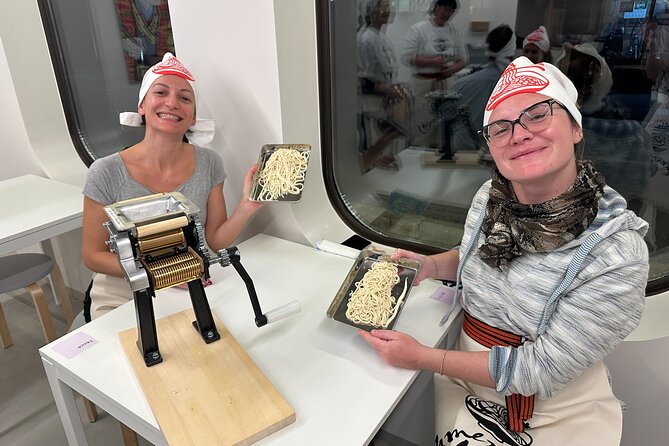
Many ramen outings give you a bowl and a quick explanation. This one puts you at the work table. You begin with flour and turn it into the noodles that will go into your own soup.
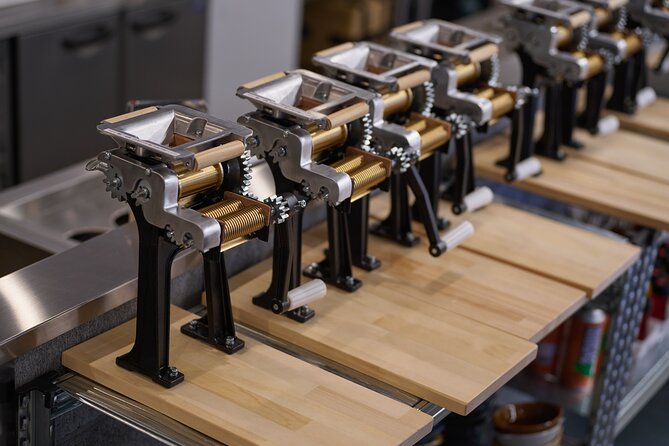
The first stage is kneading. This is simple in concept but useful in practice because it shows you that ramen noodles are not an instant side dish. You work the dough, roll it out, and cut it into shapes. The class is designed so you can follow the instructions without needing much cooking skill.
Next comes boiling and draining. You place the noodles in water, cook them, and drain them before they become part of the final bowl. This small step matters. Fresh noodles can change quickly from firm to soft, so the class gives you a direct feel for timing rather than treating noodles as something already prepared.
The instructors keep the process moving and help if you get stuck. That makes this a good choice if you want a hands-on activity but do not want a demanding cooking lesson. You will have work to do, but you are not left to guess your way through it.
More Sushi and Japanese Classes in Japan:
- Sushi Making Tokyo Roll and Authentic Japanese Sushi Class
★ 5.0 · 3,971 reviews - Tokyo: Roll and Authentic Sushi Making Class in Asakusa
★ 4.9 · 1,957 reviews - Ramen Cooking Class at Ramen Factory in Kyoto
★ 5.0 · 1,937 reviews
Building chicken garnish with your own hands
The chicken preparation adds another useful layer. You tie the chicken with string, add condiments, cook it, and slice it as you like. That means the garnish is not simply placed on top at the end. You see how it is prepared and decide how you want it presented in the bowl.
This part also gives the class a nice change of pace. Kneading and cutting the noodles are physical tasks, while the chicken stage focuses more on shaping, seasoning, and slicing. You move through several kinds of kitchen work in a short period.
If you do not eat chicken, tofu can be provided for vegetarian or vegan versions when requested ahead of time. The advance notice matters. Add your dietary needs in the special requirements section when booking rather than waiting until you arrive.
Choosing and mixing the broth
The soup is where you can make the ramen feel most personal. You choose from different broths and sauces, then blend them to create the base for your noodles. This is not a single fixed recipe for every person.
That choice is valuable for two reasons. First, it lets you adjust the bowl to your taste. Second, it shows how much of ramen’s character comes from the soup, not just from the noodles or toppings. You can see how small changes in the broth affect the final dish.
The class offers vegetarian, vegan, gluten-free, and Muslim-friendly arrangements, but the details need to be arranged in advance. The available choices may depend on the request, so be specific when booking. The activity is designed to include different diets, but it is still your job to communicate your needs clearly before the class.
The final bowl and the food included
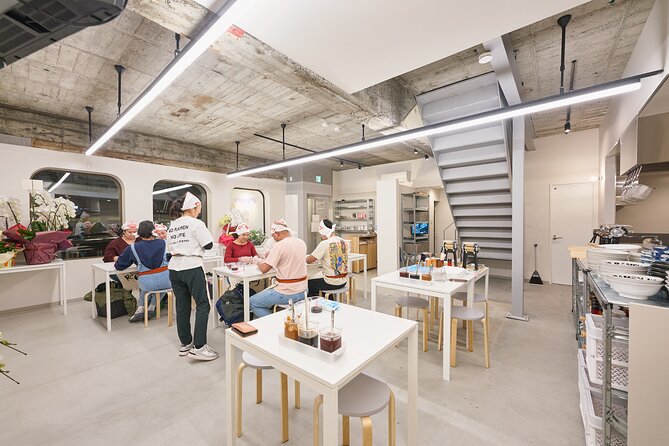
Once your noodles are cooked and drained, you place them in your chosen soup. Then you add the chicken or tofu and finish with toppings. The result is a bowl you assembled from the beginning rather than a dish handed over by a cook.
Food tasting and a meal are included in the activity price. The supplied details also list both lunch and dinner as included, so the class functions as a meal stop as well as a cooking lesson. Check the start time you choose when deciding how it fits into your day.
The finished ramen is the payoff, but it is not the only reason to book. You also get a better sense of how the pieces fit together. The dough, noodles, broth, garnish, and toppings are separate jobs, yet they need to arrive together for the bowl to work.
More Hands-On Workshops in Japan:
- Tokyo: Sushi Making Class in a Happi Coat near a Famous Spot
★ 4.9 · 1,377 reviews - Sushi Making Osaka Roll and Authentic Japanese Sushi Class
★ 5.0 · 1,220 reviews - Tokyo Sushi Making Class in Tsukiji with Professional Chef
★ 5.0 · 1,177 reviews - Ramen & Gyoza Cooking Class in Tokyo with Local Supermarket Visit
★ 5.0 · 823 reviews
How the 90-minute schedule feels
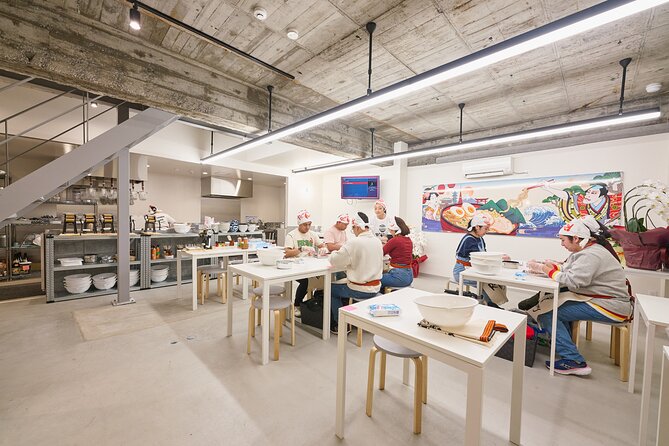
About an hour and a half gives the class a tidy shape. You have enough time to make the noodles and chicken without turning the activity into a full-day cooking course.
The pace should suit people planning other activities around Fujikawaguchiko. You can give the class a fixed place in your schedule and still have time for other sights, meals, or views in the area. At the same time, do not treat the 90 minutes as an open-ended workshop. The class follows a set process, and you will need to keep moving with the group.
A maximum of 18 people keeps the class from becoming huge. It is still a group activity, not a private lesson, but the size allows the instructors to guide several workstations. Jojo and Eri are noted for explaining the steps clearly in English, which is especially useful when the class reaches dough texture, cooking time, or broth mixing.
The class is built for beginners. You do not need to be a skilled cook to take part. The instructions are meant to get you to a good bowl even if your usual kitchen work begins and ends with opening a packet.
Why the souvenir adds real value
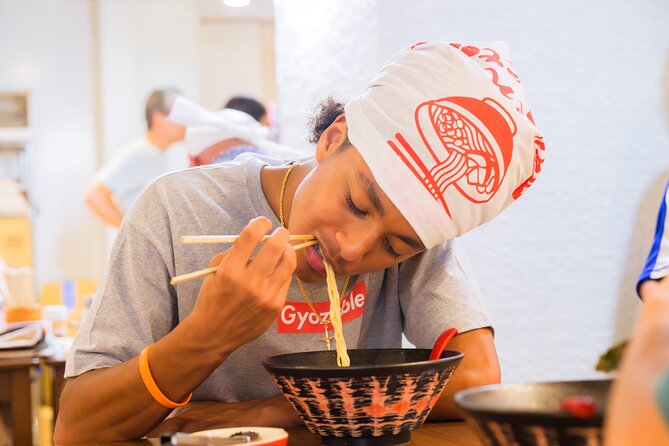
Each person can choose one souvenir: a T-shirt, ramen bowl, or Japanese apron. This is a practical touch because it gives you a choice rather than sending everyone home with the same item.
Pick the ramen bowl if you want a lasting reminder tied directly to the food. The apron makes sense if you enjoy cooking at home. The T-shirt is the simplest option if you prefer something easy to use or pack.
At a price of $141.56 per person, the souvenir helps support the value of the experience, but it should not be the main reason you book. The price covers instruction, ingredients, the meal, food tasting, taxes and fees, and the chosen gift. You are paying for a guided activity with several cooking stages, not just for a bowl of ramen.
I would compare it with the cost of an ordinary meal and ask what you want from the stop. If you only want inexpensive ramen, this is not the best value. If you want a structured food activity, a meal, and a keepsake near Mt. Fuji, the package makes more sense.
Getting to the correct Mt. Fuji location
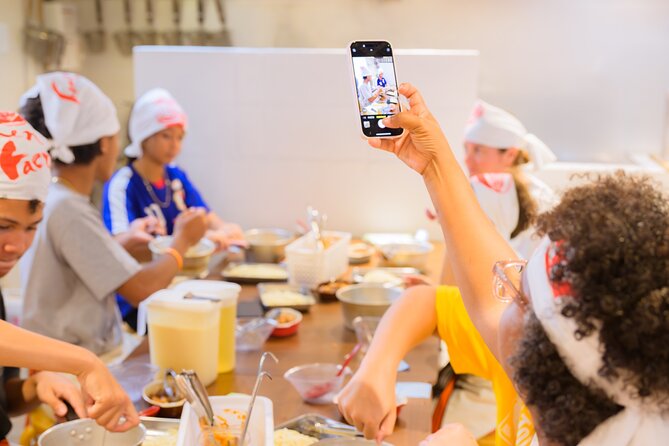
The meeting point is Ramen Factory Mt. Fuji at 3487-15 Funatsu, Fujikawaguchiko, Minamitsuru District, Yamanashi 401-0301, Japan. The activity ends back at this same point.
Transportation is not included, though the location is near public transportation. Plan your route before the day begins, especially if you are working around timed sightseeing or a train connection. The most important location warning is easy to miss: this class is held at the Mt. Fuji store, not the Kyoto store.
That distinction matters because arriving at the wrong branch would ruin a tightly planned day. Check the full address before setting out and allow enough time to reach Funatsu. The mobile ticket is convenient, but it does not replace planning your own transport.
Who will get the most from this class
I would recommend this activity to families, couples, food-focused visitors, and anyone who wants a break from sightseeing that still feels connected to Japan. Children and first-time cooks can take part because the instructors provide step-by-step help.
It also suits people who like a clear finished product. You begin with basic ingredients and end with a bowl of ramen you can eat. That makes the class more satisfying than a short demonstration where you only watch.
The activity is also a strong option for mixed groups. One person can choose a richer soup, another can select a different broth, and dietary needs can be handled with advance notice. The choice of tofu helps vegetarian and vegan participants take part in the same basic process.
You may want to skip it if you dislike group activities, have very little time between other plans, or only want a quick meal. The class involves kneading, cutting, boiling, mixing, and preparing garnish. It is not a grab-and-go restaurant visit.
The parts praised most strongly
The clearest strengths are the instruction and the food. The guides are described as friendly and easy to understand, with Jojo and Eri specifically noted for helping throughout the process. English-speaking instruction removes much of the worry about following a recipe in another country.
The flavor choices also matter. You are not locked into one broth, and you can tailor the soup to your preference. That personal choice is one reason the class feels more like your own meal than a standard group tasting.
The activity earns a 5 out of 5 rating from 101 reviews, with 99 percent recommending it. Those numbers point to a reliable experience, though they do not change the practical limits: you still need to arrange transport, request dietary accommodations ahead of time, and arrive at the correct store.
The class also leaves you with a useful confidence boost. You do not need to consider yourself a cook to follow the process. The steps are broken down so you can make noodles and assemble a good bowl without expert technique.
Booking, cancellation, and useful planning details
Confirmation is provided at the time of booking, and the mobile ticket makes it easy to keep the reservation with you. The group maximum is 18 people.
Free cancellation is available up to 24 hours before the start time for a full refund. If you cancel within 24 hours, the payment is not refunded, and changes within that same period are not accepted. The cut-off follows local time in Japan.
Give yourself extra planning space if you have a dietary request. Vegetarian, vegan, gluten-free, and Muslim-friendly arrangements are available, but you need to state the requirement when booking. Tofu is offered for vegetarian and vegan versions with advance notice.
Should you book the Ramen Factory class?
Book it if you want to do something active near Mt. Fuji and you like the idea of making your own lunch or dinner. The class gives you a full chain of tasks, from flour to noodles to broth to garnish, and it finishes with food you assembled yourself.
The $141.56 price is fair for a 90-minute class that includes instruction, ingredients, a meal, taxes, and a souvenir, but it is too high if your only goal is to eat ramen cheaply. I would also check the location carefully and plan your own transport before paying.
For most food lovers, families, and first-time cooks, this is a smart add-on to a Fujikawaguchiko day. Choose it for the hands-on process, the friendly English instruction, the dietary flexibility, and the chance to take home a bowl, apron, or T-shirt that brings the memory back to your own kitchen.
FAQ
Where is the ramen cooking class held?
The class is held at Ramen Factory Mt. Fuji, 3487-15 Funatsu, Fujikawaguchiko, Minamitsuru District, Yamanashi 401-0301, Japan.
Is this the Kyoto Ramen Factory location?
No. This activity is held at the Mt. Fuji store. Take care not to confuse it with the Kyoto store.
How long does the experience last?
The class lasts approximately 1 hour and 30 minutes.
What do I make during the class?
You knead flour, roll and cut the dough, boil and drain the noodles, mix the soup, prepare the chicken or tofu garnish, and assemble the finished ramen.
Is a meal included?
Yes. Food tasting, lunch, and dinner are listed as included, along with all fees and taxes.
Are vegetarian and vegan options available?
Yes. Vegetarian and vegan options are available. Tofu can be provided, but you must request it in advance.
Can the class accommodate gluten-free and Muslim-friendly diets?
Yes. Gluten-free and Muslim-friendly arrangements are available when you provide the dietary requirement in advance.
Is transportation included?
No. Transportation is not included. The activity begins and ends at the Mt. Fuji meeting point, which is near public transportation.
How many people can join the class?
The activity has a maximum group size of 18 people.
What souvenir can I take home?
You can choose one included souvenir: a T-shirt, ramen bowl, or Japanese apron.
Just added around Japan
- Ramen Cooking Class at Lake Kawaguchiko (Short Course)★ 5.0 · 42 reviews
- View of Mt. Fuji is good! Sushi making experience class★ 5.0 · 6 reviews
- Fukuoka Japanese Home Cooking: Ginger Pork★ 5.0 · 3 reviews
- Sushi Cooking Class at Sushi Factory -KIWAMI- Mt.Fuji★ 5.0 · 23 reviews
- Fujisan Sushi Making Lesson★ 5.0 · 16 reviews
- Japanese Cooking Class and Cultural Experience Around Tokyo★ 5.0 · 3 reviews
- Cooking Class: Make a Local Delicacy in a Japanese House★ 5.0 · 7 reviews
- Culinary Home Cooking with Grandmothers – Vegan Friendly★ 5.0 · 5 reviews
Japanese & Sushi Cooking Classes, compared.
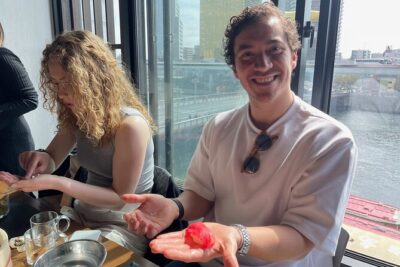
Sushi Making Tokyo Roll and Authentic Japanese Sushi Class
Read our review →
Tokyo: Roll and Authentic Sushi Making Class in Asakusa
Read our review →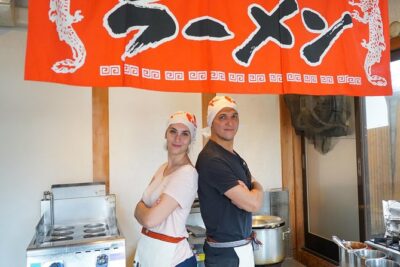
Ramen Cooking Class at Ramen Factory in Kyoto
Read our review →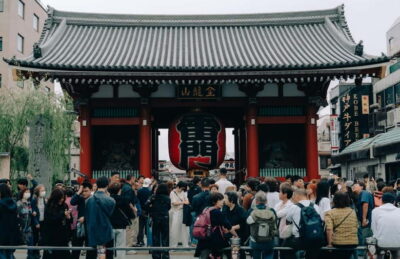
Tokyo: Sushi Making Class in a Happi Coat near a Famous Spot
Read our review →
Sushi Making Tokyo! Popular Maki Sushi & Japanese Sushi(+Recipe!)
Read our review →
Sushi Making Osaka Roll and Authentic Japanese Sushi Class
Read our review →
Tokyo Sushi Making Class in Tsukiji with Professional Chef
Read our review →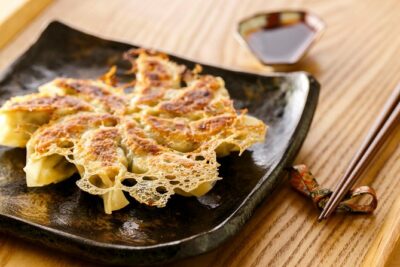
Ramen & Gyoza Cooking Class in Tokyo with Local Supermarket Visit
Read our review →Browse the lists this tour appears in