
Review · JAPANESE & SUSHI
Japanese Cooking Class and Cultural Experience Around Tokyo
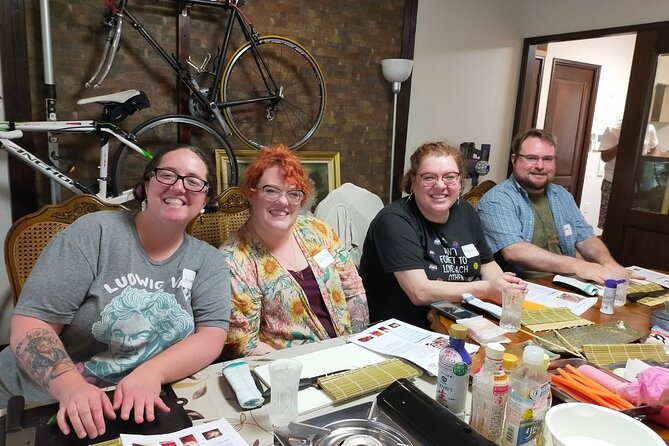
The best part of this experience is that you do not simply watch someone prepare Japanese food. You help make 3 to 4 home-style dishes, learn the base of dashi soup stock, and get a practical look at ingredients used in everyday Japanese kitchens. The class takes place in Chiba, not central Tokyo, so it gives you a local setting away from the city’s main sightseeing circuit.
I like the small maximum of eight people, which should leave room for hands-on work and questions. I also like the choice after lunch: sake tasting for adults, or Japanese tea and calligraphy for people who do not drink. The main consideration is that the exact menu depends on the booking situation, and Chiba Station is the meeting point rather than a central Tokyo address.
Key points to know before booking
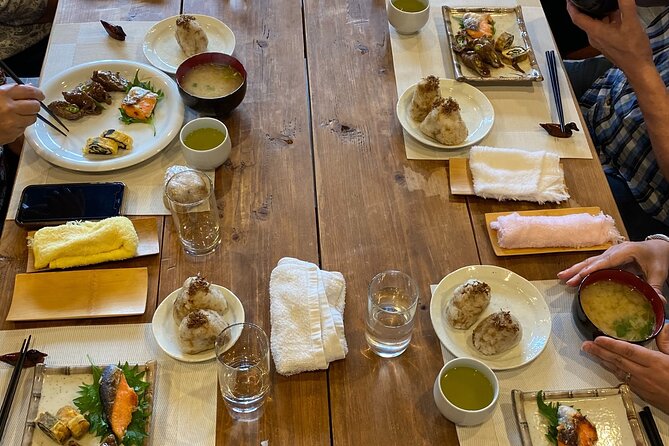
- Cook rather than simply watch: You take part in preparing several basic Japanese dishes and learn how dashi is made.
- Choose from four menu options: Menu A, B, C, or D can be requested when you book, though your choice is not guaranteed if another group joins.
- Three cultural activities in one: Finish with sake tasting, Japanese tea tasting, or calligraphy.
- A small group setting: The class accepts a maximum of eight people.
- Useful for families and mixed groups: Non-drinkers and people under the legal drinking age can choose tea or calligraphy instead.
- Plan ahead for allergies: Food allergies can be discussed before the class so the menu can be considered in advance.
A Japanese cooking lesson built around everyday food
This is not presented as a formal chef’s course or a restaurant meal with a quick demonstration. The focus is basic, authentic Japanese home cooking. That distinction matters. You are learning the sort of food that helps explain Japanese eating habits, rather than being shown only a special dish designed for tourists.
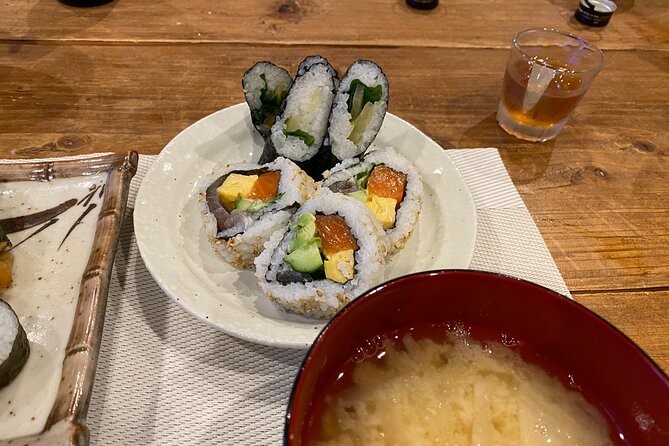
The cooking portion takes about two and a half hours. During that time, you work with the host to prepare three or four dishes. The exact recipes depend on the menu option selected from A, B, C, or D. The individual dishes are not specified in advance, so you should not book this expecting one particular recipe unless the host confirms it directly.
The class also covers Japanese ingredients and how to cook them. That broad approach can be more useful than memorizing one recipe. You get a sense of how a Japanese meal is put together, how stock supports the flavor of many dishes, and how ordinary ingredients can be handled at home.
The hands-on format is the main reason to choose this over a food tour. A food tour lets you sample several items, but it rarely gives you enough time to understand the preparation. Here, you participate in the cooking process and then eat what you have made. If you like learning by doing, the three-hour schedule gives the activity enough breathing room.
More Sushi and Japanese Classes in Japan:
- Sushi Making Tokyo Roll and Authentic Japanese Sushi Class
★ 5.0 · 3,971 reviews - Tokyo: Roll and Authentic Sushi Making Class in Asakusa
★ 4.9 · 1,957 reviews - Ramen Cooking Class at Ramen Factory in Kyoto
★ 5.0 · 1,937 reviews
Why learning dashi makes the class worthwhile
Dashi is one of the key building blocks of Japanese cooking. It is used as a soup stock and helps create the savory flavor associated with many Japanese dishes. Learning how to make it gives you a useful piece of context that you may miss when eating in restaurants.
The class specifically includes instruction about making dashi, Japanese ingredients, and cooking methods. That makes the lesson more than a collection of recipes. You are introduced to a basic idea behind the food, then use it in the dishes prepared during the session.
I would pay attention during this part even if you are more interested in the finished meal than in cooking technique. Stock-making can sound simple, but it helps explain why Japanese food often tastes balanced without relying on heavy sauces. The host’s emphasis is on basic methods, so this should suit beginners better than people looking for advanced professional training.
The description does not identify each ingredient or provide a fixed recipe list. That is useful to know before booking. If you have a strong preference, dislike a certain food, or want to learn a particular dish, contact the host before the class rather than assuming one of the four menu choices will match your plans.
Four menu choices, with an important condition
You can request menu A, B, C, or D when booking. The host prepares ingredients ahead of time, which means your selection needs to be made early enough for the class to be organized properly.
There is one catch. If you and your group are the only people attending that day, you can choose your preferred menu. If another group joins, the host may not be able to honor your selection. The class therefore offers menu choice, but not a firm private-menu guarantee.
That arrangement is fair for a small shared class, but you should treat the menu options as a request rather than a promise unless the host confirms otherwise. If the food itself is the main reason you are booking, this is the detail to clarify first.
The practical upside is that the host has time to prepare. This should make the cooking session smoother than an improvised lesson. It also explains why advance notice about allergies matters. Tell the host about food allergies before the class so the menu can be discussed.
A relaxed finish with sake, tea, or calligraphy
After the cooking and meal, the final half hour is devoted to a cultural activity. Adults can choose sake tasting, using locally made high-quality sake prepared for the session. This gives you a chance to compare the drink with the food you have just cooked, rather than treating sake as a separate bar stop.
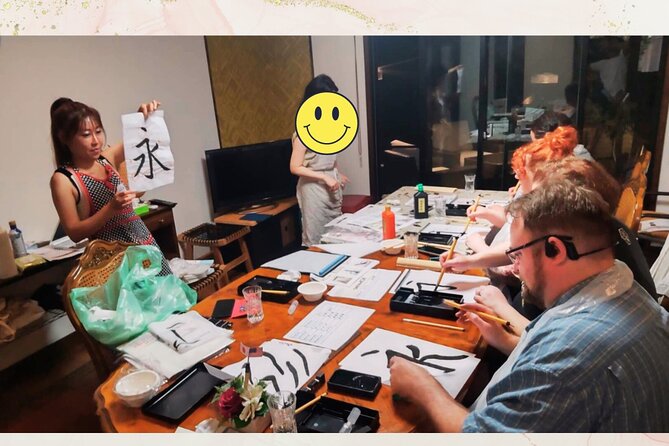
The sake option is not suitable for everyone, and the host offers two alternatives. You can choose Japanese tea tasting or calligraphy if you do not drink alcohol or are not an adult. The tea choice is especially useful for mixed groups, since nobody has to sit out while others taste sake.
The tea option also recognizes that Japanese tea is not limited to one kind of green tea. The experience description points out that Japan has many types of tea, though it does not name the varieties served. Expect an introduction to tea rather than a detailed tea-school ceremony unless the host tells you otherwise.
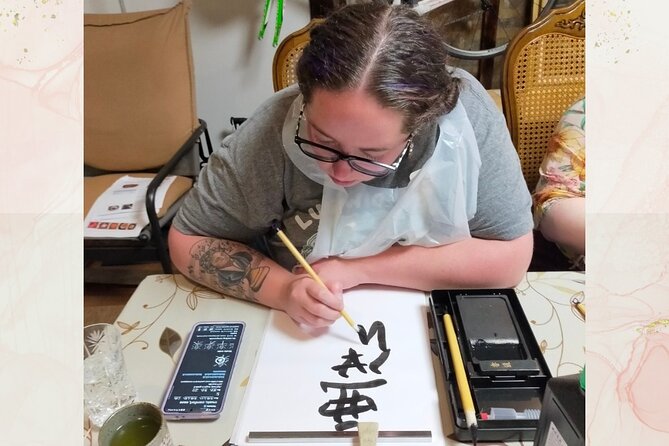
Calligraphy gives you something to do with your hands and take away in your memory. You can write your name or Kanji with special brushes and ink. A past session also included decorating a fan after learning the basic calligraphy skills. Since that fan activity is not listed as a guaranteed part of every booking, treat it as a possibility to confirm rather than a promise.
This final half hour helps the class feel broader than a cooking lesson. It also gives children and non-drinkers a real alternative, not a token substitute. For a group with different interests, that flexibility is one of the strongest reasons to consider this experience.
More Hands-On Workshops in Japan:
- Tokyo: Sushi Making Class in a Happi Coat near a Famous Spot
★ 4.9 · 1,377 reviews - Sushi Making Osaka Roll and Authentic Japanese Sushi Class
★ 5.0 · 1,220 reviews - Tokyo Sushi Making Class in Tsukiji with Professional Chef
★ 5.0 · 1,177 reviews - Ramen & Gyoza Cooking Class in Tokyo with Local Supermarket Visit
★ 5.0 · 823 reviews
What the small group size means for you
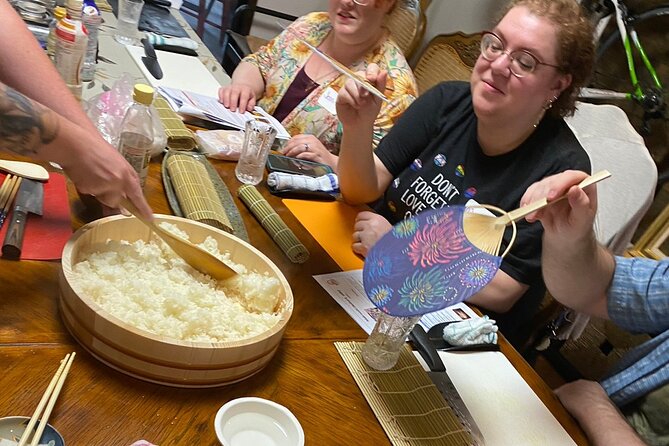
The maximum group size is eight people. That is small enough to make the class feel personal, while still allowing you to meet other people if the session is shared.
A small group should also help with the practical side of cooking. You will likely have a better chance to see demonstrations, ask about ingredients, and take part in the preparation than you would in a large workshop. The supplied information does not promise a private class, so do not assume you will have the host’s full attention throughout.
The host has been described as kind and engaging, with an approach that keeps the activity fun. That is important in a cooking lesson, where clear instructions and a relaxed mood can matter as much as the recipe. You do not need to arrive as a skilled cook. The class is built around basic home-style food.
The experience has also worked well for a group that combined cooking with calligraphy and fan decoration. That combination suggests the activity can suit people who want more than a meal, particularly families or friends with different levels of interest in Japanese food.
Getting to Chiba Station from Tokyo
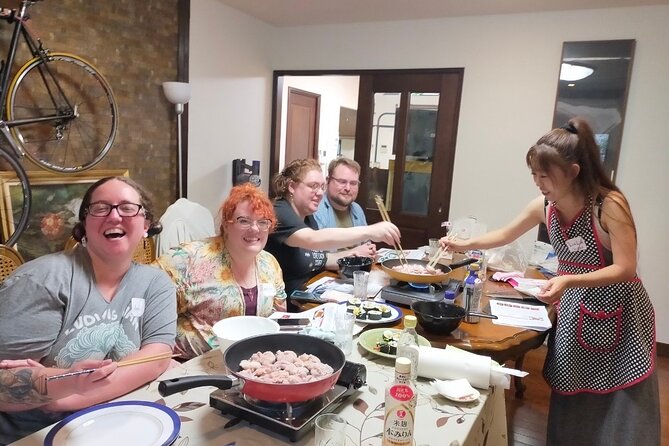
The meeting point is Chiba Station, at 1 Chome 1 Shinchiba, Chuo Ward, Chiba, postal code 260-0031. The activity is near public transportation, and pickup is offered, though the supplied details do not explain the pickup area, timing, or extra cost.
Chiba is separate from central Tokyo, so allow time to reach the meeting point. The description calls the experience a Tokyo-area activity, but the actual start is in Chiba. Check your route carefully and avoid scheduling this too close to a flight, long-distance train, or another fixed booking.
The station meeting point is practical once you are in Chiba. It avoids the confusion of searching for a private home or an unfamiliar side street. Still, ask for the exact meeting instructions after booking, especially if pickup is important to you.
The class lasts about three hours, split into approximately two and a half hours of cooking and thirty minutes of sake, tea, or calligraphy. That makes it a manageable half-day addition to a larger Japan itinerary. It is long enough to feel substantial without taking over an entire day.
Is $100.11 a fair price?
At $100.11 per person, this is not the cheapest way to eat Japanese food. You can buy a meal for far less. The value comes from the combination of instruction, hands-on preparation, the food you make, and the cultural activity afterward.
I would consider the price reasonable if you want personal participation rather than a simple restaurant visit. You are paying for roughly three hours, several dishes, an explanation of dashi and ingredients, and a choice of sake, tea, or calligraphy. The small maximum group size also supports the price, since a large class would offer less direct involvement.
The value is stronger for people who plan to cook Japanese food after returning home. Dashi and basic ingredient handling are more useful long-term than a single tasting. It is also a good fit for a group that wants one activity to serve several interests.
The price may feel less attractive if you are mainly looking for a high-end meal or a formal sake education. The food is home-style, and the lesson is basic by design. You should choose it for participation and cultural context, not for luxury dining.
Group discounts are offered, which may improve the cost for friends or family booking together. The exact discount is not stated, so check the total before assuming how much you will save.
Food allergies, age, and choosing the right ending
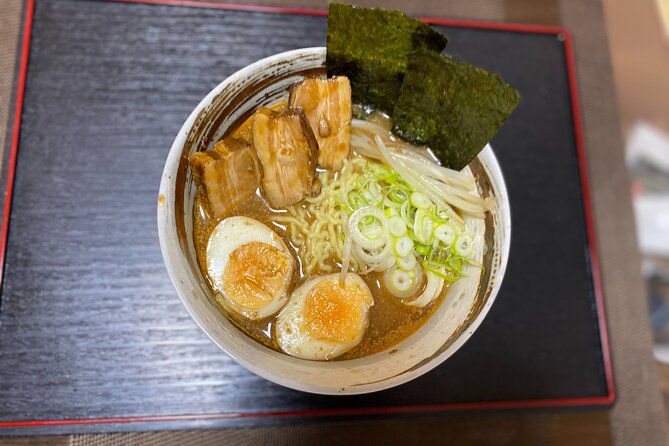
Food allergies should be reported in advance. The host can discuss the menus with you, but the information does not guarantee that every allergy can be accommodated. Give clear details before the class rather than waiting until you arrive.
The sake tasting is intended for adults. If you are not an adult, or simply do not want alcohol, choose Japanese tea tasting or calligraphy instead. This makes the activity suitable for a mixed-age group, though the booking should clearly state which ending you want.
The experience is best for people who enjoy a social, practical activity. You should be comfortable working around food, following basic instructions, and sharing the session if another group is booked. It is less suitable if you want a private chef, a fixed dish list, or a quiet meal with no group interaction.
Mobile tickets are available, and confirmation is normally provided within 48 hours, subject to availability. The activity requires a minimum number of participants, so a cancellation for that reason may lead to another date, another experience, or a full refund.
Free cancellation is available until 24 hours before the start time. After that point, the amount paid is not refunded, and changes made within 24 hours are not accepted. The cut-off uses local time, so check the time zone when making changes.
Should you book this Chiba cooking class?
Book it if you want to learn by cooking, not merely watch a demonstration. The dashi lesson, three or four home-style dishes, small group limit, and choice of sake, tea, or calligraphy give the session a useful mix of food and culture.
It is especially appealing for families, couples, and friends who want an activity everyone can join. The non-alcohol options are a real advantage, and the calligraphy portion can add a creative finish. Ask about fan decoration if that interests you, since it has been included in a previous session but is not guaranteed in the standard description.
Think twice if you need a fixed menu, a private class, or a central Tokyo meeting point. Chiba adds travel time, and menu choices may be limited if another group attends. For the right person, though, this is a practical way to connect Japanese cooking with everyday culture, at a price that can make sense when you take the full three-hour program into account.
FAQ
Where does the experience begin?
The meeting point is Chiba Station in Chuo Ward, Chiba, at 1 Chome 1 Shinchiba, postal code 260-0031.
How long does the class take?
The experience lasts approximately three hours. About two and a half hours are used for cooking, followed by thirty minutes of sake tasting, Japanese tea tasting, or calligraphy.
How many dishes will I cook?
You will prepare three to four Japanese home-style dishes with the host.
Can I choose the menu?
You can request menu A, B, C, or D when booking. If your group is the only group attending that day, you can choose your preferred menu. If another group joins, your choice may not be available.
What can I do instead of sake tasting?
You can choose Japanese tea tasting or calligraphy. These alternatives are available for people who do not drink alcohol and for people who are not adults.
Can food allergies be accommodated?
You should tell the host about food allergies in advance. The menus can then be discussed before the class.
What is the cancellation policy?
You can cancel at least 24 hours before the start time for a full refund. Cancellations or changes made less than 24 hours before the start time are not accepted for a refund.
Just added around Japan
- Cooking Class: Make a Local Delicacy in a Japanese House★ 5.0 · 7 reviews
- Culinary Home Cooking with Grandmothers – Vegan Friendly★ 5.0 · 5 reviews
- Famous Inari Sushi Making Experience in Toyokawa★ 5.0 · 4 reviews
- Nagoya Super Market Tour & Home Cooking Class with a Local, Akiko★ 5.0 · 10 reviews
- Tokyo: Tsukiji Market Walking Tour & Sushi Cooking Class★ 4.6 · 122 reviews
- Tokyo: Sushi Cooking Class with Sake Tasting★ 4.8 · 55 reviews
- Sushi-Making Experience★ 4.7 · 4 reviews
- Tokyo: Tsukiji Market Guided Tour & Sushi-Making Experience★ 4.4 · 11 reviews
Japanese & Sushi Cooking Classes, compared.
Sushi Making Tokyo Roll and Authentic Japanese Sushi Class
Read our review →
Tokyo: Roll and Authentic Sushi Making Class in Asakusa
Read our review →
Ramen Cooking Class at Ramen Factory in Kyoto
Read our review →
Tokyo: Sushi Making Class in a Happi Coat near a Famous Spot
Read our review →
Sushi Making Tokyo! Popular Maki Sushi & Japanese Sushi(+Recipe!)
Read our review →
Sushi Making Osaka Roll and Authentic Japanese Sushi Class
Read our review →
Tokyo Sushi Making Class in Tsukiji with Professional Chef
Read our review →
Ramen & Gyoza Cooking Class in Tokyo with Local Supermarket Visit
Read our review →Browse the lists this tour appears in