
Review · OSAKA
Three Types of Ramen Cooking Class in Osaka
Three bowls of ramen, one batch of handmade noodles, and a practical Japanese cooking lesson: that is the appeal here. At Sakura Cook, you prepare salt, soy sauce, and miso ramen, then sit down to eat what you made. Making the noodles yourself gives the class more substance than a simple food demonstration.
I like the small-group format, which keeps the cooking personal, and I like that the printed recipe lets you repeat the meal at home. The instructors, including Fumi, Fumiyo, Keigo, and Keiyo, are praised for clear English and patient guidance. The main consideration is the food quantity: the total noodles amount is 100 grams, but you prepare three styles, so the class is a tasting meal rather than three full restaurant-size bowls.
Key points to know before booking
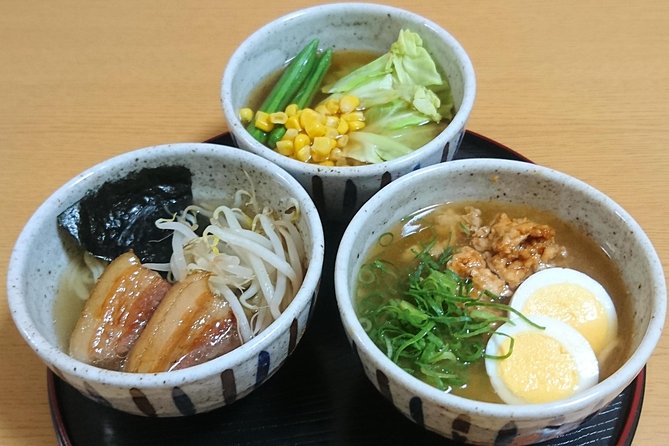
- Make three ramen styles: Prepare salt ramen with pork and seaweed, soy sauce ramen with cabbage and corn, and miso ramen with spicy chicken and egg.
- Start with flour and noodles: The class teaches handmade noodle preparation from scratch, not just broth assembly.
- Small, friendly setting: The experience is designed for a small group of up to eight, although the additional information lists a maximum of 12 participants.
- A full meal is included: Ingredients, toppings, dessert, seasonal fruit, and green tea are provided.
- Suitable for beginners: The instructions are structured for cooks of all skill levels, including children who can follow the steps.
- Take the lesson home: You receive a printed recipe, and the cooking methods are intended to be manageable in a home kitchen.
Three ramen bowls in 150 minutes
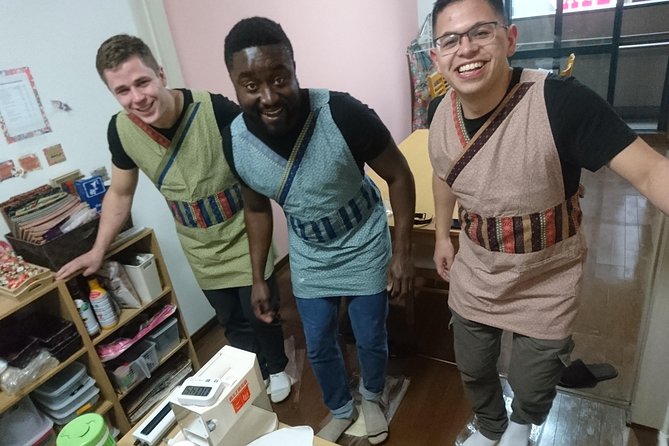
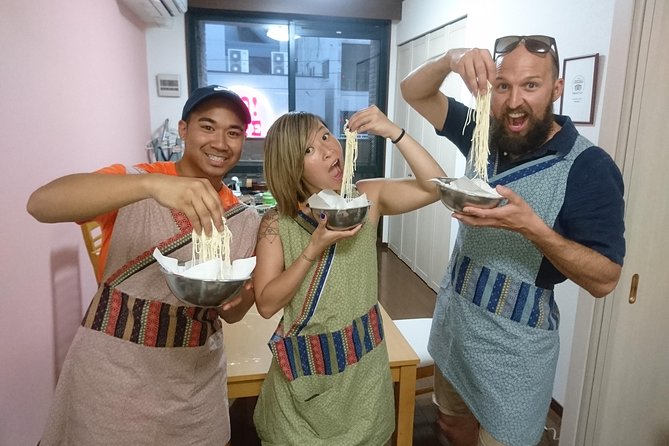
The class runs for about two and a half hours, which is enough time to cook without turning the session into a rushed race against the clock. You begin by putting on an apron, then move into handmade noodle preparation.
That opening matters. Many cooking classes let you stir a sauce or garnish a finished dish. Here, you work on one of ramen’s central parts: the noodles. The total noodle quantity is 100 grams, shared across the three ramen styles, so you are learning the technique and comparing flavors rather than preparing three large meals.
The class then moves through the soups and toppings. You make the components for each bowl, cook the proteins and vegetables, and learn how small changes in seasoning create very different results. The structure gives you a useful lesson in how ramen works: noodles provide the base, broth sets the character, and toppings change the balance of texture and flavor.
You are not expected to bring kitchen equipment or ingredients. Everything needed for the cooking portion is supplied, including utensils and equipment. That makes this a simple addition to an Osaka day, especially if you are staying near public transportation and do not want to shop for specialty items first.
More Sushi and Japanese Classes in Osaka:
- Sushi Making Osaka Roll and Authentic Japanese Sushi Class
★ 5.0 · 1,220 reviews - Osaka Sushi Making Experience
★ 5.0 · 400 reviews - Osaka: Ramen and Gyoza Cooking Class in Dotonbori
★ 5.0 · 378 reviews
Salt ramen with pork, sprouts, and seaweed
The first bowl is salt ramen. Its toppings include juicy sweet pork, bean sprouts, and seaweed.
Salt ramen is a good starting point because it lets the broth and noodles do more of the work. The toppings bring contrast: pork adds richness, bean sprouts add crunch, and seaweed gives the bowl a familiar savory note. You can pay attention to how a lighter seasoning works with the noodles before moving on to the stronger flavors later in the class.
This part also shows why the lesson is more useful than simply eating ramen in Osaka. You are not only learning a recipe. You are seeing how a small set of toppings changes the character of a bowl, and you can later adapt the same approach with ingredients available at home.
Soy sauce ramen with cabbage and corn
Next comes soy sauce ramen, served with steamed cabbage, green vegetables, and sweet corn.
The toppings here shift the balance. Cabbage and greens keep the bowl fresh, while corn brings a mild sweetness. After the salt ramen, the soy sauce version gives you a clear comparison between two familiar Japanese seasoning bases.
The class is designed around comparison, which is its best teaching feature. You do not have to remember how one broth tasted several days earlier. You can try all three during one sitting, then decide which base you would most like to recreate at home.
Miso ramen with spicy chicken and egg
The final style is miso ramen, with spicy chicken, boiled egg, and green onion.
This is likely to be the boldest of the three bowls. Miso brings a fuller savory flavor, while the chicken and green onion add further layers. Chili oil may also be available as a finishing touch. One useful warning from the cooking guidance is to add it carefully. A generous pour can leave plenty of heat on your lips after the meal.
The boiled egg is another small but useful lesson. Ramen toppings are not random decoration. Each adds flavor, color, or texture, and the class helps you see how the whole bowl is assembled.
More Hands-On Workshops in Osaka:
- Osaka Cooking Class: Okonomiyaki &Japanese cuisines experience
★ 5.0 · 261 reviews - Osaka: Roll and Authentic Sushi Making Class in Dotonbori
★ 4.9 · 239 reviews - Ramen and Gyoza Cooking Class in Osaka
★ 5.0 · 202 reviews - Osaka: Cooking Class Ramen & Gyoza Course in Nanba
★ 4.9 · 86 reviews
What the hands-on cooking is really like
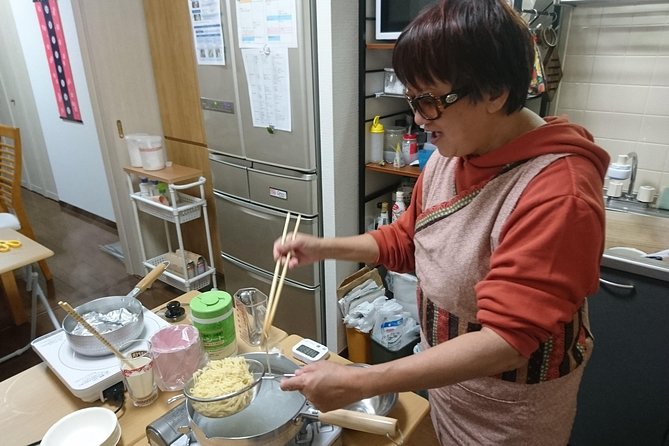
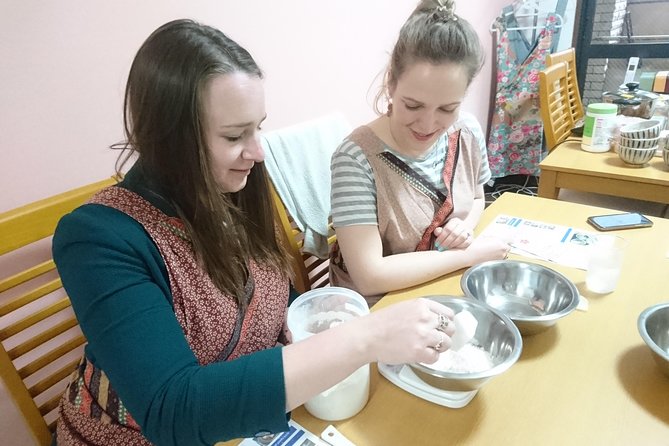
You should expect to participate throughout the session. You make the noodles, prepare the broths, and work on the toppings rather than watching a chef do everything. The instructors explain each step and give practical cooking tips as you go.
That makes the class approachable for people who do not cook often. One participant who described being unable to cook still managed to complete the dishes successfully, and another noted that the instructions were simple enough for a 10-year-old to follow. I would still expect to stand, handle food, and keep track of several components, but you do not need advanced kitchen skills.
The teaching style is another strength. Fumi is frequently praised for being patient, entertaining, and easy to follow. Fumiyo is also noted for offering careful guidance, while Keigo and Keiyo are mentioned as warm and attentive instructors. The exact teacher may depend on the date, but the experience clearly relies on direct instruction rather than a self-guided setup.
English ability is important in a cooking class, and the instructors are described as speaking good English. That should make it easier to ask about ingredients, understand cooking steps, and follow timing without guessing.
A small group, with one important size detail
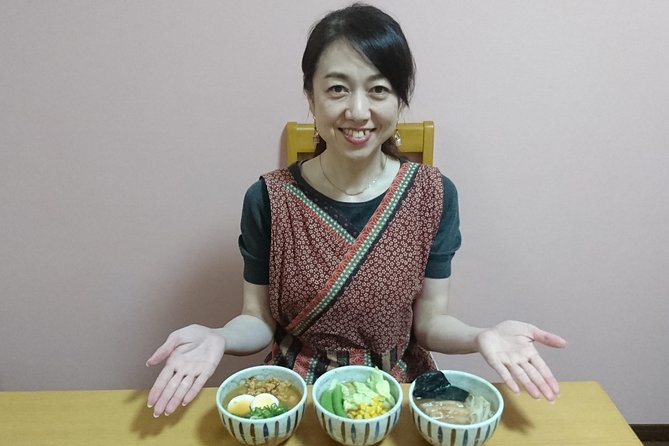
The class is advertised as a small-group activity limited to eight people. That is a useful size for cooking because you can receive help without feeling like one person in a large demonstration.
The additional tour information lists a maximum of 12 participants, so I would treat eight as the intended small-group limit and 12 as the upper operational limit. If an intimate class is essential for you, confirm the expected group size before booking.
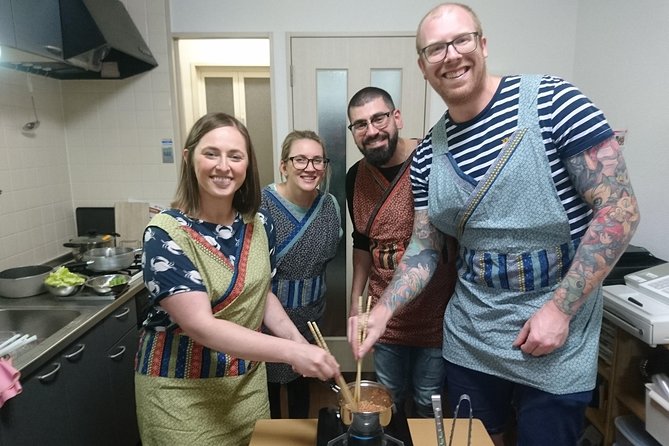
Some sessions may be even smaller. Couples and family groups have had the class with only a few people, creating a more private feel. Two instructors may also be available for a mini group, which is helpful when children or first-time cooks need extra attention.
The setting is air-conditioned, according to one detailed account, which is a welcome point during Osaka’s hot months. The meeting point is Banix Kitahorie, at 3-chōme 6-2 Kitahorie in Osaka’s Nishi Ward. The activity ends back at the same meeting point. You arrange your own way there and back, since hotel pickup and drop-off are not included.
What you eat, and what comes afterward
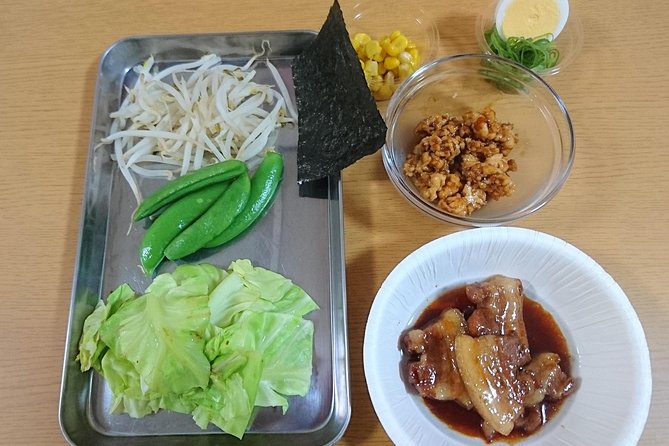
The meal is part of the class, not an extra purchase. You cook and eat the three ramen styles, then finish with dessert, seasonal fruit, and green tea.
The three bowls are tasting portions rather than three full servings. Even so, the food can be filling because you are eating noodles, meat, vegetables, egg, and broth in one sitting. One person found the portions more than enough, particularly after the time spent cooking and sampling each dish.
At the end, the dishes are set out with chopsticks and you say itadakimasu before eating. It is a small detail, but it gives the meal a sense of closure and connects the cooking lesson to ordinary Japanese dining customs.
Vegetarian requirements may be possible with advance communication. A vegetarian participant had the ramen adjusted, including broths without animal products. Do not assume every dietary request can be handled automatically. Ask before booking and receive confirmation so the instructor has time to prepare.
Why the $79.28 price can make sense
At $79.28 per person, this is not the cheapest way to eat ramen in Osaka. A restaurant bowl costs far less, and the class takes about two and a half hours that could otherwise be spent sightseeing.
The value comes from what is included. You receive a meal, dessert, green tea, ingredients, equipment, instruction, and a printed recipe. You also get three flavor profiles and a noodle-making lesson in one sitting. If you enjoy cooking or want a food activity with something to show for it later, the price is easier to justify.
I would not book this solely for quantity. The noodle amount is 100 grams total, divided among the three styles, and the bowls are part of a lesson. Book it for participation, instruction, and the chance to recreate the recipes at home.
The strong rating of 4.9 from 119 evaluations, with 100 percent recommending the experience, supports the idea that the class is consistently well received. Still, ratings cannot guarantee that every class will have the same instructor or group size. The clearest reason to book is the format itself: three ramen bases, fresh noodles, and a complete meal in one session.
Who will get the most from this class
This is a particularly good fit for ramen fans who want to understand the work behind the bowl. You will learn more than the name of a seasoning. You will handle noodles, toppings, and broths, then compare the results immediately.
Families should also consider it. The steps are simple enough for children who can follow directions, and the food gives younger participants a clear reward at the end. It is also a pleasant choice for couples, since a small booking may feel almost private.
You do not need to be an experienced cook. The class has worked well for beginners and for people who rarely cook. At the same time, experienced home cooks can pick up useful details about Japanese ingredients, broth seasoning, topping combinations, and noodle preparation.
This may be less suitable if you want a quiet food tasting with no hands-on work, or if you need a large amount of food. It is also not the right pick if your Osaka schedule has no spare two-and-a-half-hour block.
Practical details that matter in Osaka
Confirmation is sent within 48 hours of booking, subject to availability. The activity is near public transportation, but hotel transfers are not provided, so allow enough time to reach Banix Kitahorie.
Bring yourself, rather than kitchen gear. Ingredients, utensils, and equipment are included. Personal expenses and additional drinks are not included, although green tea is part of the class.
Free cancellation is available when you cancel at least 24 hours before the start time. Cancellations or changes made less than 24 hours ahead are not accepted for a refund, and the cut-off follows Osaka local time.
The mobile ticket is convenient for a day of sightseeing. Keep the meeting address handy, since the experience starts and finishes at the same place.
Should you book Sakura Cook?
I would book this class if you want an active food experience rather than another restaurant meal. The combination of handmade noodles, three distinct ramen styles, patient English-speaking instruction, and a recipe to take home gives the session real value.
It is especially worthwhile for families, couples, beginner cooks, and anyone curious about Japanese home cooking. Add a note about vegetarian needs before booking, and confirm group size if a very small class matters to you.
Skip it if you are looking only for a quick lunch, a full portion of one ramen style, or the lowest-cost meal in Osaka. For everyone else, Sakura Cook offers a practical, tasty lesson with enough variety to make the two and a half hours feel well spent.
FAQ
How long does the ramen cooking class last?
The class lasts approximately 2 hours and 30 minutes.
How many types of ramen do you make?
You make three types: salt ramen, soy sauce ramen, and miso ramen.
Do you make the ramen noodles from scratch?
Yes. Handmade noodle preparation is part of the class.
What toppings are included?
Salt ramen includes sweet pork, bean sprouts, and seaweed. Soy sauce ramen includes steamed cabbage, green vegetables, and sweet corn. Miso ramen includes spicy chicken, boiled egg, and green onion.
Is food included in the price?
Yes. Ingredients for the meal, the ramen you prepare, dessert, seasonal fruit, and green tea are included.
Is cooking equipment provided?
Yes. Kitchen utensils and equipment are provided, so you do not need to bring your own.
Where does the class start and finish?
The class starts and ends at Banix Kitahorie, 3-chōme 6-2 Kitahorie, Nishi Ward, Osaka, 550-0014.
Can I cancel for a full refund?
Yes, if you cancel at least 24 hours before the experience start time. Cancellations or changes made less than 24 hours ahead are not eligible for a refund.
Just added around Osaka
- Osaka Street Food Festival :Takoyaki&Okonomiyaki for Families★ 5.0 · 13 reviews
- Takoyaki DIY Cooking in the Heart of Osaka★ 5.0 · 7 reviews
- Sushi Making Osaka Omakase Cooking Class in Japan★ 5.0 · 4 reviews
- SUSHI Making Experience at Restaurant★ 5.0 · 8 reviews
- Cooking Class for Ramen and Gyoza in a Quiet Old Osaka House★ 5.0 · 3 reviews
- Sushi and Japnese foods cooking class in Osaka★ 5.0 · 51 reviews
- Ramen and Gyoza Cooking Class in Osaka Dotonbori★ 5.0 · 73 reviews
- Osaka Market Tour & Cooking Class with Local Expert Masato/Shohei★ 5.0 · 7 reviews
Japanese & Sushi Cooking Classes, compared.
Sushi Making Tokyo Roll and Authentic Japanese Sushi Class
Read our review →
Tokyo: Roll and Authentic Sushi Making Class in Asakusa
Read our review →
Ramen Cooking Class at Ramen Factory in Kyoto
Read our review →
Tokyo: Sushi Making Class in a Happi Coat near a Famous Spot
Read our review →
Sushi Making Tokyo! Popular Maki Sushi & Japanese Sushi(+Recipe!)
Read our review →
Sushi Making Osaka Roll and Authentic Japanese Sushi Class
Read our review →
Tokyo Sushi Making Class in Tsukiji with Professional Chef
Read our review →
Ramen & Gyoza Cooking Class in Tokyo with Local Supermarket Visit
Read our review →Browse the lists this tour appears in