
Review · OSAKA
Ramen and Gyoza Cooking Class in Osaka Dotonbori
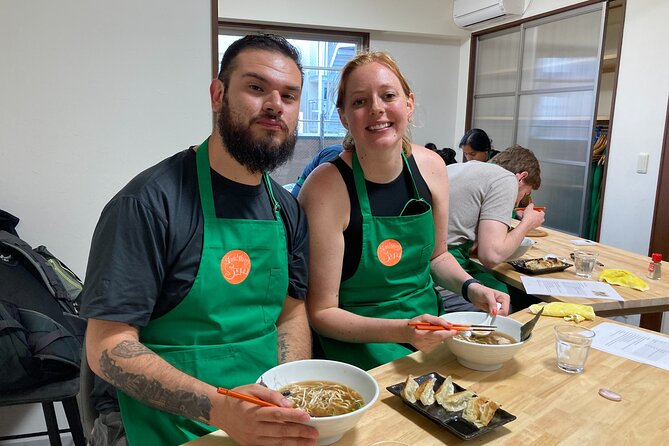
Making ramen from a packet is easy. Making the noodles and soup from scratch is another matter, and that is the useful heart of this Osaka class. You knead the noodles by hand, prepare a fish-and-chicken ramen base, and fold gyoza before sitting down to eat what you made.
I like the small maximum of eight people, which gives instructors time to correct your technique. I also like the practical recipes and ingredient lessons, including differences among miso, soy sauce, and fish flakes. The main drawback is that gluten-free cooking is not available, and the class runs from 1:30 to about 4:30 pm, so you may want a light lunch first.
Key points to know before booking
- You make the ramen noodles by hand: This is the most memorable part of the class and gives you a recipe you can try again at home.
- The broth is made from fish and chicken: Tell the cooking team ahead of time if you need a vegetarian, pescatarian, or no-fish option.
- You fold your own gyoza: The filling is prepared in class, while the wrappers are provided ready-made.
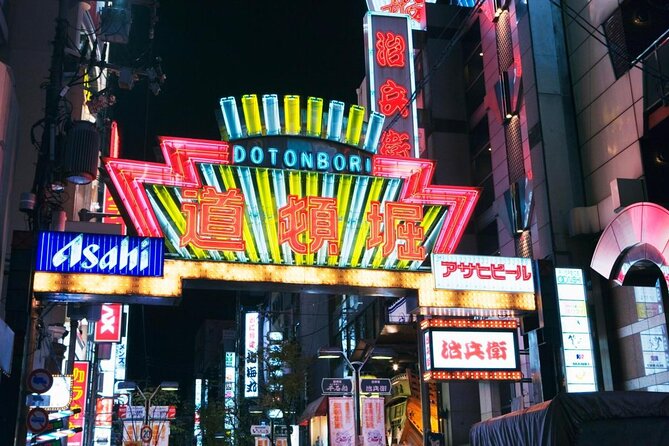
- The class takes place in Dotonbori: You are near one of Osaka’s best-known food districts, though the cooking room is inside a residential apartment building.
- English instruction is included: Miki, Jun, Kassa, Marina, and other instructors have led clear, step-by-step classes, according to the available details.
- You leave with recipes: The printed instructions make this more than a meal. You can try the dishes again at home.
Why this cooking class works in Osaka’s food capital
Osaka is famous for eating well, but its food culture is not limited to restaurants and street stalls. Ramen and gyoza are everyday Japanese favorites, often ordered together as a simple meal. This class lets you see the work behind that familiar pairing.
The setting is also well chosen. Cooking Sun is in Shimanouchi, close to Dotonbori in Osaka’s Chuo Ward. You are not being taken out to a distant cooking school. Instead, you spend the afternoon in the middle of Osaka’s food district, then finish with a homemade meal.
That location is convenient, but you should allow extra time to find the exact entrance. The address is 2-chome 9-14 Shimanouchi, room 807, in a residential building. Go to the eighth floor by elevator and look for the room. Searching for the business name alone can send your map to the wrong spot, so use the full street address in your navigation app.
The cooking room itself is described as clean, modern, and well equipped. It is a working apartment kitchen rather than a grand culinary school, which suits the homestyle nature of the meal.
More Sushi and Japanese Classes in Osaka:
- Sushi Making Osaka Roll and Authentic Japanese Sushi Class
★ 5.0 · 1,220 reviews - Osaka Sushi Making Experience
★ 5.0 · 400 reviews - Osaka: Ramen and Gyoza Cooking Class in Dotonbori
★ 5.0 · 378 reviews
The three-hour schedule, from dough to dinner
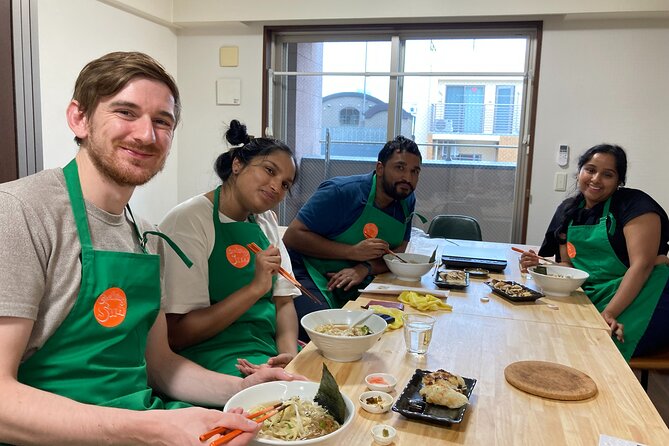
The class starts at 1:30 pm and lasts about three hours. You return to the meeting point at the end, with the cooking and meal taking place in the same location.
The exact order of the tasks may vary, but the class covers several connected stages. You do not simply watch someone prepare ramen and then eat it. You handle the ingredients, follow the instructions, and build the dishes piece by piece.
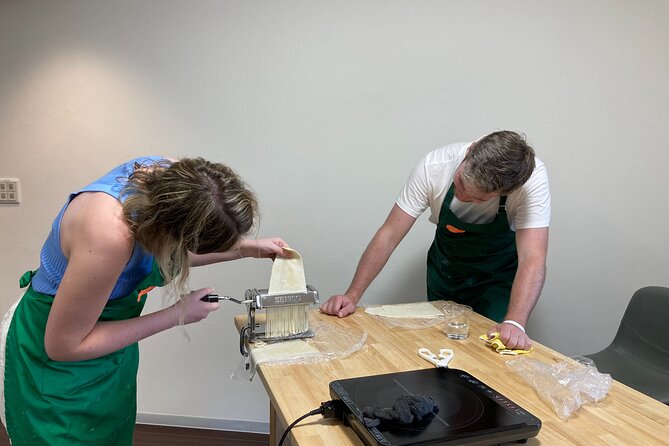
The ramen begins with the noodles. Kneading dough by hand gives you a feel for the texture and effort involved. It is a simple task, but not a quick one. One participant noted that making ramen was more tedious than expected, while also finding it rewarding and fun. That is a fair warning: this is a hands-on class, not a demonstration with a few symbolic stirs.
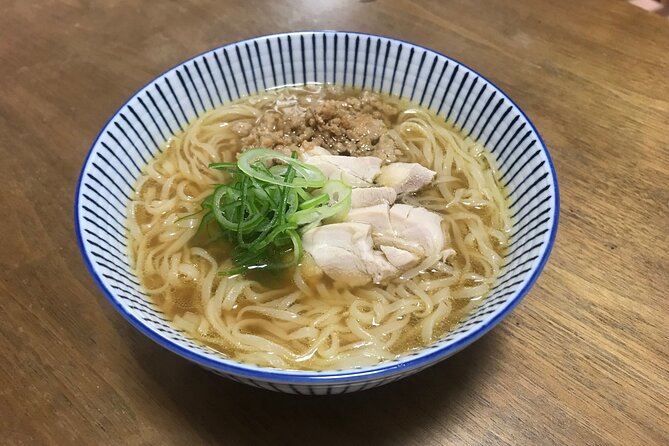
Next comes the soup. The ramen base uses fish and chicken, with lessons about ingredients such as fish flakes, soy sauce, and different kinds of miso. These explanations matter because Japanese cooking often depends on small changes in seasoning. You learn not only what goes into the pot, but why one ingredient is used instead of another.
The finished ramen can be adjusted with different toppings. That gives you some control over the final bowl and helps you think about how to adapt the recipe at home. The class also covers substitutions for ingredients that may be easier to find in your own country.
The gyoza work is different. You chop and mix the filling, then fold the dumplings using prepared wrappers. Folding looks simple until you try to make several neat parcels in a row. The instructors guide you through the process and help when a dumpling turns out less tidy than planned.
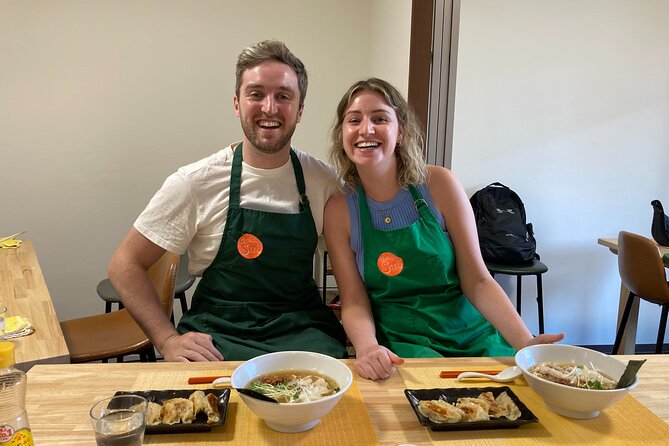
At the end, you eat the ramen and gyoza you prepared. The timing makes this an early dinner or a substantial late lunch. Since the food is served around 3:30 pm to 4:30 pm, a small meal before class is sensible if you tend to get hungry.
What you actually learn about ramen and gyoza
The best part of the class is its practical value. You are not only learning two Japanese recipes. You are learning how to make choices within those recipes.
For ramen, the class covers noodles, broth, seasoning, and toppings. You can ask how to adjust the dish for different tastes and dietary needs. That is useful because ramen recipes can become complicated at home if every ingredient must be imported. The instructors explain possible replacements, helping you understand the role of each item rather than treating the recipe as a fixed list.
The fish flakes and stock ingredients also offer a glimpse into everyday Japanese flavor building. You may already know ramen as a salty, rich bowl, but the class shows how that flavor develops through broth and seasoning.
Gyoza teaches a different lesson: balance and repetition. The filling needs the right mix of ingredients, and the dumplings need enough filling without becoming difficult to close. You prepare a chicken gyoza filling in the standard class, then fold the dumplings yourself.
The recipes are printed for you to take home. That small detail adds real value. A cooking class can be enjoyable for one afternoon and then disappear from memory. A recipe sheet gives you a chance to recreate the meal later, provided you can find the needed ingredients.
The instructors and the feel of the group
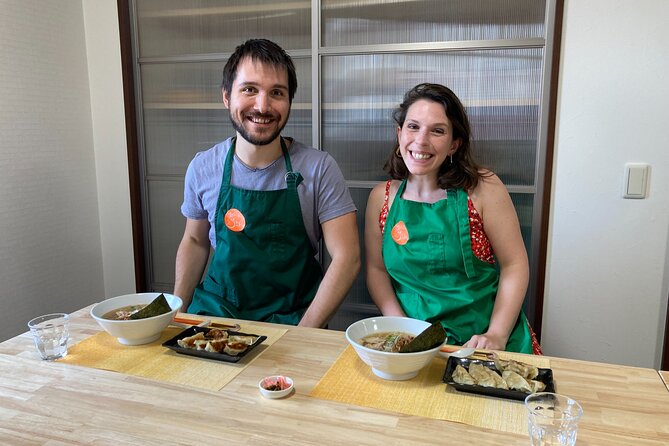
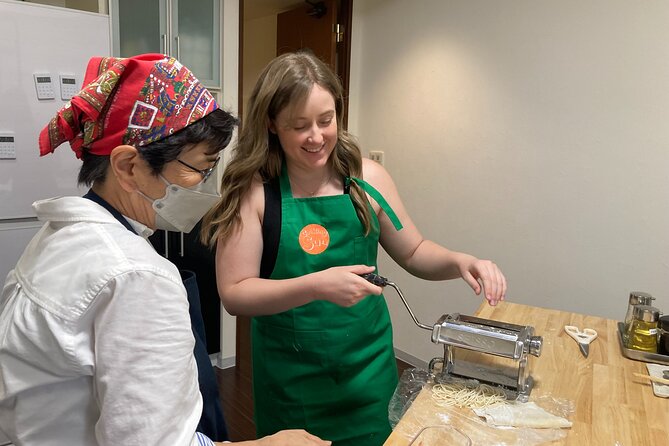
English-speaking instruction is included, and the teaching style is a strong part of the experience. Miki and Jun are named as instructors, while Kassa and Marina are also praised for their patient, welcoming teaching. The available descriptions also refer to instructors and helpers working together, which is useful for a class of up to eight people.
The teaching is step by step. Instructors explain the ingredients, demonstrate the methods, then give you time to work. They also correct mistakes without making the process feel like a test. That matters for younger cooks and anyone who rarely prepares food.
The small size helps here. With a maximum of eight people, you should have a reasonable chance to ask questions and receive individual help. Some bookings may have only one family or a small group, while others can include people from different countries. Either way, the class is designed to be social without becoming a large demonstration.
Families have a good reason to consider it. Teenagers and a 12-year-old have taken part successfully, including children who do not usually cook. The tasks have enough movement and variety to hold attention, and the final meal gives everyone a clear reward for the work.
This is also suitable if you already cook at home. The class is not limited to beginners, since the explanations about miso, soy sauce, fish flakes, and substitutions offer useful details even for experienced cooks.
More Hands-On Workshops in Osaka:
- Osaka Cooking Class: Okonomiyaki &Japanese cuisines experience
★ 5.0 · 261 reviews - Osaka: Roll and Authentic Sushi Making Class in Dotonbori
★ 4.9 · 239 reviews - Ramen and Gyoza Cooking Class in Osaka
★ 5.0 · 202 reviews - Three Types of Ramen Cooking Class in Osaka
★ 5.0 · 119 reviews
Dietary needs and the important limits
You can request a vegetarian, pescatarian, or no-fish option, but you must leave a note when booking. Do not wait until you arrive. The standard ramen base includes fish and chicken, so the kitchen needs advance notice to adjust the preparation.
The class does not offer a gluten-free option. That is the clearest reason for some people not to book. Ramen noodles and gyoza wrappers normally contain wheat, and the experience is not recommended for anyone with gluten intolerance.
Food allergies may be accommodated in some cases. A family with a child’s food allergies received help so the child could take part, but you should still provide exact information when booking. The supplied details do not promise that every allergy can be managed, so ask before committing if your restrictions are serious.
The cooking team can also help you tailor flavors. You may be able to adjust toppings and other elements, but the class is still built around Japanese ramen and gyoza. It is not a fully personalized private menu.
Is $71.35 good value?
At $71.35 per person, this is more expensive than simply ordering ramen and gyoza in Osaka. That comparison is fair, but it misses what you are paying for.
The price includes all ingredients, utensils, the hands-on lesson, an English-speaking instructor, recipes, taxes, and fees. You also receive a full meal at the end. For a three-hour activity in central Osaka, the cost is reasonable if you want practical instruction rather than a quick food tasting.
The value improves if you expect to cook the recipes again. The class explains techniques and ingredient choices that you can carry into other meals. It also removes the uncertainty of trying to make noodles or gyoza alone for the first time.
The value is weaker if you only want to eat ramen. Osaka has plenty of restaurants where you can order ramen and gyoza with no preparation involved. This class asks you to spend much of the afternoon working, chopping, kneading, and folding.
You also need to remember that extra drinks and food are not included. The meal is part of the class, but anything beyond what is provided costs extra.
Timing, transport, and finding room 807
The class is near public transportation and ends where it begins. That keeps the plan simple, especially if you are spending the evening around Dotonbori.
Still, the entrance can be confusing. This is an apartment-style building, not a clearly marked restaurant. Use the full address rather than relying only on Cooking Sun or Sun Cooking in your map app. Once you find the building, take the elevator to the eighth floor and locate room 807.
Arrive with enough time to solve the address problem. A delayed arrival could mean missing the early explanations, and the class has several steps that build on one another.
The 1:30 pm start fits well between morning sightseeing and an evening meal. Since cooking finishes around 3:30 pm according to one timing estimate, or takes close to three hours overall, plan your dinner accordingly. You may be full after the class, but Osaka’s food streets make an evening snack hard to resist.
Free cancellation is available if you cancel at least 24 hours before the start time. Cancellations or changes made within 24 hours are not refunded or accepted.
Who should book this Osaka cooking class?
I would recommend it most strongly to:
- Families with children or teenagers who enjoy practical activities
- People who want an edible souvenir they can recreate at home
- First-time cooks who prefer patient, guided instruction
- Home cooks curious about Japanese ingredients and seasoning
- Visitors who want a break from restaurant meals
- Anyone staying near Dotonbori who can spare a full afternoon
You should think twice if you need gluten-free food, dislike fish-based stock, or want a very short activity. You should also consider your energy level. Kneading noodles, chopping filling, and folding dumplings takes more effort than sitting at a counter and watching a chef.
The class is a better fit for curious eaters than for people seeking a polished fine-dining lesson. Its appeal is the chance to understand familiar Japanese dishes through your own hands.
Should you book the ramen and gyoza class?
Book it if you want to leave Osaka with more than restaurant memories. The small group, clear English instruction, printed recipes, and hands-on noodle work give the afternoon a useful shape. The meal at the end is satisfying because you made every main part yourself.
The strongest reason to choose this class is the combination of fresh ramen noodles, homemade broth, and folded gyoza in one session. The main reasons to skip it are the lack of a gluten-free option and the slightly tricky apartment location.
For most food-focused visitors, especially families and home cooks, I think the $71.35 price is justified. Bring a light appetite, use the full address, note your dietary needs in advance, and expect to work for your bowl.
FAQ
Where does the ramen and gyoza class take place?
The class takes place at Cooking SunJapan, 542-0082 Osaka, Chuo Ward, Shimanouchi, 2-chome 9-14, room 807. It is near Dotonbori and public transportation.
What time does the class start?
The class starts at 1:30 pm.
How long does the activity last?
The activity lasts approximately three hours and ends back at the meeting point.
What dishes will I make?
You will make ramen and gyoza. The ramen noodles and soup are prepared from scratch, while the gyoza filling is made in class and folded into prepared wrappers.
Is the class taught in English?
Yes. An English-speaking instructor is included.
How many people can join the class?
The activity has a maximum of eight participants.
Is a vegetarian or pescatarian option available?
Yes. Vegetarian, pescatarian, and no-fish options can be requested. Leave a note when booking.
Is a gluten-free option available?
No. A gluten-free option is not available, and the class is not recommended for people with gluten intolerance.
What is included in the price?
The price includes ingredients, utensils, the hands-on ramen and gyoza class, an English-speaking instructor, recipes to take home, fees, and taxes. Extra food or drinks are not included.
Just added around Osaka
- Osaka Street Food Festival :Takoyaki&Okonomiyaki for Families★ 5.0 · 13 reviews
- Three Types of Ramen Cooking Class in Osaka★ 5.0 · 119 reviews
- Takoyaki DIY Cooking in the Heart of Osaka★ 5.0 · 7 reviews
- Sushi Making Osaka Omakase Cooking Class in Japan★ 5.0 · 4 reviews
- SUSHI Making Experience at Restaurant★ 5.0 · 8 reviews
- Cooking Class for Ramen and Gyoza in a Quiet Old Osaka House★ 5.0 · 3 reviews
- Sushi and Japnese foods cooking class in Osaka★ 5.0 · 51 reviews
- Osaka Market Tour & Cooking Class with Local Expert Masato/Shohei★ 5.0 · 7 reviews
Japanese & Sushi Cooking Classes, compared.
Sushi Making Tokyo Roll and Authentic Japanese Sushi Class
Read our review →
Tokyo: Roll and Authentic Sushi Making Class in Asakusa
Read our review →
Ramen Cooking Class at Ramen Factory in Kyoto
Read our review →
Tokyo: Sushi Making Class in a Happi Coat near a Famous Spot
Read our review →
Sushi Making Tokyo! Popular Maki Sushi & Japanese Sushi(+Recipe!)
Read our review →
Sushi Making Osaka Roll and Authentic Japanese Sushi Class
Read our review →
Tokyo Sushi Making Class in Tsukiji with Professional Chef
Read our review →
Ramen & Gyoza Cooking Class in Tokyo with Local Supermarket Visit
Read our review →Browse the lists this tour appears in