
Review · OSAKA
Osaka Cooking Class: Okonomiyaki &Japanese cuisines experience
Osaka’s food culture makes the most sense when you are standing over a hot plate, turning a savory pancake or rolling a takoyaki ball. This small cooking class in Yayo’s home gives you that chance, with hands-on work rather than a demonstration from across the room. You prepare okonomiyaki, takoyaki, miso soup, and several extras, then sit down to eat the results.
I like two things right away: the class is limited to eight participants, and Yayo keeps the lesson personal, friendly, and practical. You also get useful instruction for cooking Japanese food at home, including dashi, the broth that gives many dishes their basic flavor. The main consideration is the setting: this is a home-based class in a small studio, not a large professional cooking school, so arrive on time and expect an intimate space.
Key points to know
- Yayo teaches in her own Osaka home, creating a relaxed setting with time for questions and conversation.
- You prepare several Japanese staples, including okonomiyaki, takoyaki, miso soup, and often tamagoyaki, taiyaki, matcha, or other small additions.
- The class lasts about 2.5 hours, long enough to cook, eat, and learn the background of the dishes.
- The group maximum is eight people, though a quiet booking period can feel almost private.
- Optional sake and beer pairings add a tasting element to the meal.
- Vegetarian and pescatarian options are available by request, but you need to mention this when booking.
Why this Osaka cooking class feels different
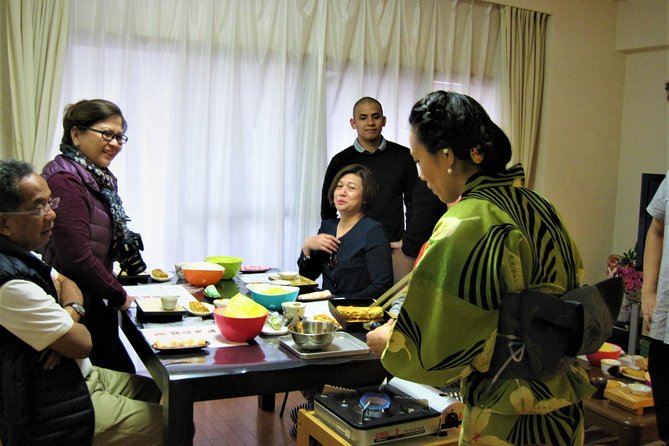
Many food activities in Osaka take place in markets, restaurants, or busy shopping streets. This one takes you into a local home, where the mood is slower and more personal. Yayo teaches from her own kitchen, explains how the ingredients fit together, and gives you time to handle the food yourself.
That home setting matters. Japanese cooking can look simple, but small choices affect the result. The amount of dashi, the texture of the batter, the heat under the pan, and the timing of the bonito flakes all change what lands on your plate. You are not just watching someone make lunch. You are learning the small decisions that help you repeat the dish later.
Yayo’s English is described as quite fluent, and she combines instruction with stories about Japanese food and daily life. She also explains the cultural background of the dishes and the way ingredients can differ across Japan. That makes the class useful for curious cooks, but you do not need serious kitchen experience to take part.
The tone is warm and informal. You may cook alongside another couple, a family, or only one or two other people. The official maximum is eight, so the class remains far more personal than a large group lesson.
More Sushi and Japanese Classes in Osaka:
- Sushi Making Osaka Roll and Authentic Japanese Sushi Class
★ 5.0 · 1,220 reviews - Osaka Sushi Making Experience
★ 5.0 · 400 reviews - Osaka: Ramen and Gyoza Cooking Class in Dotonbori
★ 5.0 · 378 reviews
Meeting Yayo near Noda Station
The meeting point is outside Noda Station in Osaka’s Fukushima Ward. You then continue to the cooking studio, which is Yayo’s home. Hotel pickup and drop-off are not included, so you need to make your own way to the station.
The meeting instructions are important. Participation is not guaranteed if you arrive more than 10 minutes late, and late arrivals do not receive a refund. Osaka’s rail network is easy to use once you know which station you need, but allow extra time to find the correct exit and meeting spot.
The class ends back at the meeting point. That makes it easy to continue exploring Osaka afterward, though you may want a quiet afternoon after eating several substantial dishes.
Starting with miso soup and dashi
The class begins with miso soup, a smart choice because it introduces one of the foundations of Japanese home cooking. Miso soup may seem basic, but the broth and timing make a real difference. You learn how dashi is prepared and how it provides the savory base behind the miso.
This part of the lesson is especially useful if you have eaten Japanese food but never tried to make it at home. Dashi can sound complicated until someone shows you the process in a clear, practical way. You also learn that miso should be handled with care rather than simply boiled into the soup.
The lesson gives you a chance to compare subtle changes in technique. That is one of the strengths of a cooking class rather than a restaurant meal. At a restaurant, you taste the finished bowl. Here, you see how the bowl comes together.
Turning takoyaki in Osaka
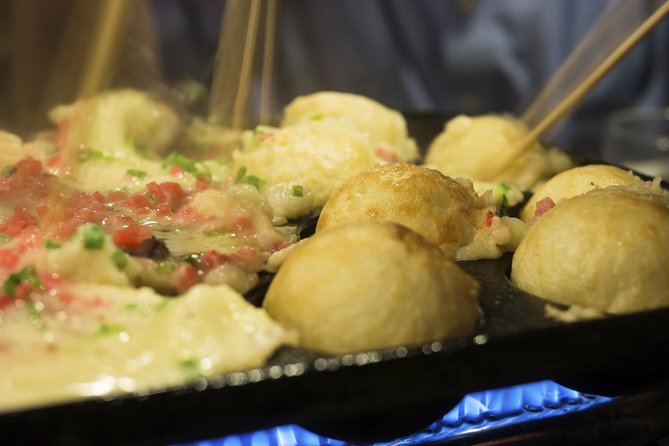
Next comes takoyaki, the round snack associated with Osaka. The batter is poured into a special pan, filled with octopus, and cooked into small balls. The tricky part is turning them at the right moment, so they brown outside while staying soft inside.
Takoyaki looks easy when an experienced cook handles the pan. Your first few turns may be less tidy. That is part of the fun, and Yayo guides you through the process so you can take part without worrying about producing perfect shapes.
The dish also gives you a feel for Osaka’s casual food culture. Takoyaki is not formal cuisine. It is hot, filling, social food, and making it with other people creates natural conversation. The cooking itself becomes a shared activity rather than a private lesson.
If you dislike octopus, note that it is a central ingredient in the standard version. Vegetarian and pescatarian options are available by request, but you should state your needs when you book rather than waiting until the class begins.
More Hands-On Workshops in Osaka:
- Osaka: Roll and Authentic Sushi Making Class in Dotonbori
★ 4.9 · 239 reviews - Ramen and Gyoza Cooking Class in Osaka
★ 5.0 · 202 reviews - Osaka: Cooking Class Ramen & Gyoza Course in Nanba
★ 4.9 · 86 reviews - Osaka: Gluten-Free Ramen and Gyoza Cooking Class
★ 5.0 · 42 reviews
Making okonomiyaki, Osaka’s savory pancake
Okonomiyaki is the main event for many people. The name refers to cooking according to your preference, and the dish usually combines cabbage, egg, flour, pork, and toppings such as dried bonito flakes.
You learn how to combine the ingredients, manage the texture, and cook the pancake properly. The cabbage provides bulk and crunch, while the batter holds everything together. Too much batter can make it heavy. Too little can make it difficult to turn. A good instructor helps you find the balance.
This is also the dish most likely to become part of your home cooking after the class. The ingredients are approachable, and the method is less intimidating than many Japanese recipes. You can also adapt the filling later, although the standard version includes pork.
The finished okonomiyaki is hearty, so pace yourself. You will also be preparing other dishes, and the amount of food can be generous. Some participants have found they cannot finish everything and are able to take leftovers with them. The exact arrangement for leftovers may depend on the day and what has been prepared, so do not count on it as a formal inclusion.
Extra dishes that make the meal feel complete
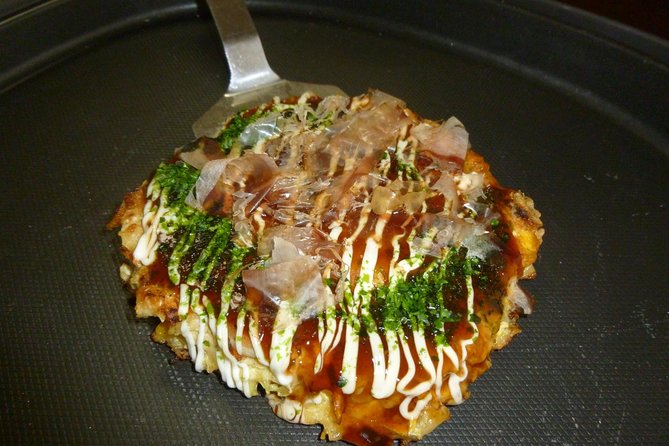
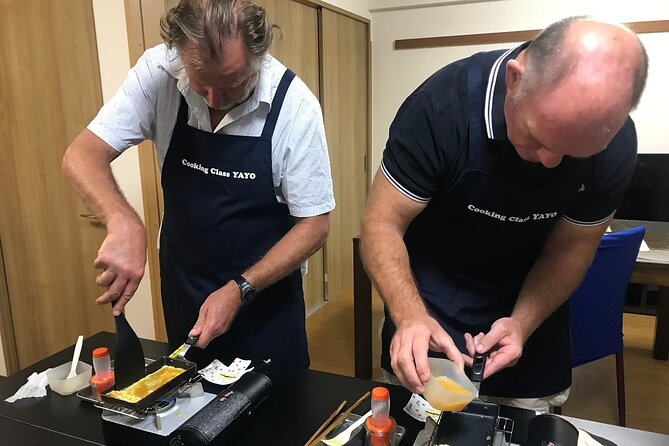
The published menu centers on miso soup, takoyaki, and okonomiyaki, but the class can include additional Japanese favorites. Previous sessions have included tamagoyaki, a rolled omelet, as well as taiyaki, a fish-shaped cake.
Tamagoyaki is a useful addition because it shows another side of Japanese home cooking. The rolled omelet requires control and patience, but it is not beyond a beginner. You get to see how a few layers are built into a neat shape.
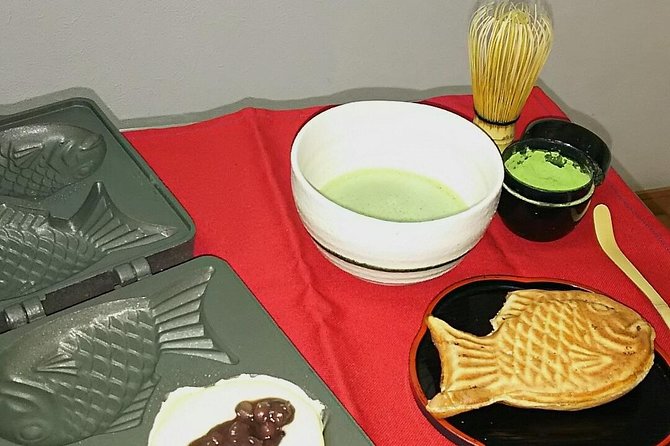
Taiyaki comes near the end, along with matcha tea. The fish-shaped cake is a playful finish, and the sweet course gives the meal a different rhythm after the savory dishes. Matcha adds a simple Japanese tea element without turning the class into a formal tea ceremony.
Some sessions also include snacks, drinks, or small handmade gifts. Participants have received items such as chopsticks, printed recipes, homemade treats, and paper cranes made from flags representing their home countries. These touches are not the core reason to book, but they help explain why the experience feels personal rather than purely transactional.
Eating what you prepare
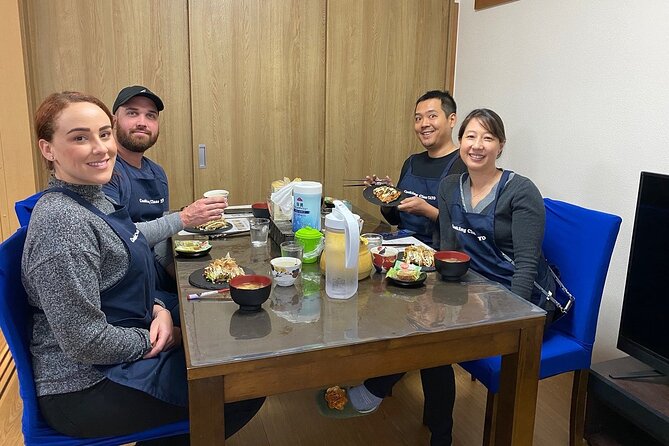
The best part of the format is that your meal develops as you work. Once the cooking is complete, you sit down and eat the food you made. You can choose the optional sake and beer pairing if you want drinks with the meal, or simply enjoy the food and matcha.
The class is listed at $104.13 per person. That is not a cheap Osaka lunch, but the price covers more than food. You receive about 2.5 hours of instruction, ingredients, utensils, an English-speaking host, and a full meal. You also get recipes and techniques that can be used after your trip.
For a person who only wants to eat okonomiyaki, a restaurant will cost less and require no work. For someone who wants a social activity, an introduction to Japanese cooking, and a meal in a local home, the price is easier to justify. The value improves if you are traveling with a partner or family member and want an activity you can talk about afterward.
Group discounts are available, so check the price for your party before booking. The sake and beer pairing is optional, which keeps the base experience flexible for people who do not drink.
The small-group setting and its limits
The eight-person maximum is one of the strongest practical features. Yayo can watch what you are doing, answer questions, and give you hands-on help. Small groups also make it easier to talk with other participants without feeling lost in a crowd.
The class may feel even more personal if few people book that time. One solo participant ended up with what was effectively a private lesson, while couples have also had one-on-one time with Yayo. You cannot guarantee that arrangement, but the low maximum gives you a reasonable chance of close contact with the instructor.
The tradeoff is space. The cooking studio is small, and only people with confirmed bookings can join. Do not expect room for extra family members to wait nearby or for unbooked friends to watch.
This is a good activity for solo visitors, couples, families with older children, and people who enjoy meeting others over food. It may be less suitable if you want a polished restaurant setting, a quiet meal, or a class focused on advanced knife skills.
Who should book this experience
I would recommend it to you if you want to understand Japanese food beyond ordering it. It is particularly good for people who plan to recreate a few dishes at home, since the recipes are approachable and the instruction covers the details that are easy to miss.
It also works well as an early Osaka activity. The food gives you immediate context for dishes you will see in restaurants and markets during the rest of your trip. Booking it on your first night can make the city feel more welcoming, although the filling meal may leave you ready for an early evening.
Families should note that adult pricing applies to all participants except children age two and under. The data does not specify a broader child age policy, so ask before booking if you are traveling with young children.
Vegetarians and pescatarians can request suitable options, but advance notice is required. Do not assume every dish can be adjusted at the table, since ingredients such as pork, octopus, bonito, and dashi may be part of the preparation.
Practical advice before you book
Wear something comfortable for a hands-on meal and arrive early enough to locate the meeting point. The experience does not include hotel transport, and late arrival can mean losing your place without a refund.
Bring an appetite. You may prepare miso soup, takoyaki, okonomiyaki, tamagoyaki, taiyaki, and other additions during the same session. The class is designed to feed you well, not merely give you a few bites.
If you want the sake and beer pairing, select it when booking. Extra food and drinks are not included, and gratuities are optional.
The cancellation policy is straightforward: cancel at least 24 hours before the start time for a full refund. Cancellations or changes made less than 24 hours before the class are not refunded or accepted.
Should you book Yayo’s Osaka cooking class?
Book it if you want a friendly, hands-on introduction to Japanese home cooking and value time with a local host. The combination of okonomiyaki, takoyaki, miso soup, sweets, tea, and optional drinks gives you a generous amount to do and eat in 2.5 hours.
The strongest reason to choose this class is Yayo herself. Her warm teaching style, clear English, cultural explanations, patience, and thoughtful personal touches make the home setting work. You should skip it only if you prefer a formal culinary school, need guaranteed privacy, or want a lighter meal.
For most food-focused visitors to Osaka, this is a strong choice at $104.13, especially if you plan to cook the dishes again after returning home.
FAQ
Where does the cooking class meet?
The class meets outside Noda Station in Osaka, at 1 Chome-1 Ohiraki, Fukushima Ward, Osaka, 553-0007, Japan.
How long does the experience last?
The cooking class lasts approximately 2 hours and 30 minutes.
What dishes will I prepare?
You prepare popular Japanese dishes including okonomiyaki, takoyaki, and miso soup. Sessions may also include tamagoyaki, taiyaki, matcha, and other small dishes or drinks.
Do I eat the food I cook?
Yes. Lunch or dinner is included, and you eat the food prepared during the class.
Is the class taught in English?
Yes. An English-speaking instructor leads the experience, and Yayo is described as quite fluent in English.
How many people can join?
The maximum group size is eight participants.
Can vegetarians or pescatarians take the class?
Yes. Vegetarian and pescatarian options are available if requested when booking.
Are sake and beer included?
Sake and beer are optional add-ons. They are not included unless you select the pairing.
Is hotel pickup provided?
No. Hotel pickup and drop-off are not included. You need to reach the meeting point near Noda Station yourself.
What happens if I arrive late?
You should arrive on time. Participation cannot be guaranteed if you arrive more than 10 minutes late, and no refund is provided for missing the class because of late arrival.
Can I cancel for a refund?
Yes. You can receive a full refund if you cancel at least 24 hours before the experience begins. Cancellations or changes made less than 24 hours before the start time are not accepted or refunded.
Just added around Osaka
- Okonomiyaki&Takoyaki for Families:Osaka Street Food Festival★ 5.0 · 4 reviews
- Osaka: Sushi Making in Spacious Studio (SAME-DAY OK!)★ 5.0 · 75 reviews
- Osaka: Sushi Making Class and Dotonbori Food Tour★ 4.7 · 3 reviews
- Osaka Sake Tasting with Takoyaki Cooking★ 5.0 · 156 reviews
- Osaka Okonomiyaki Cooking Experience for Families & Groups★ 4.9 · 8 reviews
- Osaka: Sashiko Japanese Craftsmanship Workshop★ 5.0 · 31 reviews
- Osaka Dotonbori: Sushi Making Experience★ 4.9 · 122 reviews
- Osaka: Okonomiyaki Cooking Class with Beer or Soft Drink★ 4.9 · 9 reviews
Japanese & Sushi Cooking Classes, compared.
Sushi Making Tokyo Roll and Authentic Japanese Sushi Class
Read our review →
Tokyo: Roll and Authentic Sushi Making Class in Asakusa
Read our review →
Ramen Cooking Class at Ramen Factory in Kyoto
Read our review →
Tokyo: Sushi Making Class in a Happi Coat near a Famous Spot
Read our review →
Sushi Making Tokyo! Popular Maki Sushi & Japanese Sushi(+Recipe!)
Read our review →
Sushi Making Osaka Roll and Authentic Japanese Sushi Class
Read our review →
Tokyo Sushi Making Class in Tsukiji with Professional Chef
Read our review →
Ramen & Gyoza Cooking Class in Tokyo with Local Supermarket Visit
Read our review →Browse the lists this tour appears in