
Review · OSAKA
Osaka: Cooking Class Ramen & Gyoza Course in Nanba
Making ramen from scratch is the star here. You mix and work the noodle dough, prepare the filling, and learn the careful folds that turn gyoza into neat little parcels. I like the small group of up to eight, which gives you room to ask questions, and I like that English-speaking instructors guide every step rather than leaving you to copy from a distance.
There is one practical wrinkle: the published schedule says two hours, but the detailed plan adds up to three hours: 30 minutes for orientation, 90 minutes of cooking, and one hour for eating. Confirm the exact timing before you book, especially if you have dinner plans afterward.
Key points to know before you book
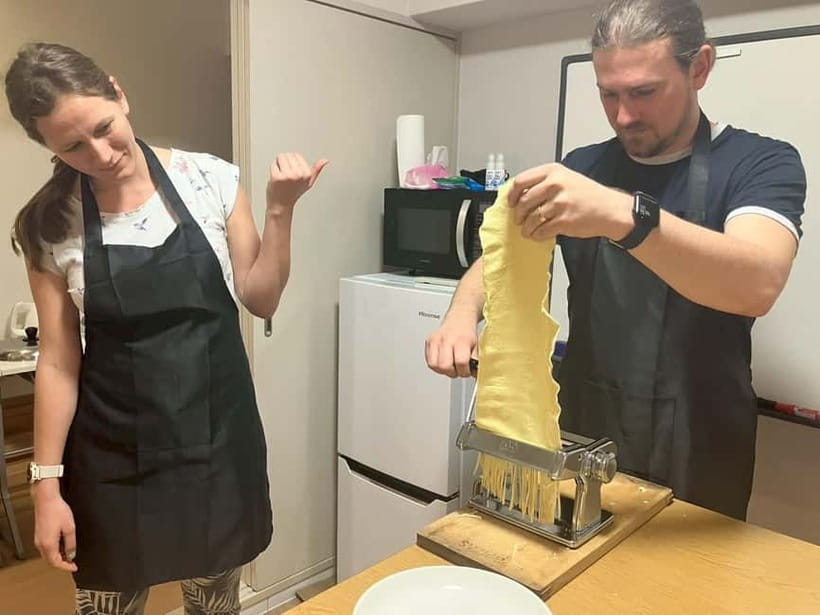
- Fresh noodles are made by hand: You work on the ramen dough instead of simply assembling a prepared bowl.
- Gyoza folding is a real skill: The instructors show you how to shape and seal the dumplings, a part many people find especially rewarding.
- The group stays small: With no more than eight participants, the class feels social without becoming a crowded demonstration.
- The meal comes with drinks: Sake, beer, and soft drinks are included during the tasting session.
- Vegetarian and vegan needs may be accommodated: Ask ahead of time, since the standard menu includes pork.
- You leave with recipes: The recipe cards give you a chance to repeat the dishes at home.
Why this Osaka cooking class is worth your evening
Osaka is famous for eating, but a cooking class gives you a different way to understand the city’s food culture. Instead of choosing a bowl from a menu, you handle the ingredients and see how separate parts become a complete meal.
This class focuses on two Japanese favorites: ramen and gyoza. They are familiar dishes, which makes the lesson easy to follow, but they still offer enough technique to keep the session interesting. You learn how ramen noodles are prepared and how gyoza wrappers are filled, folded, and cooked.
At $70 per person, the experience is not the cheapest meal you will have in Osaka. It is better judged as a meal, lesson, social activity, and recipe workshop in one. You eat what you make, receive guidance from a professional washoku team, and get recipes to use later. That is fair value if you want more than a quick dinner.
The main limitation is the timing information. The activity is advertised as lasting two hours, while the supplied schedule describes a 30-minute introduction, 1.5 hours of cooking, and a one-hour tasting. That totals three hours. Do not place this class into a tight gap between sightseeing plans until you receive a confirmed start and finish time.
More Sushi and Japanese Classes in Osaka:
- Sushi Making Osaka Roll and Authentic Japanese Sushi Class
★ 5.0 · 1,220 reviews - Osaka Sushi Making Experience
★ 5.0 · 400 reviews - Osaka: Ramen and Gyoza Cooking Class in Dotonbori
★ 5.0 · 378 reviews
Finding Dear Court Semba, Room 303
The class takes place at Dear Court Semba 303, at 4-chōme-3-1 Bakurōmachi in Osaka’s Chuo Ward. This is not presented as a large cooking school with a prominent streetfront sign. You enter an apartment-style building and go to Room 303 on the third floor.
At the entrance, look for the doorbell panel. Press 303, then press the button marked Call 呼. Once the door opens, take the stairs or elevator to the third floor.
This entry system is simple once you know it, but it is worth reading the instructions before you arrive. One family had trouble finding the building and described it as tucked behind a Ferrari dealership, near a large stairway leading to a gym and an outdoor lounge area with couches. That sort of landmark can help if the address alone does not immediately make sense.
The meeting point is in the city, but hotel pickup and drop-off are not included. Plan to make your own way there and leave enough time to locate the building. If you have trouble, the host can be contacted by phone or message.
The first 30 minutes: orientation and preparation
The class begins with a 30-minute orientation and preparation period. This is not dead time. It gives the instructors a chance to explain the dishes, organize the ingredients, and show you what you will be doing before the hands-on work begins.
You will cook as part of a group rather than receiving a private lesson. That format matters. You can watch how other people approach the dough and dumpling folds, compare results, and enjoy the easy conversation that comes with making food together.
The instructors teach in English and Japanese. Several named hosts, including Nana, Yuriko, Ryota, Kiho, Mimi, Yuma, Keiichi, Saya, and Kyota, have led sessions. The consistent strength of the teaching is patience. Beginners are not expected to arrive with knife skills or ramen experience.
This is also the point to raise dietary needs. The standard gyoza filling includes vegetables and pork, but the class has accommodated vegetarian and vegan requests. Make that request before the session rather than waiting until ingredients are on the table.
Making ramen noodles from scratch
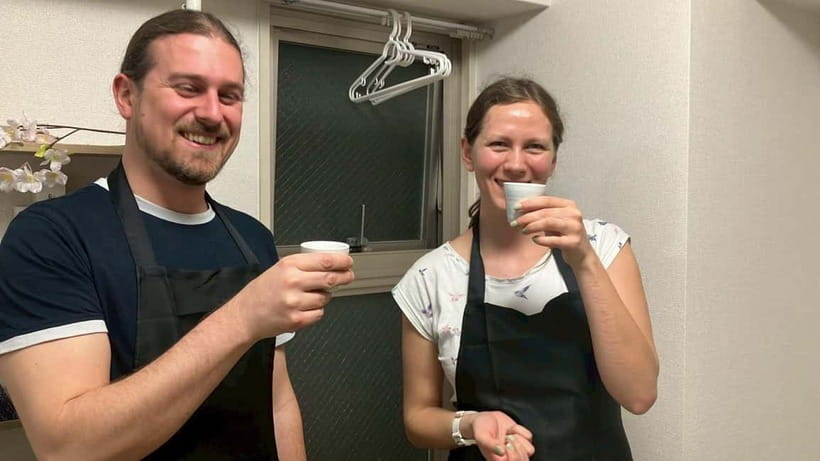
The ramen portion gives this class its strongest hands-on appeal. You do not simply boil packaged noodles and add toppings. You work with the dough and learn the basic process behind the noodles themselves.
Making dough by hand gives you a better sense of why ramen has its particular bite. The exercise also adds a little harmless uncertainty: your first attempt may not look as tidy as the instructor’s. That is part of the point. You get to ask questions, correct your technique, and see how the dough changes as you work it.
The instructors explain the steps clearly and keep the pace moving. You will have time to take part rather than watching one chef do everything at the front. That distinction is important. Some cooking classes are really demonstrations with a few token tasks. Here, the format is built around participation.
The finished ramen is cooked and served later in the tasting period. The result has special value because you made the noodles yourself. Even if your technique is not perfect, the meal gives you a clear reward at the end of the lesson.
One practical point: some ingredients used in Japanese cooking may be difficult to find in your home country. The recipe is useful, but you may need to visit an Asian grocery store or find substitutions. The class teaches you the method, though not every ingredient will be equally easy to replace.
More Hands-On Workshops in Osaka:
- Osaka Cooking Class: Okonomiyaki &Japanese cuisines experience
★ 5.0 · 261 reviews - Osaka: Roll and Authentic Sushi Making Class in Dotonbori
★ 4.9 · 239 reviews - Ramen and Gyoza Cooking Class in Osaka
★ 5.0 · 202 reviews - Osaka: Gluten-Free Ramen and Gyoza Cooking Class
★ 5.0 · 42 reviews
Folding gyoza, one dumpling at a time
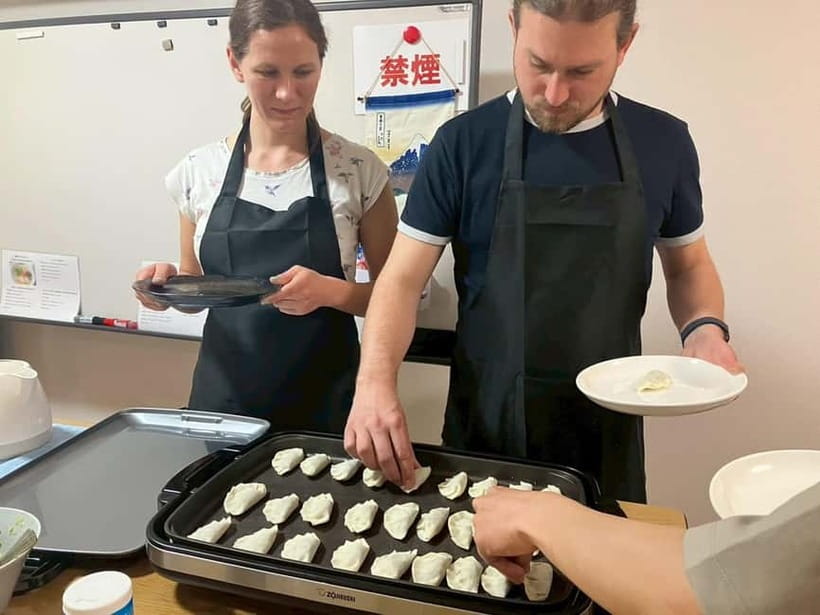
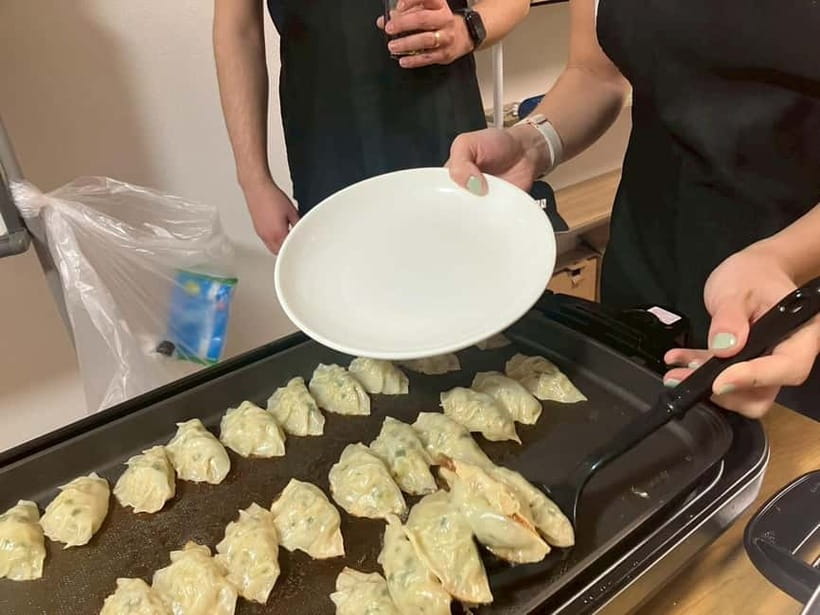
Gyoza folding is the other major lesson, and it may be the most memorable part for many people. You fill the wrappers with the vegetable and pork mixture, then learn how to pleat and seal them.
The folds look simple when an experienced cook does them quickly. At first, your dumpling may be too full, unevenly sealed, or shaped more like a small pouch than a neat crescent. The instructors are there to show you the hand position and correct the details without making the process stressful.
This is a good activity for families and mixed-age groups. A family with a 16-year-old found that everyone could take part, and the hosts were patient with teenagers. You do not need to be a serious home cook to enjoy the process. The goal is both practical and social.
The food is prepared in a shared setting, so the pace can depend slightly on the group. That is a benefit if you like meeting people from other countries, but less ideal if you want a silent, private kitchen lesson. The class works best when you are happy to talk, compare dumplings, and laugh at the occasional crooked fold.
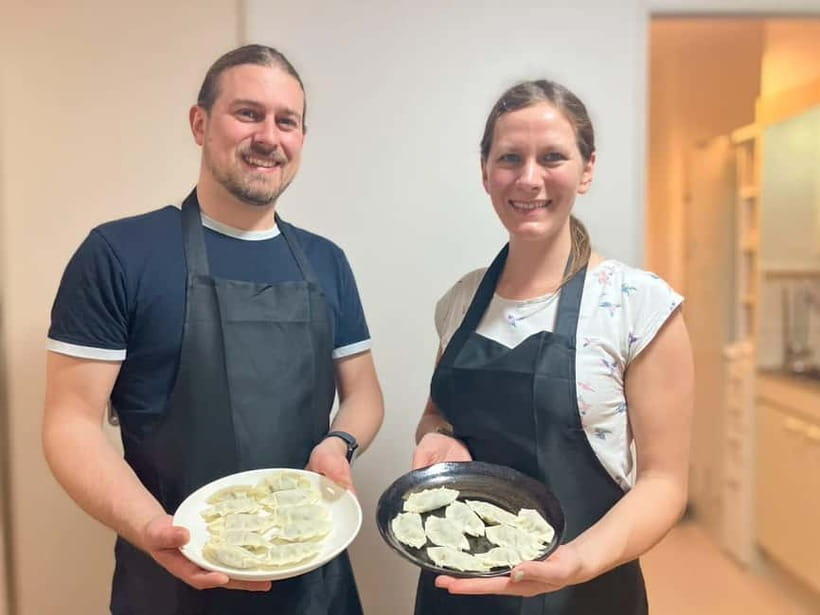
The gyoza are cooked for the meal at the end. That gives you a chance to taste the difference between a dumpling you made yourself and one ordered in a restaurant. You also leave with enough confidence to try the technique again at home.
The tasting session: ramen, gyoza, and drinks
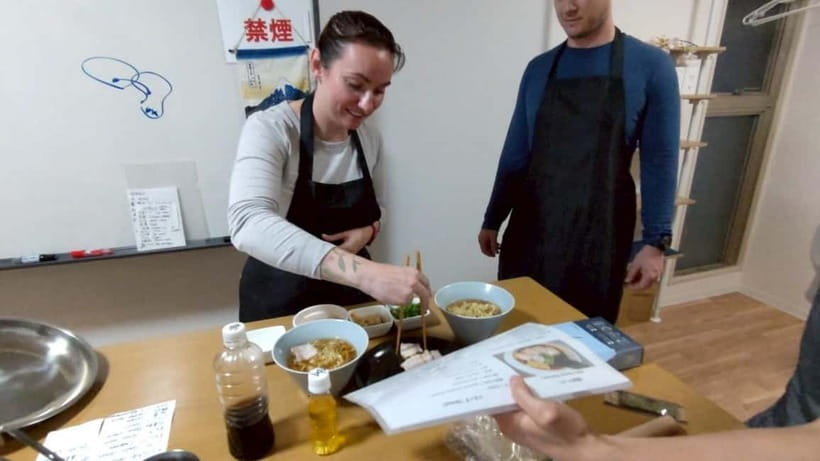
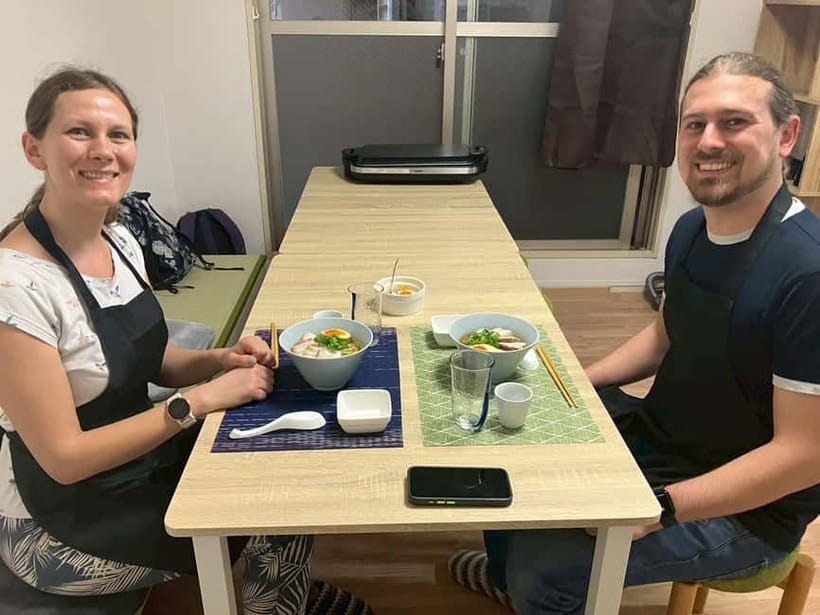
After the cooking comes the best part for hungry participants: you sit down and eat the ramen and gyoza you prepared. The tasting session includes sake, beer, and soft drinks.
The meal is more than a quick sample. The stated schedule allows one hour for tasting, although the overall duration should be confirmed because the activity is also described as two hours. You have time to enjoy the food and talk with the hosts and other people in the group.
The drink selection makes the session feel like dinner rather than a classroom exercise. Sake and beer suit the savory food, while soft drinks give non-drinkers a clear alternative. Additional food and drinks beyond the included tasting are not part of the price.
One small point may matter to you: the published details do not promise that the staff will sit and eat alongside the group. The focus is on preparing and serving the meal, with social time during the tasting. If sharing the table with the instructors is important to you, ask about the format before booking.
The instructors and the feel of the group
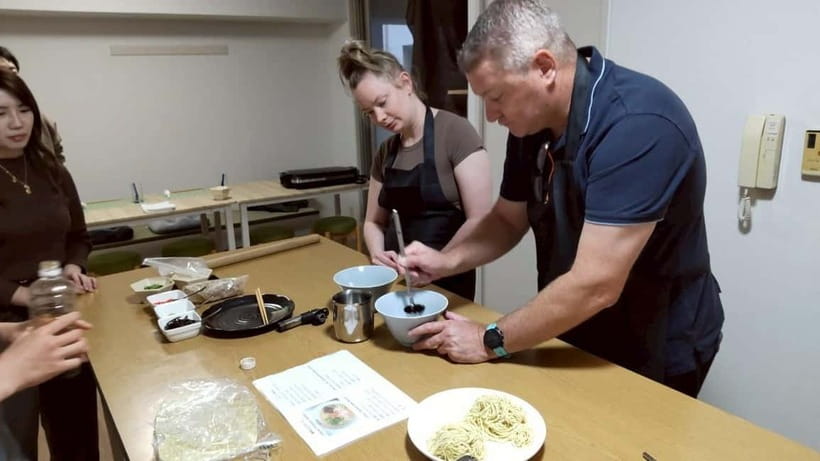
The strongest feature here is the teaching style. Names vary by session, but the instruction is delivered by a team rather than a single host. Nana and Yuriko, Kyota and Keiichi, Ryota and Kiho, and Mimi, Yuma, or Saya are among the instructors associated with different classes.
The repeated pattern is clear: the hosts explain steps in plain English, help with the tricky parts, and keep the mood relaxed. You are not expected to know Japanese cooking terms. You can focus on the food instead of worrying about a language barrier.
The small-group limit of eight is important. It leaves more opportunity for direct help than a large commercial workshop would offer. If your gyoza folds are going badly, an instructor can show you again. If you want to know why a step matters, you have a reasonable chance to ask.
The atmosphere is social but not forced. You may cook alongside a family, a solo participant, or a group of friends. The class has a natural conversation built into it, since everyone is working toward the same meal.
Who will enjoy this class most
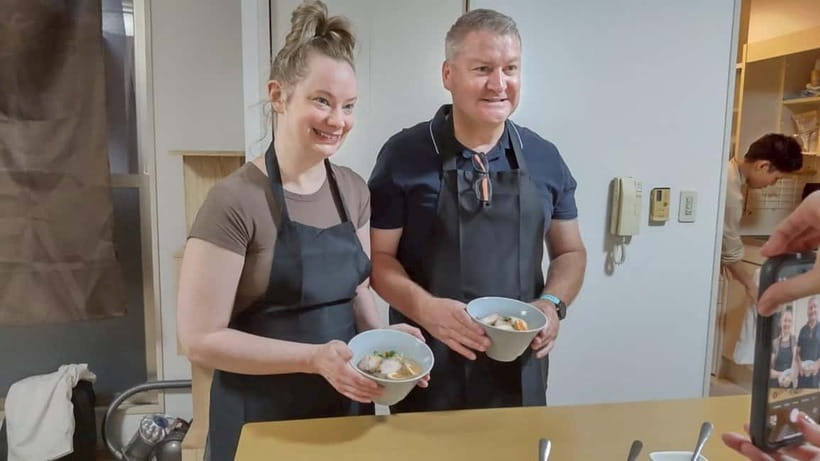
I would choose this experience for several types of visitors:
- First-time cooks: The class is designed for beginners and food enthusiasts, with all tools and ingredients supplied.
- Families with older children: The hands-on work gives each person something to do, and the hosts have been patient with teenagers.
- Solo visitors: The small group makes it easier to meet people without signing up for a large social event.
- Food lovers: You get direct contact with two dishes that are central to casual Japanese dining.
- Repeat visitors to Osaka: If you have already eaten your way through the city, learning to make the food adds a different layer to your trip.
- Vegetarians and vegans who plan ahead: Dietary adjustments have been made, but you should request them before arrival.
I would think twice if you want a private class, a short activity with an exact two-hour finish, or a fully polished professional kitchen environment. The apartment-building setting is part of the experience, but it may feel informal compared with a purpose-built cooking studio.
What the $70 price really includes
The $70 fee covers all ingredients and cooking tools, professional instruction, the 30-minute orientation, the hands-on cooking period, the tasting session, and take-home recipes. Drinks during the meal are also included, with sake, beer, and soft drinks listed.
The value depends on what you want from the evening. If you compare it with the price of a basic ramen dinner, the class costs more. If you count the meal, the instruction, the social setting, and the recipes, the price becomes easier to justify.
You also avoid the risk of buying unfamiliar ingredients for a one-time attempt. The class supplies what you need and lets you test the process before investing in equipment or pantry items at home.
Hotel transportation is not included, and neither are extra dishes or drinks. Keep those limits in mind when setting your budget.
Booking, cancellation, and access details
Booking is essential, and you should reserve at least one day ahead. The activity offers reserve-now, pay-later booking, which can help if you are still arranging your Osaka schedule.
You can cancel up to 24 hours before the activity for a full refund. Check the available start times before choosing a date, especially because the stated two-hour duration does not match the detailed schedule.
The activity is wheelchair accessible. Instruction is available in English and Japanese, and the group is limited to eight participants.
Is the ramen and gyoza class right for you?
I would book this class if you want a meal with some actual work behind it. The handmade noodles, gyoza folding, patient hosts, included drinks, and recipe cards give the evening more substance than a simple restaurant visit.
It is particularly good for families, solo visitors, and anyone who likes meeting people while learning a practical skill. Ask about vegetarian or vegan preparation in advance, and confirm the true running time before you pay.
I would skip it only if you need a strictly private experience or cannot spare more than two hours. For most food-focused visits to Osaka, this is a friendly, useful class that leaves you with dinner in your stomach and recipes in your bag.
FAQ
How long does the Osaka ramen and gyoza class last?
The activity is advertised as two hours, but the detailed schedule lists 30 minutes of orientation, 1.5 hours of cooking, and one hour of tasting. That adds up to three hours, so confirm the exact timing when you book.
Where is the meeting point?
The class meets at Dear Court Semba 303, 4-chōme-3-1 Bakurōmachi, Chuo Ward, Osaka 541-0059, Japan.
How do I enter the building?
Press 303 on the entrance doorbell panel, then press the Call 呼 button. After the door opens, take the stairs or elevator to Room 303 on the third floor.
Is the class taught in English?
Yes. The instructors teach in English and Japanese.
Are drinks included?
Yes. The tasting session includes sake, beer, and soft drinks. Extra food and drinks beyond the included tasting are not included.
Can vegetarians or vegans join?
The standard gyoza includes pork, but vegetarian and vegan adjustments have been accommodated. Request your dietary needs in advance.
Just added around Osaka
- Okonomiyaki&Takoyaki for Families:Osaka Street Food Festival★ 5.0 · 4 reviews
- Osaka: Sushi Making in Spacious Studio (SAME-DAY OK!)★ 5.0 · 75 reviews
- Osaka: Sushi Making Class and Dotonbori Food Tour★ 4.7 · 3 reviews
- Osaka Sake Tasting with Takoyaki Cooking★ 5.0 · 156 reviews
- Osaka Okonomiyaki Cooking Experience for Families & Groups★ 4.9 · 8 reviews
- Osaka: Sashiko Japanese Craftsmanship Workshop★ 5.0 · 31 reviews
- Osaka Dotonbori: Sushi Making Experience★ 4.9 · 122 reviews
- Osaka: Okonomiyaki Cooking Class with Beer or Soft Drink★ 4.9 · 9 reviews
Japanese & Sushi Cooking Classes, compared.
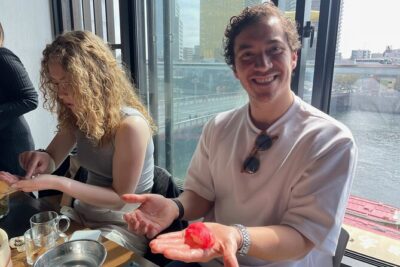
Sushi Making Tokyo Roll and Authentic Japanese Sushi Class
Read our review →
Tokyo: Roll and Authentic Sushi Making Class in Asakusa
Read our review →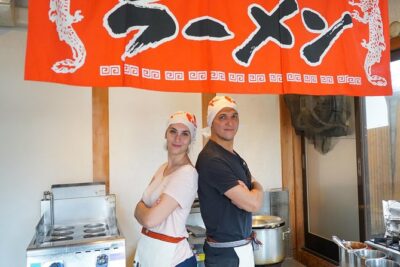
Ramen Cooking Class at Ramen Factory in Kyoto
Read our review →
Tokyo: Sushi Making Class in a Happi Coat near a Famous Spot
Read our review →
Sushi Making Tokyo! Popular Maki Sushi & Japanese Sushi(+Recipe!)
Read our review →
Sushi Making Osaka Roll and Authentic Japanese Sushi Class
Read our review →
Tokyo Sushi Making Class in Tsukiji with Professional Chef
Read our review →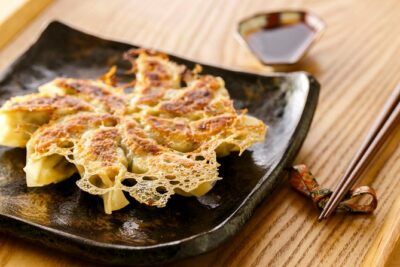
Ramen & Gyoza Cooking Class in Tokyo with Local Supermarket Visit
Read our review →Browse the lists this tour appears in