
Review · OSAKA
Traditional Home cooking Experience in Osaka, Japan
Osaka’s best souvenir may be a meal you can make again. This two-hour class takes you beyond restaurant dining, putting you to work with seasonal Japanese ingredients and carefully sourced Koshihikari rice from Minami-Uonuma in Niigata. You cook, eat, and share the table near Shinsaibashi.
I like the small maximum of eight people, which gives the chef room to help without turning the class into a crowded demonstration. I also like the choice between two very different menus, from sukiyaki and tempura to wagyu rice bowls and sashimi. The main consideration is the price: at $104.51 per person, this is not a cheap meal, so you should value the instruction, the food, and the cultural setting rather than compare it with a casual Osaka lunch.
Key points to know
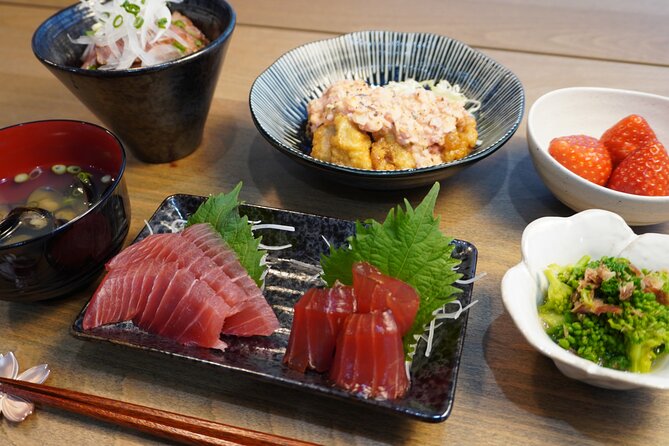
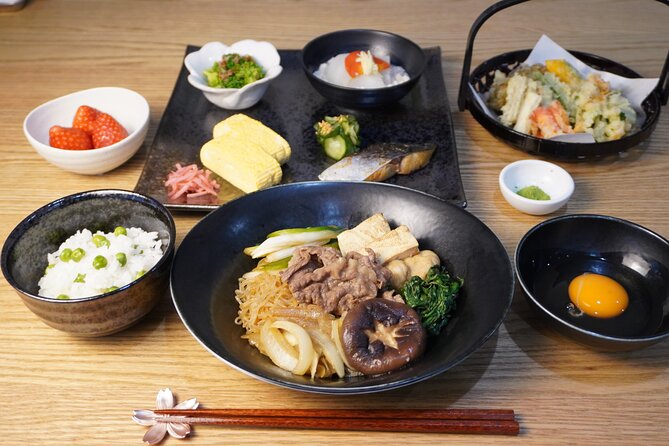
- Choose your menu in advance: Course A includes sukiyaki, tempura, and rolled omelet. Course B includes wagyu roast beef bowl, chicken nanban, and sashimi.
- Premium rice is part of the experience: The class uses Koshihikari rice purchased directly from a contracted farmer in Minami-Uonuma, Niigata.
- A small class keeps the cooking personal: The maximum is eight people.
- Plan on about two hours: You prepare two dishes together, then enjoy the food you have made.
- The location is convenient: Meet at 2 Chome-13 Nishishinsaibashi in Osaka’s Chuo Ward, near public transportation.
- The atmosphere can include more than cooking: One session included songs and a Japanese instrument performance, with performer Keiko appearing in traditional dress.
Cooking Japanese food instead of just ordering it
Osaka is famous for eating well, but a cooking class gives you a different look at the city’s food culture. Rather than simply receiving a finished plate, you see how familiar Japanese dishes come together and then sit down to eat your own work.
This class focuses on home cooking, not restaurant-style showmanship. That distinction matters. You are not being promised a professional culinary course or a long lesson in knife technique. You are joining an experienced instructor in the kitchen, preparing seasonal dishes, and sharing the results soon afterward.
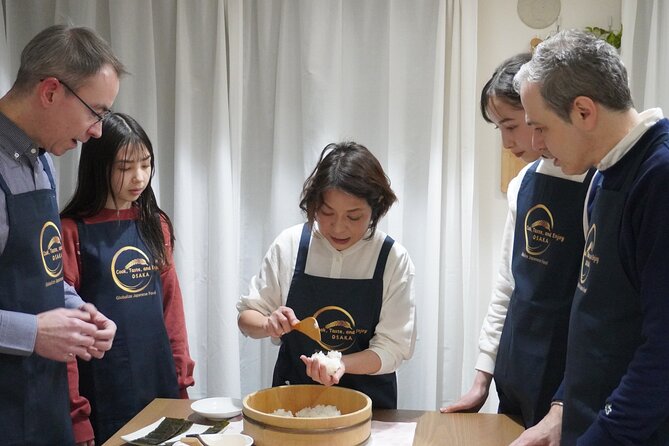
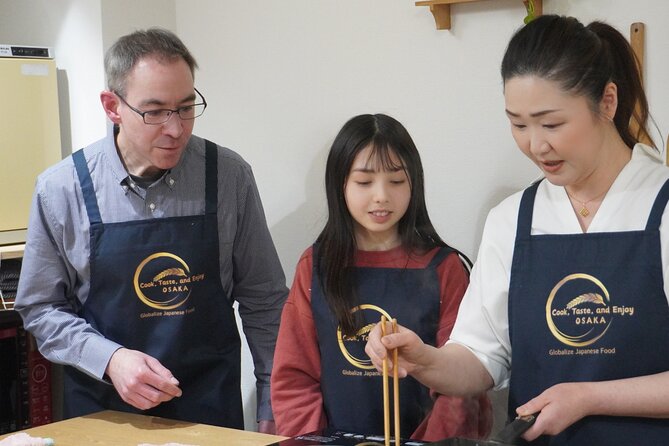
The setting is designed to be social. The staff cook alongside you and explain their specialty dishes while keeping the mood light. That makes this a good choice if you want an activity with conversation and participation, rather than a formal demonstration where you watch from a distance.
The class lasts about two hours. That is long enough to make several dishes without taking over your whole day in Osaka. If you have a packed sightseeing schedule, the short format is useful. If you want a serious cooking course with many recipes and detailed technical instruction, you may find it brief.
More Home Cooking Classes in Japan
- Japanese home cooking class in Osaka Umeda
★ 5.0 · 24 reviews - Private Home Cooking in Yanaka – Local Flavors in a Warm Setting
★ 5.0 · 173 reviews - Near Fushimiinari: Kyoto Home Cooking Class & Supermarket tour
★ 5.0 · 100 reviews
Choosing between Course A and Course B
You select Course A or Course B when booking, and the choice changes the character of the meal.
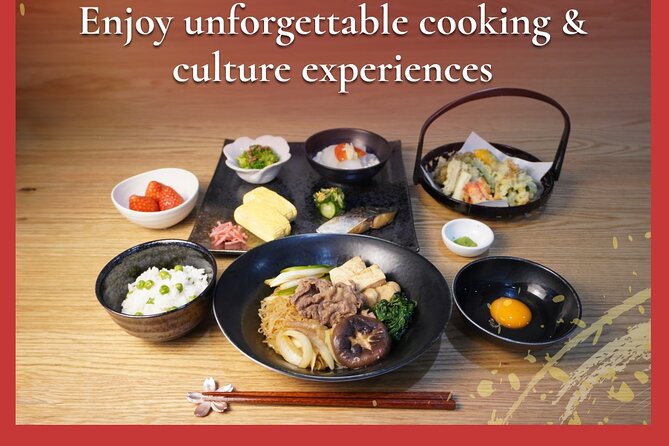
Course A centers on sukiyaki, tempura, and rolled omelet. Sukiyaki brings the familiar Japanese combination of meat, vegetables, and a savory-sweet sauce. Tempura introduces one of Japan’s best-known cooking methods, while rolled omelet gives you a chance to work with a classic home-style dish that looks simple but takes some care.
This is the menu I would choose if you want a broad introduction to recognizable Japanese cooking. It covers a simmered or cooked main dish, fried food, and egg preparation. It also gives you a useful sense of how several textures and cooking methods appear together in a Japanese meal.
Course B features a wagyu roast beef bowl, chicken nanban, and sashimi. The wagyu bowl is likely to be the star for many diners, especially if premium beef is one of your reasons for booking. Chicken nanban adds another substantial dish, while sashimi brings a fresh, uncooked element to the table.
Choose Course B if the idea of wagyu is the main draw. One participant described preparing a beautiful cut of wagyu beef as the center of the meal, along with chicken nanban. That menu may feel more special for a celebratory afternoon, though you should be comfortable with sashimi before selecting it.
The description says both courses involve making two dishes together, even though three food items are named for each course. The exact hands-on division may vary, so do not assume you will prepare every item from start to finish. The important point is that you will work with the chef rather than only watch.
Seasonal ingredients and carefully chosen rice
Japan’s four seasons shape its cooking, and this class makes that idea part of the lesson. Ingredients change through the year, so the food you prepare depends partly on when you visit. That gives the class a more genuine home-cooking feel than a fixed menu that never changes.
Seasonal cooking also means you may not receive an identical experience on every date. If you have a particular ingredient in mind, confirm its availability before booking. The supplied menu choices are the firm guide, while the seasonal element suggests that some components may change.
Rice receives unusual attention here. The class uses Koshihikari rice bought directly from a contracted farmer in Minami-Uonuma City, Niigata Prefecture, one of Japan’s leading rice-producing areas. This is not a throwaway side dish. Rice is the base of much Japanese home cooking, and quality makes a noticeable difference when it appears in a bowl with wagyu or alongside other dishes.
I appreciate this detail because it connects the meal to a specific growing region. You are not just hearing that the ingredients are good. You are being told where the rice comes from and how it is sourced. That kind of care adds value to the class, especially if you are interested in the everyday food choices behind Japanese cuisine.
What the two-hour visit feels like
You meet at 2 Chome-13 Nishishinsaibashi, in Osaka’s Chuo Ward, and the activity ends at the same point. The location is near public transportation, which makes it easy to fit between sightseeing stops in central Osaka.
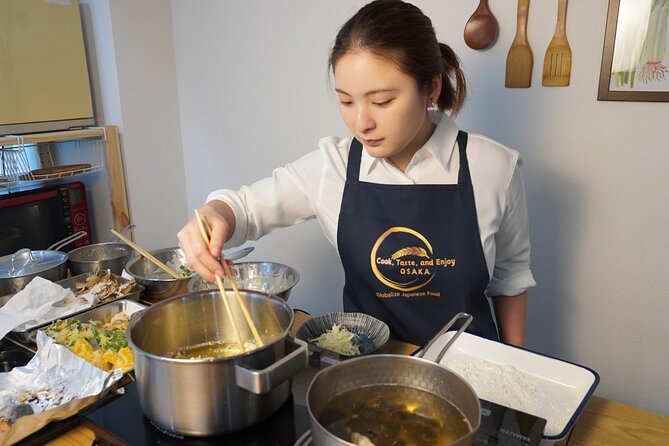
The first part centers on preparation. The experienced staff cook with you and guide the process. You can expect the focus to be on making the selected dishes, learning the basic steps, and enjoying the interaction rather than racing through a long list of recipes.
The cooking has a practical payoff: you eat what you prepare. That sounds simple, but it changes the mood of the activity. You have a reason to pay attention to the ingredients, timing, and methods because the finished meal becomes your lunch or dinner.
The class also has a playful side. Its stated aim is to cook, taste, and enjoy Osaka, with an emphasis on having fun while learning. That may appeal to first-time cooks who would rather not feel tested. You do not need to approach the class like an exam.
The host has been praised for friendly conversation and strong English, while the chef has been described as skilled, helpful, and kind. Those qualities matter in a short class. Clear instructions and a relaxed manner can make the difference between feeling lost and feeling involved.
One session also included songs and a Japanese instrument performance. Keiko was identified as the performer and appeared in traditional dress. Treat this as a possible extra flavor of the experience, not a guaranteed part of every booking, since the core description focuses on cooking and eating.
More Home Cooking Classes in Osaka:
- Khmer Cooking Class at a Local’s Home in Krong Siem Reap
★ 5.0 · 2,731 reviews - Local Home Korean Cooking Class & Market Adventure in Seoul
★ 5.0 · 1,024 reviews - Marrakech: Moroccan Cooking Class with a Local Family
★ 4.9 · 668 reviews - Mexican Cooking from Scratch in a Local Home in Tulum
★ 5.0 · 585 reviews
Why the small group matters
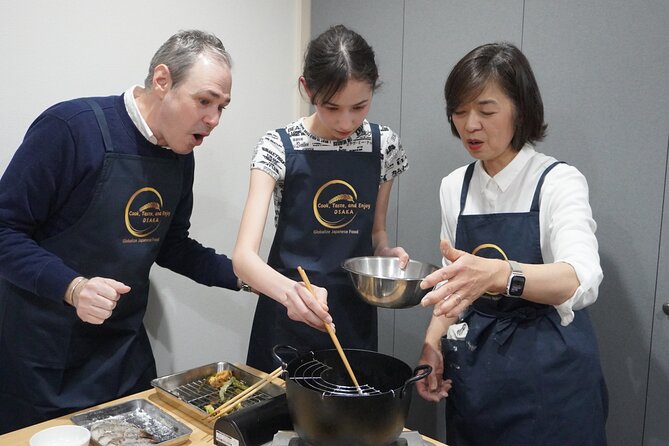
The maximum group size is eight people. That is a useful limit for a hands-on activity. In a much larger class, you might spend most of the time watching someone else chop, season, or plate. Here, the chef has a better chance of seeing what you are doing and offering help.
A small group also makes the shared meal more comfortable. Cooking classes work best when you can ask questions without interrupting a large presentation. It is easier to talk with the host, compare results, and enjoy the social side of the meal.
There is one practical tradeoff. A small class can feel more personal, but the experience may also depend on the mix of people attending that day. If you enjoy meeting others over food, this is a plus. If you prefer complete privacy, a group class is not the right format.
The mobile ticket keeps entry simple, and confirmation is sent within 48 hours of booking, subject to availability. Since the activity is booked about 19 days ahead on average, you should not leave it until the final day of your Osaka visit if the schedule matters to you.
Is $104.51 a fair price?
At $104.51 per person, this class costs more than buying a bowl of noodles or a set meal in Osaka. The comparison is not quite fair, though, because you are paying for more than the food.
The price covers a guided activity, access to an experienced chef, a small group setting, seasonal ingredients, and a meal you help prepare. Course B also includes wagyu, which can make the fee easier to justify if premium beef is important to you. The rice is sourced from a named producing area, and the class gives you time with the staff rather than sending you through a quick assembly line.
Still, value depends on what you want. If your priority is eating as much as possible for the least money, book a neighborhood restaurant instead. If you want an organized cultural activity with food at its center, the price is more reasonable.
I would especially consider it good value for a first visit to Japan, for couples, siblings, or small groups who want a shared activity. A brother and sister described learning together and making the wagyu bowl and chicken nanban, which points to the class’s strength: it gives you something to do together, not just something to consume.
Water is included, but other drinks cost extra. Alcoholic drinks are not included. Keep that in mind when comparing the total cost with a restaurant meal, particularly if you expect to order beer, sake, or wine.
Who will enjoy this Osaka cooking class?
This experience suits you if you want a short, social introduction to Japanese home cooking. It is also a good match if you are curious about seasonal ingredients, want to eat wagyu in a more active setting, or like the idea of meeting in a central Osaka neighborhood.
Families and first-time cooks may appreciate the friendly approach. The instructors are there to help, and the class is built around enjoyment as much as technique. Couples and friends can split the choice between Course A and Course B according to their tastes, though everyone should confirm how the selected menu applies to the booking.
Food-focused visitors will appreciate the attention to rice and the difference between the two menus. Course A offers familiar Japanese classics and several cooking styles. Course B leans toward a more luxurious meal, with wagyu as its main attraction and sashimi for those comfortable with raw fish.
This may be less suitable if you need a fully private activity, want advanced culinary training, or have strict dietary requirements that have not been discussed with the provider. The available information does not specify vegetarian, vegan, allergy, or substitution arrangements, so you should ask before reserving if those issues affect your meal.
Practical planning for the day
Allow about two hours for the class itself, then add the time needed to reach the meeting point. Since the activity ends where it starts, you will not need to arrange a separate return transfer.
The address is 2 Chome-13 Nishishinsaibashi, Chuo Ward, Osaka, 542-0086, Japan. It is near public transportation, but you should still allow a few extra minutes to find the exact entrance, particularly if you are coming from another part of central Osaka.
Choose Course A or Course B at the time of booking. Do not wait until you arrive unless the provider specifically allows a change. Your menu choice affects the ingredients and preparation, and the class is planned around that selection.
The cancellation policy is generous if your plans change early. You can cancel for a full refund up to 24 hours before the start time. Changes or cancellations made less than 24 hours before the activity are not accepted for a refund, with cut-off times based on Osaka local time.
Should you book Cook, Taste and Enjoy Osaka?
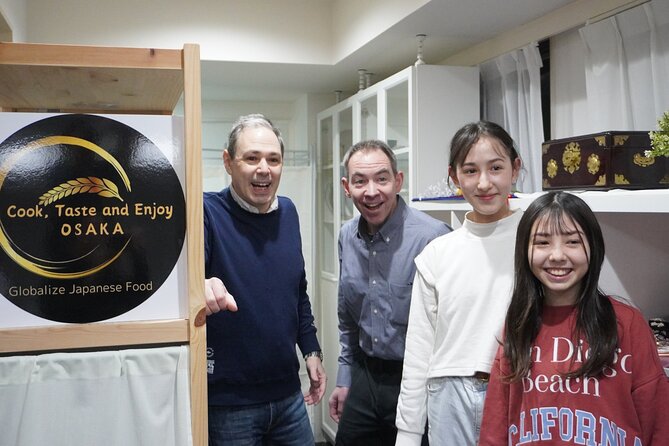
I would book this class if you want your Osaka food experience to include participation, conversation, and a meal you helped create. The small group, strong English support, seasonal ingredients, and carefully sourced Niigata rice give it more substance than a quick cooking demonstration.
Choose Course A for the widest range of classic Japanese cooking methods. Choose Course B if wagyu is the main reason you are interested and sashimi suits your taste.
Skip it if your main goal is a low-cost meal, a private lesson, or advanced chef training. For everyone else, the $104.51 fee is easiest to justify when you treat the class as both a meal and a cultural activity. The short two-hour format also makes it a sensible addition to a busy Osaka schedule.
FAQ
Where does the cooking class meet?
The meeting point is 2 Chome-13 Nishishinsaibashi, Chuo Ward, Osaka, 542-0086, Japan.
Where does the activity end?
The activity ends back at the meeting point.
How long does the class last?
The class lasts approximately two hours.
How much does the experience cost?
The listed price is $104.51 per person.
How many people can join the class?
The maximum group size is eight people.
What are the two menu choices?
Course A features sukiyaki, tempura, and rolled omelet. Course B features wagyu roast beef bowl, chicken nanban, and sashimi.
Do I choose a course when I book?
Yes. You should choose Course A or Course B when making your reservation.
Are drinks included?
Water is free. Other drinks are charged separately, and alcoholic beverages are not included.
Is the activity available with a mobile ticket?
Yes. The experience includes a mobile ticket.
Can I cancel for a full refund?
Yes. You can cancel at least 24 hours before the start time for a full refund. Cancellations or changes made less than 24 hours before the start time are not accepted for a refund.
Just added around Osaka
- Well-balanced BENTO (lunch box) Cooking Class★ 5.0 · 35 reviews
- Osaka Street Food Festival :Takoyaki&Okonomiyaki for Families★ 5.0 · 13 reviews
- Three Types of Ramen Cooking Class in Osaka★ 5.0 · 119 reviews
- Takoyaki DIY Cooking in the Heart of Osaka★ 5.0 · 7 reviews
- SUSHI Making Experience at Restaurant★ 5.0 · 8 reviews
- Sushi Making Osaka Omakase Cooking Class in Japan★ 5.0 · 4 reviews
- Cooking Class for Ramen and Gyoza in a Quiet Old Osaka House★ 5.0 · 3 reviews
- Sushi and Japnese foods cooking class in Osaka★ 5.0 · 51 reviews
Home Cooking Classes, compared.
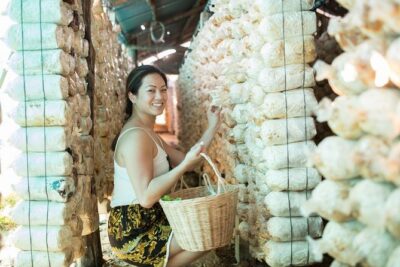
Khmer Cooking Class at a Local’s Home in Krong Siem Reap
Read our review →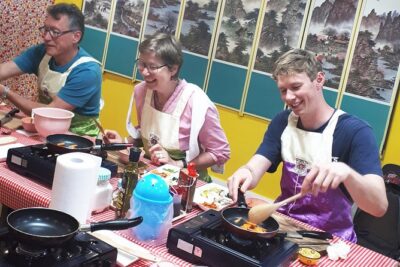
Local Home Korean Cooking Class & Market Adventure in Seoul
Read our review →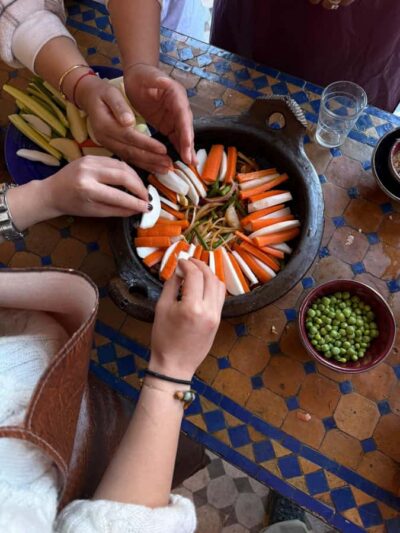
Marrakech: Moroccan Cooking Class with a Local Family
Read our review →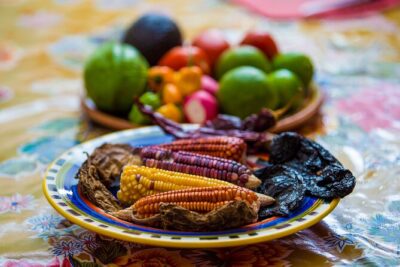
Mexican Cooking from Scratch in a Local Home in Tulum
Read our review →
Pastamama, Home Cooking Classes at Grace’s Home
Read our review →
Marrakech: Moroccan Cuisine Cooking Class in Local Home
Read our review →
Hoi An: Traditional Cooking Class & meal with Local Family
Read our review →
Browse the lists this tour appears in