
Review · JAPANESE & SUSHI
Cooking Class: Make a Local Delicacy in a Japanese House
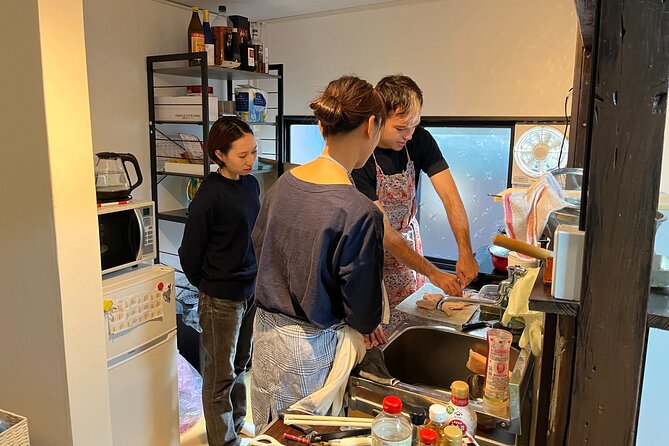
Beppu’s most local meal may be a bowl of hand-shaped noodles served in a century-old Japanese house. In this private cooking class, you knead flour, shape dango noodles, and add them to a broth filled with seasonal vegetables such as taro and burdock. I like the old-house setting and the chance to eat a dish tied closely to Oita Prefecture. I also like that an English-speaking interpreter can join at no extra cost if requested.
The main consideration is time. Ninety minutes gives you a focused introduction, not a full market-to-table food tour. The class costs $61.90 per person, so it makes the most sense if you value personal instruction, a private group, and a meal you cannot easily recreate from a standard restaurant menu.
Key points to know before booking
- Dango noodle soup is the main event: Make the dough by hand, shape it yourself, and eat it in a local broth.
- The setting is unusually authentic: Space Beppu hosts the class in a Japanese house more than 100 years old.
- You get a private class: Only your own group takes part, which allows a more relaxed pace.
- Local flavors matter: Seasonal vegetables, miso or soy sauce, and Oita’s yuzukosho give the meal its regional character.
- Alternatives are available: You can request ramen noodles or onigiri with miso soup when booking.
- English help is possible: An English-speaking interpreter is available on request at no added fee.
Why dango noodle soup matters in Beppu
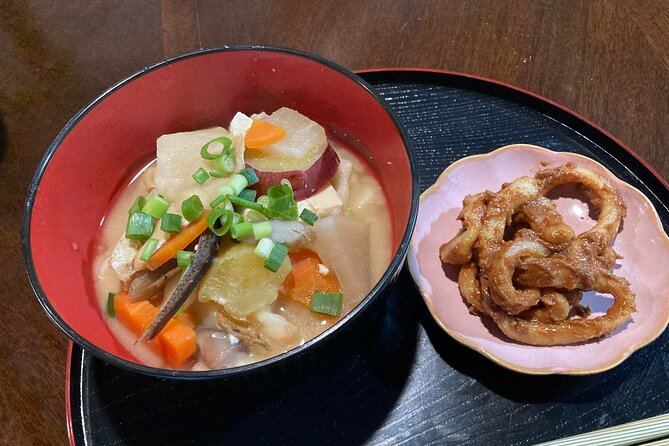
Dango noodle soup, or dangojiru, is not simply noodles dropped into broth. The noodles begin as wheat or rice flour mixed with water. The dough rests, then gets stretched and shaped by hand before it goes into the soup.
That method gives the class its appeal. You are not just watching a cook prepare a regional dish. You handle the basic ingredients and see how a humble flour dough becomes a hearty meal.
The soup comes from Oita Prefecture, so it gives you a food connection to the area beyond Beppu’s famous hot springs. Local vegetables such as taro and burdock add substance and texture. The seasoning may be based on miso or soy sauce, depending on the preparation.
At the table, you can add yuzukosho, a local seasoning made with yuzu citrus and pepper. It brings a sharp, spicy note to the broth. Use it lightly at first. A small amount can change the whole bowl.
More Sushi and Japanese Classes in Japan:
- Sushi Making Tokyo Roll and Authentic Japanese Sushi Class
★ 5.0 · 3,971 reviews - Tokyo: Roll and Authentic Sushi Making Class in Asakusa
★ 4.9 · 1,957 reviews - Ramen Cooking Class at Ramen Factory in Kyoto
★ 5.0 · 1,937 reviews
Entering Space Beppu’s century-old house
You meet at Space Beppu in Chiyomachi, Beppu, at 12番9号, postal code 874-0942. The activity begins and ends at this meeting point, and the location is near public transportation.
The house is a major part of the experience. A modern cooking studio could teach the same recipe, but an old Japanese home gives the meal a stronger sense of place. You are cooking in a building with age, character, and a direct connection to everyday domestic life.
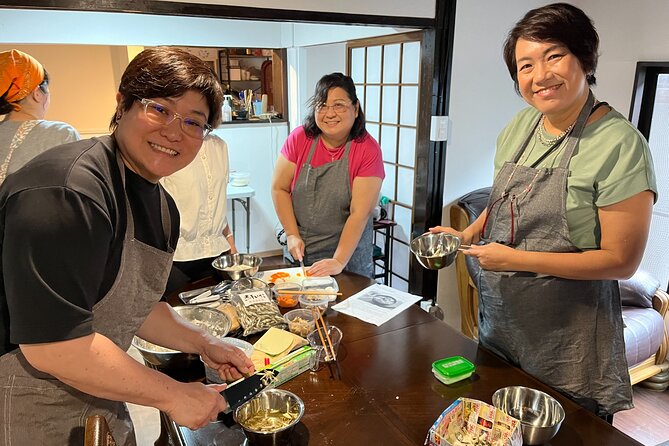
The setting also helps keep the class personal. This is not a large demonstration where you stand behind a crowd. It is a private activity for your group only. That matters if you want to ask basic questions, take your time with the dough, or let children participate without feeling rushed.
A small local crafts area is also part of the Space Beppu setting. It adds another local touch, though the class itself remains focused on cooking and eating.
The first lesson: what dangojiru means
Your teacher first explains what dango noodle soup is and why it matters to local food culture. This short introduction gives the cooking some context before you begin.
I like this order. Without it, kneading dough can feel like a generic food activity. With it, you understand that the recipe is a regional comfort food, made from simple ingredients and shaped by hand.
The local teaching team has included Masa, Mari, and Aya. Masa has also shown flexibility with market plans when a planned market was not suitable for the group. That suggests a friendly, adaptable approach, although the cooking class itself is the core activity and any market visit should not be treated as a guaranteed part of every booking.
If you need English support, request the interpreter when you book. The service is available without an additional fee, but it needs to be arranged in advance.
Kneading, resting, and shaping the noodles
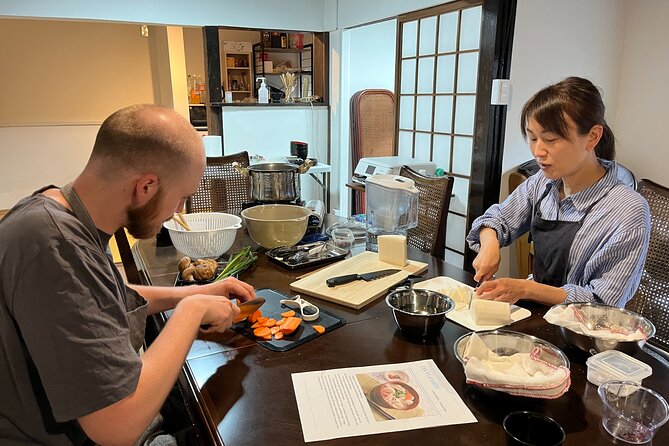
After the introduction, you receive an apron and begin cooking with the ingredients provided. Your teacher leads you through the process step by step.
The key job is working the flour and water into dough. Once the dough rests, you stretch and shape it by hand. This is the point where the class becomes more than a simple demonstration. Your noodles may not look perfectly uniform, and that is part of the fun.
The recipe is forgiving in spirit. Dango noodles are handmade, not factory-cut. Their different shapes and thicknesses contribute to the dish’s home-cooked character.
The dough also gives the class a good rhythm. You prepare it, let it rest, and use that time to follow the next steps. The entire session lasts about 1 hour and 30 minutes, so you should expect a compact lesson rather than a leisurely half-day workshop.
All ingredients are supplied. You do not need to shop for flour, vegetables, or seasoning before you arrive.
More Hands-On Workshops in Japan:
- Tokyo: Sushi Making Class in a Happi Coat near a Famous Spot
★ 4.9 · 1,377 reviews - Sushi Making Osaka Roll and Authentic Japanese Sushi Class
★ 5.0 · 1,220 reviews - Tokyo Sushi Making Class in Tsukiji with Professional Chef
★ 5.0 · 1,177 reviews - Ramen & Gyoza Cooking Class in Tokyo with Local Supermarket Visit
★ 5.0 · 823 reviews
Building a bowl with taro, burdock, and broth
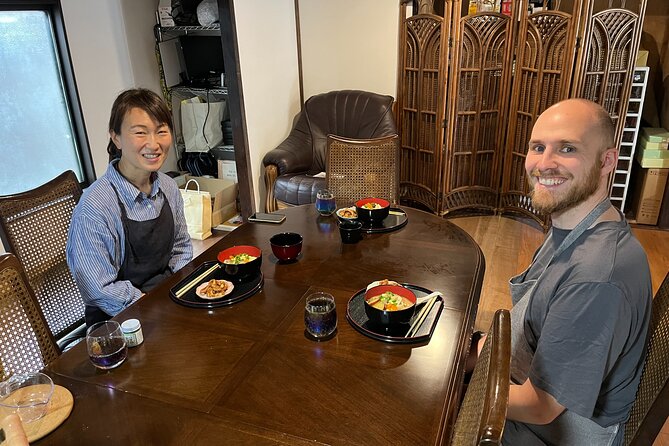
Once the noodles are ready, they go into a broth with local, seasonal vegetables. Taro and burdock are specifically associated with the preparation, giving you flavors and textures that may not appear in a typical noodle bowl outside Japan.
The soup can be seasoned with miso or soy sauce. Both choices fit the dish’s simple, nourishing character, but they create different results. Miso brings a fuller, fermented flavor, while soy sauce gives the broth a cleaner savory note.
This is where the class offers useful food insight. Japanese cooking is often about balance rather than a long list of ingredients. The flour, broth, vegetables, and seasoning each have a clear role. You can taste how a few ordinary ingredients become a satisfying local meal.
The dish is hearty, so this works best around a normal mealtime. Do not expect a delicate tasting menu. You are making a filling soup designed to warm and sustain you.
Sitting down to eat what you made
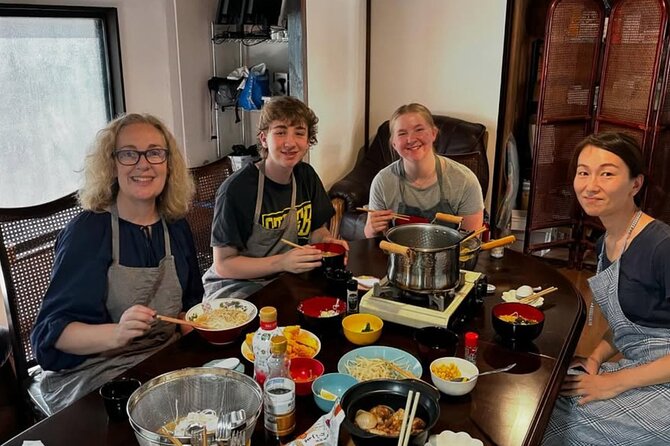
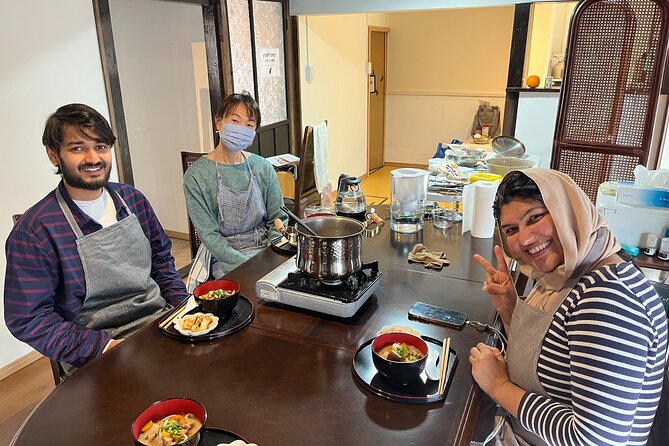
When the cooking is complete, you sit down and eat the soup. This final stage is more important than it may sound. You have worked with the dough, watched the vegetables and broth come together, and then tasted the result while the process is still fresh.
The class also gives you time to talk with your local teacher. That conversation is part of the value, especially for anyone interested in Beppu beyond its hot spring resorts.
The hosts have been described as warm, easy to talk with, and fun during the cooking session. That personal contact is one of the strongest reasons to choose this experience over simply ordering dangojiru at a restaurant.
Try the yuzukosho with care. Its citrus and pepper flavor can be excellent with the soup, but adding too much at once may overpower the broth.
Choosing ramen or onigiri instead
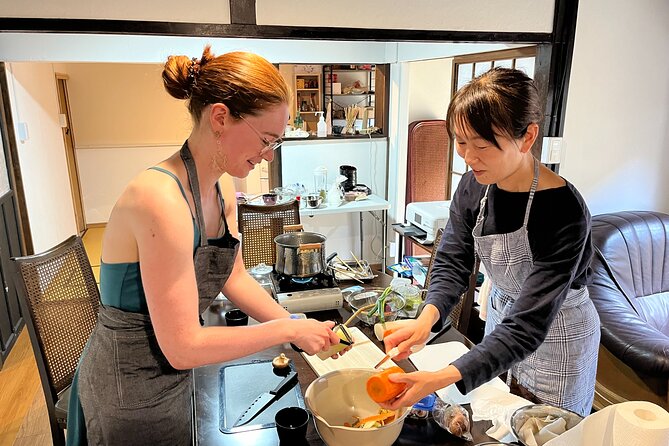
Dango noodle soup is the standard dish, but you can request another option at the time of booking. The alternatives are ramen noodles or onigiri, served with miso soup.
This choice may suit you if you already know that handmade dango noodles are not your style, or if someone in your group has a strong preference for rice or ramen. Onigiri with miso soup also offers a different look at everyday Japanese food.
The timing matters. The alternative must be requested when you book, not casually substituted after the class begins. If the regional dango soup is your reason for booking, keep the original choice. If you are arranging a mixed group with different tastes, ask for the preferred option in advance.
What the $61.90 price really covers
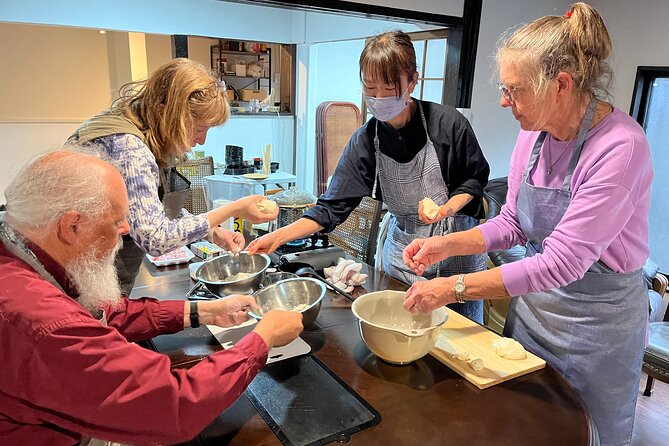
At $61.90 per person, this is not the cheapest way to eat a bowl of soup in Beppu. You are paying for more than food. The fee covers a private class, ingredients, an apron, instruction, use of the old house, and the chance to talk directly with a local teacher.
The private format makes the price easier to understand. A public group class might cost less, but you would have less control over the pace and fewer chances to ask questions. Here, your group has the teacher’s attention.
The value is strongest for couples, families, or small groups who enjoy hands-on activities. If you only want to taste local food, a restaurant will be faster and less expensive. If you want to understand how the dish is made and share the work together, the class earns its price.
Group discounts are available, which may improve the deal for larger bookings. The activity is also mobile-ticket friendly, so you can keep the booking on your phone.
Who will enjoy this class most
I would choose this experience for you if you like food with a clear regional connection and prefer a small personal activity to a large organized tour. It is also a good fit if you want something indoors and structured during a Beppu visit.
Families may appreciate the hands-on dough work, provided everyone is comfortable following step-by-step instruction. Couples and friends get a shared task without committing to a long cooking course.
It is less suitable if you want a broad survey of Beppu food, a long market visit, or a multi-course meal. The class is short and focused. Its strength is one local soup, prepared in a memorable setting.
The English interpreter option makes the class more accessible to international visitors who would otherwise worry about following the instructions. Request that support when booking so the arrangement is clear.
Practical timing and booking advice
The class lasts approximately 90 minutes. Allow enough time to reach Space Beppu in Chiyomachi, although the activity itself starts and ends at the meeting point.
Confirmation is sent within 48 hours of booking, subject to availability. Since the experience is often booked about 59 days ahead, reserve early if your Beppu dates are fixed or if you need the English interpreter.
You can cancel for a full refund up to 24 hours before the local start time. Cancellations or changes made less than 24 hours before the start are not refunded or accepted.
Because the class is private, you do not need to fit into a larger group’s schedule once your booking is confirmed. That makes it easier to plan around other Beppu activities, but the fixed start time still matters.
My take on the old-house cooking experience
The strongest part of this class is the combination of place, food, and personal contact. A century-old Japanese house gives the lesson a setting that feels connected to the dish. Hand-shaped noodles make the cooking active rather than passive. A local teacher adds the human side.
I also like the flexibility. You can ask for an interpreter, choose ramen or onigiri instead of dangojiru, and benefit from a private format. The class has earned a perfect rating from seven published ratings, with especially strong praise for the soup, the hosts, the old house, and the local crafts area.
Still, keep your expectations in line with the format. Ninety minutes is enough to learn one dish, eat it, and talk with the teacher. It is not enough for a wide-ranging cooking course or a full food tour.
Should you book it?
Book this class if you want a small, local food experience with real participation. It is a particularly good choice for anyone who has already seen Beppu’s main sights and wants a quieter activity tied to Oita’s everyday cooking.
Skip it if you only want the lowest-cost meal or if you prefer a restaurant where someone else does the work. For $61.90, the food alone is not the point. The old house, private instruction, handmade noodles, local seasoning, and time with a Beppu host are what make the experience worthwhile.
FAQ
Where does the cooking class begin and end?
The class begins at Space Beppu in Chiyomachi, Beppu, at 12番9号, postal code 874-0942. It ends back at the same meeting point.
How long does the experience last?
The cooking class lasts approximately 1 hour and 30 minutes.
Is the class private?
Yes. Only your group participates in the activity.
What food do you make?
The main dish is dango noodle soup, a traditional delicacy from Oita Prefecture. You make the noodles by hand and add them to broth with seasonal vegetables.
Can I request a different dish?
Yes. You can request ramen noodles or onigiri with miso soup instead of dango noodle soup. Make the request when booking.
Is an English interpreter available?
Yes. An English-speaking interpreter is available on request at no additional fee.
Just added around Japan
- Culinary Home Cooking with Grandmothers – Vegan Friendly★ 5.0 · 5 reviews
- Famous Inari Sushi Making Experience in Toyokawa★ 5.0 · 4 reviews
- Nagoya Super Market Tour & Home Cooking Class with a Local, Akiko★ 5.0 · 10 reviews
- Tokyo: Tsukiji Market Walking Tour & Sushi Cooking Class★ 4.6 · 122 reviews
- Tokyo: Sushi Cooking Class with Sake Tasting★ 4.8 · 55 reviews
- Sushi-Making Experience★ 4.7 · 4 reviews
- Tokyo: Tsukiji Market Guided Tour & Sushi-Making Experience★ 4.4 · 11 reviews
- Tokyo: Sushi Making with Pro Chef & Tsukiji Fish Market Tour★ 4.6 · 49 reviews
Japanese & Sushi Cooking Classes, compared.
Sushi Making Tokyo Roll and Authentic Japanese Sushi Class
Read our review →
Tokyo: Roll and Authentic Sushi Making Class in Asakusa
Read our review →
Ramen Cooking Class at Ramen Factory in Kyoto
Read our review →
Tokyo: Sushi Making Class in a Happi Coat near a Famous Spot
Read our review →
Sushi Making Tokyo! Popular Maki Sushi & Japanese Sushi(+Recipe!)
Read our review →
Sushi Making Osaka Roll and Authentic Japanese Sushi Class
Read our review →
Tokyo Sushi Making Class in Tsukiji with Professional Chef
Read our review →
Ramen & Gyoza Cooking Class in Tokyo with Local Supermarket Visit
Read our review →Browse the lists this tour appears in