
Review · JAPANESE & SUSHI
Kanazawa: Sushi & Japanese Cooking Class at a Historic School
The best thing about this Kanazawa cooking class is that you actually cook every dish. Seiji Nakata teaches sushi shaping, dashi, rolled omelet, miso soup, and jibuni, a local chicken stew with samurai-era roots. It is a real lesson, not a chef cooking while you watch.
I like the small maximum of eight people and the location, just three minutes from Kanazawa Station. I also like the useful skills: sushi rice portions, knife work, bonito and kelp stock, and the careful details behind Japanese home cooking. The main limitation is dietary: vegan diets and anyone avoiding fish-based dashi cannot be accommodated.
Key points
- Five dishes in 2.5 hours: Make nigiri sushi, jibuni, dashi-maki tamago, dashi broth, miso soup, and a seasonal side dish.
- Local Kanazawa cooking: Jibuni gives you a taste of the city’s own culinary tradition, not only familiar sushi.
- Seiji Nakata’s lively teaching: The chef uses humor, patience, and real-time AI translation to keep the class moving in English.
- Premium ingredients: Seafood comes from Omicho Market, a trusted source for local restaurants.
- Useful extras: You receive an English recipe by email, class photos, an aperitif, and a Japanese certificate of completion.
- A practical location: The school is close to Kanazawa Station, making this easy to fit into a short visit.
A 56-year-old cooking school beside Kanazawa Station
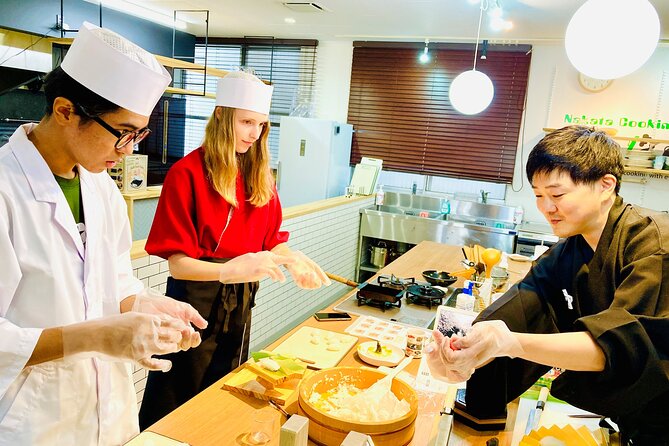
Nakata Cooking School sits in Konohanamachi, about three minutes from Kanazawa Station. That short walk matters. You can fit the class between train connections, use it as a first-day introduction to Kanazawa food, or schedule it before continuing on to another part of Japan.
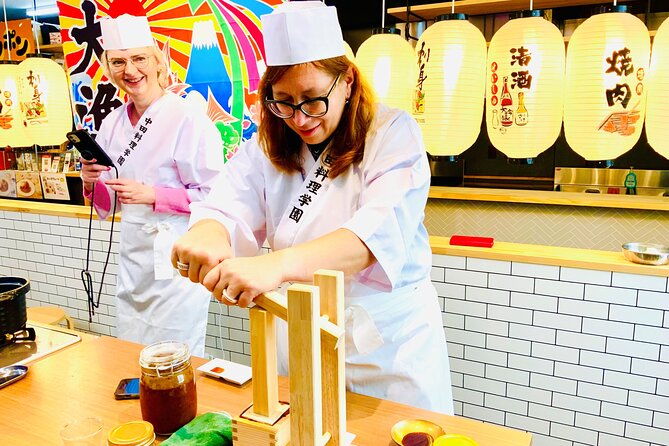
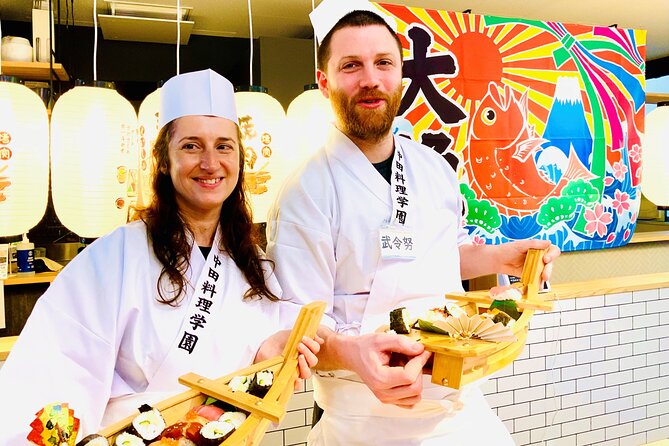
The school has been operating for 56 years, giving the experience a useful sense of place. You are not cooking in a generic hotel classroom. You change into a chef-style uniform, work with Japanese knives, and cook in a dedicated culinary school.
The class is by appointment only, so check your booking details carefully before setting out. The meeting point is Nakata Cooking School and Knife Shop at 4-13, 2nd floor, Konohanamachi, Kanazawa, Ishikawa 920-0852. The class returns to this same location.
The group maximum is eight people. That is small enough for the instructor to watch your knife work, sushi shaping, and omelet technique instead of leaving you to copy a demonstration from across the room.
More Sushi and Japanese Classes in Japan:
- Sushi Making Tokyo Roll and Authentic Japanese Sushi Class
★ 5.0 · 3,971 reviews - Tokyo: Roll and Authentic Sushi Making Class in Asakusa
★ 4.9 · 1,957 reviews - Ramen Cooking Class at Ramen Factory in Kyoto
★ 5.0 · 1,937 reviews
How the live translation works
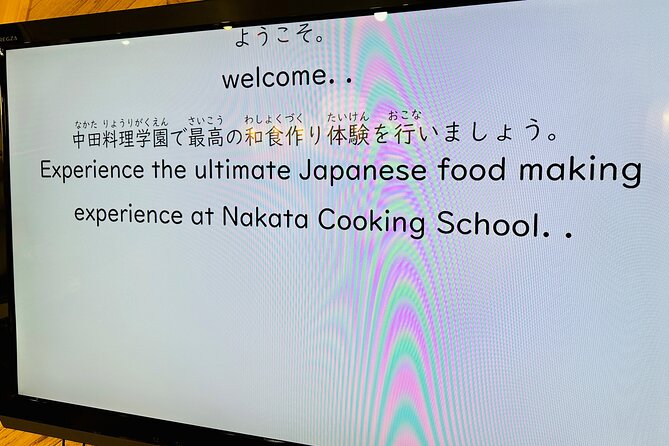
English communication is handled with real-time AI translation on a large screen. Seiji Nakata can speak some English, but the screen provides both voice and written translation during the lesson.
This is more than a practical fix for a language gap. Cooking depends on timing and small instructions, such as how much rice to use, when to turn an omelet, or how long to work a broth. The translation system helps make those points clear.
It also adds a playful side to the class. The translated Japanese humor does not always sound perfectly natural, which becomes part of the fun. You still get direct instruction, but the atmosphere is relaxed rather than formal.
The technology should not be mistaken for a quiet, self-guided lesson. Seiji remains the teacher, demonstrating, correcting, and explaining. The screen simply helps his instructions reach everyone.
The first lessons: knives, ingredients, and Japanese food culture
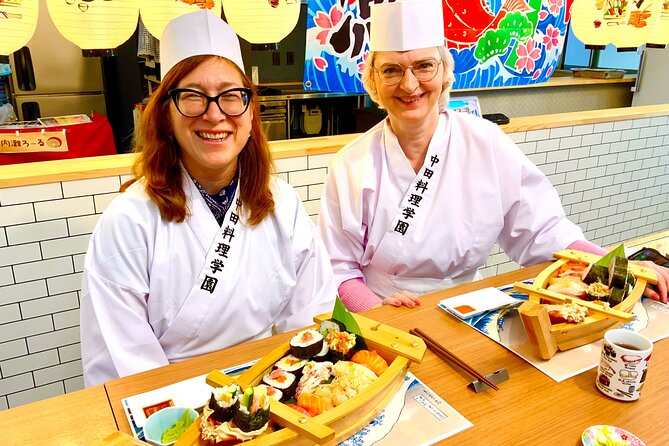
The class begins with an introduction to Japanese ingredients and food culture. You also use premium Japanese kitchen knives during the session. If you enjoy cooking, pay close attention here, since knife handling is one of the most useful skills to take home.
Japanese food often looks simple on the plate, but the preparation can be exact. A mushroom may be cut with a decorative star pattern before it goes into a dish. Sushi rice must be portioned carefully so the balance between fish and rice feels right in one bite.
Those small choices are part of what makes the class worthwhile. You learn that presentation is not an afterthought, and that texture and proportion matter as much as the main ingredient.
The school also has an in-house Knife Museum, scheduled to open in July 2025. Participants receive a 10 percent discount if they choose to visit. Knife purchases are optional, and you are not required to buy anything.
Nigiri sushi with seafood from Omicho Market
Sushi is likely the part you expect most, and the class gives you a hands-on introduction to nigiri. The fish is described as wild seafood sourced from Omicho Market, Kanazawa’s famous food market and a major local source for fresh seafood.
You shape the sushi yourself rather than simply eating a chef’s prepared pieces. The lesson focuses on the relationship between rice and fish, including the importance of portion size. One practical example shared in the class is a rice portion of about 15 grams for sushi rolls, so the filling and rice do not overwhelm each other.
This is not presented as advanced sushi-chef training. The recipes and methods are approachable, but the details are not careless. You can expect to make mistakes, reshape a piece, and learn by handling the food directly.
The finished sushi becomes part of your meal later in the class. That gives the work a clear payoff, especially if you enjoy eating what you have prepared.
More Hands-On Workshops in Japan:
- Tokyo: Sushi Making Class in a Happi Coat near a Famous Spot
★ 4.9 · 1,377 reviews - Sushi Making Osaka Roll and Authentic Japanese Sushi Class
★ 5.0 · 1,220 reviews - Tokyo Sushi Making Class in Tsukiji with Professional Chef
★ 5.0 · 1,177 reviews - Ramen & Gyoza Cooking Class in Tokyo with Local Supermarket Visit
★ 5.0 · 823 reviews
Dashi, miso soup, and the base of Japanese cooking
Dashi is one of the most important lessons because it appears in many Japanese dishes. You make a traditional broth from bonito and kelp, then use it as a foundation for other preparations.
This is the sort of skill that can change how you understand Japanese food at home. Dashi can seem invisible in a finished bowl of soup, yet it supplies much of the savory depth. The class explains the cultural role of the ingredients as well as the cooking method.
You also prepare miso soup and a seasonal side dish. These are familiar foods, but the class places them in the wider structure of a Japanese meal. Instead of treating soup as an extra, you see how broth, miso, vegetables, and seasonal ingredients work together.
The limitation is important: the class cannot accommodate vegan diets or anyone who avoids fish-based dashi. Even if a dish appears vegetarian, the stock may contain bonito. Tell the school about other dietary restrictions when booking, since changes cannot be made on the day.
Dashi-maki tamago, the soft rolled omelet
Dashi-maki tamago is a Japanese rolled omelet made with dashi. It looks modest, but shaping a soft omelet into neat layers takes more control than most first-time cooks expect.
The recipe used here is described as Michelin-style, but the lesson remains practical rather than showy. You learn how the broth affects the egg and how the layers are built as the omelet cooks.
This is one of the class’s better choices because it teaches a technique you can repeat at home. Sushi may require seafood of a particular quality, but eggs and dashi are easier to find. Once you understand the rolling method, you have a useful Japanese breakfast or side dish in your cooking toolkit.
Do not expect every first omelet to look perfect. That is part of the point. The instructor can guide you through the process, and the class is designed for active participation rather than polished restaurant presentation.
Kanazawa jibuni and the local taste of the city
Jibuni is the dish that gives this experience a strong Kanazawa identity. It is a local chicken stew connected to the city’s samurai-era culinary tradition.
You prepare it alongside the sushi and standard Japanese dishes, so the meal covers more than one familiar idea of Japan. Jibuni brings a warm, savory dish to the table and shows how Kanazawa food differs from what you might find in a standard sushi lesson.
This local focus is valuable. If you have only a short time in Kanazawa, you can taste a city-specific specialty and learn how it is made, rather than simply ordering it in a restaurant without context.
The class does not turn jibuni into a long historical lecture. Instead, its background is woven into the cooking. You learn why the dish matters while preparing something you will eat shortly afterward.
Eating what you made, with a local aperitif
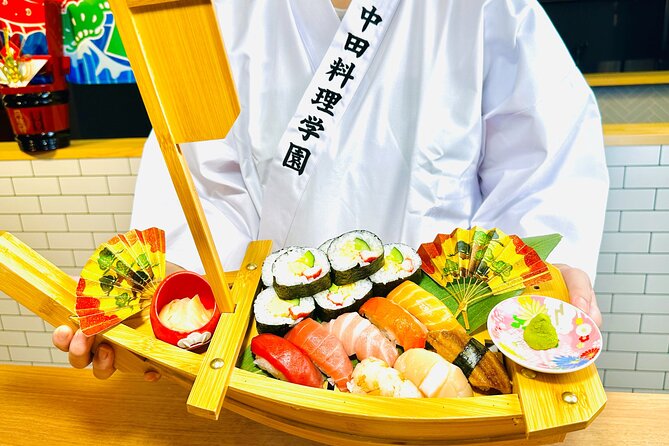
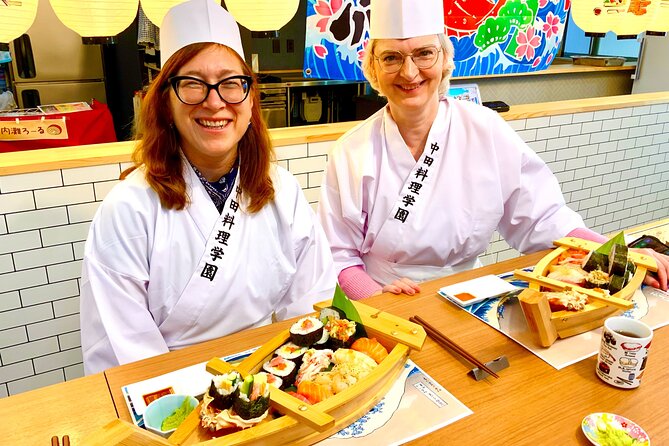
After the cooking, you sit down to eat the dishes you prepared. The tasting includes the sushi, jibuni, omelet, dashi-based soup, miso soup, and seasonal side dish.
A small aperitif is included: Kanazawa plum wine or local sake. Beer, soft drinks, and additional sake are available for purchase, but extra drinks are not part of the base price.
This shared meal is an important part of the experience. You can compare your results, ask follow-up questions, and enjoy the food without rushing straight out of the kitchen. The class has enough structure to teach real techniques, but the meal keeps it social.
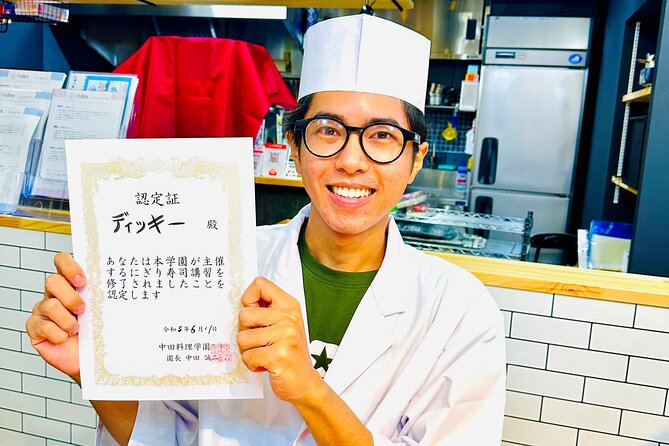
Photos are taken throughout the activity, and the school sends or provides them afterward, including air-drop delivery when possible. That lets you focus on cooking rather than constantly reaching for your phone. You also receive a Japanese certificate of completion with your name.
The certificate is a lighthearted souvenir, not a professional qualification. Still, it makes a pleasant final touch, especially for families and couples who want a physical reminder of the day.
What the $99.10 price includes
At $99.10 per person, this is not the cheapest way to eat in Kanazawa. You can buy a good restaurant meal for less, and you can certainly make miso soup or an omelet without paying for a class.
The value comes from what is bundled into the two-and-a-half hours. You receive instruction, ingredients, use of premium knives, a chef-style uniform, five prepared dishes, a tasting, one aperitif, live translation, photographs, recipes, and a certificate.
The fresh seafood is another part of the calculation. Ingredients from Omicho Market, particularly wild fish, add more value than a basic classroom meal using ordinary supermarket products.
I would consider the price fair for anyone who wants both lunch or dinner and a practical activity. It is especially reasonable if you would otherwise book a separate food tour and a restaurant meal. It is less compelling if you only want to eat sushi or if cooking is not of interest to you.
The English recipe arrives by email the day before the class. Save it on your phone, since it gives you a useful reference after you return home.
Who will enjoy this class most
This class suits you if you like to cook, want a food experience with local context, or prefer activities where you make something rather than watch a performance. It also works well for families, including teenagers, since the class combines hands-on work, humor, food, and a clear finished meal.
Couples can enjoy the small-group setting, and experienced home cooks may still find useful details in the sushi proportions, dashi preparation, knife work, and omelet technique. The class is not only for beginners, but it is not an advanced professional course either.
The instructor’s energetic style is part of the appeal. Seiji Nakata uses humor and patience, while his wife Ikumi may help create the welcoming atmosphere. If you prefer a quiet, highly formal lesson, this may feel more playful than expected.
You should also allow the full two hours and 30 minutes. The class involves several dishes, eating, photographs, and the certificate, so it is not a quick station-side stop.
Practical booking advice for Kanazawa
You receive a mobile ticket and confirmation at booking. Transportation is not included, but the school is close to public transportation and only a short walk from Kanazawa Station.
Free cancellation is available up to 24 hours before the scheduled start time. Inside that 24-hour window, the payment is not refunded and changes are not accepted. The activity also requires a minimum number of participants, so if the school cancels for that reason, you are offered another date or experience, or a full refund.
Most importantly, list dietary restrictions when booking. Vegan diets and fish-free dashi are not possible, and same-day changes cannot be made.
Should you book the Nakata Cooking School class?
I would book this if you want to understand Japanese food by making it yourself. The combination of Kanazawa jibuni, market seafood, dashi, sushi, and tamago gives you more range than a class focused only on sushi.
The strongest reasons are the small group, the close station location, the practical recipes, and Seiji Nakata’s lively teaching. The AI translation makes the class accessible in English, while the photos, recipes, aperitif, and certificate add value beyond the cooking itself.
Skip it if you avoid fish-based dashi, need a vegan class, or would rather spend your time eating than preparing food. For everyone else, $99.10 buys a substantial meal and several techniques you can use long after you leave Kanazawa.
FAQ
How long does the cooking class last?
The class lasts approximately two hours and 30 minutes.
Where does the class meet?
It meets at Nakata Cooking School and Knife Shop, 4-13, 2nd floor, Konohanamachi, Kanazawa, Ishikawa 920-0852, Japan. The school is about three minutes from Kanazawa Station.
How many people can join the class?
The activity has a maximum of eight participants.
Which dishes will I make?
You will make nigiri sushi, Kanazawa jibuni, dashi-maki tamago, dashi broth, a seasonal side dish, and miso soup. The class description refers to these as five Japanese dishes, with dashi and the seasonal items included in the meal preparation.
Is the class taught in English?
Real-time AI translation with voice and text is shown on a large screen. Seiji Nakata also speaks some English, and the translation system supports communication during the lesson.
Can the class accommodate vegan diets?
No. Vegan diets and guests who avoid fish-based dashi cannot be accommodated. Other dietary restrictions must be shared when booking because same-day changes are not possible.
What is included in the price?
The price includes the hands-on class, ingredients, use of premium Japanese knives, chef-style apron rental, tasting of the dishes, one plum wine or sake aperitif, real-time AI translation, photos, a Japanese certificate of completion, and an English recipe sent by email the day before.
More History Tours in Japan
- Kyoto: Learn Sushi at cooking studio with 20 years history
★ 5.0 · 3 reviews - Undiscovered Charleston: Half Day Food, Wine & History Tour with Cooking Class
★ 5.0 · 948 reviews - Florence Cooking Course with Historic Local Market Visit
★ 4.5 · 151 reviews - Taipei Cooking Class & Market Adventure in Historic Dadaocheng
★ 5.0 · 77 reviews
Just added around Japan
- Little EDO Sushi Making workshop in Kawagoe★ 5.0 · 18 reviews
- Sushi Making in a Century Old Kamakura Home★ 5.0 · 6 reviews
- Private Home-Style Cooking Class in Osaka with Local Mom Yoshiko★ 5.0 · 46 reviews
- Home Made Onigiri and Matcha Cooking Class in Hiroshima★ 5.0 · 11 reviews
- Private Japanese Cooking Class in Hiroshima with Machiko’s Family★ 5.0 · 35 reviews
- Make Piroshki in Hakodate and Visit Hidden Spots While Baking★ 5.0 · 3 reviews
- Fukuoka Japanese Home Cooking: Ginger Pork★ 5.0 · 3 reviews
- Ramen Cooking Class at Lake Kawaguchiko (Short Course)★ 5.0 · 42 reviews
Japanese & Sushi Cooking Classes, compared.
Sushi Making Tokyo Roll and Authentic Japanese Sushi Class
Read our review →
Tokyo: Roll and Authentic Sushi Making Class in Asakusa
Read our review →
Ramen Cooking Class at Ramen Factory in Kyoto
Read our review →
Tokyo: Sushi Making Class in a Happi Coat near a Famous Spot
Read our review →
Sushi Making Tokyo! Popular Maki Sushi & Japanese Sushi(+Recipe!)
Read our review →
Sushi Making Osaka Roll and Authentic Japanese Sushi Class
Read our review →
Tokyo Sushi Making Class in Tsukiji with Professional Chef
Read our review →
Ramen & Gyoza Cooking Class in Tokyo with Local Supermarket Visit
Read our review →Browse the lists this tour appears in