
Review · LUANG PRABANG
Evening Bamboo weaving & Cooking classes join-in
Bamboo does far more in Laos than provide building material. At The Bamboo Experience, you see it turned into household tools, weave your own small mat, and use bamboo shoots in a hands-on Lao cooking class. The setting is a simple pavilion beside rice fields, a pleasant change from Luang Prabang’s busy old town.
I like the clear connection between craft and food: you learn why bamboo matters, then taste it. I also like the small-group limit of 12, pickup and return by private car or tuk-tuk, and the chance to prepare your own dinner rather than simply watch a demonstration. The main consideration is timing: this is an afternoon and evening activity, and the four-hour program may feel long if you only want a quick cooking lesson.
Key points to know
- Bamboo is the main theme: Learn how one plant supports daily life in rural Laos, from household items to food.
- You make a souvenir: Weave a small mat or coaster from bamboo strips using a traditional technique.
- The cooking is hands-on: Help prepare sticky rice and Lao dishes with bamboo shoots as a key ingredient.
- The setting is rural and relaxed: The pavilion sits beside rice fields, with time for photos from the terrace.
- The group stays manageable: A maximum of 12 people allows room for practical instruction.
- Pickup starts at 4 pm: Transport to and from your hotel is included, though alcohol and tips are not.
A four-hour evening beyond Luang Prabang’s old town
The experience begins at about 4 pm, when a representative meets you in your hotel lobby. The venue is reached by car or tuk-tuk, with one pickup described as taking about 10 minutes. That short ride matters: you leave the central streets without committing to a full-day trip or a complicated transfer.
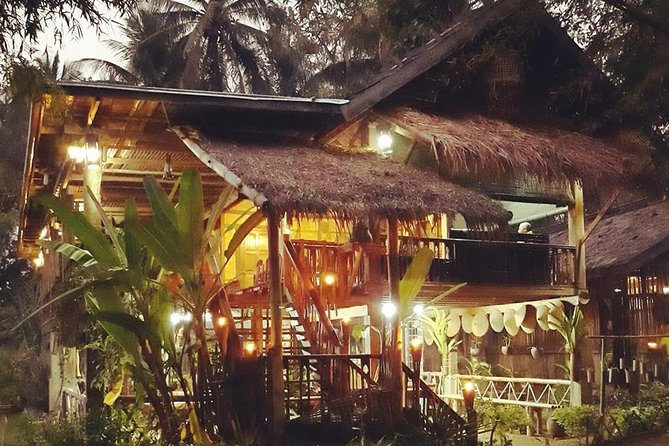
The destination is The Bamboo Experience, a rustic pavilion modeled on a traditional Lao house. It sits near rice fields, giving the class an open, semi-rural setting. You can expect a simple working environment rather than a polished restaurant kitchen. That is part of the appeal, though anyone looking for a formal culinary school should set expectations accordingly.
The program combines several activities rather than building the whole evening around cooking. You learn about bamboo, work with your hands, prepare food, eat dinner, and may take part in cultural music and ceremonial moments. The pace is designed to be social, with enough time for each activity.
Because the group can reach 12 people, you should have a better chance of handling the materials and cooking yourself. It is not a private class, but the group size is still small enough to keep the session personal.
More Hands-On Workshops in Luang Prabang:
- Luang Prabang: Evening Cooking Class & Local Baci Ceremony
★ 4.9 · 151 reviews - Luang Prabang: Bamboo Weaving Workshop & Cooking Class
★ 5.0 · 96 reviews - Luang Prabang: Cooking Class at the Former Royal Palace
★ 4.9 · 51 reviews
Why bamboo matters in Lao daily life
The opening lesson explains the role of bamboo in Lao culture. This is useful context, not a decorative introduction. In rural homes, bamboo can become household equipment, practical containers, utensils, building parts, and food. Seeing those uses before you begin the craft gives the rest of the evening a clear purpose.
Bamboo is common across Southeast Asia, but this class focuses on how it fits into Lao life. You are not simply handed a souvenir and told to copy a pattern. You first learn why the plant is so useful, then work with strips of it in a form that has been practiced for centuries.
I particularly like this connection because it makes the cooking class more meaningful. Bamboo shoots are not an exotic garnish added for effect. They are another example of a plant used in ordinary Lao food and daily life.
The presentation also helps you notice details later in Laos. After this experience, bamboo baskets, mats, tools, and household objects are easier to recognize as part of a living tradition rather than generic craft-market products.
Weaving a small bamboo mat by hand
The craft session is relaxing and practical. You weave a souvenir mat, sometimes described as a small coaster, from prepared strips of bamboo. The task uses a long-practiced technique, but you do not need to arrive with craft experience.
Expect the work to require patience. Bamboo weaving is made from repeated movements, so this is less about producing a perfect object and more about understanding how the pieces fit together. The finished item gives you something small to take home, but the real value is learning the method.
This is also a good point in the evening to slow down. Luang Prabang offers plenty of temples, markets, and food stops, yet a quiet craft activity gives you a different connection to the place. You are handling a local material instead of only taking photographs of finished goods.
Families and couples can work side by side, and solo participants can join the group without needing to perform for an audience. If your hands are not especially nimble, do not expect a flawless mat. The activity is meant to be approachable, not a test of professional weaving.
The pavilion terrace adds to the experience. From there, you can take photographs of the rice fields and the semi-rural surroundings. The view is not a grand scenic attraction, but it gives the evening a calm setting and a sense of distance from town.
Sticky rice, bamboo shoots, and the cooking lesson
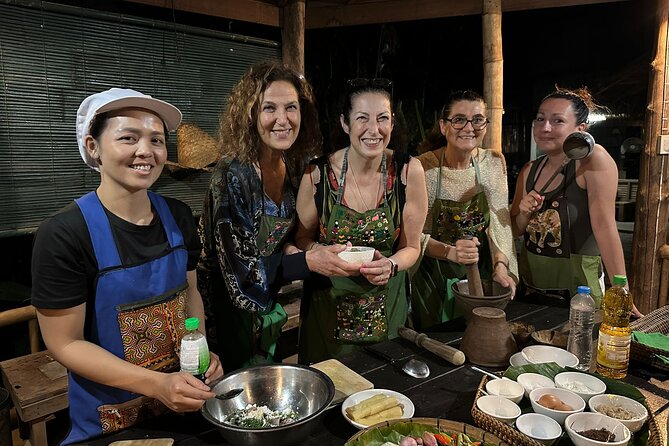
The cooking portion is interactive. You help prepare a Lao meal, with bamboo shoots serving as a key ingredient. You also take part in preparing sticky rice, including separating the rice from its husks. That extra step adds a useful lesson about the food itself before it reaches the cooking pot.
You should expect clear, practical instruction and plenty of participation. This is not a class where you sit at a table while someone else does all the work. The food is prepared by the group, then served as dinner after the cooking is finished.
The bamboo focus gives the menu a strong sense of place. You are not simply making familiar Southeast Asian dishes with a generic list of ingredients. The class shows how a local plant can move from the countryside into a Lao meal.
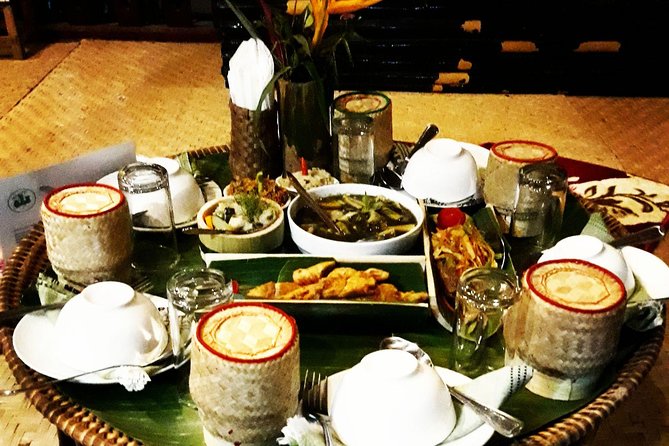
The food is also the reward for the earlier activities. You have handled the materials, helped prepare the ingredients, and then sit down to eat what you made. That makes the dinner feel more connected to the evening than a meal included at the end of a standard excursion.
Specific dishes are not listed, so you should not book this expecting a fixed menu of named recipes. The useful point is that bamboo shoots and sticky rice are central to the food activity. If you have dietary restrictions, ask about them before booking, since the available information does not explain substitutions or allergy procedures.
More Evening Classes in Luang Prabang:
- Chiang Mai: Evening Cooking Class and Local Market Visit
★ 4.9 · 648 reviews - Paris Evening Cooking Class French Dinner and Market Visit Option
★ 5.0 · 430 reviews - Evening Cooking Class in Organic Farm with Local Market Tour
★ 5.0 · 394 reviews - Tingly Thai Cooking School Evening Class
★ 5.0 · 335 reviews
Cultural touches that may be part of the evening
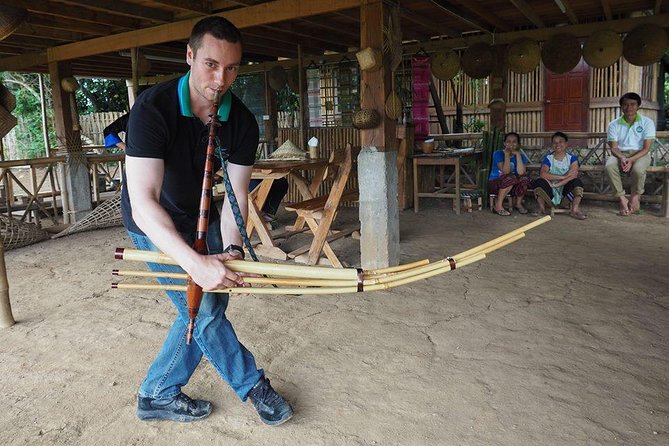
The program can include more than weaving and food. One account of the experience describes a shaman blessing and singing, followed by a local pipe player who both performed and let participants try the instrument. These details give the evening a cultural element beyond the cooking table.
The exact order and availability of these moments may vary, so treat them as possible parts of the program rather than guaranteed performances. Still, they show the kind of setting this is: a cultural evening built around local participation, music, food, and craft.
The blessing and singing may be meaningful to some people and simply interesting to others. You should approach them respectfully and follow the host’s guidance. The pipe activity offers a lighter, more playful finish, especially if you enjoy trying a traditional instrument rather than only watching a show.
This variety is one of the strongest reasons to choose the experience. You get several ways to connect with Lao culture, but none requires a long lecture. The evening keeps moving between listening, making, cooking, eating, and observing.
What the $25 price really covers
At $25, this is good value if you want more than a meal or a short craft demonstration. The price includes the four-hour experience, dinner, and private transportation to and from your hotel. You also receive instruction, ingredients, a bamboo craft activity, and access to the pavilion setting.
Transport is important here. A separate taxi or tuk-tuk ride would add cost and planning, while the included pickup makes the activity easy to fit into an evening in Luang Prabang. The short transfer also means you are not giving up an entire day of sightseeing.
The value depends on how much you enjoy participation. If you want a quick cooking class with a recipe card and a fast return to town, this may feel too broad. If you enjoy craft, food, and cultural activities combined, the price covers a good range of experiences.
Dinner is included, but alcoholic drinks are not. You should budget separately if you want alcohol, and tips are also excluded. The program is capped at 12 people, which helps preserve the hands-on quality without charging the price of a private class.
Group discounts are available, though the discount details are not specified. If you are booking for several people, ask for the current group rate rather than assuming a particular saving.
The practical shape of the evening
The listed start time is 4 pm, and the full activity lasts about four hours. That usually places the return around 8 pm, though the actual finish can vary. You should leave enough room afterward rather than booking a dinner reservation at a strict time.
Pickup is offered from your hotel lobby. Transport is described as private transportation, while an account of the ride mentions a tuk-tuk. The vehicle may therefore depend on the day and arrangement, but the important point is that you are collected and returned rather than finding your own way.
Mobile tickets are supported, and confirmation is provided at booking. The activity is near public transportation, though you should not need to rely on it if hotel pickup is arranged.
The experience requires good weather. If poor weather causes cancellation, you can receive a full refund or move to another date. For your own cancellation, you need to cancel at least 24 hours before the 4 pm start for a full refund. A cancellation inside 24 hours is not refunded, and late changes are not accepted.
Most people can participate, and the maximum group size is 12. No special access requirements are listed, so if you have mobility, food, or other needs, ask before booking rather than assuming the venue can accommodate them.
Who will enjoy this Lao cultural class
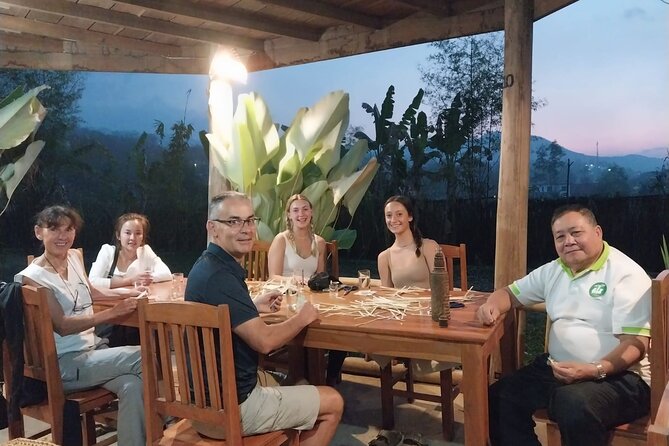
I would recommend this for people who like to make things, eat local food, and learn through activity. It suits couples, families, solo visitors, and small groups who want an evening with more substance than a restaurant meal.
It is especially useful early in your Luang Prabang stay. The bamboo lesson gives you cultural context for objects you may see around Laos, while the cooking session introduces ingredients and food traditions in a direct way.
Families should find the mix of weaving and cooking appealing, although younger children may need help with the bamboo strips and kitchen tasks. The small group limit is helpful here, since instruction is easier when the class is not crowded.
This is also a good fit if you are trying to support local employment and locally based tourism. The program uses a Lao setting, local materials, local food, and cultural activities rather than presenting a generic international cooking format.
You may want to skip it if your priority is temple sightseeing, nightlife, or a very short activity. The four-hour schedule is a commitment, and the evening includes several stages. You will get more from it if you are happy to slow down and take part.
Small details that improve the experience
Wear comfortable clothing that you do not mind using around food and natural materials. The available information does not give a formal dress code, but practical clothing is sensible for weaving and cooking.
Bring a phone or camera if you want photographs from the pavilion terrace. The rice-field setting is one of the pleasant features, and the craft gives you a natural subject for pictures without turning the evening into a photo stop.
Keep your expectations flexible about the exact sequence. The core elements are bamboo culture, weaving, cooking, dinner, and transport. The blessing, singing, and pipe music may add to the program, but the timing and availability of these cultural touches are not fully specified.
If you do not drink alcohol, there is no problem with the basic booking because dinner is included without alcoholic beverages. If you do drink, plan to pay separately.
Should you book The Bamboo Experience?
Book it if you want an active evening that links Lao food, rural life, bamboo craft, and local culture. The strongest part is the combination: you learn about bamboo, weave a small item, prepare sticky rice and bamboo-based food, then eat dinner in a pavilion beside rice fields.
The $25 cost is sensible because it includes transport, instruction, the craft activity, and dinner. The main tradeoff is time. This is not a quick stop, and the program may feel too long for anyone who prefers to keep every evening free for the night market and restaurants.
For most visitors with four hours to spare, I would choose it. It offers a practical look at Lao culture, a modest handmade souvenir, and a meal you helped create, all without the planning burden of arranging transport yourself.
FAQ
Where does the Bamboo weaving and cooking experience take place?
It takes place at The Bamboo Experience in Luang Prabang, in a rustic pavilion modeled on a traditional Lao house beside rice fields.
What time does the activity start?
The listed start time is 4 pm.
How long does the experience last?
It lasts approximately four hours.
Is hotel pickup included?
Yes. A representative meets you in your hotel lobby, and transport back to the hotel is provided after the experience.
What do I do during the bamboo activity?
You learn about bamboo’s role in Lao culture and weave a small souvenir mat from bamboo strips using a traditional technique.
What food is included?
Dinner is included. The cooking class uses bamboo as a key ingredient, particularly bamboo shoots, and includes preparation of sticky rice.
Are drinks included?
Alcoholic beverages are not included.
How many people can join the activity?
The maximum group size is 12 people.
Can I cancel for a full refund?
Yes, if you cancel at least 24 hours before the experience start time. Cancellations made less than 24 hours before the start are not refunded.
Just added around Luang Prabang
- Tribal Cooking Class in Luang Prabang Forest and visit★ 5.0 · 15 reviews
- Traditional Market Tour and Private Laotian Cooking Class with a Local★ 5.0 · 13 reviews
- Luang Prabang Cooking, Pottery & Candle Experience★ 5.0 · 4 reviews
- Full Day bamboo experience with cooking class & Kuang si waterfalls★ 5.0 · 5 reviews
- The Namkhan – Cooking Class★ 5.0 · 8 reviews
- Laos Cooking Class in Luang Prabang★ 4.5 · 7 reviews
- Luang Prabang: Bamboo Forest Cooking-class & Farm Visit★ 5.0 · 3 reviews
- Luang Prabang: Mekong River Cooking Class with Hotel Pickup★ 5.0 · 3 reviews
Cooking Classes, compared.
Half-Day Thai Cooking Class at Organic Farm in Chiang Mai
Read our review →
Florence: Pasta Cooking Class with Unlimited Wine
Read our review →
3 in 1 Cooking Class near Navona: Fettuccine, Ravioli & Tiramisu
Read our review →
Hanoi Cooking Class: Culture, Local Market & Meaning CSR Impact
Read our review →
5 Traditional Dishes Hanoi Cooking Class with Market Trip
Read our review →
Cooking Class and Lunch at a Tuscan Farmhouse with Local Market Tour from Florence
Read our review →
Chiang Mai: Cooking Class, Market & Thai Herbs Garden Tour
Read our review →Browse the lists this tour appears in