
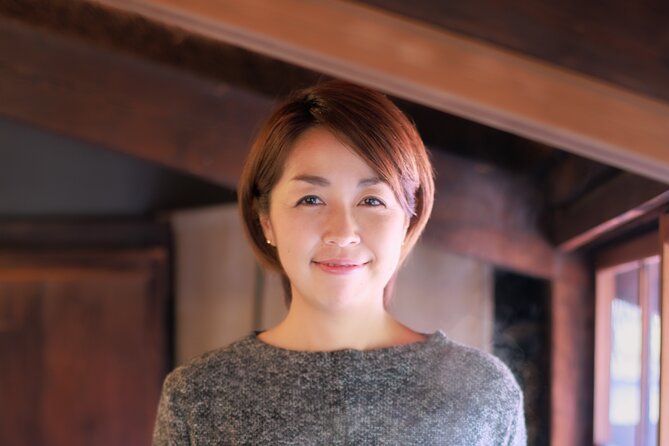
Review · JAPANESE & SUSHI
Japanese Cooking Class at a Traditional House in Nagano
A 130-year-old Machiya house gives this cooking class its real character. You cook on the second floor above a Japanese garden, using a kitchen made from sake-barrel lids, then sit down to eat what you prepared. I like the setting, and I like that Yuka explains dashi and local ingredients instead of treating Japanese food as a list of recipes.
The class also includes a look at an old storehouse, or Kura, with a Japanese harp and antique sewing machine. The main drawback is location: you meet at Shinano-Ōmachi Station, not in central Nagano City, and private transportation is not included. Check your train plan before booking.
Key points at a glance
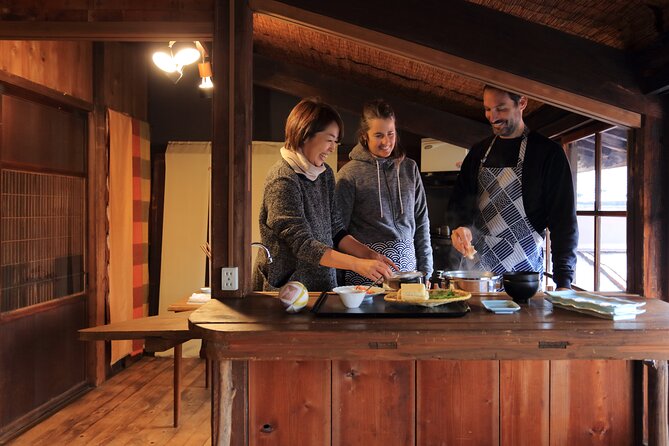
- A 130-year-old Machiya house: Cook in a former merchant’s home with a Japanese garden and a kitchen built from local sake-barrel lids.
- Three useful course choices: Pick Traditional Local Food, Temari Sushi, or Shabushabu.
- Japanese cooking basics: Learn how to make dashi and work with regional ingredients that may not appear in ordinary supermarkets.
- A full meal is included: Your cooked dishes come with other dishes, noodles or rice, and dessert.
- A private English-language class: Only your group participates, with aprons and cooking tools supplied.
- Good for home cooks: You receive recipes and tips, with vegetarian and vegan adjustments available.
Cooking in a former merchant’s Machiya
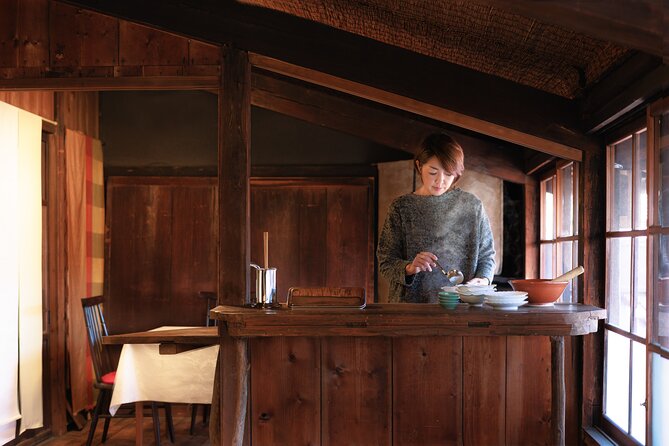
The house is the first course of the day. It was built more than 130 years ago in the Machiya style and once belonged to a Shoya, the leading merchant in the city at that time. That gives the class a sense of place before you even pick up a knife.
Machiya houses were built for practical living and work. This one has been carefully kept, so you can look around the unusual interior rather than simply enter a modern cooking studio. I like that the building is part of the lesson. You are not just preparing Japanese food in Japan. You are doing it in a house shaped by the town’s earlier commercial life.
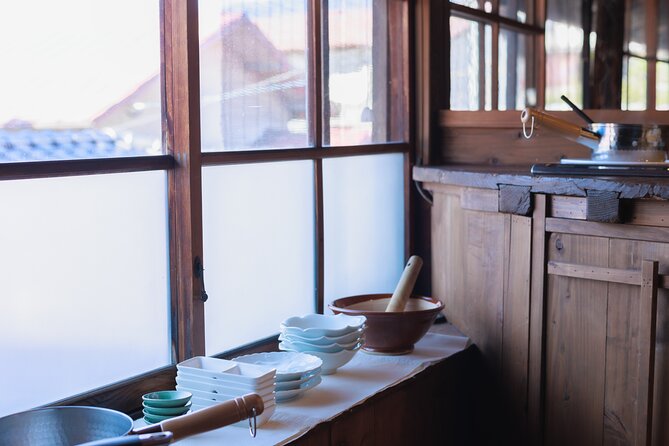
The cooking area is on the second floor. From there, you can see the Japanese garden, a small detail that makes the three-hour class feel calm and unhurried. The kitchen itself has a memorable local touch: its work surfaces are made from lids of sake barrels supplied by a nearby brewery.
That feature is more than decoration. It connects the kitchen to the ingredients and industries of the area. It also helps explain why this class feels different from a standard restaurant lesson. The building, the garden, the old storage space, and the cooking materials all belong to the same local story.
More Sushi and Japanese Classes in Japan:
- Sushi Making Tokyo Roll and Authentic Japanese Sushi Class
★ 5.0 · 3,971 reviews - Tokyo: Roll and Authentic Sushi Making Class in Asakusa
★ 4.9 · 1,957 reviews - Ramen Cooking Class at Ramen Factory in Kyoto
★ 5.0 · 1,937 reviews
A short look inside the Kura
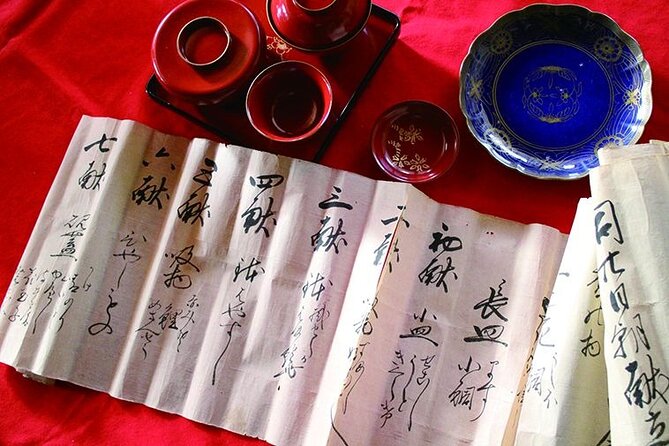
Behind the house is a Kura, an old-style storage building. During the experience, you can see objects kept there for many years, including a Koto, the Japanese harp, and an old sewing machine.
You should not expect a museum visit with a long formal tour. The Kura is part of the house visit and gives you a glimpse of domestic life in earlier Japan. For me, this is one of the best details for anyone who wants more than a food demonstration. The class links cooking with the way people once stored, worked, and lived.
The objects also give the experience a human scale. A Japanese harp and a sewing machine tell you something about home life that a display of old plates or formal artifacts might not. Still, the central activity remains cooking, so the Kura is a supporting part of the class rather than a separate attraction.
Three menus, three different ways into Japanese food
You can choose from three courses:
- Traditional Local Food Course
- Temari Sushi Course
- Shabushabu Course
The Traditional Local Food Course is the clearest choice if you want to focus on Shinano-Ōmachi and the food culture of the surrounding area. The city sits at the foot of the Northern Japanese Alps and has a cold climate. It was also a stopping point on the Salt Road, which connected the Sea of Japan with central Honshu.
Those conditions helped shape local food habits. A cold climate affects what can be grown, stored, and eaten. A trade route brings ingredients and techniques from elsewhere. The class uses this background to explain why local dishes are not simply copies of food found in Tokyo or Osaka.
Temari sushi offers a more visual lesson. The small, rounded sushi pieces are easy to understand as a complete meal and make a good choice if you want a hands-on introduction to sushi without signing up for a specialist fish-cutting workshop. The provided information does not promise a particular fish or topping, so you should confirm the menu if specific ingredients matter to you.
Shabushabu gives you another view of Japanese eating. The dish is prepared by swishing ingredients in hot broth, so the method is simple but social. It also puts broth and ingredient quality at the center of the meal. As with the sushi course, the exact ingredients are not specified, so ask ahead if you have dietary concerns beyond the available vegetarian or vegan adjustments.
The best course is not necessarily the one with the most famous name. Choose Traditional Local Food if regional context matters most, Temari Sushi if you want a hands-on sushi format, and Shabushabu if you prefer a shared hot-pot meal.
Learning dashi instead of only following a recipe
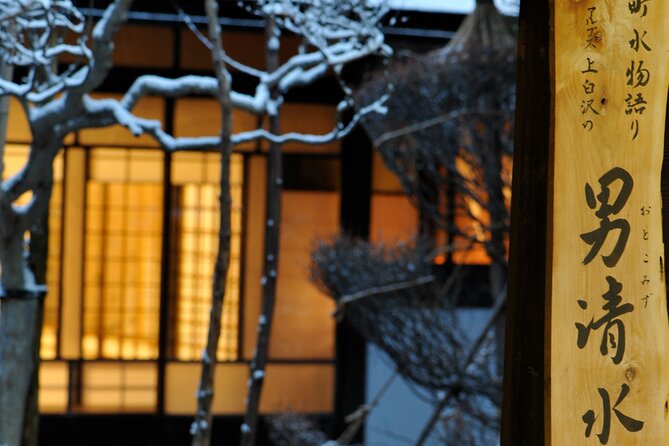
A major strength of the class is its attention to basics. Yuka explains how to make dashi, the foundational broth used in many Japanese dishes. That matters because dashi is one of the building blocks of Japanese cooking, not just another ingredient to add at the end.
You also get an introduction to locally made ingredients that may not be found in ordinary supermarkets. This is useful for two reasons. First, it helps you understand the flavor of the dishes you are eating in Nagano. Second, it gives you a better chance of repeating the recipes at home without blindly substituting ingredients.
The aim is practical. You receive a recipe and guidance on how to cook the dishes after returning to your own country. That does not mean every local ingredient will be easy to find, but the class is designed to explain how to adapt the methods at home.
I especially like this approach because a short cooking class can easily become a performance where you watch someone else do the work. Here, the stated focus is on touching the ingredients, learning the basics, and taking away usable instructions. The private format should also make it easier to ask questions, since only your own group takes part.
More Hands-On Workshops in Japan:
- Tokyo: Sushi Making Class in a Happi Coat near a Famous Spot
★ 4.9 · 1,377 reviews - Sushi Making Osaka Roll and Authentic Japanese Sushi Class
★ 5.0 · 1,220 reviews - Tokyo Sushi Making Class in Tsukiji with Professional Chef
★ 5.0 · 1,177 reviews - Ramen & Gyoza Cooking Class in Tokyo with Local Supermarket Visit
★ 5.0 · 823 reviews
What the three-hour schedule feels like
The activity lasts about three hours, from 11 a.m. to 2 p.m. on the listed Monday schedule. You meet at Shinano-Ōmachi Station, and the activity ends back at the meeting point.
The time is long enough for the house visit, cooking, explanations, and lunch without turning the experience into an all-day commitment. It also fits neatly into a morning or afternoon plan, though the 11 a.m. start means you should not schedule another distant attraction immediately afterward.
The listed stop is Iizura Omachi Tokusankan. Since private transportation is not included, pay attention to how you get from Shinano-Ōmachi Station to the cooking location. The information confirms the station meeting point and return point, but it does not provide a private vehicle or a detailed transfer service.
This is a useful experience to pair with a visit to the Omachi area rather than treat as a quick add-on from far away. The town’s position near the Northern Japanese Alps gives the class a strong regional setting, but you need to plan the rail journey and local movements yourself.
A proper lunch, not just a taste
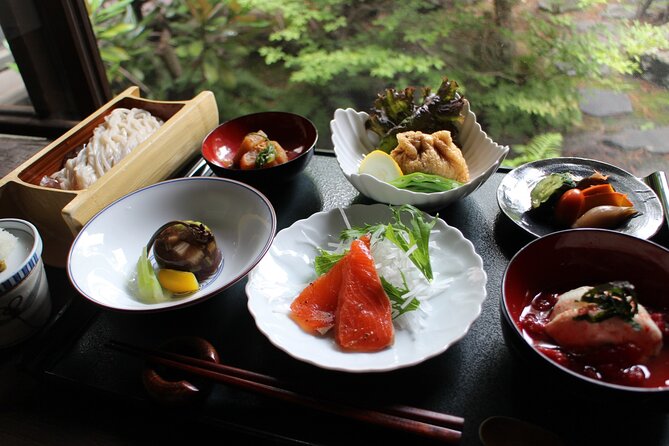
Your meal includes what you cook, plus additional dishes, noodles or rice, and dessert. That makes the $104.05 price easier to assess. You are paying for a three-hour private class, the house setting, instruction, ingredients, equipment, and a complete lunch rather than a small sample.
Alcohol is not included. Different types of sake are available as an option for people over 20, so you can add a local drink if it suits your plans. Since sake is optional, the base price remains focused on food and instruction.
The value depends on what you want from a cooking class. If you only want to eat an inexpensive Japanese lunch, this is costly. If you want a private English-language lesson, regional food context, a historic home, and recipes to use later, the price is more reasonable.
The meal also gives the class a satisfying finish. You do not leave with a few bites after standing at a counter. You sit down to eat the prepared food along with other parts of lunch. The exact dining arrangement is not described, so do not book it expecting a formal restaurant course with a fixed menu beyond your chosen class.
Why the private format matters
This is a private activity, meaning only your group participates. That is valuable if you want to ask basic questions, discuss ingredient substitutions, or move at a pace that suits your party.
A private class is especially helpful for couples and families with different levels of cooking experience. One person can ask about dashi while another focuses on technique or ingredients. It also makes the visit to the house feel more personal than a large group demonstration.
The trade-off is that a private class often costs more per person than a large shared lesson. At $104.05 per person, you are paying for that quieter format as well as the food and setting. For solo visitors, the price may be harder to justify unless the private arrangement is a major priority.
The English-language format removes the need to know Japanese cooking terms in advance. Still, the class is not described as a language lesson, so you should book it for food, culture, and practical instruction rather than for a broad introduction to Japanese society.
Vegetarian and vegan planning
The recipes can be adjusted for vegetarians and vegans. This is an important advantage, but you should state your needs when booking rather than wait until the class begins.
The available information does not list every ingredient or explain how each of the three courses is changed. If you avoid fish, seafood, meat, eggs, or dairy for a specific reason, ask which course offers the simplest adjustment.
The same advice applies to allergies. The class gives access to local ingredients that are not commonly found in regular supermarkets, which is part of its appeal. It also means you should communicate restrictions clearly before cooking.
Who will get the most from this class
I would choose this experience if you care about the setting as much as the food. The Machiya house, Kura, garden, sake-barrel kitchen, and old household objects give the lesson a strong sense of place.
It also suits people who want to cook Japanese food after returning home. The dashi lesson, local ingredient explanations, and take-home recipe make the class more useful than a meal that disappears as soon as you leave the table.
Couples are a natural fit, as are small groups who prefer a private class. The full lunch makes it easy to build into a day around Shinano-Ōmachi.
I would think twice if you have only one short stop in Nagano City, dislike scheduled activities on Mondays, or need a class close to a major city center. Shinano-Ōmachi is a separate destination, and transportation beyond the stated station meeting point is not included.
Booking details that matter
The listed price is $104.05 per person, and mobile tickets are accepted. The scheduled operating period shown is October 1, 2025 through March 31, 2026, with the same Monday, 11 a.m. to 2 p.m. timing also shown for October 1, 2026 through March 31, 2027.
Confirmation is provided at booking. The experience is near public transportation, but you should still check the train timetable and allow enough time to reach Shinano-Ōmachi Station.
Aprons and cooking tools are provided, so you do not need to pack special equipment. Comfortable clothing is still sensible for any cooking activity, but no required clothing or equipment is specified.
Cancellation is free up to 24 hours before the start time. A cancellation made less than 24 hours in advance is not refunded, and late changes are not accepted. The cut-off follows local time in Japan.
Should you book Yuka’s cooking class?
Book it if you want a personal food experience tied closely to one town. The best features are specific: Yuka’s English instruction, the former merchant’s Machiya house, the Kura with its old household objects, the sake-barrel kitchen, and the chance to learn dashi and local ingredients.
The class also received a perfect five-star rating from the three listed reviews, with particular praise for the delicious lunch, the authentic setting, the local foods, and the hosts. Those strengths match what the experience actually offers: a full meal and a genuine connection to the house and region.
Skip it if you are looking for a cheap lunch, a large selection of daily departure times, or an activity based in central Nagano City. For everyone else, especially couples and home cooks, this is a thoughtful three-hour use of time in Shinano-Ōmachi, with something useful to take home besides a full stomach.
FAQ
How much does the Japanese cooking class cost?
The price is $104.05 per person. The cost includes the cooking class, ingredients, aprons, cooking tools, and lunch with additional dishes, noodles or rice, and dessert.
How long does the experience last?
The class lasts about three hours. The listed schedule runs from 11 a.m. to 2 p.m.
Where do I meet the group?
The meeting point is Shinano-Ōmachi Station in Omachi, Nagano. The activity ends back at the meeting point.
Which cooking courses can I choose?
You can choose Traditional Local Food, Temari Sushi, or Shabushabu. The exact ingredients for each course are not specified in the available information.
Are vegetarian and vegan options available?
Yes. The recipes can be adjusted for vegetarian and vegan diets. Tell the provider about your needs when booking so the appropriate adjustments can be arranged.
Is sake included, and can I cancel for a refund?
Sake is not included, but different types are available as an optional purchase for people over 20. You can receive a full refund if you cancel at least 24 hours before the experience begins.
Just added around Japan
- [From Okayama] Okayama & Kurashiki Full Day Tour★ 5.0 · 15 reviews
- Cook Homestyle Ramen and Gyoza from scratch★ 5.0 · 4 reviews
- Sushi Making Experience Luxury Course in Nara★ 5.0 · 36 reviews
- Udon and Tempura Cooking Class in Nara★ 5.0 · 3 reviews
- Sushi Making Experience Class in Naha Makishi Public Market★ 5.0 · 35 reviews
- Grandma’s Traditional Japanese Cooking Class in Nagoya★ 5.0 · 5 reviews
- Zen Style Voice Meditation and Cooking Workshop in Motobu Okinawa★ 5.0 · 9 reviews
- Japanese food Cooking at Home★ 5.0 · 12 reviews
Japanese & Sushi Cooking Classes, compared.
Sushi Making Tokyo Roll and Authentic Japanese Sushi Class
Read our review →
Tokyo: Roll and Authentic Sushi Making Class in Asakusa
Read our review →
Ramen Cooking Class at Ramen Factory in Kyoto
Read our review →
Tokyo: Sushi Making Class in a Happi Coat near a Famous Spot
Read our review →
Sushi Making Tokyo! Popular Maki Sushi & Japanese Sushi(+Recipe!)
Read our review →
Sushi Making Osaka Roll and Authentic Japanese Sushi Class
Read our review →
Tokyo Sushi Making Class in Tsukiji with Professional Chef
Read our review →
Ramen & Gyoza Cooking Class in Tokyo with Local Supermarket Visit
Read our review →Browse the lists this tour appears in