
Review · OSAKA
Osaka Sushi Making Experience
The best part of this 90-minute sushi class is that you do more than sit down and eat. You measure rice, shape sushi, learn the difference between nigiri and gunkan, and finish with 12 pieces you made yourself. The class is in Dōtonbori, so it fits neatly into an afternoon or evening around Namba.
I like the small maximum of 16 people, which gives the instructors room to correct your technique. I also like the practical detail: one class taught the 10-gram rice measure for a proper rice-to-topping ratio. The main thing to consider is that the experience has a polished, tourist-friendly feel, and some people may find the pace a little quick.
Key points at a glance
- Make 12 sushi pieces: Practice nigiri and gunkan, then eat what you prepare.
- Central Dōtonbori location: The meeting point is in Nishi-Shinsaibashi, near Namba and public transport.
- Clear multilingual instruction: Guidance is offered in English, Chinese, and Korean.
- Dietary choices available: Vegetarian, vegan, and halal sushi can be arranged on request.
- Friendly, lively teaching: Hosts including Mika, Kosei, Yui, Mako, Toshiki, and Hana have been praised for patience and good humor.
- Good value at $29.85: You get instruction, ingredients, 12 sushi pieces, and all fees, with alcohol handled separately.
What happens during the 90-minute Osaka sushi class
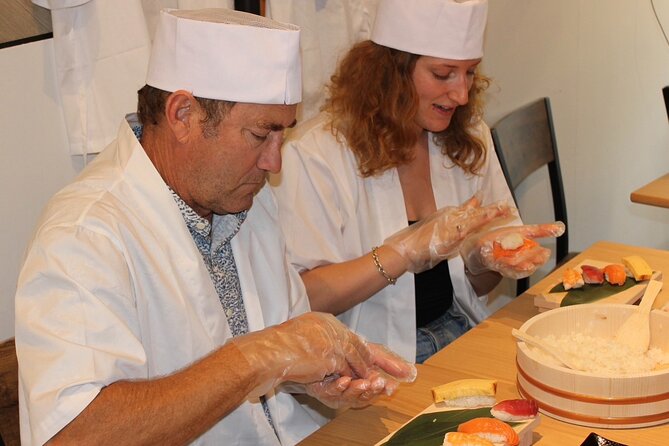
This is a hands-on lesson rather than a demonstration where you watch a chef work from across the room. The format is simple: arrive at Sushi Making Experience Namba, put on the sushi-chef costume, learn the basic ideas behind Japanese sushi, and then make your own set.
The class focuses on 12 pieces of sushi and two main styles: nigiri and gunkan sushi. Nigiri is the familiar hand-shaped sushi with rice beneath a topping. Gunkan, sometimes called battleship sushi, has a strip of seaweed around the rice and is suited to softer toppings.
You are shown how much rice to use, how to form it without crushing it, and how to keep each piece neat. One particularly useful lesson is the 10-gram rice measure. That sounds fussy until you try making sushi yourself. Too much rice makes a heavy piece, while too little leaves the topping out of balance.
The class also explains the ingredients needed to repeat the process at home. You will not become a sushi chef in an hour and a half, but you should leave with a workable sense of the rice, seaweed, toppings, and shaping methods involved.
More Sushi and Japanese Classes in Japan:
- Sushi Making Tokyo Roll and Authentic Japanese Sushi Class
★ 5.0 · 3,971 reviews - Tokyo: Roll and Authentic Sushi Making Class in Asakusa
★ 4.9 · 1,957 reviews - Ramen Cooking Class at Ramen Factory in Kyoto
★ 5.0 · 1,937 reviews
Meeting the instructors in Dōtonbori

The instructors are a major part of the experience. The teaching team includes hosts named Mika, Kosei, Yui, Mako, Toshiki, Hana, Shiori, and others, so the exact pair leading your session can vary.
The teaching style is warm and active. Instructors demonstrate each step, then watch you try it. They offer corrections on shaping and rice quantity, and the class is conducted in English, Chinese, or Korean. That matters here because sushi looks easy until your rice starts sticking to your fingers and your neat little shape turns into a lumpy handful.
The best sessions appear to benefit from the personal attention of two instructors. If your group is small, you may receive very direct help. Some sessions have even operated with only one booking, creating a private-class feel without a private-class price.
The tone is deliberately cheerful. You may take photos, discuss Osaka and Japanese writing, and receive a certificate with your name written in Kanji. That certificate is a playful extra, not a formal qualification, but it gives the class a pleasant finish.
One caution: the energetic presentation will not suit everyone. Most people will enjoy the upbeat hosts, but if you prefer a quiet, formal cooking lesson, the friendly jokes and lively delivery may feel a little staged.
Learning nigiri, gunkan, and the logic of sushi
The class is useful because it gives names and structure to sushi styles you may already eat without thinking about how they are made. You learn that sushi is not one single format, and that shape affects both appearance and how a piece is eaten.
Nigiri demands a light touch. The rice needs enough pressure to hold together, but too much handling makes it dense. Gunkan requires a different approach because the seaweed forms a wall around the rice. That simple change gives you a clear lesson in how sushi construction matches the topping.
You also learn about the ingredients required to make sushi at home. The information is aimed at beginners, so you will not be expected to know Japanese culinary terms before arriving. The instructors explain the steps in a way that makes the activity suitable for first-time cooks, couples, families, and solo participants.
This is not a serious professional training course. It is a friendly introduction with enough technique to help you try sushi at home. You should think of it as a practical food activity, not a replacement for years of apprenticeship.
Eating the 12 pieces you made
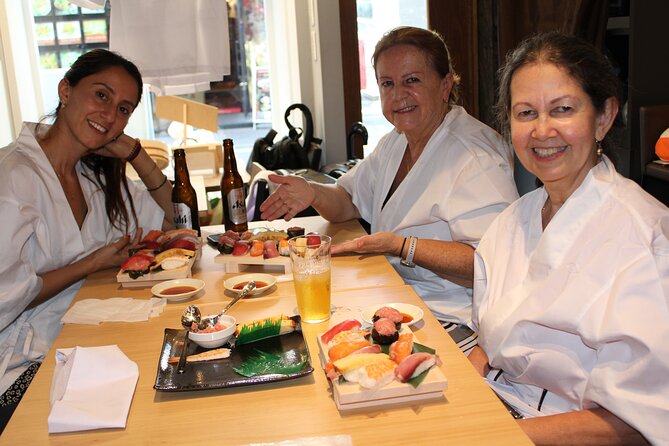
The payoff comes at the end, when you sit down with the sushi you shaped. The included food is the 12 pieces prepared during class, along with snacks, and the experience includes all fees and taxes.
Your pieces may not look perfect. That is part of the fun. A few uneven shapes make the final plate feel like your own work rather than a restaurant order. The important point is that you get enough food to make the activity satisfying, not just a token sample.
Several participants found the sushi fresh and tasty, and the meal is especially enjoyable because you understand the work behind each piece. You have measured the rice, handled the ingredients, and tried to create a clean shape. Even a slightly crooked piece tastes better when you made it yourself.
The class may also include Japanese sake and beer, but alcoholic beverages are listed separately from the included fees. If you want a drink with your sushi, check the current arrangement and expect to pay extra. The afternoon and evening start times let you choose the class around your appetite. An evening session can work well as a light meal before continuing through Dōtonbori.
Same place, a different menu:
- Tokyo: Sushi Making Class in a Happi Coat near a Famous Spot
★ 4.9 · 1,377 reviews - Sushi Making Tokyo! Popular Maki Sushi & Japanese Sushi(+Recipe!)
★ 5.0 · 1,314 reviews - Sushi Making Osaka Roll and Authentic Japanese Sushi Class
★ 5.0 · 1,220 reviews - Tokyo Sushi Making Class in Tsukiji with Professional Chef
★ 5.0 · 1,177 reviews
Dietary options, with one point to clarify

Vegetarian, vegan, and halal sushi are available by request. You should make that request when booking rather than waiting until you arrive, since the ingredients need to be arranged in advance.
The vegetarian and vegan options make this activity more practical for mixed groups. You do not have to leave one person behind while everyone else attends a seafood-based class. Halal availability also helps groups with different food requirements plan one shared activity.
There is one fair point to keep in mind. A vegan set may contain fewer varieties than a seafood set, with more vegetables and fewer of the toppings used for other menus. The experience remains hands-on, but the ingredients may not feel equal in variety. If that matters to you, ask what your particular menu will contain before booking.
Location, timing, and finding the meeting point
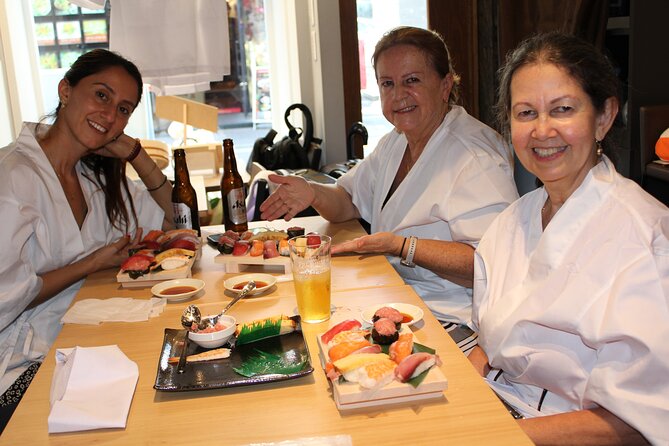
The activity begins and ends at Sushi Making Experience Namba1A, at 2-chome-6-11 Nishishinsaibashi, Chūō Ward, Osaka. It is described as being in the Dōtonbori area and near public transportation, making it easy to pair with shopping, nightlife, or a walk through Namba.
Allow a few extra minutes to find the exact entrance. The central streets can be confusing, and at least one person had trouble locating the venue. Dōtonbori is full of signs, side streets, restaurant entrances, and similar-looking buildings, so do not cut it close.
The class lasts about 1 hour and 30 minutes. That is long enough to learn, make, and eat without taking over your entire day. You can choose an afternoon or evening time, which is useful if you are fitting the class between Osaka Castle, Kuromon Market, shopping, or a night out.
The activity returns to the starting point. You do not need to arrange a separate ride at the end, and the mobile ticket makes arrival straightforward once you have found the venue.
Is $29.85 good value?
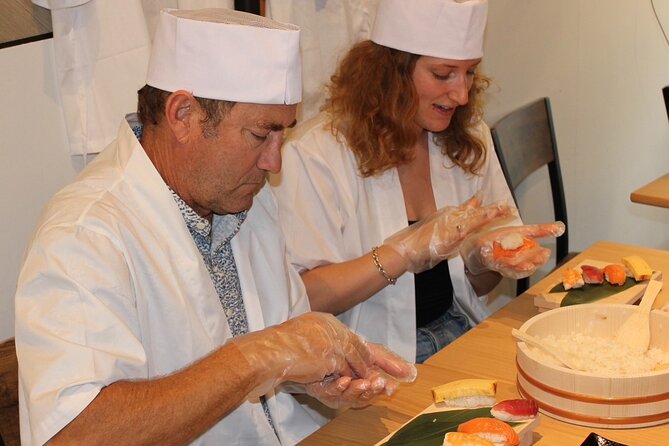
At $29.85 per person, this is a fair price for a central Osaka food activity. You receive the lesson, ingredients, 12 pieces of sushi, snacks, and taxes and fees. You also get a structured experience that would be difficult to reproduce on your own during a short visit.
The value is strongest if you want an activity rather than simply a meal. A restaurant can serve you sushi with less time and perhaps more variety, but it will not teach you how the pieces are formed or give you the chance to make them yourself.
The price is also reasonable for families and couples who want a break from sightseeing. Children can take part, and the activity has been enjoyed by a family of five. The certificate, photos, costume, and friendly instruction add to the entertainment value without requiring a full-day commitment.
Budget a little extra if you want beer or sake. Alcohol is not included in the listed price, even though Japanese drinks may be part of the setting or available during the activity.
Who should book this sushi experience?
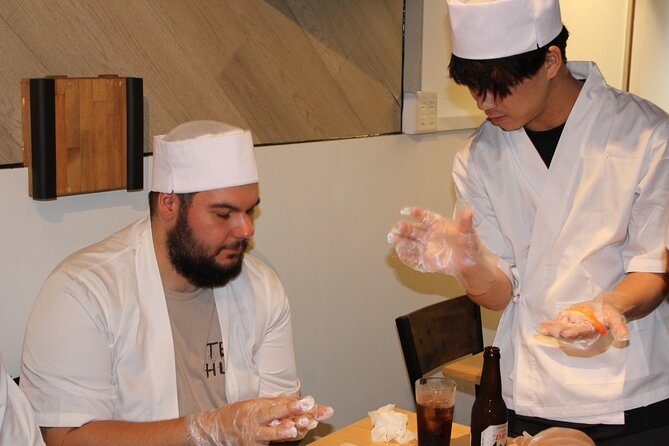
I would choose this class if you want a short, social introduction to Japanese food. It suits first-time sushi makers, couples, families, and solo visitors who like meeting instructors and doing something active.
It is also a good choice if you want an activity that works in bad weather. You spend the session indoors, and the Dōtonbori setting gives you plenty to do before or afterward.
The class is especially useful for:
- First-time sushi makers who want clear instruction
- Families looking for a hands-on Osaka activity
- Couples who prefer making dinner to simply ordering it
- Solo visitors who enjoy small-group classes
- People seeking vegetarian, vegan, or halal food options
- Anyone hoping to make sushi at home after returning from Japan
I would hesitate if you want a quiet, highly traditional culinary lesson. The format is friendly and commercial rather than intimate and formal. You may also find the pace brisk if you want long explanations or lots of time to perfect each piece.
Practical tips for a smoother visit
Arrive early enough to find the address. The central location is convenient, but the exact meeting point can be harder to spot than the surrounding Dōtonbori signs suggest.
Request your dietary menu in advance. Vegetarian, vegan, and halal sushi are available, but the kitchen needs notice.
Keep your expectations realistic about appearance. Your sushi may not look like a professional chef’s plate on the first attempt. Focus on the rice texture, the shaping technique, and the pleasure of eating your own work.
If you want alcohol, check whether sake or beer is available during your chosen session and bring room in your budget. The listed price does not include alcoholic drinks.
Finally, remember the cancellation rule: you can receive a full refund if you cancel at least 24 hours before the local start time. Changes or cancellations made inside that window are not accepted for a refund.
Should you book the Dōtonbori sushi class?
Yes, if you want a cheerful, affordable food activity with real participation. The strongest reasons to book are the central location, clear multilingual instruction, 12 pieces of sushi to make and eat, and the patient help available in small groups.
I would recommend it most for people who want to leave Osaka with a new skill, even a modest one. You will not master every part of sushi making in 90 minutes, but you can learn the basic shapes, understand the role of rice quantity, and gain enough confidence to try again at home.
Skip it if your priority is a formal chef-led lesson, a large seafood selection, or a quiet restaurant meal. For everyone else, this is a good-value way to turn sushi from something on your plate into something you know how to build.
FAQ
Where does the Osaka sushi-making class take place?
The class starts and ends at Sushi Making Experience Namba1A, 2-chome-6-11 Nishishinsaibashi, Chūō Ward, Osaka, Japan.
How long does the activity last?
The experience lasts approximately 1 hour and 30 minutes.
How many pieces of sushi will I make?
You will make 12 pieces of sushi.
Which sushi styles are included?
The class includes two main styles, nigiri sushi and gunkan sushi.
Is the class taught in English?
Yes. Guidance is available in English, Chinese, and Korean.
Are vegetarian options available?
Yes. Vegetarian sushi is available, and vegetarian, vegan, and halal menus can be requested.
Is alcohol included in the price?
No. Alcoholic beverages are not included in the listed price. Japanese sake and beer may be available separately.
What is included in the $29.85 price?
The price includes the sushi-making activity, 12 pieces of sushi, snacks, all fees, and taxes.
How many people can join the class?
The activity has a maximum of 16 participants.
Can I cancel for a full refund?
Yes. You can cancel at least 24 hours before the experience start time for a full refund. Cancellations made less than 24 hours in advance are not refunded.
Just added around Japan
- Vegan/Vegetarian Ramen and Gyoza by Bentoya cooking★ 5.0 · 59 reviews
- Ramen Making from Scratch with Tokyo Mom(Vegan Option Available)★ 5.0 · 39 reviews
- Shibuya Tokyo: Sushi Making Class (Vegan/Vegetarian/Halal)★ 4.7 · 29 reviews
- Ramen & Dumpling Cooking in Tokyo with Chef/Vegan possible★ 5.0 · 107 reviews
- Tokyo Haneda: Bento & Ramen Gyoza Cooking Class in a Local home★ 5.0 · 9 reviews
- Hands-on Japanese Cooking in a Shinjuku Home Kitchen with Satoru★ 5.0 · 19 reviews
- Private Japanese Home Cooking Class in Kyoto with Michiyo★ 5.0 · 55 reviews
- Near Fushimiinari: Kyoto Home Cooking Class & Supermarket tour★ 5.0 · 100 reviews
Japanese & Sushi Cooking Classes, compared.
Sushi Making Tokyo Roll and Authentic Japanese Sushi Class
Read our review →
Tokyo: Roll and Authentic Sushi Making Class in Asakusa
Read our review →
Ramen Cooking Class at Ramen Factory in Kyoto
Read our review →
Tokyo: Sushi Making Class in a Happi Coat near a Famous Spot
Read our review →
Sushi Making Tokyo! Popular Maki Sushi & Japanese Sushi(+Recipe!)
Read our review →
Sushi Making Osaka Roll and Authentic Japanese Sushi Class
Read our review →
Tokyo Sushi Making Class in Tsukiji with Professional Chef
Read our review →
Ramen & Gyoza Cooking Class in Tokyo with Local Supermarket Visit
Read our review →Browse the lists this tour appears in