
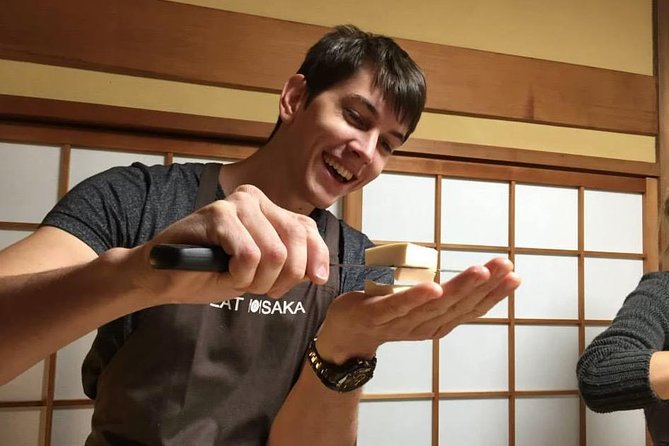
Review · OSAKA
Eat Osaka: Street Food Cooking in an Authentic Kitchen!
Osaka food is best understood with your hands busy. In this small class, you work in an old Japanese restaurant kitchen, using professional tools to prepare local dishes rather than simply eating them at a counter. Handmade udon and Osaka-style cooking are the main draw.
I like the small maximum of eight people, since it gives you room to ask questions and get help at the stove. I also like the friendly teaching style linked with guides such as Miki and Nathalie, or Natalie, whose names appear with slightly different spellings in the available information. The main thing to check is the exact menu for your date, since the description lists several different dishes.
Key points at a glance
- Old Japanese house setting: Cook inside a traditional-style kitchen rather than a modern chain restaurant.
- Small groups of up to eight: You should receive more direct help than in a large class.
- Several Osaka favorites: Dishes listed include udon, vegetable tempura, okonomiyaki, yakitori, cucumber pickles, and mochi.
- Local drinks after cooking: Beer, sake, and green tea are available to match the food.
- English-language support: A local bilingual chef leads the class and explains the reasons behind the methods.
- Easy cancellation window: Cancel at least 24 hours before the start for a full refund.
Cooking Osaka food in an old Japanese house
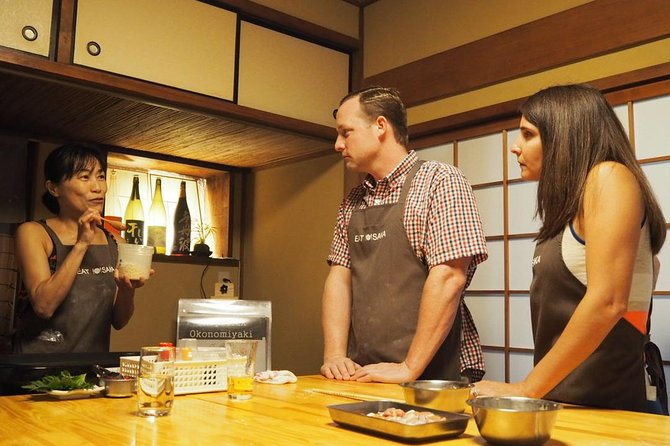
The setting gives this class much of its character. You meet at Eat Osaka Higashinari, at 1 Chome-2-10 Higashinaka, Higashinari Ward, Osaka. The cooking takes place in an old Japanese house that has been arranged as a purpose-built studio.
That combination matters. You are not just following a recipe in a generic classroom. The house gives you a sense of how Japanese food preparation can fit into a compact domestic space, with shared work areas and hands-on tools. The atmosphere should feel more personal than a large demonstration kitchen.
The address is near public transportation, and one family found it a short walk from the train station. The exact station and walking directions are not provided here, so check the meeting instructions carefully before setting out. In Osaka, a few minutes of map confusion can quickly turn into a rushed start.
The activity lasts about two and a half hours. That is long enough to cook several dishes, sit down to eat, and still leave time for questions without turning the class into an all-day commitment.
More Food and Drink Tours in Osaka:
- Osaka Sake Tasting with Takoyaki Cooking
★ 5.0 · 156 reviews - Osaka Cooking Class and Sake Tasting with Local Supermarket Visit
★ 5.0 · 79 reviews - Osaka: Cooking Class & Sake Tasting with Local Market Visit
★ 4.8 · 31 reviews
A small group with room for questions
The maximum group size is eight people. That is a useful limit for a cooking class, especially when you are handling knives, hot oil, noodles, and shared equipment.
A smaller class also changes the social side of the experience. You may cook alongside another couple or a family, rather than standing anonymously behind a crowd. The available comments describe the class as relaxed and welcoming, with hosts who encourage questions and explain the reasons behind each step.
That teaching style is important for beginners. A recipe card can tell you what to add, but it rarely tells you how the dough should feel, how much batter to use, or why a technique belongs to Osaka cooking. The class is designed to provide that missing context through a bilingual local chef.
Guides named Miki and Nathalie, also spelled Natalie in some of the supplied material, receive especially warm attention. The names are not presented consistently, so I would not book around a particular instructor unless Eat Osaka confirms who will lead your session. The useful point is that the teaching is presented as personal, patient, and conversational.
What you may cook during the session
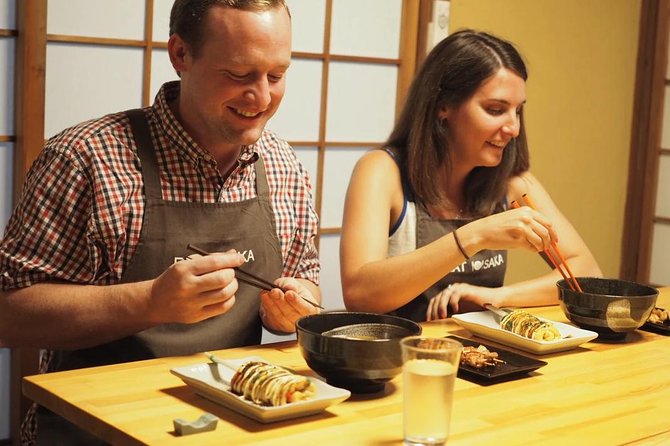
The menu needs a little explanation. One part of the description highlights Osaka-style tempura, handmade udon, pickled cucumber, and a sweet mochi dessert. Another description focuses on making okonomiyaki from scratch and preparing yakitori skewers with a signature sauce.
That is not necessarily a problem, but it does mean the menu may vary by session or the published details may combine more than one version of the class. Ask Eat Osaka what your date includes if a particular dish matters to you.
Handmade udon
Making noodles by hand is one of the most distinctive parts of the class. You work with the dough, learn the basic process, and prepare udon rather than simply watching a chef boil it. The available details specifically mention making udon noodles and pairing them with tempura.
For you, the value is practical. Udon is a dish you can recognize anywhere in Japan, but making the noodles gives you a better feel for the texture and labor behind the bowl. It is also a forgiving activity for first-time cooks, since the process is tactile and easy to follow with close guidance.
The class is not presented as a professional cooking course. Expect useful techniques and an understanding of the process, not a certificate or advanced culinary training.
More Food Experiences in Osaka:
- Osaka Street Food Festival :Takoyaki&Okonomiyaki for Families
★ 5.0 · 13 reviews - Osaka Dotonbori: Vegan/Vegetarian Sushi Making Experience
★ 5.0 · 9 reviews - Okonomiyaki&Takoyaki for Families:Osaka Street Food Festival
★ 5.0 · 4 reviews - Osaka: Sushi Making Class and Dotonbori Food Tour
★ 4.7 · 3 reviews
Vegetable tempura
Vegetable tempura appears in the class details and in the description of what participants may prepare. The focus is on learning the method, using professional-level ingredients and tools with help from the chef.
Tempura looks simple, but the batter and cooking process reward careful timing. This is the sort of dish where a teacher can help far more than a printed recipe. You can ask questions as you work, and the small group should make it easier to see what the chef is doing.
If you are vegetarian, the class may be a good fit, but do not assume the full menu is vegetarian. One participant received a vegetarian accommodation, which suggests the provider can sometimes adjust the food. Contact Eat Osaka before booking so your needs are clear.
Okonomiyaki and yakitori
The main description also presents Osaka-style okonomiyaki, the savory pancake often associated with the city, as a central dish. You are meant to make it from scratch, rather than simply add toppings to a prepared base.
This is a good match for Osaka because okonomiyaki is casual, filling, and built around a shared cooking culture. You learn how the mixture comes together and then eat the result in the same session.
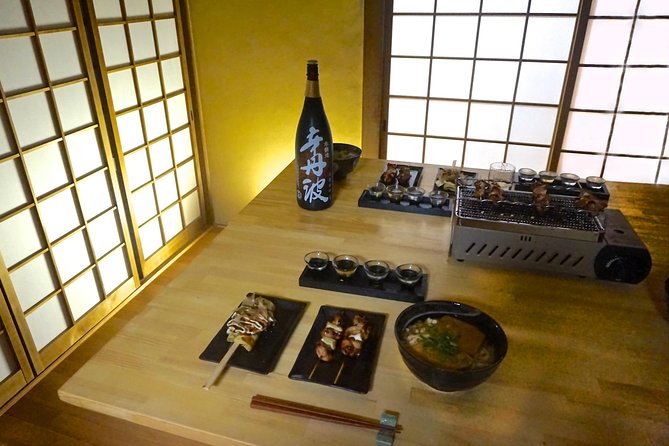
Yakitori skewers with a signature sauce are also listed. Since the other menu description mentions tempura instead, confirm which option applies to your booking. You may receive okonomiyaki and yakitori, or a menu built around udon and tempura.
Pickles, mochi, and the meal afterward
Pickled cucumber and a sweet mochi dessert round out the menu described in the class information. These smaller dishes matter because they show more than one side of Japanese food. You are not spending the entire session on a single heavy main course.
Mochi gives the class a sweet finish and lets you practice a different texture from noodles or batter. The information does not specify the exact filling or style, so treat it as a dessert-making component rather than expecting a particular flavor.
Once the cooking is complete, you sit down and eat what you made. Beer, sake, or green tea can accompany the meal. Welcome drinks are included, while the details do not clearly state that every drink served with the final meal is included in the price, so check that point if it affects your budget.
The sit-down meal is one of the strongest parts of the format. You see the result of your work immediately, and the food becomes a shared experience rather than a series of disconnected cooking tasks. It also gives you a natural pause to talk with the chef and the other people in the class.
A closer look at the teaching style
The class is built around instruction, not a quick photo opportunity. The chef demonstrates, explains, and helps you use the equipment. The available information repeatedly points to patient guidance and an atmosphere where questions are welcome.
I would recommend this most to people who enjoy learning by doing. If you only want to taste Osaka specialties, a food walk or market visit may offer more variety. Here, you spend time on preparation, which means fewer dishes but more understanding of how they are made.
The bilingual format should help English-speaking visitors follow the process. Still, cooking classes can move quickly once several dishes are underway. Listen closely at the beginning, and ask for clarification before you start a new step. The small group makes that easier.
Families can also consider this class. A family booking described the hosts as warm and patient, with the activity working well for different ages. The information does not state a minimum age, so confirm age requirements before booking for young children.
The value of the $79.28 price
At $79.28 per person, this is not the cheapest way to eat in Osaka. You can buy a filling street-food meal for far less. The price makes more sense if you count the food, instruction, use of the kitchen, welcome drink, and time with a local chef.
The small group adds real value. A cheaper class with a large crowd may leave you watching from the back, while a group capped at eight should give you more direct help. That matters most during dough preparation, frying, and any work involving hot equipment.
You should also judge the price by how much you value participation. If you want a two-and-a-half-hour cultural activity that results in a full meal, the cost is reasonable. If your priority is simply eating as many Osaka dishes as possible, spend the money on several casual meals instead.
The strong satisfaction rate and five-star score suggest the format has worked well for many bookings, but I would still focus on the practical fit. Confirm the menu, note any dietary restrictions, and make sure you want a seated cooking class rather than a moving food tour.
Timing, meeting point, and cancellation
The class starts and ends at Eat Osaka Higashinari. It does not include a separate transfer to another restaurant or attraction. Plan your day around the full two-and-a-half-hour session, plus time to reach the house and find the entrance.
A mobile ticket is provided, and confirmation is sent when you book. Public transportation is nearby, but the supplied information does not identify a particular station or give a walking time. Use the exact address rather than relying on a broad search for Eat Osaka.
Free cancellation is available if you cancel at least 24 hours before the local start time. Cancellations or changes made inside that window are not refunded or accepted. The class also requires a minimum number of people, so if Eat Osaka cancels because that minimum is not met, you receive a different date, another experience, or a full refund.
Who should book this Osaka cooking class?
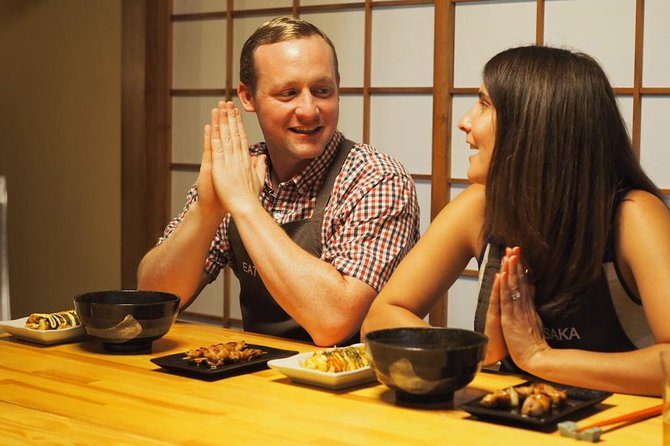
I would choose this class if you want a hands-on introduction to Osaka food and prefer a calm, small setting. It suits couples, families, solo visitors who enjoy meeting people, and anyone who wants more than a restaurant meal.
It is also a good choice for visitors who have already seen Osaka’s major sights and want a local activity that fits into half a day. The old-house setting and direct contact with a bilingual chef add a sense of place that a standard cooking studio may not provide.
You may want another option if you dislike group activities, have strict dietary restrictions that cannot be adjusted, or want a fixed menu centered on one specific dish. The changing dish descriptions make confirmation worthwhile.
Should you book Eat Osaka?
Book it if you want to make your own Osaka food, ask questions freely, and sit down afterward with the meal you prepared. The small group, old Japanese house, bilingual instruction, and generous menu make this more than a basic recipe lesson.
Before paying, confirm whether your session features udon and tempura, okonomiyaki and yakitori, or the full combination of dishes listed. With that one detail settled, the class offers good value for a hands-on two-and-a-half-hour taste of Osaka cooking.
FAQ
Where does the cooking class meet?
It meets at Eat Osaka Higashinari, 1 Chome-2-10 Higashinaka, Higashinari Ward, Osaka, Osaka Prefecture 537-0021, Japan.
How long does the experience last?
The cooking class lasts approximately two hours and 30 minutes.
Where does the activity end?
The activity ends back at the meeting point.
How many people can join the class?
The class has a maximum of eight participants.
Is the class near public transportation?
Yes. The meeting point is near public transportation, and the exact address is provided with the booking information.
What food can I learn to make?
The information lists handmade udon, Osaka-style tempura, pickled cucumber, mochi, okonomiyaki, and yakitori. The exact menu may vary, so confirm the dishes for your date.
Are ingredients and instruction included?
Yes. The ingredients and cooking instruction are included.
Are drinks included?
Welcome drinks are included. After cooking, you can enjoy beer, sake, or green tea with the food, though the details do not specify that every drink is included in the price.
Is the class taught in English?
The class is led by a local bilingual chef.
Can I cancel for a full refund?
Yes, if you cancel at least 24 hours before the experience start time. Cancellations made less than 24 hours before the start are not refunded.
Just added around Osaka
- Osaka Street Food Festival :Takoyaki&Okonomiyaki for Families★ 5.0 · 13 reviews
- Three Types of Ramen Cooking Class in Osaka★ 5.0 · 119 reviews
- Takoyaki DIY Cooking in the Heart of Osaka★ 5.0 · 7 reviews
- SUSHI Making Experience at Restaurant★ 5.0 · 8 reviews
- Sushi Making Osaka Omakase Cooking Class in Japan★ 5.0 · 4 reviews
- Cooking Class for Ramen and Gyoza in a Quiet Old Osaka House★ 5.0 · 3 reviews
- Sushi and Japnese foods cooking class in Osaka★ 5.0 · 51 reviews
- Osaka Market Tour & Cooking Class with Local Expert Masato/Shohei★ 5.0 · 7 reviews
Cooking Classes, compared.
Half-Day Thai Cooking Class at Organic Farm in Chiang Mai
Read our review →
Florence: Pasta Cooking Class with Unlimited Wine
Read our review →
3 in 1 Cooking Class near Navona: Fettuccine, Ravioli & Tiramisu
Read our review →
Hanoi Cooking Class: Culture, Local Market & Meaning CSR Impact
Read our review →
5 Traditional Dishes Hanoi Cooking Class with Market Trip
Read our review →
Cooking Class and Lunch at a Tuscan Farmhouse with Local Market Tour from Florence
Read our review →
Chiang Mai: Cooking Class, Market & Thai Herbs Garden Tour
Read our review →Browse the lists this tour appears in