
Review · UBUD
Ubud Cooking Class Bali with Balinese Chef
Ubud’s best cooking lessons do more than hand you a recipe card. Here, you visit a traditional market on the morning session, then work at your own station to prepare a full Balinese meal with an English-speaking chef. The hands-on format means you chop, mix, cook, and taste instead of watching from the sidelines.
I like the choice between a vegetarian and non-vegetarian menu, and I like that the class includes seven dishes, cooking equipment, ingredients, and the meal you make. The main consideration is timing: the market visit is available only with the morning class, and hotel pickup is limited to central Ubud.
Key things to know before booking
- Your own cooking station: You prepare the dishes yourself with your own utensils and cooking equipment.
- Morning market visit: The 30-minute visit to Ubud Traditional Art Market is included only in the morning schedule.
- Two complete menus: Pick vegetarian recipes with tempe, tofu, mushrooms, and vegetable curry, or non-vegetarian recipes with chicken and fish.
- Made and the cooking team: Made is named in the experience feedback as a chef who keeps the class light and explains recipes in a way you can repeat at home.
- Four hours, including your meal: The class lasts about four hours, with roughly three and a half hours at the cooking school after the market stop.
- Central Ubud pickup only: Morning return transfers are included from central Ubud. Other areas may cost up to IDR 600,000 per car.
Why this class works well in Ubud
Food is one of the quickest ways to understand Bali. A cooking class gives you more than a meal, because you learn how several small ingredients become the sauces, pastes, marinades, and dishes that appear across Balinese cooking.
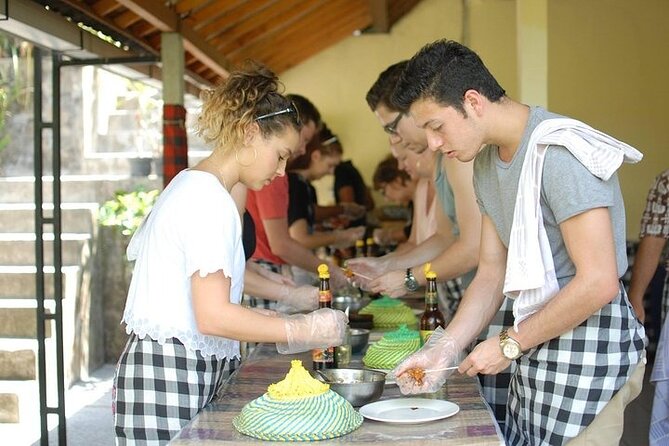
This class is especially practical because the work is assigned to you. You are not simply watching a chef fry something and then receiving a plate. You make the food with your own hands, then sit down to eat it. That makes the four-hour schedule feel useful rather than padded.
The teaching is in English, and the chef leads you through the recipes step by step. The team also has assistants, which matters in a group that can reach 24 people. The class may not feel like a private lesson at that size, but each participant is given a station and utensils.
Chef Made is named in the feedback as one of the people helping lead the experience. His approach is described as funny and clear, with instructions presented in a way that can be repeated at home. That is an important point. You want a cooking class to leave you with methods you can use, not just a pleasant afternoon and a meal you cannot recreate.
More Balinese Cooking Classes in Indonesia:
- Ubud: Balinese Cooking Class at an Organic Farm
★ 5.0 · 1,786 reviews - PRIVATE Authentic Balinese Cooking Class in Ubud at Putu’s Home
★ 5.0 · 644 reviews - Balinese Ubud cooking school (9 Dish Cooking and Market Tour)
★ 5.0 · 540 reviews
The morning begins at Ubud Traditional Art Market
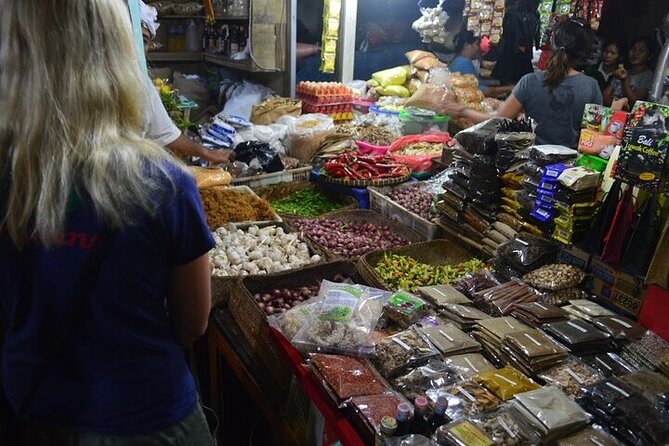
The morning option adds a 30-minute stop at Ubud Traditional Art Market before cooking. This is not a long shopping excursion, and personal purchases are not included, so think of it as a quick introduction to the ingredients and market setting rather than a dedicated shopping tour.
I like this addition because it gives the cooking lesson some context. You see where food and local products are sold before you start preparing them. The market visit also helps you get your bearings in Ubud early in the day.
Keep your expectations in check. The tour data does not promise a full market breakfast, tastings, or time for bargaining. Any purchases and personal expenses are yours to pay. If the market matters most to you, choose the morning session and allow enough time for the pickup arrangements.
The market stop is listed with admission included. After about 30 minutes, you continue to Ketut’s Bali Cooking Class for the main part of the experience.
At your station, the cooking becomes hands-on
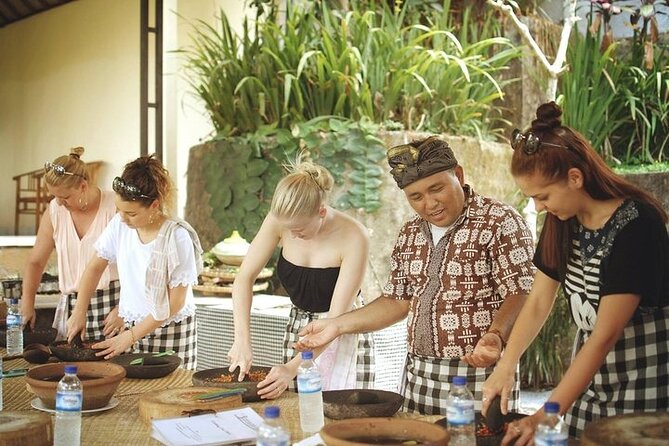
The central feature is simple: you cook. The class provides ingredients, cooking ware, and utensils, while the chef and assistants explain what to do. You then prepare the dishes at your own station instead of relying on a demonstration at the front of the room.
That setup suits beginners. You can follow each stage as it happens, ask for help, and see how the food changes as it cooks. Several people who took the class praised the clear, step-by-step teaching and the number of staff available to help.
The class has a maximum of 24 participants. That is a moderate group, not a quiet private lesson. You should expect a shared class atmosphere, with other people cooking around you and a group meal at the end. The upside is a social setting and extra hands from the cooking team. The downside is that individual attention may vary depending on the size of the group.
The chef also introduces basic Balinese building blocks. You prepare Sauce Kacang, or peanut sauce, and Bumbu Bali, a Balinese spice paste. These are useful recipes to learn because they help explain the flavor base of several dishes on the menu.
Choose between vegetarian and non-vegetarian recipes
You select one of two menus. Both include peanut sauce, Balinese spice paste, fried noodles, and Kolak Pisang, a dessert of saba banana braised in palm sugar gravy.
The vegetarian menu includes:
- Vegetable curry
- Tempe, tofu, and vegetable sate with peanut sauce
- Mushroom cooked in a banana leaf
- Fried noodles
- Kolak Pisang
The non-vegetarian menu includes:
- Balinese fried chicken
- Chicken sate with peanut sauce
- Fish cooked in a banana leaf
- Fried noodles
- Kolak Pisang
The wording describes a seven-dish cooking experience, with sauces and spice paste included in the preparation. The exact order of the work can depend on the class, but you should expect to make several separate components rather than one main dish.
The vegetarian option is not an afterthought. Tempe, tofu, vegetables, and mushrooms give it its own character, and the peanut sauce adds a familiar thread across the meal. If you eat meat, the chicken and fish menu gives you a broader taste of Balinese cooking.
If you have dietary restrictions beyond choosing vegetarian food, confirm them before booking. The information provided confirms vegetarian and non-vegetarian menus, but it does not promise allergy-free preparation or substitutions.
More Hands-On Workshops in Indonesia:
- From Ubud: Authentic Cooking Class in a Local Village
★ 4.9 · 1,325 reviews - Ubud: Cooking Class with Transfers and Optional Market Visit
★ 4.9 · 824 reviews - Ubud: Balinese Cooking Class and Market Tour
★ 4.8 · 531 reviews - Seminyak: Balinese Cooking Class & Market Tour
★ 4.9 · 458 reviews
Banana leaves, spice paste, and the food you make
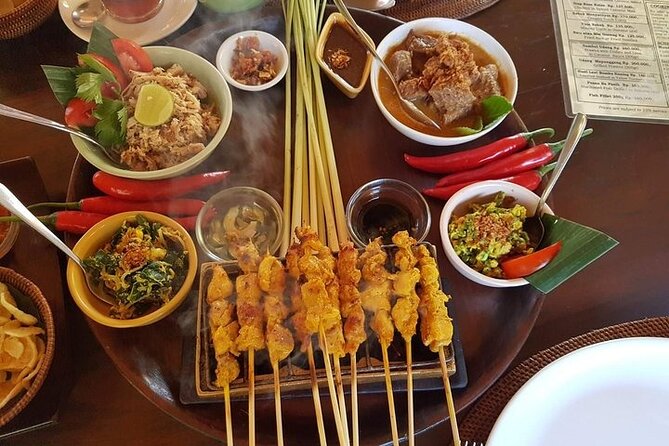
The banana-leaf dishes are among the more interesting parts of the menu. The vegetarian version uses mushrooms, while the non-vegetarian version uses fish. Cooking food in a banana leaf gives the lesson a strong local feel and adds a technique that is more memorable than simply frying or boiling ingredients.
Bumbu Bali is another useful lesson. Spice pastes often do much of the work in Indonesian cooking, and preparing one yourself helps you see how the flavor develops before it reaches the final dish. The class does not just present the finished paste. You take part in making it.
Sate is also a good choice for a group class. The vegetarian menu uses tempe, tofu, and vegetables, while the non-vegetarian menu uses chicken. Both are served with peanut sauce, so you learn how one sauce can work with different ingredients.
The meal ends with Kolak Pisang. Saba banana is braised in palm sugar gravy, giving you a sweet finish after the savory dishes. It is a simple dessert, but it rounds out the menu and means you prepare a full meal from beginning to end.
Eating together gives the class a proper finish
After the cooking, you eat the dishes you made in the dining room. This is where the class earns much of its value. You can see the results of your work, compare the dishes, and understand how the separate components fit together.
The group meal also keeps the experience social. The class is not designed as a rushed lesson where you leave as soon as the last pan is washed. You sit down to enjoy lunch or dinner with the food prepared during the session.
The inclusion of the meal matters at this price. At $35.79 per person, you are paying for instruction, ingredients, equipment, the cooking space, and a substantial meal. That is a strong package for someone who wants both an activity and a meal in one outing.
Drinks beyond the welcome drink and mineral water are not included. Bring extra money if you want other beverages. Personal purchases at the market are also separate.
Timing, pickup, and the difference between morning and afternoon
The full experience lasts about four hours. The morning schedule includes the market visit, followed by about three and a half hours at the cooking school. This is a half-day activity, so avoid placing it beside another fixed tour with a tight start time.
Morning pickup and return transfer are included for hotels in central Ubud, using a shared car. This is useful if you are staying in the central area, but the phrase central Ubud matters. Pickup from other locations is not included, and the listed extra charge can reach IDR 600,000 per car.
The afternoon class follows a different arrangement. You meet at 2:30 p.m. in front of Lapangan Desa Ubud, which is the stated pickup and return point. The traditional market tour is for the morning trip only.
That gives you a simple choice. Pick the morning class if you want the market and central Ubud hotel transfer. Pick the afternoon class if the market is less important or if meeting at Lapangan Desa Ubud is easier for your schedule.
Confirm the meeting details at booking. The reservation confirmation is issued at the time of booking, and the experience provider is Bali Cooking Class Ubud.
Group size, teaching style, and who will enjoy it
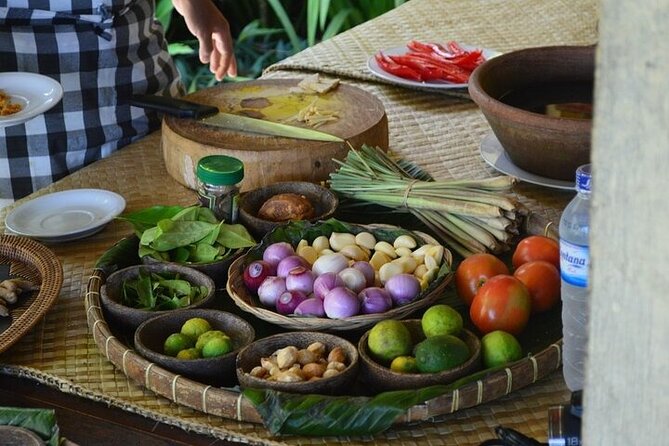
This class suits first-time cooks, food lovers, couples, families, and solo visitors who like a social activity. You do not need to arrive as an experienced cook. The structure is built around instructions, your own station, and help from the chef and assistants.
It also suits people who want something more active than a restaurant meal. You spend the afternoon or morning working with ingredients, learning sauces, and preparing several dishes. The class has a clear result: you eat what you made.
The maximum group size is 24. That may be fine if you enjoy meeting people and cooking in a shared room. If you want one-on-one instruction, a private class would likely be a better fit, but no private option is specified here.
The class is also a good choice for people who like to take recipes home. The feedback specifically praises the clear explanations and says the dishes were presented in a way that could be copied later. That is a better sign for a cooking lesson than praise based only on the food tasting good.
Most people can participate, according to the supplied information. Still, the activity involves preparing and cooking food for several hours, so consider your own comfort with standing and hands-on kitchen work.
What the price really includes at $35.79
The $35.79 price is not just an admission fee. It covers the chef, cooking equipment, ingredients, a welcome drink, mineral water, the seven-dish menu, and lunch or dinner made during the class.
The morning option also includes the traditional market visit and shared return transfer for central Ubud hotels. That makes the price particularly fair if you would otherwise pay separately for a meal and a market tour.
There are costs to watch. Drinks beyond the included water are extra. Market purchases are extra. Pickup from outside the stated central Ubud area may cost up to IDR 600,000 per car. Ask about that charge before confirming if your accommodation is outside the included zone.
The class is non-refundable and cannot be changed for any reason once booked. If poor weather forces cancellation, you are offered another date or a full refund. The same applies if the minimum number of participants is not reached. Because the standard cancellation rule is strict, book only when your plans are firm.
Should you book the Ubud cooking class?
I would book this class if you want a practical introduction to Balinese food, especially if you like cooking more than simply watching. The strongest reasons are the own-station format, the choice of menus, the market visit with the morning class, and the meal at the end.
Choose the morning session if you want the market and included central Ubud pickup. Choose the afternoon session if you prefer a 2:30 p.m. meeting at Lapangan Desa Ubud and do not need the market stop.
I would think twice if you dislike group activities, need a private teacher, or have a complicated dietary requirement that is not covered by the two listed menus. For everyone else, $35.79 buys a useful half-day activity, a full meal, and recipes you can try again at home.
FAQ
How long does the Ubud cooking class last?
The experience lasts approximately four hours. The morning itinerary includes a 30-minute traditional market visit and about three and a half hours at the cooking class.
Is the market visit included?
Yes, the 30-minute visit to Ubud Traditional Art Market is included with the morning class. It is not part of the afternoon class.
Is hotel pickup included?
Return hotel transfer is included for the morning class from hotels in central Ubud, using a shared car. Pickup from other areas may cost up to IDR 600,000 per car.
Where does the afternoon class meet?
The afternoon class meets at 2:30 p.m. in front of Lapangan Desa Ubud. This is also the stated pickup and return point.
Can I choose a vegetarian menu?
Yes. The vegetarian menu includes tempe, tofu, vegetables, mushroom cooked in banana leaf, vegetable curry, peanut sauce, Balinese spice paste, fried noodles, and Kolak Pisang.
What is on the non-vegetarian menu?
The non-vegetarian menu includes Balinese fried chicken, chicken sate with peanut sauce, fish cooked in banana leaf, peanut sauce, Balinese spice paste, fried noodles, and Kolak Pisang.
Is the class taught in English?
Yes. An English-speaking local chef teaches the class.
Are cooking equipment and ingredients provided?
Yes. Cooking ware, utensils, and cooking ingredients are included.
Is lunch or dinner included?
Yes. You eat the dishes you prepare during the class as lunch or dinner.
How many people can join the class?
The activity has a maximum of 24 participants. Most people can participate.
Are drinks included?
A welcome drink and mineral water are included. Other beverages are not included.
Can I cancel for a refund?
The experience is non-refundable and cannot be changed for any reason. If the provider cancels because of poor weather or because the minimum number of participants is not met, you are offered a different date or a full refund.
Just added around Indonesia
- Nia Balinese Cooking Class★ 5.0 · 202 reviews
- Nia Bali Seminyak Cooking Class★ 5.0 · 127 reviews
- Cooking class in the comfort of your own personal villa. Yes, I’ll come to you!★ 5.0 · 80 reviews
- Balinese Cooking class with traditional morning market visit★ 5.0 · 161 reviews
- Balinese Cooking Class at Organic Farm★ 5.0 · 51 reviews
- Small-Group Farm Tour & Balinese Cooking Class in Ubud with Kadek★ 5.0 · 16 reviews
- From Ubud: Authentic Bali Farm Cooking School & Organic Farm★ 5.0 · 122 reviews
- PRIVATE Balinese Cooking Class in Ubud with Dewa with Transfers★ 5.0 · 213 reviews
Balinese & Indonesian Cooking Classes, compared.
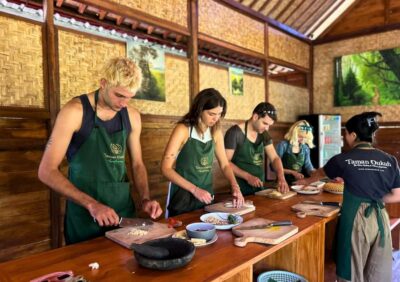
Ubud: Balinese Cooking Class at an Organic Farm
Read our review →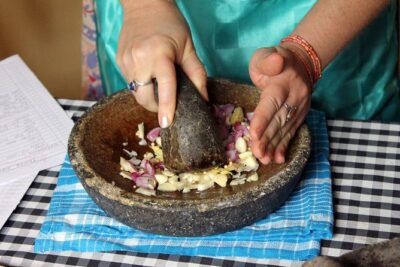
PRIVATE Authentic Balinese Cooking Class in Ubud at Putu’s Home
Read our review →
Balinese Ubud cooking school (9 Dish Cooking and Market Tour)
Read our review →

Learn to cook Indonesian food at Gili Cooking Classes Trawangan
Read our review →
Browse the lists this tour appears in