
Review · UBUD
PRIVATE Balinese Cooking Class in Ubud with Dewa with Transfers
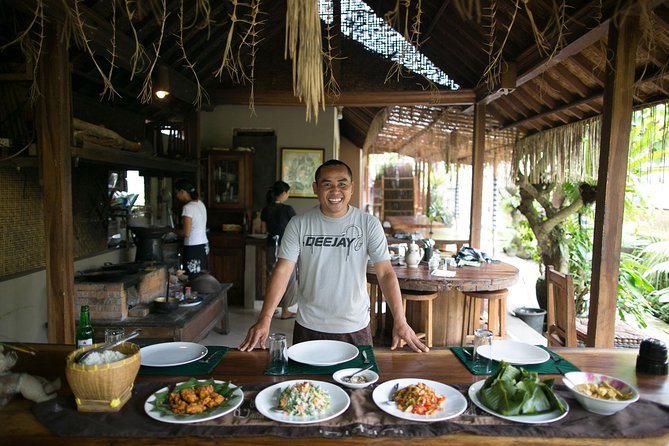
The best part of this experience is that the cooking starts before you reach the kitchen. Dewa takes you through his village, garden, and family compound, explaining Balinese food, farming, faith, and daily life along the way. I especially like the garden-to-table meal and the chance to cook beside Dewa’s wife in a real home, not a polished training kitchen.
I also like the private format, the traditional wood-fired stove, and the recipes you can take home. The main consideration is that this is a cultural visit with cooking, not a formal chef-led class. If you want precise culinary technique or restaurant-style instruction, this may feel relaxed and informal. If you want time with a Balinese family, it is a much better fit.
Key points to know before booking
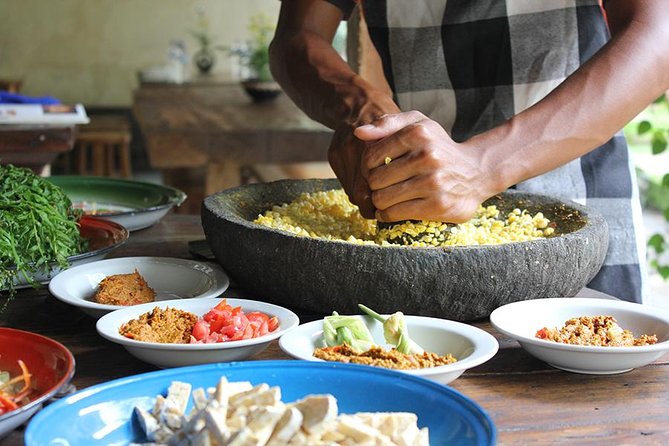
- The setting is a traditional family compound: Several open pavilions surround a central courtyard in Keliki, a village north of Ubud.
- Dewa leads more than a cooking lesson: Expect village stories, local customs, plant knowledge, and an introduction to his family’s way of life.
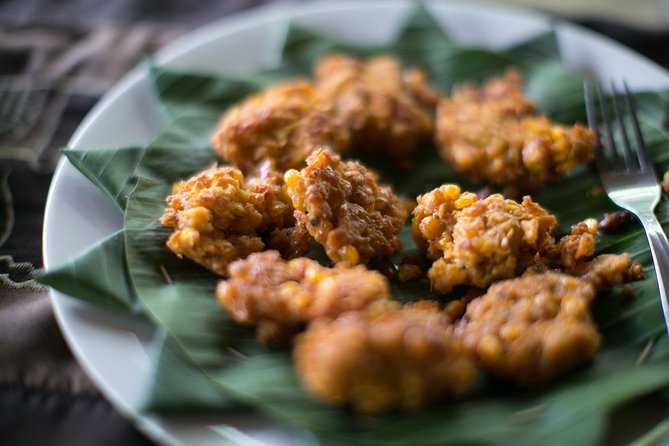
- You cook several dishes: Menus may include pepes ikan, bumbu kuning chicken, and bregedel corn fritters, with some sessions preparing five to seven recipes.
- The ingredients begin in the garden: You may see and gather galangal, cacao, nutmeg, herbs, fruits, and vegetables used in the meal.
- Transfers are limited to Ubud: Pickup and return are available from Ubud hotels and vacation rentals, not from areas outside the Ubud region.
- Bring comfortable shoes: The village walk can include streets, garden paths, forested areas, and rice-field surroundings.
Why this feels like more than a cooking class
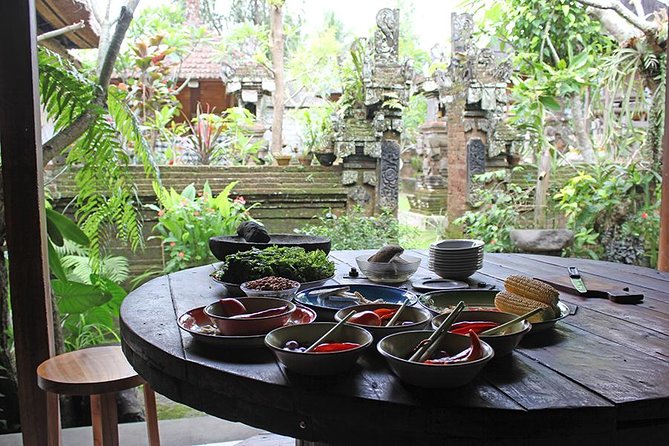
A standard cooking class gives you a recipe, a workstation, and a plate of food. This experience begins with a look at the place where the food grows and the family who cooks it. That difference matters.
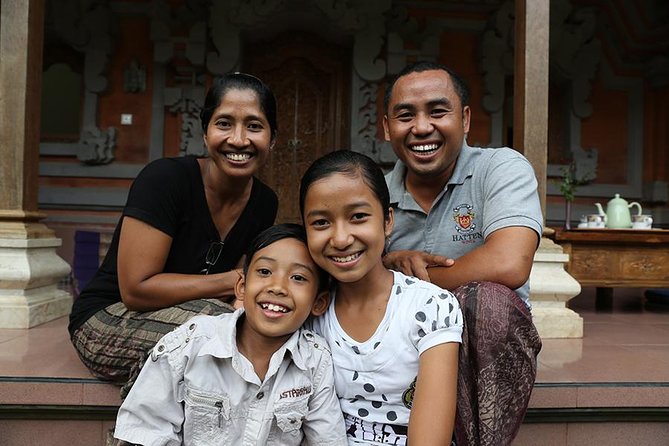
Dewa’s home is in Keliki, in the terraced foothills north of Ubud. His traditional Balinese compound has open pavilions arranged around a shared courtyard. You are not simply shown a staged version of Balinese life. You are welcomed into a working family home, where cooking, religion, farming, and family life are closely connected.
Dewa leads the cultural side of the experience, while his wife, Jero, helps with the cooking. If Dewa is unavailable, another family member hosts with Jero. The tone is personal and conversational, with plenty of room to ask questions.
I would choose this experience for the setting and contact with the family first, then for the food. The cooking is the practical thread that brings everything together.
More Balinese Cooking Classes in Indonesia:
- Ubud: Balinese Cooking Class at an Organic Farm
★ 5.0 · 1,786 reviews - Ubud Cooking Class Bali with Balinese Chef
★ 5.0 · 1,609 reviews - PRIVATE Authentic Balinese Cooking Class in Ubud at Putu’s Home
★ 5.0 · 644 reviews
The ride from Ubud to Keliki
Round-trip transportation from Ubud hotels and vacation rentals is included. The drive to the village generally takes about 15 to 30 minutes according to the details shared by participants, though Bali traffic can affect the timing.
You may also be asked to meet at Rumah Makan Jero Nini at Jl. Arjuna in Keliki, depending on the arrangements for your booking. The activity ends back at the meeting point or with the return transfer, as arranged.
This transfer is useful because the home is outside central Ubud, in a rural area where reaching the exact compound on your own may be less simple. It also lets you focus on the experience rather than arranging a taxi for the journey back.
There is one important limit: pickup is available only within the Ubud region. If you are staying in another part of Bali, you need to make your own way to Dewa’s home in Keliki. Confirm the pickup area before paying, especially if your hotel is in Canggu, Seminyak, Sanur, Kuta, or farther afield.
Walking through the village and garden
The first major part of the experience is a walk through the local area. Dewa explains Balinese customs, village life, farming, and the religious ideas that shape everyday routines. His talks also touch on Hinduism, Buddhism, animism, spirituality, and the Balinese emphasis on balance with nature.
The garden visit gives this conversation a practical focus. You see ingredients in their natural setting rather than encountering them as anonymous items on a chopping board. The plants discussed can include galangal, cacao, nutmeg, herbs, fruits, and other local produce. Dewa also explains traditional medicinal uses and the role of plants in cooking.
That is one of the strongest parts of the day for anyone who wants context. Galangal is not just an unfamiliar root to grate into a spice paste. It becomes part of a larger picture of how Balinese households use plants for food, aroma, health, and ceremony.
The walk may pass through village streets, gardens, forested areas, and rice-field surroundings. Wear comfortable shoes that can handle uneven paths. This is not a strenuous hike, but it is more active than simply walking from a hotel to a cooking studio.
Entering the family compound
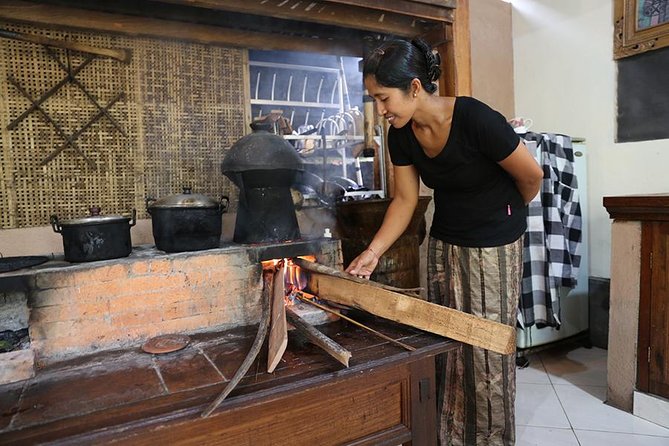
Once you arrive at the compound, Dewa and his family show you around. The open pavilions and courtyard give you a look at the layout of a traditional Balinese home, with family life spread across shared spaces rather than contained in one modern building.
The atmosphere is calm and informal. You may meet other family or community members, and the visit gives you a sense of how a household functions beyond the tourist areas of Ubud.
Privacy is another advantage. This is a private activity for your own group, so you do not need to share the lesson with a large class. That makes it easier to ask about ingredients, culture, religion, or cooking methods without trying to compete for the guide’s attention.
At the same time, remember that you are entering someone’s home. The experience works best when you treat the compound as a family space, not simply as a photo stop. Listen carefully, ask before taking photographs, and follow the host’s lead around household and religious areas.
More Hands-On Workshops in Indonesia:
- From Ubud: Authentic Cooking Class in a Local Village
★ 4.9 · 1,325 reviews - Ubud: Cooking Class with Transfers and Optional Market Visit
★ 4.9 · 824 reviews - Ubud: Balinese Cooking Class and Market Tour
★ 4.8 · 531 reviews - Seminyak: Balinese Cooking Class & Market Tour
★ 4.9 · 458 reviews
Cooking with a wood-fired stove
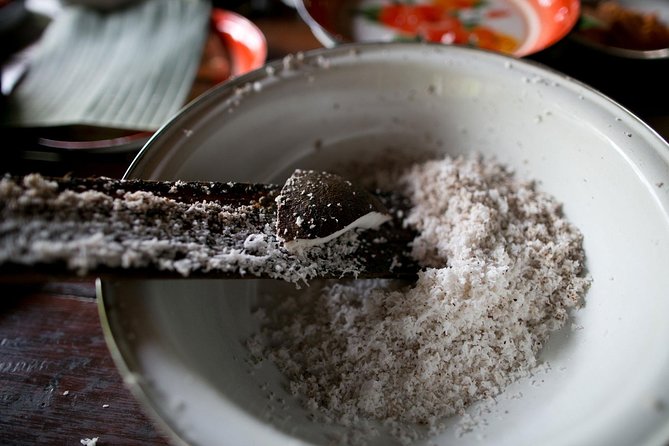
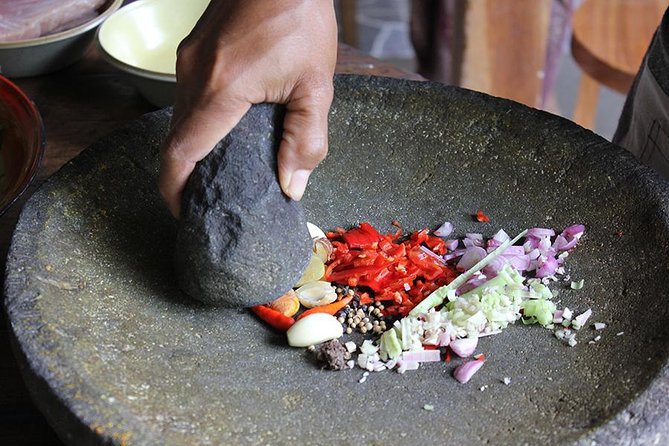
The cooking takes place in an open kitchen with Jero and Dewa. You use traditional equipment, including a pestle and mortar, and prepare food over a wood-fired stove.
That equipment changes the pace of the class. Grinding spice pastes by hand takes more effort than using a blender, but it also shows you how much flavor comes from freshly crushed ingredients. The wood-fired stove adds another layer of local method, though it may not provide the exact control you expect from a modern kitchen.
The class is hands-on. You may chop, grind, mix, season, and help assemble the dishes rather than watching the family do all the work. Some sessions prepare five or six recipes, while other descriptions mention as many as seven. The exact menu can vary, so do not book this expecting a fixed restaurant tasting menu.
Possible dishes include:
- Pepes ikan, tuna grilled in banana leaves
- Bumbu kuning chicken with fresh turmeric and coconut milk
- Bregedel, hand-ground corn fritters
- Balinese salads, side dishes, mains, and dessert, depending on the menu that day
The food is cooked in a home style, with fresh local ingredients and a focus on herbs and spice pastes rather than heavy amounts of salt. You should expect bold flavors, but not necessarily the standardised seasoning of a cooking school.
Eating what you have prepared
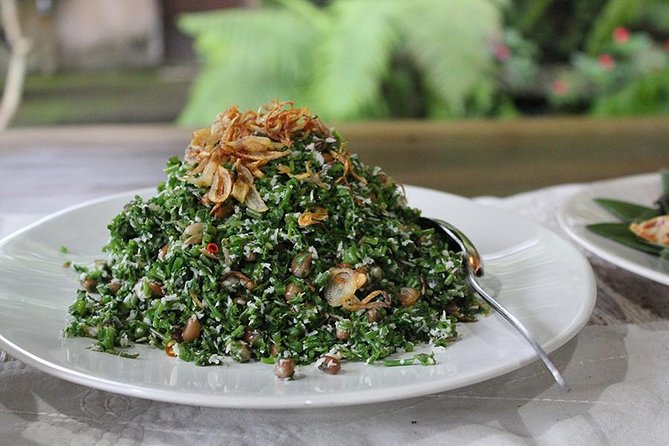
After the work comes lunch or dinner in the compound. You eat the dishes you helped prepare, with local beer and water included.
I like this part because it gives the class a clear purpose. You are not cooking a token sample and then moving on to a restaurant. You help make a full meal, sit down in the family setting, and experience how the ingredients work together.
The meal may include several courses. The descriptions of the experience and individual visits refer to five, six, or seven dishes, but the precise number depends on the session. Vegetarian food is available if you request it when booking. Make that request in advance, rather than waiting until you arrive.
You also receive recipes to take home. A handmade or locally produced notebook is provided in some sessions, giving you a place to write down the methods and ingredients. This is a useful touch, since Balinese spice pastes can otherwise be hard to remember once you return to your own kitchen.
The value of the $69 price
At $69 per person, this is not the cheapest cooking activity around Ubud. But the price includes more than food preparation. You are paying for a private half-day, round-trip transportation from Ubud, a garden and village visit, a cultural conversation, a home meal, drinks, and direct time with a local family.
The transfer alone adds practical value. So does the private format, especially if your group wants to ask questions or move at an unhurried pace.
I would compare this with the cost of a standard cooking studio plus a separate village tour and taxi rides. The comparison is not exact, but it shows why the price can make sense for a visitor who wants both food and local context in one outing.
The value is weaker if you care only about learning knife skills or mastering a tightly timed menu. This is not professional chef training. It is a home visit shaped around food, culture, and conversation.
Who will enjoy this experience most
I would recommend it to you if you:
- Want a personal look at Balinese family life
- Enjoy cooking with fresh ingredients and traditional tools
- Prefer a small, private experience to a large group class
- Are curious about Balinese religion, farming, and village customs
- Want recipes you can try at home
- Have half a day available in your Ubud schedule
It is also a good choice for couples, families, and small groups who want an activity with conversation rather than a simple sightseeing stop.
You may want something else if you need a fully equipped kitchen, exact measurements, professional culinary instruction, or a guaranteed menu. The class is informal, and the family’s way of cooking is more important than restaurant-level presentation.
Timing, comfort, and practical details
The experience lasts about four hours. That includes the transfer arrangements, village and garden walk, cooking, and meal, so plan it as a substantial half-day rather than a quick activity between temple visits.
Wear comfortable shoes and light clothing suitable for walking and cooking. The route can include outdoor paths and village streets. Bali’s heat and humidity may make the walk feel more tiring than the distance suggests, though no strenuous hike is described.
Service animals are allowed, and the location is near public transportation. The experience is private, so only your group participates.
Confirmation is issued within 48 hours of booking, subject to availability. Free cancellation is available up to 24 hours before the start time. Changes or cancellations made within 24 hours are not accepted for a refund.
The listed activity is connected with Traveling Spoon, and the meeting point details identify Rumah Makan Jero Nini in Keliki. Check the final pickup instructions carefully, since hotel collection applies only within Ubud.
How this compares with other Ubud cooking classes
Many Ubud cooking classes focus on a market visit, a cooking station, and a set menu. This one leans harder into village life and the host’s personal story.
You are likely to spend more time walking, listening, and looking at plants than you would in a commercial kitchen. You may spend less time on formal technique, exact measurements, and chef-style presentation.
That tradeoff is the key decision. I would pick Dewa’s class if your idea of a good food experience includes meeting the family, seeing the garden, learning why ingredients matter, and eating in the home where the class takes place.
I would pick a conventional school if you want a polished lesson with printed instructions, modern equipment, and a fixed menu taught in a professional classroom.
Should you book Dewa’s Balinese cooking experience?
Yes, if you want the cooking to open a door into Balinese culture. The strongest features are Dewa’s village walk and storytelling, the garden ingredients, the warm family setting, the hands-on work with traditional tools, and the recipes you can bring home.
Book with the right expectations. This is not a chef certification course, and the menu may vary. It is a private cultural visit with a substantial meal attached, and that is exactly why I think it is one of the better choices for a meaningful half-day around Ubud.
If you are staying in Ubud, the included transfers make the $69 price easier to justify. If you are outside the Ubud area, confirm your transport plan first. For a food-loving visitor who wants more than a restaurant meal, this is a strong pick.
FAQ
How long does the Balinese cooking experience last?
The experience lasts approximately four hours.
Where does the activity take place?
It takes place in Dewa’s traditional family compound in Keliki, in the terraced foothills north of Ubud. The listed meeting point is Rumah Makan Jero Nini on Jl. Arjuna, Keliki.
Is hotel pickup included?
Round-trip transfers are included from hotels and vacation rentals within the Ubud region. Transportation is not included from locations outside Ubud.
Is this a private activity?
Yes. Only your group participates in the activity.
What dishes will I cook?
Possible dishes include pepes ikan, bumbu kuning chicken, and bregedel corn fritters. The meal may include five to seven recipes, but the exact menu can vary.
Is a vegetarian meal available?
Yes. A vegetarian option is available, but you must request it when booking.
What is included in the price?
The price includes round-trip transfers from Ubud, the private garden tour, the cooking class with a local host, the cultural experience, local beer, and water.
Just added around Indonesia
- Nia Balinese Cooking Class★ 5.0 · 202 reviews
- Nia Bali Seminyak Cooking Class★ 5.0 · 127 reviews
- Cooking class in the comfort of your own personal villa. Yes, I’ll come to you!★ 5.0 · 80 reviews
- Balinese Cooking class with traditional morning market visit★ 5.0 · 161 reviews
- Balinese Cooking Class at Organic Farm★ 5.0 · 51 reviews
- Small-Group Farm Tour & Balinese Cooking Class in Ubud with Kadek★ 5.0 · 16 reviews
- From Ubud: Authentic Bali Farm Cooking School & Organic Farm★ 5.0 · 122 reviews
- Balinese Authentic Cooking Class in Ubud★ 5.0 · 239 reviews
Balinese & Indonesian Cooking Classes, compared.
Ubud: Balinese Cooking Class at an Organic Farm
Read our review →
PRIVATE Authentic Balinese Cooking Class in Ubud at Putu’s Home
Read our review →
Balinese Ubud cooking school (9 Dish Cooking and Market Tour)
Read our review →
Learn to cook Indonesian food at Gili Cooking Classes Trawangan
Read our review →Browse the lists this tour appears in