
Review · KYOTO
Izakaya Style Cooking Class
Kyoto’s izakaya cooking class teaches the everyday side of Japanese food: dashi, sesame sauce, tempura, soups, rice dishes, and other small plates made for sharing. I like that you cook several dishes instead of watching a single demonstration, and I like that the recipes are practical enough to make again at home. The class also explains why Japanese cooks use certain seasonings, not just what to pour into a bowl.
The main thing to consider is that the menu changes with the season and available ingredients. You might make six dishes, but you cannot count on a fixed list, and one past menu included pasta rather than Japanese noodles. Extra drinks may also cost more, so ask before accepting sake with dinner.
Key points
- Learn dashi from scratch: Understand the stock that gives many Japanese dishes their savory base.
- Make several small dishes: Menus can include sesame spinach, teriyaki yellowtail, vegetable chowder, mushroom tempura, vegetable rice, and dessert.
- Cook in a traditional wooden house: The class takes place at Cooking Sun Kyoto, at 679 Funayacho.
- Work in a small group: The maximum is eight people, with hands-on help from the English-speaking instructors.
- Eat what you prepare: Dinner is included, so come hungry.
- Take the lesson home: Recipes let you repeat the dishes for family and friends.
Why izakaya food makes a good Kyoto cooking lesson
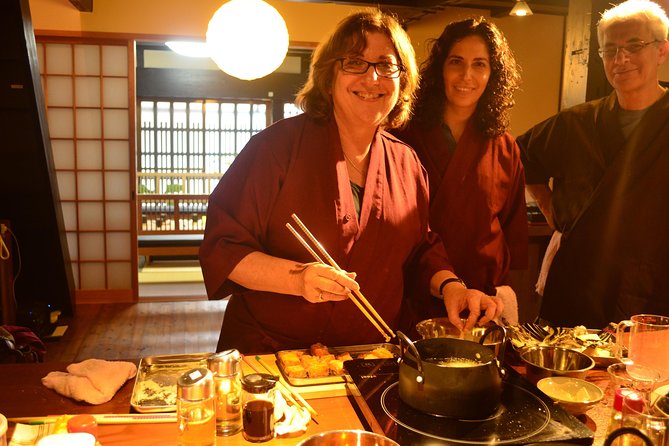
An izakaya is often described as Japan’s answer to a tapas bar, but that comparison only goes so far. The food is usually served in small portions, yet an izakaya is also a casual place for drinks, conversation, and a broad mix of simple dishes.
This class focuses on the kind of food you might eat at home or order at an informal Japanese restaurant. That makes it a useful change from the familiar sushi and teriyaki circuit. You learn how several modest ingredients become a full meal through careful cutting, seasoning, and timing.
The cultural introduction gives the food some context. Izakaya culture is often traced to the Edo period, when sake shops began serving dishes to encourage customers to stay and drink. The result is a style of eating built around variety. You can order a little fish, some vegetables, soup, rice, and a fried dish rather than committing to one large entrée.
I like this format for a cooking class because it gives you several techniques in one afternoon. You are not only learning a recipe. You are seeing how Japanese meals balance savory flavors, vegetables, soup, rice, and small portions.
More Drink Tastings in Kyoto:
- Kyoto: Afternoon Japanese Izakaya Cooking Class
★ 4.9 · 241 reviews - Authentic Japanese Cooking Experience at Izakaya restaurant
★ 4.2 · 5 reviews - Ramen and Sushi Cooking Class with Sake Pairing Set in Tokyo
★ 5.0 · 291 reviews
Arriving at Cooking Sun Kyoto at 2pm
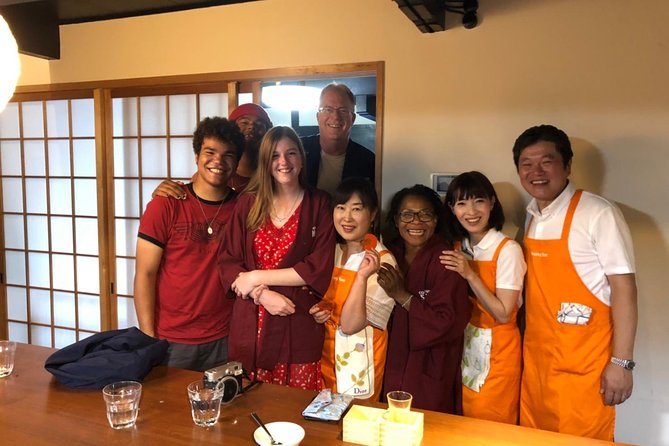
The meeting point is Cooking Sun Kyoto, at 679 Funayacho in Kyoto’s Shimogyo Ward. The class starts at 2pm and ends back at the same meeting point after roughly three hours.
The cooking studio is in a traditional wooden house, which gives the lesson a more local feel than a modern demonstration kitchen. The exact studio location is provided when you book, so check the confirmation carefully before setting out.
The location is near public transportation, but hotel pickup and drop-off are not included. I would allow enough time to find the building and arrive ready to begin. A cooking lesson has a firm rhythm once it starts, and arriving late can mean missing the opening explanation or the first preparation steps.
You receive an apron, and the ingredients are supplied. That keeps the class simple for you. There is no need to shop for unfamiliar seasonings or carry ingredients across Kyoto.
Starting with dashi and Japanese seasoning
The first useful lesson is likely to be dashi, the basic Japanese soup stock. Dashi is not just a soup ingredient. It often forms the savory foundation for sauces, soups, rice dishes, and other preparations.
The value here is learning the logic behind Japanese seasoning. You are shown how ingredients work together instead of being handed a finished dish without explanation. The class also covers sauces and condiments, including the differences between them and how they change the final taste.
That matters when you cook at home. A recipe can tell you to add a certain amount of soy sauce, but the better lesson is understanding what the seasoning is doing. Is it adding salt, sweetness, aroma, or depth? The instructors explain these points while you work.
The class is designed for a range of cooking ability. You do not need to be an experienced cook, and the structure also gives keen home cooks something new to take away. Past participants have particularly appreciated the clear explanations of Japanese ingredients, cooking tools, and flavor combinations.
Preparing multiple izakaya dishes by hand
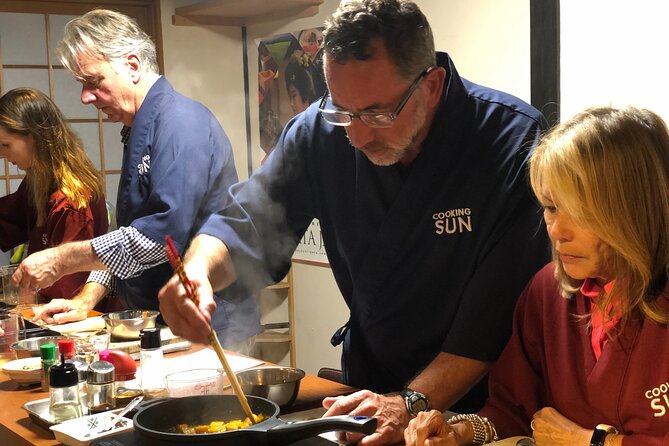
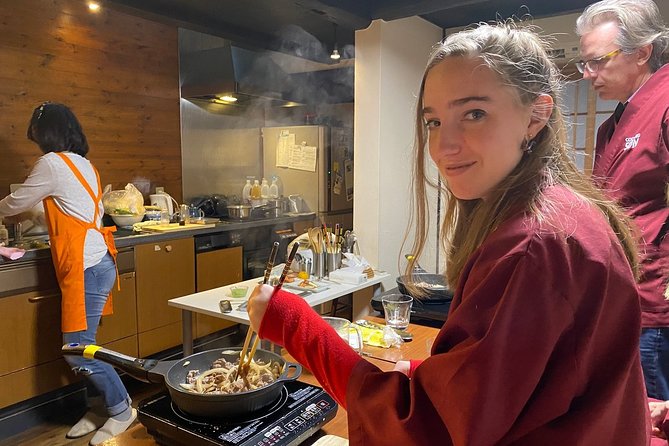
After the introduction and demonstration, you take over the preparation. The instructors provide hands-on guidance as you chop, season, cook, and assemble the dishes.
The menu can vary, but examples include:
- Spinach with sesame sauce
- Teriyaki yellowtail
- Vegetable chowder
- Mushroom tempura
- Rice with vegetables
- Cucumber salad
- Pumpkin soup
- Mochi dessert
You should not expect every dish listed above in one class. Seasonal ingredients affect the menu, and the cooking team adjusts the recipes to suit what is available. Some sessions have included six dishes, giving you a broad meal rather than one carefully polished plate.
That variety is one of the strongest reasons to book. You might learn a soup, a fried item, a vegetable side, a rice dish, and a sweet in one afternoon. The work is divided into manageable tasks, with some ingredients prepared in advance so the group can spend more time cooking and eating.
This also means the class is not a slow, from-scratch farm-to-table workshop. If you want to practice every single knife cut or prepare every ingredient from the beginning, you may find parts of the session streamlined. If you want to learn several approachable dishes in a limited time, that preparation makes good sense.
The instructors keep the process moving by bringing ingredients, clearing work areas, and helping with the next recipe. That organization is important in a group class. You get more cooking time and less waiting around.
More Hands-On Workshops in Kyoto:
- Ramen Cooking Class at Ramen Factory in Kyoto
★ 5.0 · 1,937 reviews - Kyoto: Ramen Cooking Class at a Ramen Factory with Souvenir
★ 4.9 · 532 reviews - Kyoto: Ramen, Gyoza, and Onigiri Cooking Class
★ 5.0 · 445 reviews - The Original Small-Group Sushi Making Class in Kyoto
★ 5.0 · 436 reviews
How the small group affects the experience
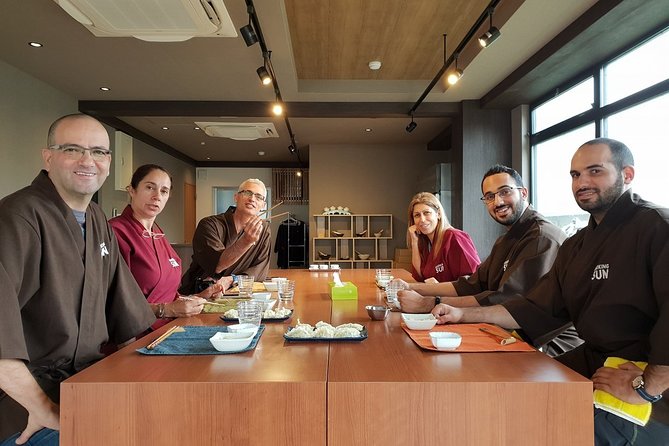
The maximum group size is eight people. That is small enough for the English-speaking instructor to offer individual help, but large enough to create a shared dinner at the end.
The class has worked well for families, couples, solo participants, and groups with different levels of cooking experience. Children have taken part alongside adults, and the lesson is structured clearly enough for younger cooks to follow with help.
You should still expect a group activity rather than a private lesson. You will share equipment, counter space, and the pace of the class with other people. The upside is that the meal becomes social, and you can compare results and ask questions as you cook.
The teaching team has been praised for working together efficiently. In practice, that means one person may be explaining a sauce while another helps with preparation or keeps the kitchen organized. The strongest part of this setup is that you are less likely to be left waiting when you need help.
Keiko and her team have been singled out for making the instruction relaxed, clear, and friendly. The important point is not just personality. Good communication matters when you are learning unfamiliar ingredients and cooking methods in another language.
Sitting down to eat your own dinner
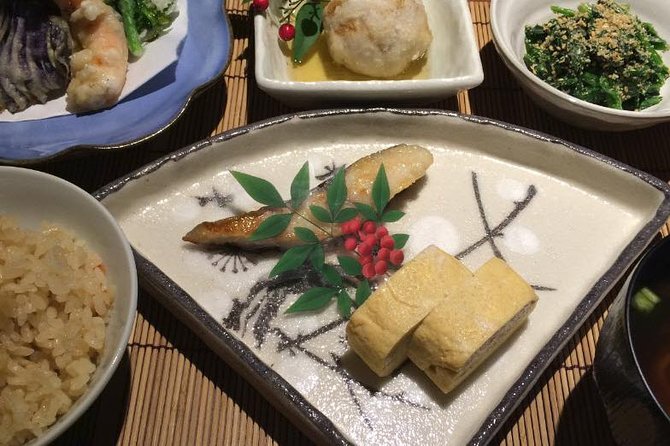
The class finishes with dinner made from the dishes you prepared. Dinner is included, so the meal is part of the experience rather than an optional add-on.
Come hungry. Several sessions have produced enough food for a substantial meal, especially when the group prepares six dishes. You will not simply taste a small sample at the end.
Eating together also helps you understand the izakaya idea. The food is meant to be shared and sampled in a loose sequence. A soup may arrive alongside rice, vegetables, fried food, or fish. You get a sense of how different textures and flavors work together on a Japanese table.
Drinks are a separate matter. Food and drinks are not generally included unless specified, and one participant was offered sake and later charged 600 yen per glass. That is easy to avoid: ask the price before accepting any extra drink.
The meal may also include dishes that are not strictly traditional izakaya favorites. One past menu included a pasta dish, which disappointed someone hoping for Japanese noodles. This is a useful reminder that the class menu can be adapted and may include modern or cross-cultural choices.
What you can take home besides recipes
The recipes are provided after the class, which is one of the experience’s most practical features. You can try the dishes again for friends and family rather than leaving with only a pleasant memory.
The best take-home lessons are likely to be the techniques: preparing dashi, balancing Japanese sauces, handling unfamiliar ingredients, and using the kitchen tools shown in class. You may not find every ingredient in a standard supermarket back home, but the recipes give you a clear starting point.
The class also helps you understand how Japanese home cooking differs from restaurant presentation. The food is not built around elaborate sushi skills or theatrical knife work. It is based on repeatable methods, good seasoning, and a mix of vegetable, soup, rice, fish, and fried dishes.
That makes the experience especially useful if you cook at home. I would expect a confident home cook to pick up new flavor combinations, while a beginner can leave with a small set of recipes that feel achievable.
Price, timing, and overall value
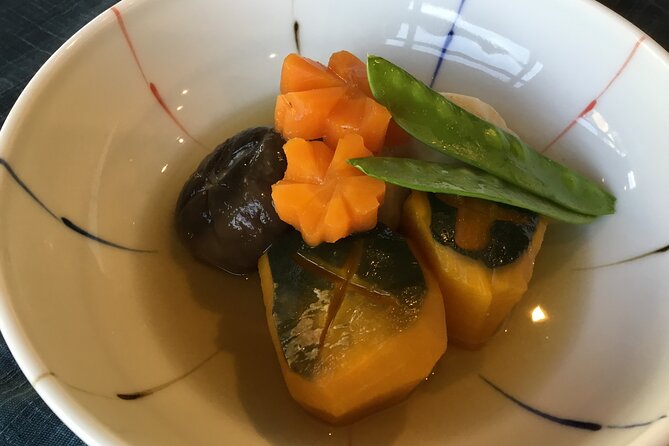
The price is $71.63 per person. For about three hours, that includes the instruction, ingredients, apron, and dinner. You also receive the recipes, and the meal itself can include several dishes.
I consider that a fair price for Kyoto, particularly because you are paying for active instruction rather than only a meal. A restaurant dinner might cost less, but it would not teach you how to prepare dashi, use Japanese seasonings, or repeat the dishes at home.
The value is strongest if you want an activity with a clear result. You spend the afternoon learning, then sit down to eat what you made. If you are only looking for a quick taste of Japanese food, a market or casual restaurant will be cheaper and simpler.
Group discounts are available, which may help families or friends booking together. The activity has had at least five bookings in a recent month, and the rating is 4.9 from 219 ratings, with 99 percent recommending it. Those numbers suggest a well-established class, though they should not replace checking the current menu and dietary arrangements before booking.
Dietary needs and practical details
Tell the operator about specific dietary requirements when you book. The cooking team has accommodated allergies, celiac needs, and vegetarian diets, but advance notice is important so the menu can be adjusted safely.
Do not assume every dish is automatically vegetarian, gluten-free, or allergy-friendly. Japanese sauces and stocks can contain ingredients that are not obvious, so explain your needs clearly before the class begins.
Service animals are allowed, and the studio is near public transportation. The class is limited to eight people per booking and eight people overall, which keeps the teaching more personal than a large workshop.
Mobile tickets are available. Free cancellation applies if you cancel at least 24 hours before the 2pm start time. Inside that window, the payment is not refunded, and changes are not accepted.
Who should book this Kyoto cooking class
I would choose this class if you want to understand everyday Japanese food rather than only eat famous dishes. It suits home cooks, curious beginners, families with older children, and anyone who enjoys a social activity with a meal built in.
It is also a good pick for a rainy afternoon or for a day when you want a break from temples and long walks. The three-hour schedule gives you a substantial activity without taking up the whole day.
You may want to skip it if you need a fixed menu, a private lesson, or a highly technical cooking course. The dishes change, some preparation is done ahead of time, and the group works at a shared pace.
I would also look elsewhere if your main goal is learning sushi, ramen, or Japanese noodles. This is a wider introduction to home-style and izakaya cooking, and the menu may include contemporary choices.
Should you book it?
Book it if you want to cook several Japanese dishes, eat a full dinner, and leave with recipes you can use at home. The combination of dashi instruction, practical seasoning advice, small-group help, and a traditional wooden setting gives the afternoon real value.
Before booking, send your dietary requirements, confirm the studio details, and ask about the planned menu if a particular dish matters to you. Also check the price of any sake or other drink offered during dinner.
For most people, this is a strong choice for a hands-on Kyoto food experience. Its best feature is simple: you learn enough to keep cooking after your holiday ends.
FAQ
How long does the Izakaya Style Cooking Class last?
The class lasts approximately three hours.
What time does the class begin?
The activity begins at 2pm.
Where does the class meet?
It meets at Cooking Sun Kyoto, 679 Funayacho, Shimogyo Ward, Kyoto, 600-8466, Japan.
Is dinner included?
Yes. Dinner made during the class is included.
Are ingredients provided?
Yes. All ingredients needed for the cooking lesson are provided.
Is an English-speaking instructor included?
Yes. The class includes an English-speaking cooking instructor.
How many people can join the class?
The maximum is eight people per booking, with a maximum of eight participants for the activity.
Can dietary requirements be accommodated?
You should advise the operator of specific dietary requirements when booking. Vegetarian diets, allergies, and celiac needs have been accommodated.
Can I cancel for a full refund?
Yes. You can receive a full refund if you cancel at least 24 hours before the experience start time. Cancellations within 24 hours are not refunded.
Just added around Kyoto
- Kyoto: Sushi Making Class with Sushi Chef★ 4.8 · 64 reviews
- Nishiki Market Food Tour with Cooking Class★ 4.9 · 42 reviews
- Kyoto: Wagashi (Japanese sweets) Cooking near Fushimiinari★ 5.0 · 40 reviews
- Kyoto: Sushi Making Experience in Kawaramachi★ 4.8 · 13 reviews
- Kyoto: Small-Group Authentic Sushi Making Workshop★ 5.0 · 137 reviews
- Kyoto Udon & Tempura Cooking Class with Professional Chefs★ 3.8 · 3 reviews
- Kyoto: Cooking class, learning how to make authentic sushi★ 4.2 · 9 reviews
- Kyoto: Morning Japanese Bento Cooking Class★ 5.0 · 149 reviews
Cooking Classes, compared.
Half-Day Thai Cooking Class at Organic Farm in Chiang Mai
Read our review →
Florence: Pasta Cooking Class with Unlimited Wine
Read our review →
3 in 1 Cooking Class near Navona: Fettuccine, Ravioli & Tiramisu
Read our review →
Hanoi Cooking Class: Culture, Local Market & Meaning CSR Impact
Read our review →
5 Traditional Dishes Hanoi Cooking Class with Market Trip
Read our review →
Cooking Class and Lunch at a Tuscan Farmhouse with Local Market Tour from Florence
Read our review →
Chiang Mai: Cooking Class, Market & Thai Herbs Garden Tour
Read our review →Browse the lists this tour appears in