
Review · JAPANESE & SUSHI
Kanazawa: Authentic Japanese Cooking and Sushi-Making Lesson
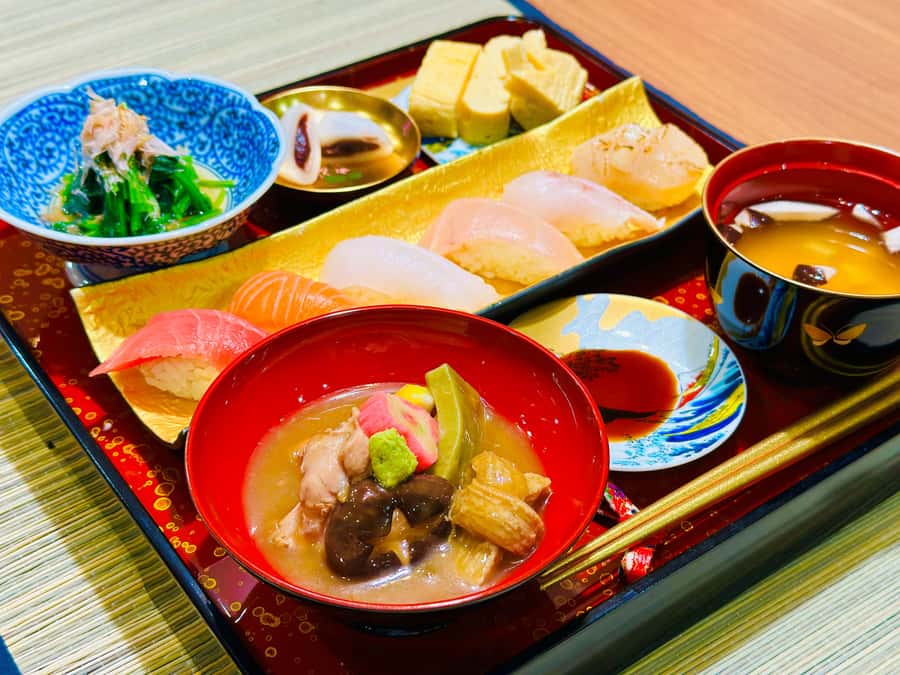
Three minutes from Kanazawa Station, chef Seiji Nakata turns a small family-run cooking school into a friendly Japanese kitchen. You will prepare pressed sushi, Kanazawa-style jibuni, fluffy dashi omelet, side dishes, miso soup, and dessert, then sit down to eat what you made.
I like the use of premium seafood from Omicho Market and the chance to learn jibuni, a Kanazawa dish you are unlikely to find elsewhere. I also like the live translation system, which puts spoken and written explanations on a large screen instead of leaving you to guess what the chef means.
The main drawback is that this is not suitable for strict vegetarians or vegans because the class uses bonito-based dashi. The school is on the second floor without a lift, and ingredient changes must be requested before the day of the class.
Key points at a glance
- Pressed sushi with premium sashimi: Use fish sourced from a respected Omicho Market supplier, then learn the compact, attractive style of oshizushi.
- Kanazawa-only jibuni: Prepare a traditional stew with chicken or duck, vegetables, fu, and savory dashi.
- A real language solution: Live voice and text translation appear on a large monitor, with smart translators available too.
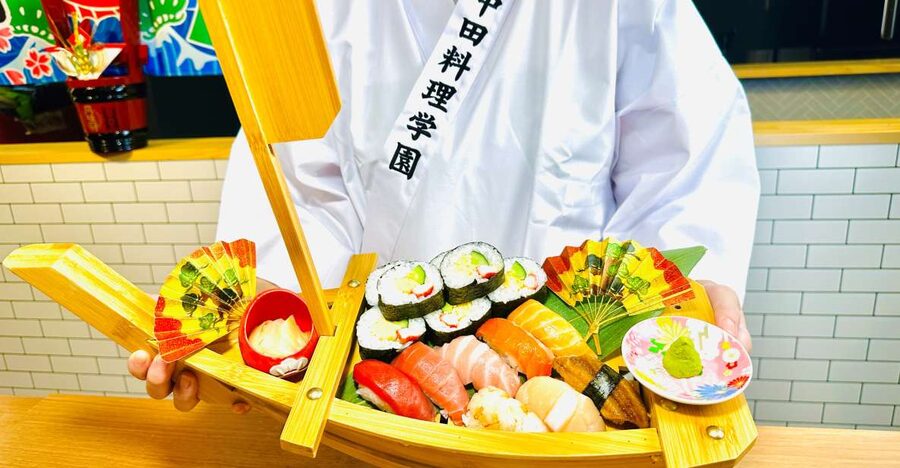
- Sushi chef dress-up: Put on a custom-made costume and have professional photos taken during the class.
- A practical location: The school is about three minutes from Kanazawa Station, making it easy to fit into a busy itinerary.
- Small-group, hands-on cooking: Seiji Nakata and his wife guide you through each dish rather than having you watch from the sidelines.
A Japanese cooking class with a Kanazawa address
Many Japanese cooking classes focus on familiar dishes such as sushi, miso soup, or tempura. This one adds a useful local angle: jibuni, a gently simmered Kanazawa specialty linked to samurai-era cooking customs.
That matters because the class is not only about learning recipes. You get a taste of what makes Kanazawa different from Tokyo, Kyoto, or Osaka. The seafood reflects the city’s coastal setting, while jibuni gives you a dish with a local identity.
The class takes place in a 56-year-old school run by the Nakata family. It is near the station, but the setting is not a polished restaurant or a large tourist kitchen. You enter a working family space where Seiji and his wife teach, translate, encourage, and keep the pace moving.
The activity lasts about two and a half hours, followed by time to enjoy the meal. That is long enough to learn several techniques without taking up a full day of sightseeing. I would place it early in your Kanazawa visit, since the recipes and knife skills may make later meals more interesting.
More Sushi and Japanese Classes in Japan:
- Sushi Making Tokyo Roll and Authentic Japanese Sushi Class
★ 5.0 · 3,971 reviews - Tokyo: Roll and Authentic Sushi Making Class in Asakusa
★ 4.9 · 1,957 reviews - Ramen Cooking Class at Ramen Factory in Kyoto
★ 5.0 · 1,937 reviews
Finding the school near Kanazawa Station
The location is one of the strongest practical points. From Kanazawa Station, walk for about three minutes to the three-story building. The first floor is slightly recessed and used as parking, with a distinctive Stayable Movie Theater hotel and blue noren curtain at the entrance.
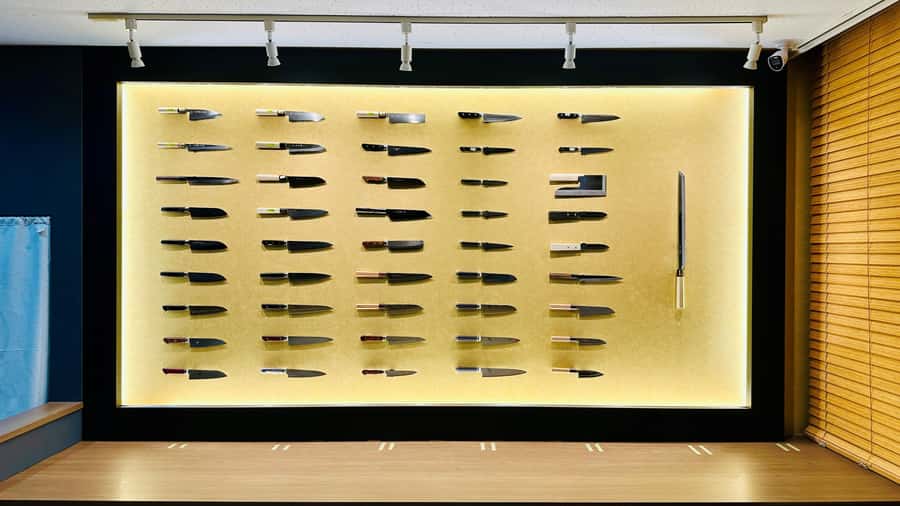
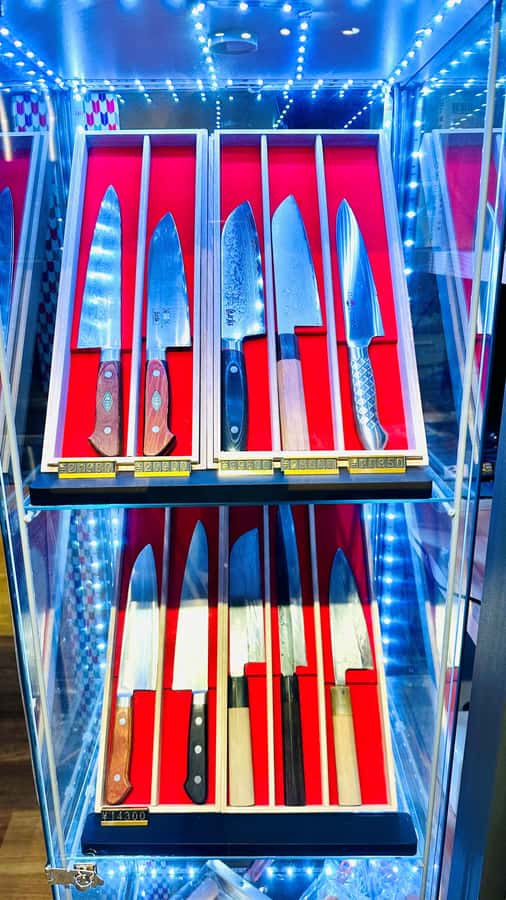
Look up to the second-floor window for the display of Japanese knives. That is the key landmark. The classroom is upstairs, and there is no lift, so you need to manage the stairs comfortably.
The school does not provide hotel pickup or drop-off. That is no real problem for most people, given the short walk from the station, but allow a few extra minutes to identify the building. Going directly to the second floor is the safest plan.
Meeting Seiji Nakata and getting settled
Seiji Nakata is a certified professional chef trained in both Osaka and Kanazawa. He leads the cooking, while his wife helps create the welcoming, easygoing mood that comes through repeatedly during the class.
The teaching style is active and personal. You are not simply handed a recipe and left alone. Seiji explains the steps, demonstrates techniques, then gives you a chance to take over. He is described as cheerful, funny, patient, and encouraging, which is useful when you are handling unfamiliar knives or trying to shape sushi for the first time.
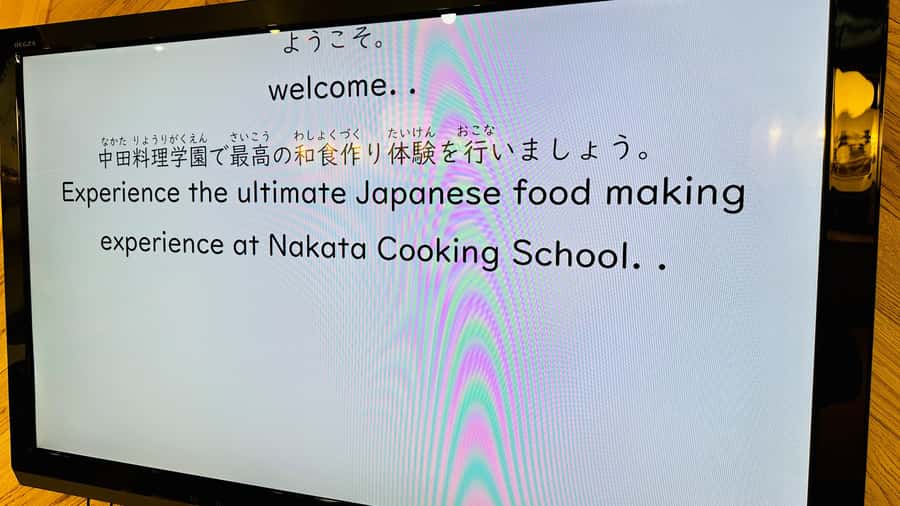
Language is handled with unusual care. Seiji speaks English, and the classroom uses a large screen for live translation in several languages. Voice and written text appear as the lesson continues. Smart translators are also available, and wireless internet is included.
This technology will not replace a human guide, but it removes much of the strain from technical explanations. You can ask questions, follow instructions, and understand cultural notes without relying only on gestures. It also adds a bit of fun to the class.
Dressing as a sushi chef
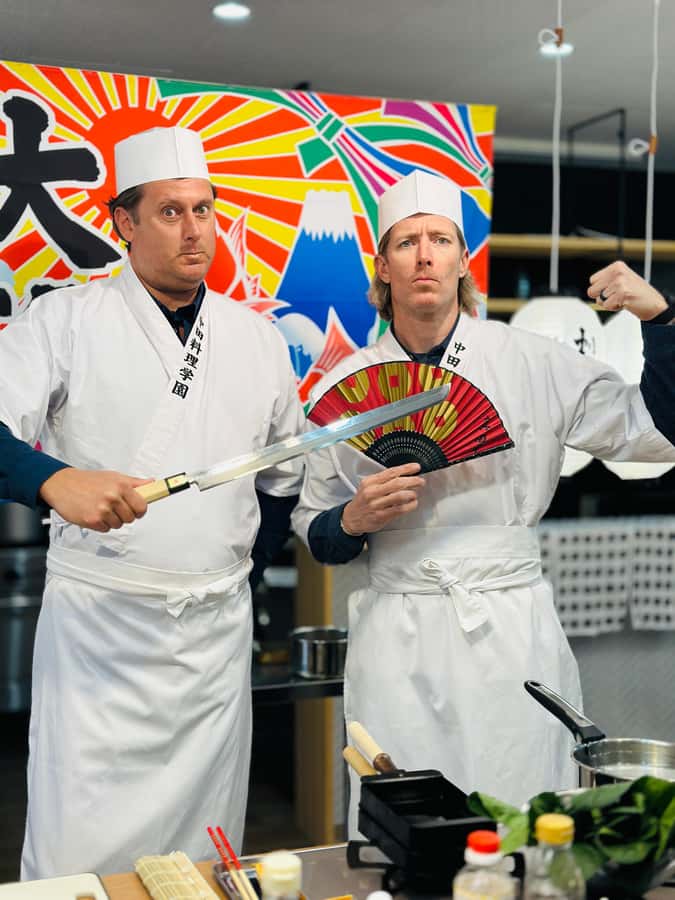
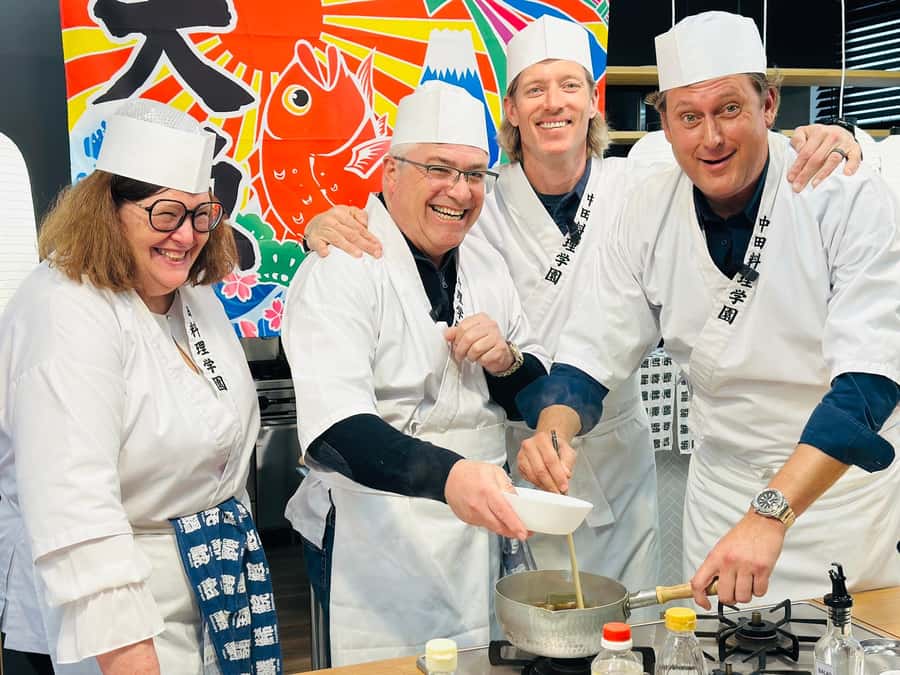
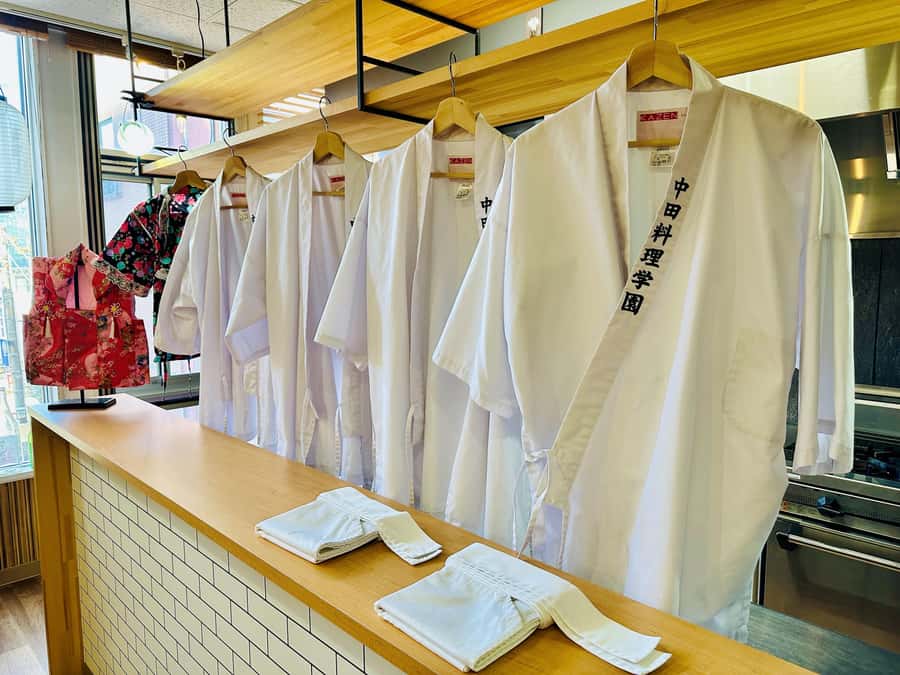
The costume is more than a quick photo prop. You can dress in an authentic-style sushi chef outfit before preparing the meal, which gives the lesson a playful restaurant-kitchen feel.
Professional photos are taken during the experience, and high-quality souvenir images are provided. That is a useful extra for families and couples who want pictures of the activity without one person constantly stepping away from the group to use a phone.
The costume also helps children and first-time cooks relax, though the class is not suitable for children under 12. Teenagers aged 12 and above can take part, but the second-floor access and knife work are worth considering before you book.
More Hands-On Workshops in Japan:
- Tokyo: Sushi Making Class in a Happi Coat near a Famous Spot
★ 4.9 · 1,377 reviews - Sushi Making Osaka Roll and Authentic Japanese Sushi Class
★ 5.0 · 1,220 reviews - Tokyo Sushi Making Class in Tsukiji with Professional Chef
★ 5.0 · 1,177 reviews - Ramen & Gyoza Cooking Class in Tokyo with Local Supermarket Visit
★ 5.0 · 823 reviews
Making pressed sushi with Kanazawa seafood
The sushi portion uses oshizushi, or pressed sushi. Instead of forming individual pieces by hand in the usual nigiri style, you place ingredients into a mold and press them into a neat block before cutting and serving.
This method is approachable for beginners. You can learn how to arrange the fish, control the pressure, and create tidy portions without needing years of sushi training. The result also looks good on the plate, which makes the presentation feel rewarding.
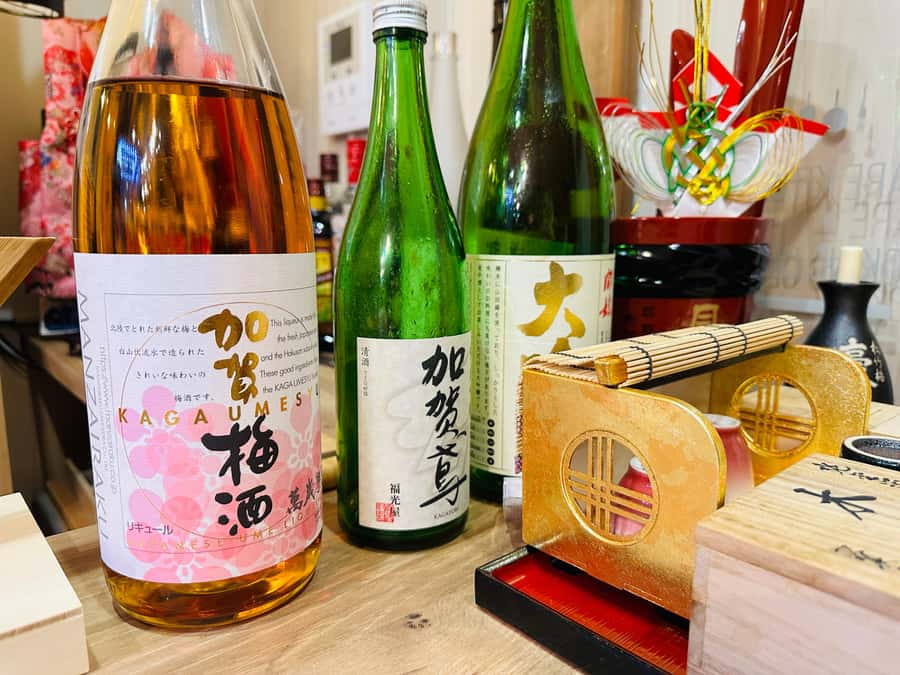
The sashimi comes from a top fishmonger at Omicho Market, a source trusted by Michelin-starred restaurants. The class describes the seafood as premium, and that quality matters here because sushi has nowhere to hide. Simple preparation puts the texture and freshness of the fish at the center.
You also learn more than the assembly. Seiji explains the food and shows you how the ingredients fit into Japanese cooking. The lesson is therefore useful at home, especially if you want to recreate a polished sushi plate rather than simply copy a single recipe.
Cooking Kanazawa-style jibuni
Jibuni is the dish that gives this class its strongest local character. It is a softly simmered stew with a savory dashi-based sauce, meat, seasonal vegetables, and fu, a chewy wheat gluten cake often used in Japanese cuisine.
The standard version uses duck or chicken. You can request tofu or vegetables instead of chicken, but you must do this when booking. Same-day changes are not available.
Jibuni has roots in Kanazawa’s samurai-era food culture, and it is considered a local dish found specifically in the city. That makes it a good reason to choose this class over a general Japanese cooking lesson in another destination.
The dish also teaches a different side of Japanese food. Sushi is precise and visual, while jibuni is about building a gentle broth and allowing ingredients to take on its flavor. You get to see how a local home-style dish can sit beside more famous Japanese foods.
Rolling dashi omelet and finishing the meal
The fluffy omelet, or tamagoyaki, adds a technique challenge. It is made with dashi and rolled into layers, producing the soft texture associated with a well-made Japanese omelet.
This is the sort of dish that looks simple until you try it. The class gives you a chance to practice the movement and timing rather than only taste the finished version. The dashi brings the savory depth that makes the omelet different from an ordinary Western egg dish.
You also prepare seasonal side dishes and miso soup. These are classic companions, but they matter because they turn the class into a full Japanese meal rather than a single sushi workshop. Tea is included, and dessert is part of the food program as well.
The full menu is listed as five kinds of Japanese food and desserts. The exact seasonal side dishes may vary, but the main elements are pressed sushi, jibuni, dashi omelet, miso soup, side dishes, and dessert.
Sitting down to eat what you made

After the cooking, you eat the meal at the school. The food is described as more refined than what you might produce in a basic beginner class, partly because the ingredients are carefully selected and partly because Seiji guides you through the details.
The meal is also plentiful enough to feel like a proper lunch or dinner rather than a few samples. That helps justify the roughly $94 price, especially since the fee includes food, tea, costume use, professional photos, translation support, smart translators, wireless internet, and recipes.
I would not compare the cost directly with the price of a restaurant meal. You are paying for instruction, preparation, equipment, food, cultural explanation, and time with a professional chef. If you only want to eat sushi, a restaurant is cheaper and simpler. If you want to understand how the meal comes together and take the methods home, the class offers better value.
Recipes for all the dishes are emailed the day before. Save them before class and use the lesson to mark the steps that seem hardest. The recipes give the experience a useful afterlife instead of ending when you leave the building.
Dietary restrictions and physical access
This is not a vegetarian or vegan class. Even if your sushi uses vegetables or egg and your jibuni uses tofu, the school uses traditional dashi made with bonito fish flakes.
That means the class cannot accommodate people who must avoid animal-based broths. Allergies and foods you cannot eat must be reported at booking, and the school cannot handle same-day ingredient substitutions.
The stated substitutions are practical but limited. Sashimi can be replaced by vegetables or egg, and chicken in jibuni can be replaced by tofu or vegetables. Ask in advance if you have any concern.
The school is not suitable for wheelchair users or people with visual impairments. Pregnant women are also advised not to book, and children under 12 are not accepted. These restrictions are important to read before paying, since they are not minor details that can be fixed on arrival.
Who will get the most from this class
I would recommend this experience to first-time visitors who want a direct connection with Japanese food culture. You do not need advanced cooking skills. The teaching is built for beginners, and the translation system makes it easier to follow along.
It works especially well for couples, families with older children, and small groups. The costume and photos add a light, social touch, while the food and local background give the activity substance.
It is also a good choice for people spending only a short time in Kanazawa. The station location means you do not lose much time in transit, and the two-and-a-half-hour schedule fits neatly between sightseeing plans.
Experienced home cooks may still enjoy it, particularly for jibuni, pressed sushi, and the dashi omelet technique. Just keep your expectations realistic. This is a guided introduction, not professional culinary training.
Is the $94 price fair?
At $94 per person, this is not a budget meal. But the price includes a full hands-on class, five food elements and dessert, quality seafood, a professional chef, translation technology, tea, costume use, photos, and recipes.
The strongest value comes from the combination of local food and personal instruction. Jibuni gives you something specific to Kanazawa, while the sushi ingredients raise the standard beyond a basic tourist demonstration.
The photos and costume are pleasant extras, but I would not book the class for those alone. The real value is the chance to prepare, eat, and understand several dishes in one sitting, with the language problem largely managed for you.
Cancellation is allowed up to 24 hours before the activity for a full refund. You can also reserve and pay later, which is useful when your Japan plans are still shifting.
Should you book the Kanazawa cooking class?
Book it if you want to do more than look at Japanese food. Seiji Nakata and his wife provide a warm, hands-on class with strong local content, good ingredients, clear guidance, and a smart translation setup.
The best reasons to choose it are the Kanazawa-specific jibuni, seafood from Omicho Market, the useful recipes, and the easy station location. The main reasons to skip it are the upstairs access, the animal-based dashi, the age limit, or a preference for simply dining rather than cooking.
For most food-loving visitors who meet the access and dietary requirements, this is a well-balanced way to spend half a day in Kanazawa. You leave with a meal in your stomach, new techniques in your hands, and recipes you can try again at home.
FAQ
How long does the cooking class last?
The cooking activity lasts about two and a half hours, followed by time to enjoy the meal you prepared.
Where is the cooking school?
The school is on the second floor of a three-story building about three minutes from Kanazawa Station. A display of Japanese knives in the second-floor window marks the location.
Which dishes will I make?
You will prepare pressed sushi, Kanazawa-style jibuni, a dashi omelet, seasonal side dishes, miso soup, and dessert. The experience includes five kinds of Japanese food and desserts.
Is the class suitable for beginners?
Yes. The class is designed to be hands-on and accessible to beginners, with step-by-step guidance from chef Seiji Nakata.
Is English available?
Japanese and English are supported. The class also uses live voice and text translation on a large monitor, and smart translators are available to use.
Can I wear a sushi chef costume?
Yes. Authentic sushi chef costumes are included, and professional souvenir photos are taken during the activity.
Can vegetarians or vegans join?
Strict vegetarians and vegans cannot be accommodated because the class uses traditional bonito-based dashi. Sashimi can be replaced with vegetables or egg, and chicken in the jibuni can be replaced with tofu or vegetables if requested in advance.
Is the classroom wheelchair accessible?
No. The classroom is on the second floor and there is no lift. The activity is not suitable for wheelchair users or people with visual impairments.
Can I cancel for a refund?
You can cancel up to 24 hours before the activity for a full refund.
Just added around Japan
- Cooking Class: Make a Local Delicacy in a Japanese House★ 5.0 · 7 reviews
- Culinary Home Cooking with Grandmothers – Vegan Friendly★ 5.0 · 5 reviews
- Famous Inari Sushi Making Experience in Toyokawa★ 5.0 · 4 reviews
- Nagoya Super Market Tour & Home Cooking Class with a Local, Akiko★ 5.0 · 10 reviews
- Tokyo: Tsukiji Market Walking Tour & Sushi Cooking Class★ 4.6 · 122 reviews
- Tokyo: Sushi Cooking Class with Sake Tasting★ 4.8 · 55 reviews
- Sushi-Making Experience★ 4.7 · 4 reviews
- Tokyo: Tsukiji Market Guided Tour & Sushi-Making Experience★ 4.4 · 11 reviews
Japanese & Sushi Cooking Classes, compared.
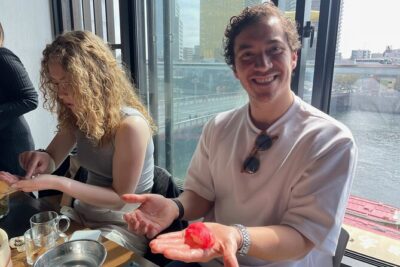
Sushi Making Tokyo Roll and Authentic Japanese Sushi Class
Read our review →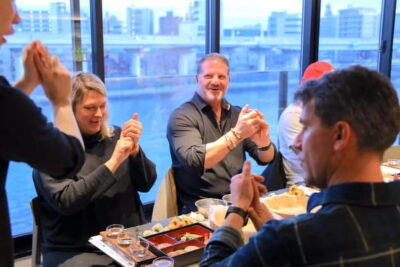
Tokyo: Roll and Authentic Sushi Making Class in Asakusa
Read our review →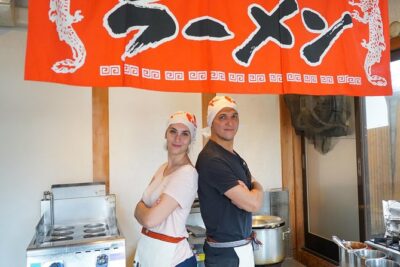
Ramen Cooking Class at Ramen Factory in Kyoto
Read our review →
Tokyo: Sushi Making Class in a Happi Coat near a Famous Spot
Read our review →
Sushi Making Tokyo! Popular Maki Sushi & Japanese Sushi(+Recipe!)
Read our review →
Sushi Making Osaka Roll and Authentic Japanese Sushi Class
Read our review →
Tokyo Sushi Making Class in Tsukiji with Professional Chef
Read our review →
Ramen & Gyoza Cooking Class in Tokyo with Local Supermarket Visit
Read our review →Browse the lists this tour appears in