
Review · TOKYO
Shibuya Tokyo: Onigiri & Tamagoyaki Cooking Class
The best part of this 90-minute Shibuya cooking class is its focus on everyday Japanese food rather than restaurant theater. You learn how rice texture, hand pressure, nori, and fillings turn a few plain ingredients into onigiri you can make again at home. You also prepare tamagoyaki, the softly rolled Japanese omelet.
I like the small group of up to eight, which gives you room to work and ask questions. I also like the practical finish: you make three rice balls, half a serving of omelet, eat what you prepare, and take home recipes and a small souvenir. The main consideration is that this is a compact workshop, not a full Japanese meal or a broad cooking course.
Key Points
- Three onigiri per person: Practice shaping, filling, and wrapping your own rice balls.
- Tamagoyaki included: Make half a portion of the familiar rolled Japanese omelet.
- English instruction: An English-speaking host explains each step clearly.
- Small, personal setting: The group is limited to eight, and past sessions have been as small as three people.
- Hands-on food skills: Learn rice selection, cooking texture, traditional shapes, and nori wrapping.
- Good take-home value: Ingredients, utensils, apron rental, recipes, and a small souvenir are included.
Why Onigiri Makes a Good Tokyo Food Class
Onigiri is simple food, but it is not careless food. The rice needs the right texture. The filling needs enough flavor to work with the rice. The outside layer of nori should add crisp, savory character rather than turn soggy before you eat it.
That makes onigiri a smart choice for a short class. You are not spending half the session watching a chef prepare a complicated dish. You are working with your hands and learning a food that belongs to everyday Japanese life. Onigiri can be a packed lunch, a quick snack, or a home-cooked comfort food.
The class covers the details that are easy to overlook. You learn how to choose suitable rice and cook it for the right texture and flavor. You also practice shaping the rice into classic triangles and other designs. That hands-on work matters because the pressure of your hands affects whether the rice holds together or falls apart.
You also get a choice of fillings. The selection includes traditional and modern ideas, as well as vegetarian options. The available information does not list every filling, so you should not book expecting a particular ingredient. Instead, think of the variety as a chance to compare different ways of balancing rice, salt, seaweed, and filling.
More Hands-On Workshops in Tokyo:
- Sushi Making Tokyo Roll and Authentic Japanese Sushi Class
★ 5.0 · 3,971 reviews - Tokyo: Roll and Authentic Sushi Making Class in Asakusa
★ 4.9 · 1,957 reviews - Tokyo: Sushi Making Class in a Happi Coat near a Famous Spot
★ 4.9 · 1,377 reviews
What Happens During the 90 Minutes
The class takes place in a small shop with a cozy kitchen setup. The working area is compact, but there is enough space for each person to prepare the food comfortably. A previous class had only three participants, creating a particularly personal session. Even at the maximum of eight, the group size should remain manageable for a practical workshop.
You begin with an introduction to the ingredients and the basic plan. The English-speaking host guides you through the process rather than leaving you to copy a demonstration from across a large room. That is useful if you have never made Japanese food before or if you want to ask about a technique while you work.
The first important lesson is the rice. Onigiri depends on rice that is sticky enough to hold its shape but still pleasant to eat. You learn about selecting and cooking the right rice, along with the texture and flavor you should aim for. This is the most useful lesson to carry home because shaping is much harder when the rice itself is wrong.
Next comes the filling. You explore several options, including traditional choices, newer interpretations, and vegetarian fillings. The point is not simply to stuff rice with anything available. You learn how the filling sits inside the rice and how much you need for a balanced bite.
Then you shape the onigiri. The classic triangle is the main form, but the class also allows for creative designs. This is where the workshop becomes pleasantly tactile. You need enough pressure to make the rice hold together, but too much pressure can create a dense rice ball. The host guides you through that balance.
You prepare three rice balls per person, giving you more than one chance to improve. Your first may be uneven. By the third, your hands should have a better feel for the rice and the shape. The repeated practice is a better teaching method than making one perfect sample and moving on.
The nori wrapping comes next. You learn traditional ways to use the seaweed around the rice. Nori changes the flavor and gives the onigiri its familiar finish, but its texture is part of the lesson too. Wrap it at the right point and you get a pleasant contrast between soft rice and seaweed. Leave it too long and it may lose its crispness.
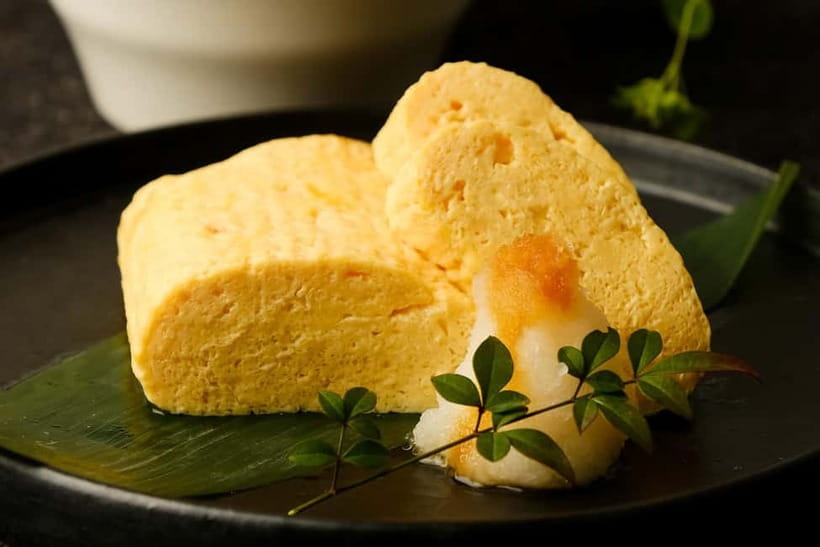
The other dish is tamagoyaki, the Japanese rolled omelet. You make half a portion per person. It is a small addition, but it gives the class a second useful technique. Onigiri teaches rice handling and shaping. Tamagoyaki introduces the controlled rolling needed to build the omelet layer by layer.
The class ends with the food you have prepared. Sharing the meal in the small kitchen gives the activity a social finish without turning it into a long sit-down dining event. You also receive recipes and a small souvenir, so the class does not end when you leave the room.
The Skills You Can Use at Home
The strongest reason to book this class is that it teaches repeatable skills. You are not only assembling a dish at a worktable. You are learning how to judge rice texture, handle fillings, form a stable shape, and use nori in a traditional way.
The recipes help, but the physical practice may be more valuable. Rice preparation can look easy until you try to make a firm triangle without crushing it. Tamagoyaki can also seem straightforward until you need to roll the egg neatly. Clear instruction and individual help make these tasks less frustrating.
I especially like that the class includes both traditional and modern filling ideas. This gives you a starting point without forcing you to treat onigiri as a fixed recipe. Once you understand the method, you can adapt it at home to suit your taste.
Vegetarian participants also have options to explore. If you have allergies or other dietary restrictions, contact the host before the class. Gluten-free choices may be possible on request, but the activity is not suitable for anyone with a severe or life-threatening food allergy.
Why the Small Group Matters
A group limit of eight is one of the more important details here. Cooking classes can become awkward when too many people share one work surface or when the instructor cannot see what everyone is doing. This class is designed to remain small, and a previous session had just three people.
That setting gives you a better chance to receive help with small but important points. You can ask whether your rice is too loose, how much filling to use, or how firmly to press the shape. You are also less likely to spend the session waiting for a turn.
The class is conducted in English. That removes a major barrier for many international visitors, especially when the lesson involves timing, texture, and hand movements. You still need to pay attention and follow along, but you are not trying to decode instructions while handling hot or sticky food.
The small shop setting has a tradeoff. It is cozy rather than spacious. If you want a polished cooking studio with lots of room and a large demonstration counter, this may feel modest. If you prefer a personal session with direct guidance, the compact setup works in its favor.
A few more cooking classes around Tokyo worth a look
- Tokyo Sushi Making Class in Tsukiji with Professional Chef
★ 5.0 · 1,177 reviews - Ramen & Gyoza Cooking Class in Tokyo with Local Supermarket Visit
★ 5.0 · 823 reviews - Tsukiji Fish Market Guided Tour and Sushi Making with Pro Chef
★ 5.0 · 775 reviews - Tokyo: Tsukiji Fish Market Sushi Making Class with Pro Chef
★ 4.9 · 506 reviews
Is $49 a Fair Price?
At $49 per person, the class sits in a reasonable range for a short, guided food activity in Tokyo. The price covers the instruction, ingredients, utensils, apron rental, three onigiri, half a portion of tamagoyaki, recipes, and a small souvenir.
That package matters because you are not paying only for a tasting. You receive enough ingredients to prepare several pieces yourself, and the class gives you practical instruction that can be repeated at home. The recipe booklet adds value for anyone who wants to make the dishes after returning from Japan.
The class is less attractive if you are looking for a substantial meal. Three rice balls and half a serving of rolled omelet make a satisfying workshop meal, but this is not an all-day food tour or a large restaurant-style spread. You are paying for participation and instruction first, with food as the result.
I see the best value for people who enjoy cooking, want a cultural activity in Shibuya, or would like a break from sightseeing that still feels connected to Japan. Families and first-time cooks can also get plenty from it, provided children meet the age requirement and are comfortable following a hands-on lesson.
Who Should Book This Class?
This is a good match for food-focused visitors who want more than a meal. You learn why the ingredients work, then prepare the food yourself. The class also suits anyone who wants a low-pressure introduction to Japanese cooking.
Families may like the short duration and clear goal. The experience is not suitable for children under five, so check the age of everyone in your group before booking. Older children can benefit from the shaping and wrapping work, though the information provided does not specify a minimum age beyond that restriction.
It is also a sensible choice for solo visitors. The small group creates an easy setting for meeting other people, and you have enough work to keep your hands busy. Couples and friends can compare shapes and fillings without needing advanced cooking skills.
You should think twice if you have a severe food allergy. The host asks you to share dietary restrictions in advance and may be able to provide gluten-free options, but the activity is not suitable for life-threatening allergies. Also consider the compact setting if you prefer lots of personal space.
Getting There and Planning Your Visit
Transportation to and from the venue is not included, so you need to make your own way to the class. The shop location has been described as easy to find, but you should still allow time to locate it before the start. A cooking lesson is not a good place to arrive flustered and late, especially when the rice preparation has a set sequence.
The class lasts about an hour and a half. That makes it easy to fit into a day in Shibuya without giving up a full morning or afternoon. Check the available starting times before you book, since the schedule can affect how well it fits with shopping, museums, or other plans.
You can cancel up to 24 hours in advance for a full refund. A reserve-now, pay-later option is also available, which helps if your Tokyo plans are still shifting. These policies are useful, but the main planning point is simpler: leave enough time for transportation and finding the small shop.
What Makes This More Than a Snack Lesson?
Onigiri is familiar to many people as a convenience-store food, but the class shows what sits behind that simple appearance. You learn that the result depends on small choices: rice quality, cooking texture, filling balance, hand pressure, shape, and timing with the nori.
That context makes the activity feel more connected to daily Japanese cooking. You are not only copying a recipe for a one-time meal. You are learning a flexible method that can use different fillings and take different shapes.
Tamagoyaki adds another layer. It is still an approachable dish, but the rolling process rewards patience and control. Preparing it alongside onigiri gives the session a better range of skills than a class focused on rice balls alone.
The food also gives you a chance to slow down. Shibuya can be an intense part of Tokyo, full of movement and bright signs. A quiet kitchen activity offers a useful change of pace, with a clear task and a meal at the end.
Final Verdict: Book It If You Want Practical Japanese Food Skills
I would book this class if you want an affordable, hands-on introduction to Japanese home-style food. The English guidance, small group, recipe booklet, and included apron and ingredients make the $49 price easy to justify for someone who values participation over passive tasting.
Book it especially if you enjoy rice dishes, want vegetarian filling choices, or need a short activity that fits neatly into a Tokyo schedule. The three onigiri give you enough practice to improve, and the tamagoyaki adds a second useful technique.
Skip it if you want a large meal, a long professional cooking course, or a spacious studio. This is a compact workshop in a small kitchen. For most food lovers, though, that modest scale is part of the appeal: you get clear instruction, personal attention, food you made yourself, and recipes to carry the experience home.
FAQ
Where does the onigiri and tamagoyaki class take place?
The experience takes place in Shibuya, Tokyo, on Honshu, at a small shop with a cozy kitchen setup.
How long is the cooking class?
The class lasts 90 minutes.
How much does the experience cost?
The listed price is $49 per person.
How many people can join the class?
The group is limited to eight participants.
Is the class taught in English?
Yes. An English-speaking host provides the instruction.
How many onigiri will I make?
Each person receives the ingredients and utensils to make three rice balls.
Is tamagoyaki included?
Yes. Each person makes half a portion of rolled omelet.
What is included in the price?
The price includes the cooking class, ingredients, utensils, apron rental, recipes, and a small souvenir.
Can people with dietary restrictions participate?
You should notify the host about dietary restrictions or allergies in advance. Gluten-free options may be available on request, but the activity is not suitable for anyone with a severe or life-threatening food allergy.
Can children join the class?
Children under five cannot take part.
Is transportation included?
No. You are responsible for transportation to and from the venue.
Can I cancel the booking?
You can cancel up to 24 hours in advance for a full refund. A reserve-now, pay-later option is also available.
Just added around Tokyo
- Takoyaki cooking experience in Kabukicho, Shinjuku★ 4.8 · 36 reviews
- Shinjuku Tokyo: Authentic Japanese Home-Style Culinary Class★ 4.9 · 125 reviews
- Ramen Making from Scratch +Akihabara Tour –Cooking Class★ 5.0 · 25 reviews
- Japanese Knife Skills & Tuna Don/Sushi Workshop in Tokyo★ 5.0 · 3 reviews
- Tokyo: Private Japanese Cooking Class with a Local Chef★ 5.0 · 81 reviews
- AKEMI’s SUSHiKiTCHEN: A fun sushi cooking lesson in Tokyo★ 5.0 · 5 reviews
- Shibuya Tokyo: Sushi Making Class (Vegan/Vegetarian/Halal)★ 4.7 · 29 reviews
- Ramen Making from Scratch with Tokyo Mom(Vegan Option Available)★ 5.0 · 39 reviews
Cooking Classes, compared.
Half-Day Thai Cooking Class at Organic Farm in Chiang Mai
Read our review →
Florence: Pasta Cooking Class with Unlimited Wine
Read our review →
3 in 1 Cooking Class near Navona: Fettuccine, Ravioli & Tiramisu
Read our review →
Hanoi Cooking Class: Culture, Local Market & Meaning CSR Impact
Read our review →
5 Traditional Dishes Hanoi Cooking Class with Market Trip
Read our review →
Cooking Class and Lunch at a Tuscan Farmhouse with Local Market Tour from Florence
Read our review →
Chiang Mai: Cooking Class, Market & Thai Herbs Garden Tour
Read our review →Browse the lists this tour appears in