
Review · JAPANESE & SUSHI
Lake Kawaguchiko: Ramen Cooking Class with Souvenir
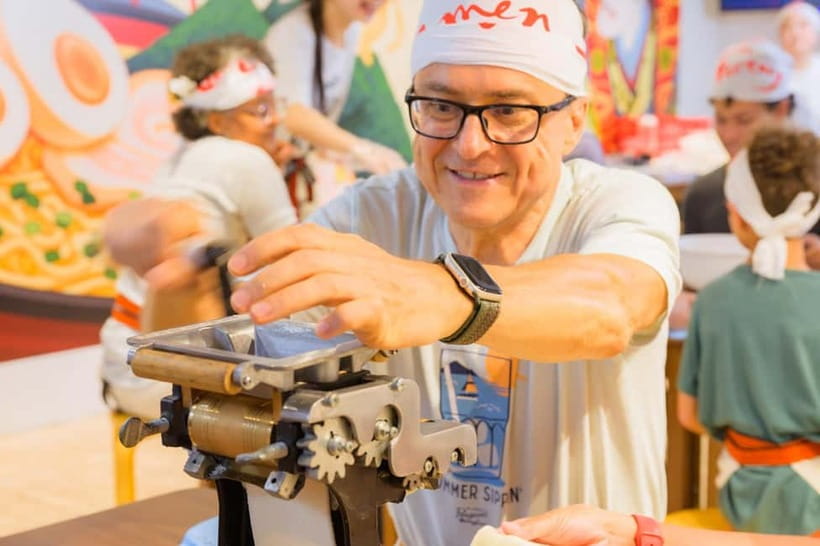
Making ramen from scratch is the heart of this Lake Kawaguchiko experience. You watch a short introduction, prepare the noodles and toppings yourself, choose your soup and sauce, then eat the bowl you created. It is a hands-on food lesson, not simply a demonstration.
I like the fresh-noodle work, which gives the class its real cooking value, and the friendly, step-by-step teaching that makes it suitable for beginners. You also get a choice of four souvenirs, a useful extra at a price of $133 per person. The main drawback is that 90 minutes goes quickly, and drinks and transport are not included.
Key points to know before booking
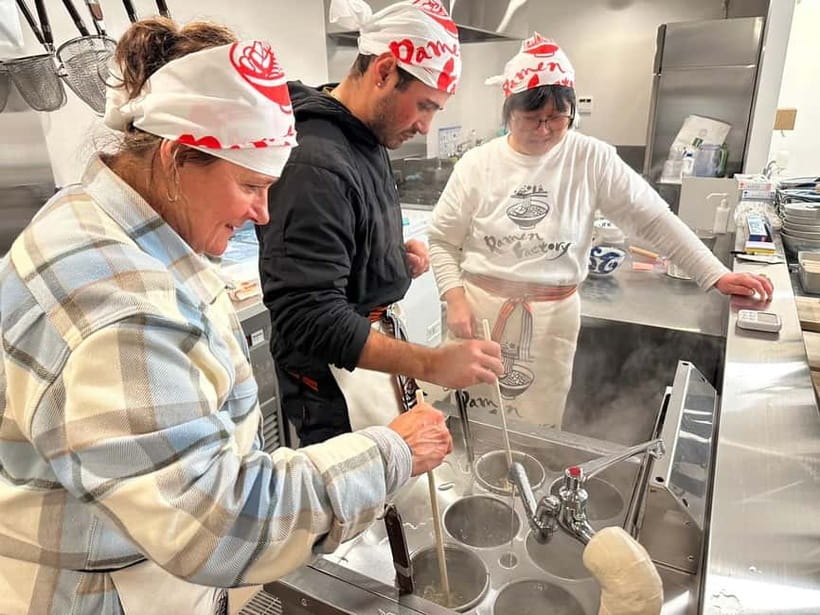
- Fresh ramen from start to finish: You make the noodles, prepare ingredients, and enjoy the finished bowl.
- Choose your flavor: Pick from available soup and sauce options, including miso soup as one choice mentioned during the class.
- English-language instruction: The activity is conducted in English, with a video helping explain the process.
- Practical meeting point: Ramen Factory is about a three-minute walk from Kawaguchiko Station.
- A take-home reminder: You choose one of four souvenirs after the cooking session.
- Short but focused: The full class lasts 90 minutes, so arrive 10 minutes early and be ready to work.
What this Kawaguchiko ramen class is really like
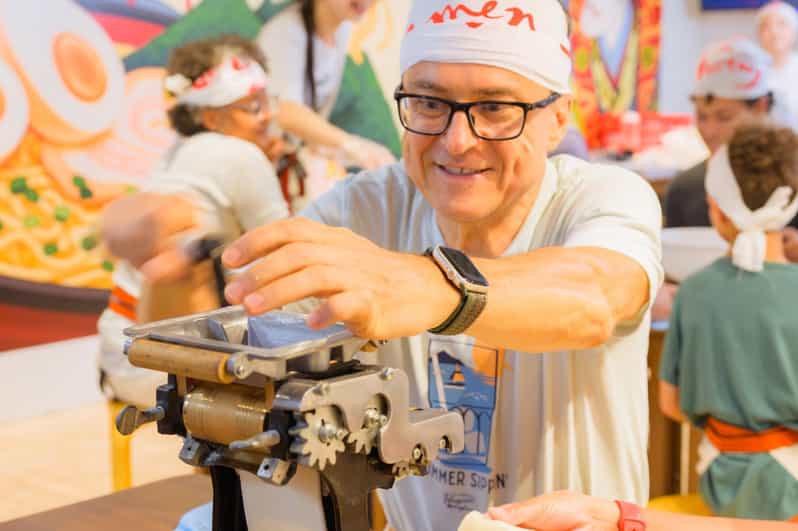
I see this as a compact Japanese food workshop with a satisfying finish. You are not just watching a chef assemble a bowl. You take part in the important steps, then sit down and eat the result while the experience is still fresh in your mind.
The class begins with a short video about making ramen from scratch. This gives you the basic picture before you start handling ingredients. For a first-time cook, that opening matters because ramen can look simple in a restaurant bowl while involving several separate parts: noodles, broth, sauce, meat, and toppings.
The teaching then becomes practical. The class includes the ingredients, a ramen apron, and a headscarf, so you do not need to arrive with cooking equipment. You will have guidance as you make fresh noodles, prepare the other ingredients, and put the bowl together.
The supplied descriptions contain one stray reference to sushi-making, including Temari, Gunkan maki, Nigiri, and Temaki sushi. That does not match the named activity, its included items, or the detailed participant accounts. This experience is presented as a ramen-making class, and you should book it for ramen rather than sushi.
More Sushi and Japanese Classes in Japan:
- Sushi Making Tokyo Roll and Authentic Japanese Sushi Class
★ 5.0 · 3,971 reviews - Tokyo: Roll and Authentic Sushi Making Class in Asakusa
★ 4.9 · 1,957 reviews - Ramen Cooking Class at Ramen Factory in Kyoto
★ 5.0 · 1,937 reviews
Finding Ramen Factory near Kawaguchiko Station
The meeting point is easy to reach if you are already at Kawaguchiko Station. Exit the station, walk along the front street, and continue straight to the left for about three minutes. The location is diagonally across from Fujitempra IDATEN.
That short walk makes the class convenient on a day built around Lake Kawaguchiko. You do not need to arrange a separate taxi or tour transfer, but you do need to reach the meeting point on your own. Transportation to and from Ramen Factory is not included.
Arrive 10 minutes early. You will need that time to prepare for the class, put on the apron and headscarf, and get settled before the instruction begins. Cutting it close could make the first part feel rushed.
The activity ends back at the same meeting point. That makes it simple to continue your day around Kawaguchiko, although the class itself does not provide transportation to other sights.
The video gives the class a useful starting point
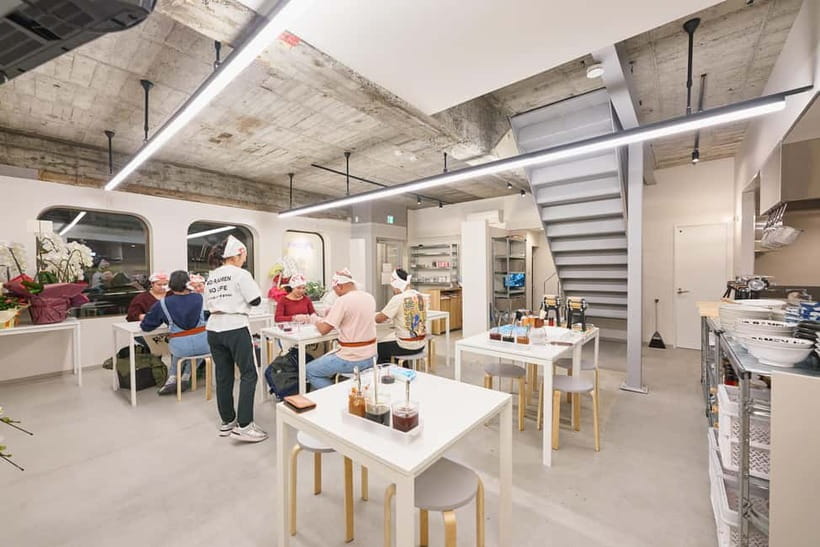
The opening video explains the ramen-making process before you begin. I like this format because it gives you a quick sense of how the parts fit together instead of dropping you into a kitchen without context.
It also helps if your cooking vocabulary is limited. The activity is offered in English, and the video provides another way to follow the sequence of the work. You can see the broad process first, then repeat it with the instructor’s help.
Do not expect a long culinary lecture. The class is only 90 minutes, so the video is designed to get you ready rather than cover every regional style of Japanese ramen. Its value is practical: you understand what you are about to do, then get on with doing it.
Fresh noodles are the best part of the session
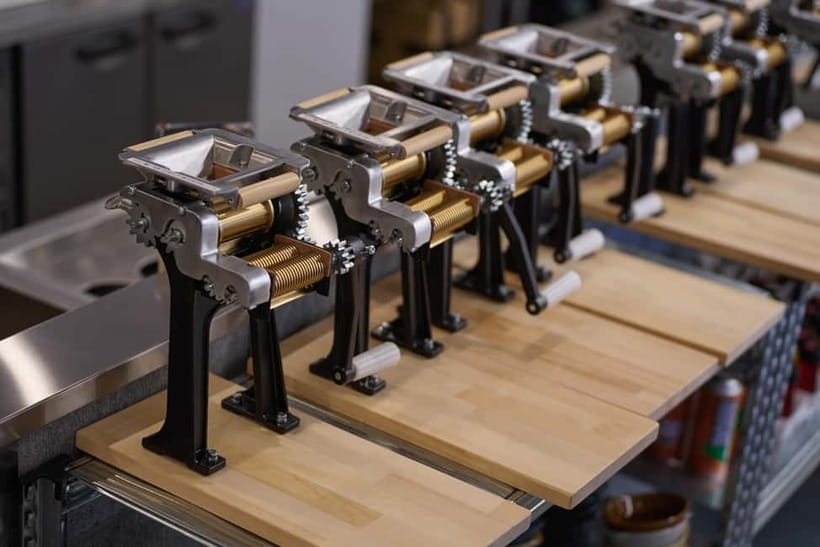
The noodle-making is the activity’s main draw. Making fresh noodles gives you a stronger connection to the meal than adding toppings to pre-cooked noodles would. You can see how much work goes into the base of a bowl that often arrives at a restaurant in just a few minutes.
The class is described as hands-on from beginning to end. You make the fresh noodles, boil them, prepare the meat, and bring the components together. That sequence gives the session a clear beginning, middle, and end.
I would especially recommend this for anyone who loves ramen but has never tried to make it at home. You may not leave ready to open a ramen shop, but you will have a better sense of the basic process and the parts that affect the final taste.
The instructors guide you step by step and answer questions as you work. That matters because beginners often need help with timing and order. The friendly teaching style also keeps the class from feeling like a test.
More Hands-On Workshops in Japan:
- Tokyo: Sushi Making Class in a Happi Coat near a Famous Spot
★ 4.9 · 1,377 reviews - Sushi Making Osaka Roll and Authentic Japanese Sushi Class
★ 5.0 · 1,220 reviews - Tokyo Sushi Making Class in Tsukiji with Professional Chef
★ 5.0 · 1,177 reviews - Ramen & Gyoza Cooking Class in Tokyo with Local Supermarket Visit
★ 5.0 · 823 reviews
Choosing broth and sauce adds a personal touch
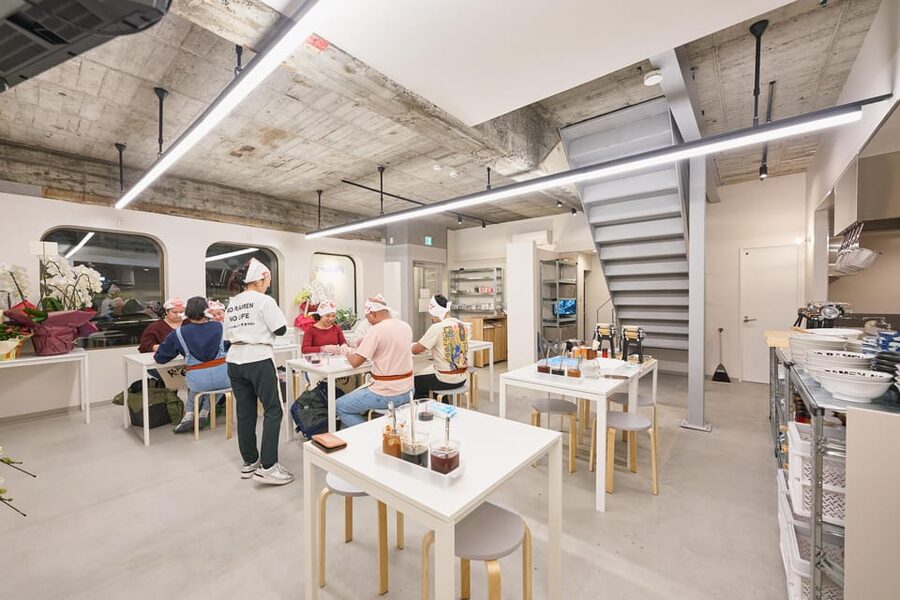
You get to choose your soup and sauce. Miso soup is one option specifically mentioned by a participant, who found it a successful choice. The available selection may shape your bowl more than any decorative topping, so this is one of the class decisions worth paying attention to.
I like having a choice because it keeps the experience from feeling completely fixed. You are not making a generic bowl that everyone receives in exactly the same form. Your selection gives the meal a small personal stamp.
At the same time, the supplied information does not give the full list of broth and sauce choices. I would not book this expecting a detailed tasting menu or a long comparison of regional ramen styles. Think of the choice as one enjoyable part of a guided class.
Preparing the meat and eating the finished bowl
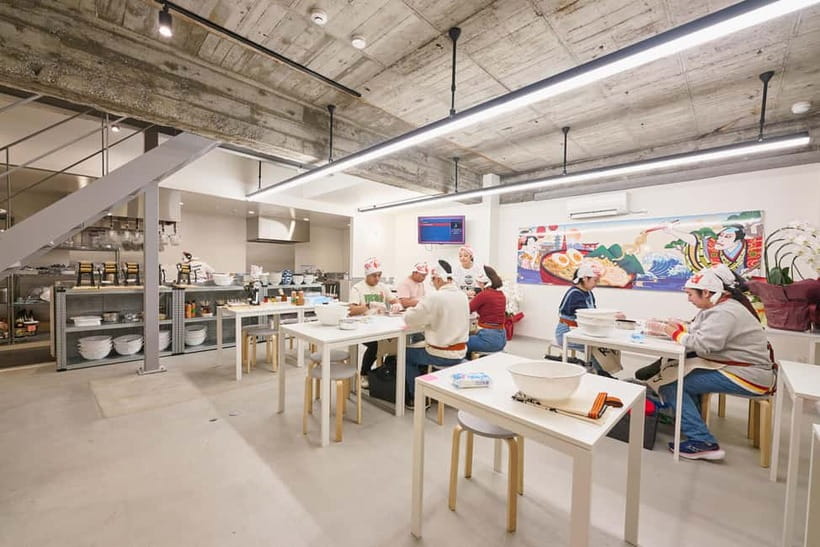
The class also includes preparing the meat, then boiling the noodles and assembling the ramen. These steps help you understand why timing matters. Fresh noodles are not something you want to leave sitting around after cooking, so the final stage leads naturally into the meal.
This is where the class pays off. You sit down and eat the ramen you made, rather than packing it away or watching someone else take over. That final bowl is part of the experience and is included in the class.
I find this more rewarding than a standard cooking demonstration because the meal gives the work a clear result. You can look back at the process while eating, compare what you expected with what you produced, and remember the practical steps more easily.
Drinks are not included. If you want something to accompany the ramen, plan to buy it separately, though no drink arrangements are specified in the provided details.
Four souvenirs give the experience a lasting reminder
After cooking, you can choose from four types of souvenirs. The exact items are not listed, so you should treat this as a choice of four available keepsakes rather than assume a particular kitchen tool, food item, or decorative object.
Still, the souvenir is a useful part of the package. Cooking classes can fade into a pleasant memory once you leave, while a small item gives you something tangible to take home. It may also help you remember the ramen process when you try to recreate parts of it later.
The souvenir should not be the main reason to pay $133. The real value lies in the 90-minute instruction, the ingredients, the cooking work, and the meal at the end. The keepsake is an extra that improves the package, especially if you are looking for a Japanese food experience rather than only lunch.
Is $133 per person good value?
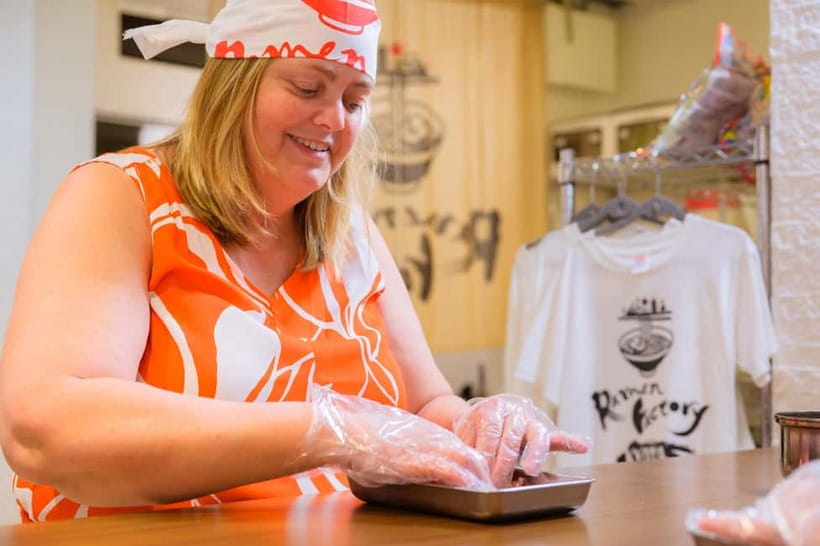
At $133 per person, this is not a cheap meal. You could spend far less on a bowl of ramen in Japan. The price makes sense only if you want the activity, not simply the food.
You are paying for a guided class, ingredients, cooking equipment and preparation, an apron and headscarf, a process video, your finished ramen, and one of four souvenirs. The 90-minute length is also important. This is a focused session, not an all-day food school.
I see fair value for visitors who would otherwise spend money on a cooking activity and want something easy to fit into a Kawaguchiko schedule. The class is especially appealing if you have always wanted to learn how ramen is made but have never taken the time to try.
The value is weaker for someone who is mainly hungry or watching every yen. You would be paying a premium for participation and instruction, and the package does not include drinks or transportation. Before booking, ask yourself whether you want to make ramen or simply eat ramen. Only the first goal justifies the cost.
Who will enjoy this most?
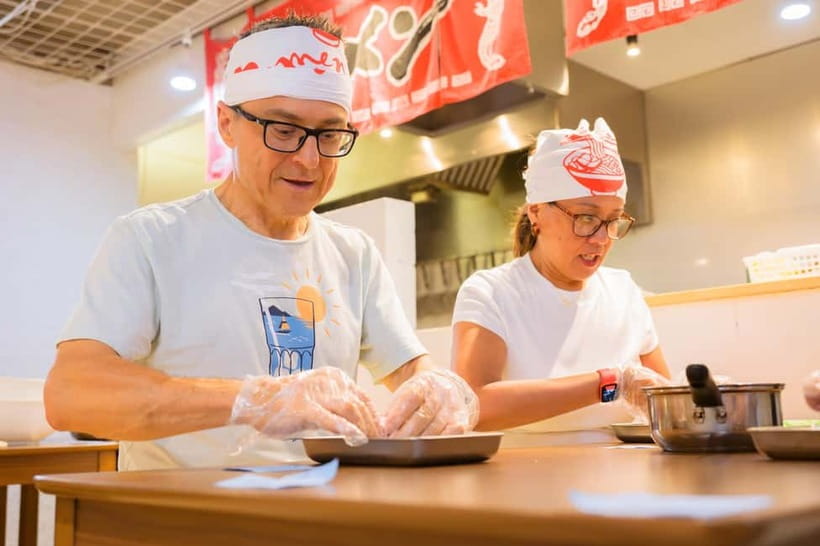
This class suits first-time cooks, ramen fans, couples, families, and solo visitors who want a structured food activity near the station. The step-by-step format means you do not need advanced kitchen skills.
It also works well for a mixed group. One person might be keen on Japanese food, while another simply wants an activity that feels more personal than sightseeing. Since everyone works toward a bowl at the end, the session has a clear shared goal.
I would also recommend it for visitors who have already seen several temples, shrines, and viewpoints and want a change of pace. Cooking gives you a different way to connect with Japan, through ingredients and routine rather than only through historic buildings.
The class may be less suitable if you dislike structured group activities, have very limited time, or want a quiet meal with no instruction. Ninety minutes is not long, but it is still a scheduled activity with preparation, teaching, and cooking.
Practical details that can affect your visit
Wear comfortable clothing suitable for cooking. You will be working with ingredients and hot food, so clothes that allow easy movement make more sense than anything formal or restrictive.
Tell the provider about food allergies in advance. This is important because the class includes several ramen ingredients, meat preparation, soup, and sauce choices. The available information does not promise that every allergy can be accommodated, so early notice is the sensible approach.
The class is offered in English. No guide names are provided, but the teaching is described as friendly, clear, and attentive, with instructors answering questions as participants work. You should expect direct guidance rather than being left to copy a demonstration on your own.
You can reserve now and pay later, which helps if your Kawaguchiko plans are still shifting. Cancellation is allowed up to 24 hours before the activity for a full refund. Those terms make it easier to fit the class into a day that also depends on weather and sightseeing plans.
Should you book this ramen experience?
Book it if you want more than a restaurant meal and like the idea of making fresh noodles with your own hands. The strongest reasons are the practical noodle work, the choice of soup and sauce, the finished bowl, and the easy walk from Kawaguchiko Station.
I would skip it if your main goal is the lowest-cost lunch, if you need drinks included, or if you are looking for a sushi class. The stray sushi wording should not change your decision: the actual activity is centered on ramen.
For most visitors who enjoy food and have 90 minutes to spare, this is a focused and memorable way to add Japanese cooking to a Lake Kawaguchiko day. Arrive early, tell the provider about allergies, wear comfortable clothes, and treat the price as payment for a hands-on lesson plus lunch, not just a bowl of noodles.
FAQ
Where is the ramen cooking class held?
It is held at Ramen Factory near Kawaguchiko Station in Honshu, Japan. From the station, exit onto the front street and walk straight to the left for about three minutes. It is diagonally across from Fujitempra IDATEN.
How long does the class last?
The ramen-making class lasts 90 minutes. You should arrive 10 minutes early to prepare.
Is the activity offered in English?
Yes. The listed activity language is English, and the class also includes a video explaining the ramen-making process.
What do I make during the class?
You make ramen from scratch, including fresh noodles. The detailed activity also includes boiling the noodles, preparing the meat, choosing soup and sauce, and eating the finished bowl.
Are ingredients and cooking clothing included?
Yes. Ingredients, a ramen apron, and a headscarf are included.
Are drinks included?
No. Drinks are not included in the activity price.
Can I cancel the booking for a refund?
Yes. You can cancel up to 24 hours in advance for a full refund.
Just added around Japan
- Kyoto: Wagashi (Japanese sweets) Cooking near Fushimiinari★ 5.0 · 40 reviews
- Kyoto: Small-Group Authentic Sushi Making Workshop★ 5.0 · 137 reviews
- Kyoto Udon & Tempura Cooking Class with Professional Chefs★ 3.8 · 3 reviews
- Kyoto: Sushi Making Experience in Kawaramachi★ 4.8 · 13 reviews
- Kyoto: Learn Sushi at cooking studio with 20 years history★ 5.0 · 3 reviews
- Kyoto: Cooking class, learning how to make authentic sushi★ 4.2 · 9 reviews
- Kyoto Home Cooking Class &Supermarket tour near Fushimiinari★ 5.0 · 31 reviews
- Kyoto: Morning Japanese Bento Cooking Class★ 5.0 · 149 reviews
Japanese & Sushi Cooking Classes, compared.
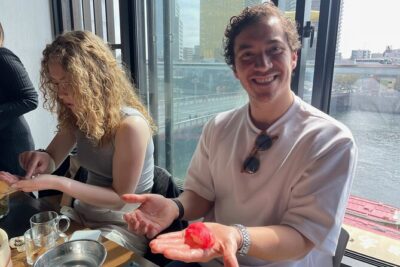
Sushi Making Tokyo Roll and Authentic Japanese Sushi Class
Read our review →
Tokyo: Roll and Authentic Sushi Making Class in Asakusa
Read our review →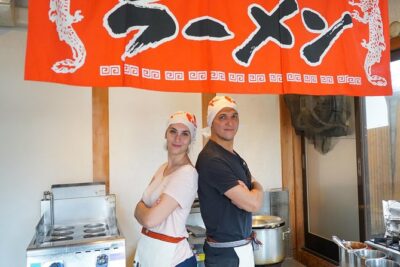
Ramen Cooking Class at Ramen Factory in Kyoto
Read our review →
Tokyo: Sushi Making Class in a Happi Coat near a Famous Spot
Read our review →
Sushi Making Tokyo! Popular Maki Sushi & Japanese Sushi(+Recipe!)
Read our review →
Sushi Making Osaka Roll and Authentic Japanese Sushi Class
Read our review →
Tokyo Sushi Making Class in Tsukiji with Professional Chef
Read our review →
Ramen & Gyoza Cooking Class in Tokyo with Local Supermarket Visit
Read our review →Browse the lists this tour appears in