
Review · KYOTO
Kyoto: Morning Japanese Bento Cooking Class
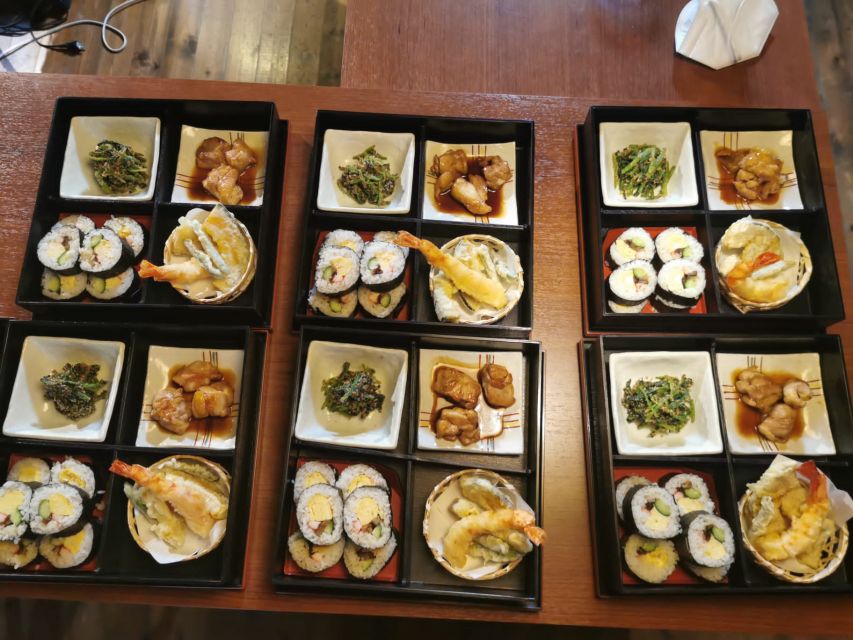
Kyoto’s bento cooking class turns a familiar Japanese lunch into a hands-on lesson. You prepare sushi, tempura, teriyaki chicken, miso soup, and several side dishes, then arrange the results in your own bento box. I like the small-group feel and the fact that the recipes are practical enough to repeat at home.
I also like the cultural side. You learn why bento became such a lasting part of Japanese food life, not just how to cook the dishes. The main consideration is pace: you make many items in about three hours, and most ingredients are already prepared, so this is more about cooking methods and assembly than knife skills.
Key points to know
- Several dishes in one morning: Make sushi, tempura, teriyaki chicken, miso soup, and other bento items before sitting down to eat.
- English instruction: The class is taught in English, with clear demonstrations and written recipes to take home.
- Small classes can feel personal: Past groups ranged from four to about ten people, with more than one instructor in some sessions.
- Dietary needs can be accommodated: Vegetarian and no-shellfish requests have been handled, but you need to advise the provider when booking.
- A useful Kyoto lunch: Your cooking becomes the meal, giving you a direct taste of the techniques you have just practiced.
- Central meeting point: Meet at Cooking Sun, Funayacho, Shimogyo Ward, Kyoto 600-8466. Hotel pickup is not included.
Making a Kyoto bento from scratch
A bento is more than a box with several foods tucked inside. It is a compact Japanese meal designed to balance flavors, textures, colors, and portions. The tradition reaches back to the late Kamakura Period, from 1185 to 1333, and remains part of daily Japanese food culture today.
That background gives the class a useful purpose. You are not simply making a few popular Japanese dishes for lunch. You are learning how different foods work together in one meal and why presentation matters.
The exact dish list can vary slightly, but the advertised menu includes sushi, tempura, teriyaki chicken, and miso soup. Past classes have also included several additional traditional dishes, with one participant recalling as many as six or seven items. This makes the morning feel fuller than a single-recipe cooking lesson.
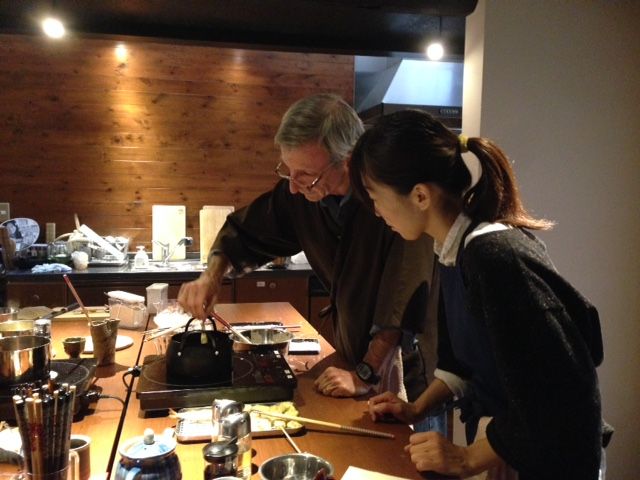
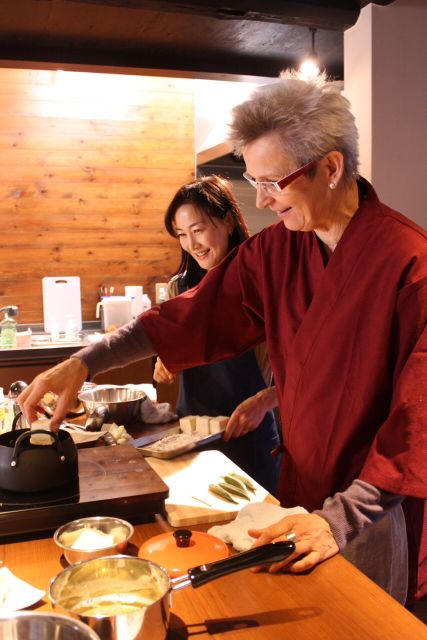
You collect the ingredients, apron, and utensils at the start. The chef then demonstrates each dish, explains the method, and gives you time to follow along. The format suits beginners because you can watch the technique before attempting it yourself.
More Sushi and Japanese Classes in Kyoto:
- Ramen Cooking Class at Ramen Factory in Kyoto
★ 5.0 · 1,937 reviews - Sushi Making in Kyoto! Same-day bookings welcome!
★ 5.0 · 713 reviews - Kyoto: Ramen Cooking Class at a Ramen Factory with Souvenir
★ 4.9 · 532 reviews
A clear three-hour morning at Cooking Sun
The class lasts about three hours, though the activity information gives a range of two and a half to three hours. Starting times depend on availability, so check the date carefully when booking.
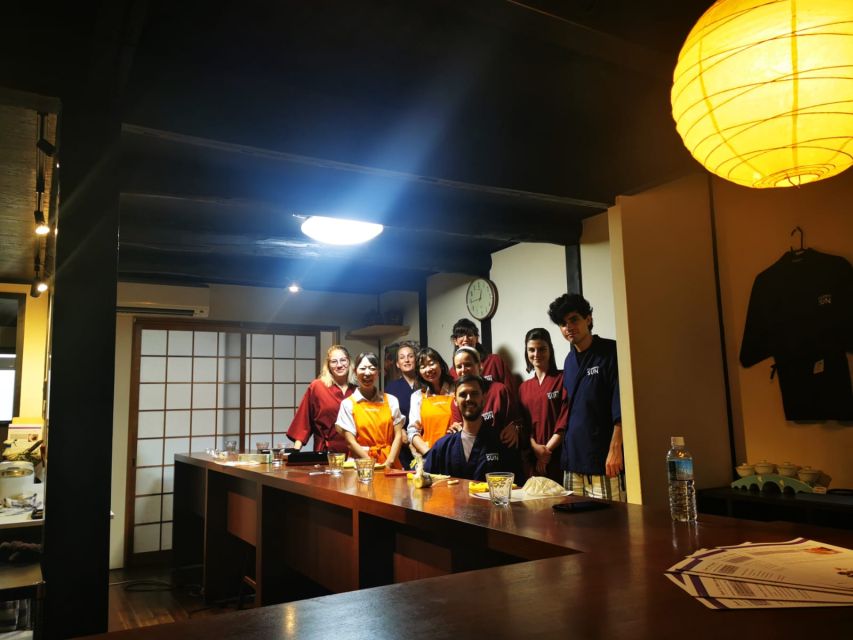
The opening section is about getting organized. You receive the equipment and ingredients, settle into your cooking station, and meet the instructors and the other people in the class. Groups have varied in size. Some past sessions had only four people, while others had eight or around ten, with two or three instructors helping the group.
That difference matters. A very small group can give you more direct help and more time to ask questions. A larger group may mean sharing some cooking equipment, which one participant felt reduced individual interaction slightly. Even so, the class is designed around demonstration and guided practice rather than a lecture.
The chefs work through the recipes in stages. You watch, repeat the technique, and move on to the next part of the meal. English is the teaching language, and the instruction has been described as easy to follow. Written recipes are also provided, which is a real advantage if you want to recreate the lunch after returning home.
What you actually cook
Sushi
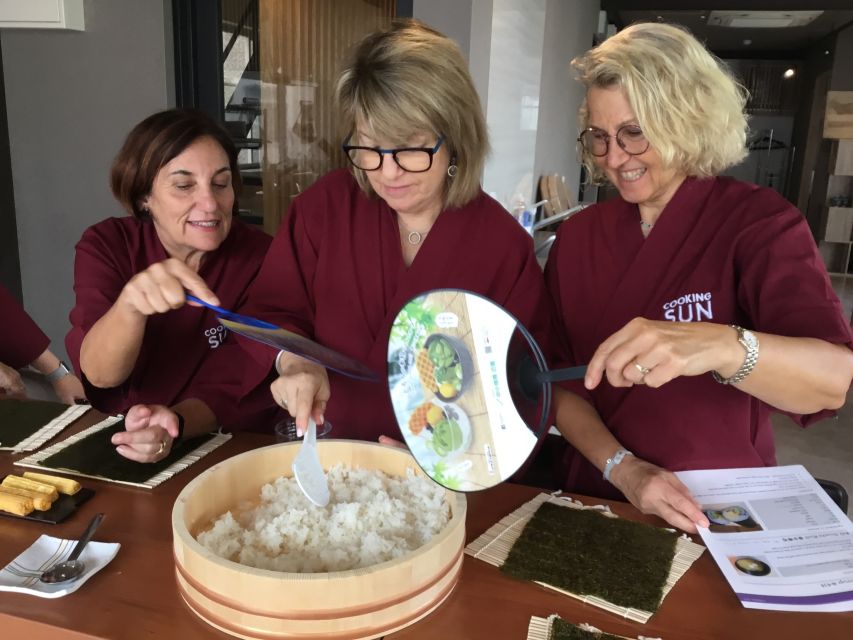
Sushi is one of the most appealing parts of the menu for many first-time participants, but this is not presented as a specialist sushi-chef course. You learn a practical preparation method that you can try again in your own kitchen.
The useful part is the step-by-step format. You see how the components are handled, how the roll is assembled, and how the finished piece fits into the bento. Because the recipes are intended for home use, you leave with more than a one-time demonstration.
One past participant appreciated tips on finding Japanese ingredients after returning home. That is the kind of advice that can make a cooking class worthwhile. A recipe is only useful if you can locate the ingredients and understand how to adapt the method to your own kitchen.
More Hands-On Workshops in Kyoto:
- Kyoto: Ramen, Gyoza, and Onigiri Cooking Class
★ 5.0 · 445 reviews - The Original Small-Group Sushi Making Class in Kyoto
★ 5.0 · 436 reviews - Kyoto: Japanese Washoku Bento Small Group Cooking Class
★ 5.0 · 380 reviews - Kyoto Ramen and Gyoza Cooking Class with Professional Chefs
★ 5.0 · 282 reviews
Tempura
Tempura adds a different skill to the meal. You work with a light batter and frying technique, then place the finished food alongside the other bento items.
The class is not a professional kitchen apprenticeship, so expect a beginner-friendly explanation rather than advanced frying theory. Still, learning the process in person helps you see the texture and consistency that written instructions can be poor at describing.
You should also tell Cooking Sun about dietary requirements before the class. A no-shellfish version has been prepared in the past, but the provider needs notice to plan suitable ingredients.
Teriyaki chicken
Teriyaki chicken is likely to be one of the easiest dishes to carry into your home cooking. The familiar sweet-savory flavor makes it approachable, while the class gives you a chance to learn the sauce and cooking method in a Japanese setting.
It also works well in a bento because it can sit beside rice, vegetables, sushi, and smaller side dishes. You see how one substantial item helps anchor the meal rather than eating each dish as a separate course.
Miso soup and the smaller dishes
Miso soup brings a warm, simple element to the lunch. It also gives the instructor a natural opening to explain ingredients and everyday Japanese food habits.
The smaller dishes may be the most educational part of the class. Bento cooking depends on variety, so you learn how a meal can include several modest portions instead of one large main dish. The result is more work than making a single recipe, but it gives you a better understanding of how a bento is put together.
What the class teaches beyond recipes
The cultural explanation is a strong reason to choose this class over a generic international cooking workshop. You hear about the bento’s long place in Japanese cuisine and see how appearance, balance, and portioning shape the meal.
I especially like the way the class connects cooking with daily life. Bento is not treated only as a decorative lunch for visitors. It is presented as a practical Japanese meal tradition with roots reaching back many centuries.
You also get small technique tips that can improve home cooking. Participants have picked up advice on egg rolls, mirin, tempura, sushi rolls, and ingredient shopping. One person who already knew quite a bit about Japanese food still found new techniques to take home.
The instructors have included chefs named Mei, Mae, Tomoko, Yukari, Coco, and Ikari in past sessions. Names and staffing can change, but the repeated pattern is clear: the teaching is personal, patient, and focused on keeping the group moving without rushing the explanations.
Eating the bento you prepared
The payoff comes at the end, when you sit down with the food you made. The lunch is not an afterthought. It is the chance to taste how the dishes work together and judge the results while the techniques are still fresh.
That makes the meal more satisfying than a standard cooking demonstration. You can connect the finished sushi, tempura, teriyaki chicken, miso soup, and side dishes to the steps you just followed.
The food has been a major strength of the experience. Past participants consistently found the lunch delicious, and several were keen to repeat the recipes at home. One family bought cooking equipment after the class so they could continue making the dishes themselves.
Keep your expectations realistic, though. Because the morning includes many dishes, ingredients are prepared in advance. This is not a knife-skills workshop. You will learn cooking methods, seasoning, assembly, and presentation, but you will not necessarily spend the morning chopping every ingredient from scratch.
Is $67 a fair price?
At $67 per person, this is not the cheapest way to eat lunch in Kyoto. You can buy a prepared bento for far less. The value comes from the teaching, ingredients, equipment, cultural explanation, and the meal all being combined in one three-hour experience.
I think the price is fair if you want a practical activity rather than another restaurant meal. You get several recipes, an apron and utensils during the class, and lunch at the end. You also receive guidance that is hard to gain from a cookbook alone.
The value is strongest for couples, families, and anyone who enjoys cooking. A family with two ten-year-olds found that the children could take part and enjoyed the food. A teenager also received extra help when needed, so the format can work well for younger cooks who can follow instructions.
For a solo participant, the social side may add value. You meet people from different places while working through the same meal. The class is also a good indoor option if rain disrupts a sightseeing day.
Who should book this experience?
I would choose this class if you enjoy food, want direct contact with Japanese culture, or prefer doing something active in Kyoto. It is especially suitable for first-time cooks because the chefs demonstrate each stage and provide clear instructions.
It also suits people who already cook Japanese food but want a few new ideas. One experienced home cook left with useful tips, which suggests the class is not limited to complete beginners.
Families should consider it, particularly with older children and teenagers who can participate at a cooking station. The activity is wheelchair accessible, another practical point for visitors who need a step-free experience.
Vegetarians and people with some dietary restrictions may also be able to join. Vegetarian meals and a no-shellfish version have been arranged before, but you must state your needs when booking. Do not wait until the morning of the class.
You may want to skip it if you dislike group activities, want advanced chef training, or prefer to spend a quiet morning sightseeing. The schedule covers a lot of food in a short period, and some equipment may be shared when the group is larger.
Getting there and planning the morning
You meet at Cooking Sun on Funayacho in Kyoto’s Shimogyo Ward. Hotel pickup and drop-off are not included, so allow time to reach the address on your own.
The meeting point is the kind of detail to handle before the morning begins. One past participant had trouble finding the place, so save the address and check your route in advance rather than relying on a last-minute search.
The activity is offered in English. Cancellation is free up to 24 hours before the scheduled class, and you can reserve now and pay later, which helps if your Kyoto plans are still shifting.
Should you book the Kyoto morning bento class?
Book it if you want to understand Japanese food by making it yourself. The class combines a useful menu, cultural context, patient instruction, and a proper lunch, not just a quick cooking display.
I would rate it as particularly good value for families, couples, and home cooks who want recipes they can repeat. The only real cautions are the busy schedule, the advance-preparation format, and the need to share equipment in some larger groups.
If you want a relaxed morning with food, conversation, and skills you can carry home, this is a strong Kyoto choice. Bring your appetite, give the class your dietary information early, and leave enough time to find Cooking Sun without rushing.
FAQ
Where is the cooking class held?
The class meets at Cooking Sun, Funayacho, Shimogyo Ward, Kyoto, Kyoto 600-8466.
How long does the class last?
The class lasts about three hours. The activity details give an expected range of two and a half to three hours.
What dishes will I learn to make?
The advertised dishes include sushi, tempura, teriyaki chicken, and miso soup. Additional traditional bento dishes may also be included.
Is lunch included?
Yes. You eat the bento lunch you prepare during the class.
Are ingredients and cooking equipment provided?
Yes. The booking includes ingredients, an apron, and utensils.
Is the class taught in English?
Yes. English is the listed teaching language.
Do I need previous cooking experience?
No previous experience is stated as a requirement. The instructor demonstrates the recipes and guides you through the steps.
Can dietary requirements be accommodated?
You should advise Cooking Sun of dietary requirements when booking. Vegetarian and no-shellfish versions have been provided in past classes.
Is the activity wheelchair accessible?
Yes. The activity is listed as wheelchair accessible.
Is hotel pickup included?
No. You need to make your own way to Cooking Sun, since hotel pickup and drop-off are not included.
More Morning Classes in Kyoto
- Tingly Thai Cooking Class with Morning Market Tour
★ 5.0 · 589 reviews - Cooking Morning Class Chiang Mai Visit Organic Garden and Market
★ 5.0 · 211 reviews - Balinese Cooking class with traditional morning market visit
★ 5.0 · 161 reviews - Chiang Mai: Morning Cooking Class with Market Visit
★ 4.9 · 81 reviews
Just added around Kyoto
- Kyoto: Sushi Making Class with Sushi Chef★ 4.8 · 64 reviews
- Nishiki Market Food Tour with Cooking Class★ 4.9 · 42 reviews
- Kyoto: Wagashi (Japanese sweets) Cooking near Fushimiinari★ 5.0 · 40 reviews
- Kyoto: Sushi Making Experience in Kawaramachi★ 4.8 · 13 reviews
- Kyoto: Small-Group Authentic Sushi Making Workshop★ 5.0 · 137 reviews
- Kyoto Udon & Tempura Cooking Class with Professional Chefs★ 3.8 · 3 reviews
- Kyoto: Cooking class, learning how to make authentic sushi★ 4.2 · 9 reviews
- Kyoto Home Cooking Class &Supermarket tour near Fushimiinari★ 5.0 · 31 reviews
Japanese & Sushi Cooking Classes, compared.
Sushi Making Tokyo Roll and Authentic Japanese Sushi Class
Read our review →
Tokyo: Roll and Authentic Sushi Making Class in Asakusa
Read our review →
Ramen Cooking Class at Ramen Factory in Kyoto
Read our review →
Tokyo: Sushi Making Class in a Happi Coat near a Famous Spot
Read our review →
Sushi Making Tokyo! Popular Maki Sushi & Japanese Sushi(+Recipe!)
Read our review →
Sushi Making Osaka Roll and Authentic Japanese Sushi Class
Read our review →
Tokyo Sushi Making Class in Tsukiji with Professional Chef
Read our review →
Ramen & Gyoza Cooking Class in Tokyo with Local Supermarket Visit
Read our review →Browse the lists this tour appears in