
Review · SEOUL
Seoul: Taste of Korea, Authentic Home Style Cooking Class
Korean cooking becomes far more understandable when you make it yourself. At Hansik Korean Cooking Class, Chef Jennifer turns familiar dishes such as budae jjigae and haemul pajeon into a three-hour lesson in Korean food, family cooking, and everyday ingredients.
I like the small-group format, which gives you a personal cooking station and room to ask questions. I also like the generous meal: four dishes, seasonal banchan, snacks, traditional drinks, dessert, and leftovers if you cannot finish everything.
The one drawback is that budae jjigae includes processed meats and beans, which may feel less traditional to some people. Vegetarian and other dietary adjustments have been made successfully, but tell the provider ahead of time rather than assuming every dish can be changed on the spot.
Key points to know before booking
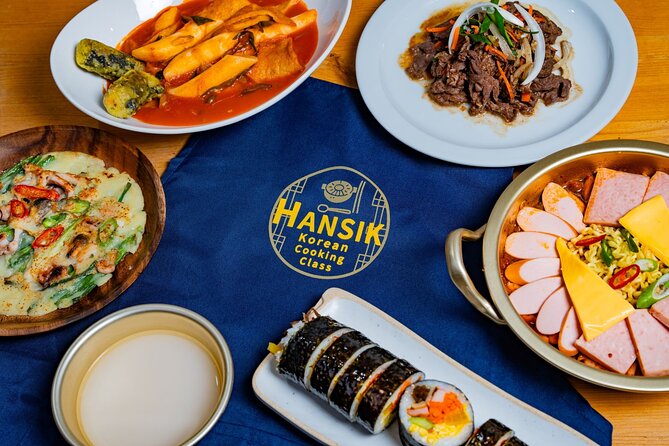
- Four dishes in about three hours: You may prepare dishes such as gimbap, tteokbokki, haemul pajeon, and budae jjigae, then eat what you make.
- Chef Jennifer teaches in English: Her method is patient, clear, and step by step, with cultural background woven into the cooking.
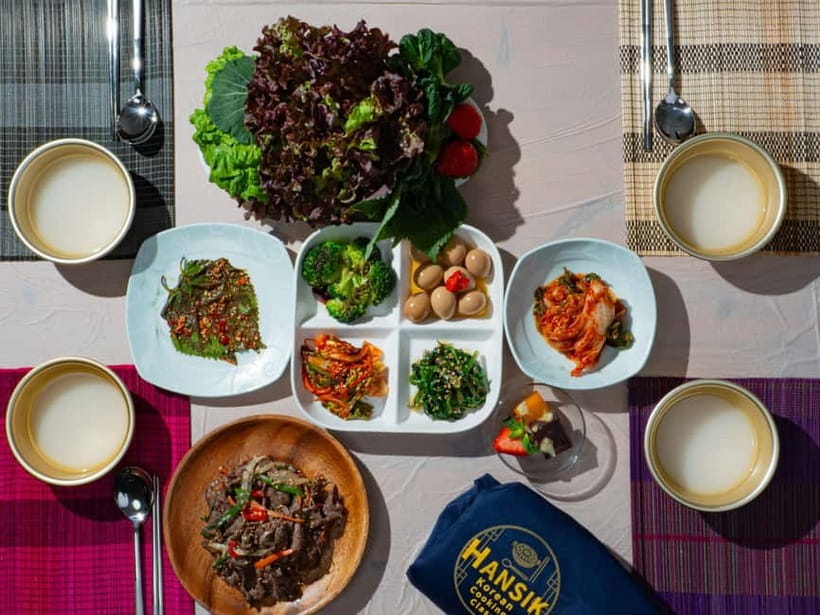
- A real meal, not a quick tasting: Seasonal banchan, Korean snacks, tea, coffee, Sikhye, makgeolli, dessert, and water are included.
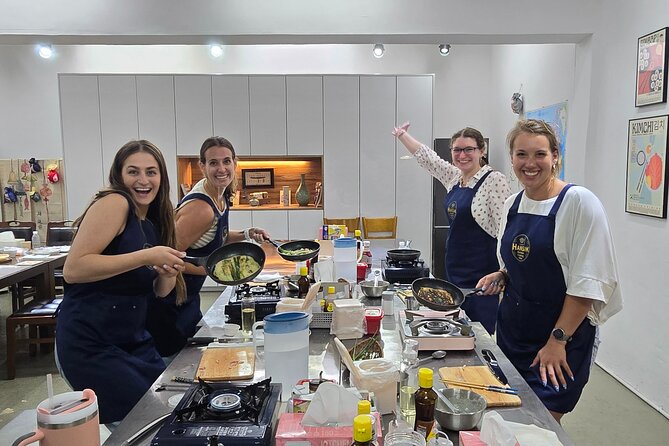
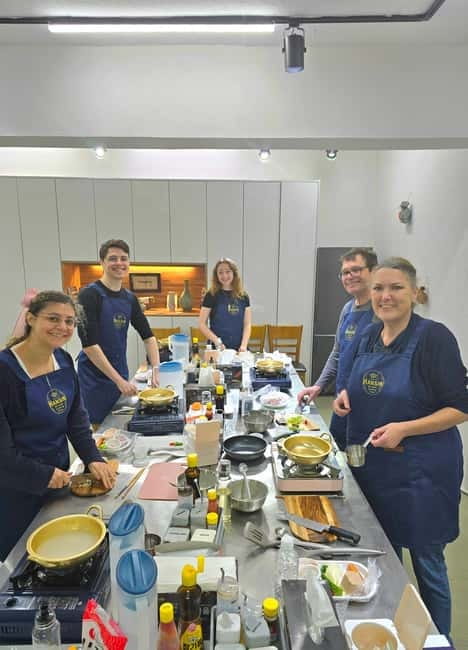
- Personal cooking stations: The clean, spacious studio gives each person room to work without crowding around one counter.
- Good for mixed skill levels: Children as young as 11 have taken part, and beginners can follow the pre-portioned ingredients and demonstrations.
- Convenient Seoul location: Meet near Gyeongbokgung Subway Station, then walk about five minutes through a small alley to the studio.
What the Hansik class is really about
Hansik is the Korean word for Korean cuisine. This class uses home-style dishes to show you how Korean food is built: rice, vegetables, seafood, meat, fermented or spicy sauces, small side dishes, and careful balance between textures.
That makes the experience more useful than a simple restaurant meal. You learn what goes into a dish, how the ingredients are handled, and how to repeat the recipe at home. You also get a little context about why a dish exists and how it fits into Korean food culture.
I especially like that the menu is practical. These are not showpiece dishes designed only for a cooking school. Gimbap can become an easy packed lunch, tteokbokki is a familiar street-food favorite, pajeon works well as a shared snack, and budae jjigae is a simple communal stew.
The class is led in English by Chef Jennifer, whose teaching style comes across as warm and patient. She demonstrates each stage, watches your work, and gives general cooking tips rather than leaving you to copy a recipe from a screen.
More Hands-On Workshops in Seoul:
- Local Home Korean Cooking Class & Market Adventure in Seoul
★ 5.0 · 1,024 reviews - Seoul: Korean Cooking Class at a Local Home and Market Tour
★ 5.0 · 348 reviews - Korean Cooking Class with Grocery Shopping at Seoul Local Market
★ 5.0 · 107 reviews
Arriving near Gyeongbokgung Subway Station
The meeting point is Gyeongbokgung Subway Station on Orange Line 3, Exit 2. From there, walk straight for about five minutes toward Woori Bank. The studio is in a small alley between the bank and the K-Pop Store.
This is the sort of meeting point where you should allow a few extra minutes. The final approach is not described as a large storefront on a main road, so keep the directions handy and look for the bank and the shop landmarks.
The location works well with a day around central Seoul. You can pair the class with Gyeongbokgung Palace, the surrounding traditional streets, or other sights in the area. Morning and evening sessions are available, though exact start times depend on the date you select.
The cooking space is described as clean and spacious, with dedicated stations. That matters. Cooking classes can become awkward when six or eight people crowd around one cutting board, but here you have your own place to prepare food and follow along.
The welcome drink sets a relaxed tone
The class begins with drinks and Korean snacks. Depending on the session, you may receive a berry drink, tea, coffee, or traditional snacks before the cooking gets underway.
Sikhye, a sweet Korean rice punch, is included. Makgeolli, a milky Korean rice wine, is also provided. These drinks give you a quick introduction to flavors you may not order on your own at a restaurant.
A bottle of water is included as well. The opening is not just filler while the instructor organizes the kitchen. It gives Chef Jennifer time to introduce the class and lets everyone settle into the group before handling ingredients.
If you do not drink alcohol, the listing does not say that makgeolli is mandatory, so you can ask about alternatives. The important point is that this is a food-centered experience, not a drinking activity.
Cooking four Korean dishes step by step
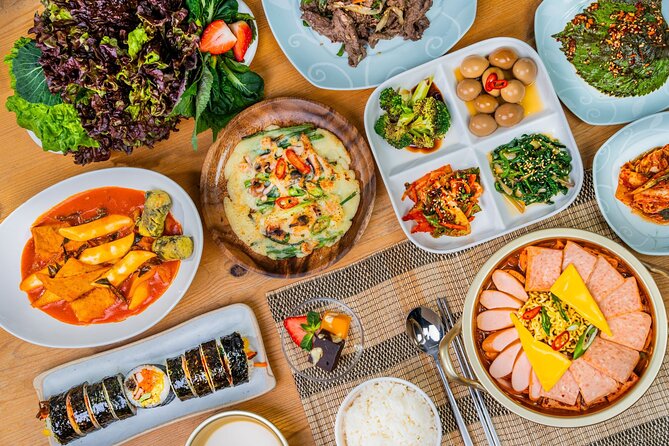
The class generally works through four dishes across roughly three hours. Past sessions have included gimbap, tteokbokki, haemul pajeon, and budae jjigae, though the exact combination may vary.
A few more cooking classes around Seoul worth a look
- Master Korean traditional cooking with a Kimchi chef
★ 5.0 · 385 reviews - Seoul: Korean Cooking at Seoul Cooking Club!
★ 5.0 · 311 reviews - Korean Cooking at Seoul Cooking Club
★ 5.0 · 220 reviews - Seoul: Royal Seoul Cooking Class in a 100-Year-Old Hanok
★ 5.0 · 96 reviews
Gimbap: careful rolling and useful technique
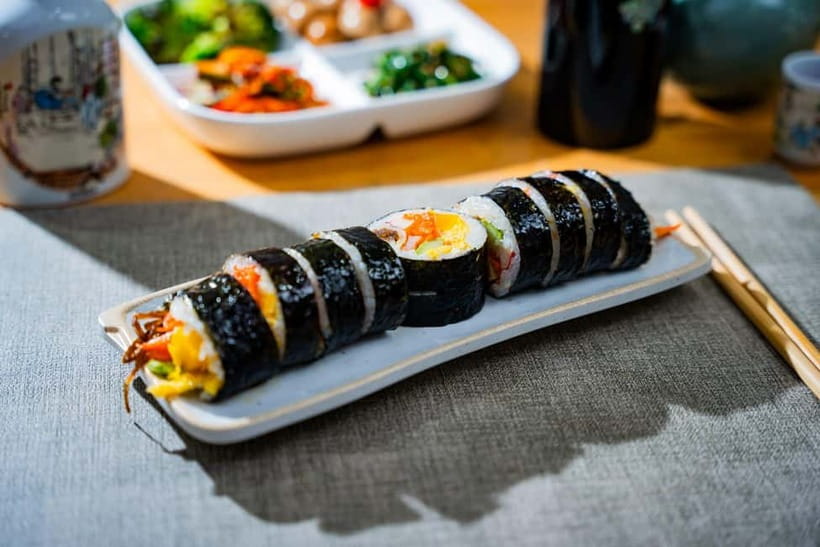
Gimbap looks simple until you try to make a neat roll. You work with rice, seaweed, and fillings, then learn how to arrange and roll everything without spilling the center.
This is one of the most useful dishes to learn because it is easy to adapt at home. The lesson also gives you a feel for Korean seasoning and presentation. A tidy gimbap roll is as much about preparation and order as it is about cooking.
Tteokbokki: chewy rice cakes and gochujang
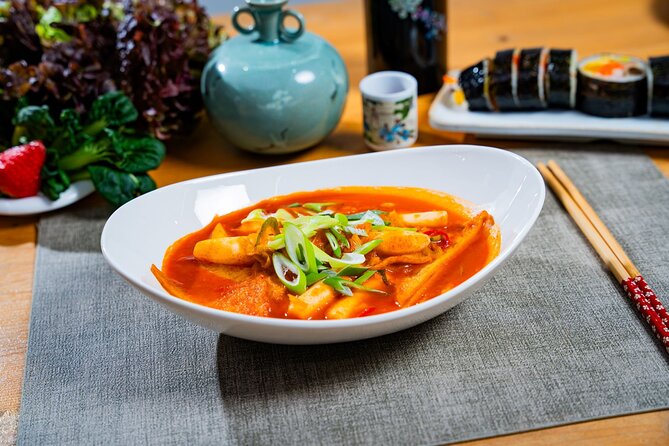
Tteokbokki uses rice cakes in a sauce based on gochujang, Korea’s fermented red chili paste. The dish is chewy, spicy, and familiar from Korean street-food stalls.
Here, you get more than a taste. You learn how the sauce comes together and how to judge the balance of heat and sweetness. For home cooks, this is the sort of recipe that can be repeated without special restaurant equipment.
Haemul pajeon: a shared Korean pancake
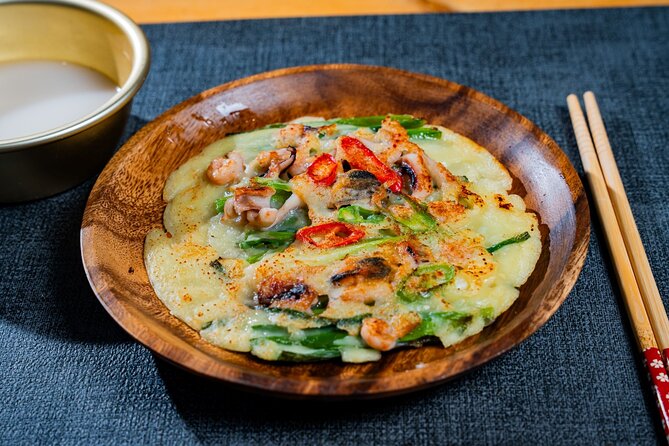
Haemul pajeon is a seafood and green onion pancake. The appeal is partly in the contrast between the crisp outside and soft, savory filling.
The class gives you a chance to see how the batter is spread, how the ingredients are arranged, and when the pancake is ready to turn. This is a useful lesson in heat control, especially if you are not confident with pan-frying.
Budae jjigae: a stew with modern Korean history
Budae jjigae, often called Korean military stew or army stew, combines ingredients such as processed meats, hot dogs, beans, and spicy broth. Its history is tied to the postwar period and the use of available imported foods.
Some people will find that background fascinating. Others may prefer a class focused only on older, more traditional Korean dishes. One participant specifically felt that spam and hot dogs did not fit their goal for a Korean cooking class. That is a fair concern, so check the menu if this dish does not appeal to you.
The upside is that budae jjigae is easy to share and forgiving to cook. It also shows that Korean food culture includes newer dishes shaped by difficult periods, changing ingredients, and practical home cooking.
You eat as you go, not just at the end
A useful feature of the class is the rhythm of making dishes and then eating them. You are not asked to cook for three hours while hungry food sits out of reach.
The meal includes the dishes you prepare, Korean seasonal banchan, drinks, and dessert. Banchan means the small side dishes served with a Korean meal. They help you understand how a Korean table works, with many flavors appearing together rather than one large plate arriving alone.
There is often enough food to leave you very full. Several sessions have produced more than people could finish, and takeaway bags are available for leftovers. One practical limitation is that soup may not always have a proper container for taking home, so do not count on carrying away budae jjigae unless you have suitable packaging.
Dessert and traditional drinks round out the meal. The result feels closer to being welcomed into a home kitchen than attending a short demonstration followed by one small sample.
Why the teaching style matters
Chef Jennifer’s strength is the way she breaks down each recipe. Ingredients are largely pre-portioned, which keeps the class moving and prevents beginners from wasting time measuring every item while the group waits.
You still do the work. You cook, assemble, mix, pan-fry, and build the dishes yourself. The pre-portioned setup simply keeps the focus on technique and flavor rather than on a long preparation line.
The instructor also explains how to increase quantities at home, including the correct ratios for larger portions. That detail has real value. A recipe that serves four in a class is not always easy to scale, especially when sauces or seasoning are involved.
Cultural notes are part of the lesson, too. You learn the story behind some dishes and gain a clearer sense of how Korean cooking uses shared food, side dishes, sauces, and seasonal ingredients.
The small group is limited to 10 people. Groups of four have been especially comfortable, while couples have sometimes had the class almost to themselves. A small group also works well for solo visitors because the cooking gives you an easy way to talk with other people without forcing conversation.
Dietary needs and family suitability
Vegetarians have received substitutions for every dish in past sessions, and a participant who did not eat red meat had one dish adjusted. That is encouraging, but it is not a guarantee for every allergy or preference.
You should state your dietary needs when booking and confirm them before the class. The supplied information supports vegetarian and red-meat accommodations, but it does not list a full allergen policy or promise that all ingredients can be removed.
The class can work for families and older children. Two children aged 11 and 13 took part successfully, and an 18-year-old joined with parents. Beginners do not need advanced kitchen skills.
You should still be comfortable standing, handling basic cooking equipment, and following instructions in a shared kitchen. No special cooking experience is required, but this is hands-on work rather than a passive food tour.
The $89 price: good value if you eat and learn
At $89 per person, the class is not the cheapest way to find Korean food in Seoul. You can eat very well for much less at a local restaurant or market.
The comparison changes when you count what is included. You receive three hours of instruction, all ingredients and equipment, a full meal, seasonal banchan, snacks, tea and coffee, water, Sikhye, makgeolli, dessert, and recipes sent by email.
You also leave with skills rather than only a memory. If you make even two of the dishes at home, the class may pay off better than a single expensive meal. The value is strongest for visitors who enjoy cooking or want a cultural activity that has a practical result.
It is less suitable if you want to spend the same money on several different restaurant meals, or if you dislike structured group activities. The class is food-heavy and generous, so arrive hungry and plan a quiet period afterward rather than another major meal.
Practical details that can affect your choice
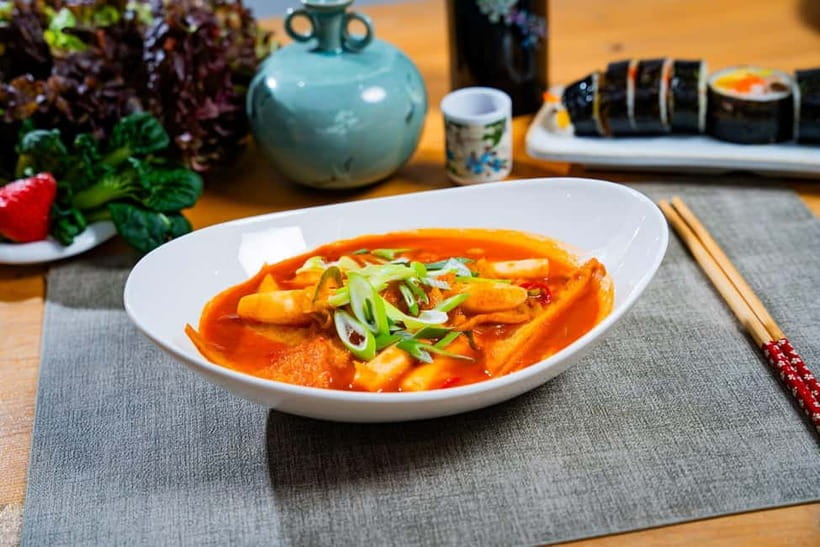
The activity lasts three hours, with morning and evening sessions available. English is the teaching language, and the group size is capped at 10.
Free cancellation is available up to 24 hours before the class for a full refund. You can also reserve and pay later, which helps if your Seoul schedule is still changing.
Recipes are sent by email after the class. That is worth noting because it means you do not need to copy every measurement while cooking. Take pictures of the dishes and your workstation if you want a visual reminder, and bring a container only if you expect to carry leftovers home.
The experience provider is Hansik Korean Cooking Class. The setting is a dedicated cooking studio, not a market stall or restaurant kitchen. That makes it a good fit for anyone who wants a clean, organized place to learn without giving up the social feel of a small class.
Should you book the Hansik cooking class?
I would book this if you want to understand Korean food by making it, not just eating it. The best reasons are the patient English instruction, personal cooking stations, generous meal, and recipes you can use after Seoul.
It is especially well suited to solo visitors, couples, families with older children, beginner cooks, and anyone keen to recreate Korean dishes at home. The class also works for vegetarians when arrangements are made ahead of time.
Think twice if you want only old-style regional dishes, since budae jjigae is a modern stew with processed ingredients. Also reconsider if you prefer a fast tasting experience, because three hours of cooking and eating is a substantial part of your day.
For most food-minded visitors, $89 is a fair price for the amount of instruction and food provided. Come hungry, allow time to find the alley near Woori Bank, and tell Chef Jennifer about dietary needs before you arrive.
FAQ
How long does the Korean cooking class last?
The class lasts three hours, although some sessions have been completed in about two and a half hours.
Where does the class meet?
Meet at Gyeongbokgung Subway Station, Orange Line 3, Exit 2. Walk straight for about five minutes to Woori Bank. The studio is in a small alley between the bank and the K-Pop Store.
Which dishes will I cook?
The class can include gimbap, tteokbokki, haemul pajeon, and budae jjigae. The exact menu may vary, but sessions generally include four dishes.
Is the class taught in English?
Yes. The instructor teaches in English.
Are drinks and dessert included?
Yes. The inclusions are a bottle of water, Korean snacks, tea, coffee, Sikhye, makgeolli, Korean desserts, and a full meal with seasonal banchan.
Can dietary requirements be accommodated?
Vegetarian substitutions and adjustments for people who do not eat red meat have been provided. Tell the provider about your needs when booking and confirm them before the class.
Just added around Seoul
- Seoul: Premium Korean Feast Cooking Class★ 5.0 · 3 reviews
- Seoul: Korean Cooking Class with Local Grocery Shopping★ 5.0 · 13 reviews
- Seoul: Korean Kimchi Cooking Class in the Heart of the City★ 5.0 · 3 reviews
- Seoul: Kimchi Dishes Cooking Class with Wine Pairing★ 4.7 · 38 reviews
- (Seoul) Korean Cooking Class with a Professional Chef★ 5.0 · 14 reviews
- Seoul: Cooking Class and Tour with Michelin-Trained Chef★ 5.0 · 11 reviews
- Seoul: Authentic Korean Cooking Class and Market Tour★ 5.0 · 6 reviews
- Seoul: Royal Seoul Cooking Class in a 100-Year-Old Hanok★ 5.0 · 96 reviews
Cooking Classes, compared.
Half-Day Thai Cooking Class at Organic Farm in Chiang Mai
Read our review →
Florence: Pasta Cooking Class with Unlimited Wine
Read our review →
3 in 1 Cooking Class near Navona: Fettuccine, Ravioli & Tiramisu
Read our review →
Hanoi Cooking Class: Culture, Local Market & Meaning CSR Impact
Read our review →
5 Traditional Dishes Hanoi Cooking Class with Market Trip
Read our review →
Cooking Class and Lunch at a Tuscan Farmhouse with Local Market Tour from Florence
Read our review →
Chiang Mai: Cooking Class, Market & Thai Herbs Garden Tour
Read our review →Browse the lists this tour appears in