
Review · KYOTO
Sushi – Authentic Japanese Cooking Class – the best souvenir from Kyoto!
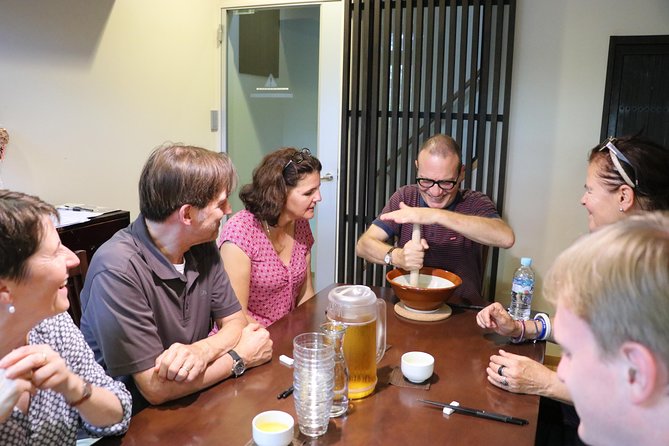
The best part of this Kyoto class is that you do not just eat sushi, you learn how to make it properly. In Kaori’s home-style kitchen, you prepare sushi, soup, and pickled ginger while picking up the small cultural details that make Japanese food more than a list of ingredients.
I like the hands-on format and the useful recipes you take home. I also like the way the class connects food with daily life, from umami and dashi to chopstick customs and Japanese table manners.
The main consideration is finding the meeting point. Kyoto addresses can be confusing, and one participant had trouble when a taxi driver could not locate it. Use the map link supplied after booking, allow extra time, and do not rely on a driver knowing the street address alone.
Key points at a glance
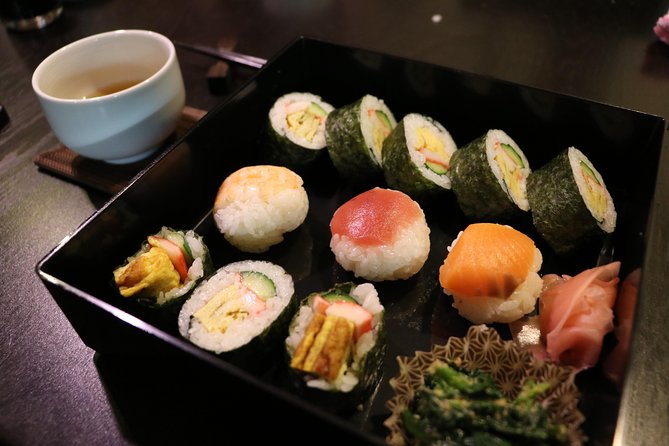
- Cook several Japanese dishes: Make sushi, sushi rice, dashi soup, and pickled ginger, then eat what you prepare.
- Learn the reasons behind the food: Kaori explains umami, Japanese culinary customs, and why sushi rice is fanned.
- Practice Japanese table manners: The class covers etiquette, chopstick use, and the cultural side of sushi dining.
- Small, personal setting: The experience takes place in a beautiful home kitchen with an English-speaking instructor.
- Useful souvenir: Recipes and a four-page guide help you repeat the dishes at home.
- Good family option: Children and adults can take part, though the exact group size may vary.
Why this sushi class feels different from a restaurant meal
A sushi restaurant gives you a finished plate. This class gives you the steps behind it. You learn how the rice is prepared, how soup gets its savory base, and how several parts of a Japanese meal fit together.
That difference matters. Sushi can look simple, but the texture of the rice, the balance of seasoning, and the way ingredients are handled all affect the final result. Kaori breaks the process into manageable stages, so you are not left guessing what your hands should be doing.
The class also puts sushi into a wider food setting. You learn about umami, the savory taste associated with ingredients such as bonito and seaweed, and make dashi, a basic Japanese broth. Pickled ginger is part of the lesson too, giving you another useful recipe rather than just one dish to copy.
I especially like that the class does not treat Japanese cooking as a performance. You are encouraged to take part, make mistakes, and try again. Several parts of the preparation are demonstrated first, then practiced with guidance.
More Sushi and Japanese Classes in Kyoto:
- Ramen Cooking Class at Ramen Factory in Kyoto
★ 5.0 · 1,937 reviews - Sushi Making in Kyoto! Same-day bookings welcome!
★ 5.0 · 713 reviews - Kyoto: Ramen Cooking Class at a Ramen Factory with Souvenir
★ 4.9 · 532 reviews
Inside Kaori’s kitchen at 11:30 a.m.
The class begins at 11:30 a.m. at Japanese Cooking Class Roujiya, located at 22-58 Nishinokyo Ikenouchicho in Kyoto’s Nakagyo Ward. The experience ends at the same place, and hotel pickup is not included.
The setting is a home-style kitchen rather than a large schoolroom. That gives the class a more personal feel and makes it easier to follow the instructor’s movements. A small group is part of the appeal, although the booking details give two different limits: the experience is described in places as capped at eight people, while the additional information allows up to 12 travelers and a maximum booking size of 13. If group size matters to you, confirm it before booking.
The kitchen is described as clean, attractive, and easy to follow. You can expect to watch demonstrations, prepare ingredients, and then eat the finished food. The pace is about two hours, which is long enough for real participation without taking up half your day in Kyoto.
That timing works well beside sightseeing. You can attend the late-morning class, eat lunch as part of the experience, and still have much of the afternoon available. Since the class includes a meal, arrive ready to eat, but not so hungry that you cannot concentrate on the preparation.
The first lessons: umami and dashi soup
One of the most useful parts of the class is the introduction to umami. Rather than simply telling you that a dish tastes savory, Kaori explains how that taste is built and why it matters in Japanese cooking.
You then learn to make dashi, a broth associated with seaweed and bonito flakes. Dashi may seem like a small component, but it forms the base of many Japanese dishes. Learning it here gives you a practical tool for cooking at home, especially if you want to recreate more than sushi.
The soup is part of the meal, so you can taste how the broth develops. That immediate connection between explanation, preparation, and eating is one reason the class works well for beginners. You do not need prior knowledge of Japanese cooking to follow along.
I also like the way the instructor explains why a step matters. The best cooking lessons do not leave you with a string of commands. They help you understand what you are trying to achieve, which makes it easier to repeat the recipe later.
Sushi rice, rolling, and the satisfaction of making lunch
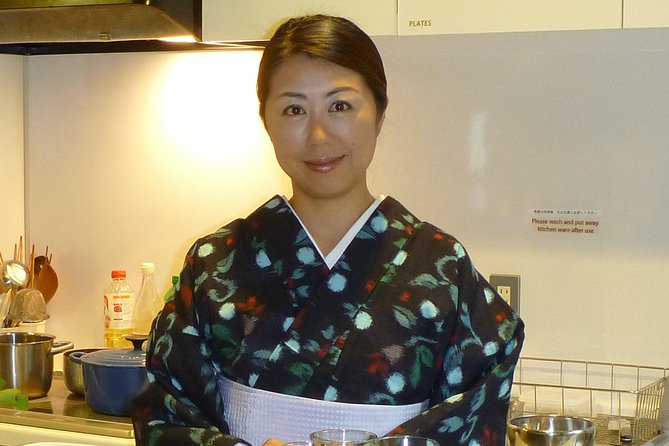
The sushi portion is the main event. You prepare sushi rice and learn how it is handled before moving on to the different sushi preparations included in the class.
One detail worth noting is the need to fan the rice. That step helps create the right texture and temperature, and it is the kind of small technique that is easy to miss when watching a short internet video. Here, you can ask questions and get immediate correction.
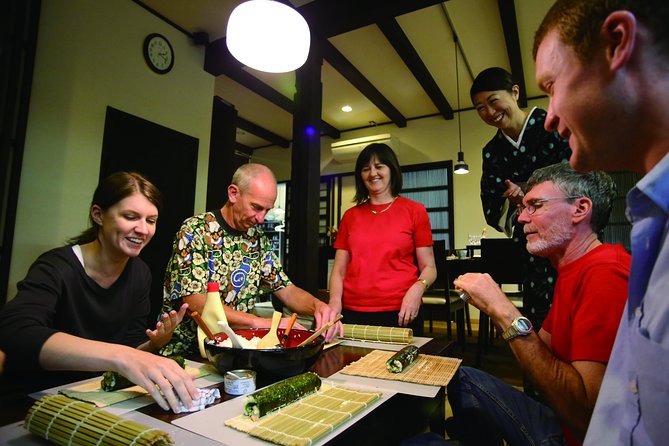
You will make the sushi yourself rather than simply watching Kaori assemble it. That makes the class more useful for anyone who wants to cook at home. You are likely to leave with a better feel for the texture of the rice, the amount of filling to use, and the care needed when shaping each piece.
Do not expect restaurant-level knife training or an advanced sushi-chef apprenticeship. This is an introductory cooking class designed for ordinary home cooks. Its value is in making Japanese food approachable, not in turning you into a professional sushi chef in two hours.
The meal is included, along with the ingredients needed for the cooking. You eat what you prepare, so the class ends with a proper lunch rather than a token taste. An aperitif and Japanese green tea are also included. One description of the experience notes that sake and beer may be offered after the cooking for an extra charge, so do not assume every alcoholic drink is part of the stated price.
More Hands-On Workshops in Kyoto:
- Kyoto: Ramen, Gyoza, and Onigiri Cooking Class
★ 5.0 · 445 reviews - The Original Small-Group Sushi Making Class in Kyoto
★ 5.0 · 436 reviews - Kyoto: Japanese Washoku Bento Small Group Cooking Class
★ 5.0 · 380 reviews - Kyoto Ramen and Gyoza Cooking Class with Professional Chefs
★ 5.0 · 282 reviews
Pickled ginger and the details that make a meal Japanese
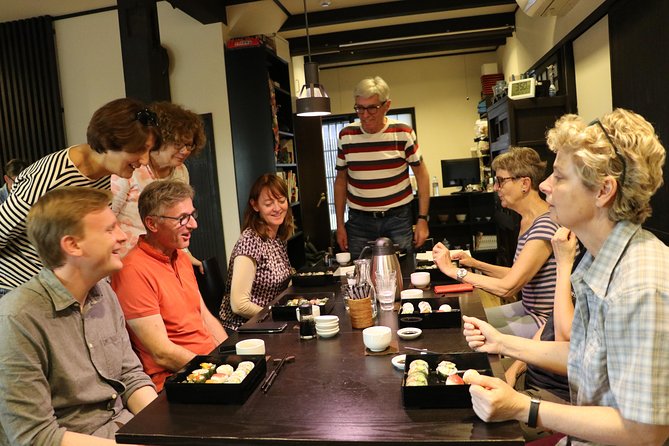
Pickled ginger is another welcome part of the lesson. It is familiar to anyone who has eaten sushi, but making it yourself gives you a clearer sense of its role. The sharp, clean flavor helps refresh your palate between bites and balances richer tastes.
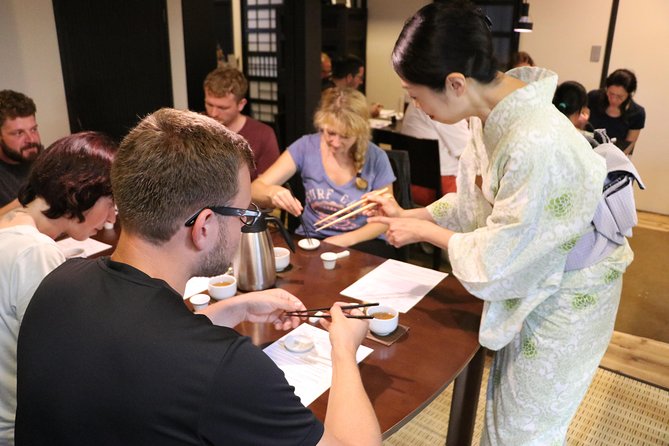
The class also covers Japanese dining manners. That can include how food is approached at the table, how chopsticks are used, and how sushi fits into Japanese dining customs. One especially memorable cultural detail is the explanation of why Japanese chopsticks are shorter than Chinese chopsticks.
These points may sound minor, but they are useful when you eat in Japan. Many visitors know not to stick chopsticks upright in rice, yet feel less certain about the wider set of customs. A cooking class is a comfortable place to ask about those questions without feeling awkward in a busy restaurant.
The four-page guide adds practical value. It includes information about Japanese manners and food, along with recipes for sushi rice, soup, and pickled ginger. Keep it in your luggage. It is more useful than a souvenir that sits on a shelf because you can actually use it once you get home.
Kaori’s teaching style and the English-language experience
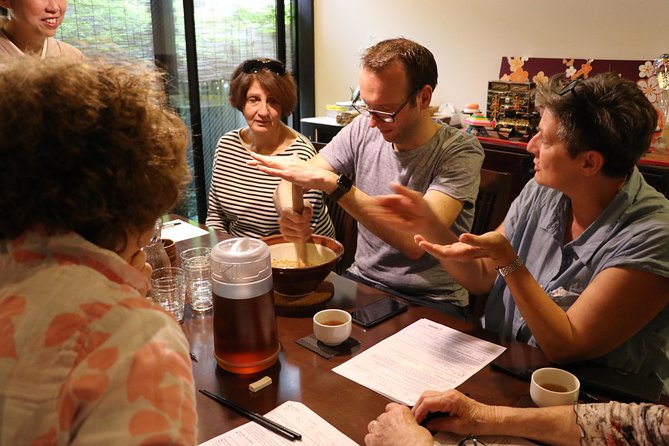
Kaori is the instructor, and the class is conducted in English. The teaching style is patient and detailed, with explanations of both the cooking steps and the cultural background.
That matters if you are new to sushi making. You want an instructor who notices when a group is unsure, slows down when needed, and checks that everyone has tried the technique. The class is structured around guided practice rather than a lecture.
The English-language instruction is also important for the etiquette portion. Food customs can be difficult to understand through gestures alone. Clear explanations help you see the connection between a cooking technique and the culture around it.
The tone appears friendly and informal, with plenty of room for questions and laughter. Families, couples, and groups of friends all fit the format. Children have taken part successfully, and the hands-on work gives younger participants something concrete to do.
Still, remember that everyone shares the kitchen and the instructor’s attention. If you prefer a private lesson with a pace tailored only to you, check the booking arrangement before paying. The class is designed as a small-group activity, not a fully private chef consultation.
What the $72.67 price includes
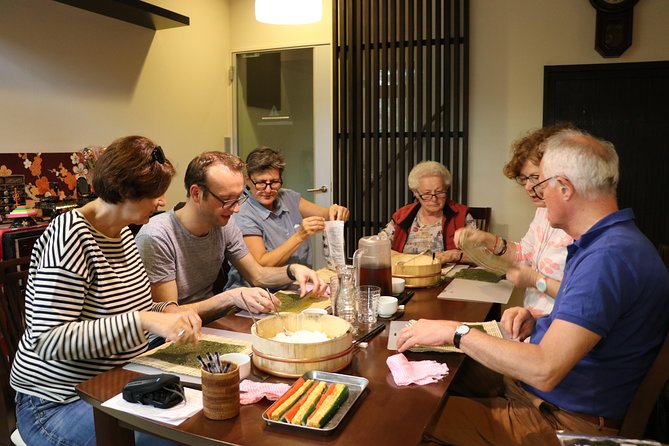
At $72.67 per person, this is not the cheapest meal you can buy in Kyoto. It is also not simply a meal. You are paying for instruction, ingredients, a prepared lunch, recipes, cultural context, an aperitif, and green tea.
I consider the price reasonable if you want an activity that teaches you something you can repeat at home. The recipe handout and the practical instruction give the experience value beyond the two hours in the kitchen. You also avoid paying separately for lunch during that part of the day.
The value is weaker if your only goal is to eat excellent sushi. Kyoto has plenty of restaurants where you can spend less or more, depending on the setting, and a restaurant will give you a wider range of finished dishes. This class makes sense when you want participation and instruction rather than a purely polished meal.
The included ingredients and meal are important. You do not need to shop before arriving, and you are not left with a small sample after doing the work. You should also advise the operator of dietary requirements when booking. The available information does not promise that every restriction can be accommodated, so ask clearly before your visit.
Getting to Roujiya without a stressful start
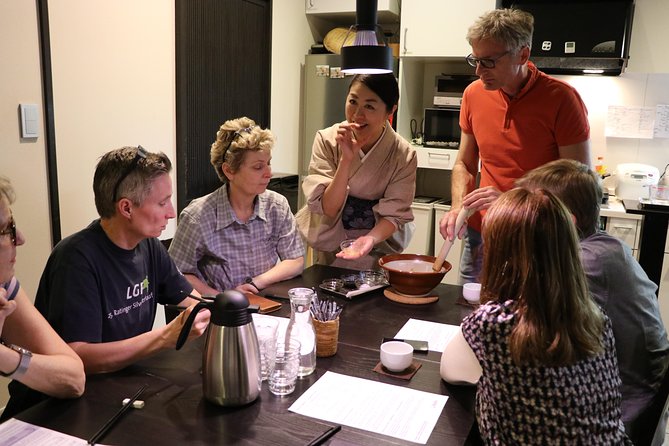
The class is near public transportation, but the address deserves attention. Kyoto’s street system can confuse taxi drivers, and the experience provider sends a Google Maps location link in the post-booking information.
Use that link rather than typing only the street address into a taxi app. Check the route before leaving, and arrive early enough to deal with a wrong turn. The start time is 11:30 a.m., and communication may be difficult once the lesson has begun.
There is no hotel pickup or drop-off. You are responsible for reaching the meeting point and returning from it. Since the class ends where it begins, you can plan the rest of the day from the same area.
Confirmation is sent within 48 hours, subject to availability. The experience is often booked about 40 days ahead, so reserve early if your Kyoto dates are fixed, particularly if you need a certain day or want to attend with family or friends.
Free cancellation is available when you cancel at least 24 hours before the local start time. Changes or cancellations made inside that window are not refunded, so keep the class time in mind when making a packed sightseeing schedule.
Who will get the most from this Kyoto cooking class
This class suits first-time visitors who want a friendly introduction to Japanese food. You do not need cooking experience, and the step-by-step teaching makes it approachable for beginners.
It is also a good choice for sushi fans who want to understand what they are eating. If someone in your group loves sushi while another person wants a cultural activity, the class gives both of you something to enjoy.
Families can benefit from the practical format. Children can take part in the preparation, and the meal provides a clear reward at the end. Keep in mind that the exact accommodation for dietary needs is not specified, so raise those concerns before booking.
Couples may find it a fun shared activity, especially for a honeymoon or special trip. You leave with a set of recipes and a skill rather than another purchased object.
I would be less likely to recommend it to someone seeking advanced sushi technique, a private chef-led lesson, or a long tasting menu. The class is about accessible home cooking, etiquette, and culture. That is its strength, but it also sets a clear limit on how technical the lesson can become in two hours.
Should you book Japanese Cooking Class Roujiya?
Book it if you want to do more than photograph your food in Kyoto. Kaori’s class gives you a meal, a practical lesson, a look at Japanese dining customs, and recipes you can use after your trip.
The strongest reasons to go are the hands-on work, the clear English instruction, the home-kitchen setting, and the chance to learn dashi, sushi rice, soup, and pickled ginger in one sitting. The class is especially good for families, couples, and beginners.
Before booking, confirm the group size if a very small class is important to you, disclose dietary needs, and save the map link. If you do those three things, this is a well-priced cultural activity and one of the more useful souvenirs you can bring home from Kyoto: the ability to make and appreciate Japanese food with a little more confidence.
FAQ
How long does the sushi cooking class last?
The class lasts approximately two hours, beginning at 11:30 a.m.
Where does the class take place?
It takes place at Japanese Cooking Class Roujiya, at 22-58 Nishinokyo Ikenouchicho, Nakagyo Ward, Kyoto, 604-8375, Japan. The activity ends back at the same meeting point.
What food will I learn to make?
You will make several types of sushi, sushi rice, Japanese soup using dashi, and pickled ginger. The class also covers umami and Japanese culinary customs.
Is the class taught in English?
Yes. An English-speaking cooking instructor leads the class, and the cooking and cultural explanations are provided in English.
What is included in the price?
The price includes the meal, all cooking ingredients, the English-speaking instructor, recipes, an aperitif, and Japanese green tea. Hotel pickup and drop-off are not included.
Can I cancel for a full refund?
Yes, if you cancel at least 24 hours before the experience start time. Cancellations or changes made less than 24 hours before the local start time are not refunded.
Just added around Kyoto
- Kyoto: Sushi Making Class with Sushi Chef★ 4.8 · 64 reviews
- Nishiki Market Food Tour with Cooking Class★ 4.9 · 42 reviews
- Kyoto: Wagashi (Japanese sweets) Cooking near Fushimiinari★ 5.0 · 40 reviews
- Kyoto: Small-Group Authentic Sushi Making Workshop★ 5.0 · 137 reviews
- Kyoto Udon & Tempura Cooking Class with Professional Chefs★ 3.8 · 3 reviews
- Kyoto: Sushi Making Experience in Kawaramachi★ 4.8 · 13 reviews
- Kyoto: Cooking class, learning how to make authentic sushi★ 4.2 · 9 reviews
- Kyoto Home Cooking Class &Supermarket tour near Fushimiinari★ 5.0 · 31 reviews
Japanese & Sushi Cooking Classes, compared.
Sushi Making Tokyo Roll and Authentic Japanese Sushi Class
Read our review →
Tokyo: Roll and Authentic Sushi Making Class in Asakusa
Read our review →
Ramen Cooking Class at Ramen Factory in Kyoto
Read our review →
Tokyo: Sushi Making Class in a Happi Coat near a Famous Spot
Read our review →
Sushi Making Tokyo! Popular Maki Sushi & Japanese Sushi(+Recipe!)
Read our review →
Sushi Making Osaka Roll and Authentic Japanese Sushi Class
Read our review →
Tokyo Sushi Making Class in Tsukiji with Professional Chef
Read our review →
Ramen & Gyoza Cooking Class in Tokyo with Local Supermarket Visit
Read our review →Browse the lists this tour appears in