
Review · KYOTO
Nishiki Market Food Tour with Cooking Class
Nishiki Market is easy to rush through in 15 minutes and easy to misunderstand. This private tour slows you down, explains the foods and customs, then sends you to a kitchen to cook a donburi meal with ingredients chosen at the market. I like the personal guide and the fact that the market visit leads to a real meal, not just a string of samples. I also like the choice of seafood, tempura, or chicken and egg.
The main drawback is time. About an hour in a crowded market can feel short if you want to browse every stall, shop for souvenirs, and stop for many tastings. The market portion may also feel less detailed on a very busy day, so this suits you best if you want guidance and a focused introduction rather than an unhurried shopping trip.
Key points to know before booking
- Your market purchases become lunch: Ingredients for your donburi are included, and you cook with them soon after the tour.
- Choose one of three bowls: Pick kaisen-don with seafood, ten-don with tempura, or oyako-don with chicken and egg.
- A private English-speaking guide leads the way: You can ask questions at your own pace and request help with translation at market stalls.
- The tour explains market manners: You learn practical customs, including why eating while walking is not appropriate here.
- Optional sake and free pickle tastings add variety: Three types of sake may be available, along with sample Japanese pickles.
- The cooking class is family-friendly: Children can take part, and each person in a group may choose a different dish.
Why Nishiki Market needs a guide
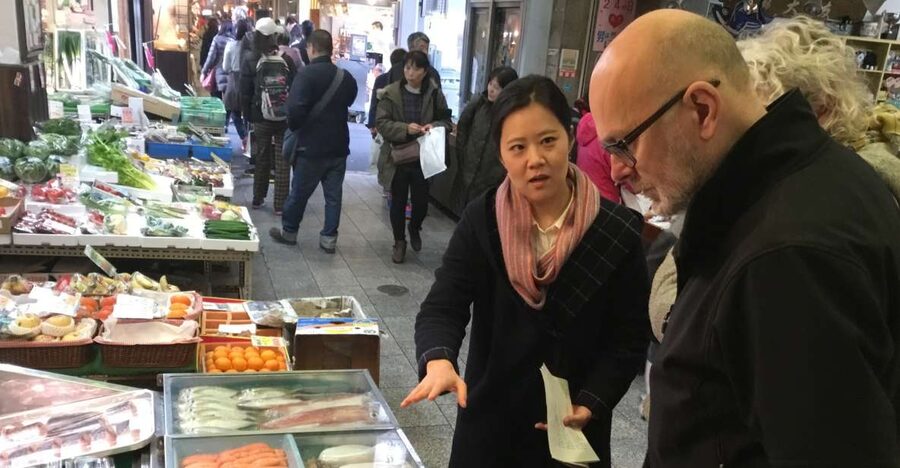
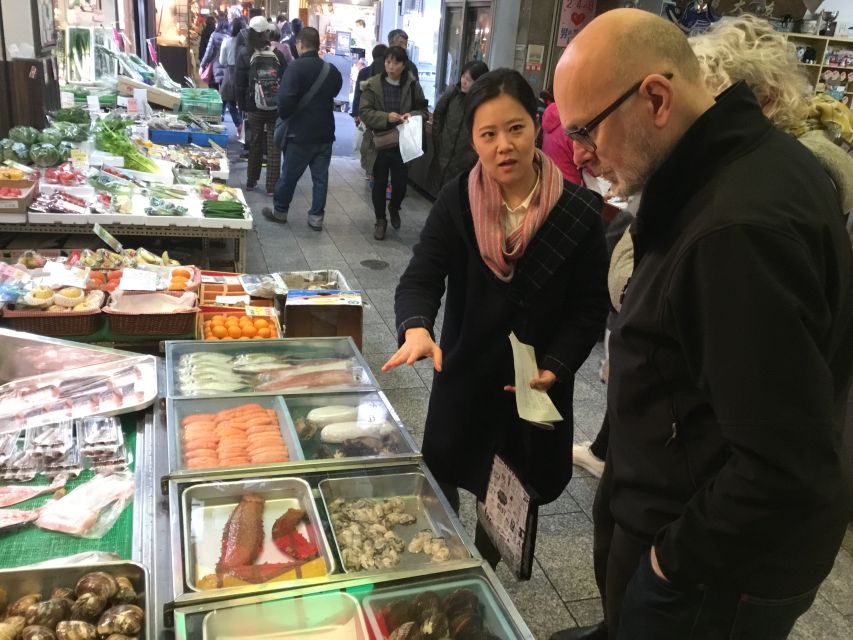
Nishiki Market looks simple at first: one long covered shopping street lined with food shops. Walk through quickly and you will see seafood, pickles, spices, sweets, meat, and prepared snacks. Without context, though, it can feel like a narrow corridor of unfamiliar ingredients.
The guide gives those ingredients a place in Kyoto’s food culture. You can ask about something you have never seen, learn how it is used, and get help speaking with shop staff. That last point matters. Even when you know what you want to ask, the language gap can make a small food purchase harder than expected.
The guide also points out older, original stalls among the newer, more tourist-focused shops. That helps you spend your limited time with purpose. Instead of stopping at every bright display, you learn which shops are known for pickles, spices, meat, or other local specialties.
I especially like the practical etiquette lesson. You are told not to eat while walking through the market. That is easy to miss if you are used to European food halls or street markets where strolling with a snack is normal. Knowing the rule lets you enjoy samples without looking careless.
The market is still a working food district, not a quiet museum. It can be crowded, and your pace depends partly on the people around you. One guide may offer a thorough explanation of each stop, while another may need to keep moving through a packed section. If your priority is detailed food talk, ask questions early and often. This is a private tour, so the format allows it.
More Market Tour Cooking Classes in Japan
- Tsukiji Fish Market Guided Tour and Sushi Making with Pro Chef
★ 5.0 · 775 reviews - Tokyo: Tsukiji Fish Market Sushi Making Class with Pro Chef
★ 4.9 · 506 reviews - Tokyo Tsukiji Fish Market Tour and Sushi Making Lesson
★ 5.0 · 390 reviews
The first hour: tasting, questions, and choosing ingredients
The meeting point is the western entrance of Nishiki Market. After a short briefing, you begin walking with your English-speaking guide. The market tour usually takes about an hour, giving you enough time to see several types of food without turning the whole morning into a slow crawl.
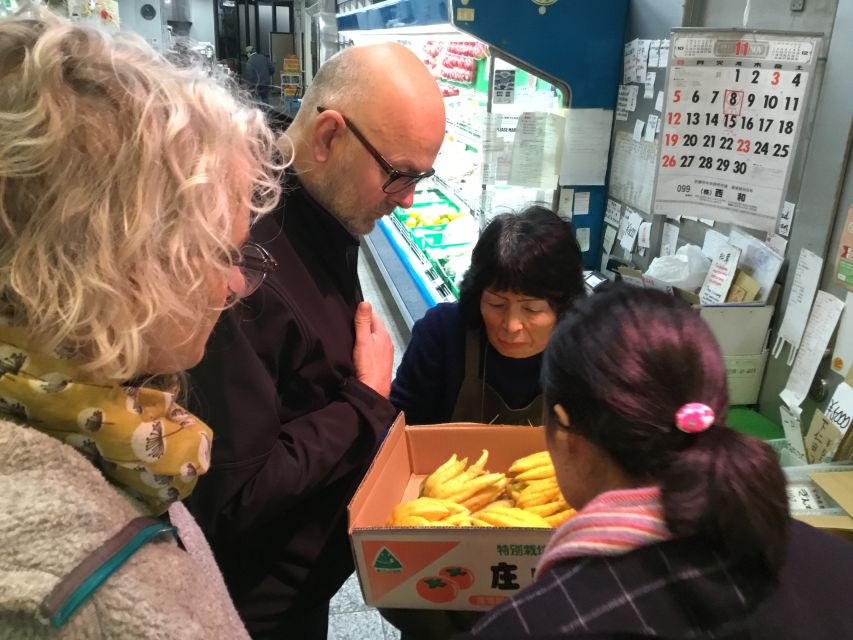
You can expect sample foods during the walk, including Japanese pickles. These are more useful than they may sound. Pickles vary in taste, texture, and seasoning, and tasting them beside other market foods helps you understand how they fit into a Japanese meal. The samples are included, but anything else you want to eat or buy for yourself is not.
Three types of sake may also be available as an optional tasting. Treat this as an extra, not the main reason to book. The strongest part of the market visit is the explanation of ingredients and local food customs. Sake adds interest for adults who want to compare styles, but you should confirm the option when booking if it matters to you.
During the walk, you help shape the cooking portion. The available bowls are:
- Kaisen-don: A seafood bowl, usually the best choice if you want the market’s fish connection to be front and center.
- Ten-don: A tempura bowl for anyone who prefers fried vegetables or seafood with sauce and rice.
- Oyako-don: A comforting chicken and egg bowl, often the simplest choice for children or cautious eaters.
Each person does not have to choose the same dish. That is a useful feature for families and mixed groups. One person can make tempura, another seafood, and someone else chicken and egg. The class becomes more interesting when you can compare the finished bowls.
The ingredients cost is included, so you do not need to calculate a separate market budget for the meal. You can still buy extra food or gifts, but those personal purchases are outside the tour price. A smart plan is to note shops you want to revisit later rather than trying to fit all your shopping into the guided hour.
What makes the private format useful
This is a private-group experience, not a large shared walk. That changes the feel of the market visit. You can ask why one sauce is used with a certain dish, request a substitution, or pause when a particular stall catches your eye.
The guides have also accommodated special requests. A tofu substitution instead of chicken has been arranged, and one group received small side dishes chosen to suit their tastes. You should not assume every request can be met, but it is worth mentioning dietary preferences before the class begins.
The English instruction is another practical strength. Guides and instructors associated with the experience include Chie, Momo, Mio, and Mae. The names and exact guide assignment can vary, but the activity is conducted in English. The guide can explain cooking steps, product labels, sauces, brands, and the background of different foods without leaving you to guess.
A private format does not guarantee a completely slow market tour. Nishiki can become crowded, and one past assessment of the experience found the market explanations shorter than expected. You should think of this as a guided introduction with samples and ingredient shopping, not a full-day food seminar.
From market to cooking studio
After the market visit, the included taxi takes you to the cooking studio. This transfer is important because it saves you from finding the kitchen on your own and gives the experience a clear change of pace. The total activity lasts 150 minutes, with roughly one hour in the market and one hour cooking and eating. The remaining time covers the briefing and transfer.
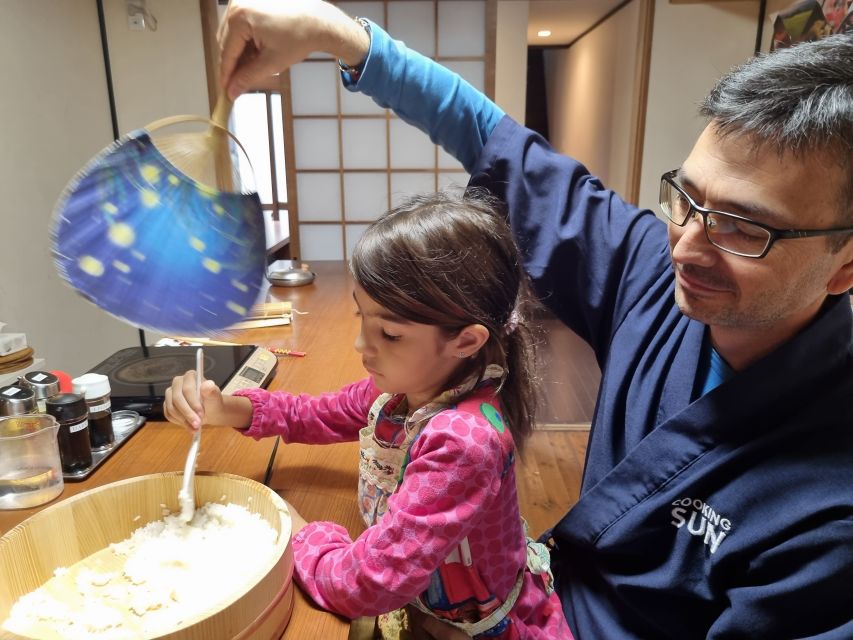
The cooking space has been described as clean, well stocked, cozy, and designed for cooking classes. You begin preparing the dishes soon after arriving, rather than spending a long time watching a demonstration before touching anything.
The class focuses on practical technique. You learn how to prepare the chosen bowl, make dashi, handle sauces, and arrange the food so it looks good as well as tastes good. That presentation advice is a nice touch for anyone who cooks at home. Small details, such as how to place ingredients or use a sauce, can make a simple rice bowl feel much more polished.
The instructor works through each step with you. This is not a class where you stand at the back and watch a chef do everything. You take part in the preparation, which makes the meal more memorable and gives you a recipe to use later. The recipe is included, so you leave with something more useful than a photograph of lunch.
The food also gives you a clear connection to the market. You have just seen the ingredients, heard how they are used, and then handled them yourself. That sequence makes the market visit easier to remember. A fish stall is no longer just a row of unfamiliar pieces, and a bottle of sauce has a purpose once you have cooked with it.
More Market Tour Cooking Classes in Kyoto:
- Hanoi Cooking Class: Culture, Local Market & Meaning CSR Impact
★ 5.0 · 5,147 reviews - 5 Traditional Dishes Hanoi Cooking Class with Market Trip
★ 5.0 · 4,890 reviews - Cooking Class and Lunch at a Tuscan Farmhouse with Local Market Tour from Florence
★ 5.0 · 4,831 reviews - Chiang Mai: Cooking Class, Market & Thai Herbs Garden Tour
★ 4.9 · 4,824 reviews
The three donburi choices in more detail
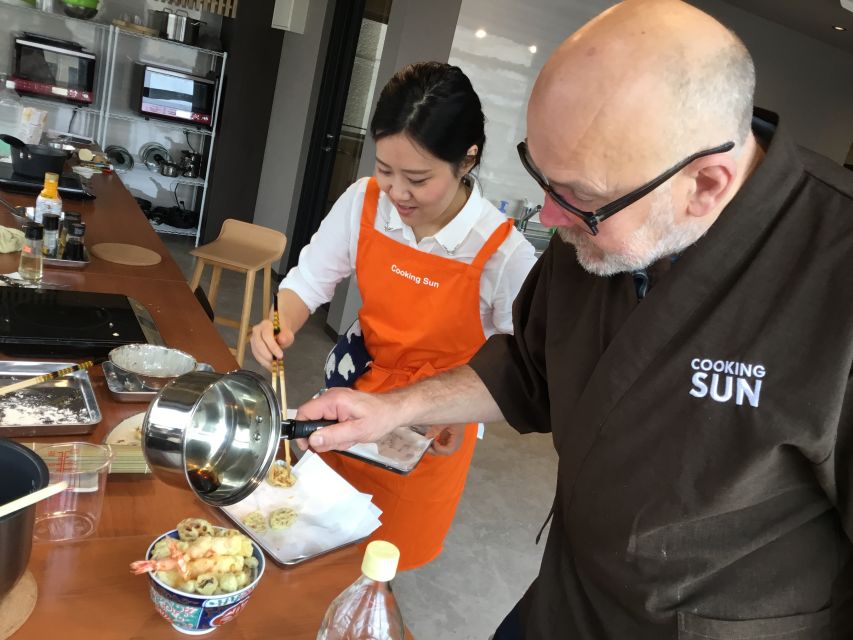
Kaisen-don is the most directly tied to the seafood market. It is a good choice if you want a fresh-tasting bowl with seafood as the main attraction. One caution is that ingredient quality can vary. Fatty tuna was not well received on one occasion, so seafood lovers should keep their expectations practical. This is a teaching meal built around available market ingredients, not a high-end sushi counter.
Ten-don gives you a more hands-on cooking task because tempura involves preparation and frying. It can be the most engaging option for people who enjoy working with heat and batter. It also makes a satisfying shared comparison if other people in your group choose seafood or chicken and egg.
Oyako-don is a warm, familiar option. Chicken and egg combine with rice in a bowl that is approachable even if you are new to Japanese cooking. It is also a good choice for families, and the method is realistic to repeat at home.
The best part is that your group can split the choices. You can learn one method and taste the others at the table. If a substitution matters, ask before ingredients are purchased or prepared.
Food etiquette and useful Kyoto context
The guide does more than identify food. You also get context about Kyoto specialties and the reasons certain shops are known for particular products. This is where the tour offers more than a recipe class purchased separately.
You learn how to behave in the market, how to approach samples, and how to think about foods that may be unfamiliar. These details can prevent small mistakes and make the rest of your time in Kyoto easier. I find this sort of instruction more valuable than a long list of dates because it applies immediately.
The market is also a good place to ask about products you may want to bring home. The guide can point out items worth a second visit, but remember that the guided schedule is not designed for a long private shopping session. If you want to buy several things, return after the tour with your own time.
Is $109 a fair price?
At $109 per person, this is not the cheapest way to eat at Nishiki Market. You are paying for a private English-speaking guide, market samples, the donburi ingredients, a recipe, the cooking instruction, and the taxi from the market to the studio.
The value is strongest for people who would otherwise struggle to understand the market or feel unsure about ordering and buying food. A private guide can answer questions that a standard group walk cannot, and the meal gives the tour a practical finish.
The price is less compelling if you mainly want to wander, snack, and shop independently. You will still need to pay for personal foods and purchases, and the market section is limited to about an hour. You are buying structure, translation help, and participation, not unlimited tasting.
For a family or small group, the value improves because everyone can take part in the same class while choosing different bowls. It is also useful for home cooks who want techniques they can repeat, especially dashi, sauce use, and presentation.
Who should book this experience?
I would choose this tour if you want a clear introduction to Kyoto food culture without spending half a day in a formal cooking school. It works particularly well for first-time visitors who see Nishiki Market as confusing or overly touristy and want help separating long-established shops from newer snack stalls.
Families should give it serious thought. The activities keep children involved, and the menu has enough variety for different tastes. The cooking portion is hands-on, and children can compare dishes rather than waiting through a long lecture.
It also suits curious eaters who like to ask questions. You can ask about ingredients, sauces, etiquette, and cooking methods as you go. The private setting is a better fit than a fixed group tour if your interests are specific.
I would be more cautious if you want extensive market shopping, a slow photographic walk, or a very specialized seafood tasting. The market can be crowded, the schedule is compact, and the quality of one ingredient may not match what you would choose at a premium restaurant.
Cancellation is flexible up to 24 hours before the start for a full refund, and you can reserve while paying later. Check the available starting times when planning your day. The meeting point is the western entrance of Nishiki Market.
Should you book the Nishiki Market food tour?
Book it if you want Nishiki Market explained by a local, prefer a private pace, and like the idea of turning market ingredients into your own lunch. The strongest reasons are the English guidance, the option to choose among three donburi dishes, and the practical cooking lesson you can repeat at home.
Skip it if your main goal is independent shopping or eating as many market snacks as possible. For everyone else, this is a well-balanced Kyoto activity: a focused market walk, useful food etiquette, a few tastings, and a hands-on meal in about two and a half hours.
FAQ
Where does the Nishiki Market food tour begin?
The tour begins at the western entrance of Nishiki Market in Kyoto.
How long does the activity last?
The activity lasts 150 minutes. About one hour is normally spent at Nishiki Market, followed by about one hour cooking and eating, with time also allowed for the transfer and briefing.
Is the tour conducted in English?
Yes. The guide and cooking instruction are provided in English.
Is this a private tour?
Yes. It is offered for a private group, so you can ask questions and move at your group’s pace.
Which dishes can I cook?
You can choose kaisen-don with seafood, ten-don with tempura, or oyako-don with chicken and egg.
Can people in the same group choose different dishes?
Yes. Each person can choose a different donburi option.
Are the cooking ingredients included?
Yes. The ingredients needed for the donburi cooking are included in the tour price.
Is the taxi to the cooking studio included?
Yes. The taxi cost from the market to the studio is included.
Are extra foods and personal market purchases included?
No. Foods you choose to eat on your own and any personal shopping are not included.
More Food Experiences in Kyoto
- Undiscovered Charleston: Half Day Food, Wine & History Tour with Cooking Class
★ 5.0 · 948 reviews - Vietnamese Food Cooking Class in Hanoi with Market Experience
★ 5.0 · 778 reviews - Milan: Italian Cooking Class with Food and Wine
★ 4.7 · 509 reviews - Mexican Cooking Class with Food Market Visit in Mexico City
★ 5.0 · 506 reviews
More Food and Drink Tours in Kyoto
- Small Group Cooking Class & Market Food Tour in Florence
★ 5.0 · 1,574 reviews - Pasta Making & Wine Tasting with Dinner in Frascati from Rome
★ 5.0 · 1,326 reviews - Paella Cooking Class, Wine Tasting & Central Market in Valencia
★ 5.0 · 1,150 reviews - Athens: Food Market Visit and Cooking Class with Wine
★ 4.9 · 1,087 reviews
Just added around Kyoto
- Kyoto: Wagashi (Japanese sweets) Cooking near Fushimiinari★ 5.0 · 40 reviews
- Kyoto: Sushi Making Experience in Kawaramachi★ 4.8 · 13 reviews
- Kyoto: Small-Group Authentic Sushi Making Workshop★ 5.0 · 137 reviews
- Kyoto Udon & Tempura Cooking Class with Professional Chefs★ 3.8 · 3 reviews
- Kyoto: Cooking class, learning how to make authentic sushi★ 4.2 · 9 reviews
- Kyoto Home Cooking Class &Supermarket tour near Fushimiinari★ 5.0 · 31 reviews
- Kyoto: Morning Japanese Bento Cooking Class★ 5.0 · 149 reviews
- Authentic Japanese Cooking Experience at Izakaya restaurant★ 4.2 · 5 reviews
Cooking Classes with a Market Tour, compared.
Hanoi Cooking Class: Culture, Local Market & Meaning CSR Impact
Read our review →
5 Traditional Dishes Hanoi Cooking Class with Market Trip
Read our review →
Cooking Class and Lunch at a Tuscan Farmhouse with Local Market Tour from Florence
Read our review →
Chiang Mai: Cooking Class, Market & Thai Herbs Garden Tour
Read our review →
Chiang Mai: Authentic Cooking Class with Market & Farm Visit
Read our review →
Barcelona: Paella Cooking Experience & Boqueria Market Tour
Read our review →
Cooking Class Hoi An:Local Market, Basket Boat, Fishing & Cooking
Read our review →
Hoi An Cooking Class(Market,BasketBoat Crabfishing&Cooking Class)
Read our review →Browse the lists this tour appears in