
Review · TOKYO
Tokyo Tsukiji Fish Market Tour and Sushi Making Lesson
Tsukiji is easiest to appreciate with a guide who knows which stalls offer samples and how to explain the unfamiliar foods. This tour pairs that market walk with a hands-on Japanese cooking class, where you prepare sushi, tamagoyaki, miso soup, and side dishes before sitting down to eat.
I like the small groups, capped at six, and the useful English support from guides such as Akiko, Lucy, Yoko, and Shitomi. I also like that the market visit is not treated as a quick photo stop. You have time to inspect dried seafood, octopus, sea urchin, tuna, sweets, and other Japanese ingredients.
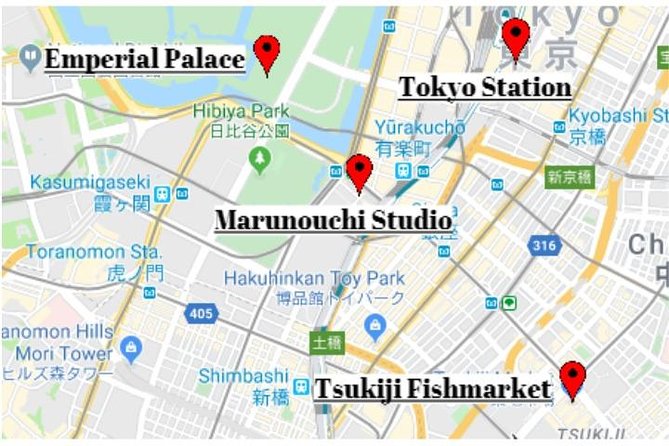
The main caution is value. At $99.49, this is not a bargain market stroll, and the cooking lesson can feel basic if you already make sushi at home. The market and studio are also separated by a bus ride, so the day is less compact than the simple three-hour description suggests.
Key points before you book
- Tsukiji remains the star of the morning: You spend about an hour exploring the Outer Market, with possible extra time there instead of a shorter temple visit.
- The class is genuinely practical: You may prepare rolled sushi, nigiri, tamagoyaki, miso soup, stock, and side dishes under an instructor’s direction.
- Small groups make a difference: The maximum is six people, giving the guide room to answer questions and help with food preparation.
- Your guide handles the language gap: English-speaking guides can explain ingredients, translate at stalls, and point you toward worthwhile samples.
- The experience is best for beginners and families: The minimum age is nine, and the lesson gives children and adults something active to do.
- The $99.49 price includes more than the class: Market guiding, transport to the studio, an apron, water, and drinks with your meal are included.
Starting at Tsukiji Hongwanji Temple
Your meeting point is outside Tsukiji Hongwanji Temple, at 3-chome-15-1 Tsukiji. This unusual Buddhist temple is worth a few minutes before the market walk. Its exterior takes cues from South Asian and Indian architecture, while the interior has a different character altogether.
The temple stop is listed at about five minutes and admission is free. Think of it as a useful orientation point rather than a major part of the tour. You will not spend the morning studying temple design, but the location gives the experience a calmer beginning before you enter Tsukiji’s crowded shopping lanes.
Arrive ready to walk. No hotel pickup is provided, so you must make your own way to the temple. The meeting point is near public transportation, which helps, but you should still allow time to find the correct entrance and guide.
More Market Tour Cooking Classes in Japan
- Tsukiji Fish Market Guided Tour and Sushi Making with Pro Chef
★ 5.0 · 775 reviews - Tokyo: Tsukiji Fish Market Sushi Making Class with Pro Chef
★ 4.9 · 506 reviews - Tokyo Washoku 4-hour Cooking Class: From Market to Table
★ 5.0 · 253 reviews
Finding the useful corners of Tsukiji Outer Market
The old wholesale market moved to Toyosu, but Tsukiji’s Outer Market continues as a maze of shops, counters, and food stalls. This tour focuses on that public shopping area, not the tuna auction. Tuna auction viewing is specifically excluded, so do not book this experience expecting an early-morning auction visit.
The market portion lasts about an hour, though the tour may spend roughly 70 minutes there instead. That extra time matters. Tsukiji is easy to enter on your own, but the narrow lanes can be confusing, and a guide can help you spend your limited time wisely.
With a guide such as Akiko, Lucy, or Yoko, you can ask what an ingredient is, how it is used, and whether a sample is worth trying. The food may include dried seafood, dried scallops, small dried crabs, soy products, tamagoyaki, mochi, and other market specialties. The exact tastings depend on the vendors and the season.
You might also see large tuna, octopus, sea urchin, fish, fruit, vegetables, and packaged ingredients arranged for sale. This is the part of the morning that gives the cooking class context. Sushi stops being a restaurant item and becomes a meal built around freshness, knife work, rice, stock, eggs, and careful presentation.
I especially like the translation help here. If you speak no Japanese, ordering a sample or asking a vendor a question can feel awkward. An English-speaking guide makes the market less intimidating and can point out foods you might otherwise pass without noticing.
Still, keep expectations in check. This is not a private food crawl with a long list of tastings. You buy your own market samples unless otherwise included, and the tour does not promise that you will shop for the ingredients later used in class. That distinction matters because some people expect the market purchases and cooking lesson to be directly connected.
Have a light breakfast. Several food stops can add up, and you will want room for the meal you prepare later. At the same time, do not arrive expecting an all-you-can-eat tasting session. The main value is the guide’s help and explanation, not the total amount of food sampled.
The short ride from the market to ABC Cooking Studio
After Tsukiji, the group travels to the cooking studio. Transportation between the market and the studio is included, and the ride is by bus according to the detailed descriptions of the experience.
The transfer is practical, but it breaks the rhythm of the morning. One part of the tour feels like a market walk, while the other takes place in a bright, modern cooking school. You may also pass through the Ginza area on the way, adding a glimpse of central Tokyo shopping streets.
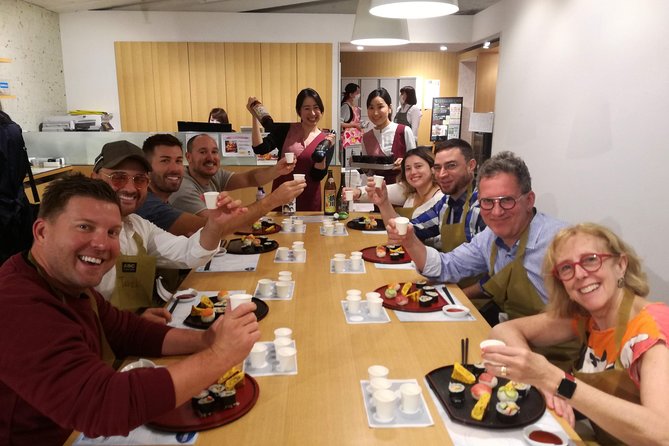
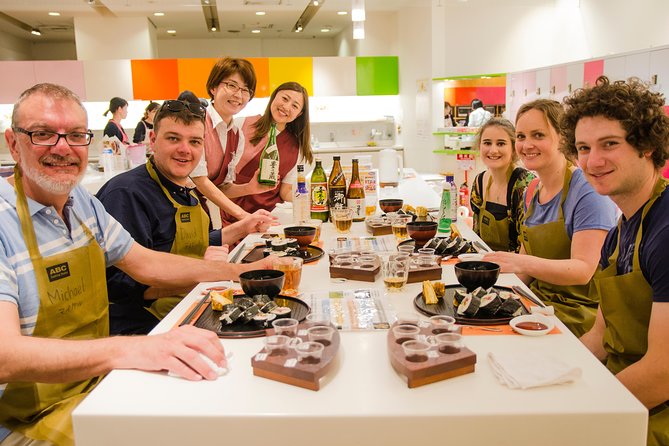
The studio is part of ABC Cooking Travel, connected with a large Japanese cooking school network. The setting is clean and organized, with proper workstations and aprons supplied for the lesson. Water is included, and the atmosphere is more formal than a casual kitchen demonstration.
This is also where group size helps. With no more than six participants, the instructor can watch your technique and give you a hand when rolling sushi or turning the omelet. The experience is not a private class, but it is small enough to feel personal.
Making sushi, tamagoyaki, and Japanese side dishes
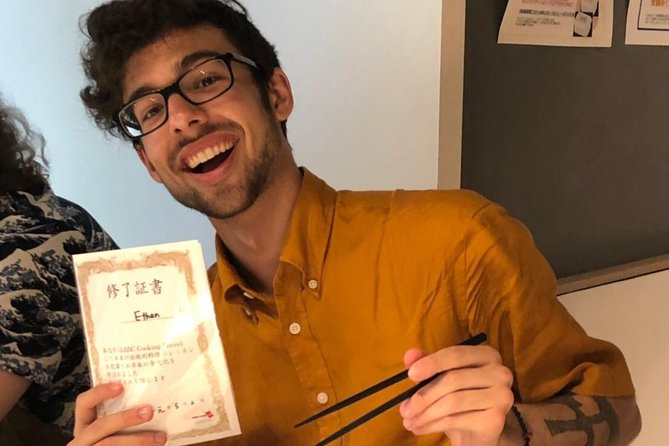
The cooking portion lasts about an hour and a half. Recipes change with the season, ingredient supply, and the day’s class plan, so you should not treat the advertised food list as fixed. The lesson typically includes a sushi roll and tamagoyaki, with other items such as nigiri, miso soup, stock, and side dishes.
Tamagoyaki is one of the most useful things to learn. This Japanese-style omelet is made by cooking thin layers of egg and rolling them together. It looks simple, but shaping it neatly takes practice. Several families found this part especially memorable, with children asking about buying a tamagoyaki pan for home.
You may also make rolled sushi and nigiri. The class gives you the basic sequence: prepare the components, handle the rice, arrange the fillings, roll or shape the sushi, and serve it attractively. It is a sensible introduction for someone who has never made sushi, and the recipes are practical enough to attempt again at home.
Miso soup or stock may also be part of the lesson. That broadens the experience beyond sushi and shows how a Japanese meal can include several small, balanced elements. You are not simply shaping rice and fish for a photograph.
The instructor leads the cooking, while your market guide may assist with translation and organization. Instructors such as Miwako, Miwa, Masayo, and Hiromi have been praised for patience, clear explanations, and friendly support. English ability can vary between staff members, so the quality of explanation may depend partly on who leads your session.
That point is worth weighing honestly. Most people find the class easy to follow, but some have wanted more discussion of sushi customs, market ingredients, and Japanese food traditions. If you already have strong sushi-making skills, the lesson may feel introductory rather than advanced.
Ingredients also vary. The food in the promotional photographs is not guaranteed, and seasonal availability or delivery conditions may change the menu. You can ask for alternate ingredients, which is helpful if you have a food preference or need a substitution, though the supplied information does not promise that every request can be met.
More Market Tour Cooking Classes in Tokyo
- Tokyo: Tsukiji Market Walking Tour & Sushi Cooking Class
★ 4.6 · 122 reviews - Tokyo: Tsukiji Market Guided Tour & Sushi-Making Experience
★ 4.4 · 11 reviews
Eating the meal you prepared
The lesson ends with lunch. You sit down and eat your sushi, omelet, soup, and other dishes, rather than leaving with only a recipe card and a quick taste.
You can choose wine, plum sake, or soft drinks with the meal. Water is also provided at the studio. This makes the class feel like a complete half-day food experience rather than a cooking demonstration followed by an immediate departure.
The meal is part of the value calculation. At $99.49 per person, you are paying for the guide, market orientation, transport, kitchen access, instruction, apron, ingredients, and drinks. If you would happily wander Tsukiji alone and only want a basic sushi lesson, the price may feel high. If you value translation, organized transport, a small group, and a prepared lunch, the cost is easier to justify.
I would also remember that you are paying for the setting and instruction, not a high-end sushi meal. The dishes are made by you and the group, and the recipes are designed for teaching. That is the appeal for beginners, but it will not replace a polished omakase meal.
What the strongest experiences have in common
The best version of this tour depends on the guide. A good guide keeps you moving through the market, explains what you are seeing, and gives you enough freedom to stop at stalls that catch your eye. Lucy has been especially effective with families, helping groups explore without feeling rushed. Akiko has been praised for knowing where to find samples and for adding useful local context.
The cooking instructor matters just as much. A patient teacher can turn a simple sushi lesson into an activity you remember and repeat at home. The most successful sessions combine clear demonstrations with actual participation, rather than asking you to watch while the instructor does all the work.
That hands-on element is not guaranteed to feel identical every time. Some participants have wanted more time at the workstations or more food traditions explained. If you want an advanced culinary course, ask yourself if beginner-level sushi, omelet, and soup preparation will be enough.
Families with older children are a strong match. The minimum age is nine, the minimum height is 130 centimeters, and the lesson offers children a clear task with an edible result. It also works well for couples, friends, and solo participants who want a social activity, though the tour requires at least two people to operate.
Practical details that affect your morning
The experience lasts approximately three hours, but market crowds, the bus transfer, and the pace of the group can affect the feel of the schedule. Wear comfortable shoes and keep your hands free. Strollers and luggage are not allowed, so this is not a good activity to schedule while carrying large bags or traveling directly between hotels and stations.
The maximum group size is six. That is one of the strongest practical features, especially in a market where a large group would be difficult to keep together. Bookings made separately are not automatically guaranteed to join the same group, so if you are traveling with another family or couple, place everyone on one booking when possible.
The tour requires at least two participants. If the operator cancels because that minimum is not reached, you receive the choice of another date or experience, or a full refund. Poor weather can also lead to a different date or a full refund.
For your own cancellation, free cancellation applies up to 24 hours before the start time. Changes or cancellations inside that window are not accepted and are not refunded. The experience uses a mobile ticket, so keep your booking available on your phone.
Who should book this Tsukiji cooking experience
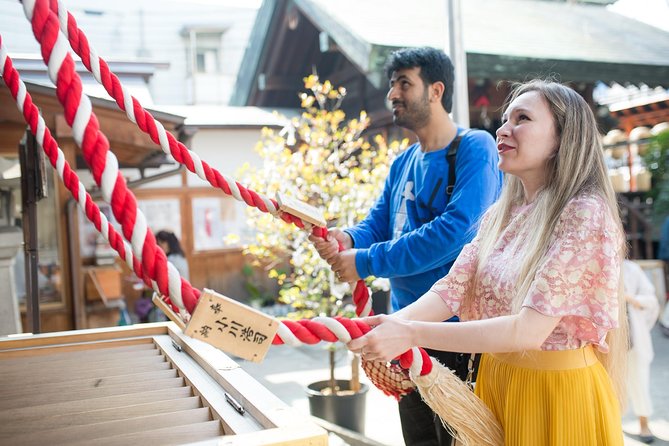
I would choose this tour if you want a guided introduction to Tsukiji but also want to do something with your hands. It is a particularly good fit if you have never made sushi, want an English-speaking guide, or are traveling with children old enough to participate.
It is less suitable if your main goal is the tuna auction, an advanced cooking course, or a long gourmet tasting tour. It is also not ideal if you already know Tsukiji well and can communicate comfortably at the stalls. In those cases, you may prefer to explore the market independently and spend your budget on a meal or a more specialized class.
The strongest reason to book is the combination. The market gives you ingredients and context, while the cooking lesson gives you a skill to take home. The weakest point is that the two parts are not fully connected: you do not necessarily buy the exact ingredients in Tsukiji and then use them at the studio.
Should you book it?
Book this experience if you want a friendly, well-organized introduction to Japanese food, especially with children or first-time sushi makers. The small group, English support, market tastings, and meal make the $99.49 cost reasonable for many visitors.
Skip it if you want an advanced lesson, a tuna auction, or a luxurious sushi meal. For the right audience, though, this is a practical way to turn Tsukiji from a confusing food market into a place you can understand, taste, and recreate at home.
FAQ
Where does the tour begin?
The tour begins outside Tsukiji Hongwanji Temple at 3-chome-15-1 Tsukiji, Chuo City, Tokyo 104-8435, Japan.
How long does the experience last?
The activity lasts approximately three hours, including the market visit, transport to the cooking studio, and cooking lesson.
Does the tour include the tuna auction?
No. Tuna auction viewing is not included. The experience visits Tsukiji Outer Market.
Is transportation included?
Yes. Transportation between Tsukiji Market and the cooking studio is included.
What foods will I prepare?
The class typically includes sushi rolls and tamagoyaki, with possible dishes such as nigiri sushi, miso soup, stock, and side dishes. Recipes may change with the season and ingredient availability.
Are ingredients included?
Yes, the cooking class provides the ingredients used for the lesson. The exact ingredients may differ from the promotional photographs, and alternate ingredients can be requested.
Are drinks included?
The cooking studio provides drinking water. With the meal, you can choose wine, plum sake, or soft drinks.
What is the minimum age?
The minimum age is nine years old. The minimum height is 130 centimeters, or approximately 4.2 feet.
Can I bring a stroller or luggage?
No. Strollers and luggage are not allowed during the activity.
What happens if the tour is canceled?
If poor weather or an insufficient number of participants causes cancellation, you are offered another date or experience, or a full refund. You can also cancel for a full refund up to 24 hours before the start time.
More Shopping Trips in Tokyo
- Hanoi Cooking Class: Culture, Local Market & Meaning CSR Impact
★ 5.0 · 5,147 reviews - 5 Traditional Dishes Hanoi Cooking Class with Market Trip
★ 5.0 · 4,890 reviews - Cooking Class and Lunch at a Tuscan Farmhouse with Local Market Tour from Florence
★ 5.0 · 4,831 reviews - Chiang Mai: Cooking Class, Market & Thai Herbs Garden Tour
★ 4.9 · 4,824 reviews
More Sushi and Japanese Classes in Tokyo
- Sushi Making Tokyo Roll and Authentic Japanese Sushi Class
★ 5.0 · 3,971 reviews - Tokyo: Roll and Authentic Sushi Making Class in Asakusa
★ 4.9 · 1,957 reviews - Tokyo: Sushi Making Class in a Happi Coat near a Famous Spot
★ 4.9 · 1,377 reviews - Sushi Making Tokyo! Popular Maki Sushi & Japanese Sushi(+Recipe!)
★ 5.0 · 1,314 reviews
Just added around Tokyo
- Tokyo: Tsukiji Market Walking Tour & Sushi Cooking Class★ 4.6 · 122 reviews
- Tokyo: Sushi Cooking Class with Sake Tasting★ 4.8 · 55 reviews
- Sushi-Making Experience★ 4.7 · 4 reviews
- Tokyo: Tsukiji Market Guided Tour & Sushi-Making Experience★ 4.4 · 11 reviews
- Tokyo: Sushi and Ramen Cooking Class with Sake Pairing Set★ 5.0 · 81 reviews
- Tokyo: Kawaii Bento Cooking Class – Cute Character Lunchbox★ 4.9 · 55 reviews
- Tokyo: Learnt to cook Bento, Oyakodon and More!★ 5.0 · 5 reviews
- Tokyo: Real Ramen & Dumpling Cooking with Master Chef★ 5.0 · 10 reviews
Japanese & Sushi Cooking Classes, compared.
Sushi Making Tokyo Roll and Authentic Japanese Sushi Class
Read our review →
Tokyo: Roll and Authentic Sushi Making Class in Asakusa
Read our review →
Ramen Cooking Class at Ramen Factory in Kyoto
Read our review →
Tokyo: Sushi Making Class in a Happi Coat near a Famous Spot
Read our review →
Sushi Making Tokyo! Popular Maki Sushi & Japanese Sushi(+Recipe!)
Read our review →
Sushi Making Osaka Roll and Authentic Japanese Sushi Class
Read our review →
Tokyo Sushi Making Class in Tsukiji with Professional Chef
Read our review →
Ramen & Gyoza Cooking Class in Tokyo with Local Supermarket Visit
Read our review →Browse the lists this tour appears in