
Review · KYOTO
Bento Box Cooking Class
A bento box looks simple until you learn how many small dishes go into one. This Kyoto cooking class lets you see that work up close, from rolling sushi and shaping egg rolls to frying tempura and building a balanced lunch. You finish by eating the bento you made, not just watching a chef do the work.
I like the hands-on format and the clear English instruction. I also like that the menu changes with the seasons and that you receive recipes to use at home. The main consideration is timing: at about three to three and a half hours, this is a real cooking lesson, not a quick demonstration between sightseeing stops.
Key points at a glance
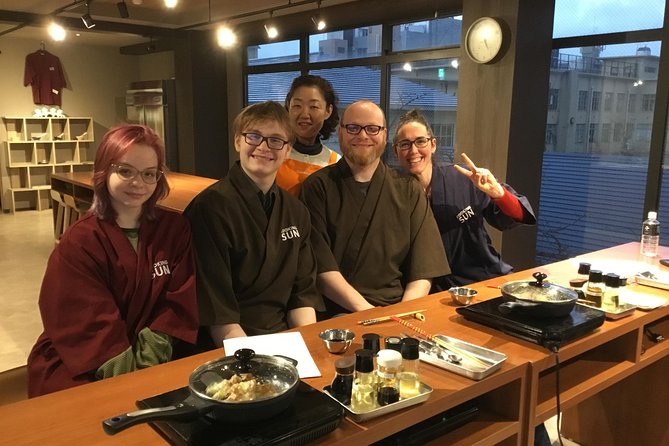
- Several dishes in one class: Prepare bento favorites such as miso soup, tempura vegetables, egg rolls, sushi, teriyaki chicken, and spinach with sesame.
- A useful Kyoto morning: The class begins at 9:30 a.m. and finishes back at Cooking Sun Kyoto, making it easy to plan around an afternoon of sightseeing.
- Small-group attention: Bookings are limited to a maximum of eight people, though the total class size can vary.
- Seasonal cooking: The menu may change every three months, giving the kitchen room to use the best available ingredients.
- A meal and recipes included: Your handmade bento becomes lunch, and recipe copies help you repeat the dishes at home.
What you are really learning about bento
Bento is more than a compartmented lunchbox. It is a practical Japanese meal built from several small portions, with attention given to variety, color, texture, and presentation. In this class, the food gives you a useful way to understand everyday Japanese cooking rather than only its restaurant side.
The session begins with background on the origins of bento. The word is linked to the 13th century, when bento was used in the Song Dynasty as slang for something convenient. That short history lesson helps explain why bento remains such a familiar part of Japanese life, from school lunches to railway meals and daily home cooking.
I like that the class connects the recipes to the idea behind the box. You are not simply preparing unrelated Japanese dishes. You are learning how several modest foods come together as one complete meal.
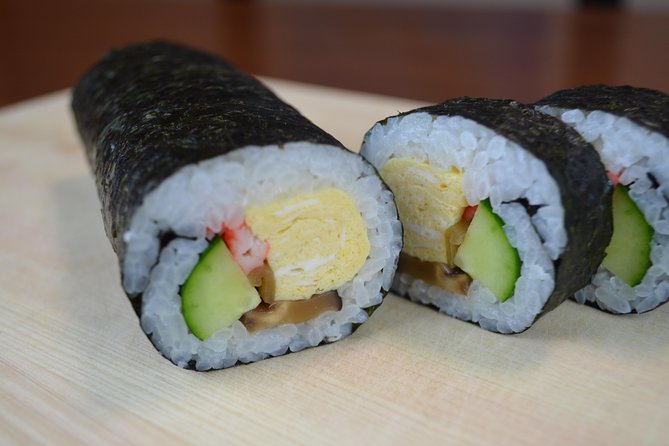
The exact menu can change by season. The listed dishes include miso soup, tempura vegetables, and egg rolls, while class participants have also prepared sushi rolls, teriyaki chicken, spinach with sesame, and tempura shrimp. That variety is one of the class’s strengths, but it also means you should not expect every date to have precisely the same menu.
More Sushi and Japanese Classes in Kyoto:
- Ramen Cooking Class at Ramen Factory in Kyoto
★ 5.0 · 1,937 reviews - Sushi Making in Kyoto! Same-day bookings welcome!
★ 5.0 · 713 reviews - Kyoto: Ramen Cooking Class at a Ramen Factory with Souvenir
★ 4.9 · 532 reviews
Arriving at Cooking Sun Kyoto at 9:30 a.m.
The meeting point is Cooking Sun Kyoto at 679 Funayacho, Shimogyo Ward, Kyoto, 600-8466. The class begins at 9:30 a.m. and ends at the same location. The studio is near public transportation, but hotel pickup and drop-off are not included, so you need to make your own way there.
The morning start works well if you want to keep the rest of the day open. After finishing your lunch, you can continue sightseeing without spending another meal break in a restaurant. It is also a good choice for a compact Kyoto schedule, though you should leave enough time to reach the studio without rushing.
Bring an appetite, but do not skip breakfast entirely. The food is served at the end, after the cooking is complete, and the meal can be substantial. A light breakfast is the sensible compromise.
An apron is provided, along with all ingredients and the English-speaking instructor. You do not need to shop for supplies or bring cooking equipment. The class is designed so that you can arrive ready to work.
Watching the chefs, then taking over the kitchen
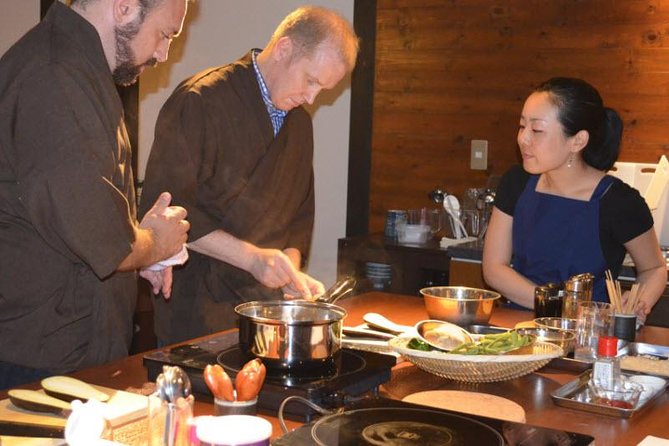
The instructors begin by showing you the techniques needed for the menu. This matters because Japanese cooking often depends on small details: how ingredients are cut, how a rolled omelet is formed, how sushi is assembled, or how tempura batter is handled.
The class does not leave you sitting at the edge of the room. You get hands-on guidance as you prepare the dishes yourself. That balance is important. A demonstration can be interesting, but the real value comes when you have to repeat the movement with your own hands.
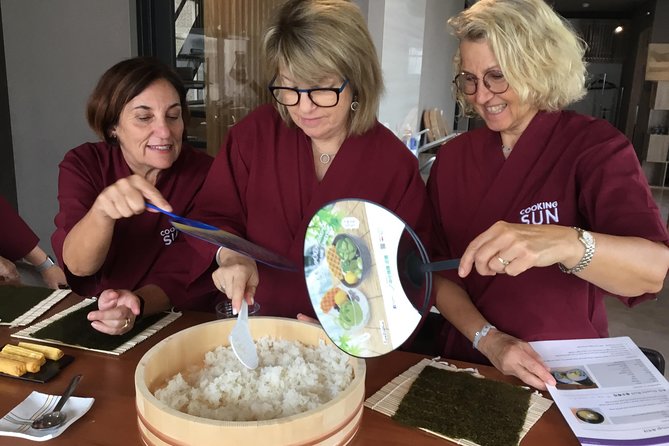
Several practical tasks receive special attention. The rolled egg is a highlight because it takes control and patience to build the layers neatly. Sushi rolling gives you another useful skill to take home. Tempura offers a lesson in handling a light coating and working with hot oil under supervision.
You may also learn small details about dashi, the stock used in many Japanese dishes, and how different colors of soy sauce can be used. These are the sorts of tips that can change how you cook after the trip. The class is suitable for beginners, but people who already cook Asian food can still pick up techniques they have not tried before.
The instructors are described as patient, clear, friendly, and relaxed. English is used throughout, and the teaching style allows time for questions about ingredients, sushi, and the reasons behind particular methods.
Making a full bento instead of one showcase dish
A common weakness in cooking classes is that much of the meal has been prepared before you arrive. Here, some preparation is naturally done in advance, but the class still gives you a wide range of tasks. You work on multiple dishes from start to finish, then arrange them together in the box.
That range makes the three-hour format worthwhile. You might prepare an omelet, teriyaki chicken, a vegetable or shrimp tempura, a spinach and sesame side, and a sushi roll, along with soup. The exact combination depends on the seasonal menu.
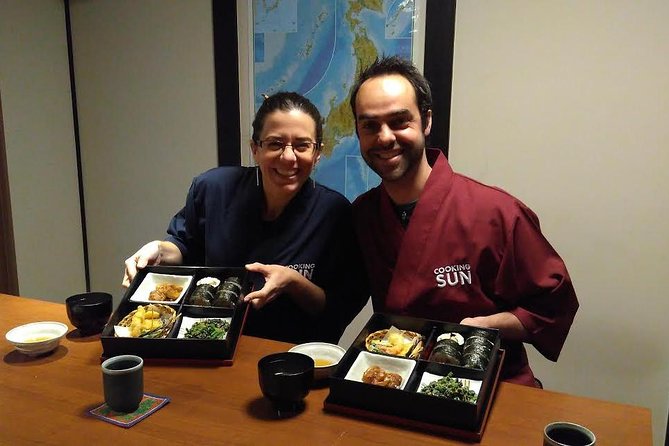
You also begin to appreciate the labor behind an ordinary bento. Several small servings require planning, separate cooking methods, and careful arrangement. The finished box may look tidy and effortless, but the class shows you the work hidden behind that neat presentation.
The food is not only decorative. The end result becomes your lunch, and the class includes the meal. That makes the experience feel more complete than a lesson where you cook a small sample and leave hungry.
More Hands-On Workshops in Kyoto:
- Kyoto: Ramen, Gyoza, and Onigiri Cooking Class
★ 5.0 · 445 reviews - The Original Small-Group Sushi Making Class in Kyoto
★ 5.0 · 436 reviews - Kyoto: Japanese Washoku Bento Small Group Cooking Class
★ 5.0 · 380 reviews - Kyoto Ramen and Gyoza Cooking Class with Professional Chefs
★ 5.0 · 282 reviews
Sitting down to eat what you made
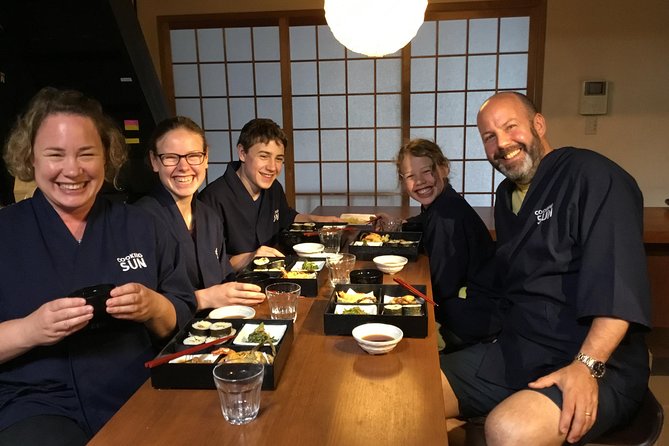
At the end, you put away the knife and apron and sit down with the other class participants to eat. This shared meal is a useful finish because you can compare the results, talk about the techniques, and enjoy the food while it is fresh.
The lunch can be larger than expected. If you are booking this for a family or a couple, plan for a filling meal rather than a light tasting. The cooking itself is part of the fun, but the reward is arranging the box and then eating the finished dishes.
I especially like this structure for people who want a social activity without committing to a full evening. The class gives you a common project, but the main focus remains the food. Families, couples, friends, and solo food lovers can all take part.
One point to keep in mind is that the lunch comes only after the cooking. If you arrive very hungry, the wait may feel long. Have something small beforehand and save room for the bento.
Why the seasonal menu matters
The menu is adjusted every three months to use the best available seasonal ingredients. That does two useful things. First, it gives the class a connection to the Japanese calendar. Second, it prevents the lesson from becoming a fixed set of dishes detached from the time of year.
You should treat the listed foods as examples rather than a guarantee for your date. Miso soup, tempura vegetables, and egg rolls are named as typical bento items, while past class menus have included sushi, chicken, shrimp, and spinach. Ask about the current menu if one specific dish is the reason you want to book.
Seasonality also supports the central bento lesson. A good bento is not just a pile of food. It balances colors, flavors, textures, and portions. Working with seasonal ingredients helps you see how that balance changes throughout the year.
A class size that allows real help
The booking information gives a maximum of eight people per booking and a maximum of eight participants for the activity. Some class experiences have involved a larger overall group with several instructors, so the exact room setup may differ by date.
The important point is that instruction is not presented as a large lecture. You receive individual guidance from the class leader, and the instructors demonstrate each step before you try it. That helps with tasks such as sushi rolling and layered egg, where a quick correction can save a messy result.
The class works for beginners because you do not need previous cooking experience. It also works for more confident home cooks because the menu covers several techniques rather than one basic recipe. If you are cooking with a teenager, the hands-on format gives them plenty to do.
Food allergies and dietary requests
You should report specific dietary needs when booking. The class has been able to handle food allergies carefully, with staff explaining the ingredients and helping participants understand what they could eat.
That is encouraging, but you should still give clear information in advance. Japanese cooking may use soy, seafood, sesame, eggs, wheat, and dashi, depending on the menu. The provided details confirm that dietary requirements should be advised at booking, but they do not promise that every allergy or diet can be accommodated.
The safest approach is to contact the provider before the class if your restriction is serious. Do not wait until you arrive.
Price and practical value at $71.35
At $71.35 per person, this is not the cheapest way to eat lunch in Kyoto. It is also more than a short cooking demonstration. The price includes about three hours of instruction, all ingredients, an apron, an English-speaking instructor, and the lunch you prepare.
The stronger value comes from the number of things included in one experience. You learn several dishes, eat a substantial meal, and take recipes home. If you tried to order comparable dishes in a restaurant, you would taste them but not learn how to make them. If you took several separate lessons, the cost and time would climb quickly.
The class is a good use of money for someone who cooks at home or wants a food activity with lasting value. It is less compelling if you only want a quick snack or a short break from sightseeing. You are paying for instruction and participation, not simply for a bento.
Group discounts are available, which may help if you are booking for a family or a small party. The activity also offers a mobile ticket, and confirmation is provided at booking.
Who should book this Kyoto cooking class?
I would choose this class for:
- A first-time visitor who wants a practical introduction to Japanese food.
- Couples looking for a shared activity beyond temples and shopping.
- Families with older children or teenagers who enjoy making their own lunch.
- Home cooks who want recipes and techniques they can repeat.
- People with a busy Kyoto plan who can spare a full morning.
- Anyone interested in the everyday side of Japanese food culture.
You may want a different activity if you dislike group instruction, have very limited time, or want a highly specialized lesson focused on one dish. The bento format covers many foods, so it favors variety over mastery of a single recipe.
Service animals are allowed, and the studio is near public transportation. The activity ends at the starting point, with no hotel transfer included.
Cancellation and planning notes
Free cancellation is available up to 24 hours before the local start time for a full refund. Cancellations or changes made less than 24 hours before the start are not accepted for a refund.
The most important planning detail is the three to three and a half hour commitment. Do not schedule a temple visit across town for the exact finish time. Give yourself room after lunch, especially if you plan to continue sightseeing from the cooking studio.
Should you book it?
Book this bento class if you want to do more than eat Japanese food in Kyoto. You will prepare a varied meal, learn useful techniques, hear why bento is organized the way it is, and leave with recipes rather than only photographs.
The best reason to choose it is the combination of variety and hands-on time. You may roll sushi, fry tempura, prepare chicken, make egg, and arrange the finished box in one morning. The main tradeoff is the time commitment and the fact that the menu changes, so no single dish is guaranteed.
At $71.35, I see it as good value for food lovers, families, and curious cooks. If that sounds like your kind of morning, this is a practical and tasty way to give your Kyoto itinerary a break from sightseeing.
FAQ
Where does the bento cooking class meet?
The class meets at Cooking Sun Kyoto, 679 Funayacho, Shimogyo Ward, Kyoto, 600-8466, Japan.
What time does the class start?
The class starts at 9:30 a.m.
How long does the experience last?
The cooking course lasts approximately three to three and a half hours.
Does the class include lunch?
Yes. You eat the bento you prepare during the class, and lunch is included.
Are ingredients included?
Yes. All cooking ingredients are included in the experience price.
Is an apron provided?
Yes. An apron is included.
Is the class taught in English?
Yes. An English-speaking cooking instructor leads the class.
What dishes will I make?
The menu can change seasonally. Dishes may include miso soup, tempura vegetables, egg rolls, sushi, teriyaki chicken, spinach with sesame, and tempura shrimp.
Can I request dietary accommodations?
You should advise the provider of specific dietary requirements when booking. The class has provided careful help for food allergies, but the supplied information does not guarantee that every dietary need can be accommodated.
Is hotel transportation included?
No. Hotel pickup and drop-off are not included. The class starts and ends at Cooking Sun Kyoto, which is near public transportation.
How many people can join?
The activity has a maximum of eight people per booking and a maximum of eight participants listed for the activity.
Can I cancel for a refund?
Yes. You can cancel at least 24 hours before the local start time for a full refund. Cancellations or changes made less than 24 hours before the start are not accepted for a refund.
Just added around Kyoto
- Private Kyoto Sushi Cooking Class & Tea Ceremony with Emika★ 5.0 · 66 reviews
- Private Cooking Class Udon in Kyoto Japan★ 5.0 · 23 reviews
- Private Plant-Based Japanese Cooking Class – Kyoto Edition★ 5.0 · 15 reviews
- Private Guided Traditional Buddhist Cooking in Japan★ 5.0 · 16 reviews
- Kyoto Wagashi(Japanese sweets) Cooking Class near Fushimiinari★ 5.0 · 60 reviews
- Nishiki Market, Private Sushi class & Sake Tasting in Townhouse★ 5.0 · 6 reviews
- Private Kyoto Cooking Class with Aki in a Beautiful Wooden House★ 5.0 · 12 reviews
- Private Kyoto Market Tour and Authentic Cooking Class with Aki★ 5.0 · 15 reviews
Japanese & Sushi Cooking Classes, compared.
Sushi Making Tokyo Roll and Authentic Japanese Sushi Class
Read our review →
Tokyo: Roll and Authentic Sushi Making Class in Asakusa
Read our review →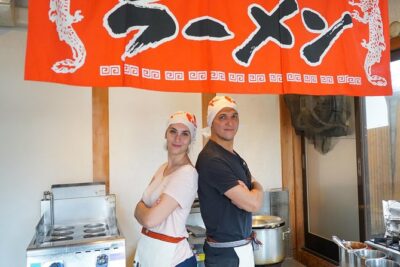
Ramen Cooking Class at Ramen Factory in Kyoto
Read our review →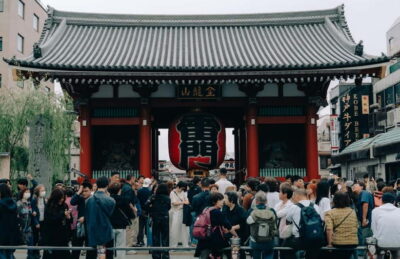
Tokyo: Sushi Making Class in a Happi Coat near a Famous Spot
Read our review →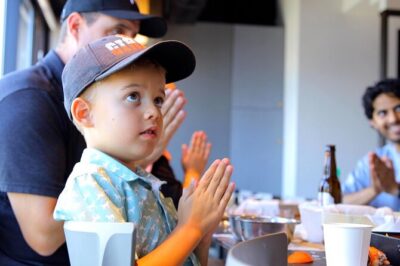
Sushi Making Tokyo! Popular Maki Sushi & Japanese Sushi(+Recipe!)
Read our review →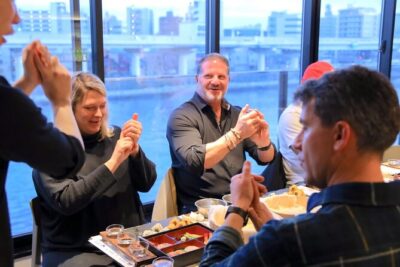
Sushi Making Osaka Roll and Authentic Japanese Sushi Class
Read our review →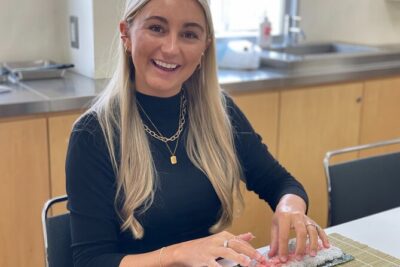
Tokyo Sushi Making Class in Tsukiji with Professional Chef
Read our review →
Ramen & Gyoza Cooking Class in Tokyo with Local Supermarket Visit
Read our review →Browse the lists this tour appears in